Jump to ratings and reviews
Rate this book

Once on a Moonless Night

Rate this book
From the author of the beloved best seller Balzac and the Little Chinese Seamstress , a haunting tale of love and of the beguiling power of a lost language.

When Puyi, the last emperor, was exiled to Manchuria in the early 1930s, it is said that he carried an eight-hundred-year-old silk scroll inscribed with a lost sutra composed by the Buddha. Eventually the scroll would be sold illicitly to an eccentric French linguist named Paul d’Ampere, in a transaction that would land him in prison, where he would devote his life to studying the ineffably beautiful ancient language of the forgotten text.

Our unnamed narrator, a Western student in China in the 1970s, hears this story from the greengrocer Tumchooq—his name the same as that of the language in which the scroll is written—who has recently returned from three years of reeducation. She will come again and again to Tumchooq’s shop near the gates of the Forbidden City, drawn by the young man and his stories of an estranged father. But when d’Ampere is killed in prison, Tumchooq disappears, abandoning the narrator, now pregnant with his child. And it is she, going in search of her lost love, who will at last find the missing scroll and discover the truth of the Buddha’s lesson that begins “Once on a moonless night . . .” in this story that carries us across the breadth of China’s past, the myth and the reality.

288 pages, Hardcover

First published January 1, 2006

44 people are currently reading
1051 people want to read

About the author

Dai Sijie

12 books283 followers
Dai Sijie was born in China in 1954. He grew up working in his fathers tailor shop. He himself became a skilled tailor. The Maoist government sent him to a reeducation camp in rural Sichuan from 1971 to 1974, during the Cultural Revolution. After his return, he was able to complete high school and university, where he studied art history.

In 1984, he left China for France on a scholarship. There, he acquired a passion for movies and became a director. Before turning to writing, he made three critically acclaimed feature-length films: China, My Sorrow (1989) (original title: Chine, ma douleur), Le mangeur de lune and Tang, le onzième. He also wrote and directed an adaptation of Balzac and the Little Chinese Seamstress, released in 2002. He lives in Paris and writes in French.

His novel, Par une nuit où la lune ne s'est pas levée (Once on a moonless night), was published in 2007.

L'acrobatie aérienne de Confucius was published in 2008.

His first book, Balzac et la Petite Tailleuse chinoise (Balzac and the Little Chinese Seamstress) (2000), was made into a movie, in 2002, which he himself adapted and directed. It recounts the story of a pair of friends who become good friends with a local seamstress while spending time in a countryside village, where they have been sent for 're-education' during the Cultural Revolution (see Down to the Countryside Movement). They steal a suitcase filled with classic Western novels from another man being reeducated, and decide to enrich the seamstress' life by exposing her to great literature. These novels also serve to sustain the two companions during this difficult time. The story principally deals with the cultural universality of great literature and its redeeming power. The novel has been translated into twenty-five languages, and finally into his mother tongue after the movie adaptation.

His second book, Le Complexe de Di won the Prix Femina for 2003. It recounts the travels of a Chinese man whose philosophy has been influenced by French psychoanalyst thought. The title is a play on "le complexe d'Oedipe", or "the Oedipus complex". The English translation (released in 2005) is titled Mr. Muo's Traveling Couch.

Ratings & Reviews

What do you think?
Rate this book

Friends & Following

Create a free account to discover what your friends think of this book!

Community Reviews

5 stars
86 (13%)
4 stars
148 (22%)
3 stars
230 (35%)
2 stars
120 (18%)
1 star
72 (10%)
Displaying 1 - 30 of 118 reviews
Profile Image for Jim Fonseca.
1,163 reviews8,513 followers
February 4, 2018
This is a story told many by a young woman, a language and literature scholar from France, who is living in the “Peking” of the late 1970’s. This is set in the aftermath of the Cultural Revolution, so everyone has lost loved ones and is damaged in some way. She falls in love with a young Chinese man who is a green grocer by day but in his spare time is obsessed with the history of China and discovering supposedly lost scrolls written by a non-Chinese ethnic group revealing the earliest days of Buddhism in China.

description

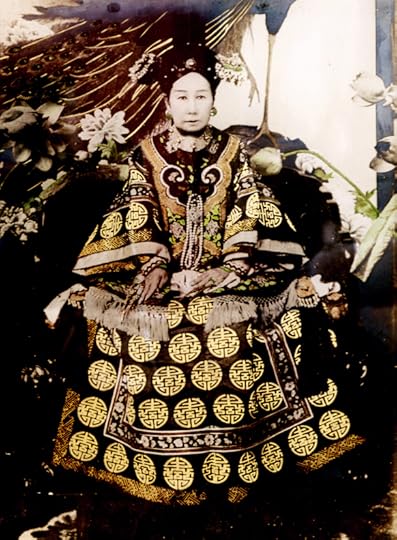
I say supposedly because historical fact and historical fiction are notoriously mixed in this book. You really must be scholar of Chinese history or spend many hours of the web researching to see what is true and what is not. Yes, many of the recent Chinese emperors mentioned and their various idiosyncrasies are correct. There was a Dowager Empress Cixi (ruled 1861-1908) and yes Puyi, the last Emperor, fled to Manchuria in 1932. One emperor was obsessed with art and calligraphy and another with his traveling aviary.

description

But all the scroll stuff is fictitious as is the French scholar who wrote a book about Marco Polo referred to many times in the story. So, the story is a mystery (where is the other half of the scroll containing the Buddhist sutra?) and a love story. At time it follows the Chinese man at other times the woman as she leaves China to travel to Paris, Mali and Burma before returning to China. The story weaves together the yin and yang of fact and fiction, East and West, man and woman.

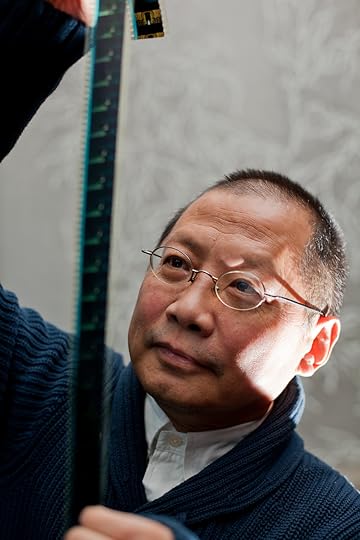
The author, better known for his novel Balzac and the Little Chinese Seamstress, is Chinese but he writes in French and this novel is translated from the French. He knows first-hand about the cultural upheaval he writes of. Dai Sijie was born in 1954 and spent four years of hard labor in a “re-education” camp in the 1970’s before leaving for France in 1984.

description

This is a good read. Although slow in places, it kept my interest. I gave up worrying about what was fact and what was fiction (there will be no quiz!) and decided to just enjoy the story.

Photos from top: Empress Cixi from Wikipedia
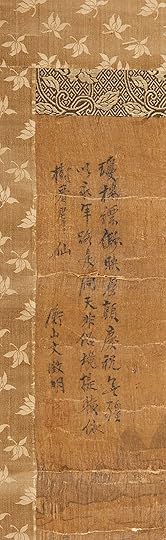
Chinese scroll from thecobbs.com/auction
Dai Sijie from wikipedia
Profile Image for Katy.
282 reviews2 followers
August 17, 2010
I almost didn't finish this book. It's very stream of consciousness with very complicated voices, so I'd often have trouble remembering who was talking about whom. It has random passages that don't seem to link to the rest of the story. It gives you that feeling that if you were just a bit smarter and could GET IT, you'd have this really deep and fantastic story... but too bad, you're not smart enough.
25 reviews2 followers
June 16, 2011
Balzac and the Little Chinese Seamstress is one of my all-time favorites, but I was completely unable to read Dai Sijie's following book, Mr. Muo's traveling couch, despite picking it up repeatedly. I think it just had too much of the depression and melancholy that defines much of Chinese literature. (A professor of Chinese literature once explained Chinese novels to me by telling me that one of the most famous books in Chinese literature ends with everyone dieing, even the dogs. Only the flies are left.) Once on a Moonless Night offered a very compelling premise, however, and I found myself pulled along despite the fact that the story is not at all what the publishers had led me to believe with the cover description. This is a Russian nesting doll of a book, the story digressing and digressing through many people's stories and histories. In the end, it's not really a book about a narrative story at all; it's a book about language and the power of certain languages to transform. Something only a Chinese writer writing in French and then translated to English can really get to the heart of.
Profile Image for Simona.
224 reviews37 followers
June 20, 2020
3 hviezdy davam len za nadherne opisy Zakazaneho mesta a starej Ciny a za urputnu love story ale inak nuda nudovita......
Profile Image for John.
Author 537 books183 followers
January 7, 2020
In the aftermath of China's Cultural Revolution a young French student (our anonymous narrator) is studying in Peking/Beijing when she falls in love with a local greengrocer, Tumchooq. But this isn't any old greengrocer: he's the estranged son of the French linguist Paul d'Ampere, the first person to "crack" the dead language Tumchooq, for which his son was named. The language was initially known to modern scholarship only through a partial sutra written on a torn scroll that played a part in the lives of both of China's "last emperors" and some of their predecessors.

This gives Tumchooq (the man) the excuse to spout off great scads of Chinese history, quoting long passages from books by heart because he has this wonderful eidetic memory. When his father, imprisoned in a labor camp for offending against the People's Republic in some way, is killed by a mob of fellow-inmates, Tumchooq dumps our narrator and goes off in search of his namesake language: its origins, its literature, its ultimate decipherment, the other half of the sundered scroll.

That's about it for the foreground plot, which forms a surprisingly small fraction of this book, which is otherwise occupied by the aforementioned scads of historical infodump. Don't get me wrong: I'm actually something of a fan of infodumps, and on occasion the ones here were interesting, but for most of the time I was plowing through Once on a Moonless Night I didn't feel I was reading a novel.

In other words, I found this book pretty heavy going. Which was a pity, because whenever we moved away from background information -- whenever the narrator was telling us about what was happening to her in her here-and-now, or when Tumchooq was talking about his own past -- the text suddenly became a whole lot livelier, so that I was turning the pages eagerly to find out what would happen next. As noted, the foreground plot is pretty thin, but when it's in focus it's engrossing enough. The trouble is that, especially in the first three-quarters or so of the book, it's never in focus for very long before, kajunk, we run smack bang into the brick wall of some new, long, aridly couched -- because supposedly quoted from a textbook -- indigestible wodge of historical background.

For what it's worth, Once on a Moonless Night is often very prettily written, and it held my attention sufficiently that I persevered to the end, but it seemed to me not so much a novel as a meditation on language, the love of language and (I think, though I may be projecting here) how the love of language can lead to the love of others and even oneself. It's an interesting piece and on balance I'm glad I read it, but I wouldn't want to have to read it again.
Profile Image for Jim Elkins.
361 reviews456 followers
Read
April 1, 2021
An imagination anchored in the past

As Ezra Pound said of his early collection "A lume spento": this is a collection of stale cream puffs. "One on a Moonless Night" is contemporary, but Dai Sijie's imagination is embalmed the period between 1890 and 1920: the period of romantic Sinology, of Fennolosa, Binyon, and the young Ezra Pound. The period when an aesthete's most obscure and arcane imaginings conjured a rare perfume, a fragrance so refined, so delicate and faded that it could hardly be perceived. The book's aesthetics, in which only the fabulously rare, perfect, and long-lost artifacts of culture can attract the true connoisseur's eye, comes from symbolist and fin-de-siecle aesthetes like Huysman's Jean Des Esseintes, and book's cast of characters are the stock in trade of 1920s Sinology: Huizong, Du Fu, Li Bo, lost masterpieces of Tang painting, rare sutras, the Jin Ping Mei, oracle-bone script... if those points of reference aren't familiar to you, if they aren't completely tarnished by generations of conservative historians and late-romantic poems, then you may not see just how cloistered, how cobwebbed, Dai Sijie's imagination really is. The book might remind you of "The Name of the Rose," "Foucault's Pendulum," "The Dictionary of the Zhazars," or any number of overly intricate, supposedly erudite novels, all the way down to and including "The Da Vinci Code"... or it might remind you, more precisely, of admirers of Pound's original Sinophilia such as George Steiner. (See Steiner's comment in "After Babel," that Pound translated Chinese poetry better than people who could actually read Chinese, and his notion that the translation issues raised by Pound's versions of Chinese poems might be the most complex event in the history of the universe.)

But Eco, Pavic, and the other contemporary writers of the arcane have their own idiosyncracies. This novel is warmed-over cobwebs. If you think otherwise, you might spend time reading about Huizong, Du Fu, Li Bo, lost masterpieces of Tang painting, rare sutras, the Jin Ping Mei, oracle-bone script, and then, when they are as familiar as Updike's descriptions of New England WASPS, when they have lost whatever aura they might once have had, then come back to this book and you may agree.
Profile Image for Christine.
7,225 reviews572 followers
December 30, 2010
I'm not sure quite how I feel about this book.

It's beautiful, but there doesn't seem to be much plot. This is strange because usually a lack of plot will drive me up a wall. It makes me want to fling the book across the room and consider revoking my "don't burn books" rule. Worse, the narrator is a woman, but I consistently forgot that. (Oh that's right, she has a womb because she is a she). That usually clinches the deal.

But not this one. Not this time.

Okay, there is something of a plot, a search for an ancient scroll. But it isn't an Indiana Jones type of a search; in fact, it is a very round about search.

And yet.

There is such restrained passion in the language of this novel. It is rich. I can see why A.S. Byatt enjoyed this novel. I enjoyed this novel.

There is something transportative (is that even a word) about the language of this novel. The story is so simple, the ending is so simple, and yet magical.
Profile Image for Elsa.
136 reviews25 followers
February 14, 2012
Par une nuit où la lune ne s'est pas levée, Dai Sije


Une très belle découverte sur le chemin de la sagesse en Chine.

Ce roman raconte les souvenirs d'une jeune occidentale, son amour pour un jeune garçon chinois et de l'histoire qui le lie à un parchemin de soie, écrit dans une langue mystérieuse, le tumchouq, et longtemps détenu dans les collections des empereurs de Chine. Il a passionné le dernier empereur mais la moitié s'est perdue du temps. Chaque personnage du récit est lié de prêt ou de loin à ce texte dont on ne connait plus la fin. Chacun restera à jamais marqué par ce mystère, apprenant patiemment la langue tumchouq pour se noyer dedans, voyageant au bout du monde pour oublier, guettant avec application la trace de ce parchemin...

Voici un beau roman, emprunt de lenteur mais où tout s'éclaire petit à petit et où les trames du récit se dévoilent avec délicatesse. Dai Sijie livre un récit initiatique, une quête des origines au-delà du manuscrit et chaque personnage découvre ses limites et ses origines. Brodé sur l'histoire de l'introduction du bouddhisme en Chine, on est bercé par ces évocations lointaines, brumeuses d'un Pékin révolu, d'un pays fort et impitoyable et d'une histoire ancienne sur la route de la soie. L'auteur écrit avec une plume précise qui décrit bien les pensées, les sentiments des personnages, les confrontations entre deux pensées occidentales et orientales, malgré les efforts de l'héroïne pour intégrer et comprendre ce monde. C'est donc un très beau roman dont il est difficile de conclure la lecteur sans regrets.
Profile Image for Dakota Lane.
Author 20 books36 followers
April 13, 2012
POTENTIAL SPOI LER ALERT ONLY IF I AM PSYCHIC!!!!!!!!!!!!


warning: It is my kind of book and i still have not finsished, it as it is saving my life. i barely dare read more than five pages a day. there are flaws, like the female westerner, not that female, ( i didn't know she was a a she til page 60 or so but that's probably ME) but i'm not that female or western either so i am convinced. why start with flaws...

it is a masterpiece and is the first adult book i mgiht refer to as my FAVORITE BOOK.

but am ickle.

here is the potential psychic spoiler:

there is a riddle in the book, half of an ancient sutra spoken perhaps by the buddha--this is a book of dense languages and heart and history, layered not like watercolors, not cleverly, but holographically, and without artifice, EVER. i want to hug the author.

i hope i still feel this way by the end when the answer is revealed...if it is revealed

here is the potential psychic spoiler: the sutra is torn in two and we are given the first half...i am torn between and then he let go...and then he took flight..
and will be very happy if it is something fresh and different that makes the whole book take flight and me with it into the pureland and its pure lotuses evoked by this book, rising out of the mud and sewage and suffering of human life.
Profile Image for mussolet.
254 reviews47 followers
April 6, 2015
There aren't many things I dislike as much as discovering a new favourite in a book that isn't already on my shelves. Because I know I'll have to return it, and I'd rather not do so until I own it myself.

"Once On A Moonless Night" is such a book. If you're into fast-moving plots and suspense, this is not for you. It is quiet and poetical, and even during dramatic moments, there is a sense of the inevitable that pulls you through and lets you look beyond day-to-day grievances.

There is an overarching romance, and yes, even a mystery plot about an ancient scroll, but really for someone not from China it is a great exploration of culture and of a different sense of being. There are better stories out there for taking you on a wild romp, but very few that can capture the same quality and will make you savour the ride as much.

The best advice I can give you is to read this for the writing or, even more so, for the feeling of reading it. And take your time to do so.
(And don't borrow it, otherwise you might be as frustrated as I am.)

"Calligraphy may well be simply an artistic version of another form, that is the ideograms which make up the poem, but then not only does it reflect the character and temperament of the artist but . . . also betrays his heart rate, his breathing."
Profile Image for Dania.
24 reviews
January 24, 2012
I gave this book a real shot. I need to admit that I only read it thoroughly up until about the 63rd page and then a skimmed the rest... It's sad because I was really excited and looking forward to reading this one. While reading it, it felt like the author was just rambling on in a stream of consciousness filled with historical information. My mind kept wandering and I could feel myself drift off, which is such a pity.
Profile Image for Ali.
1,823 reviews163 followers
October 2, 2020
This book was quite different to what I was expecting. For starters, I'd forgotten it was written in French, and the flowing, run-on sentences took me by surprise. Secondly, the book doesn't so much meander through digressions as hurtle down them enthusiastically.
This is never as artless as it seems. In fact, the book is more art than anything else. But the rich, detailed kind. A delicately, painstakingly painted watercolour with details etched in subtly varying wash. Many of the scenarios are hardly plausible, instead carefully posed, but the picture is so beautiful your brain doesn't care. There is a very personal, and Buddhist, core of the book: Characters across time grapple with how to maintain a sense of self, of values and ethics, when stripped of personal control, and then also when they have it. This book simultaneously explores China's history of totalitarian and brutal governance over a culture which celebrates delicacy, precision and finding meaning in the unsaid as well as the said. Which in turn leads us into language and the way it can *be* a culture, a connector and meaning-maker. Then there is Beijing itself, which to use a cliche, is a character itself - one who is, perhaps, ultimately the winner. Or maybe the loser. If that kind of ambiguity bothers you, this book may not be for you. I found the ending underwhelming, and the pace of the "main" storyline varies enormously. The prose is stunning however and the stream of ideas and history and characters compelling.
Profile Image for Larry.
45 reviews
June 9, 2012
Pardon the mixing of cultures in my comparison of this story to nesting dolls (chinese story-russian doll type)but that is what it brings to my mind, each doll seems to tell another story as you read, but ultimately they are the sum whole of their parts. A rich tapestry of a story that sometimes seems to shift so effortlesly in an out of backstory, personal narrative and legend of a scroll and its translation and subsequent meaning to drive some to madness (including the reader if s/he has a stray thought and loses the thread of just where your at in the story;it(the story's only weakness and at the same time its endearments because of the way it pulls you into a totally different realm that when abruptly pulled out of is like a dreamer waking to find a profound dream at the edges of self awareness; nagging to be discovered-- the only to hope is to be reimmursed in a recurring dream not unlike the novel(pick a damn good place to leave off) , others to betrayal still others to unrequited love then self-denial at the cost of love and heartbreak to another only to learn the most profound meaning in an intricate oddessy that the closer one gets to the truth, it is like the closer you get to the horizon the distance seems to haven't changed. Self-doubt emerges at such divergent paths, twisting mazes and life choices as each character stands at the crossroads at one point or another forced to finally make a choice. The feckless attempts to bring reason and order to this story give one pause...and in that unlikely and final pregnant pause will the outcome be enlightnment or the bitter unknowing of eternal darkness that characterizes exitensialsms absurdity, which is almost as absurd as using the occidental philosophy in this review in a very eastern tale. What lies in wait in the darkness? The ending will leave you hanging until breathless you descend back to reality. Happy reading.
Profile Image for Sarah.
30 reviews
June 17, 2012
A surprisingly long read for such a small book. Much like his "Balzac" I liked it but he lost my interest about halfway through and it became a bit hard to finish without my mind wandering. I think the problem is that the characters, particularly the narrator, seem to be explored academically rather than with empathy. So, when their narrative becomes less interesting (or relevant), you don't really care what happens to them. His secondary characters, such as Paul d'Ampere or even Tomchooq, are more evocative and their connections to the torn sutra and the lost kingdom are explored from many angles and in interesting ways.
Worth the read if you are interested in China, particularly the late 1970's from a foreigner's standpoint, and in the the radical change that China has undergone over the hundreds of years. It's also kind of an anthropological "myth"tery that explores how real the "real"is and how myth informs that perception - so, some interesting ideas and explorations along the way. It's just unfortunate that he asks you to follow the narrator way off the path in order to get back again, because it's hard to maintain interest.
2,204 reviews
February 19, 2013
There are so many stories in this small book. The story of Pu Yi and his frenzied attack on an ancient manuscript as the Japanese fly him into exile. The story of Paul d'Ampere and his quest to study the ancient language of the scroll even when he is sent to a re-education camp. The story of life in that camp.

The story of d'Ampere's son Tumchook, named for the lost language, greengrocer, good son, monk. The story of the power hungry Dowager Empress Cixi and the crimes she committed to retain power. The story of the young French translator narrator who comes to China, falls in and out of love with Tumchook and ultimately discovers the reunited halves of the manuscript in the Forbidden City.

Mostly it is a story of language, its importance and its mysteries. I did not love this book as much as I love Mr. Muo's Traveling Couch, but there are wonderful descriptive passages and some beautifully evocative writing,
Profile Image for Writerlibrarian.
1,554 reviews4 followers
February 13, 2009
More like 3 3/4 stars, just shy of 4. The middle part lagged a little hence three stars. This is Dai Sijie third novels, his first since winning the Femina in 2003 with "Le complexe de Di". It's a slow and somewhat nostalgic narrative. We follow the narrator, a young French woman who studied Chinese in Beijing in the late 1970's, fell in love with a young Chinese man with a troubled past. Both their lives are entwined in the most singular yet delightful way. Both become obsessed with a long lost silk scroll inscribed with an obscure language. Both lose themselves in this obsession. It's almost genetic for them. The middle part could have been shorter or edited in a way that it could have been incorporated in the last part making the flow of the narration less chaotic. The ending is very much in keeping with the Chinese, Asian way of seeing and experiencing live.

I'm glad I read it.
Profile Image for Twineaquarius.
288 reviews
September 27, 2019
"Hơn nữa, bao giờ cũng nên nghĩ rằng rau có thể bị thối nhũn vì bị loại bệnh nào đó, và con người phải vứt đi khối lượng lớn để khỏi lây sang rau sạch còn tồn đọng. Và thế là tính tương đối của doanh số sẽ tạo nên hạnh phúc cho những người bán hàng."
"Con đường cát lác đác đó đây vài viên đá như những đam mê đã chấm hết và thành nguội lạnh được đặt giữa đám tro tàn mịn màng không một chút nguy cơ bùng cháy, con đường nhỏ nom như là cuộc đời của người đang đi ở đó. Rất có thể người làm ra con đường này muốn nhắc nhở chúng ta rằng dấu chân ta rồi sẽ biến mất trước ngọn gió đầu tiên thổi vào cũng giống như những ngày vui của đời ta một đi là không để lại dấu vết cỏn con nào nữa"
#Vào_một_đêm_không_trăng #ĐớiTưKiệt

- Thể loại: Tiểu thuyết
- Chấm điểm: 9/10

Như một cách không thể tình cờ hơn, cũng nhờ một lần lao đầu đi ủng hộ sách truyện mà mình đã vớ bẫm được quyển này. Đúng là có cho mới có nhận. Đúng là với Trung Quốc, khi nghiêm túc thì thật sự không thể nào không ngạc nhiên trước nền văn thơ và những ẩn ý của các tac gia ở nơi này.
Vào một đêm không trăng là câu chuyện xoay quanh một mảnh lụa được ghi bằng thứ ngôn ngữ tối cổ vùng Trung Á. Từ đó ta được gặp lại Huệ Tông, Phổ Nghi, gặp lại vị nữ hoàng đế đầy uy quyền và đáng sợ Từ Hy thái hậu nơi Tử Cấm Thành sừng sững bao đời. Cũng với mảnh lụa ghi nội dung từ thứ ngôn ngữ xa xôi ấy, mình gặp được câu chuyện về tình yêu, thứ tình yêu không gói lại giữa nam - nữ, mà tình yêu ngôn ngữ, tình yêu với những gì là cổ cũ, với những lời dạy của Đức Phật, với những cái đẹp đẽ nằm sâu bên trong mỗi con người.
Vào một đêm không trăng mang lại quá nhiều cảm xúc, quá nhiều kiến thức khiến đôi khi mình đọc và mình hoang mang giữa Chính sử hay chỉ là một câu chuyện dã sử của tác giả câu. Những mảnh đất cứ dần hiện ra, từ Trung Quốc với Tử Cấm Thành, đi ra vùng Thành Đô của những năm sau khi vị hoàng đế cuối cùng bỏ trốn trên chiếc máy bay của người Nhật, vất tung nhưng thứ quý giá nhất từ trên máy bay xuống, bằng một cách tình cờ lại lạc vào tay Thất Thập Nhất - người đã phải ra đi, chọc mù đôi mắt vì lòng tham của Từ Hy, rồi lạc vào tay người Pháp Paul d’Ampere, đi qua những ngày tù tội, đến với Pagan, đến Myanmar, đến Miến Điện, Lào, quay trở lại B��c Kinh năm 1990, một cuộc hành trình dài của mỗi mảnh đời lại luôn gắn kết với cái mảnh lụa của thứ ngôn ngữ xa xôi ấy. Đấy cũng là hành trình của một niềm tin nới Đức Phật, của những ngôn ngữ từ Phật, của thứ ngôn ngữ xa xôi Tumchooq. Cảm giác như chính mình phải trải qua hàng ngàn hàng vạn năm, hàng vạn con đường, đi qua bao nhiêu vùng đất để “Vào một đêm không trăng, một kẻ lữ hành cô độc lần bước trong bóng đêm đi dọc theo một con đường nhỏ dài dặc, con đường nhòa vào với núi và núi nhòa vào với trời. Nhưng đang giữa đường tới một khúc cong thì kẻ lữ hành trượt chân. Khi ngã xuống, kẻ lữ hành vớ lấy một túm cỏ khiến cái chết định mệnh không diễn ra ngay. Nhưng rồi hai tay yếu dần, và như kẻ bị tuyên án kết liễu cuộc đời, vào phút chót người đó nhìn lần cuối xuống dưới chân, ở đó chỉ nhàn thấy thẳm sâu những miền tối đen hun hút”.
Một điều nữa khiến mình không khỏi rợn người khi nghĩ về những gì tác phẩm kể ra. Đấy là những đêm mộng mị từ Huệ Tông đến Phổ Nghi, là những tranh đấu tham quyền cố vị nơi Tử Cấm Thành, những ngày Trung Quốc rối ren với người Pháp - người Mỹ. Những thời điểm đấu tố, cái cảm giác bị bắt bớ vì "Tội trong tư tưởng", cảm giác bị đánh đập mà không thể phản kháng, chỉ chơi cờ - thứ cờ từ một đất nước với ngôn ngữ xa xôi - trong tư tưởng cũng khiến người ta triệt tiêu nhau. Tất cả tạo nên cảm giác cũng như cái bàng bạc u tối của gần 400 trang sách.
Cũng phải nói, khi đọc truyện, có đôi chỗ làm mình ngờ ngợ giữa giọng văn của Đới Tư Kiệt và Diêm Liên Khoa hay Nghiệt Tử của Bạch Tiên Dũng, có lẽ vì họ đều nói đến những mặt tối (mình chỉ nói là mặt tối - có thể nó không phải mặt trái) của cuộc đời. Đoạn tác giả viết về Pagan, về cuộc phiêu lưu đến miền đất Châu Phi lại khiến mình gờn gợn một chút gì tư tưởng của Rễ trời. Hoặc có lẽ những nhân cách lớn sẽ gặp nhau ở tư tưởng để họ đều viết ra những câu văn khiến người đọc phải suy ngẫm chăng?
Và có lẽ, chỉ dám nói đây là tác phẩm hay, tác phẩm nên đọc. Mình không dám ngồi để xem những sự kiện nêu trong đó là thật hay giả, nhưng nếu là giả thì mình cũng mong 1 ngày đọc được 1 tác phẩm về văn vật, về những trang sử của Việt Nam hay như thế.
Mình trích lại ở đây một đoạn văn rất dài mà khi đọc nó mình vừa mang cảm giác xót xa, vừa thấy cái đáng sợ để mỗi khi đọc lại, cả cuốn sách sẽ lại hiện ra trong mình - với nguyên vẹn cảm xúc như lúc đọc
"Khi con đường quốc lộ từ Thành Đô đi Tây Tạng đến Nha An thì nó thả dốc xuống phía Tây chừng mười lăm cây số thì đến đèo Tay Lái Bất tử, ngay cái tên gọi cũng thể hiện hoàn toàn đầy đủ hình khe thế núi và nhắc nhở những con người không bất tử bằng xương bằng thịt về mối hiểm nguy và những khó khăn khi đi ngang. Đến đó thì đường chẽ làm hai ngả. Rẽ bên phải là con đường đất gồ ghề nếu không nói là đường làm bằng bùn có những luống sâu đào đi bơi slaij bởi bánh xe tải chở đá, một đoạn đường dài mười tám cây số hiếm người đi nằm dọc theo con sông Lục khoét lòng sông sâu ngay dưới chân vực cao chất ngất, trên thực tế đó là con sông sâu ngay dưới chân vực cao chất ngất, trên thực tế đó là con sông không có giao thương vì lượng nước thì ít mà lại lởm chởm đá hộc đen ngòm từ đỉnh núi lăn xuống, xấu xí như quỷ hiện hình, đầy đe dọa, những tảng đá mang hình thù những kẻ tàn tật, những người gù, những người lùn, những người điên bị bắt phải chịu những cực hình không biết gọi tên là gì, đang la hét vì đau đơn, đang vũng vẫy, đang quằn quại, đang hóa đá thành những thế đứng chịu đựng cảnh trừng phạt tối hậu vì sắt nung và lửa đỏ cho đến chết"
469 reviews
March 17, 2012
I think this book is destined to become a classic. Its episodic nature could turn off some less than diligent readers, but for those who persevere the rewards are great. There are several chapters that could be novels in their own right, so it can seem quite condensed. The plot turns on the search for a missing piece of an ancient scroll, but along the way it evokes the human search for the ineffable, the collective unconscious memory of a lost paradise, the human desire to make sense of existence. Oh, I loved it!
Profile Image for Gabriela.
817 reviews78 followers
June 15, 2012
Este o carte buna cu un potential urias. Daca ar fi putin mai lunga, mai incapatoare pentru uriasa si frumoasa poveste, ar fi excelent. In 300 de pagini totul pare mult prea inghesuit si grabit parca.
Profile Image for Book Concierge.
3,080 reviews387 followers
March 4, 2016
Very disappointing. Disjointed. I really coudln't get into it. Can't begin to describe it. There are a few poetic phrases worth 1 star.
Profile Image for Literarischunterwegs.
362 reviews42 followers
February 13, 2019
Eine in China lebende französische Studentin lernt während ihres Studiums in Peking „Tumschuk“ einen Gemüsehändler kennen und lieben. Gemeinsam versuchen sie den verschollenen Teil einer Sutra wiederzufinden, die in Verbindung zu Tumschuks Vater steht. Auf dieser nicht sehr einfachen Suche kommen sich die beiden immer näher: Die Studentin erwartet schließlich ein Kind.

„Wie ein Wanderer in einer mondlosen Nacht“ ist mein dritter Roman von Dai Sijie. Genau wie in seinem ersten Roman „Balzac und die kleine chinesische Schneiderin“ liegt auch diesem Roman wieder eine besondere Stimmung zu Grunde. In einer ganz besonderen, warmherzigen und den Leser verzaubernden Art und Weise beschreibt der Autor die Grausamkeiten jener Zeit und die damit verbundenen menschlichen Schicksale. Sprache und Inhalt stehen für mich in einem Kontrast zueinander: Einerseits geht von dem Buch eine Wärme und Ruhe aus, die einen als Leser gedanklich völlig entspannt. Andererseits werden eine Fülle von Informationen, geschichtlicher Personen und Daten darin verarbeitet, die es dem Leser manchmal unmöglich machen, alles zu verstehen. Oftmals dachte ich während des Lesen: Schade, dass du so wenig über China weißt, denn dann könntest du gewiss bessere, klarere und gezieltere Schlussfolgerungen bezüglich der gedanklichen Intention des Autors ziehen. So bleibe ich mit meinen Deutungen leider nur an einer wahrscheinlich eher kläglichen Oberfläche. Und dennoch: Die Geschichte Chinas, das besondere der Denkweise dieser Kultur und die recht extremen Umstände unter denen die Menschen dort leben mussten, fängt er mit seiner Sprache so nachhaltig ein, dass ich die Geschichte sicherlich nicht so schnell vergessen werde und immer wieder Passagen davon in mein Gedächtnis zurückkehren werden. Ähnlich ergeht es mir auch mit „Balzac und die kleine chinesische Schneiderin“.

Profile Image for Ruby Jusoh.
250 reviews11 followers
January 21, 2021
Super difficult yet mesmerizing prose. What a hard read. A thin book but oh so bulky in terms of language and understanding. He wrote the book in French. I wonder if that plays a part in its overall flow.
.
The narrator is a French student In 1970s Beijing. She fell in love with a grocer whose father found a historical ancient scroll liked to past emperors. One day, her lover disappeared. The narrator travelled to look for him, was pregnant but miscarried. She went back to Europe and travelled to Africa before returning to China.
.
That's the overall plot. The chapters, though, are maniac in structure. They are like mini stories put together. A table full of great luxurious dish you don't understand. We have the story of the lover's father, Puyi the Emperor and Cixi the Empress Dowager. I could not understand what the hell was going on most of the time. The main theme, I feel, is love. I think this is a love story. I think. I am not sure, to be honest.
.
3/5. The language is beautiful. Dai Sijie wrote in super long paragraphs containing so many details. If you are not attentive, you will definitely struggle. Nonetheless, each time I understood a paragraph, I felt so happy. It was a challenge, indeed.
Profile Image for Truly.
2,763 reviews12 followers
July 17, 2023
Sepertinya saya harus memohon maaf pada pemberi buku ini ^_^. Karena sekian punama baru sadar bahwa buku ini belum dibaca. Andai tidak beres-beres rak, maka buku ini juga akan semakin lama tertimbun.

Saya mengartikan judul buku ini "Suatu malam tanpa bulan"
Narator kisah ini, seorang mahasiswa Perancis yang sedang belajar bahasa Asia di Peking,China sekitar tahun 1978-1979. Ketika itu. China baru mulai membuka diri. Tentunya selain belajar ada urusan roman. Tanpa sengaja, ia mengenal anak seorang pemilik gulungan Sutra Budha dalam bahasa yang tidak dikenal. Konon, kaisar terakhir-Pu Yi yang diam-diam membawa sutra tersebut ketika diasingkan ke Manchuria. Sayangnya, Sutra tersebut robek dan bagian terakhir dari hilang.

Bagaimana mahasiswa tersebut bergitu bersemangat untuk mencoba menterjemahkan dan bersama mencari bagian yang hilang, menjadi kisah yang patut dinikmati. Demikian juga, bagaimana upaya sang pemilik awal Sutra untuk mendapatkannya, walau harus secara ilegal, menjadi bagian yang tak terpisahkan.
Profile Image for L. Meadow.
Author 4 books3 followers
April 21, 2018
This is one of those books that leave an indelible mark on your mind. Written in beautiful effortless prose that both leaves you feeling detached, and at the same forces you to wrestle meaning from it. I suppose much like a Buddhist sutra should make you feel - although I do not practice Buddhism myself, detachment from earthly struggles is one of the goals, while one is simultaneously supposed to meditate on the deeper meaning of various sutras - wrestle in a sense.

This is a book about language. This is a book about attachment we have to language and how language attaches us to culture and history. It is a book that encompasses both east and west, yin and yang, present and past.

And does so in language so rich and evocative you find yourself lost in the descriptions. A delight to read. No not read - savour.
Profile Image for Alaa Abdel-Rahman.
112 reviews6 followers
February 23, 2020
Un autre livre qui n’a pas su décoller de sur mon terrain d’intérêt. Le fait que c’est un livre qui raconte l’histoire de la Chine et du bouddhisme m’a tué l’envie de terminer le livre. Ça peut y aller que pendant un autre temps, j’aurai été intéressé à savoir plus sur l’histoire de la Chine et le bouddhisme mais pour l’instant, de lire un seul chapitre qui se déroule sur 60-65 pages est un fait qui sûrement peut faire perdre l’intérêt pour l’histoire dans un instant. Pour les 20% que j'ai pu terminer, le déroulement des événements était trop lent, trop passif et trop descriptif de façon à ennuyer la majorité des lecteurs. Bref, j'étais deçu profondément.
Profile Image for Lavinia Darlea.
186 reviews
March 15, 2024
Very complex and in certain points hard to follow - at a certain point the authour was being told a story by a guy, who was telling the story that a friend of his had told him, and the friend had heard the story from another guy... Add to that the oriental names, which for me sound the same, since I'm not used to them and you'll understand that from time to time I got confused. But still a very nice and interesting story, it is so easy to believe you are reading real history, and not fiction. And, really, the end was just beautiful! So simple and so full of meanings, reassuring and funny in an ironical way.
Profile Image for Michael Lent.
Author 49 books4 followers
April 12, 2021
I loved Balzac and the Little Chinese Seamstress and was eager to read more by Dai Sijie. Despite some beautiful passages, Mooonless Night was hard to follow -- numerous digressions and who is the narrator, etc. Reminded me a bit of Moby Dick which devotes chapters to the history and process of whaling. Other times felt like I was eavesdropping on a conversation that I couldn't quite make out. Guess I was anticipating more of a novel and the magic of Sijie's first book.
331 reviews
August 7, 2017
Much of the time, when reading Once on a Moonless Night, I was confused as to who was narrating, where we were in time, why scenes or tales were told, and what was happening. I cared little for the first person narrator, was frustrated by the lack of access to the more interesting Paul DeAmpere, and found no satisfaction in the unresolved love story.
Profile Image for Glenna Barlow.
343 reviews56 followers
June 16, 2018
i initially picked up this book because i loved sijie's (or would it be dai's?) balzac and the little chinese seamstress. i didn't enjoy this one quite as much but it's still an interesting story about love, devotion (verging on obsession) and the pull of the past and one's legacy.
Profile Image for Angelique.
260 reviews3 followers
March 18, 2022
The writing! The writing in this book is like jumping into a waterfall, falling ever deeper while not being terrified but somehow floating weightless and feeling the sentences wash over you like powerful cascades of water. Fascinating.
Displaying 1 - 30 of 118 reviews

Can't find what you're looking for?

Get help and learn more about the design.