
What do you think?

Savannah Quartet #1
Savannah
Few writers have earned a place in readers' hearts as dear as Eugenia Price. Her novels entice us into a vanished world, peopled by characters who immediacy makes their joy, sorrow, heartbreak, and soaring love something we can share and savor. Eugenia Price chose Savannah, Georgia as one of the most fascinating cities of the South, as the setting of a quartet of novels that follow the fortunes of the city and families that gave it life.
Orphaned Mark Browning was only twenty when he renounced his father's fortune and sailed to Savannah, his mother's birthplace...and the home of two remarkable women. The first is Eliza McQueen Mackay, his mentor's beautiful wife, whom Mark loves with a deep, pure love that can never be spoken. The other is lovely young Caroline Cameron, whose life is blighted by a secret that has tormented her grandparents for half a century--a secret that affects Mark more closely than he imagines. Desiring one woman, loved by another Mark must confront the ghosts of a previous generation, and face the evil smoldering hate, before he can truly call Savannah his home.
Orphaned Mark Browning was only twenty when he renounced his father's fortune and sailed to Savannah, his mother's birthplace...and the home of two remarkable women. The first is Eliza McQueen Mackay, his mentor's beautiful wife, whom Mark loves with a deep, pure love that can never be spoken. The other is lovely young Caroline Cameron, whose life is blighted by a secret that has tormented her grandparents for half a century--a secret that affects Mark more closely than he imagines. Desiring one woman, loved by another Mark must confront the ghosts of a previous generation, and face the evil smoldering hate, before he can truly call Savannah his home.
608 pages, Mass Market Paperback
First published January 1, 1983
About the author
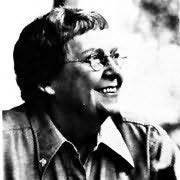
Eugenia Price
89 books250 followersEugenia Price was born in Charleston, WV, June 22, 1916, to Walter (a dentist) and Anna Price. At the age of ten, she decided she wanted to be a writer and entered a poem in her school's literary magazine. She was raised as a member of the Methodist Church, but had left the church behind by the time she graduated from high school, at the age of 15, in 1932. She decided to leave writing behind to follow in her father's footsteps and pursue a career in dentistry. She attended Ohio University for three years, declaring herself an atheist during this time. In 1935, she became a student at Northwestern Dental School, the only woman admitted that year. She studied dentistry for two years, but writing continued to draw her. In 1939, she was hired to work on the NBC radio serial In Care of Aggie Horn. She continued as one of the writers for the show until 1942. She left NBC, going to work for the Proctor and Gamble show Joyce Jordan, M.D. from 1944-1946. In 1945 she founded her own television and radio production company, Eugenia Price Productions, developing other serials for Proctor and Gamble.
In 1949 Eugenia Price underwent a profound life change, giving up her college atheism to embrace Christianity. She considered a career change, but accepted a position with WGN Radio as writer, producer, and director for Unshackled, another radio serial. The popularity of the show led her to a lecturing career throughout the United States and Canada for several years.
Price began yet another career in the early 1950s when she was approached by one of the owners of Zondervan publishing. The 1953 publication of Discoveries Made from Living My New Life, a chronicle of her newfound faith and the experiences that led her to it, launched Eugenia Price into a new career as an inspirational writer. Other inspirational books followed, addresses issues of importance to women and children and other self-help concerns and urging readers away from advances in psychology and analysis and toward a life based on Biblical tenants. Many of her inspirational books are still in print, a testimony to the comfort and empathy many readers found in her works.
Eugenia Price gained a much wider audience though when she began publishing historical romances set in the American South. These novels were praised as "compelling sagas that blend personal stories of love and tragedy. . . with the dramatic events of a region's history." Her first historical romance, The Beloved Invader, was inspired her visit to Saint Simons Island, Georgia and based on one of the island's nineteenth-century inhabitants. The Beloved Invader was published in 1965 and followed by two other romances, New Moon Rising (1969) and Lighthouse (1971), to form the St. Simons Trilogy.
Her historical romances made Price a frequent member of the best-seller lists and brought her millions of readers. Although she continued to write and to publish inspirational works, it was her romances that brought her the greatest attention.
Eugenia Price died May 28, 1996, in Brunswick, Georgia of congestive heart failure and is buried in the Christ Church cemetery, Frederica, GA. Many of her books remain in print and have translated into 17 languages, charming readers of all ages and nationalities. Her manuscripts are housed at Boston University.
In 1949 Eugenia Price underwent a profound life change, giving up her college atheism to embrace Christianity. She considered a career change, but accepted a position with WGN Radio as writer, producer, and director for Unshackled, another radio serial. The popularity of the show led her to a lecturing career throughout the United States and Canada for several years.
Price began yet another career in the early 1950s when she was approached by one of the owners of Zondervan publishing. The 1953 publication of Discoveries Made from Living My New Life, a chronicle of her newfound faith and the experiences that led her to it, launched Eugenia Price into a new career as an inspirational writer. Other inspirational books followed, addresses issues of importance to women and children and other self-help concerns and urging readers away from advances in psychology and analysis and toward a life based on Biblical tenants. Many of her inspirational books are still in print, a testimony to the comfort and empathy many readers found in her works.
Eugenia Price gained a much wider audience though when she began publishing historical romances set in the American South. These novels were praised as "compelling sagas that blend personal stories of love and tragedy. . . with the dramatic events of a region's history." Her first historical romance, The Beloved Invader, was inspired her visit to Saint Simons Island, Georgia and based on one of the island's nineteenth-century inhabitants. The Beloved Invader was published in 1965 and followed by two other romances, New Moon Rising (1969) and Lighthouse (1971), to form the St. Simons Trilogy.
Her historical romances made Price a frequent member of the best-seller lists and brought her millions of readers. Although she continued to write and to publish inspirational works, it was her romances that brought her the greatest attention.
Eugenia Price died May 28, 1996, in Brunswick, Georgia of congestive heart failure and is buried in the Christ Church cemetery, Frederica, GA. Many of her books remain in print and have translated into 17 languages, charming readers of all ages and nationalities. Her manuscripts are housed at Boston University.
Ratings & Reviews
Friends & Following
Create a free account to discover what your friends think of this book!
Community Reviews
Displaying 1 - 30 of 168 reviews

January 31, 2014
Where I got the book: review copy supplied by the publisher. My feature article on the Savannah Quartet appears on the Historical Novel Society website.
On the eve of the War of 1812, Mark Browning moves to Savannah. On the way he meets Robert Mackay, a successful Savannah merchant, and the two hit it off so well that Mackay invites Mark to stay in his home, thus leading to a lifelong friendship. Against the background of the war, Mark discovers his past and his future.
I’m going to stop here and explain that Robert Mackay was a real person, while Mark Browning is fictional. The weaving of fiction and fact is pretty seamless—Price uses the real lives of the characters as plot points, inventing a sort of love triangle that is a major factor in the book’s last third. Price was a Christian writer and this is reflected in the text, but I didn’t find it particularly preachy or intrusive since nineteenth-century Americans of that class were pretty much automatically religious.
Price’s main fault is repetition—she has a tendency to belabor plot points by having first one set of characters and then another discuss them. Also, I wanted to smack Mark for keeping Caroline hanging around while he moons over Eliza—if he were a woman there’d be a name for his behavior. But he’s portrayed as so perfect—many of Price’s ‘good’ characters are good to the point of weakness—that we’re evidently supposed to sympathize with his predicament. I didn’t.
Having said that, Savannah is a really good read with plenty of historical interest and something always about to happen round the next corner (often heavily foreshadowed). It’s the kind of book you can just sit a long time with, preferably on a verandah with a tall glass of cold liquid. Recommended.
On the eve of the War of 1812, Mark Browning moves to Savannah. On the way he meets Robert Mackay, a successful Savannah merchant, and the two hit it off so well that Mackay invites Mark to stay in his home, thus leading to a lifelong friendship. Against the background of the war, Mark discovers his past and his future.
I’m going to stop here and explain that Robert Mackay was a real person, while Mark Browning is fictional. The weaving of fiction and fact is pretty seamless—Price uses the real lives of the characters as plot points, inventing a sort of love triangle that is a major factor in the book’s last third. Price was a Christian writer and this is reflected in the text, but I didn’t find it particularly preachy or intrusive since nineteenth-century Americans of that class were pretty much automatically religious.
Price’s main fault is repetition—she has a tendency to belabor plot points by having first one set of characters and then another discuss them. Also, I wanted to smack Mark for keeping Caroline hanging around while he moons over Eliza—if he were a woman there’d be a name for his behavior. But he’s portrayed as so perfect—many of Price’s ‘good’ characters are good to the point of weakness—that we’re evidently supposed to sympathize with his predicament. I didn’t.
Having said that, Savannah is a really good read with plenty of historical interest and something always about to happen round the next corner (often heavily foreshadowed). It’s the kind of book you can just sit a long time with, preferably on a verandah with a tall glass of cold liquid. Recommended.

March 22, 2013
I read this book at the request of my mother: we're visiting Savannah in June and she wants to see some of the places in this series of books. Mother-daughter bonding over books!
Honestly, I didn't think I would like this book. The narrative voice is very calm and peaceful (in a bit of a woman-of-a-certain-age style...if that makes sense), and a little on the flowery side, but without being obnoxious. When I first started reading it, I thought it would be one of those books where the writing style isn't impressive, and the plot even worse.
But, it made me miss my bus stop. Seriously. I take the same bus route a couple of times a month to meet a friend and it's only a 10-15 minute ride. I was so absorbed in the book I completely missed it.
Excellent summer read. Would be probably one of the best beach reads for the aspiring reader who wants to venture away from Greene novels or Bridget Jones or that book about being skinny by practically starving yourself. It would probably be a great train or plane book: absorbing enough to distract you without being too heavy to become overwhelming after a while. This isn't a book that will be studied in literature classes for the next 200 years, but it's pleasing and a good read.
The end ties up a little more neatly that I would have expected from the first book in a series, but I suppose now I'll just have to read the others to see what happens to Mark and Caroline.
Honestly, I didn't think I would like this book. The narrative voice is very calm and peaceful (in a bit of a woman-of-a-certain-age style...if that makes sense), and a little on the flowery side, but without being obnoxious. When I first started reading it, I thought it would be one of those books where the writing style isn't impressive, and the plot even worse.
But, it made me miss my bus stop. Seriously. I take the same bus route a couple of times a month to meet a friend and it's only a 10-15 minute ride. I was so absorbed in the book I completely missed it.
Excellent summer read. Would be probably one of the best beach reads for the aspiring reader who wants to venture away from Greene novels or Bridget Jones or that book about being skinny by practically starving yourself. It would probably be a great train or plane book: absorbing enough to distract you without being too heavy to become overwhelming after a while. This isn't a book that will be studied in literature classes for the next 200 years, but it's pleasing and a good read.
The end ties up a little more neatly that I would have expected from the first book in a series, but I suppose now I'll just have to read the others to see what happens to Mark and Caroline.

November 17, 2022
I found SAVANNAH on my cousin's bookshelf and started reading, but only had a short while to do so. The next day, I returned home and ordered the book online (not sure where, but I think Thriftbooks). When the book came in, I placed it in my TBR pile and, some months later, opened the cover. Imagine my surprise to find that Eugenia Price had not only signed the book but had also dated it not one month after release!
I began reading . . . and quite honestly, I didn't want to put it down (but I had to). As an author myself, I recognized several "rules" we traditionally published authors must live by today that were broken by Ms. Price. They weren't broken in HER time, but they would be considered broken in ours. There was a lot of telling. "Head hopping." But who cares? This book swept me into a time and place I'm half familiar with (not the time because I was born in the 1950s, but I was reared in the lowcountry of Georgia near Savannah, so the places were very familiar). I both wanted it to end and never wanted it to end (I wanted to know HOW it ended but didn't want to ever leave the story.
My only frustration and relief came with the hero who seemed too perfect until (here comes the relief) he wasn't. How can you be in love with one woman and string another along? Mr. Browning, you cad. :)
Still, I highly recommend it and cannot wait to read the next three in the four-book series.
I began reading . . . and quite honestly, I didn't want to put it down (but I had to). As an author myself, I recognized several "rules" we traditionally published authors must live by today that were broken by Ms. Price. They weren't broken in HER time, but they would be considered broken in ours. There was a lot of telling. "Head hopping." But who cares? This book swept me into a time and place I'm half familiar with (not the time because I was born in the 1950s, but I was reared in the lowcountry of Georgia near Savannah, so the places were very familiar). I both wanted it to end and never wanted it to end (I wanted to know HOW it ended but didn't want to ever leave the story.
My only frustration and relief came with the hero who seemed too perfect until (here comes the relief) he wasn't. How can you be in love with one woman and string another along? Mr. Browning, you cad. :)
Still, I highly recommend it and cannot wait to read the next three in the four-book series.
August 9, 2026
This was a miserable month as I tortured through this book. It was for book club. A book club that I run. Next year, I am going to run my book club like a benevolent dictator, no longer the democratic populist.
This book ran about 600 pages and very easily could have been modified and written to be closer to half. When I ask my grandson, what did you do today? He doesn’t tell me that he woke up at 7:00, got up, brushed his teeth, washed his face… no, he played with his friends, learned about the word “disappeared”, had a vanilla milkshake at his favorite spot… You get this, correct?! This is exactly how this book felt like to me.
Content wise. A few historical points of Savannah, but what Georgian hasn’t been there to see the history?!
And this is the first of a quartet?! Oh, save my soul!
This book ran about 600 pages and very easily could have been modified and written to be closer to half. When I ask my grandson, what did you do today? He doesn’t tell me that he woke up at 7:00, got up, brushed his teeth, washed his face… no, he played with his friends, learned about the word “disappeared”, had a vanilla milkshake at his favorite spot… You get this, correct?! This is exactly how this book felt like to me.
Content wise. A few historical points of Savannah, but what Georgian hasn’t been there to see the history?!
And this is the first of a quartet?! Oh, save my soul!

August 31, 2020
I re-read Savannah off my own bookshelves during the shutdown pandemic this spring. The further I got into the story the less I remembered ever reading it at all. It is the story of Mark Browning and the Mackay family who befriend him as he settles in Savannah from Philadelphia. What made it better this time was Google!
Each time a particular architect was mentioned or the stately home he had designed and built, I could Google it and see the house as Eugenia Price was describing it in detail. I felt like I was standing in front of it on a tour of the neighborhood. It definitely was written in a different time period than the one we are living in, but with respect to the servants in the family homes pre Civil War. Drama ensues throughout along with fire and the yellow fever scourge in the city. This is worth the time invested to read Savannah.
Each time a particular architect was mentioned or the stately home he had designed and built, I could Google it and see the house as Eugenia Price was describing it in detail. I felt like I was standing in front of it on a tour of the neighborhood. It definitely was written in a different time period than the one we are living in, but with respect to the servants in the family homes pre Civil War. Drama ensues throughout along with fire and the yellow fever scourge in the city. This is worth the time invested to read Savannah.
March 30, 2010
I am only 100 pages into this and am reading it the same time as Dragonfly in Amber. Am I a sucker for punishment or what, reading two huge books at the same time. Anyway, what I have to say about this book is that if the author tells me one more time how nobel, without guile, beautiful etc. the main character, Mark, is I am going to scream. Nobody is that terrific. I am going to keep reading but as I do I can't help but keep scoffing at his noble self.
I finally finished this book and although it was kind of interesting Mark remained, noble, beautiful, and oh' so wonderful throughout the whole thing. This is a first book of a 4 part series but there is no way that I can put up with his beautiful self or family anymore so Goodbye beautiful, noble, Mark Browning, Goodbye!
I finally finished this book and although it was kind of interesting Mark remained, noble, beautiful, and oh' so wonderful throughout the whole thing. This is a first book of a 4 part series but there is no way that I can put up with his beautiful self or family anymore so Goodbye beautiful, noble, Mark Browning, Goodbye!

March 31, 2010
This was a great story that took a long time to get to where it was going. It was truely a southern novel as it was paced just about the same as a walk on a hot day.

June 5, 2021
This book could not have been more bland. It has all the elements you would want for a novel, but lacks any of the technical skill or characterization that makes reading enjoyable. It's like if someone cooked you a fancy dinner but didn't add any seasoning to the food. It could have been so good! But instead it's unremarkable and tasteless.
There's absolutely no character depth here. People don't change or grow. Almost no one experiences internal conflict, competing desires, or acts in a way we think of as "human." Good people are good all the way through and, at most, get upset about things but not in any meaningful way. Bad people are bad. That's just the way it is. And the way these people talk to one another! It's not even believable for the time it's set in! It feels like an alien or some artificial intelligence was given a description of how people interact and tried its best to recreate it.
The book is also overly long and actually sort of repetitive. People are continuously described in the same way. It's like, by page 500, I don't need a reminder that people think Mark is handsome and kind. I know that. You've told me that since page 1. Please stop. For being so long, the book is also oddly structured. You can spend whole chapters living through a single weekend, and then suddenly, in the course of one page, skip through two years of the characters' lives. Some judicious editing really would have helped.
Another thing I found annoying is that the author clearly went to great lengths to make this a work of "historical fiction." She has a whole afterword where she goes into detail about all the research she did. I don't discredit that, but there are some pretty obvious historical inaccuracies, even to someone with a casual knowledge of 19th century American history. I know the internet makes it easy to be an armchair historian, so some of the mistakes I'll let slide, but there are others that should have been obvious even then. For one thing, Price makes Christmas a big deal in the novel, having it be celebrated several times. But Americans (and Christians generally) didn't really start celebrating Christmas (especially in the way we think of it) until much later in the 19th century. That's been a known fact for decades. It frankly would have been odd for Mark and the MacKays to make such a big deal of Christmas in the first few decades of the 1800s. In line with that, there's also a part in the novel where Caroline plays "the familiar French carol," "Angels We Have Heard On High." She does this in 1825, which is VERY impressive because "Angels We Have Heard On High" didn't exist until the 1860s. Similarly, there's a part in the book where Eliza reads "Pride and Prejudice" aloud to her children, which is kind of amazing since the first printing of P&P in the United States was in 1832, seven years after "Savannah" ends. I suppose it could have been imported from England or something; it's not impossible she would have it. But it makes it seem like P&P was well known and a big deal in the US at the time when it in fact wasn't. Anyway, I think that historical events directly related to Savannah are probably correct, but it seems like, for the sake of name dropping or love of Christmas or whatever, Price got sloppy with general cultural details. Which was distracting.
Of course, you can't read a book about the antebellum South without touching on slavery, and, as you'd expect from a book written by an old white woman in love with pre-Civil War Savannah, the rosy depiction of slavery is pretty heinous. Slaves are frequently referred to as "servants," which implies that they are being paid for their work/are willingly there, when they weren't. All the slaves in the novel are depicted as being happy with their lot in life and devoted to the people who own them, which is gross. There even seem to be some parts that try to use this familial closeness as a justification for slavery, which is shocking coming from a modern day author. Price also writes their dialogue in a way I assume she thought slaves would speak, and it's pretty offensive. There's some talk about abolitionism, and the main character himself eventually comes out as opposed to owning slaves himself, but the presence of slavery itself is never condemned or really even debated. This, actually, is an example of what I meant by the characters lacking internal conflict or development. Mark is opposed to owning another human, but he refuses to call himself an abolitionist and never speaks poorly about slavery as an institution. He even marries a woman who owns slaves and not once does that concern him or cause him trouble. It seems weird that he's so idealistic that he'd refuse to own slaves himself for moral reasons but then not care if others, including his wife, do. He's basically just like "whatever" about it. I'm sure Price would have replied with something like "that's just how it was then" but I think we know that 1) that's not true and 2) you're writing a novel so you can have characters act however you want. I get that in the 80s when this was published it's depiction of slavery and blacks in the 19th century South probably wasn't offensive to most readers, but it absolutely is now and is hard to stomach.
The biggest indictment of this book is probably that it's the first in a series, but having finished, I have absolutely no desire to read further. Whatever happens to the Brownings/MacKays will remain a mystery to me, though actually I can probably guess that Mark will continue to be handsome and kind. If you're looking for another "Gone With the Wind," or just good historical fiction, look elsewhere.
There's absolutely no character depth here. People don't change or grow. Almost no one experiences internal conflict, competing desires, or acts in a way we think of as "human." Good people are good all the way through and, at most, get upset about things but not in any meaningful way. Bad people are bad. That's just the way it is. And the way these people talk to one another! It's not even believable for the time it's set in! It feels like an alien or some artificial intelligence was given a description of how people interact and tried its best to recreate it.
The book is also overly long and actually sort of repetitive. People are continuously described in the same way. It's like, by page 500, I don't need a reminder that people think Mark is handsome and kind. I know that. You've told me that since page 1. Please stop. For being so long, the book is also oddly structured. You can spend whole chapters living through a single weekend, and then suddenly, in the course of one page, skip through two years of the characters' lives. Some judicious editing really would have helped.
Another thing I found annoying is that the author clearly went to great lengths to make this a work of "historical fiction." She has a whole afterword where she goes into detail about all the research she did. I don't discredit that, but there are some pretty obvious historical inaccuracies, even to someone with a casual knowledge of 19th century American history. I know the internet makes it easy to be an armchair historian, so some of the mistakes I'll let slide, but there are others that should have been obvious even then. For one thing, Price makes Christmas a big deal in the novel, having it be celebrated several times. But Americans (and Christians generally) didn't really start celebrating Christmas (especially in the way we think of it) until much later in the 19th century. That's been a known fact for decades. It frankly would have been odd for Mark and the MacKays to make such a big deal of Christmas in the first few decades of the 1800s. In line with that, there's also a part in the novel where Caroline plays "the familiar French carol," "Angels We Have Heard On High." She does this in 1825, which is VERY impressive because "Angels We Have Heard On High" didn't exist until the 1860s. Similarly, there's a part in the book where Eliza reads "Pride and Prejudice" aloud to her children, which is kind of amazing since the first printing of P&P in the United States was in 1832, seven years after "Savannah" ends. I suppose it could have been imported from England or something; it's not impossible she would have it. But it makes it seem like P&P was well known and a big deal in the US at the time when it in fact wasn't. Anyway, I think that historical events directly related to Savannah are probably correct, but it seems like, for the sake of name dropping or love of Christmas or whatever, Price got sloppy with general cultural details. Which was distracting.
Of course, you can't read a book about the antebellum South without touching on slavery, and, as you'd expect from a book written by an old white woman in love with pre-Civil War Savannah, the rosy depiction of slavery is pretty heinous. Slaves are frequently referred to as "servants," which implies that they are being paid for their work/are willingly there, when they weren't. All the slaves in the novel are depicted as being happy with their lot in life and devoted to the people who own them, which is gross. There even seem to be some parts that try to use this familial closeness as a justification for slavery, which is shocking coming from a modern day author. Price also writes their dialogue in a way I assume she thought slaves would speak, and it's pretty offensive. There's some talk about abolitionism, and the main character himself eventually comes out as opposed to owning slaves himself, but the presence of slavery itself is never condemned or really even debated. This, actually, is an example of what I meant by the characters lacking internal conflict or development. Mark is opposed to owning another human, but he refuses to call himself an abolitionist and never speaks poorly about slavery as an institution. He even marries a woman who owns slaves and not once does that concern him or cause him trouble. It seems weird that he's so idealistic that he'd refuse to own slaves himself for moral reasons but then not care if others, including his wife, do. He's basically just like "whatever" about it. I'm sure Price would have replied with something like "that's just how it was then" but I think we know that 1) that's not true and 2) you're writing a novel so you can have characters act however you want. I get that in the 80s when this was published it's depiction of slavery and blacks in the 19th century South probably wasn't offensive to most readers, but it absolutely is now and is hard to stomach.
The biggest indictment of this book is probably that it's the first in a series, but having finished, I have absolutely no desire to read further. Whatever happens to the Brownings/MacKays will remain a mystery to me, though actually I can probably guess that Mark will continue to be handsome and kind. If you're looking for another "Gone With the Wind," or just good historical fiction, look elsewhere.

August 11, 2026
Loved this book! This book reminded me of Gone with the Wind a little bit probably because it takes place in Georgia. It is very clean though and has good Christian content throughout. This book will definitely not be for everyone but I really enjoyed it. I do recommend if you try it to at least give it until page 150 or so to really get into it since it’s 590 pages. I liked it from the beginning but it picked up around there. It’s set from 1812-1825. What is cool is there are a lot of characters that were real people. Overall, I enjoyed it and recommend.

July 23, 2026
Wow that was really boring. Super long way to say rich orphan dude marries his cousin after being rejected by his mentor's widow. Also unrealistic that all these unmarried people lived together, and that women own their own property and businesses.

October 25, 2015
Ugh. How much this book disappointed me. I was hoping for sweeping descriptions of kitschy, yet charming southern life, filled with flawed but relatable characters. All I got was bland, vanilla descriptions of the city and it's way-too-perfect inhabitants. The characters were lackluster and yawn-worthy. I won't be reading the rest of this series.

September 18, 2017
I was disappointed in this book. I thought that this book would be more of a historical fiction than a love story. The book is about a love story between Mark Browning and Caroline Cameron in Savannah during the early 1800s. I have the three books that are sequels to this edition, but I doubt that I will read them soon.
January 18, 2010
Much better than the cover describes... learned a good deal about pre-civil war deep South. Writing style a bit goody-two-shoes and the principal character annoying at times, but the history is sound and if you've been to Savannah, the name-dropping and situations are amusing.

April 12, 2024
For someone who enjoys historical fiction I think this is a nice novel to add to the arsenal of my growing collection. The author writes in a way that reminds me of classical fiction, the first part of the novel does a great job of setting up the characters and the landscape of the young protagonist coming to Savannah. I don’t know much about Savannah’s history, but after reading the afterword in the book, it sounds like the author took care to bring in real characters and real plot lines to the protagonist adventures. It may not be the drama field exploration like some of the other historical fiction novels that I’ve read, but if you are historical fiction fan, I believe this is a fun one to read.

July 27, 2024
Well researched, saga style historical fiction that has a touch of inspirational themes. If you are interested in the Georgia roots or even architecture this would be a great fit. Also if you are a fan of Regency style reads this tone mimics those. Looking forward to book 2 of the four of the Savannah series.

September 11, 2026
Whew, definitely an epic of a read! I enjoyed it! The first quarter is a bit slow. It takes some time to get to know the characters and become immersed in the story, but then it picks up. There were times I was in love with the story and other times I grew bored, but all in all I really liked it and will probably read the next one in the series at some point. If you like ‘Gone With the Wind’ type sweeping historic dramas you will like this. It is clean and has Christian themes to it.

July 24, 2008
Price, Eugenia. 1983. Savannah.
First sentence: Hands gripping the rail of the plunging schooner Eliza, young Mark Browning, his well-tailored clothes wet and rumpled, stood on deck alone, determined not to be sick.
Eugenia Price, along with Margaret Mitchell, was one of the primary reasons I first fell in love with historical fiction. (Or perhaps I should say historical fiction with more than a couple of splashes of romance added into the mix.) (I honestly can't remember if this series "found" me in eighth or ninth grades. But definitely back when I was in high school.)
What is Savannah about? To make it short and sweet it is a story of a young man coming-of-age in the city of Savannah in the early nineteenth century. (Think the war of 1812). Mark Browning. Just twenty or so when we meet him. Wise in some ways, naive in others. But without a doubt, the best day of young Mark's life was when he met Robert Mackay, family man and merchant.
Mackay is the owner of Eliza, a vessel named after his wife. He takes pity on the young man and cares for him when he falls sick on the ship. He also takes him into his own home back in Savannah. There he is welcomed by Eliza Mackay, the ever-faithful and near-perfect wife, and the couples' children: Jack, William, Eliza Anne, and Kate. (Though I can't quite remember if Kate had been born yet.) There he is welcomed, and there he remains until the day--some dozen or so years later--when his own house is completed and he begins keeping house with his own wife and child.
Mark, an orphan with no known family, comes to a new city, a strange city and finds refuge. His mother had been born, so he was told, in the city of Savannah. And it was in Savannah that his mother had met his father, Mark Browning, Sr. He has now come to that city to see if it holds some power over him. If perhaps he will find something he's been looking for his entire life--a place to belong, a place to call home. The minute he sets foot in Savannah, his love affair begins. He begins working alongside Robert Mackay. And soon he is made partner in Robert's business. But this arrangement isn't just good for his career. No, Mark genuinely becomes part of this family. The couple loves him. Sees him as a son. And the children idolize him. They cherish him. Cling to him almost.
This illustration of Southern hospitality seems strange in some ways to the modern reader. (I certainly can't imagine a modern family taking in a complete stranger for any amount of time let alone letting him--urging him--to become part of the family itself forever and ever and ever.) But if it is strange, it is strange in a mostly good way I think.
Savannah has more than its fair share of secrets. It is an emotional journey with unfolding mysteries and romances. Secrets. Lies. Blackmails. Murder. Passion. Jealousies. A little bit of everything really. It spans the years 1812 through 1825. It is rich in historical detail. It is really just a thoroughly satisfying read.
First sentence: Hands gripping the rail of the plunging schooner Eliza, young Mark Browning, his well-tailored clothes wet and rumpled, stood on deck alone, determined not to be sick.
Eugenia Price, along with Margaret Mitchell, was one of the primary reasons I first fell in love with historical fiction. (Or perhaps I should say historical fiction with more than a couple of splashes of romance added into the mix.) (I honestly can't remember if this series "found" me in eighth or ninth grades. But definitely back when I was in high school.)
What is Savannah about? To make it short and sweet it is a story of a young man coming-of-age in the city of Savannah in the early nineteenth century. (Think the war of 1812). Mark Browning. Just twenty or so when we meet him. Wise in some ways, naive in others. But without a doubt, the best day of young Mark's life was when he met Robert Mackay, family man and merchant.
Mackay is the owner of Eliza, a vessel named after his wife. He takes pity on the young man and cares for him when he falls sick on the ship. He also takes him into his own home back in Savannah. There he is welcomed by Eliza Mackay, the ever-faithful and near-perfect wife, and the couples' children: Jack, William, Eliza Anne, and Kate. (Though I can't quite remember if Kate had been born yet.) There he is welcomed, and there he remains until the day--some dozen or so years later--when his own house is completed and he begins keeping house with his own wife and child.
Mark, an orphan with no known family, comes to a new city, a strange city and finds refuge. His mother had been born, so he was told, in the city of Savannah. And it was in Savannah that his mother had met his father, Mark Browning, Sr. He has now come to that city to see if it holds some power over him. If perhaps he will find something he's been looking for his entire life--a place to belong, a place to call home. The minute he sets foot in Savannah, his love affair begins. He begins working alongside Robert Mackay. And soon he is made partner in Robert's business. But this arrangement isn't just good for his career. No, Mark genuinely becomes part of this family. The couple loves him. Sees him as a son. And the children idolize him. They cherish him. Cling to him almost.
This illustration of Southern hospitality seems strange in some ways to the modern reader. (I certainly can't imagine a modern family taking in a complete stranger for any amount of time let alone letting him--urging him--to become part of the family itself forever and ever and ever.) But if it is strange, it is strange in a mostly good way I think.
Savannah has more than its fair share of secrets. It is an emotional journey with unfolding mysteries and romances. Secrets. Lies. Blackmails. Murder. Passion. Jealousies. A little bit of everything really. It spans the years 1812 through 1825. It is rich in historical detail. It is really just a thoroughly satisfying read.
November 17, 2013
‘Savannah” Left Me a Bit Cold
“Savannah” by Eugenia Price details the story of recently orphaned Mark Browning as he leaves his position as a wealthy Philadelphian and begins life anew in the city of Savannah in 1812. Fueled only by his father’s effusive stories of Savannah and the knowledge that his father met his mother in Savannah, Mark boards a ship to begin a new life. Literally by accident, he is befriended by Robert Mackay who insists that he start his life in Savannah in the Mackay home. While the novel is well-written and the pacing is decent, I simply found the characters to be a little, well, bland. The setting is beautifully described and the details of daily life in Savannah are interesting. The author simply glosses over slavery as an issue without adequately addressing how her “too good to be true” hero might feel about slavery after being raised by an abolitionist aunt. The dialogue often lapses into much more modern speech as in the use of the term “blow out” for a big party. (According to my research, the term “blow out” is not recorded until 1825 and has a crass meaning.)
While it is interesting to note that the author has populated her book with many actual Savannah residents of the time, the Mackay family for instance, I found it difficult to warm up to many of her fictional characters. Browning is either the best man who ever lived or a cad for taking advantage of the caresses of one woman while in love with another. Much of the dialogue feels either stilted or melodramatic and lacks an easy flow of conversation. Despite my quibbles, I’d give this book a three star rating as it does paint a lovely, detailed picture of the growing city confronted by the early days of the War of 1812.
This book was provided to me by Turner for this review. The opinions, however, are entirely my own. “Savannah” is available now.
“Savannah” by Eugenia Price details the story of recently orphaned Mark Browning as he leaves his position as a wealthy Philadelphian and begins life anew in the city of Savannah in 1812. Fueled only by his father’s effusive stories of Savannah and the knowledge that his father met his mother in Savannah, Mark boards a ship to begin a new life. Literally by accident, he is befriended by Robert Mackay who insists that he start his life in Savannah in the Mackay home. While the novel is well-written and the pacing is decent, I simply found the characters to be a little, well, bland. The setting is beautifully described and the details of daily life in Savannah are interesting. The author simply glosses over slavery as an issue without adequately addressing how her “too good to be true” hero might feel about slavery after being raised by an abolitionist aunt. The dialogue often lapses into much more modern speech as in the use of the term “blow out” for a big party. (According to my research, the term “blow out” is not recorded until 1825 and has a crass meaning.)
While it is interesting to note that the author has populated her book with many actual Savannah residents of the time, the Mackay family for instance, I found it difficult to warm up to many of her fictional characters. Browning is either the best man who ever lived or a cad for taking advantage of the caresses of one woman while in love with another. Much of the dialogue feels either stilted or melodramatic and lacks an easy flow of conversation. Despite my quibbles, I’d give this book a three star rating as it does paint a lovely, detailed picture of the growing city confronted by the early days of the War of 1812.
This book was provided to me by Turner for this review. The opinions, however, are entirely my own. “Savannah” is available now.
July 23, 2015
Mark is obviously quite fabulous. It is written on nearly every page.
Writing someone that is truly good is tricky business, in my opinion.
I figured out the Kott and Cotting thing as soon as I read the names.
So far, my favorite character is Caroline.
Still reading.....
-- Im in the middle of the book now. I know Mark is suppose to be wonderful, but I'm having a hard time. (Like I said, it's tricky business) First off, he's stringing along that poor Caroline girl. He kisses and kisses her, but he doesn't love her enough to marry her. I know she says she doesn't mind that he's blatantly doing this, but I wish some fabulous man would come to town and sweep her off her feet, and make her forget Ashley..I mean, Mark... I'm sure he would not like it, which would make it even better because the shoe would be on the other foot.
Another thing... He's in love with Eliza, who was married to his best friend, Mark McKay--who also happens to have heart trouble. So, on a trip to NY, he finally confides that he knows about the Kott/Cotting thing, and also accidently ??? blurts out that he loves Mark's wife. Mark kind of laughs it off, but then he's dead the next morning.. Now, he's living with Eliza and her children. (She seems to think of him as another of her kids, but he's secretly lusting for her--living in her house..) Was this really done in early 1800's? Two unmarried people living together??? Seems scandalous..
Another thing that bugs me about Mark--Caroline apparently looks like his mom, and Eliza is old enough to be his mom (back then, at least--when they married at 16) He lost his mom at an early age. Freud would love it.
Still reading...
Many of the figures are real life people, and the author wrote around them. It would be interesting to visit Savannah and see the houses/graves that she spoke about in this novel.
Writing someone that is truly good is tricky business, in my opinion.
I figured out the Kott and Cotting thing as soon as I read the names.
So far, my favorite character is Caroline.
Still reading.....
-- Im in the middle of the book now. I know Mark is suppose to be wonderful, but I'm having a hard time. (Like I said, it's tricky business) First off, he's stringing along that poor Caroline girl. He kisses and kisses her, but he doesn't love her enough to marry her. I know she says she doesn't mind that he's blatantly doing this, but I wish some fabulous man would come to town and sweep her off her feet, and make her forget Ashley..I mean, Mark... I'm sure he would not like it, which would make it even better because the shoe would be on the other foot.
Another thing... He's in love with Eliza, who was married to his best friend, Mark McKay--who also happens to have heart trouble. So, on a trip to NY, he finally confides that he knows about the Kott/Cotting thing, and also accidently ??? blurts out that he loves Mark's wife. Mark kind of laughs it off, but then he's dead the next morning.. Now, he's living with Eliza and her children. (She seems to think of him as another of her kids, but he's secretly lusting for her--living in her house..) Was this really done in early 1800's? Two unmarried people living together??? Seems scandalous..
Another thing that bugs me about Mark--Caroline apparently looks like his mom, and Eliza is old enough to be his mom (back then, at least--when they married at 16) He lost his mom at an early age. Freud would love it.
Still reading...
Many of the figures are real life people, and the author wrote around them. It would be interesting to visit Savannah and see the houses/graves that she spoke about in this novel.
This entire review has been hidden because of spoilers.

June 7, 2017
I'm writing one review for the entire set of Eugenia Price novels because, truly, the same can be said for each one. I read each and everyone of these novels - the Savannah Quartet, the Georgia Trilogy , the St. Simon's Trilogy and the Florida Trilogy - the very moment they were published waaaay back when.
Eugenia Price is a Christian novelist who writes historical fiction with a bent toward and emphasis on her beliefs. Her writing style is very much in the flavor of the Old Style such as that of Catherine Marshall and Margaret Mitchell. It has grace and charm and exquisite beauty but, at times, can come across as a little too prim and proper. The difference between Price and Mitches is that Price's research on this area and era is impeccable. You can literally trace the roots of the families and the places if you visit Savannah, St. Simon's Island or St. Mary's in Florida. It's fascinating.
If you don't mind the light religious overtones - of which you are now aware - and you like historical, southern literature with very innocent romance then you might give these books a read. I enjoyed them very much at the time.
Eugenia Price is a Christian novelist who writes historical fiction with a bent toward and emphasis on her beliefs. Her writing style is very much in the flavor of the Old Style such as that of Catherine Marshall and Margaret Mitchell. It has grace and charm and exquisite beauty but, at times, can come across as a little too prim and proper. The difference between Price and Mitches is that Price's research on this area and era is impeccable. You can literally trace the roots of the families and the places if you visit Savannah, St. Simon's Island or St. Mary's in Florida. It's fascinating.
If you don't mind the light religious overtones - of which you are now aware - and you like historical, southern literature with very innocent romance then you might give these books a read. I enjoyed them very much at the time.

April 7, 2009
An old-fashioned sweeping saga of the Old South. Took a little while to get into it, but I liked the combination of historical and architectural appreciation, woven into a story of family dysfunction and resolution. Refreshing that love was represented without sordid sexual scenes- that topic was treated with respect, which I'd love to see more often in novels.
I did like the exploration of the good and bad coexisting within a person- with some people leaning more in one direction or the other. Also that the psychological backgrounds were taken into consideration and negative characters were still presented with some sympathy. On occasion, I did find it tiresomely romantic that only women who grieve so much that they decide to remain in single widowhood are considered to have loved deeply. I would have liked to see that explored on a more practical level- the fact that the women might have been afraid to try again. I didn't like it presented as healthy or realistic- especially for a woman of that time period.
I did like the exploration of the good and bad coexisting within a person- with some people leaning more in one direction or the other. Also that the psychological backgrounds were taken into consideration and negative characters were still presented with some sympathy. On occasion, I did find it tiresomely romantic that only women who grieve so much that they decide to remain in single widowhood are considered to have loved deeply. I would have liked to see that explored on a more practical level- the fact that the women might have been afraid to try again. I didn't like it presented as healthy or realistic- especially for a woman of that time period.

July 9, 2012
i wish i could better type the sound "muhnuhhh". that's how i feel after reading this book. i bought this book at a rummage sale 5 years ago whilst i was living in savannah. the historical aspects and descriptions are interesting and spot on, the story is just so-so. i feel like the jacket description(which i never read prior) was WAY off. that was just a bump on a very long log. while i am aware of my bias, the comparison to Gone With The Wind was only true in that both books take place in Georgia. i found the incessant description of the main character as too beautiful, too perfect, too guileless as very annoying. flaws make a story. the rest of the characters were too lightly fleshed out. i couldn't decide whether i liked anyone else that much, except for sheftall sheftall. disappointing.
January 18, 2021
The best I can say is that is that, after 100 pages, it's a clean book. But wow it's not good. The reviews for the author and the book were fairly high but the characters are so boring, flat, and repetitive in their dialogue that it's torture. The first chapter held promise as it set things up but then the three main characters sit around admiring each other in painful, ridiculous, unrealistic ways. The only other thing that happens in this hagiography is the detailed comments on Savannah's history and founding citizens but even that isn't well written. Having just returned from a visit there I had expected much more from a book purporting to highlight such a beautiful and interesting city. For an example of an author who wrote in the same genre but pulls this off well, read Anya Seton.
I couldn't finish this one.
I couldn't finish this one.

April 10, 2010
I absolutely love the Savannah quartet. I just re-read these 4 books and I forgot how much I loved them. The history from the quartet is AMAZING, and as a history teacher seeing personal reactions to the events that unfold from 1812-1865 is one of my favorite parts. And what I love best about Eugenia Price novels is that many of the characters are real! While Mark and his family is fictional the McKay family is real, and the research that went into these books is meticulous. While at times they can be a slow read, and they are long. These books have me planning a trip to Savannah!

October 4, 2010
I did enjoy this a lot, but it will not be everyone's cuppa tea. Full review here, http://misfitandmom.wordpress.com/201...

July 19, 2019
DNF. I tried and tried with this book, but it was so sappy and unrealistic.
February 25, 2022
Am 30 pages in and giving up. Find it effectively unreadable.

May 21, 2021
The quartet gets off to a good start with this first book. It didn't take me long to get all caught up in the story of Mark Browning, Robert and Eliza Mackay, Caroline Cameron, and all the secondary characters that held my attention as much as the main ones.
Eugenia Price often combined truth with fiction in her novels, using actual people and telling their true story, while embellishing a bit here and there, but still sticking to facts. Then, she'd add fictional characters into the midst, her skill as an author keeping it from feeling phony or uneven, until it seems as though they really were a part of Savannah history, too.
That's how I felt about Mark Browning, since his story was told without a lot of drama and contrived situations, nothing that couldn't have happened to an actual person. You could actually find yourself doing an online search for a biography, before remembering there won't be one.
As with many historical novels, there's romance involved, but again, it's not overdone. Mark finds the road to true love, but not before his misguided heart takes him in the wrong direction. There's drama, but without the melodrama.
I won't say anything to give away the story, but I just want to warn that, where the characters are actual people, fiction mirrors fact, so if they suffered a tragic fate in real life, the same will happen in the book. You wouldn't read a novel about Lincoln and expect a different outcome at Ford's Theatre; the same goes for any of Ms. Price's novels that involve real people.
You'll get some knowledge of Savannah history, so you don't have to feel you're just killing time by reading this; well worth the time.
Eugenia Price often combined truth with fiction in her novels, using actual people and telling their true story, while embellishing a bit here and there, but still sticking to facts. Then, she'd add fictional characters into the midst, her skill as an author keeping it from feeling phony or uneven, until it seems as though they really were a part of Savannah history, too.
That's how I felt about Mark Browning, since his story was told without a lot of drama and contrived situations, nothing that couldn't have happened to an actual person. You could actually find yourself doing an online search for a biography, before remembering there won't be one.
As with many historical novels, there's romance involved, but again, it's not overdone. Mark finds the road to true love, but not before his misguided heart takes him in the wrong direction. There's drama, but without the melodrama.
I won't say anything to give away the story, but I just want to warn that, where the characters are actual people, fiction mirrors fact, so if they suffered a tragic fate in real life, the same will happen in the book. You wouldn't read a novel about Lincoln and expect a different outcome at Ford's Theatre; the same goes for any of Ms. Price's novels that involve real people.
You'll get some knowledge of Savannah history, so you don't have to feel you're just killing time by reading this; well worth the time.

September 2, 2019
SAVANNAH by Eugenia Price
As a lover of history and the antebellum period I cannot express well enough in words my enjoyment reading this book.
I visited Savannah briefly a year ago and fell in love instantly with the towns chat and history. I plan on going back next spring to spend a week to immerse myself in Savannah's beauty and past.
I related to Mark Browning because I also instantly fell in love with this charming city. Ms. Prices eloquent writing and thorough research took me back in time. While reading her book I kept a historic map of the city within arms reach. This book instantly transported me back in time to Savannah's glorious beginning. I could picture the various historical homes and squares in my mind from my last visit. The author made me fall deeper in love with this magical city. I feel As if I have a deep personal connection with the characters that I've grown to know and love. I eagerly await to begin book two in this serries.I
Next year when I spend more time in historic Savannah I will also visit the cemeteries where the characters in this book have been laid to rest.
If you have never visited Savannah may I suggest to readers to make a visit there. I'm sure it will capture your heart As it did mine and my daughter 's.
As a lover of history and the antebellum period I cannot express well enough in words my enjoyment reading this book.
I visited Savannah briefly a year ago and fell in love instantly with the towns chat and history. I plan on going back next spring to spend a week to immerse myself in Savannah's beauty and past.
I related to Mark Browning because I also instantly fell in love with this charming city. Ms. Prices eloquent writing and thorough research took me back in time. While reading her book I kept a historic map of the city within arms reach. This book instantly transported me back in time to Savannah's glorious beginning. I could picture the various historical homes and squares in my mind from my last visit. The author made me fall deeper in love with this magical city. I feel As if I have a deep personal connection with the characters that I've grown to know and love. I eagerly await to begin book two in this serries.I
Next year when I spend more time in historic Savannah I will also visit the cemeteries where the characters in this book have been laid to rest.
If you have never visited Savannah may I suggest to readers to make a visit there. I'm sure it will capture your heart As it did mine and my daughter 's.

December 18, 2019
I really enjoy historical novels...if I learn something and if they are well written. I have mixed feelings about Savannah. Obviously the author did her homework and brought early Savannah and her occupants to life. The plot, while shaky at times, kept me reading. My main objection was with the writing style. I simply don't enjoy events and feelings being rehashed, as if I've forgotten what I read 100 pages ago. Reading tastes are quite subjective, so while I did not love this novel, there may be lots of readers who will love it. This is the first in a series of four. I have all four books, given to me many years ago by my sister. While Savannah ended with the promise of more drama to come, I cannot decide whether it will be worth my while. At my age there are so many books to read and so little time!
Displaying 1 - 30 of 168 reviews