A publishing phenomenon in Europe, where it has sold 230,000 copies in hardback, Bart van Loo's epic history of the dukedom of Burgundy has the grip of a great historical novel and the fascination of a wonderful factual narrative.
In 1525, Burgundy was extinguished as an independent state. It had been a fabulously wealthy, turbulent region situated between France and Germany, with close links to the English kingdom. Torn apart by the dynastic struggles of early modern Europe, this extraordinary realm vanished from the map. But it became the cradle of what we now know as the Low Countries, modern Belgium and the Netherlands.
This is the story of a thousand years, a compulsively readable narrative history of ambitious aristocrats, family dysfunction, treachery, savage battles, luxury and madness. It is about the decline of knightly ideals and the awakening of individualism and of cities, the struggle for dominance in the heart of northern Europe, bloody military campaigns and fatally bad marriages.
It is also a remarkable cultural history, of great art and architecture and music emerging despite the violence and the chaos of the tension between rival dynasties.
Rightly compared to great narrative historians like Barbara Tuchman, Bart van Loo has written a popular and scholarly masterpiece.
Schrijver en conferencier Bart Van Loo (1973) heeft zich de voorbije jaren ontwikkeld tot een zeldzaam dubbeltalent. Met zijn virtuoze minicolleges in De Wereld Draait Door raakte hij bekend bij het grote publiek, maar in de eerste plaats is Van Loo natuurlijk schrijver. Van zijn hand verschenen de alom geprezen Frankrijktrilogie en de bestsellers Chanson en Napoleon. In zijn nieuwste boek De Bourgondiërs is Bart Van Loo op het toppunt van zijn kunnen.
Tremendous. A hugely comprehensive history of the Burgundian duchy, which wasn't just the French wine bit, but covered a lot of the Netherlands/Belgium. Brilliant structure, giving a quick run over the first thousand years, focusing in on the most important hundred years, then closer and closer in--a decade, a year, a day--to take us the the end of Burgundy as a named political structure. This means the author can really go in hard on the interesting bits, and does.
It's bursting with great stuff. Good stories, many interesting characters with deep dives into the dukes with their extravagance, cruelty, and appetites, loads on art and literature and emergent technology (I am desperate to go see some of the surviving buildings and paintings now), lots on the state of the common people, not just the nobles. Really good with the historical context, which let me slot it into place with what I know of England/France/Holy Roman Empire. Written in an enthusiastic, informal style (and terrifically translated) so it's a bit like a history lesson from a really good teacher. It's a big book about an area of which I knew virtually nothing and I've been glued to it for a week.
Really excellent. Don't miss, even (especially) if you're like "who tf are the Burgundians anyway". You'll learn.
Men kon moeilijk ontsnappen aan de grootse marketing campagne rond dit boek. Maar het kan geen kwaad om ervoor te bezwijken want het is een goed boek voor mensen die geen al te beste kennis van de geschiedenis hebben, zoals ik. Een paar jaar geleden groeide het besef dat het pover gesteld was met mijn herinneringen aan de geschiedenislessen uit de humaniora en die paar ondersteunende cursussen uit de literatuurstudie aan de universiteit. Ik had dus het plan opgevat om toch op zijn minst wat bij te benen wat betreft westerse en vaderlandse geschiedenis. In zo een leesproject past dit boek perfect.
Wat kan de lezer verwachten? Een helder verhaal over de politieke geschiedenis in de Bourgondische periode (1360-1500, grofweg) met een ruime inleiding over de duizend jaar die eraan vooraf gingen en een afwikkeling over hoe daarna de Bourgondiërs Habsburgers werden met Keizer Karel als brugfiguur en wij, de Lage Landen, mee naar het Spaanse rijk verhuisden, u weet wel, waar de zon nooit onder ging. Dus veel berekende huwelijken van Karels, Filipsen, Maria's, Margaretha's en een Lodewijk of een Jan gecombineerd met een kluwen van wisselende allianties en feodale obediënties. En heel de tijd slag leveren ook, tenzij er vrede gesloten werd. Maar geen angst, Van Loo voorziet de protagonisten van vlees en emotie, zodat ze niet alleen door hun naam herkenbaar blijven maar wat lijken op personages in een roman. Ik heb niet de indruk dat Van Loo hier de Rubicon naar de fictie oversteekt richting historische roman omdat alle anekdotiek en innerlijke toestand van de hoofdrolspelers ogenschijnlijk terug te voeren zijn naar geschreven bronnen waarnaar hij verwijst. Maar aan de historici om daarover te oordelen.
De zuivere politiek geschiedenis over de wissels van de macht en het verschuiven van graafschappen, prinsbisdommen, heerlijkheden, hertogdommen enz verweeft van Loo met de sociaal-economische geschiedenis van veranderende landbouw, wol- en houtindustrie, handel en scheepvaart. De opkomst van de steden en de burgerij met de gilden en het conflict met de oude standen van adel en kerk. Heel goed verteld in een geïntegreerd verhaal.
Natuurlijk komen ook onze Vlaamse primitieven (Van der Weyden, de Van Eycks, Bouts, Van der Goes, ...) aan bod, verbonden als ze zijn met de Bourgondische hofhouding. Lezers zullen onvermijdelijk abdijen en kerken toevoegen aan lijstjes van reisbestemmingen. Van Loo heeft zijn oude liefde voor reisverslagen uit Frankrijk niet helemaal opgeborgen en laat dan ook goed merken dat hij op de plaatsen die opduiken in het verhaal ook echt geweest is en elke overgebleven voetafdruk van een Bourgondiër persoonlijk de nodige aandacht heeft geschonken. Zijn culinaire interesse in Frankrijk komt bij een onderwerp als Bourgondië natuurlijk ook van pas: konijnen, hoenders allerhande, wat zwijn, rund en lam. Pronkfeesten en toernooien met mooi opgetuigde paarden en ridders!
Als vanouds is Van Loo verliefd op zijn onderwerp en geniet hij van zijn schilderen. Wie daar niet tegen kan, moet er niet aan beginnen. Denk een beetje aan een getalenteerde, enthousiaste geschiedenisleraar voor de klas. Zo leest dit boek.
Lezend leren, het blijft zalig. “Hadden mijn geschiedenisleerkrachten maar meer het kaliber van Bart Van Loo gehad”, dacht ik regelmatig. Een kennis beschreef dit boek als onze eigen Game of Thrones. Nu heb ik nog niet naar die serie gekeken, maar ik kan me een voorstelling maken van wat hij bedoelde. Wat een kuiperijen, oorlogen en veldslagen door die onstilbare drang naar meer. Ongeveer alles moest wijken voor de machtshonger van de Bourgondiërs, deskundigen in het uithuwelijken van soms nog maar kleuters met maar één bedoeling, het uitbreiden van grond en macht. Genoten van de episodes over het recalcitrante Gent, een stad die er vandaag nog steeds uit springt. Nu weet ik ook in detail waar de bourgondische natuur van de Vlaming vandaan komt, in tegenstelling tot de eerder calvinistische Nederlander. Veel nieuwe zaken opgestoken, ook over mijn vroegere spreekbeurtidool Jeanne d’Arc. Vlot geschreven fraai boek. Heb me geen seconde verveeld.
The Burgundian Dukes were descendants of King John II of France, who though careful (or lucky) marriages, winning the inheritance lottery a few times, and a certain application of fire and sword, managed over the life spans of four Dukes ( Philip the Bold, John the Fearless, Philip the Good, and Charles the Bold to establish a conglomeration of territories from today's Netherlands up to the borders of Switzerland between 1363 and 1477.
This is a book from the Barbara Tuchman school for people who don't really like messy, picky, history; preferring a clear narrative that gives right answers and appropriate emotional colour. There's nothing particularly wrong with that, but unfortunately that kind of approach only really works from about the fifteenth century onwards, the source materials as demonstrated by Tuchman's own A Distant Mirror: The Calamitous 14th Century don't support a dense close narrative even of a leading European dynasty like the Burgundians, so the narrative comes to life I felt only during the rule of Philip the Good, I felt it telling that the suggestions for further reading include a swathe of historical novels. Which is not a bad idea and gives you a sense of the readership that the book is aimed at.
I went into this book with the expectation that it would be a derivative, unoriginal but lively narrative. The second half of the book largely is indeed a pleasant readable narrative, the first half though is remarkable for the author's apparent desire to avoid talking about the Burgundians whenever he gets a chance, with digressions on the etymology of words and place names or the nature of time in the middle ages. The narrative is so chopped up by these digressions that I was extremely glad of the map at the back showing the territories that the Burgundians ruled over - with dates of acquisition, and the list of Dukes showing who they were married to which have me some kind of working context. Given the title I am interested that the author privileged the history of the Burgundian involvement in the 100 years war over their creation of a territorial block which I had thought might be the subject of the story. Typical of my frustrations is that I am almost sure that the 100 years war is mentioned more often than the French Revolution, but not entirely.
I also took badly to the author's reading of emotion into events for instance telling us that Philip the Bold was shocked to be offered a double wedding by the Bavarians rather than a single marriage alliance for his children, firstly was he shocked, secondly how would we know, I am pretty sure that is no letter to a cousin or dedication of a church that hints that he was shocked by such an idea or even if it was the Bavarians idea or his. Or similarly telling us that Sultan Bayezid wanted to stable his horses in St Peter's Rome - if so it can't have been very high on his list of priorities Perhaps this comes from an uncritical reading of his sources. Or perhaps it is padding, or perhaps a sign that the narrative drive knocks over everything in its way.
The historical interpretation seemed questionable in places to me as well, I didn't see the relevance of mentioning that the Second Lateran Council condemned Tournaments in 1139 when discussing Burgundian Tournaments in the fourteenth century, when that condemnation had been consistently ignored since it was issued; or why the author left the need to start the book off with the dark age Burgundians, with digressions on Cluny and Citeaux important as they were in the history of European monasticism but which don't have any bearing on van Loo's narrative on the deed of the fourteenth and fifteenth century dukes of Burgundy. Or mentioning centralisation without explanation or context despite the picture emerging from his text of a poly-centric Low countries, and in the early part of the book reading back modern linguistic divisions into fourteenth century Europe before realising at the end of the book that the medieval linguistic division was horizontal rather than vertical - west of the Rhine the social elites spoke French (and Latin).
There is a use of language and references such as calling one person a nerd, another the Eddie Mercxx of the middle ages, the two "fuck yous" which will work for some readers and not others. Personally I thought calling someone a nerd for knowing their heraldry was pretty stupid - in medieval warfare that could be a matter of life or death .
He mentions being inspired as a child by an illustration in 's Lands Glorie of Charles the Bold dead in the snow . The last few chapters and epilogue - repeated endings all concentrating on the dramatic end of Charles the Bold, the marriages of his daughter (1482) and grandson (1496), and a brief survey of Charles V as ruler over the seventeen provinces which were the best parts of the book, colourful and focused.
There are some references to cultural life - Jan van Eyck, Rogier van der Weyden, Les cent Nouvelles nouvelles, less to social history apart from mentioning Thomas à Kempis, it is traditional great man and not so great woman story telling. I didn't think it was either as compelling or sophisticated as Juliet Barker's books Agincourt: Henry V and the Battle that Made England and Conquest still it leaves me greedy for something more serious about the Burgundians.
Bijna 4 jaar geleden had ik mijn eerste kennismaking met Bart van Loo. In zijn boek over Napoleon maakte ik al kennis met zijn uiterst aangename manier van schrijven. Dus dit nieuwe boek, over de oorsprong van de Lage Landen, kon niet anders dan bovenop mijn al (immens dikke) stapel nog-te-lezen eindigen.
Mijn geduld werd echter wel op de proef gesteld, want nadat ik dit boek via de bieb gereserveerd had, kon ik er een aantal maanden op wachten wegens een lange reserveringen rij. Altijd een goed teken.
Nadat het boek eindelijk in mijn bezit was, kon het lezen beginnen. Bart van Loo is een Vlaamse auteur en conferencier, wat meteen de humoristische schrijfstijl benadrukt. Het is een aangenaam en uiterst leesbaar boek, die daarin een goede combinatie weet te raken tussen historische feiten en uiterst vermakelijke beschrijvingen.
Het boek bestaat uit grofweg 3 delen, waarbij het eerste deel het oude Bourgondische koninkrijk van Gundobad, het tweede deel uit de heerschappij van Filips de Goede en als laatste die van Karel de Stoute. Het is onder de eerste waarbij de grondslag wordt gelegd voor de huidige Lage Landen, en onder de tweede waardoor de onafhankelijke heerschappij van de hertogen wordt beëindigd.
Het boek beschrijft de vele uitvoerige banketten waarvoor de Bourgondische leefstijl zo bekend staat. We lezen over de verschillende vermaarde huwelijken met banketten met complete deegwerken, met daarin verstopte zangers en complete orkesten:
Op de eerste tafel prijkte een kruiskerk, voorzien van atrisanaal vervaardigde glasramen en vier zanger verstopt in een klokketoren [...] Een andere tafel was veranderd in een gigantische pastei [met daarin] 28 muzikanten in de immense deegconstructie. Onder hen bevond zich een handvol blinden die naar verluidt als geen ander draailier konden spelen.
Ook verhaalt Bart van Loo goed over de kunstwerken uit die tijd. De grote (hof)schilder Jan van Eyk komt goed uit de verf en belangrijke schilderijen als het Lam Gods komen aan bod.
Al met al een zeer interessant en vermakelijk boek, dat een goed inzicht geeft in het ontstaan van de Lage Landen.
“A Game of Thrones soap opera where everything is true,” says one critic. “A history book that reads like a thriller,” says another. On the one hand, these observations shed less light than they seem to. Martin and his ilk borrow a lot from medieval European history, so the affinities between those good stories and the ones where “everything is true” shouldn’t surprise us. But on the other hand, there is something special in Van Loo’s impossibly habit-forming history of the Dukes of Burgundy. This is partly down to the liveliness of the writing itself—deadened only a little by heavy reliance on TV-documentary clichés, which might be the fault of the translator—and to the dynamism of the book’s shifts between large and small scales of time and interpersonal drama (about which more later). But all this “like a true Game of Thrones” stuff also clearly has to do with how much of a good, compelling, naturally story-shaped arc there is to the lives of the four key Burgundians, the heroic Philip the Bold (1342-1404), the violent, lionhearted would-be crusader John the Fearless (1371-1419), the extravagant, statecrafting political strategist Philip the Good (1396-1467), and ultimately the tragic end in and of the troubled Charles the Bold (1433-1477).
The book is an impressive study in scale. First, there’s the wide variance in the handling of time. What’s billed as a history of “1111 years and 1 day” is ultimately a book about one century and four people. It devotes an opening section to the “Forgotten Millennium” from 406 to 1369, a kind of stage-setting 40,000-foot overview, and at the other end are sections devoted to a “Fatal Decade” (1467-77), a “Decisive Year” (1482), and ultimately a single “Memorable Day” (20 October 1496). But the middle section is where most of the action is: the “Burgundian Century,” 1369-1467, chronicling the expanding and contracting duchy and the ambitions and atrocities of its rulers. Van Loo observes this history at scales that allow for different levels of detail, cutting across centuries in one chapter and devoting the next to a detailed account of a single evening, etc. The description of the lavish feast on 17 February 1454, essentially a Crusade recruitment event masterminded by Philip the Good, is an especially absorbing instance of the latter. This is a big part of what makes the book “read like a thriller”; to be fair to Van Loo, even when he is dramatizing personal conversations and individual emotional reactions to things, he relies heavily on the work of contemporary chroniclers (who might well have been fabricating a great deal themselves, of course). These moments aren’t mere modern speculations or whole-cloth inventions. But they are the product of a novelistic imagination, and they’re dramatized with careful attention to pacing, suspense, foreshadowing, etc., with the result that the book really is surprisingly hard to put down.
Just as so many have loved A Song of Ice and Fire without having any investment in the history of the Wars of the Roses, a reader of Van Loo’s history is apt to find it propulsive and engaging without any knowledge of or even interest in the Burgundy of the Late Middle Ages. I was one of those readers: visiting Bruges a few weeks ago, I got chatting with a local on a bridge over the Groenerei one day and he recommended this book to me so heartily that I figured there must be something in it and promptly sought it out. (Only travellers of a certain sort will take the recommendation of a 600-page book of late-medieval history and begin toting a brick-thick hardcover all around the Low Countries in a carry-on already overstuffed with books; I am apparently this sort of traveller.)
The abiding claim here is basically that Burgundy was the seedpod out of which grew not just the present makeup of the Low Countries but indeed much of the rest of the modern European political landscape. I wondered at the outset if this wasn’t perhaps very slightly overstated. But as events unfold, the world-historical dimensions of this period and these figures start to come into view. At one point, in an anecdote about the pre-printing-press bookbinding industry that flourished in wealthy Flanders in the 1460s, suddenly in walks Gutenberg himself. Earlier, amidst all the upheavals of the Hundred Years’ War, we and Philip the Good suddenly find ourselves face to face with Joan of Arc. In the 1490s, in sails Christopher Columbus. And so on—on the historical who’s-who goes. There’s absolutely justification for Van Loo’s claims about Burgundy’s ramification and influence (which won't be news to those who do come to this book with knowledge of the subject, I'm sure). With Charles the Bold and the Burgundians’ eventual entanglement with the Habsburgs and the unification of the Low Countries with Austria and Spain, one sees again and again something special and oddly decisive about this period. As Lenin said, “There are decades when nothing happens; and there are weeks when decades happen.” Far more than a century of history seems to happen in Flanders, in Brabant, in Holland, Hainault, Zeeland, in France, in England, and in the Holy Roman Empire, etc., between the 1360s and the 1460s.
4,5 Sterne. Sehr gut lesbares und unterhaltsames Geschichtsbuch, das vor allem die Ursprünge Belgiens und der Niederlande und die Zusammenhänge zwischen den Königshäusern und burgundischen Herzögen im Hundertjährigen Krieg und danach anschaulich erklärt.
Gent war ein mächtiger Rebell und hat sich nichts sagen lassen, die Arteveldes haben Herzögen die Suppe versalzen, Burgund hat die Einigung der Niederen Lande begünstigt, wie man heute zum Ganzen "Holland" sagt, hat man früher zum Ganzen "Flandern" gesagt, beides ist nicht korrekt, aber immer noch besser als Flandern, Brabant, Hennegau, Geldern, Seeland und Holland sagen zu müssen, der französische König Karl VI war verrückt, weil seine Freunde brannten, die französischen Ritter wurden bei Crecy von englischen Langbögen fertiggemacht und dachten sich bei Poitiers und Azincourt: Aller guten Dinge sind drei, van Eyck war ein Genie, das sogar Schatten konnte, das Wort "Börse"ist abgeleitet von der reichen Brügger Familie ter Beuerze, Brügge wollte einen Kanal zum Meer buddeln, aber Gent hat die Schaufeln geklaut, die Burgunder haben gigantische Feste mit Wal-Attrappen gefeiert, Burgund hatte 4 Herzöge, wovon 2 gut und 2 schlecht waren, insgesamt also mittel, im Abkömmling Carlos I/Karl V trafen sich plötzlich Dynastien zu einem Superherrscher, eigentlich waren alle irgendwie verwandt, Philipp der "Kühne" war mutig, sein Urenkel Karl der "Kühne" war eher tollkühn, weil Ludwig von Orleans gut mit Worten war, hat Cousin Johann Ohnefurcht ihn weggesnackt, Die Burgunder haben sich freshe Beiwörter ausgedacht, um die wenigen Vornamen zu kompensieren, waren aber nicht durchgängig gut mit Alliterationen - warum nicht "Philipp Phantastisch"? Flandern war das Berlin des 15. Jhh - da wollten alle hin, Philipp der Gute stand hart auf Peniswitze, wenn du eine Hochzeit mit einer (zu nahen) Verwandten feiern willst: mach`s nicht in Gent!
Ich bin nun klug und genieße diesen vorübergehenden Zustand, bis die Vergesslichkeit alle Learnings wieder auslöscht wie Burgund vom Antlitz der Welt.
Permanent Hegelian strive, and territorial expansion on the back of weakness of the Holy Roman Empire and France battling England, form a vivid history of an entity we now only know from figures of speech and wine Like the world around us we ourselves are the fruit of the past
A rich book that cover 1.100 years of history of a tricky concept, as Burgundy was much more than the French territories that originally gave their rulers the title of Duke, and especially later essentially becomes a history of the low countries. Insightful but at times I missed an overall arc or analysis of the innovations that led the Burgundians to administer so many different territories.
Ik weet niet of ik een heel ander boek dan de rest van enthousiast Nederland heb gelezen, maar mijn allesomvattende reactie is helaas slechts "meh". Het boek zelf is prachtig, vol met relevante illustraties. Het meeste vond ik ook erg boeiend, en mooi geschreven, echter die combi werkte niet helemaal ofzo. De Volkskrant heeft perfect kunnen verwoorden wat ik ook voelde en me ook nog steeds afvraag (Sander van Walsum):
"Hebben al die kopers het boek ook metterdaad gelezen - van flap naar flap? Zijn ze in dat geval ook tot het einde van de onmiskenbare zwier van de auteur blijven genieten? En kunnen ze het verhaal over de 'aartsvaders van de Lage Landen' ook in grote lijnen navertellen (gesteld dat ze al niet vertrouwd waren met Herfsttij der Middeleeuwen van Johan Huizinga)? (..) Want déze lezer heeft de Bourgondiërs als een onnavolgbaar boek ervaren. Onnavolgbaar in de zin dat Van Loo erin is geslaagd vrijwel elke alinea van het ruim 600 pagina's tellende boek vol te proppen met beeldspraak, al dan niet relevante terzijdes, namen van hoofdrolspelers en figuranten, weelderige beschrijvingen van 'blijde intredes', feestelijke banketten en bloedige veldslagen, en grappen waarmee de conferencier de historicus hinderlijk voor de voeten loopt."
Als je het hiermee eens bent, raad ik je van harte aan het hele artikel te lezen, want het gaat nog even zo door. Zoals je begrijpt heb ik Herfsttij der Middeleeuwen van Johan Huizinga op mijn leeslijstje gezet.
It's been a couple of days but I finally made peace with this book and my rating. Even though I tried, I cannot force myself to like it despite its popularity.
This book has not only a podcast (not the audiobook version of the book!) but also recently a theater performance (in Flanders, in so far I know). It received lots of praise by critics. However the reason people give for why they liked the book so much is the same reason I didn't: the writing style.
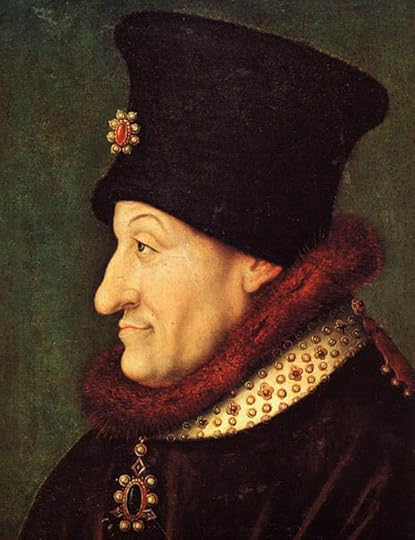
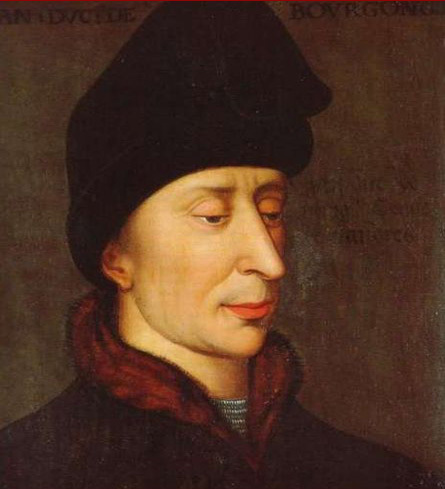
The dutch title of The Burgundians literally translates to "The Burgundians: the founding fathers of the Low Countries" in english. In the prologue the author indicates that he was inspired by the book 's Lands Glorie (an illustrated history of Belgium) read in his youth and was captivated by the story of the Burgundian dukes. Especially by the haunting image of Charles the Bold's body found naked and half chewed by wolves in the snow after the battle. On a sidenote, if you discuss the Burgundian dukes in a group, it's only a matter of time before someone (including myself) asks "which duke came first?" or "I'm confused, can someone rank the dukes?" To make it easier (for myself) I'm going to list these powerful dukes below:
Philip the Bold, John the Fearless, Philip the Good (book cover), and Charles the Bold
I enjoyed reading the prologue. It was clear the author wanted to research and write about what the Burgundian rule meant for the Low Countries. How it shaped our identity and culture, the reason why we even today refer to our food & culture as 'Burgundian'. I was really looking forward to that (myself being a bilingual belgian living in France). Who were these rich, powerful dukes, constantly in rivalry with their cousins, the French kings (see the Armagnacs vs Burgundians), in the midst of the Hundred Years' War? What does this Flemish-Burgundian alliance mean for the average citizen? How was life in the Burgundian Netherlands ?
Please note that this book falls under the category of traditional/old school history books, meaning that it's history from the top-down (versus bottom-up) or as some say 'history of rulers'. If you're interested in 'history from below' or microhistory (like me), lower your expectations. It's true the author does occasionally write about eating habits, feasts/bankets, clothes, trade, art, etc. but these are all in connection with the Burgundian court. But to be fair, I shouldn't have assumed that the author would follow the new trend when writing history. This in the end didn't affect my rating however the below did.
The writing style (of the dutch edition) is quite confusing. I have two requirements for the history books I read. For me to enjoy them, they preferably have to be:
1. Readable: It seems to me that the author did his best to use all the synonyms possible for every word he used (shying away from to most common words). Without asking for it I've learnt so many outdated words (that I won't even be able to use in everyday speech). Not only that but the author loved using euphemisms and metaphors. There are a lot of local idioms as well as loanwords, I have no idea how that would work in translations. Some articles (link below) praise the author's talent of wielding the dictionary like a pro ("word juggler") and for his use of imagery/figurative speech. Meanwhile, I can't get the image of Joey from Friends out of my head when he uses the thesaurus in order to appear smart.
Needless to say, after a while, trying to keep track of the events written in metaphors in a time where everybody's name was either Charles, John or Philip, my head was spinning. Luckily for me I've read concise well written medieval history books in the past.
2. Trustworthy (it's non-fiction after all): The more I read the less I trusted the story, this is also largely due to the colourful storytelling. It became quite noticable when the author assumed things like someone's feelings around events or when he uses "might have been", "most probably", "in all likelihood" etc. I understand using it when trying to reach a conclusion that you can't 100% prove but not every chapter. Lastly, the author sometimes draws weird comparisons. For example comparing a 14th century Flemish revolt against the French crown with the French Revolution. Never saw these two events linked in any way before, even now I can't see why.
I was told by my mother, who adored this book and also listened to the podcast, that the author's first manuscript was refused by the editor and was asked to rewrite it in order to appeal to a wider audience. And it shows, the amount of storytelling and use of metaphors especially is exaggerated. I presume it would appeal to readers who like a bit of historical fiction with their history. I would be very curious to see how the author's revised edition compares to his first draft. In the end, it boils down to personal preference. Some people like their history more romanticized. Lots of reviewers mention that it reads 'like a historical novel'. I prefer a more straightforward factual history book. The ones some may call 'dry' due to the lack of imagery I presume. Don't mind a bit of storytelling though, as long as it's done with moderation.
It's quite telling that what I enjoyed the most about the book are the direct quotes from first hand accounts, reenforcing my preference for primary sources. I had no issues reading those but once I dived again into the author's storytelling it turned into a chore.
Please do not let me deter you from reading this book, I just wasn't the target audience for it. It might work for you. I'm actually glad when people read history books even the not well written ones.
In the mean time I've added the book The Waning of the Middle Ages to my TBR which has been cited by the author as well as critics comparing the two works. Hopefully that book will work better for me than The Burgundians. Because despite being disappointed by this book I still want to learn more about the Burgundians. That being said, once I digested this reading experience, I will try to listen to Van Loo's podcast.
5 stars for the subject matter, 1 star for the writing. Will settle for 2.5 stars.
Ah nee he, het boek is uit. Wat onwijs jammer. Ik heb echt heel erg genoten van dit boek. Bart van Loo weet heerlijk te omschrijven hoe de geschiedenis in 1000 jaar is verlopen, inclusief alle schandalen, feesten, huwelijken en bastaarden, maar zeker niet door de belangrijkste details te overschaduwen. Dat het boek niet langer is verbaast me enerzijds wel, aan de andere kant is dat denk ik misschien ook wel de reden waarom het zo lekker leest. Er is geen overdaad. Een absolute aanrader wat mij betreft en ik ga heel binnenkort ook zijn boek van Napoleon erbij pakken. 5 sterren dik dubbel en dwars.
Bart Van Loo is een groot verhalenverteller. Filips de Stoute, Jan zonder Vrees, Filips de Goede, Karel de Stoute en hun bekende en minder bekende tijdgenoten komen tot leven in dit meesterlijke epos over het Bourgondische rijk. Politiek, kunst, oorlog, familiebanden, geloof: alle facetten komen aan bod, verteld met verve en vol vermakelijke details.
A fantastic history and one of the most interesting books I have ever read.
It tells the tale of the Burgundians from its beginnings in the mist of the 4th century to its heyday in the 14th and 15th century. The focus lies on the four Valois Dukes (+-1363-1477) and on the Burgundian rule of the Low Countries, with Bruges, Ghent and Brussels as the main cities. You basically get four biographies in one: Philips the Bold, John the Fearless, Philips the Good and Charles the Bold. And they are all the stuff of legends. Legends that we don't know, or at least I didn't, despite being Dutch. Our history classes tend to start with the 80 years' war against the Spanish that started in the 16th century.
On top of the chronological main storyline there are countless interesting digressions neatly woven into the text, for instance on art (Jan van Eyk, Rogier van der Weijden), church, chivalry, economy and trade, the role of women, warfare, nobility vs merchants - all in flux as traditional structures at the end of the middle ages start to shift.
Why is it so fascinating? Because of the period, because it doesn't presuppose lots of background knowledge, because it is supremely readable (the Flemish author's control of the Dutch language is phenomenal) and accessible (it is clearly popular history and I am sure critical scholars will raise an eyebrow here and there), and because the original Burgundian perspective works brilliantly as a storyline.
As the Burgundians were in a sense foreign rulers in a time there was no real Belgium or the Netherlands, this is a period that, especially in the Netherlands, is by and large ignored. I guess the Burgundian Dukes are largely forgotten everywhere else as well, except maybe for Dijon, simply because they don't exist anymore - the Duchy was more or less silently incorporated into France and the Low Countries became more Spanish as the Burgundian Duke Charles V and his son Filips II were more Spanish than Burgundian. However, the book makes a convincing case that the Burgundian era laid, in a surprising number of ways, the basis of Belgium and the Netherlands we know and live in today.
The book is somewhat of a hit here and I hope it will be translated and find the audience it deserves abroad!
Belgian Historian Bart Van Loo Composes A Compelling Narrative Which Explores 1111 Years Of Burgundian History & Tradition.
Bart Van Loo is a Belgian historian & the author of a number of titles in the Dutch language, including his 2023 biography of Napoleon Bonaparte, Napoleon: The Shadow of the Revolution, the well-received 2011 France Trilogy, the unique 2013 Chanson: A sung history of France, & the gigantic, 1328-page My France. The title being reviewed, The Burgundians: A Vanished Empire - A History Of 1111 Years & One Day, is currently his sole written work to be translated into the English language, & was also a nominee for both the 2019 Libris History Prize & the 2019 Bookspot Literature Prize, formerly the ECI Literature Prize, which are two prestigious awards for books written in the Dutch language.
This 2022 paperback edition of The Burgundians: A Vanished Empire is published by Head of Zeus Ltd. & features a 514-page main text consisting of 25 chapters that are grouped into 5 parts of vastly disparate lengths. To provide an example, Part II - The Burgundian Century weighs in at 326 pages, over half of the book's total length, while Part V - A Memorable Day is a comparatively lean 15 pages. In addition, there is a 23-page Epilogue, The Last Burgundian, which is a general overview of the life & political career of the Holy Roman Emperor, Charles V, emphasizing his annexation of Flanders & the Low Countries. Charles V's fervant desire to possess Burgundy & the Low Countries stemmed from a lifelong adoration of what he saw as his rightful homeland, & he voiced as much in a speech given in 1520 to the States General in Brussels : "My heart has always been hither." Van Loo has generously provided a plethora of useful genealogical charts & family trees to accompany his rich history, including the Royal Lineage of the Merovingian Kings of Burgundy, the English Kings, the Holy Roman Empire, the House of the Burgundian Dukes, the Royal House of France, & the Bavaria-Burgundy-France-Brabant-Limburg-Luxembourg Entanglement. There is also a series of detailed maps which include Europe around 500 A.D., France during the Hundred Years War c. 1428, Europe in 1475, the Burgundian Principalities from 1363-1477, & finally, a map of the Low Countries' Seventeen Provinces around 1550. At the end of the volume there is a section of endnotes, followed by a sizeable 22-page bibliography of predominantly Dutch source material which is accompanied by an 8-page introduction that serves as a sort of roadmap for the reader to more readily navigate the formidable, & frankly a bit intimidating, collection of bibliographical material assembled by the author.
In the prologue Van Loo fondly reminisces that one of the primary inspirations which sparked his lifelong interest in history was when he first viewed a print depicting the aftermath of the Battle of Nancy from the Belgian illustrator Jean-Léon Huens' collaborative effort with historian Jean Schoonjans, s' Lands Glorie, an illustrated guide to Belgian & Dutch history published in six volumes between 1949-1961. He then proceeds to offer an endearing explanation on exactly how the albums were filled by prospective historians : "The idea was to cut out various coupons that were printed on the packages of various food products. You then exchanged the coupons for little color prints, each with a brief commentary on the back, so by eating the right products you could also acquire knowledge. You posted the pictures into the green albums provided for this purpose." The Burgundians is written in an informal, easy-to-read, & unapologetically casual prose style that is perfect for readers not necessarily acclimated with Burgundian history & is a wonderful introduction to the subject's more advanced scholarly works, such as Professor Richard Vaughan's 4-book set, The Dukes of Burgundy. The history of Burgundy, particularly the manner in which it relates with Philip the Bold's intricate marriage alliances with the nobility of the Hainault, Holland, & Zeeland regions, can be quite arduous to follow, & the author does an admirable job of holding the reader's hand through these scenarios, making the wise decision to re-explain certain alliances & relationships as the narrative proceeds to ensure they do not lose themselves in the oftentimes Byzantine web of treaties, edicts, & second, third & in some cases, fourth, weddings.
At Nancy, the last Valois Duke of Burgundy, Charles the Bold, sustained not only his most costly defeat of his ten-year reign but he also lost his life on the frozen battlefield. Readers who are interested in learning more about how Charles the Bold's often reckless military campaigns affected the French monarchy, primarily during the reign of France's famous Machiavellian ruler Louis XI, are encouraged to read Professor Paul Murray Kendall's exceptional biography, Louis XI : The Universal Spider. Also known as Charles the Rash, Charles the Bold's frequent incursions & uprisings against the French crown & his wars with the Swiss Confederation stemmed from a volatile & egotistical personality which differed from that of his sire, Philip the Good, garnering him a dangerous reputation amongst his fellow European lords & rulers despite the fact that he reigned a mere ten years, from 1367-1377. For a traditional, scholarly overview on the reigns of these colorful Flemish-Burgundian potentates who held their decadent courts at the prosperous Dutch, Flemish, & French cities such as Brussels, Lille, Bruges, Dijon, & Ghent, the reader is encouraged to try Professor Richard Vaughan's 1965 Valois Burgundy, a wonderful companion work to his more erudite set of studies concerning the reigns of Philip the Bold, John the Fearless, Philip the Good & Charles the Bold. Charles' life & reign is sometimes compared with that of the Milanese prince Galeazzo Maria Sforza, as Sforza's own tenure in power, 1366-1376, was only one year removed from that of his Burgundian counterpart. Curious readers looking for a well-written, academic study on Galeazzo can find it in Gregory Lubkin's A Renaissance Court: Milan Under Galeazzo Maria Sforza. In the preface of the aforementioned work Lubkin muses on the exciting possibility of writing a dual, contemporaneous study comparing the reigns of Charles & Galeazzo, but alas, the project never came to be.
In Chapter 14,The Battle for Holland & Zeeland, Van Loo launches into a spirited & fascinating digression on the geography, economic history & overall population growth of the Holland & Zeeland regions in the Low Countries. A large quantity of the land in these areas consisted of marshy forests & peat bogs, & during the Great Reclamation, much of this otherwise unusable land was salvaged by constructing a series of canals, dams, & ditches which diverted the water flow & allowed the land to be tilled & settled by the Flemish population. The leftover peat moss was then dug out & burned as a valuable fuel source, but the problem arose after the peat had been excavated due to the land being at that point well below sea level, leaving it vulnerable to inclement seaborne squalls & tempests. The remaining mossy soil, while unsuitable for more traditional crops such as corn & wheat, was ideal for pasturage, & the increased cow population which resulted led to a noticeable surge in cheesemaking, also leading to new techniques that were developed to extract salt from the peat moss. After a series of damaging storms & floods in the late 14th & early 15th centuries during which the Flemish city of Oostende was completely swallowed up by the tides & had to be relocated further inland, all the Flemish canals were joined together in 1404 into the gigantic Graaf Jansdijk, named after the second duke of Burgundy, John the Fearless. Later on this ingeniously-devised canal system was augmented by a series of draining mills which assisted in sluicing off the excess water, but all of these drainage & irrigation projects were costly, & the Dutch drafted rules to govern the financial contributions due from the populace based on overall land use & an equitable system of expense sharing, which, while reflecting their fiercely capitalistic spirit, it did not cohabitate well with their Burgundian overlords' tendencies toward excessive spending & decadent luxury.
In order to finance the small-scale tactical operations waged by the Duke of Burgundy against his rival (& cousin) Jacqueline of Bavaria in the Hainaut, Holland, & Zeeland regions, in Chapter 15, As Man or Woman?, Van Loo discusses the various ploys resorted to by Philip so he could accumulate the necessary revenue to field his costly military campaigns, stressing the importance during that period of winning wars by bankrolling powerful armies & utilizing the proceeds from creatively implemented taxes & special impositions, which were called benevolences. During the early 15th century France was involved in a three-way power struggle between the Dauphin, & later king, of France, Charles VII 'the Victorious', Duke Philip the Good of Burgundy, & the English claimant to the French throne, Henry VI, with John of Lancaster, Duke of Bedford, standing as the child king's regent. The war between Philip & Jacqueline was associated with two opposing factions, the Hooks & the Cods, with the former predominantly represented by members of the Flemish nobility, & the latter consisting of merchants & tradesman from the working class, developing Dutch cities in Holland. The English became embroiled in the Hook & Cod Wars well before Jacqueline of Bavaria's third marriage to the British nobleman Humphrey of Gloucester, a union which later was declared by Pope Martin V to be null & void due to Humphrey's illicit affair with her former serving woman, Eleonora Cobham. This liaison of Gloucester's produced a child out of wedlock just as it rendered Humphrey's mostly self-imagined rights as Count of Hainaut, Holland, & Zeeland invalid as well. It is during sequences such as the one described that Van Loo's genealogical tables, namely the one depicting the Bavaria-Burgundy-France-Brabant-Limburg-Luxembourg Entanglement, become invaluable to the reader. The aforesaid chart demonstrates how the family of Albert of Bavaria, Count of Hainault-Holland-Zeeland, became dynastically intertwined with that of Philip the Bold via the marriages of Albert's son, who became William VI, & Philip the Bold's daughter, Margaret of Burgundy, & also through the nuptials of their child, Jacqueline of Bavaria, to John IV of Brabant, who was Philip the Bold's grandson through his youngest son, Anthony of Brabant. The author deftly & tirelessly guides his audience through these treacherous passages & provides the reader with a more thorough understanding of one of the most convoluted periods in European history once they have finished the book.
Chapter 16, Golden Glitter, contains the author's lively account of Philip the Good's obsession with the exotic medieval automata fashioned by the inventors of Hesdin, a fief of the Counts of Artois, & early on he provides an illustrative passage describing the city's assortment of mechanized wonders that were housed within the Duke's opulent palace : "In the chaos of his relatively short life, John the Fearless had had little time to become captivated by the wonders of Hesdin, but his son Philip fell under their spell early on : the spouting statues, the distorting mirrors, the traps that landed visitors on sacks of feathers...The funhouse quality of such stunts was very popular. In one of the rooms you would be sprinkled with flour, in another you'd find yourself in the midst of an indoor rainstorm. Over there was a wooden hermit, & here was an owl -- all of them devices that could speak." Among the more refreshing aspects of Van Loo's history can be found with his concerted efforts to devote equal attention to Burgundian art, music, science, culture & economics to help balance out the princely, diplomatic, & military aspects of the book. A diverse variety of subject matter is seldom a bad thing in a lengthy narrative such as this one, & this title possesses an abundance of it with some to spare.
Chapter 17, The Burial Pit & the Stake, discusses the aftermath of Joan of Arc's remarkable life & brief but spectacular military career after she valiantly fought to liberate her native land from the English, which were led by King Henry VI, after France's rival country claimed sovereign rights in 1422 due to the instability of the French King Charles VI 'the Mad'. Van Loo limns about how the deeds of Joan of Arc slowly became a national phenomenon over the centuries & were subsequently used by conquerors such as Napoleon Bonaparte to further their own political agendas, eventually culminating in her canonization as a saint in 1920 by the Catholic church, 490 years after her death in 1430. Joan of Arc's popularity in her native country can still be seen even in modern times, where in 2015 there were at least 426 schools in France that are named after her, more than the famous author & statesman Victor-Marie Hugo & the French writer & aviator Antoine de Saint-Exupéry. Throughout the text Van Loo integrates & discusses historical figures, written works, artwork, & significant events from later eras to better assist in demonstrating the profound influence the history of Burgundy & France effected upon the rest of western civilization. It can be a tremendous amount of information for the reader to process & absorb, particularly at certain points in the middle & later portions of the narrative, but does not significantly impede the book's overall readability.
In Chapter 20, Pheasant & Fox, Van Loo chronicles the generous foundation of a hospital for the sick & infirm by Duke Philip the Good's savvy, shrewd, & immensely wealthy chancellor, Nicolas Rolin & his wife, the philanthropic noblewoman Guigone de Salins, which was called the Hôtel-Dieu, located at the town of Beaune in the Côte-d'Or district of Eastern France. The Hundred Years War with England had generated tremendous pain & suffering throughout western Europe, & Nicolas' wife Guigone had long spoken to her husband about the thousands of impoverished people who had been left without means to afford health care of any sort, though they were in dire need of it. The couple at last decided to commission structural plans to be drafted for the construction of a grand hospice which were to be undertaken by the famed Flemish architect, Jacques Wiscrère, & would take a full ten years before finally coming to fruition. In 1451 the husband & wife also commissioned a contract with the prominent Netherlandish painter Rogier van der Weyden to complete a breathtaking Christian polyptych, The Last Judgement, also known as the Beaune Altarpiece, which is painted on 9 oak panels & comprised of no less than fifteen different paintings, & can still be seen in one of the rooms of the Hospices de Beaune, which in modern times has been converted into a museum.
This is merely a very small sampling of what readers can expect in the event they decide to give this excellent title a try, & there is no possible way a single review could encompass the entirety of the book's impressive array of subject matter. Part III - The Fatal Decade - 1367-1377 covers the disastrous 10 year reign of Charles le Téméraire, better known as Charles the Bold, & Part IV - A Decisive Year (1483) discusses the aftermath of Charles' downfall which involved an opportunistic marriage alliance between his daughter, Mary the Rich of Burgundy, & Archduke Maximilian Habsburg, who went on to win the election for King of the Romans & later became the uncrowned Holy Roman Emperor. The official procedure for becoming Western Emperor was to first win a poll between seven Austrian & Bavarian electors, after which the victorious candidate would proceed to Rome or one of the neighboring cities to receive their coronation from the pope with the Iron Crown of Lombardy, finally becoming the Holy Roman Emperor. Overall, The Burgundians: A Vanished Empire - A History Of 1111 Years & One Day is an outstanding history title which takes some extremely challenging subject matter & renders it much more digestible via the author's informal, easy-to-jump-into writing style & the well-illustrated maps & charts located at the beginning of the book. In this paperback edition there are two sections with full-color photographs of breathtaking French & Burgundian sculptures & artwork, such as an ivory binding depicting the Baptism of Clovis from a book written on the life of St. Remigus & kept at the Musée de Picardie in Amiens, France, & a c.1500 copy of a 1432 portrait of Jacqueline of Bavaria painted by Lambert van Eyck, the brother of Jan van Eyck, which is housed at the Kunsthistorisches Museum Wien, in Vienna, Austria. Hopefully you enjoyed the review, thanks so much for reading!
Be ready for an entrancing and powerful reading experience about the great ceremony, insatiable appetites, dazzling splendor, overwhelming extravagance, and hefty arrogance of the Burgundian world that will put you at the heart of, and in the mind of, characters with such charming sobriquets as Philip the Tall, Charles the Fair, John the Posthumous, Philip the Bold, John the Fearless, Philip the Good, Charles the Bold (actually the reckless), Louis the Quarrelsome, Philip the Handsome 😊, Louis the Do-Nothing, Baldwin Iron Arm. There was even the loathsome John the Pitiless.
Parallels, Tragic
Medieval Europe is such a fascinating subject of study because the resulting culture was created by the confluence of the three distinct traditions: 1) the classical inheritance from Rome, 2) tribal barbarian customs, 3) the mythology of Christianity. The current cultural collapse of our own time is also characterized by the confluence of three distinct movements 1) conspiracy theory politics, 2) clownish corruption, 3) the mythology of Christianity. I guess some things never change. The threadbare beliefs of Christianity are still twisted into the hypocritical fabric of hypercritical repression and hysterical oppression. Then as now, the relentless mechanism of ambition driven power supported by religion is the same, and then as now, human empathy is the only security in the cruelty of dark and uncertain times.
Another interesting parallel can be found in kings, dukes and counts invading recalcitrant cities to bring them to heal so as to undo a growing social consensus rejecting feudal tyranny with Donald the Deranged deploying ICE and the National Guard in recalcitrant cities to bring them to heal so as to undo a growing social consensus rejecting petty tyranny. More parallels can be found in how rescue and restoration work in the face of natural disaster was hampered by acrimony in divided regions during the Middle Ages with FEMA aid for disaster relief based on political geography in our own time. The difference between private money and private good versus public money and public good was virtually nonexistent in the Middle Ages and this distinction is now being erased in 21st century America by Donald the Deranged.
In a reverse parallel to our own time, under Philip the Good as Duke of Burgundy, there was a regularization and professionalization of the civil service. Under Donald the Deranged, the civil service is being purged of competent professionals and instead staffed with clownish but dangerous buffoons. Under Philip the Good, feudal customs were disregarded, Under Donald the Deranged, a new futile feudalism is being implemented.
Parallels, Comic
In a fun parallel with the Middle Ages, we need to bring back the tradition of amusing but accurate sobriquets for public figures to keep their true nature and essential character top of mind so to speak. This was the purpose of such nicknames in the Middle Ages, it provided a thumbnail biography.
Donald the Deranged J.D. Lier Lier Vance on Fire Kristi the Dog Lover aka A.R. toting Kristi Gnome Peter the Cheater Robert the Gross Karoline the Krazed-Khristian Tulsi the Treacherous Pam the Blondie Kash In Patel
The Women of the Middle Ages
But let’s hear it for the women of the Middle Ages, so often forgotten, just to name a few.
Joanna of Constantinople Margaret of Constantinople Margaret of York Margret of Male (wife/consort of Philip the Bold and mother of John the Fearless and grandmother of Philip the Good) Margret of Bavaria Margret of Austria Louise of Savoy Christine de Pizan – writer Jacqueline of Bavaria – worthy rival the Philip the Good Jean de Meung Joanna of Brabant Isabelle of Portugal – shrewd diplomat and peace maker Isabeau of Bavaria Jeanna de Flandre Mary of Hungry Mary of Burgundy And of course, Joan of Arc (delusional though she was)
And the many other benefactresses of the community who governed provinces and estates in their own right, or in the absence of their husbands, brought peace, brokered truces, founded hospitals, leprosariums, and beguinages.
Organization of the Book:
The book is organized as an inverted triangle with the wide base (longest time frame) at the top (the beginning of the book) and the narrow apex (shortest time frame) at the bottom (the end of the book).
Chapter 1 – A millennium (406 - 1369) Chapter 2 – A century (1369 - 1467) Chapter 3 – A decade (1467 - 1477) Chapter 4 – A year (1482) Chapter 5 – A day (10-20-1496)
In terms of the subtitle, a history of 1,111 years and one day:
1,000 Chapter 1 100 Chapter 2 10 Chapter 3 1 Chapter 4 1 day Chapter 5 1,111 and 1
Art History
The book also provides a lesson in the art history of the period, but the illustrations in the book are not up to the task of doing the descriptive text justice. So, sit by a computer while reading and pull up full screen high-resolution detailed renderings of the art online. For example, in the book there is a small color plate of ‘The Madonna of Chancellor Rolin’ by Van Eyck. In the background of the portrait is Van Eyck himself but it is nearly impossible, even with a magnifying glass, to make out the figure in the red turban. I was able to find a high-resolution rendering of the same portrait online, making possible the magnificent details right down to the expression on Van Eyck’s face. Same for the images in the mirror of ‘The Arnolfini Wedding’ portrait.
Wat een feest is dit boek, een cadeau van begin tot eind. De naam zegt het al: we volgen het ontstaan en verdere verloop van de Bourgondiërs, van de Vikingen tot aan Karel De Stoute. Gelukkig is er ook nog een epiloog opgenomen, waarin we nog wat verder kijken en uiteindelijk de terugkoppeling hebben met de dag van vandaag, de cirkel is rond.
Dit non-fictie werk leest als een wervelende roman. Bart Van Loo neemt ons mee naar de feestelijke banketten, de paleizen vol pracht en praal en laat ons van op de eerste rij meegenieten. Door zijn levendige beschrijvende schrijfstijl worden al je zintuigen geprikkeld en kan je als het ware alles zien, proeven, ruiken, en meebeleven.
Hoewel er heel wat (grote) namen de revue passeren, lukt het om bij te blijven precies doordat de schrijver je zo kan meenemen in het verhaal. En als er even een dipje is, is er een handig overzicht in het boek opgenomen. Ook de verwijzingen naar verschillende kunstwerken (waarvan sommige ook in kleur opgenomen werden in het boek), met bijkomende info, zijn zeker een meerwaarde. Zo wordt het lezen van dit boek bijna een historische ervaring. De geschiedenis komt dichterbij, wordt tastbaarder en menselijker.
Na de laatste pagina heb je dan ook meteen zin om een trip te ondernemen naar alle plaatsen die in dit boek aan bod kwamen om het toch ook eens in levende lijve te gaan zien. Mijn eerste boek van deze schrijver, maar zeker niet het laatste!
Ik moet bekennen dat dit mijn boek mijn ogen heeft doen opengaan over een stukje geschiedenis waar ik zeer weinig van kende - al was het maar omdat ik in feite weinig interesse heb voor dynastieke geschiedenis, dat ik vooral ervaar als "one damn thing after the other". Het is de grote verdienste van Van Loo dat hij dit verhaal op een levendige en toegankelijke manier brengt, maar tegelijkertijd is deze levendigheid ook de Achillespees van het boek. Soms weet je niet goed of je nu een historisch werk aan het lezen bent, een historische roman of een reisgids. Maar laat u daar niet door afschrikken.
(Een mens vraagt zich wel af hoe onze geschiedenis eruit had gezien als de protagonisten een cursus 'woedebeheersing' hadden gevolgd. Het is wonderbaarlijk dat er in feite nog een huis rechtstaat in onze gewesten).
Ik las dit boek in een groepje. Daarom een review in kernwoorden die we aan het boek meegaven: Lijvige, Bloemrijke (qua taal), humoristische, interessante, eerlijke vertelling van de geschiedenis van de Lage Landen :D aanrader. Ik ben ook al begonnen in de bijbehorende podcast en die is ook erg leuk: met strijdgeluiden en middeleeuwse muziek op de achtergrond!
Bart van Loo doet je denken aan je over enthousiaste geschiedenis leerkracht en ik vind het fantastisch! Ik raad de podcast aan aan mijn mede geschiedenis nerds. :)
Een interessant boek over de geschiedenis van Bourgondie, van het ontstaan van dit hertogdom dat aanvankelijk een deel van oost Frankrijk besloeg en later grote delen van wat nu Nederland en Belgie is. En het gaat ongeveer door tot Karel V met oog voor alle hertogen, kunstenaars, groeiende steden en alle politiek die Bourgondie moest voeren, ingeklemd tussen de rivalen Engeland en Frankrijk en de Duitse vorsten in het Oosten. Erg interessant.
---
An interesting book about the history of Burgundy, starting with the inception of this dukedom that initiately was just a part of eastern France, and later included large parts of what is now Belgium and The Netherlands. It goes all the way to about the time of Charles V, including the stories about all the dukes, the artists of that time, the growing cities and the difficult political situation being hemmed in between warring France and England and the German states to the east. An interesting read.
Een boekenliefhebber die - Bart van Loo heeft zien performen bij DWDD, - Herfsttij der Middeleeuwen van Johan Huizinga (1919 nota bene!) heeft gelezen en - dus vermoedelijk in geschiedenis is geïnteresseerd... die lezer mag het genieten van De Bourgondiërs niet al te lang uitstellen. Ik heb er vele loze uren in hotels, cruiseboten en vliegtuigen mee gevuld, tijdens een reis door Egypte. Het spreekt vanzelf dat een e-reader daar handzamer was dan the real thing. Maar zodra ik terug in het vaderland was, ben ik met volle overtuiging de gebonden, geïllustreerde versie alsnog gaan kopen. Van Loo is historicus noch kunsthistoricus, hij is romanist. En 'auteur/conferencier'. Dat alles blijkt een gelukkige combinatie op te leveren. De Loo vertelt ons eindelijk eens exact hoe wij ooit bij Willem van Oranje, Alva en Philips de Tweede zijn uitgekomen. Want daar begint (na de onvermijdelijke Hunebedden en Romeinen, en een gat van 1568 jaar vage volksverhuizingen) voor de meeste Nederlanders pas hun herinnering aan de geschiedenisles. Maar wat die 'Bourgondiërs' hier nou precies deden, en van waaruit zij opereerden... het was mij een raadsel. Dat kan je natuurlijk even opzoeken, maar dat doe je niet. Als geschiedenis niet meer dan een belangstelling is, dan wacht je tot je tegen Bart van Loo aanloopt. Of tegen Maarten van Rossem over het Romeinse en Amerikaanse imperialisme, of tegen Mary Renault over het Minoische Kreta. In de onbeklimbare berg van goedgeschreven geschiedenisboeken moet je forse keuzes maken, en ik laat het toeval dat werk vaak doen. Van Loo vlecht drie grote lijnen en een heleboel kleintjes dooreen. Natuurlijk de grote Europese geschiedenis, de Mannen met Plannen, de vorstelijke dynastieën met hun eindeloze ge-oorlog, gebrandschat, gemartel en geplunder... je krijgt er echt pijn in je buik van. Maar dat wordt dan met subtiele tussenpozen verzacht door meesterlijke hoofdstukken over de emotionele en 'relationele' make-up van de hoofdrol-hertogen, de Philipsen, de Karels... Richard de Rechtbrenger en Jan zonder Vrees! Maar vooral ook onvergetelijke portretten van hun oma's, nichten, moeders en dochters, met bijvoorbeeld de zo bekende namen Jacoba van Beieren en Margaretha van Oostenrijk... zij blijken interessante, moedige, wijze en zelfs wrede vrouwen te zijn geweest. Wonderlijke vrouwen, soms meisjes nog, die bij alle beperkingen die hun eer- en wraakcultuur ze oplegde, toch hun verwante testosteronbommen vaak voor erger behoedden. En dan het mooiste -in mijn ogen. Dan borduurt Van Loo daar nog eens nog eens de fenomenale hoogtepunten van beeldhouw- en schilderkunst in de Lage Landen dwars doorheen (wat is er in godsnaam 'primitief' aan de Vlaamse Primitieven?), met nauwkeurige aanwijzingen over de plekken, vooral in Frankrijk en België, waar die kunst nog te zien en te bewonderen is. Dit is een boek waar je gewoon naartoe kunt rijden! Het werk van Bart van Loo, al overal bejubeld gelukkig, is een laatmiddeleeuws én zeer 21ste-eeuw wandtapijt van woorden, waar leek en specialist van kunnen genieten. Zijn virtuoze metaforen alleen al... en die vormen maar een klein onderdeeltje van veel groter stilistisch meesterschap. De verteldynamiek bijvoorbeeld, versnellend, vertragend, in- en uitzoomend, is beïnvloed door de film; de kunstvorm die ons verteltechnieken schonk waar Huizinga bijvoorbeeld nog geen weet van had. Wat ik ten slotte nooit zal vergeten, zijn de sublieme taferelen van alle -inderdaad- Bourgondische feest- en vreetpartijen die deze pronkerts aanrichtten als er iets te vieren viel. Carnavaleske pronkwagens met complete tableaux-vivants... Een gebraden geitje dat uit een reusachtige rijdende pastei tevoorschijn komt, als was het een geboorte. Je ziet het... nou ja, eigenlijk zie je het niet eens voor je, zo krankzinnig. Wat. Een. Boek. Zoals ik zou twitteren. Maar dit is veel leuker. (U begrijpt dat ik Goodreads net heb ontdekt) Een echte mediëvist, Sanne Frequin, raadde mij aan vanwege mijn enthousiasme voor Van Loo, te vervolgen met Medieval Bodies, een recent boek (2018) over lichaam, biologie, dood en geneeskunst in de middeleeuwen, van Jack Heartnell. Ik spreek u over een maand weder.
De Bourgondiërs - Burgundy dukes (will do the review in English for my many abroad friends who aren’t fluent in Dutch): the dukes that fought for union, that expanded their grounds (from France over Belgium, The Netherlands till finally even Luxemburg and parts of Austrië) - I truly enjoyed this book! It’s history told in such a fashion that I was immediately captivated! Chronologically perfectly constructed 👍🏽 @bartvanloo thank you very much for this wonderful tale of dukes, kings (dreadful ones sometimes) of Joan of Arc, Philip the Hardi, John the Fearless, Philip the Good and Charles the Bold, kings of France and of Austria... this is Game of Thrones but without the dragons (or nightwalkers) but with the sex, the intrigues, the murders, the wars... 🐑 But also about the arts... writing, painting, architecture (how many palaces were built during the reign of Burgundy dukes is unimaginable- a lot have already disappeared unfortunately) 🐑 This is also a book about the rise and fall of cities... my own hometown of Ghent was more important in those days than we can fathom today... it was a rebellious city (🥰) and took other cities often with it into battle against dukes and kings (read all about it in this book) 🐑 I hope this will be translated in English in the near future... (I heard from the author, on Instagram, that it is planned in 2021 - something to look forward to) - the French translation has recently been published (Les Téméraires - see picture) 🐑🐑🐑 This is a definite 5⭐️ rating! (Or 10⭐️, depending on your rating system!) 👑👑👑👑👑