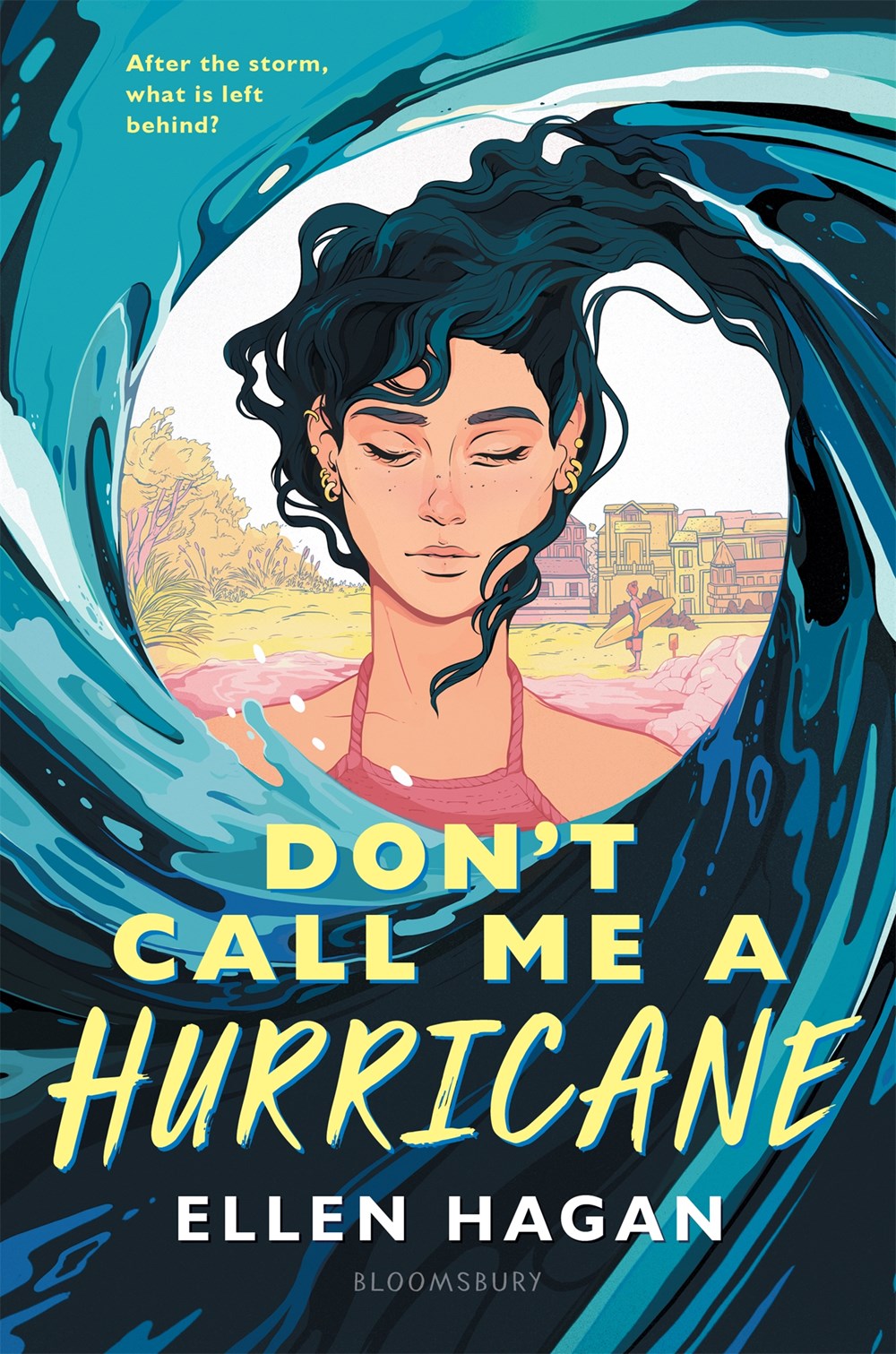
An affecting and resonant YA novel in verse that explores family, community, the changing ocean tides, and what it means to fall in love with someone who sees the world in a different way.
It's been five years since a hurricane ravaged Eliza Marino's life and home in her quiet town on the Jersey shore. Now a senior in high school, Eliza is passionate about fighting climate change-starting with saving Clam Cove Reserve, an area of marshland that is scheduled to be turned into buildable lots. Protecting the island helps Eliza deal with her lingering trauma from the storm, but she still can't shake the fear that something will come along and wash out her life once again. When Eliza meets Milo Harris at a party, she tries to hate him. Milo is one of the rich tourists who flock to the island every summer. But after Eliza reluctantly agrees to give Milo surfing lessons, she can't help falling for him. Still, Eliza's not sure if she's ready to risk letting an outsider into the life she's rebuilt. Especially once she discovers that Milo is keeping a devastating secret. Told in stunning verse, Don't Call Me a Hurricane is a love story for the people and places we come from, and a journey to preserve what we love most about home.
Ellen Hagan is a writer, performer, and educator. Her books include: Crowned, Hemisphere, Watch Us Rise, a YA collaboration with Renée Watson, Blooming Fiascoes, Reckless, Glorious, Girl, Don’t Call Me a Hurricane and All That Shines. She has a new YA project forthcoming in 2025 with her partner David Flores. Ellen's poems and essays can be found in Oprah Magazine, ESPNW, So We Can Know: Writers of Color on Pregnancy, Loss, Abortion, and Birth (edited by Aracelis Girmay), Creative Nonfiction, Underwired Magazine, She Walks in Beauty (edited by Caroline Kennedy), Huizache, Small Batch, and Southern Sin. Ellen's performance work has been showcased at The New York International Fringe and Los Angeles Women's Theater Festival. She is the recipient of the 2020 New York Foundation for the Arts fellowing in poetry, the 2013 NoMAA Creative Arts Grant and received grants from the Kentucky Foundation for Women and the Kentucky Governor's School for the Arts. National arts residencies include The Hopscotch House in Louisville, Kentucky and Louisiana Arts Works. Ellen is Head of the Poetry & Theatre Departments at the DreamYard Project and directs their International Poetry Exchange Program with Japan, South Korea, the Philippines and Australia. She is on faculty in the low residency MFA program at Spalding University and co-leads the Alice Hoffman Young Writer's Retreat at Adelphi University. A proud Kentucky writer, Ellen is a member of the Affrilachian Poets, Conjure Women, and is co-founder of the girlstory collective. She lives with her partner and children in New York City.
whatever my sins were in a past life, my punishment is accidentally picking up poetry.
and taking myself way too seriously.
and loving cookies more than any other food but being unendingly picky about what constitutes a good one.
and learning words from books, causing me to mispronounce them when i try to say them out loud, and then forevermore not being able to remember which is the correct pronunciation and which is my made up one.
but mostly the poetry one.
i don't think this book gets itself. our main characters are a group of local teens on the jersey shore, and 99% of their shared personality is that they hate everyone who comes for the summer (the other 1% is being, like, the greta thunbergs of the east coast), except they kind of don't hate people who come EVERY summer (which, it is revealed in the author's note, includes our author), and also they can fall in love with a shoobie (which to my knowledge has always been a day-tripper, but in this book is just an out of place visitor) and in fact the plot circles around them doing so.
anyway.
other than that, i'm not much of a fan of hagan's writing. and not just for the aforementioned poetry-curse related reason - i actually like poetry a lot of the time i pick it up - but because hers is the type that to me just seems to take liberal advantage of the enter key.
and also to center around Serious content at the expense of characters/their relationships/the forced-in romance/things that make stories feel realistic.
but i think i'm done complaining now.
bottom line: a well meaning book! just not one that does it for me.
----------------- tbr review
honestly i think it'd be cool to be called a hurricane. kind of a badass nickname
I’m not a big poetry reader but I really liked this one! It read more like a novel-in-verse and the story it told was a really important one about standing up for what’s right. I liked the characters a lot and the setting was so vibrant. I’ve never been to Long Beach Island but I feel like I have after reading this book. It really came to life in the story. The romance plot line was really sweet. This book also delved into some deeper topics like mental health issues, climate change and land conservation. It was very well-written and I enjoyed it a lot even though the form was out of my comfort zone.
Seventeen year-old Eliza Marino just wants to enjoy her summer before senior year. Her small, island town of Holgate, New Jersey was ravaged by a hurricane five years prior. Eliza's family barely survived and had to rebuild. Now, Eliza is in therapy to help with the trauma and is an avid climate activist with her friends. They are fighting to keep development away from Holgate that will threaten the sand dunes, cause erosion and damage to turtle habitat. When Eliza meets Milo at a party, she believes she has found love, but Milo is harboring a secret that is against everything Eliza is fighting for.
Don't Call Me a Hurricane is a brave book about teens fighting for their home and the planet. Eliza and her friends are climate activists who are dealing with the destruction of their home as well as facing climate anxiety and an uncertain future. Written in verse, the emotional impact of the writing was strong. I could feel Eliza's fear in the flashback scenes during the hurricane as well as her anxiety and need in the present day to do something to help her home. Eliza's passion, fear, confusion and spirit continuously shines through in the writing. I enjoyed watching Eliza and her friends organize for climate activism, how they found help and advice from outside sources, listened to those who have succeeded before them, planned fundraising, sit-ins, and protests while still making some mistakes along the way. Eliza and Milo's romance was realistic and integrated well into the story. Milo introduced conflict and challenge for Eliza as she had to reassess some of her beliefs, think about what was important to her and grow in ways she didn't know she could. Don't Call Me a Hurricane is an important book for the current world as teens and young adults face impending climate disasters and climate anxiety.
This book was received for free in return for an honest review.
I wanted to like this a lot more than I did, but ultimately, Eliza's story of being engaged in climate justice post-hurricane trauma is a love story with a boy from off the island . In the end .
It's...fine. I think Running does the climate justice angle better and A Fierce and Subtle Poison does island gentrification from outside developers better.
Don't Call Me a Hurricane is a really great book, and it's in verse so it flies by. It opens up a lot of fabulous discussions on climate change, gentrification, PTSD, and therapy.
This was the first book I've encountered that discusses therapy for people, post a massive trauma, in this case surviving a hurricane. This is something I've found myself oddly curious about, survivors left behind, when the news finds a new tragedy. I found it refreshing, and crucial as we've been in unprecedented times for almost a decade, but who's keeping track right?
Basically, this book follows climate change activist Eliza Mariano through her summer; first love, her battle to save the marshlands (Clam Cove Reserve) from the Hope/Hart Construction and figuring herself out after a hurricane that destroyed her town. One of my favourite aspects of this book is how it handled climate change, placing a lot of emphasis on saving the planet, rising temperatures, hurricanes (duh), and ocean levels. Protecting the island helps Eliza deal with her lingering trauma from the storm (more on that later). The other thing I liked was how much emphasis there is on the fact that WE CAN DO SOMETHING, no matter how hopeless it seems or how hard it is. We can make an impact if we all band together. It was told in verse, which I really enjoyed. I generally don't read books in verse (I never really thought I'd like them), but I enjoyed this one! I'll definitely pick up more books in verse and by this author in the future! For representation and characters, there was a side character named Zach (who is one of Eliza's best friends) who uses they/them pronouns. Other than that, I don't believe there was that much physical rep. I don't recall any POC (though it has been a couple of days; I needed to think it over and get my thoughts figured out). Throughout the novel, Eliza deals with anxiety and PTSD throughout the book and needs to go to a therapist, who we see multiple times. I enjoyed the characters. There were a bunch, but they were well-rounded and fun to read about. I wish we had seen a little more of them. All this said, I wasn't a huge fan of the romance scenes between Milo and Eliza. They weren't explicit, but it didn't have impact on the book in any way. They never talked or thought about it again. The only significant note is that they strip to their underwear and swim/kiss in the ocean then shower together (nothing happens, though. Other than that, the romance was pretty cute, and the mini plot twist the author added in was amazing. I loved how that impacted Eliza and her dedication to, well, everything. However, I feel like Eliza got over that 'twist' a leeeetle too easily for me. I get that her feelings couldn't be stretched out too much, but between one page and the next, it was over and everything was back to normal. I enjoyed reading the flashbacks Eliza had with the hurricane; they were dramatic and probably my favourite parts of the story. This part may be triggering to some readers.There's a lot of talk of #girlpower, so it may be empowering for some girls. I never felt like the girls were belittled or viewed as less than the guys. There was VERY mild profanity, romance (as mentioned above) and basically no violence. This novel is amazing in terms of YA (ness?), climate change/global warming and what it means if you fall in love someone who sees everything differently.
Rep: Italian female MC with PTSD, anxiety and panic attacks, Puerto Rican female character, Panamanian-Italian nonbinary character, Italian characters, latine side characters TWs: Panic attacks/disorders, Injury/injury detail, Alcohol
To be honest this was... kinda disappointing :/ Maybe I had too high expections + it wasn't exactly what I though it will be. It was a bit too long too in my opinion and the ending was a little rushed. I will recommend it for certain things but... I don't know, I didn't vibe with it the way I wanted.
So thankful to get this ARC through my job at Bodacious Bookstore and Cafe.
This was an absolutely beautiful novel in verse. 17-year-old Eliza’s life was forever changed five years ago when a hurricane destroyed her life and home on the Jersey Shore. Now it’s time for her to fight back to save the island, but she doesn’t know what to do when Milo crashes into her life.
I love books in verse, and I really like the concept of this book, but I think the execution fell flat. I like the environmental focus of this book, but, at the same time, my main complaint is that Eliza had zero personality traits other than being a climate activist. None. It is literally all she talked about at all times. She was exhausting.
I really like the message this book conveyed ; the overwhelming love for the sea and the island, how the sense of identity is tightly tied to them, the importance of the marshlands, the gentrification... The writing was beautiful as well, with some lines hitting HARD. However, the pacing felt off. The beginning was very slow and removed from the characters and the story, and the ending a bit rushed. Besides, the problem I encounter most with books written in verse (which I adore) is that sometimes it calls for too much introspection and pretty words, and we don't get to meet the characters properly, which kinda happened here unfortunately. Despite it all, I really enjoyed my reading, especially after page 150!
Poetic and timely, this novel in verse highlights the need to act on the climate crisis that is continuing to rise.
Urgent with a dash of romance, Don't Call me a Hurricane is set in Long Beach Island, New Jersey where the one of the few marshlands protected by locals get threatened when a wealthy visitor decided to expand his real estate in that territory.
Led by Eliza Marino, a teen survivor of Hurricane Sandy, the people of Long Beach Island rallied and stood their ground against the upcoming demolition.
Nothing can go wrong with novel in verse, it's an easy and quick read + the delivery of the message feels more powerful if phrased in a limited character spaces.
RATING: 4stars
P. S. Manila is mentioned several times in this novel and as a Filipino witnessed how typhoons ravaged our country yearly, I can say that even if this representation is not something to be proud of, it is accurate naman
I will say that because this book is told through poetry and verse with some prose (I guess cause it sounded as such), it’s better to listen to the audiobook rather than reading a physical. However, I think the story would’ve been better if the writing style stuck to one style. I still enjoyed it nevertheless.
Summer before senior year and you can surf all day? Or, you can stand up for your island and stand up to big change! And maybe even fall I love with someone unexpected! Loved this novel in verse! #bookposse
I was pretty disappointed in this book. It starts off with the premise of the effects of climate change and what we can do to help mitigate the negative effects. In this case, that mitigation would be to help preserve the marshes off the outer islands of New Jersey. Good start. But then the book gets derailed with very light details about marshes and their importance to the ecosystem and veers into a love story between the protagonist, who is suffering from PTSD caused by staying on the island during a hurricane, and the antagonist's son. It devolves into their love story. The ending was lovely but unrealistic. I felt like flinging the book against the wall. I suspect that teens, the intended market, will like the story if they enjoy reading novels-in-verse, because of the love story. But I, an adult, did not.
*sighs* i really expected this to be better but it was honestly really mid.
the characters were barely fleshed out, and felt as plain as cardboard, including the main character and her love interest. i guess it's because of the fact that the book is written in verse, but i dont really see that as an excuse.
i also found it weird how quick eliza's parents were to literally disregard her and everything she has worked for in a matter of seconds. they were so quick to shit on her the second money was involved. like that is so fucked up.
there's also the fact that i find it so weird how this gives off alt leftist x alt rightist vibes bc of how the story is set up, especially with the "i can change him" shit.
Every so often I pick up a novel in verse. Sometimes they are hits or misses. But oftentimes, I find myself longing for more like I did with this work. There were parts that absolutely hit hard, but when you compare those to the whole you feel overwhelmed by the potential.
I received an ecopy of this book through Netgalley; however, my opinions are my own.
A stunning novel in verse about a young girl trying to save her island home from building and climate change. Eliza is supposed to have the summer of her dreams. Does that include falling in live with an outsider?
“They think we live here to serve them when they come.” This verse novel was a random find at a little free library and I’m so glad I happened to find it. Eliza and her family have survived a devastating hurricane and the island they live on is struggling to recover too. This narrative which combines environmentalism and the struggle against gentrification is compelling. The wealthy choose not to understand how their presence affects the way of life of the people. Nor do the wealthy care how their projects will disrupt natural ecosystems. Taking up space with homes they will not be in year round and the houses they build affecting property value in a negative way for the year round inhabitant. The idea that she felt like the outsider when Milo’s family showed up flashing wealth. Not only feeling powerless against money and what it can buy, but also feeling the influence and instruction money can afford it is possible to make something completely natural and native to feel alien. Because money can shape the world to the specifications of the holder even the natives can feel left out or like something isn’t as good as it was. “To see yourself is to see everyone.” It is easy to think that your problems, your situation exist inside a vacuum. But once we see that in another we realize that we are individuals sharing similar experiences that is when we can find community. Being forced to sell one’s property for a pittance is not helping or saving anyone. It’s taking advantage of the weaken state of another. The idea that the people living on the island are doing more for upkeep while the people with more expensive homes and with extra money to spend are doing far less speaks volumes. The wealthy go to the island taking up space that the locals then can’t use then disappear while expecting that upkeep of the island and demanding their own space be respected. Finally, the developers are willing to invigorat the local economy, create jobs with construction, but after that is done where do those profits go? Who are the buildings for? Who does the rent go to? Does that money stay on the island? Are they gifting the space and buildings to the island for public use? The issue with gentrification is that the money does not help the community, not really. The jobs are created, but the money spent in that establishment goes to the owner’s place of comfort and even if a local business in installed in the building that rent goes to the owner which is offsite. It takes money out of the community rather than allowing it to circulate back through the community. This is apart from the fact that they got for a deal for the land deed because of desperation and destruction.
For more bookish opinions, visit my blog: Craft-Cycle
Set five years after a devastating hurricane, this novel-in-verse finds the community of Holgate, New Jersey still picking up the pieces. Follow Eliza as she deals with anxiety after facing the hurricane's destruction firsthand, simultaneously fights for the preservation of the marshlands, and develops feelings for a wealthy new arrival to her island home who threatens to change her carefully laid plans.
A mix of summer romance and inspiration for young climate change activists. Also tackles some difficult topics including anxiety, PTSD, and social class. Loved the focus on the impact young people can have on the world and the power in people coming together.
The gorgeous cover and emphasis on environmental issues initially pulled me into this one. I usually love novels-in-verse, but the poems in this one fell flat for me. They were often repetitive, belaboring their points. For me, the environmental storyline got lost in the romance and Eliza comes off as fairly flat as well. Her personality never really shone through, which is especially important in first-person verse.
For how drawn out most of the narration was, the ending was quite rushed. Things resolved very quickly without much detail. The twists are fairly predictable and I found it hard to engage with.
I read an ARC so I can't speak to the entirety of the bonus materials. But the backmatter in the one I read contains an author's note about Hagan's own connection to the story and lists further organizations, books, writers, and activists to explore.
Overall, a nice tale about coming together as a community, standing up against overdevelopment, and sharing one's love of the ocean and natural world.
At some point, I'd like to write more about this book, but for now here goes. I was particularly interested in the narrative for two reasons (1) I'm teaching a course on children's environmental literature and (2) this book is set on LBI (Long Beach Island, NJ), so it's geographically familiar to most of my students. The fact that Don't Call Me a Hurricane is also a verse novel was a bonus.
In terms of cli-fi, this is a GREAT example. The poetry is lovely and inventive, and the story reckons seriously with climate change, climate grief, climate justice, climate trauma (post-hurricane PTSD), racialized spaces, youth activism, and collective/community action. There's also romance, but the heart of the book is the main character's relationship with the ocean and island she calls home.
The gist: Unlike the many tourists and part-timers who summer on LBI, Eliza's family lives there year-round and was nearly devastated by Hurricane Sandy. Now they're trying to rebuild, but as they're doing so, they're competing with development companies and wealthy families who are redeveloping properties lifelong members of the community can no longer hold onto. In addition, one builder is planning to start construction on lots that will eliminate local marshlands that are home to animal species important to the regional ecosystem.
I've been thinking about this book since I finished it. I'm sad I didn't read this before I designed the syllabus for my course. Had I, I would have assigned it.
“Sea level rise. Watching the way the earth is heating up. All the time. Loving something that could take away everything and everyone I love.”
Don’t Call Me a Hurricane is a novel in verse that follows 17-year-old Eliza Marino during the summer before her senior year. Eliza lives on the Jersey shore, and while she loves it there, she hates the way that it’s being overrun by tourists and developers — especially after a devastating hurricane that washed away her house, her mom’s business, and most of the city she grew up in. Throughout the novel, readers follow Eliza as she grapples with life after the hurricane, when all she can think about is the destruction that it caused. With the help of her friends, family, and a new boy on the island, Eliza begins to heal by fighting to save her island from the environmental impacts of gentrification.
There are many things to love about Don’t Call Me a Hurricane. Eliza struggles with PTSD and anxiety in the aftermath of the hurricane, and Ellen Hagan discusses these mental health issues in a very honest and open way... To read the rest of this review, head over to our website: Don’t Call Me a Hurricane | Ellen Hagan
Follow us on Instagram, Twitter, TikTok and Facebook @pinereadsreview and check out our website at www.pinereadsreview.com for reviews, author interviews, blogs, podcast episodes, and more!
This book follows the story of a young woman who loves her island. Her summer is spent lifeguarding and surfing ..and working with her peers to make a difference and save their island from the harmful construction that is scheduled all around them. Thoughtful and deeply personal, the narrative flows between the present -in which she hesitantly allows herself to befriend a summer tourist, seeking to share some of the love that she has for the island - and the trauma of a hurricane she survived five years before.
You could call this a love story. Between a girl and a boy. A girl and her island. The future is uncertain, all she knows is that she cannot just sit back and do nothing.
The teens in the story bear irritation (seemingly bordering on hatred) for those simply visiting the island. Rather than seeing this as a flaw in the writing, I saw it as the characters being imperfect people trying to make sense of their world. While I am not a fan of their dismissal of tourists, it makes sense within the framework for them to hold this anger toward the people they view as promoting the actions (e.g. development) that makes their home more vulnerable to future disasters.
I would recommend this to people who care about the environment and/or stories of young people and activism. This book is short and fairly simple, but it shows the power of fighting for hope in the face of past and future storms.
I picked this one since it is this month’s book club choice with @the.bookish.mama! She is always bringing new and unique books to my attention.
This was a beautiful book. Eliza is a wonderfully deep chapter. Dealing with the trauma of a hurricane that destroyed her house and town, she is a teen looking to move on but also to help rebuild her community and fight for what she believes in. I really loved how the book explored her vulnerability in opening up, accepting outsiders and looking at things from other perspectives. This is also basically a love letter to the ocean, really recommend reading this one on a beach if possible 🌊.
I love books in verse more than I thought I would. Although I have to say I would love to have listened to this one. My only problem with verse is I find my eyes skim or drift down the page, not even on purpose. I just find I have to go back and read a page over again to really absorb what’s being said.
Have you read a book in verse? If so what is your favourite?
Thank you to @netgalley and @bloomsburyya for my copy!
Living on a coastal island has many advantages. Eliza loves the carefree days filled with swimming and surfing. As she bikes around the island with her friends, she sees one of the threats to their peaceful lifestyle. Rich folks from the mainland are building mansions that threaten not only the peace but also the marshlands around the island.
Eliza also knows the natural threat to her island all too well. Having survived a hurricane that almost killed her younger brother and destroyed her home and her mother's business, reveals the dangers of climate change in addition to the growing development. She and her friends are in the midst of planning a protest involving a new construction demolition project due to start soon.
In the middle of enjoying the summer and planning the project, Eliza meets Milo. His family is spending the summer in one of the fancy hotels while their new mansion on the island is being completed. There is an immediate connection between the two; enough that her friends notice the budding friendship. Unfortunately, both Eliza and Milo have secrets that could destroy their relationship.
Author Ellen Hagan's novel in verse takes on young love, threats of overdevelopment, and climate change. Can one girl's activism make a difference? Can her friendships survive her desire to protect her home?
This is a story of a Jersey summer, told in verse. Our narrator Eliza is a native of Long Beach Island, her loving and rambunctious family live there year round and are survivors of Hurricane Sandy. Due to this experience and watching developers come in and build massive mansions where simple homes used to be, and taking over her home with frightening speed, she dedicates her time and passions to protecting her island, her home, her family. She is also fighting the panic and anxiety that come with the trauma of living through a Hurricane. The summer of her 17th year Eliza meets an out of towner, Milo, who makes her feel things she's never felt before. But the real core of this story is that of the passionate activist, who is angry and frustrated with the way adults are more interested in profit than survival, more interested in money than in what is right. Her passion for environmental justice, her deep, deep love of the ocean and all it touches, the way her family lives in this community and loves in this community, is what truly holds this story together and makes it memorable. An excellent foray into environmental activism for young people. These teens are heroes who use their voices, their agency, their passions and intelligence to fight for the world they want to protect against a system that was never created for the benefit of people or the planet.
This novel written in verse was a nice change of pace for me from what I usually read. I enjoyed this one a lot, and it was beautifully written. This was an emotionally charged piece of literature that shares a lot about the emotional journey of the main character, Eliza, who is trying to figure out how to deal and cope with lingering trauma from 5 years earlier when a hurricane disturbed her home and life. Eliza has grown up and become more into and passionate about climate change. She tries to do more good in her community and with her family and others. She meets a guy, who's a rich tourist that comes to visit her quiet town and she wants to hate him but instead falls for him. This is about how Eliza has to continue on with life, deal with PTSD, go to therapy and still live her normal life with friends, family and romance among other things as well. This is a quick and easy read with a lot packed into it that is great for all ages not only Young Adults. I would definitely recommend this one to everyone to check out. Thanks so much to NetGalley and Bloomsbury USA Children's Books/Bloomsbury YA for letting me read and review this wonderful story. All thoughts and opinions are my own.
This novel written in verse was a nice change of pace for me from what I usually read. I enjoyed this one a lot, and it was beautifully written. This was an emotionally charged piece of literature that shares a lot about the emotional journey of the main character, Eliza, who is trying to figure out how to deal and cope with lingering trauma from 5 years earlier when a hurricane disturbed her home and life. Eliza has grown up and become more into and passionate about climate change. She tries to do more good in her community and with her family and others. She meets a guy, who's a rich tourist that comes to visit her quiet town and she wants to hate him but instead falls for him. This is about how Eliza has to continue on with life, deal with PTSD, go to therapy and still live her normal life with friends, family, and romance among other things as well. This is a quick and easy read with a lot packed into it that is great for all ages not only Young Adults. I would definitely recommend this one to everyone to check out. Thanks so much to NetGalley and Bloomsbury USA Children's Books/Bloomsbury YA for letting me read and review this wonderful story. All thoughts and opinions are my own.
pros: some of the poetry about the ocean--the chill of being immersed, the overwhelm of almost drowning, and the faith in reliably rising to the top each time--was both pretty to read and pretty moving. made me appreciate more how lucky I am to live by the beach and relish the ocean that belongs to all of us. where I feel most at peace
cons: Teenage savior complex, extremely cliche teen romance, predictable "twists" if I can even call them that, little to no rising action, climax, or resolution... and purely one-sided in the anti construction pro-preservation argument... there are ways to compromise because the money-backed interests of big business/development will inevitably prevail (to an extent), but the author did not offer an ounce of the other side of the debate, or how caring about climate change can actually have economic benefits. I learned absolutely nothing about how the "development vs habitat preservation" debate...besides "here's how to be the annoying climate protesters everyone always complains about... we're actually cool!!!"
ugh.
I get it, I'm an adult (barely) reading a YA novel and expecting it to be transformative. hate to say it but it reads like progressive propaganda. I'm the biggest green activist I know, but this book just felt weak.