A long time ago, I had heard about a theory that Shakespeare did not write the plays he is credited with. He was just a “front” for some aristocrat who was the actual author. I attributed this theory to some imaginative conspiracy buff(s) and totally forgot about it.
When I came across this book recently, it piqued my interest (the blurb helped a lot) and I borrowed it form my friend.
A young director Kate, an American who is in London to direct Hamlet at Shakespeare’s Globe is visited by her old mentor, Roz, a professor of Shakespeare at Harvard. The two had parted on unpleasant terms, and been out of touch. Roz pops out without any warning, gives Kate a box and asks for help in something big. To make all these very mysterious, the author makes Roz say “If you open it, you must follow where it leads.” Not very original, eh!
Thus, our adventure begins and we find a serial killer is on the loose, and doing what serial killers are supposed to do. But, our killer actually models his/her killings on Shakespeare’s plays. Kate is in danger, followed by an unknown enemy and depends upon a few friends to survive. Help would appear out of nowhere in the form of a handsome, strong mysterious man who claims to run a security company, the one with “guns and guards” and not with “stocks and bonds.”
Anyway, Kate would follow the clues and travel across US, UK and visit continental Europe in her quest to reveal the true identity of the bard and to find the original version of his lost play. In the story you will encounter actors, scholars, eccentric billionaire Shakespeare enthusiasts, priests, nobles and others.
There is some interesting trivia, and the best part is that the narrative at times will take you back to Shakespeare’s time. In fact, the prologue started with a crime committed during Shakespeare’s time in London. The prologue had piqued my interest and raised my expectations.
The idea behind the story was good and the author did put in her efforts; it was interesting to read about theories about the real identity of Shakespeare, but the execution did not live up to my expectations. Kate was too naïve for me, the motive behind the crimes were not convincing enough and the identity of the villain(s) were predictable, the author did not utilize the certain characters to their full potential and some of the phrases could have been improved.
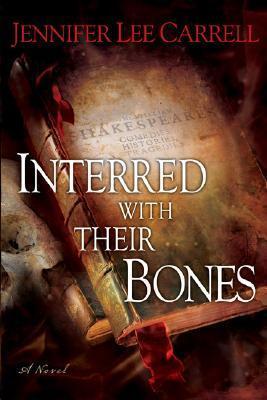
The cover page says that there is “a modern serial killer hunting an ancient secret.” Now Shakespeare lived during the sixteenth and early seventeenth century, then how come secrets related to him are ancient! Maybe we can overlook the choice of word!
As a thriller, the novel was okay-ish. Publishers Weekly, as printed on the cover page, had endorsed the plot twists of this book as being “worthy of The Da Vinci Code”, but I feel it is an exaggeration.
I am giving the book a rating of 2.5 which I am rounding off to 3!
The good thing about this novel is that it made me aware of the logic why some people think or are convinced why Shakespeare couldn’t have written those magnificent plays and sonnets. Shakespeare had very humble roots and in those days it was very unlikely for an individual like him to have received a good education. Then, the question is, from where he received the education and knowledge to write his plays! It makes you think, right! On the other hand, some people are born with extraordinary intelligence; social class does not dictate a person’s abilities always. Maybe he was a gifted individual. Guess we would never know!