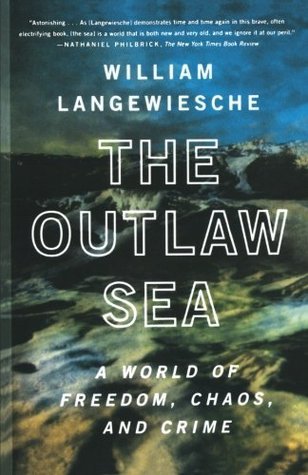
William Langewiesche recently passed away. I've been thinking about it for days, and returned to his writing as a result. His writing, for me, always had a quality that invoked a sort of obsessive need to read what he had to say, especially about flight. It started with my childhood intrigue and curiosity about aircraft flying at 30,000 feet above my nondescript midwestern town. Where's it going, who's in the plane, who's flying it, why are they in that plane, and so on. That fascination never waned, resulting in my discovery of Langewiesche's writing decades later in the library (Aloft) as a graduate student. When I read it, I was hooked by this factual, straight-shooting style and outrageously detailed research. I felt like this writer/journalist asked the right questions to get the best possible picture of whatever it was he was writing about. He must have been wicked smart.
Additionally, true to the non-fiction literary style, Langewiesche's writing is driven by an earnest desire to connect with the human element by describing who he has talked to and what they said. He somehow captured the essence of humanity, often in a single, economically built sentence with the absolute correct vocabulary to pack a punch. You can tell when he found someone off-putting or when he found someone interesting, but he has a way of putting it into the bigger picture.
I opted to listen to this book because the author narrated it (the only one he narrated).
The early chapters in the Outlaw Sea are sort of a chaos/pirates 101 introduction to the sea. Those stories are compelling in demonstrating the anarchy that seems to be the law of the sea and the difficulty of prosecuting criminals involved in piracy and maritime misdeeds. Like water itself, people and ships slip from one jurisdiction to another, never quite staying in one place. I won't call it an administrative set of chapters, but they are necessary to help the reader understand the inhabitants of the world of large ships.
The later chapters about the Estonia ferry disaster offer incredible, harrowing passages that leave you breathless, and also wondering, was this guy (the author) there? Was he literally on that sinking ship? Because he convinced me that he just might have been, simply through language.
But he wasn't there. He interviewed survivors, apparently, with the patience of Job. No angle, no agenda, but painstaking observation (smart), listening, research, culminating in an astounding synthesis of facts, events, and witness accounts. The details about the sinking, the way the ship moved, the weather, the utter futility. It's all captured in plain, clear language, but with those occasional, perfectly placed "smart-sounding" words that bring it all together.
The final section about shipbreaking was equally thoughtful, but in a completely different way. Shipbreaking's necessity and questionable practices reveal a story that explains the uneven global development patterns that continue to plague our world, affecting the environment, policy, politics, and human survival (even more so since this was written). I mean, look at this sentence, "The ships seemed to emerge from the earth, as if the peasants had found a way to farm them." Not even a fancy word in this one, yet he's juxtaposed the main themes so efficiently and imaginatively.
I'm gushing about the writing, but honestly, this sort of work amazes me because I'm reading something I know nothing about, and I keep coming back to it. It's not because I'm some ship nut, but only because these long vignettes contain suspense, action, truth, space, time, life, death, and injustices. Why would I read about a ship that I know is going to sink? I didn't even like Titanic (the movie). I keep reading because it's written well.
A great read. Thank you for leaving us with all this great stuff to read. RIP.