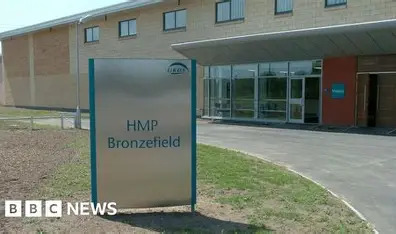
HMP Bronzefield, the UK’s largest women’s prison: notorious for bent screws and drugs:
But what’s the truth behind the headlines?
Forced into signing an NDA when she arrived there on remand, former public schoolgirl Sophie risked extra time on her sentence by documenting her experiences of life inside.
Backed up by recent research and statistics, Breakfast at Bronzefield offers a powerful glimpse into a world few see: riots; unethical medical prescribing; and prison barons – key figures behind prostitution and drug-smuggling.
In a world where anything goes and being rehabilitated simply means saying ‘sorry’ right up until you’re released, how will Sophie cope on the outside, where she is expected to play by different rules? Will she succeed in creating the life she wants? Or, like most prisoners, will she end up back where she started?
'Powerfully written... you give me hope.' Dame Sally Coates
'Eye-opening, thoughtful and determined. A thoroughly engaging piece of work that will challenge what you think you know about prisons and prisoners.' Dr. Lamiece Hassan
Sophie Campbell is a freelance writer whose writing has appeared in the Harvard Women’s Policy Journal (article forthcoming April 2021), Prospect Magazine, Medium, and BERA, and the author of BREAKFAST AT BRONZEFIELD (Sophie Campbell Books), a memoir about her time inside Europe’s largest female prison.
In 2020, she coined the term misogycon to describe the misogyny aimed at women who offend that has led to their forced exclusion from the labour market. She has been shortlisted for the National Press Awards - Reporting Diversity category, the Financial Times/McKinsey 2020 Bracken Bower Prize for the best business book proposal by an author under the age of 35 and she won the 2020 Emma Humphreys Memorial Prize that recognises one woman who through her writing or campaigning has raised awareness of state violence against women and children.
Review There is a central mystery to this book. The author who uses a pseudonym, went to prison for Grevious Bodily Harm. In the UK, murder is the most serious offence, manslaughter below that, then grevious bodily harm. It is the most serious of assault offences. She never reveals what she did, only that she had an additional conviction for assaulting a police officer.
It feels less than sincere and honest to present oneself and one's book and there is always the feeling what is she holding back, how is she manipulating the reader, why is she not upfront and honest about this very major issue? What compelling reason did she have that her editor would say fine, you don't have to tell anyone?
She doesn't hold back in describing how when she wasn't respected in prison she reacted with violence, from minor like pouring water over a prison officer to punching one in the face. Yet she advocates that ex-prisoners should not have to declare their offences when applying for a job, that they should be entitled to social housing and free university. The taxpayer who doesn't commit crimes is of course at the root of all this. The author seems to have an extremely left wing outlook when it suits her, but when it doesn't, well she herself took herself off to private school at 14.
If there is a greater incentive to commit crime if you are poor, have to live in adequate premises and would like an education, than to work hard for it, then best commit an offence and then when you've served your time, it's all free and no one will ever know what you did.
The author had some very interesting things to say about prison administration I had never really thought of before but are manifestly unfair. If a prisoner is charged with an offence she can be brought before a governor who will listen to the offence, listen to the prison officer and may or may not listen to the prisoner and any defence they have before sentencing them to variations in privilege, segregation etc.
Worse. For some crimes and outside judge is brought in and the prisoner does not have the right to a lawyer nor even to preparing a defence since the judge may not listen to it, but the judge has the power to sentence the person to extra time to be served. That is so wrong, this isn't justice. It really made me angry on her behalf that she had to go through that several times, even though she brought it on herself.
There is quite a lot of contradictory statements in the book which I think an editor should have addressed. At one point we are told how supportive the women are, at another how everyone is out for themselves and their really isn't any true friendship. Then there is mental health, how a lot of prisoners (including the author) say they have mental illnesses because it reduces their sentence but in fact don't. Then at another point how many prisoners are mentally ill but can't get appropriate treatment. There are many other contradictions.
The book was very uneven in chapters of interest, preaching and whinging. In content it varied from a 2-4. But there was one chapter that was a five star, if not more, and for this single chapter the book gets a 5 star. After the author had left prison she was instructed to live with her estranged father, also himself an ex-prisoner. He didn't work, didn't believe in it, benefits plus crime were his thing. His misogyny was extreme, women could be used to get money, or have sex with, or do keep house, but they weren't people to be respected. That included his daughter. He had no boundaries at all of what he would say or attempt to do to his daughter.
The author's absolute bravery in writing this chapter, all the anguish, bitterness and betrayal she must have felt. As soon as she could she cut him and all her family out of her life, all except her sister, who had done the same thing. Writing like that wins you prizes. She's going to be very, very successful under whatever name she chooses.
A note: I had the audiobook, not by choice, but that's what I got sent. The narrator had a bland voice, with a slightly depressive air which dampened down even the most interesting of chapters. YMMV. __________
The author (I’ll call her Sophie, though the Author’s Note seems to make it clear that this is a pseudonym used to protect her identity) is a young black woman who, after an incident she doesn’t describe, finds herself remanded in custody in Britain’s largest female prison. In fact, in total her stay in prison was to last some two years, divided between two separate facilities, and her account of that time is presented in this book. Her experiences are comprehensively and, I believe, very honestly documented and along side this she provides her own analysis of the shortfalls evident in our current prison system, supported by data obtained from a variety of sources.
Sophie grew up in the north of England. She makes it very clear that her father was a violent criminal and both he and her mother practiced substance abuse. In fact from the age of thirteen she’d taken it into her own hands to organise her schooling and subsequently became estranged from pretty much all of her family. She completed a good education (including time at a fee paying school, thanks to a scholarship award) and spent time in a decent if low paying job. And though she doesn’t provide details of the offence that led to her eventual jail sentence she does disclose that it involved a charge of Grievous Bodily Harm (a term used in English law to describe the severest form of assault) and also that of assaulting a police officer.
The broader descriptions of prison life didn’t throw up too many major surprises: it’s predictably grim, with poor food and constant bubbling tensions between inmates and with prison staff. Sophie openly discloses how she used tantrums and physical violence to achieve small wins with prison officers and settle grievances with fellow inmates. She was no saint, and she’s honest enough to admit that. Some elements that were rather more unexpected include the limited opportunities given to inmates to allow or encourage personal development and the almost negligible support provided to prisoners as they prepared for release and afterwards, when they found themselves once more back in the big wide world. Many, it seems, are sent on their way with little help, virtually no money and nowhere to live.
This is a gritty, no holds barred account and once I’d settled into it I found it compelling reading. If I were to offer a small criticism it would be that the desire to provide insight into the deficiencies of the system (and indeed recommendations for its improvement) rather got in the way of what could otherwise have been a flowing and cohesive narrative. But that’s a minor quibble and I quite understand her motivation for including this element. And though I find it hard to accept that Sophie’s behaviour whilst in prison was in any way tolerable I do very much admire her honesty, her tenacity and her drive. Through her own self motivation she’s managed to complete an education, survive a family group that would have sunk most people and despite a few false steps along the way put herself in a position to complete a university degree (she’s close to that stage as the book is published) and hopefully lead a rewarding and fruitful life. No small achievement!
My sincere thanks to the author and NetGalley for providing an early copy of this book in exchange for an honest review.
”...anyone can go to prison - your friend, your colleague or even the person who offers you their seat on the train.”
I guess that when the words “prison” or “prisoner” are said, images that spring to mind are those of a bloke with an imposing physique, lots of tatts, and a menacing air. Yes, your stereotypical crim. I don’t imagine that too many people would really think about women being in prison, let alone the unique set of issues which they face while incarcerated.
As the writer herself says ”I’ve never measured up to the anyone’s idea of what a female offender is supposed to look like…”.
But what does a female offender look like? Is there an atypical profile that ticks all the boxes? Maybe. Or then again, maybe not. As with so many books which are biographical, this book makes you pause for thought, and have a bit of a ‘sliding doors’ moment. If someone hadn’t been in a certain place, at a certain time...you get the picture.
And so it was with Sophie Campbell. With her bags packed, and on her way to the airport to start her life afresh in sunnier climes, she’s involved in an altercation, resulting in a prison sentence for GBH*. We don’t hear the intricacies of what led to this arrest, nor do we need to. It’s one of those things where people have a moment where they act in a manner which they later regret, and which has severe implications for them.
Coming from a family background which had both alcohol and substance abuse issues, Sophie had created a life for herself outside of the family circle. Moving away from London and living up north, going to university, and working. But, as with most things, it’s that split second, that moment, that changes everything.
Ms.Campbell ends up at HMP Bronzefield. I’d not heard of it before, so had to look it up. It’s an all female prison in Middlesex, UK and is apparently the largest female prison in Europe.
Observations of life both within and without the prison gates are done with a keen eye. We’re provided with appalling stats of the treatment of female prisoners, and about how difficult it is to return to a life of normalcy when released from jail, as there simply aren’t the resources to help everybody that needs that kickstart. Many become “repeat offenders” as they are unable to re-adjust to everyday life for a myriad of reasons: they are released to homelessness, cannot find gainful employment, return to partners who are also in the revolving door of incarceration or returning to old bad friends and bad habits.
It’s mostly through hard work and a bit of luck, that some are able to turn their lives around, and not end up back ‘inside’.
The description of prison life is equally fascinating and frightening. I mentioned to Collin that I was reading this, and he said that prison is an ecosystem all of its own. That’s so true. It’s a world within a world. I remember watching the TV show ”Prisoner” in my teens. Take it off the telly and put it into real life, flesh and blood people with friends and family, hope and dreams, and it’s a scary thing to contemplate. The cliques amongst the women, the boredom and frustration, sexual relationships between the women prisoners and between the prisoner and guards. Poor food, not enough food. The rules, the unwritten rules. Your best friend today wanting to slit your throat tomorrow. Little exercise or time outdoors. The lack of basic amenities, including female sanitary items. It’s a tough, harsh environment. And one that’s hard to bounce back from.
Sophie doesn’t pretend to be an angel while incarcerated, and oftentimes her behaviour did her no favours. Pressing a buzzer in her room for hours on end to annoy the prison guards, constantly throwing water over prison guards and other prisoners, all round petulant behavior. I guess as she says at one point, if she met her alter ego in prison, she would walk away.
I found it particularly difficult to understand and was saddened that Sophie’s father - who she lived with temporarily on her release from prison - seemed determined to hold her back, as if somehow willing her to fail. That’s tough.
This has been written both eloquently and articulately. In fact, this was one of the many things that peeved many of the prison officers and various legal people Sophie had dealings with during the two years she was incarcerated. The assumption being that someone in prison would be inarticulate, uneducated, and not have a job or any interests on the outside. Wrong on all counts.
From the petty experiences, to the struggles to make a life outside the prison gates, this book doesn’t pull any punches. It’s a grim reality check. This book takes you inside doors you’d rather had remained closed.
Kudos to Ms.Campbell for putting her experiences to paper. I believe that an audio version of this book will be available in August this year, which is a great accomplishment also.
I can’t help ponder if there’s any link between the title ”Breakfast at Brokenfield” and ”Breakfast at Tiffany’s”. It’s probably overly simplistic and whimsical of me to try to do so. But I can’t help thinking that these are both representations of women who don’t quite fit the boxes society is squashing them into, and who aspire to be so much more.
”I had no intention of leaving prison and letting my experiences there define me.”
*** I’d like to thank the Author, Sophie Campbell, for sending me a copy of her book, and for the opportunity to review it. I am truly humbled by this experience. I wish Sophie every success in the future, and much happiness with wherever life takes her. Her story shows that yes, mistakes can be made that cost us dearly. But that there’s always hope to turn your life around. You just have to have grit and determination. Sophie has both.***
*GBH - grievous bodily harm is the severest form of assault, usually resulting in mandatory high jail sentences.
Thank you to Netgalley, the memoirist and Sophie Campbell Books for an ecopy. This was released August 2020. I am providing an honest review.
Sophie Campbell (a pseudonym) spent two years in prison for violent crimes in the UK. She writes a collection of memories, vignettes and many thoughts and opinions on what transpired. She also makes many recommendations around what might work more effectively for female prisoners especially those of color. She writes well but the memoir is overly detailed and lacking in insight and interpersonal awareness.
I am not going to lie. I struggled so much with this memoir. I was very glad when it was done despite learning a little bit and disagreeing a lot.
The memoirist is tenacious, ambitious and super street smart at best. She is also super slippery, hyper critical and hard on most everyone (but herself) and presents a left wing feminist agenda for reform. She infuses selective statistics to back up claims and despite a life of attachment injuries comes across as entitled with a very large chip on her shoulder.
I wish her the very best in her endeavors to work in education policy and hope she finds a life where she feels settled and that she enjoys.
ARC received from the author in exchange for an honest review.
Breakfast at Bronzefield is an unflinchingly honest look into the British prison system from the point of view of a young, British, woman who has spent time in prison. It delves deeply into the politics and injustices of life behind bars, and the daily struggle to achieve even the basic human rights. Sophie doesn’t hold back on her experiences inside, and sets out to prove that female prisoners are woefully underrepresented and forgotten about in a system that just doesn’t seem to care, and favours the prisoner guards. Because who’s going to believe the story of an ‘uneducated’ or ‘drug filled’ woman over a respectable guard?
I think this throws up a lot of interesting and valuable points, especially given the current climate around police brutality and race. Sophie really doesn’t shy away from exposing everything of herself and her experience – often to the point where she doesn’t paint herself in the best light – having tantrums and starting fights to get what she wants. I admired this a lot, as it actually made me relate to Sophie more and feel an emotional connection to her predicament. I think if I was in her position, I’d probably do the same thing. Desperate times call for desperate measures – even if that doesn’t make you out to be a good person. Sophie at no point tries to make what she does seem acceptable, but she does demonstrate just how much power her prison guards had over her – being able to restrict or deny her food, clean water and even sanitary towels. No-one, regardless of what they have done to end up inside, should be denied these rights just because of a vendetta someone has over another human being.
Sophie has also clearly put a lot of thought into articulating her points regarding females in the system prion, backing up her statements with well documented and researched facts and figures. It shows she’s passionate about the subject, and trying to raise awareness about the lack of support female prisoners have, and a distinct lack of educational resources to raise them out of the cycle of re-offending. There is little to no support available to women to try and rehabilitate them to the wider world on release, and little opportunity to better themselves inside via school courses, meaning the majority of these women end up back inside. Because a lot of them are also originally inside due to husbands and boyfriends crimes, on release they are simply sent back to them – instigating a high chance of re-offending. More needs to be done for these forgotten women, and Sophie’s voice has a drive to it in her writing that inspires the reader to reach out and help.
A passionate and honest discussion into what life is really like in prison from someone who’s been there, on the inside, and experienced a lifetime of harrowing acts and a violation of their human rights. It shines a bright light on the topic area, and demonstrates that we as a wider population have more to do in order to help these women to break the cycle of poverty and crime.
Sophie Campbell, pseudonym to protect her identity, grew up in England with an abusive father and a drug addict mother. She basically put herself through school, receiving a good education despite her upbringing. When Sophie was incarcerated in HMP Bronzefield, the largest women’s prison in the United Kingdom, she naively thought – as she was on remand – she’d be out in a couple of weeks. But some two years later her views had changed significantly.
Apart from attacking a policeman in the police station, we don’t really learn why Sophie went to prison. But her telling of what went on inside the prison was pretty gruesome, though not that surprising. Her gritty, honest reflection of what its like to be a black woman inside Bronzefield, of sticking up for herself, of the guards who didn’t particularly care what went on, just happy to instil the punishment needed, of the violence and drugs that were rife throughout, of the mental health issues that dogged the inmates – and of course the food, or lack of it – all made for enlightening reading.
Breakfast at Bronzefield by Sophie Campbell is a non-fiction memoir of her time in the prison. It was interesting, intriguing almost, horrifying and demeaning, but I felt the writing was stilted and choppy. It didn’t seem to flow as I expected; here’s hoping the published version will have improved on this ARC. I wish the author all the very best with her future and thank NetGalley and the author for my digital ARC to read in exchange for an honest review.
This is the author’s first book, written about her time in prison after being arrested for Grievous Bodily Harm and assault on a police officer (GBH) in England. She finds herself in HMP Bronzefield, which is the biggest women’s prison in the UK. She shares just what it’s like to be female, a minority, and stuck in prison on remand while waiting for her case to come up. If you enjoy true biographies like this, you might want to check it out. I found it to be quite decently written, she tells it like it is without being overly gossipy. Explaining how she was seemingly expected to know how to get along and know the rules, even though it was her first time in. Like they didn’t believe her, even when she kept reminding them. They did finally assign someone to her for a short while to help her learn her way around, until she became adjusted a bit. It’s not like she wasn’t trying or was uneducated, as she had been to college.
It’s easy to forget about everything else when you pick the book up and start reading. You become engrossed in her world and what’s going on while she was inside and having to stick up for herself all the time. Often having to do crazy things to make a point that she won’t be pushed around, which often ended up with her losing privileges. Advanced electronic review copy was provided by NetGalley and author Sophie Campbell.
Breakfast at Bronzefield is one of the best books I've read this year. No jokes. No lies.
It's one of those books that opens you up to a world you might have heard of, but never really truly knew about before. I've watched Orange is the New Black, and have heard all of the stories from shows and books like it, but Sophie's first hand account opened my eyes up so much. Seriously, it's not the fun and cutesy stuff Orange brings you in the show (although, it is still an excellent show so I'm not hating on it).
Sophie is a real woman who was in a women's prison, and man does her story shed a different light on the "correction" facilities. By the sounds of it, we can hardly call them correction facilities anymore, but that's a topic for another day (or for this book, let's be honest).
This book recounts Sophie's tales as a black woman in the Britain's justice system. Women's prisons aren't the campy fun that some television shows might have you believe. The news doesn't do it justice either. Correctional officers and probation officers aren't always out there to protect these ladies, and inmates don't always get treated the way they should. The food isn't great, when they can get it. The activities are limited, and they're lucky to get them most of the time, especially if the officer or recreation assistant running it doesn't like them (for who knows what reason). Even then, once they are no longer inmates, it isn't easy for them to get back on their feet. The programs provided don't always help or have the best interests of these ladies in mind.
This book is honest, real and raw. It made me think a lot and wonder how the system got so corrupt. If we're trying to help people get 'better' or learn from their 'mistakes', why are we so harsh? Is there not better ways? It's mind blowing. The system we've been told is supposed to help and do good is quite corrupt.
Overall, the honesty and accuracy of this account is so mind boggling. While I'm not surprised, I also totally was. Sophie's accounts felt so real, and brought some new light to my eyes. More stories like these need to be told, and then maybe the system will change. That's a tall order, but it's possible - it just might take a very long time.
Five out of five stars.
I received a free copy of this book from the author, Sophie Campbell, in exchange of an honest review.
Sophie spent two years incarcerated. She describes her time inside in intimate detail. She's alsomopen and honest about the time she spent behind bars. We learn of the violence, mental health issues, drug abuse and much much more that took place on a daily basis. We also learn of the time she spent in HMP Downview. Sophie was determined to stand up for her rights and how she found the lack of educational opportunity annoying. They were only offered basic literary skills. Sophie doesn't really tell us why she was in prison.
This is an interesting memoir written by Sophie (a pseudonym). It's not for the faint hearted.
I would like to thank NetGalley, Sophie Campbell Books and the author Sophie Campbell for my ARC in exchange for an honest review.
While the author touches on a lot of issues inside prison (and even outside after her sentence) it didn't have the impact it should have. Her distant style of writing comes off as stuck up or entitled. I found her behaviour inside (and her lack of remorse for said behaviour) really undercut the effectiveness of presenting the issues. I think this would have been more effective if she had not stooped to violent immaturity throughout her time inside. Thanks to the author for my signed paperback.
“The degree of civilisation in a society can be judged by entering its prisons”
This is a fascinating memoir of a woman’s experience in a prison in the UK. It’s thought provoking and includes horrifying statistics on what happens to women in and after prison.
Thanks to the author for the ARC in exchange for an honest review.
As is the best kind of book, I have not read a title quite like this one. The automatic assumption may be to compare this to Orange is the New Black, but this should not be the case. It is very different and stands on its own, but of course it still highlights an institution rife with inequality. A thorough contemplation, perhaps this could even be treated as an expose of a very much flawed system of justice in the corrections system of Britain. This may sound trite or scandalous, but this story is very real; written by an educated and determined young woman. A resourceful woman who was able to use her time of imprisonment as an intense observation of a system full of inequality and unfairness. Sophie tells us of countless ways the objectionable nature of the day to day life inside Europe’s largest female prison.
I was surprised and honoured to receive an email from the author offering a copy to review and received a lovely card alongside my signed copy. This sort of thing is special, and it has always made my reading experience special.
The author experienced a very hard background, she does not use this to blame the outcome and her journey into prison, but I think she certainly uses this as extra gumption for success. As an early teen she sought out scholarships on her own with no assistance from her family, remarkable for a young girl. I am so impressed; I did this for my own children to enable them to access private high school education here in Australia, but for her to do this at such a young age with no support is remarkable. It certainly has paid off; her education is continuing today where there is a high expectation of casual work, internships and engaging in university life. She is a very busy woman trapped in deep isolation due to COVID19 [this review is penned in early February 2021].
Whilst in prison, staff are always be surprised when her intelligence shone through, which paradoxically to me shows a huge amount of ignorance. It seems they expected nothing from her given the colour of her skin. In all facts and figures mentioned (and there are a lot), all items are thoroughly referenced; this was a labour of love and meticulously laid out. I ready many Guardian articles referenced.
Sophie (a pseudonym for many reasons) pushed so hard to obtain training inside, use of computers in the library, access to information to no avail. Realistically, if one was to help themselves to find out information regarding university entrance etc, one would have to rely on friends or family to post information or print out the hundreds of pages required to study. This was a rarity as so many inmates did not have support. The situation did seem totally helpless; class and education meant nothing. Doctors (as inmates) were treated no differently. Sophie had to work doubly as hard when represented by solicitors, it was explained how being represented by those of the same skin colour may work against you, as those in a position of power need to be seen as driving a hard line; if they were seen to be ‘soft’ this would present a whole lot of problems and it was likely the inmate being represented may have received outcomes harsher than realistically assumed.
Sophie had a short stint in the library and on one occasion community librarians attended to observe. As soon as the visit commenced the vibe changed and the group clung together. It turns out they were mostly interested in the ‘reasons for’ her incarceration. This was a theme all along with the author’s dealings with anyone aware of her past. It seems a shame lessons could not be learned, and skills shared clearly libraries are an institution of learning sharing of information. Clearly, she was a well educated woman with a lot to offer the prison library, yet the experience seemed like another wasted one. As an individual, I have a different type of empathy and would want to help as much as I could, entering the facility would have been a choice and one to use as an excellent experience. Unfortunately, she only got to shelve a few books and hand out colouring sheets to fellow inmates. She did push for further work such as loaning items, but this wasn’t agreed upon; at every turn there was resistance and seemingly unnecessary resistance at that. She wanted to build her skills and use her time wisely; she did end up working with valuable items in archives while studying for her degree post incarceration and having given the opportunity to work further in the library she would have gained more work experience.
Many schemes and partnerships were mentioned for connecting enterprise and the prison population for post release, but these were usually followed up with the author as being failed or unused, or worse still, participants being paid below award wage as a common theme. Or frustratingly, they would have a program (Toastmasters for example) that existed but was not promoted. Sophie was a perfect applicant for this but was not aware. This entire institution seemed like a radical mess.
Directly from her website: In 2020 she coined the term mysogycon to describe the misogyny aimed at women who offend that has led to their forced exclusion in the labour market.
Sophie’s time served was littered with bad behaviour (her own); I’ve been pondering this and came to the conclusion that she was so smart (and bored) that she just couldn’t help but make the poorly behaved staff see what she thought of them. This defiance is heart-warming in a way, although this might seem an odd stance. She didn’t seem to belong; she was young and feisty. So many of the staff acted appallingly, and the behaviours from some of the inmates were just as bad, unsurprisingly I suppose. Bickering, grievances, interesting ways of dominance and rivalry. Poor quality of food and simply not enough of it. In my own little world clearly, I can’t relate, but Sophie’s no holds barred account raises so many questions.
The things us lay people assume about bribery is true, smuggling phones, sex between guards and inmates, physical intimidation and altercations. There are no surprises here I also suppose but confronting nonetheless as an outsider such as I who has never set foot inside a facility. My father worked for the former Commonwealth Employment Service here in Australia where part of his role was to speak with inmates about their employment opportunities post release. I must ask him about this experience, which I had completely forgotten about till now.
“It was as if the officers had reached their own conclusions on what an ‘authentic’ black person versus a ‘non-authentic’ black person was, and if you didn’t conform to the former, not only were you treated contemptuously, but you also had less chance of getting responsible jobs or being considered for early release.”
Sophie is black, educated and quite the renegade. Of the latter two, quite a fiery mix. She has made so obvious to the reader the terrible disparity in the educational system in England; the public system is quite appalling; poor quality of teachers and lack of resources. So, in a way, this book is not only about her experience in prison, but of the poor level of the education system in general.
“Having walked out of prison homeless with no support network and no assistance from either the prison or the National Probation Service, I should by all accounts have ended back inside, or even dead; 79 percent of offenders who are released from prison homeless go on to be reconvicted within the year, and female prisoners are 69 more times likely to die in the week following their release from prison, compared to women in the general population.”
The author secured a job within two weeks and in the same year had her own private accommodation and a successful University application under her belt. Oh – and published this book of course.
The probationary system demanded she stay in her father’s accommodation on release. He was a criminal living in substandard accommodation, and she had to share his bed. This was deemed appropriate. She felt unsafe. Being the resourceful girl she was, she made sure she got moving quickly into her own temporary studio. Given the setbacks this would have been a remarkable feat.
She was penalised for attending parole meetings late or for cancelling them due to university lectures; all with advance warning. The parole situation set up for her ended up being inconsistent due to the procedural rules, another sign of disparity. She followed things up and got to know her rights, but other women in her situation would not have been able to. There were so many instances. For example, they wanted her to travel hours away on the day of release with her suitcases to report for probation. To then return to her father’s residence on the same day. She pushed to get her point across, but others wouldn’t have the gumption to do so and would just find themselves living rough. It has been reported that inmates are sent off with a sleeping bag. So tragic.
Sophie has supported herself from such a young age, she never received support, nor expected it. She has cut herself off from her family and seem to have accepted this along with such pragmatism that seems to have served her well. She is now onto master’s level, such a fabulous outcome.
This reading journey was interesting, eye opening and brutally honest. I thank the author for the privilege and opportunity. It has been lovely getting to know the author, and as a reader I feel this completes the reading cycle and made it such a rewarding one. And this, I think, is what it is all about.
Sometimes in life because of the choices we make we end up having to learn lessons the hard way but out of that comes a new understanding and a new direction in life. Because of Sophie's choices she ends up in prison in England for two years. Out of that comes an understanding of what prison life is really like and not the tv version of prison. In this book Sophie see's the wrong treatments of women inside and comes up with ways that would help improve the life of woman.
My friend said there is good sides and bad to every personality. Sophie has this passion of rightness which is good because it gets her thinking of how to improve things but it also means she gets into trouble. On the first night in prison she hadn't had tea so she kept pushing her buzzer after being told not to till she got something to eat so she got tea and a slip to say two more and she would loose privileges e.g no t.v. She just wanted to fight for her rights like she had done all of her life.
One time Sophie comes up before the Governors Governor and she wants to read out a list of complaints she had collected in her short time in prison but he would interrupt because he didn't want to know in the end she had to give up and got ready to leave but instead of being lead out she ran towards the Governors Governor and slid across the table to attack him. Which I thought was funny, she is one crazy brave women. Not something I would do.
Sophie has put a lot of work into this book it has a lot of facts and percentages of prison life. It's not a wo is me sort of story, she isn't sitting in her prison cell rocking back and forward (like I probably would) she is sharing her story in an honest way she is not a role model for how to act in prison but she is talking about the way things could be improved. Like putting wages up to the living wage so people don't have to turn to crime to make ends meet. Helping with education to improve the chances of a good job and an easier life in the world. setting up support systems to help women in prison and to help them settle back into the real world with a safe home and a way of paying the bills.
I like Sophie and I could learn from her. She came from a really rough background but it didn't stop her from trying to improve herself through education so she could make better choices and not get caught up in a world of crime and the abuse of others. she wasn't about people feeling sorry for her she has had to fight for every thing she has got. She has had to find her inner strength and courage to step away from people who would rather use her for their own destructive ways. I am proud of her for that. Yes she spent two years in prison but while there she had a plan to up skill and go back to university to fight her way out of the prison cycle.
I have never been in prison but in the 70's I did sit in the car with my siblings while my parents went in to visit my uncle (who was only about 12 years older than me) who was doing time for his crime. Years later he told us my father was very supportive of his siblings he also said his ex wife rang up the job he was in and said he had spent time in prison and had not put it on the job application so he lost his job. So I understand the dilemma that ex prisoners have when trying to get a job. Also my husband had to go to court 26 years ago because of a accident so when we travel he has to go through customs to get checked and he will have to do that for the rest of his life. I have also been on minimum wages my whole working life. So that is why I said yes to reviewing this book and I am glad I did.
I want to thank Sophie for allowing me to review this book for her through netgally. I wish her all the best in the sales for this book. I hope people do pick it up and that they won't be quick to judge but find ways to help the people around them. There should be equal rights for those inside and out. Sophie is proof that yes we stuff up but we can pick ourselves up and turn our lives around.
Breakfast at Bronzefield by Sophie Campbell. (2020).
**Thank you to the author for getting in contact and sending me a free copy of this novel, I am very appreciative**
Sophie documented her experiences inside HMP Bronzefield, the UK’s largest women’s prison, despite being forced into signing a NDA when she arrived there on remand. Backed up by recent research and statistics, Breakfast at Bronzefield offers a powerful glimpse into a world few see: riots; unethical medical prescribing; and prison barons. In a world where anything goes and being rehabilitated simply means saying ‘sorry’ right up until you’re released, how will Sophie cope on the outside when she is released? Will she succeed or like most prisoners, will she end up back where she started?
I want to take a second to acknowledge how brave it must have been for this author to keep notes on her prison experience after being forced to sign a non disclosure agreement; and also acknowledge that it must have been quite emotional to have reflected on everything while writing this book.
Now onto my review! A really niggling thing for me personally was that I was disappointed to not know the exact incident that lead to the author's arrest; the author does explains her feelings about it not being necessary to disclose specifics of her legal history for the rest of her life but I do think it would have been within context for this particular book. I also think it would have supported her argument that it's not just disadvantaged people that land in prison, it can truly happen to any of us. I found the author's account to be quite honest in that she describes how in prison many women take on a different persona to survive and often this persona includes being more defiant and aggressive. I found the flow a bit chaotic in that the author jumps all over the place in terms of timeline. In saying that, I would consider the style of this book to feel a bit like a diary; the author is explaining things as she thinks of them. Overall: an interesting and informative memoir that will hopefully be eye-opening and enlightening for some people.
Bronzefield is a prison for women in England where the author was incarcerated for two to three years – and she ended the last few months at another prison called Downview.
This woman is a pistol. And you have to be to survive in prison, otherwise you become everyone’s punching bag. She lashes out – and towards the end of her sentence she even tosses a T.V. out of her window (Keith Richards style one could say!).
So, she has a temper which flares up now and then.
We get an insider’s view on prison life – the interaction with fellow inmates and the guards. Prisons are not just made up of the “lower classes” and homeless. She has many insights on race and gender. Female prisoners receive far less visitors than do male prisoners. All prisoners lie and deceive.
In prison everything is reversed; one behaves in a way that would be totally unacceptable in the outside world. One must re-adjust quickly upon release to modify behavior when returning to “normal life”.
The author never tells us why she was sent to prison. She says merely that it was a GBH - Grievous Bodily Harm (I had to look up GBH). She also mentions that all fellow prisoners and visitors want to know why you are in prison – in the authors case, depending on her mood, she may have politely answered that “its’ personal”. She tells how other prisoners, when on the public phone, would recite and spell the names of other prisoners in order for the recipient on the other end of the line to look them up and research the reasons for their jail term.
I was surprised that inmates were not given access to a PC – but that may just be my naiveite.
We get a penetrating view of the author’s father when she is released and stays with him for a few days. He is a real piece of work.
The author succeeds in overcoming her prison term. Prior she had been to university and worked (I am not sure at what). Upon release she continues to pursue her education at university and works part time. I found the passages on her academic and housing issues of little interest to me, but may be more valid for those in the UK.
But all power to her for being resilient. She makes a complete break with her past – and drops one prison friend because she felt encumbered by her.
She strongly suggests that prisons should improve on their educational programs. Education is a strong incentive for preventing recidivism. Aid is needed to find released prisoners proper housing. Being homeless is sometimes a step away from being imprisoned once more.
It is commendable given the obstacles that were placed in the authors’ life that she is now a success – and has added authorship to her educational accomplishments.
Page 274 (my book)
I’d hate to live a life where the only time someone is prepared to listen to what I had to say is when I was talking about race or women in prison.
Page 276
The only advantage going to prison offered me was that it allowed me to change my approach to life and how I thought about myself. I left prison with a huge drive to succeed.
Sophie spent two years incarcerated. She describes her time inside in intimate detail. She's also open and honest about the time she spent behind bars. We learn of the violence, mental health issues, drug abuse and much much more that takes place on a daily basis. We also learn of the time she spent at HMP Downview. Sophie was determined to stand up for her rights and how she found the lack of educational opportunity annoying. They were only offered basic literary skills. Sophie doesn't really tell us why she was in prison.
This is an interesting memoir written by Sophie (a pseudonym). It's not for the faint hearted.
I would like to thank NetGalley, Sophie Campbell Books, and the author Sophie Campbell for my ARC in exchange for an honest review.
Breakfast at Bronzefield offers a powerful glimpse into a world few see: riots; unethical medical prescribing; and prison barons – key figures behind prostitution and drug-smuggling.
It was very informative about various aspects of the prison system. Also, it highlights an important issue that prisoners are hardly rehabilitated. In fact, they are thrown back on the street without any resources or support after their time is served, which proves to be a challenge for those prisoners to start a new life without facing difficulties and discrimination.
Overall, an insightful look into the life of a prisoner.
Thank You to NetGalley and the author for this ARC!
“Prohibiting women from contacting the media ought to be revoked. I believe the public has a right to know what goes on inside prisons and should not have to wait until memoirs are published to gain an accurate picture of the nature of things.”
This is the account of Sophie Campbell, who details her experiences in 2 of Britain’s women’s prisons for us in this memoir-cum-comprehensive, thought-provoking insight.
“Having walked out of prison homeless, with no support network and no assistance from either the prison or the National Probation Service, I should by all accounts have ended up back inside, or even dead: 79 per cent of offenders who are released from prison homeless go on to be reconvicted within the year,2 and female prisoners are 69 times more likely to die in the week following their release from prison, compared to women in the general population.”
I have read so many prison books, and true crime books, but all written from the perspective of the jailor, the doctor, the journalist etc...this is the first memoir I’ve read of a prisoner behind the gate and for that reason alone I was attracted to this book. When I was lucky enough to receive an ARC in return for an honest review I was absolutely chuffed, and excited to read.
The book delves into many areas of prison politics: education, women’s rights, BAME prisoners, economics, family life, bitchy girl gangs, work in prisons, the judicial system, the prison audit programme, contractulisation of feeding inmates, drugs, pharmaceuticals (yes there’s a difference...but which one is worse?), prison release and rehabilitation, the flaws of the probation service and the difficulty in securing housing and a job upon release.
Sophie does not detail the nature of her crime - in fact, I realized rapidly early on that she wasn’t going to - and at first this disappointed me. However, as I progressed through the book, I completely realized why she doesn’t share this information. Too often, people are only interested in prison leavers’ experiences because they want to learn what crime they committed, what led them to do it, if they feel remorse etc. Sophie tells of times where visitors to the prison strike up a conversation with her, only to be blatantly only interested in finding out what crime she had committed to get herself in there, rather than hearing about her experiences in prison. This book corrects that, and it is clearly a conscious decision to use this book to describe Sophie the individual, Sophie the prison survivor, Sophie the ambitious and striving young woman and not Sophie the criminal.
There are so many insights in here that have made me completely rethink my attitudes to prison life, and there are so many insights that have absolutely shocked me and educated me on the disgusting failures of our penal system. The book is balanced with many interesting facts and statistics, and a lot of hard work has gone into making this book not just an honest recount, but a factual one too. I was horrified to learn of prisoners going to bed hungry ( “It always seemed incredibly ironic to us that the company that owned the prison, Sodexo, had a Stop Hunger Foundation to feed vulnerable people, but seemed to forget about the women entrusted to their care as not one night went by when someone didn’t go to bed hungry.”) and amazed to learn that Magistrates require zero ..yes zero...legal training to be a judge..(Worryingly, magistrates aren’t required to have formal qualifications or legal training. Instead, they have to be of good character and have an awareness of social issues. They’re assisted by a clerk, whose primary role is to provide legal advice to the magistrates especially regarding points of law.“). It made me think of the stark differences of men who go inside, who often have women on the outside looking after their children and homes and paying their bills, and women who once they go inside do not have visitors, or people looking after their homes and finances whole they are away. (“when men were released they had friends and family waiting for them outside the gates to collect them, but women, in the majority of the cases, were left to their own devices, carrying their belongings in black plastic bags to the nearest train or bus station.”)
I was particularly interested in Sophie’s accounts of being a BAME prisoner. Interestingly she feels that the calls for more POC to become judges or legal representatives are not necessarily a benefit, and states: “BAME personnel who work in the court system feel the need to distance themselves from defendants that look like them and, in turn, advocate for harsher sentences.” “I guess when you work in a system where those from an ethnic background are disproportionately more likely to be tried and convicted in the Crown Court, they probably feel the need to draw the line between them and you.” “A few women I met in prison, from a range of ethnic backgrounds, were represented by those who looked like them, and they never said to me, ‘I feel so lucky to be represented by one of my own.’”
The insight into leaving prison and the restrictions and lack of help amazed me as much as the insights into prison life. Thank god Sophie has courage, enthusiasm, and self belief....thanks to her own sheer determination and effort she has managed to not allow her stint in prison to stop her from achieving, nor to keep her from earning money or a roof over her head, and has even gone on to study at university for a second time. I think if she had not got the oomph that she so clearly posses then this could have been a very different tale. As Sophie says: “they were quick to ask for the name of the prison or probation officer that had helped me to sort my life out. Dozens of times, I had to insist that there was no one in the background helping me. Like a lot of women who leave prison, I managed to sort my life out all on my own.”
Thank you for writing this book it has educated me beyond belief.
Not quite what I was expecting, but still a really interesting read.
Sophie Campbell (pseudonym) was charged with assault and sent to Bronzefield prison, pending trial. This account details her experiences inside, and of the rehabilitation process afterwards.
Firstly, I found the structure a little off. The events jumped around a bit, rather than being laid out chronologically, which could be confusing at times. I found it disrupted the flow a little and made it trickier to follow.
There's also a massive focus on the prison system, rather than any kind of personal focus. This rubbed me wrong for a few reasons. Firstly, we never find out what Sophie's story actually is beyond the barest of details (which seems to have been an intentional choice) so it makes it hard to empathise with her and her experiences, and to take her at her word. She easily admits to being a violent person, to lying and faking mental illness to receive less consequences. It was bravely honest, certainly, but it also meant that I didn't feel a lot of sympathy for the negative experiences she had as a prisoner, and I found myself often questioning how honest her account was.
Secondly, I'm a bit of a black-and-white person at times, and I do generally believe that criminals should be punished. For example, one of the first complaints Sophie shares about her experience is that she wasn't allowed to bring in things like makeup and skirts that were considered 'too short'. That seems such a petty complaint to me for someone who has been charged with inflicting grievous bodily harm on another human being. So there were a lot of moments like that where I didn't really feel the sympathy I think I was supposed to, and Sophie's quick decision to choose violence in most cases made it harder for me to appreciate the support she was requesting on behalf of prisoners like herself.
That being said, there were definitely some red flags here, particularly with the inconsistencies in treatment the prisoners experienced. It does seem like there should be more effort put into establishing firm guidelines and boundaries. The rehabilitation process, for example, struck me as terribly unjust, and I can understand the concerns Sophie raises.
This is a detailed look at one specific prison in the UK, but it does raise broader questions about the justice system, and the treatment and eventual rehabilitation of prisoners. This account operates on the conclusion that most criminals have become so due to poverty and inequality, and that seems tragically realistic to me. But the book also gives far more empathy to prisoners than I was willing to offer.
It was a really interesting read, and it was also fascinating to me to consider how I responded to it. I know I have some unconscious biases and it seems one of those is towards criminals (Probably not helped by my frequent enjoyment of serial killer podcasts and the like).
This book made me consider a little further the experiences of prisoners, and I think Sophie raises some really worthy considerations for reforming the prison system. It's more factual than personal, so don't look for a moving memoir here, but an interesting read all the same.
With thanks to the author and Netgalley for an ARC
I’m drawn to reading memoirs, but Breakfast at Bronzefield was one the most very heartbreaking, account that I have read.
I have read several other books about prisons, but never from a woman who has served time in a prison.
The whole 368 pages was a page turner for me, it explained quite a few things that I didn’t even though happened. And I know that other readers will feel the way.
I also think that Sophie Campbell was very brave to write her own memoir of her time in prison. It’s a well know fact that women in prison are rarely given the opportunity to write their own stories. I have to admit I was quite tearful at times all about what Sophie went through during her time in prison.
Sophie Campbell tells us what is like inside the UK’s largest female prison.
Non-Disclosure and Invisible women examine the NDA that all women are made to sign on arrival at HMP Bronzefield.
Sophie was half way through her social sciences degree she decided to write about her experiences as a remanded prisoner inside the UK’s largest female prison, HMP Bronzefield.
When she signed up to do an extra module on philosophy and Mental Health, not realising until later that one lecture would be about female prisoners. If she had known this beforehand, she would never have enrolled. Sophie left prison determined never to look back.
Sophie was sent to Bronzefield for GBH and one account of assault against police when the station at the police station later got out of hand. Sophie Campbell takes us through what really happened inside prison. I’m dreadful upset that prisoners are treated badly and can starve without given food. Sophie often mentions that she was hungry and worst still Sophie don’t think she had ever been so hungry as when she was in Bronzefield.
The prison cut corners feeding prisoners to save money. Breakfast was a cartoon of milk which was of more than it was on, and stale, child-sized portions of Rice Krispies or Corn Flakes, this is the most disgusting part the cereal, was served by Servery workers put into a blue plastic bowl using their hands.
I praise Sophie for not being afraid and speaking out about certain situations to prison staff while being inside in the Bronzefield prison.
What I find the most upsetting is that when Sophie left prison she was homeless and being left without any support what so ever, by the prison I find that very hard to digest, surely the prison services should find somewhere for her to live. I was saddened to learn that a lot of women leave prison homeless.
You must read Breakfast at Bronzefield as it’s a very rare read that offers what life is really like in prison for a woman.
I recommend reading Breakfast at Bronzefield, through the way Sophie explains what goes on behind prison doors really educates you and opens up your eyes. There is so much that happens and Sophie Campbell will tell you everything. The book has been extremely well written with unfolding, unexpected and memorising events you won’t forget.
⭐️4 Stars⭐️ A true experience of life inside the UK’s largest women’s prison
I couldn’t wait to read Breakfast at Bronzefield by Sophie Campbell. Many of us are curious about what goes on in a women’s prison, aren’t we? Who isn’t a fan of those gripping TV shows, ‘Prisoner', 'Orange is The New Black' or ‘Wenworth'?
Sophie holds nothing back in this candid memoir of her time as a prisoner, she exposes the abuse that occurs in two women’s prisons in the UK. She is a well educated and a fiercely determined woman who is not going to let this bump in the road stop her to lead the life she wants.
The author is honest to admit in prison she used physical violence to settle grievances with prison officers and fellow inmates, she believed in standing up for her rights. Sometimes it was a struggle, as basic human necessities would be denied to her just because an officer held a grudge and this would be when she would lash out.
Corruption, lack of education services available in prison, stereotyping, lack of food, prison wages, violence and drugs are some of the subjects discussed in the book.
Sophie reveals there is a huge lack of support, to assist with accommodation and finances when the women are released which is part of the problem many of the women end up back in prison.
A intriguing and eye opening look at the UK prison system backed up with informative statistics and intensive research which must of taken a considerable amount of effort and time to document.
I wish to thank the author Sophie Campbell & Netgalley for sending me an advanced copy of Breakfast At Bronzefield in return for an honest review. Sophie I sincerely wish you the best of luck with your writing career and hope you find it successful.
Breakfast at Bronzefield is a captivating and insightful read about Sophie Campbell's (a pseudonym) experience as a prisoner incarcerated at HMP Bronzefield, the UK's largest female prison. Sophie shares her riveting story of what it is like to be a minority female, and the conflicts she faced during her time not only in prison but once released as well. Her account highlights the significant injustice that many prisoners face revealing statistics and her own personal experience. An eye opening account that needs to be read!
Thank you to NetGalley and Sophie Campbell Books for an arc of this novel in exchange for my honest review.
thanks to the publishers and netgalley for a free copy in return for an open and honest review
this book was interesting but felt however it lacked a little something about a BAME female in 2 prisons and her experiences of the system when in and once released and some of the people she had met whilst there both inmates and officers
If a person seeks only to ever see the negative, that's what they're going to find.
Normally, if I give a lower rating to anything autobiographical, I am at pains to say I'm not denigrating the person's experience - just saying that the book is poorly written or badly structured. This time I'm probably leaning in the opposite direction. I didn't like the book because I couldn't like the writer.
Sophie Campbell - or whoever she is since that's a pseudonym - approached her time in prison from a sense that everything was everybody else's fault and entirely failed to address her own offending behaviour whether before or in prison. She evades telling us what she did but GBH is a serious issue; GBH against a member of the police even more so. She clearly has some serious issues about anger management and her attitude to authority and people in uniforms. During her time in the two prisons, she continued to use violent assaults against staff and other prisoners without any apparent remorse for her actions.
Sophie has an over-developed sense of entitlement that means she seems entirely unable to see that the treatment she received - exaggerated for dramatic effect as it may be - was largely brought upon her by her own actions and attitudes. If you go to school and spit at the teachers, you won't get treated like the good kids. If you get a job and throw water over your colleagues, you won't have a job for long. And if you act up in prison, punch staff, annoy other inmates by ringing your buzzer all night, you're likely to receive some of the limited sanctions that staff can apply against you.
There are things she doesn't mention and one of the main ones is that Bronzefield is a private prison and not managed by the Her Majesty's Prison Service. I mention this for the many readers who are not UK-based. Private prisons tend to be staffed less professionally than HMPS prisons and some have such poor records that rioting has led to their closure or being taken back into HMPS control because the private contractors just can't deliver the appropriate service. Private contractors are aiming for maximum profit at minimum spend and so may well cut back on food rations.
She also says nothing about the vast majority of GOOD prison staff. My husband has served 30 years for HMPS, including several years at a women's prison in Suffolk where he soon learned that for many of the women in his care, he and other male officers were the first men who had ever treated them fairly and with respect after many years of physical and sexual abuse from male relatives, drug dealers and pimps. My husband has never been assaulted, never been investigated, has never drawn his baton and was often stopped on the street by ex-inmates in our area because they wanted to ask how he was doing and let him know they were OK. He is not atypical of many prison staff. I recall one older lady chatting with him for 20 minutes at a village fete, and introducing her husband. As we walked away he whispered to me "She pushed her mother-in-law down the stairs and nearly killed her".
Sophie Campbell tries to tell us that she's not like the other women inside because she went to a fancy school, has more than average education, and was working before she seriously assaulted a police officer. She also tells us that both her parents were drug addicts, that her father did a long sentence for violent crime and various other members of her family also had criminal records. Sorry, but fancy school or not, that sounds pretty exactly like a lot of the other women to me. She's angry that she ended up on remand - despite planning to flee the country and having her suitcases and passport with her when she was arrested.
There are many things wrong with the women's prison estate that need to be addressed and my two stars are for her raising awareness but I'm not sure Campbell makes the strongest case when she's been such a problem inmate, with dozens of assaults on staff. There are too few prisons in the UK and too much of the capacity is in the London area. Far too many women lose contact with family and friends due to being very distant from their homes. Often prisons are in areas hard to reach by public transport. Women who can't keep contact with family are much more likely to lose their children into the care system and will struggle to get them back on release. Getting a job with a criminal record is never easy - especially with many roles in even low-paid work requiring criminal record checks. And being released with less than £50 in your pocket and a one-way travel warrant is insane. Being in prison isn't a holiday camp - though some tabloid newspapers would have you believe differently.
Campbell has served her time and deserves a clean slate. She writes well - though in a rather rambling and repetitive style - and the book could have been half as long and twice as effective. Those who self-publish often suffer from over-egging their pudding if they don't get a good editor. I wish her well but I don't think her book is as effective as it might have been and I hope that one day she'll start to accept that sometimes change has to come from within.
With thanks to Netgalley and Sophie Campbell for the free ARC in return for an honest review.
Breakfast at Bronzefield is Sophie Campbell's memoir of her experience in the UK prison system where she's served a sentence for grievous bodily harm. At times touching, at times raw, this is an honest and straightforward account of things as they are. Sophie doesn't shy away from sharing her own mistakes and her unbecoming behaviour inside Bronzefield and Downview, but she also doesn't keep quiet about the wrong that has been done to her and hundreds of other girls and women in prisons across the UK. And I suspect many other countries. This is not an entertaining crime book you can flick through at the beach, nor is it a book about a poor girl who's lost her way but has finally found the light and become a better person thanks to an altruistic good officer or the efforts of a system that cares. None of Sophie's success after being released is in any way due to the system.
This is a book that requires a certain level of open-mindedness, willingness to think about things you might not necessarily consider otherwise. It requires you to think of the many nuances of right and wrong and about the fact that things are not always purely one or the other. Most of all, it makes you look for a balance between sympathy and justice. There's a lot in Breakfast at Bronzefield that requires a large level of sympathy, both for the inmates serving their sentences and the guards working in prisons, but it also questions your sense of justice. Interestingly enough - again towards both inmates and prisoners. Are guards automatically good only because they keep bad people behind bars? Are prisoners only bad because they have to be kept closed inside?
On a personal level, I have always been interested in the way our prisons operate for a number of reasons. First of all let me say that when it comes to justice, I am quite conservative and believe that wrong-doings bring consequences and the worse the crime, the harsher the consequence. But I have always been aware of how the border between serving justice and overdoing it is very, very thin. I've always wondered why is it that we know so little about life in prisons apart from the fictionalised, romanticised and dramatised versions we see in modern movies and TV series, and Sophie Campbell gives us an answer to this question straight away - upon entering the prison, every prisoner is obliged to sign a non-disclosure agreement that forbids them to speak about anything they experience inside. You probably understand how this should alarm us all - if everything is done well and so much effort is put into reforming those who have made a bad decision in their life, why does it have to be kept a secret? If the way our prisons operate is good, why would they add extra days to the sentences of those who dare speak about their experience inside the system? If our taxes are being used to build and maintain these prisons, why are we not allowed to know about them? Justice is not something done quietly. That's called vengeance and it's what thugs do.
Structurally, this book is written in topical chapters that often follow a subject from the beginning of Sophie's time in prison until after she has served her sentence and been released. In some chapters she deals with the question of education and how prisons generally tend to think everyone who is being locked in a cell is poor, unemployed and uneducated. Other chapters deal with topics such as family support, race, multiple convictions, opportunities for inmates to gain access to education, poor feeding and generous abuse and humiliation by guards, but most of all - the unbelievable amount of people being released from jail without any sort of support system, home, or anything to fall back on. I needed to read this book to finally understand why so many people return to prison time and time again after spending so long in such horrible circumstances in the first place. It is perhaps the structure of the book and how Sophie follows a number of topics from the beginning of her sentence until after she's been released that has left a few reviewers, at times even me, feeling that she's being repetitive. But this is unavoidable in such an approach to structuring the narrative and actually allows you to follow each topic from start to finish in a very logical manner.
Stylistically, Sophie's language is conversational and raw and supported with real statistics and data taken from recent researches and reports. This is what makes this book invaluable in understanding the way the prison system works - it's not written by an academic who has never spent a day in prison and has only a theoretical approach and interest in prisons. Nor is it the purely emotional account of someone who has served a sentence and wants to gain our sympathy and understanding by squeezing a few tears out of us. Sophie Campbell combines the two worlds seamlessly and explains how the current system operates and where it fails to achieve the goals it prides itself in supposedly achieving. And what won my respect was that in many cases, Sophie herself admits to not knowing the solutions, but calls attention to the fact that the current solution is flawed and something needs to be done.
In the most literal sense of the word, Sophie Campbell shines a light in a place that is being kept dark by the implementation of non-disclosure agreements, fake programs that bring no results, and literally taking away the small chances of people to fall back on their feet once they're being thrown back out into the outside world. Sophie's work is admirable and very much needed. Our courts and prisons operate based on outdated laws and authority that finally needs to be questioned.
ARC (my first!) received from the author in exchange for an honest review.
This diary type journal is the unflinching, sad yet honest look into our prison system from the point of view of Sophie (not her real name) a young BAME female who spent two years (pre and post sentence) at two female prisons, the first being the UK's largest for female prisoners.
We don't know much about the crime that Sophie was remanded and subsequently served her sentence for, it is not massively relevant. The book focus on what it is like to be a prisoner and the politics and struggles of day to day life. There is violence, mental health issues, substance addiction, lack of education and much more. Nothing is off limits and Sophie does not shy away from her own experiences and behaviour to the point where she doesn't portray herself in the best light starting fights with guards and damaging property to get what she wants. It just goes to sh0w that you don't know how to react about matters until you are put in that situation.
The grim reality of the book is backed up by researched facts which shows the lack of education, less funding in comparison to males prisoners and less support means that women are being let down and are forced to repeat the same cycle over and over again. Clearly more needs to be done not just in prisons but also the agencies, who are there to help female prisoners, need to change their approach, the one size fits all clearly does not work which Sophie shows.
It's a powerfully written book and one I think more professionals working in the UK justice system need to read.
I would like to thank author Sophie Campbell for sending me the ARC a 4 star read.
As much as I love reading books like this on the inside of prisons, this one was slightly different. I loved hearing the stories of what sophie and the other prisoners got up to but it went into statistics and what actually happens that we never hear about or is never on the news. As much as it opens our eyes to how prisoners are being treated by the police, courts and guards etc it also shows what the prisoners themselves get up when they dont get their own way or get pushed around which doesnt help matters either lol a good insight into the other side of the bars, chapters were a bit long but other than that a good read
We all imagine what prison life must be like, but try as we might I'm sure most of us get nowhere near the reality. This story gets my attention with the most unpleasant feelings of what it must be like. A never ending nightmare of arguing, tension, violence, poor food (surprisingly lack of it) and abuse so much abuse physical and mental. The description of prison life is more than disturbing its horrific. This book doesn't beat around the bush it describes life for the author and the daily struggles faced inside and how she's constantly shocked by the British criminal justice system. Documented seemingly very honest we see the journey of Sophie and her daily experiences leading up to bail and after sentencing. Sophie explains how she grew up in the North of England and although she doesn't disclose the actual detail of her offence she does disclose that it was for Grievous Bodily harm against a police officer. No Angel, Sophie highlights what really happens behind closed doors in Prison HMP Bronzefield, spending time on the Mental Health wing because there was simply no room for where she should be because of overcrowding. Still Sophie and lots of women try against all the odds to make a better life for themselves often leaving with nowhere to go, very little money and of course homeless. Sophie holds nothing back and I enjoyed it although it definitely isn't an easy read. Tons of facts and statistics stopped this from being like other memoirs I have read and enjoyed and reduced my rating. I felt a little bogged down by the overload of information but I also understand why she has added it. For me a stronger bond with the people and their characters would have made it a higher rating. Through sheer resilience she manages to get through all the obstacles thrown at her and Sophie is excellent at articulating how the system is failing so many inmates on a daily basis. I hope she goes on to be successful in life and follows a happier journey than her previous ones. Thank you for the advanced copy.
This was such a fascinating and insightful read about HMP Bronzefield, the UK'S largest female prison.
I didn't really know a lot about the prison system going into this book. But this book really opened my eyes to what life is like inside a female prison.
I was shocked to read about the conditions the prisoners experienced. They are absolutely horrendous. If you are someone who thinks prison life is "easy" you should definitely get educated and read this book.
I particularly liked how this book challenged stereotypes surrounding female prisoners. People assume that they all are uneducated and come from working class backgrounds, but as Sophie highlights this is just not the case.
This book was really well written. There is a good balance between personal anecdotes and facts/statistics. Most of which are pretty shocking to read.
I found this a thoroughly interesting and insightful read. I definitely learnt a lot. Highly recommend
TW: real life accounts of violence, suicide, rape, sexual assault and mental illness
Grrrr, I was expecting a gritty inside view of life in Britain’s biggest women’s prison, but I felt like I was reading someone’s diary. There was some interesting content, and I didn’t mind the read, but the style of writing left me feeling unfulfilled and i don’t feel I learnt anything that I didn’t already know from reading other books. There was too much emphasis on the authors crime and trial, both of which were quite underwhelming.. and it was lacking in style and va va voom. Thank you to Netgalley for sending me the preview but I can’t award it more than 2 stars.