From Booker Prize-winning author John Berger, a collection of essays that explores the relationship of art and artists and includes examinations of the work of Brancusi, Degas, Michelangelo, and Frida Kahlo, among others.
The pocket in question is a small pocket of resistance. A pocket is formed when two or more people come together in agreement. The resistance is against the inhumanity of the New World Economic Order. The people coming together are the reader, me, and those the essays are about–Rembrandt, Paleolithic cave painters, a Romanian peasant, ancient Egyptians, an expert in the loneliness of a certain hotel bedroom, dogs at dusk, a man in a radio station. And unexpectedly, our exchanges strengthen each of us in our conviction that what is happening in the world today is wrong, and that what is often said about it is a lie. I’ve never written a book with a greater sense of urgency. –John Berger
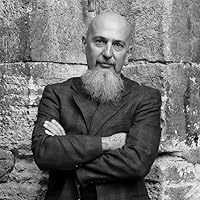
John Peter Berger was an English art critic, novelist, painter and author. His novel G. won the 1972 Booker Prize, and his essay on art criticism Ways of Seeing, written as an accompaniment to a BBC series, is often used as a college text.
Later he was self exiled to continental Europe, living between the french Alps in summer and the suburbs of Paris in winter. Since then, his production has increased considerably, including a variety of genres, from novel to social essay, or poetry. One of the most common themes that appears on his books is the dialectics established between modernity and memory and loss,
Another of his most remarkable works has been the trilogy titled Into Their Labours, that includes the books Pig Earth (1979), Once In Europa (1983) Lilac And Flag (1990). With those books, Berger makes a meditation about the way of the peasant, that changes one poverty for another in the city. This theme is also observed in his novel King, but there his focus is more in the rural diaspora and the bitter side of the urban way of life.
Büyük bir kısmı resim sanatı ile ilgili denemelerin yanında bir radyo programının deşifresini bir de Zapatista lideti Marcos ile olan yazışmalarını içeren bir klasik J. Berger kitabı. Keyifle okunuyor.
John Berger died in 2017 at 90 years of age. This was a loss, but we have his keen observations that read like a man talking to us as we view the art works he so imaginatively describes. He encourages our intimacies with the painting, sculpture or real life object. It is this expansion of our senses, forming new ways of seeing, listening, reading that registers with us permanently.
I love my John Berger, even if he's a funny mix of progressive thinking and old fashionedness and romanticizing. In this collection, the pieces are primarily about art, and I find them evocative.
From "Opening a Gate": "Our customary visible order is not the only one: it coexists with other orders. Stories of fairies, sprites, ogres were a human attempt to come to terms with this coexistence. Hunters are continually aware of it and so can read signs we do not see. Children feel it intuitively, because they have the habit of hiding behind things. There they discover the interstices between different sets of the visible.
Dogs. . . are the natural frontier experts of these interstices. Their eyes, whose message often confuses us for it is urgent and mute, are attuned boh to the human order and to other visible orders."
From "Steps Towards a Small Theory of the Visible": "Technological innovation has made it easy to separate the apparant from the existent. And this is precisely what the present system's mythology continually needs to exploit. It turns appearances into refractions, like mirages: refractions not of light but of appetite, in fact a single appetite, an appetite for more."
"When a painting is lifeless it is the result of the painter not having the nerve to get close enough for a collaboration to start. He stays at a copying distance. . . To go in close means forgetting convention, reputation, reasoning, hierarchies and self. It also means risking incoherence, even madness."
"the eye evolved and developed where there was enough light for the visible forms of life to become more and more complex and varied. Wild flowers, for example, are the colours they are in order to be seen. . . There is a certain ontological basis for the collaboration between model and painter."
***Painting as an act of collaboration between model/subject and painter; receptivity: "Shitao wrote-- Painting is the result of the receptivity of ink: the ink is open to the brush: the brush is open to the hand: the hand is open to the heart: all this in the same way as the sky engenders what the earth produces: everything is the result of receptivity."
"The Fayum Portraits": "Neither those who ordered the portraits, nor those who painted them, ever imagined their being seen by posterity. They were images destined to be buried, without a visible future. . . This meant that there was a special relationship between painter and sitter. . . the two of them, iiving at that moment, collaborated in a preparation for death. . . Looking at these 'portraits' which were not destined for us, we find ourselves caught in the spell of a very special contractual intimacy."
From "Drawing: Correspondence with Leon Kossoff": "In your landscapes the receptivity of the air to what it surrounds is even more evident. . . for the sky to 'receive' a steeple or a column is not simple, but it's something clear (It's what, during centuries, steeples and columns were made for.) [nearly flipped when I read through this part, since I used to feel pretty often a sense of mystery/excitement looking at where a building's roof edge met the sky]
"It is impossible to set out to paint light. Light in a painting makes its own appearance. It occurs as a result of a resolution of the relationships within the work."
From "Studio Talk": "Photos, videos, films never find the face; at their best they find memories of appearances and likenesses. The face, by contrast is always new. . . A profile is never a face, and cameras somehow turn most faces into profiles."
"What any true painting touches is an absence--an absence of which, without the painting, we might be unaware. And that would be our loss."
From "Vincent": "from this nakedness of his, which his contemporaries saw as naivety or madness, came his capacity to love, suddenly and at any moment, what he saw in front of him."
From "Giorgio Morandi": "In art the tempation to please too easily is ever present: it comes with mastery. The obstinacy of reculses, familiar with failure, is art's saving grace."
"and we realize that what interests the artist is the process of the visible first becoming visible, before the thing seen has been given a name or acquired a value. The lonely life's work of the crotchety sexton is about beginnings!. . . .Traces are not only what's left when something is gone, they can also be marks for a project, of something to come."
From "Frida Kahlo": "The capacity to feel pain is, her art laments, the first condition of being sentient. The sensitivity of her own mutilated body made her aware of the skin of everything alive--trees, fruit, water, birds and--naturally--other women and men. And so, in painting her own image, as if on her skin, she speaks of the whole sentient world."
From "Against the Great Defeat of the World": "In the history of painting one can sometimes find strange prophecies. Prophecies that were not intended as such by the painter. It is almost as if the visible by itself can have its own nightmares. . . [The hell depicted in Bosch's Millenium Triptych] has become a strange prophecy of the mental climate imposed on the world at the end of our century by globalisation and the new economic order. . . There is no horizon there [in the space depicted of his hell] There is no continuity between actions, there are no pauses, no paths, no pattern, no past and no future. There is only the clamour of the disparate, fragmentary present. Everywhere there are surprises and sensations, yet nowhere is there any outcome. Nothing flows through: everything interrupts. There is a kind of spatial delirium."
From "Will it be a likeness?": "sometimes a sound is more easily grasped as a silence, just as a presence, a visible presence, is sometimes most eloquently conveyed by a disappearance. Who does not know what it is like to go with a friend to a railway station and then to watch the train take them away? As you walk along the platform back into the city, the person who has just gone is often more there, more totally there, thna when you embraced them before they climbed into the train."
"A presence has to be given, not bought. . . A presence is always unexpected. However familiar. You don't see it coming, it moves in sideways."
"Silence, you know, is something that can't be censored."
"The other day I was listening to Glenn Gould playing Mozart's Fantasy in C Major. I want to remind you of how Gould plays. He plays like one of the already dead come back to the world to play its music."
How I do like Berger's preoccupations--and how they do preoccupy ME!
John Berger, Degas'dan bahsediyor; 'Uzanmış bir kadının bacağına masaj yapan bir masajcı heykeli vardır ki onu kısmen bir itiraf gibi okurum..... bir sanatçı olarak temas etmekle bir şeyleri hafifletme fantezisinin itirafıdır bu - o temas sadece kağıda değen füzen çubuğunun teması olsa bile. Peki neyi hafifletir? Etin taşıdığı bütün yorgunluğu...'
Kahlo'nun dünyası ile paylaşma iradesini hatırlatıyor, Gericault'un portreleri ile kayıtsızlığa karşı duruyor, Bosch'un cehenneminden yeni bir ufuk keşfettiriyor..
Berger bu kitaptaki metinleriyle de görmemizi, dinlememizi ve hissetmemizi sağlıyor yine.. Sanatın hafifletici, umut verici desteğiyle..
For lyrical ease of reading this book gets four stars. For the subject matter, two. (Having said that, there were several chapters about specific artists which were brilliant.) I like John Berger but I'm not sure why I like this book. Maybe it's because the reading of it was like lounging in a hammock for a couple of hours pondering the shape of the clouds overhead. One comes away from such an experience feeling refreshed and relaxed, but none the wiser.
John Berger gözümde gittikçe büyüyor. "Manzaralar"ı okuduğumda şaşırıp kalmıştım. Dostlarım "Hemen Sanatla Direniş'i okuyorsun!" demişti. Dedikleri kadar var. Fakat ben anlatı olarak kitap kısa olmasına rağmen cümlelerin daha derin, zorlu olduğunu düşünüyorum. Sakın yanlış anlaşılmasın, bir tık daha ağır. "Manzaralar"a göre daha yavaş, dikkatli okunması gerekiyor. Entellektüel yetileri üst düzey, renk skalası çok geniş, sanat ve sanata dair bilgi birikimi dağ gibi biri Berger. Sanata, üretmeye ilginiz varsa kütüphanenizde olmalı :)
[2017] Raccolta di scritti, piuttosto brevi, sull’arte, lo sguardo, il vedere. Letto sette anni fa. Mi è rimasto in mente quello stile un po’ oracolare e perentorio, antistorico e a tutta prima piuttosto sgradevole. Berger presenta le sue idee, come la “collaborazione del modello” al disegno, o la ricerca del momento in cui la cosa disegnata entra nel disegno, con definizioni personali, magico-intuitive di termini come “volto” e “luogo”. Mostra grande interesse per i dipinti primitivi nelle grotte, per i ritratti greco-egiziani del Fayum; e dichiara il dialogo con alcuni artisti come Miquel Barceló (torna più di una volta; ribellione del solido e del mortale contro gli stereotipi consumistici, menzogna visiva della “comunicazione”), più volte con una non determinata Marisa, cui si rivolge col tu; fino all’estratto di epistolario con Leon Kossoff. Scambio di lettere anche con il subcomandante Marcos (vicino a Bosch). Non mancano inserzioni più personali ma non autobiografiche; è tendenzialmente antistorico anche a questo livello. Un esempio di tono ineffabile e insieme apodittico (su Degas): intorno al 1888 cambiamento qualitativo: «lo stile resta identico, ma l’energia è diversa. La differenza è così lampante che anche un bambino se ne accorgerebbe. Solo a certi moralisti dell’arte potrebbe sfuggire.» Son quelle frasi che mi fanno subito pensare: allora io sono un "moralista dell'arte" o quel che è!
Poi naturalmente Van Gogh, pittore-amante, che realizza l’amore per quello che osservava; Michelangelo il cui unico soggetto è il corpo umano, e il cui sogno è che gli uomini partoriscano (nota le posizioni dei corpi, maschi a gambe aperte); Rembrandt che cerca una via d’uscita dalle tenebre; Brancusi; Michelangelo Antonioni e Ferrara, il Po, la nebbia; Giorgio Morandi; Frida Kahlo collegata a Juan Gelman per la familiarità col dolore; Christoph Hänsli e i letti; Géricault che ritrae un uomo della Salpetrière: «A quale straordinario periodo della storia della rappresentazione e della coscienza umana appartiene questo quadro! Prima di esso, nessun estraneo avrebbe guardato un pazzo con tanta intensità e compassione.»
Tra i maestri che tornano anche Velázquez, Cézanne, Tintoretto, Antonello da Messina. Anche una lettera aperta al sindaco di Lione, sul carcere. Alla fine, mi ricordo che mi erano piaciute le pagine sulla Sardegna.
"Direnme eylemi, sadece bize sunulan dünya-resminin saçmalığını kabullenmeyi reddetmek değil, bu resmin geçersizliğini duyurmaktır."
İlk yarısı daha çok sanatla ilgili iken diğer yarısının daha çok politika, direniş gibi konulara ağırlık verdiği Sanatla Direniş aslında İngilizce adından farklı olan çevirisiyle bize kendini önceden ima ediyor. Ben kişisel olarak sanatla ilgili yazıları okumayı daha çok sevdim. Yine hayal kırıklığına uğratmayan bir John Berger kitabıydı bu açıdan. Fakat ikinci kısmını okumak beni biraz yavaşlattı ve kitap biraz elimde süründü.
Bir de Metis keşke kitaplarının başında çevirmenleri hakkında da bilgi verse.
This is a wonderful little book that needs to be read all the way through to the very odd and beautiful end. It's about dogs, photography, Zapatistas, Michelangelo, prisons, cave paintings, faces, and flesh -- and all the topics that reside between those markers.
Mano galvoje John Berger, Agnès Varda ir Jonas Mekas yra geriausi draugai. Idealistai ir didžiausi šio pasaulio romantikai.
“Who does not know what it is like to go with a friend to a railway station and then to watch the train take them away? As you walk along the platform back into the city, the person who has just gone is often more there, more totally there, than when you embraced them before they climbed into the train. When we embrace to say goodbye, maybe we do it for this reason – to take into our arms what we want to keep when they’ve gone.”
John Berger is too smart for me. Several of the essays went right over my head. There are sentences and fragments, though, where I’m able to follow him. In those moments I’m completely caught by his writing. (Note to self: add quotes)
Bugün varolanı resmetmeye çalışmak umudu teşvik eden bir direniş eylemidir. s. 25 Sanatla Direniş John Berger. Teknolojinin gelişmesiyle insanlik sürekli değişen, hızla tüketilen, seçme şansının olmadigi, doğrunun ve yanlışının birbirine karıştığı bir enformasyon çöplüğüne dönüştü. Bu çöplükle beraber ortaya herkesin belli sınırlar dahilinde hareket edebildiği hatta bazen hareket edemediği duyarsız, tecrit edilmiş bir simülasyon evreni oluştu. Bu evrenle birlikte insanlik, verilen bilgileri sorgulamadan, anlamlandirmadan hızlıca tüketti. Bilgi, güvenilirliği sorgulanmayan, hizla tüketilen bir metaya dönüştü. Oysa ki, insan olmanın ilk amacı varoluşunu anlamlandırma çabasıdır. İnsanin içinde bulunduğu toplumda varoluşunu anlamlandırma çabası, aynı zamanda dayatılan bilgileri sorgulamayı gerektirir. Sorgulama ise bir direniş biçimidir. Sanat bu direnişin anlatıldığı en guzel alanlardan biridir. Berger, bu direniş biçiminini anlatırken okuyucuyu mağara duvarlarına yapılan resimlerden, Antik Mısırdaki Feyyum portrelerine, ressamların ve fotoğrafçıların yaptıkları çalışmalara uzanan bir sanat yolculuğuna çıkarıyor. Yakınlık, uzaklık, yabancılaşma kavramları, dayatılan davranış biçimleri ve kapitalizmin acımasız yüzünün sanata nasıl yansıdığını anlatıyor. Hieronymus Bosch'un Ortacağ'da yaptığı Dünyevi Zevkler Bahçesi tablosunda yer alan, her kötülüğün sebebi sayılan şeytanın günümüzde sansürcü zihniyetin, kapitalist sistemin baş aktörü olduğu ve cehennemin icinde bulunduğumuz simülasyon evreninin bir parcasina dönüştüğünün anlatıldığı bölümü cok sevdim. Bu tecrit edilmiş durumda sanat insanlığa sorgulamayı, varolan aksaklıkları göstermeyi görev edindiği icin kimi zaman sansürlenmiş kimi zamanda insanlık ağır bedeller ödemiştir. Buna rağmen insanlar yaratım edimlerini tekrar tanımlamışlar ve varoluşunu anlamlandırma çabalarını sanatla anlatarak bir direniş biçimi oluşturmuşlar. Böylelikle sanat sessizliğin sesi olmuş, daha cok kitleye ulaşmıştır. Iyi ki sanat var diyerek sanatı seven , bazi meselelere kafa yoran okuyucuların bu kitabi okumasını öneririm. Iyi okumalar.
“Her hakiki resmin dokunduğu şey yokluktur - o resim olmasa muhtemelen farkına varmayacağımız bir yokluk. Ki farkına varmamak bizim için bir kayıp olacaktır. Ressamın sürekli aradığı şey, yokluğu ağırlayabileceği bir yerdir.”
Temmuz ayının son kitabı ve John Berger’dan okuduğum ikinci kitap Sanatla Direniş. Berger’dan okuduğum ilk kitap olan Görme Biçimleri’ni okurken yazarın görme anlamında ufkumu açtığını hissetmiştim. Hatta kitabı 2 kere okumuştum. İkinci okuyuşumda, kaçırdığım bir çok yerin olduğunu bile hissetmiştim. Öyle kitaplar ki her okuyuşta elbet farklı bir şey katıyor insana, beslemesi asla bitmiyor. Bu kitap da 24 bölümden oluşan, dili oldukça akıcı, içerisinde mektup, anlatı ve resim sanatının anlatıldığı, Frida Kahlo’dan Rembrandt’a bir çok ünlü ressama değinilmiş. Zaman zaman sohbet tadı aldığım kitap, çok keyif verdi bana. Kitaplığımda bulunan John Berger kitaplarını büyük bir iştahla okumaya devam edeceğimi söyleyebilirim. Çünkü yazarın bu alanda kesinlikle vazgeçilmez bir usta olduğu aşikar. Sanat okumalarına adım atmak adına, sıkılmadan, zevkle okuyacağınız bir kitap olacaktır. 🖼
Den livslånga kampen att få själsliga dimensioner att materialisera sig. Och för att lyckas måste konsten vara förankrad i en 'plats', enligt John Bergers teori. En vacker bok, luftig, med ett prosalyriskt filosoferande kring främst konst. Men för mig bara en svag fyra totalt sett.
Boken gestaltar en lång rad manliga konstnärers strävan att skapa, att förankra motivets själ i materialet. Enda kvinnliga konstnär som finns med är Frida Kahlo. Där ändras perspektivet. Hennes liv var fyllt av smärta, både från barnpolio och efter allvarlig trafikolycka som 18-åring. Efter det börjar Frida Kahlo måla självporträtt, och till skillnad från männen målar hon smärtan på sig själv, på sin avbildade kropp, inklusive inre organ, placeras på huden, synliga - är det omvänt besjälat? Kvinnan kan ju skapa utan talang och 'arbete' - om inte kroppen skadats, som i Fridas fall ...
Efter det kapitlet, flyttar John Berger fokus till smärtan, hos mentalpatienter, fängelsekunder, och fördömer ekonomisk globalisering, att människan på det sättet förlorar makten över sin ekonomi, och fotfästet - antagligen en underförstådd jämförelse med konstens behov av förankring i jorden, sin 'plats' - och naturligtvis Yuppie-erans ekonomiska utsugning från 1980-talet och framåt.
Berger has the extraordinarily unique ability of provoking in the reader more than just new thoughts or imaginings, but very real experiences. It will help to have some context for these essays, but his writing will captivate regardless. This is one for the top shelf, to be read over and over.
The Shape of a Pocket is my third John Berger book and my second of his that falls more aptly in the category of non-fiction - one gets the sense when reading Berger’s writing that there is an intentional and a useful blurring of the realised and the imagined or aspirational.
I’ve probably said this before in a review of one of his other works, but it bears mentioning again that Berger’s is one of those rare voices that, when encountered through reading or listening or both, immediately and often in a lasting way shifts one’s perceptions on things that matter. His is a voice that is soothing and intellectually and emotionally involving and this is due in equal parts to his gifts in style and commitment to substance. Try this - the next morning you wake up and the prevalent feelings you recognise in yourself are openness and curiosity, open up youtube, search “John Berger interview”, and then cancel the rest of your plans for the day.
John Berger is an artist, but in the twenty-four essays in The Shape of the Pocket, he is more often than anything else an appreciator of the artist, written art, and the function of that art as a means of observation and interrogation. I’m imagining that, like I did, most readers without a PHD in Art History will need to be in semi-regular consultation with a variety of online resources in order to gather satisfactory context for much of what Berger is discussing here in terms of specific artists and their work.
This depth and specificity isn’t an obstacle though - details about specific artists and their pieces are introductions to larger and more universally recognised ideas: the process of the artist in terms of waiting and creation, compassion as a crucial and possibly “supernatural” (or counter to nature) purpose in life, and the concept of the intangible and ephemeral “likeness” one might feel in the absence or presence of someone or something they hold dear. Berger’s book seems created to be considered in a contemplative manner. When approached this way, it is accessible, empowering and encouraging - it is celebratory of reflective thought.
Despite this, Berger does suggest on the back of the jacket that his writing here is “urgent” as he is addressing injustice, “especially in the face of global capitalism, oppression, and war.” Berger sees art (visual and through writing) linked to compassionate citizenship. The title’s pocket is one of resistance: “a pocket in which certain things can be kept, and certain things can gather". He is aiming for momentum and for critical and catalytic change. The reader, though, is advised to take time with it, and listen in on Berger’s conversations with other artists (some captured here in letter correspondence) and his meditations on art and life between himself and the reader. At just under 300 pages, The Shape of a Pocket is probably best valued at a chapter a day. His writing, counter to stated intended purpose, is more easily appreciated when one is able to let Berger be urgent on the reader’s behalf.
The writer is infinitely quotable here as he usually is. I’ve thought for a while about how to summarize The Shape of a Pocket’s varied messages. In the end, that would do a disservice to the writer’s careful prose. Here are some of Berger’s observations that resonate with me:
The painter as someone who sees on a different plain from those who do not paint: “I picture her in her studio shutting her eyes in order to see - because what she wants to see - or has to see - is always far away. She opens them to look only at the drawing. What she does with her shut eyes is like what we do when we put a seashell to our ear to listen to the sea” (46).
The artist’s studio as “a place of digestion, transformation and excretion. Where images change form. Where everything is both regular and unpredictable” (71).
The self-portrait as ensnarement: “..when he looks straight into a mirror, he is caught in a trap: his reaction to the face he is seeing changes that face. Or, to put it another way, that face can offer itself something it likes or loves. The face arranges itself” (117).
The painter as medium of the transitory: “I have the impression that the painter stays still and that the objects (the same ones with an occasional seashell added) are approaching the canvas. He waits and they arrive. Perhaps he is in hiding, so as to encourage them” (144).
The acceptance of the value of ambiguity: “The act of writing is nothing except the act of approaching the experience written about; just as, hopefully, the act of reading the written text is a comparable act of approach” (228).
A view of the portrait as an act of compassion: “Compassion has no place in the natural order of the world, which operates on the basis of necessity. The laws of necessity are as unexceptional as the laws of gravitation. The human faculty of compassion opposes this order and is therefore best thought of as being in some way supernatural. To forget oneself, however briefly, to identify with a stranger to the point of fully recognising her or him, is to defy necessity, and in this defiance, even if small and quiet and even if measuring only 60cm. X 50cm., there is a power which cannot be measured by the limits of the natural order. It is not a means and it has no ends. The Ancients knew this” (179).
An open letter to the municipal government of Lyon pleading to consider the historical cost of the architectural design of the Prison of St. Joseph possibly being converted to a park and orchard of Spartan apples. Here, Berger is noting the inhumane treatment of the incarcerated in the time of the prison’s operation, and how foresight and forgiveness allows one to see the irony of caring for foliage more than one might have for the condemned: "The trees should be planted, according to Zima 6 or 8m. Apart. The present cells measure 3m. X 3.6m.” (197).
The value of quiet, noting that “it was better to look at paintings on the radio than on television. On the TV screen nothing is ever still, and this movement stops painting being painting. Whereas on the radio we see nothing, but we can listen to silence. And every painting has its own silence” (245).
The closeness with someone that is born at the point of parting: “Who does not know what it is like to go with a friend to a railway station and then to watch the train take them away? As you walk along the platform back into the city, the person who has just gone is often more there, more totally there, than when you embraced them before they climbed onto the train. When we embrace to say goodbye, maybe we do it for this reason - to take into our arms what we want to keep when they’re gone” (246).
A beautiful recollection about the quest to find such a likeness, which I will encourage you to discover this passage for yourself (254-255).
Absolutely stunning prose. Of course, there are endless passages I didn't quite comprehend and references to artworks that are beyond me, but I chose to read this text as poetry, and once I shifted my mindset, I was embraced by the mystery and magic of Berger's meanderings and it held me close throughout. He speaks of presence and absence, the visible and invisible, the seen and unseen, darkness and light, mysticism and faith, the nonlinear labyrinth of time. And each essay is a meditation, an intimacy observed. You don't have to understand the exact references or artworks in order to understand the feeling of Berger's experiences, his way of articulating the ineffable. The shape of a pocket speaks to the human need for resistance — against darkness, tyranny, mundanity, inhumanity and greed. Through these essays, Berger offers up a kind of psychic field guide to subterranean spaces we all know but rarely have the words to describe. This book is a mood and I'll return to it again and again for sustenance as we tumble through the darkness of these days together.
i will always credit Berger for opening my eyes to art and beauty of the world and its historical place when i was just a fresh high schooler. this series of essays read like love letters to classical, modern, and contemporary artists and their art, but slowly morphs into the bigger story. the way we see the world should be modeled by compassion and understanding. i especially loved Berger’s essay on Kahlo in addition to his correspondence with Zapatistas. his compassionate radicalism is one that i admire very much.
John Berger; senaryo yazarı, romancı, ressam ve sanat eleştirmeni. Sanat severler için müthiş bir kitap. Okurken bitmesin ne olur, diyerek okuduğum ender eserlerden biri oldu. Berger, mısırdaki feyyum portrelerinden tutun, klasik ve modern sanat eserlerine kadar geniş bir yelpazede nefis bir eser hazırlamış. Sanatın birey ve toplum için ne kadar önemli ve vazgeçilmez olduğuna vurgu yapan muhteşem kelime oyunlarıyla dolu bir kitap, hatırat. #johnberger #sanatladireniş
This was my first time reading anything by Berger and I was entranced. In the beginning, I found his style of writing quite hard to get into, but once I was adjusted the book was thought-provoking, deeply human, and at times confusing in a "the author has wisdom beyond my understanding" type of way. His views of the world are fit only for a man who has lived and thought long enough to seek out connections in all things and see beyond himself.
A lot of the focus here is about layers and ways of intimately connecting, the bond of the artist or onlooker and his or her subject, and the space around the subject, the intensity of the life of the studio but some on modern commercialism and exploitation and the pockets of resistance to that.
The short chapters are really philosophical probes with John Berger’s characteristically meaningful and poetic insights, always wanting to touch the substance of what is being exposed, to find what artworks might say to us: there are a few thoughts on famous artists, Velázquez, Degas, Michelangelo, Van Gogh, Rembrandt, some on the 30,000 year old Chauvet cave art, the Egyptian Fayum portraits and a few on recent artists like Leon Kossof, Frida Kahlo, Raymond Mason, Vija Celmins, Giorgio Morandi, Miquel Barceló and others.
- ‘What any true painting touches is an absence - an absence of which, without the painting, we might be unaware. And that would be our loss. The painter’s continual search is for a place to welcome the absent. If he finds a place, he arranges it and prays for the face of the absent to appear….whatever a painter is looking for, he’s looking for its face.’
- ‘When a painting becomes a place, there is a chance that the face of what the painter is looking for will show itself there. The longed-for return look can never come directly to him, it can only come through a place… a place surrounds something. A place is the extension of a presence or the consequence of an action. A place is the opposite of empty space.’
- ‘There are fortunately superb photos of the Chauvet paintings. The cave has been closed up and no public visits will be allowed. This is a correct decision, for like this, the paintings can be preserved. The animals on the rocks are back in the darkness from which they came and in which they resided for so long. We have no word for this darkness. It is not night and it is not ignorance. From time to time we all cross this darkness, seeing everything: so much everything that we can distinguish nothing…It’s the interior from which everything came… “Listening not to me but to the logos, it is wise to agree that all things are one,” said Heraclitus…twenty-nine thousand years after the Chauvet paintings were made. Only if we remember this unity and the darkness we spoke of, can we find our way into the space of those first paintings.’
Encontré este libro en una caja arrumbada en una esquina de Chedraui. De Berger había leído sus textos sobre el impresionismo y fue una buena experiencia. No dude en llevarme este libro y en verdad fue una buena experiencia: ensayos personales que en momentos comparten ideas muy interesantes sobre el arte. Todo es muy literario es una experiencia positiva en todos los sentidos.
Yo lo comencé a leer después de un día de recorrer museos. Leer sobre la mirada es para mí interesante.
Beautiful, passionate essays... Berger writes with a patient precision, repeating what is crucial and always chipping away to the essential. The letter to the Mayor of Lyon opened a world of beauty and sadness to me, a world full of pain but also full of promise. His words continue to guide and focus me. A legend.
"Painting is, first, an affirmation of the visible which surrounds us and which continually appears and disappears. Without the disappearing, there would perhaps be no impulse to paint, for then the visible itself would possess the surety (the permanence) which painting strives to find. More directly than any other art, painting is an affirmation of the existent, of the physical world into which mankind has been thrown." (14)
"What any true painting touches is an absence - an absence of which, without the painting, we might be unaware. And that would be our loss." (32)
"The stakes were high, the margins narrow. And in art these are conditions which make for energy." (56)
"Why do original works of art often strike us, at first, as being coarse, awkward and difficult to place?" (150)
"Ci sono molti dolori che non è possibile condividere. Ma si può condividere la volontà di partecipare al dolore. Ed è da questa partecipazione fatalmente inadeguata che nasce la resistenza." (p. 123)
"Il silenzio è qualcosa che non si può censurare, sapete. E in certi casi diventa sovversivo. Ecco perché lo riempiono sempre di rumore." (p. 193)
I'm sure I'll say this again somewhere in my reviews, but read any John Berger you can. He's fantastic. (Seminal work: Ways Of Seeing) NOTE- This collections is amazing. If you don't want to read Ways Of Seeing, read this. Compendium-esque.