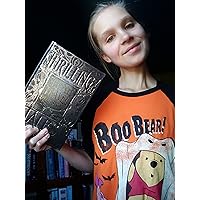
"The Complete Fairy Tales of Oscar Wilde" is as the title would suggest a collection of whimiscal tales by Oscar Wilde. This collections includes the following short stories: The Happy Prince, The Nightingale and the Rose, The Selfish Giant, The Devoted Friend, The Remarkable Rocket, The Young King, The Birthday of the Infanta, The Fisherman and his Soul, and The Star-child. Readers of all ages will be delighted by these fanciful tales.
Oscar Fingal O'Fflahertie Wills Wilde was an Irish poet and playwright. After writing in different forms throughout the 1880s, he became one of the most popular playwrights in London in the early 1890s. He is best remembered for his epigrams and plays, his novel The Picture of Dorian Gray, and his criminal conviction for gross indecency for homosexual acts. Wilde's parents were Anglo-Irish intellectuals in Dublin. In his youth, Wilde learned to speak fluent French and German. At university, he read Greats; he demonstrated himself to be an exceptional classicist, first at Trinity College Dublin, then at Magdalen College, Oxford. He became associated with the emerging philosophy of aestheticism, led by two of his tutors, Walter Pater and John Ruskin. After university, Wilde moved to London into fashionable cultural and social circles. Wilde tried his hand at various literary activities: he wrote a play, published a book of poems, lectured in the United States and Canada on "The English Renaissance" in art and interior decoration, and then returned to London where he lectured on his American travels and wrote reviews for various periodicals. Known for his biting wit, flamboyant dress and glittering conversational skill, Wilde became one of the best-known personalities of his day. At the turn of the 1890s, he refined his ideas about the supremacy of art in a series of dialogues and essays, and incorporated themes of decadence, duplicity, and beauty into what would be his only novel, The Picture of Dorian Gray (1890). Wilde returned to drama, writing Salome (1891) in French while in Paris, but it was refused a licence for England due to an absolute prohibition on the portrayal of Biblical subjects on the English stage. Undiscouraged, Wilde produced four society comedies in the early 1890s, which made him one of the most successful playwrights of late-Victorian London. At the height of his fame and success, while An Ideal Husband (1895) and The Importance of Being Earnest (1895) were still being performed in London, Wilde issued a civil writ against John Sholto Douglas, the 9th Marquess of Queensberry for criminal libel. The Marquess was the father of Wilde's lover, Lord Alfred Douglas. The libel hearings unearthed evidence that caused Wilde to drop his charges and led to his own arrest and criminal prosecution for gross indecency with other males. The jury was unable to reach a verdict and so a retrial was ordered. In the second trial Wilde was convicted and sentenced to two years' hard labour, the maximum penalty, and was jailed from 1895 to 1897. During his last year in prison he wrote De Profundis (published posthumously in abridged form in 1905), a long letter that discusses his spiritual journey through his trials and is a dark counterpoint to his earlier philosophy of pleasure. On the day of his release, he caught the overnight steamer to France, never to return to Britain or Ireland. In France and Italy, he wrote his last work, The Ballad of Reading Gaol (1898), a long poem commemorating the harsh rhythms of prison life.
Bisher habe ich mich ja erfolgreich um Oscar Wildes Werke herummanövriert, dabei fiel mein Interesse schon recht früh auf seine Geschichten. Der "Dorian Gray" ist leider nach wie vor ungelesen, kam mir aber als stilistische Adonis-Narziss-Mischung bereits in Aufsätzen vor. Wildes "Märchen" sind öfter eher Parabeln, Fabeln und traurige Kurzgeschichten mit märchenhaften Elementen. Die Metaphern sind angepasst-überbordernd, manchmal arg kitschig, aber trotzdem treffend und passend für diese merkwürdige Mischsorte an Kurztexten. Es gibt keine typischen "Es war einmal..."-Anfänge und keine "und sie lebten glücklich bis an ihr Lebensende"-Enden, aber trotz allem sind all diese Geschichten zeitlich und räumlich enthoben, haben alle ein fantastisches Element und beziehen sich auf verschiedene europäische und orientalische Erzählmuster und -motive. Was eher märchenuntypisch ist, ist die starke, oft religiös aufgeladene Verklärung des Todes. Mehr als die Hälfte der Kurzwerke enden mit dem Tod der Hauptfigur, dieser ist jedoch mehr Erlösung und Paradiesführung als das Leben, was dieser Mensch zuvor führte. Zudem lässt Wilde durchaus Beziehungen zwischen gleichgeschlechtlichen Figuren/Personen/Tierwesen/Objekten zu, was bei ihm womöglich in anderen Werken ebenfalls anzutreffen ist. Mir hat dieser erste Einblick in Wildes Primärtexte [in Übersetzung: Reclamausgabe - 9783150202586] gut gefallen. Die vielfachen Einflüsse aus anderen Kulturen und die vielen Schmuckworte lassen doch auf noch größeres hoffen. :) Lieblingsmärchen aus diesem Band: "Der glückliche Prinz".
I picked up a random book, and was delightfully surprised yet again. The Fisherman and his Soul was my least favorite of the fairy tales, but it was still creative and entertaining. I’ll be seeking out more of Oscar Wilde’s work moving forward.
I so love the writing style. I would maybe say 4.5 stars instead of 5 because it was quite jarring to read the old, discriminatory terms for some people, but of course that's because the text is old, I know that. Still, I'm not a literary critic, I rate based on my own reading enjoyment. Aside from that the stories are stellar, I love the political and religious critique wrapped into stories about morals, I shed more than one tear. Would definitely recommend!
8 short stories which were all quiet enjoyable to read :) Althought Oscar Wilde is such a goddamn troubled individual Jesus
The Happy Prince- 4/5 A simple start to the book. Really enjoyable
The Nightingale and the Rose- 4.5/5 Jesus Christ
The selfish giant- 3/5 Meh, the ending was really cute though
The devoted friend- 4/5 Holy fuck a more toxic relationship never existed
The remarkable rocket- 3.5/5 He was a funny guy
The young king - 3/5 The most cheerful story in this collection. And strange ending
The Birthday of the Infanta- 4.5/5 Poor guy man… he was just a funny lad….
The fisherman and his soul- 5/5 Imo the best story in this collection. Also the longest and maybe unnecessarily so but still very very beautiful. And sad. But like… duh
The Star-Child- 4/5 This is why children suck. Also Wilde can’t stand happy endings I’ve discovered
I never knew Oscar Wilde wrote fairy tales until it was recommended by Goodreads based on my recent fairy tales reading. So it sparked my curiosity and I decided to check them out. In my opinion these tales seem intended more for adults, but there is no reason that an older child couldn't enjoy reading them. Originally, he wrote two small collections of tales. If you have read Dorian Gray, there is at least one story that really has that cynical look at society in it, that is very Dorian Gray Wilde. Otherwise, for the most part, his tales feel a lot like Hans Christian Anderson. Whom he was familiar with like The Brothers Grimm. These tales were for the most, a good read, and a lot had lessons attached to the story, or a moral of sort. An interesting set of fairy tales.
I love Oscar and his wit and his words that feel so alive. Gave it a four because I think it’s not comparable to dorian grey. Yep yurt. Also teeny bit ablest for poking fun at that man with dwarfism, but look, it was written in the 19th C like people were throwing people with dwarfism up in the air and around for the laugh…. Let’s not blame Ms Oscar for that.
Oscar Wilde's sensibilities as a fairy tale story teller sit between Hans Christian Anderson and A.A. Milne. Very Victorian, but with a sly post-modern irony and sense of humor.