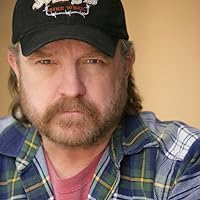
In 1947, the House Un-American Activities Committee rudely interrupted the successful career and life of Edward Dmytryk, citing him with contempt of Congress. As a result, Dmytryk was fired by RKO and spent three years in England before returning to the United States to serve a six-month jail sentence and undergo a second round of hearings, during which he recanted and provided evidence against several of his former colleagues.
In this personal and perceptive book, Dmytryk sharply chronicles the history of a particularly turbulent era in American political life while examining his own life before and after the events universally called the witch hunts. He details his brief membership in the Communist Party of America, explaining his initial commitment to what he perceived as communist ideals of civil liberties, economic justice, and antifacism, followed by his eventual disillusionment with the party as itbetrayed those ideals. He goes on to provide a fair assessment of what then happened to him and the effect it had on the rest of his life.
Dmytryk describes the activities, prejudices, and personal behaviors of all the parties enmeshed in the congressional hearings on communism in Hollywood. His reactions to other members of the Hollywood Ten and his recollection of conversations with them lend his book an immediacy that is not only informative but also absorbing. Most importantly, he does not uphold an ideology but rather presents the events as he perceived them, understood them, and responded to them. Dmytryk’s account is characterized by an openness born of a mature awareness of personal trial as history.
What we generally hear about the Hollywood Ten and the blacklist is that they were the victims of the red scare and opportunistic politicians. Director and Hollywood Ten member, Edward Dmytryk, presents a story that is more complicated and thus more captivating. He was like many idealists who sought out the party as a way to improve the human condition. With time he realized that the leaders were taking their cues from Moscow and he quit when the party demanded he place messages in a film he was making. He was an artist and he wasn't going to compromise his art for any ideology. Then he and 19 others were called before the House Un-American Activities Committee.
The group agreed not to name names and take the 5th Amendment when asked. As Dmytryk puts forth in the book this could have been an effective approach had everyone played the victim. They had a number of Hollywood stars on their side who came to Washington to lend support. But rather than stand quietly some of the actual communists among the group erupted and any sympathy they had in Hollywood was diminished.
What Dmytryk realized was the strategy worked to the benefit of the actual communists and no one else. For the sake of protecting people he didn't even like such as John Howard Lawson and Howard Biberman, Dmytryk spent 6 months in jail for contempt of Congress. He spent the rest of his life trying to overcome it.
His career got a second chance with Harry Cohn and Darryl Zanuck and he directed some notable movies like Raintree County and The Young Lions, but the hard Left never forgave him for talking to HUAC and the anti-communists never really trusted him because of his previous associations.
Dmytryk's memoir gives you a great look at how the party operated, how the committee operated, and how things shook down in Hollywood. Victor Navsky's history on the blacklist, NAMING NAMES, is cited and quoted several times, but Dmytryk's journey doesn't adhere to the usual binary division on the issue and therefore gave me additional insight into the issues.
The book is also about how people learn their true friends during times of foul weather. Dmytryk is just as thankful for a loving wife and loyal friends and he is miffed at the people who used him for their own gains.
A portion of the book is about his time in prison and how Hollywood movies about prison life were nothing like the experience of it. He talks about fellow prisoners be they murderers or moonshiners and how so many of them readily admitted their guilt. He learned a lot of about what prison does to people and how some never want to leave.
It's a thoroughly interesting and entertaining look at those times from an actual person who experienced so much.
Fascinating. And very relevant to the political atmosphere of 2016. He mentions in the later pages that his wife would address some things in her own book. Anyone know anything more on this? I can't seem to find any copies of it, if it ever actually materialized.
This book was an opinion-turner. If you feel that those who informed on other Communists during the HUAC hearings were traitors, as I did, this book will change your mind.
Bitter, tasteless screed against people he blames for his being blacklisted, and for rejecting him after he returned to testify before HUAC and named names--which he did in order to return to a lucrative career.