

What do you think?
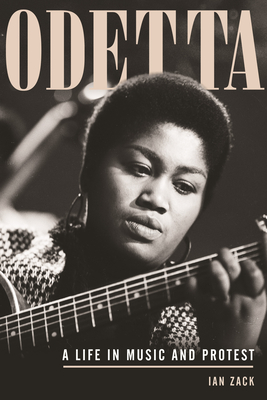
Odetta: A Life in Music and Protest
The first in-depth biography of the legendary singer and "Voice of the Civil Rights Movement," who combatted racism and prejudice through her music.
Odetta channeled her anger and despair into some the most powerful folk music the world has ever heard. Through her lyrics and iconic persona, Odetta made lasting political, social, and cultural change.
A leader of the 1960s folk revival, Odetta is one of the most important singers of the last hundred years. Her music has influenced a huge number of artists over many decades, including Bob Dylan, Janis Joplin, the Kinks, Jewel, and, more recently, Rhiannon Giddens and Miley Cyrus.
But Odetta's importance extends far beyond music. Journalist Ian Zack follows Odetta from her beginnings in deeply segregated Birmingham, Alabama, to stardom in San Francisco and New York. Odetta used her fame to bring attention to the civil rights movement, working alongside Joan Baez, Harry Belafonte, and other artists. Her opera-trained voice echoed at the 1963 March on Washington and the Selma to Montgomery march, and she arranged a tour throughout the deeply segregated South. Her "Freedom Trilogy" songs became rallying cries for protesters everywhere.
Through interviews with Joan Baez, Harry Belafonte, Judy Collins, Carly Simon, and many others, Zack brings Odetta back into the spotlight, reminding the world of the folk music that powered the civil rights movement and continues to influence generations of musicians today.
Odetta channeled her anger and despair into some the most powerful folk music the world has ever heard. Through her lyrics and iconic persona, Odetta made lasting political, social, and cultural change.
A leader of the 1960s folk revival, Odetta is one of the most important singers of the last hundred years. Her music has influenced a huge number of artists over many decades, including Bob Dylan, Janis Joplin, the Kinks, Jewel, and, more recently, Rhiannon Giddens and Miley Cyrus.
But Odetta's importance extends far beyond music. Journalist Ian Zack follows Odetta from her beginnings in deeply segregated Birmingham, Alabama, to stardom in San Francisco and New York. Odetta used her fame to bring attention to the civil rights movement, working alongside Joan Baez, Harry Belafonte, and other artists. Her opera-trained voice echoed at the 1963 March on Washington and the Selma to Montgomery march, and she arranged a tour throughout the deeply segregated South. Her "Freedom Trilogy" songs became rallying cries for protesters everywhere.
Through interviews with Joan Baez, Harry Belafonte, Judy Collins, Carly Simon, and many others, Zack brings Odetta back into the spotlight, reminding the world of the folk music that powered the civil rights movement and continues to influence generations of musicians today.
288 pages, Hardcover
First published April 14, 2020
Ratings & Reviews
Friends & Following
Create a free account to discover what your friends think of this book!
Community Reviews
Displaying 1 - 30 of 55 reviews

December 16, 2019
4.5 stars
A fascinating, timely, and balanced biography!
Recommend!
A fascinating, timely, and balanced biography!
Recommend!
February 25, 2020
In 1978 my husband and I went to the Philadelphia Folk Festival. Our interest in folk rock turned into a deep love of folk music.
We attended concerts around Philly and bought recordings and listened to WXPN on the radio, discovering favorite singers.
One name we heard was Odetta, Odetta, and we knew she was a queen who had once ruled and was still worshipped.
I was a child in the 1950s, cushioned in my working class white neighborhood, unaware of things beyond my front door when Odetta was breaking into songs that stirred souls and feed movements and engendered a whole generation of singers whose names filled the airwaves of my sixties teenage years.
I knew so little about her.
Ian Zack's Odetta: A Life in Music and Protest is a wonderful biography of Odetta that presents her life, her art, and her legacy.
Odetta's amazing voice spurred teachers to encourage training and her mother scrimped to find the funds for voice lessons. After high school, Odetta worked menial jobs days and studied European classical music nights, singing in the Verdi Requiem and Bach's Mass in B Minor. Odetta loved opera and art songs but knew her career options were nil because of her color.
Odetta was cast for a revival of Yip Harburg's Finian's Rainbow in 1950 which led to her work with Turnabout Theater Jr.
Folk music was the new big thing, The Weavers success spurring an interest in folk songs. Friends took Odetta to hear a concert including Lead Belly songs and it "touched the core of me," she said. It changed the twenty-year-old's life.
The shy girl whose voice was a powerful instrument sang with her eyes closed as she inhabited the songs of her people.
She eschewed straightening her hair, cutting it short and leaving it natural, unwittingly engendering a movement.
Pete Seeger became her biggest fan and promoter. Generations claimed Odetta as their spiritual mother including Joan Baez and Bob Dylan, Carly Simon, The Kinks, Grace Slick, and Janis Ian.
There are so many interesting stories in these pages. Odetta was on the TV Western Have Gun--Will Travel because Richard Boone was a fan. The script was a "clear endorsement of black rights," Zack writes.
With the arrival of the Beatles, popular music took a new turn and Odetta struggled to attract the new audience--basically, my generation. She had a series of flops. Her love life had its ups and downs, mostly downs, with a failed marriage and unsustainable relationships.
And yet with age, she became more comfortable with herself, confident on stage, celebrating her African American heritage. President Clinton awarded her the National Medal of the Arts and Humanities, confessing that she had inspired him as a boy.
I enjoyed this biography as a vehicle for learning more about this iconic singer and the role of folk music in American history. It was also a nostalgic trip 'down memory lane', recalling the first time I heard many of the artists who inform the story.
I was given access to a free ebook by the publisher through Edelweiss. My review is fair and unbiased.
We attended concerts around Philly and bought recordings and listened to WXPN on the radio, discovering favorite singers.
One name we heard was Odetta, Odetta, and we knew she was a queen who had once ruled and was still worshipped.
I was a child in the 1950s, cushioned in my working class white neighborhood, unaware of things beyond my front door when Odetta was breaking into songs that stirred souls and feed movements and engendered a whole generation of singers whose names filled the airwaves of my sixties teenage years.
I knew so little about her.
Ian Zack's Odetta: A Life in Music and Protest is a wonderful biography of Odetta that presents her life, her art, and her legacy.
Odetta's amazing voice spurred teachers to encourage training and her mother scrimped to find the funds for voice lessons. After high school, Odetta worked menial jobs days and studied European classical music nights, singing in the Verdi Requiem and Bach's Mass in B Minor. Odetta loved opera and art songs but knew her career options were nil because of her color.
Odetta was cast for a revival of Yip Harburg's Finian's Rainbow in 1950 which led to her work with Turnabout Theater Jr.
Folk music was the new big thing, The Weavers success spurring an interest in folk songs. Friends took Odetta to hear a concert including Lead Belly songs and it "touched the core of me," she said. It changed the twenty-year-old's life.
The shy girl whose voice was a powerful instrument sang with her eyes closed as she inhabited the songs of her people.
She eschewed straightening her hair, cutting it short and leaving it natural, unwittingly engendering a movement.
Pete Seeger became her biggest fan and promoter. Generations claimed Odetta as their spiritual mother including Joan Baez and Bob Dylan, Carly Simon, The Kinks, Grace Slick, and Janis Ian.
There are so many interesting stories in these pages. Odetta was on the TV Western Have Gun--Will Travel because Richard Boone was a fan. The script was a "clear endorsement of black rights," Zack writes.
With the arrival of the Beatles, popular music took a new turn and Odetta struggled to attract the new audience--basically, my generation. She had a series of flops. Her love life had its ups and downs, mostly downs, with a failed marriage and unsustainable relationships.
And yet with age, she became more comfortable with herself, confident on stage, celebrating her African American heritage. President Clinton awarded her the National Medal of the Arts and Humanities, confessing that she had inspired him as a boy.
I enjoyed this biography as a vehicle for learning more about this iconic singer and the role of folk music in American history. It was also a nostalgic trip 'down memory lane', recalling the first time I heard many of the artists who inform the story.
I was given access to a free ebook by the publisher through Edelweiss. My review is fair and unbiased.

December 21, 2019
an overdue and long-deserved bio of the folk singer and civil rights activist, ian zack's odetta: a life in music and protest chronicles a remarkable life and career. never afforded the success nor acclaim that should've rightly been her due, odetta's legacy nonetheless remains highly influential for generations of musicians. from her childhood in alabama to her participation in the march on washington to her later resurgence (and eventual national medal for arts and kennedy center honors), zack's biography is a fitting tribute to one of the most singular titans of song.

March 8, 2020
This is a unique and well-researched biography of Odetta, the singer who was in the vanguard of the folk movement. She was the inspiration for many that followed, including artists like Peter, Paul, and Mary and Bob Dylan. Odetta went against tradition by keeping her hair natural, which in the 1950's was unheard of, and used her powerful voice not only to bring traditional songs to the public, but also in support of the Civil Rights movement. Recommended for fans of music, biographies, and history. Thanks to the publisher and to Edelweiss for this ARC.

April 5, 2020
In my case it is always the image of Odetta that comes to mind when I hear her name. The tall, undeniably Black woman, hair in an afro, guitar in hand. It must be that I simply did not know enough about her life, her struggle, and even her music to convey more than that image. But her image is memorable and her presence something not easily described. This book fills in the gaps in the story of Odetta that I didn’t know. Looking back at my childhood, her most memorable songs are the ones I’ve known most of my life, singing in my school’s chapel along with hundreds of other Black students, the words having meaning that I can only truly comprehend decades later as a Black woman.
Zack takes his time with this biography, letting the readers learn as much about Odetta as we do the time from whence she came. Her migration from Alabama to California, her feelings of coming from a loveless, forced marriage, not being accepted or valued as a young Black girl and having a talent that couldn’t be denied. Her rise to being the Queen of folk music, her journey embracing her Blackness and forcing others to recognize it, using her songs and words to encourage the Civil Rights movement are all described in these pages. It also includes how she eventually would be outshined and mismanaged, struggling to find her place as the decades passed. This story ends with her rising again, but eventually her health failed and the Queen of folk, who had emerged late as a Blues singer, passed before seeing the first Black president take the oath of office.
I really enjoyed this book. Zack fully imagines Odetta on the page and allows readers to appreciate her, not just her for her music but for the complexities that existed within her as a Black woman emerging in the music industry in a time riddled with political strife. She was filled with rage that she channeled through her beautiful voice and music. Zack details her life, her love, her struggles and her choices to create a well thought out, honest narrative that honors her memory. I highly recommend this book.
Zack takes his time with this biography, letting the readers learn as much about Odetta as we do the time from whence she came. Her migration from Alabama to California, her feelings of coming from a loveless, forced marriage, not being accepted or valued as a young Black girl and having a talent that couldn’t be denied. Her rise to being the Queen of folk music, her journey embracing her Blackness and forcing others to recognize it, using her songs and words to encourage the Civil Rights movement are all described in these pages. It also includes how she eventually would be outshined and mismanaged, struggling to find her place as the decades passed. This story ends with her rising again, but eventually her health failed and the Queen of folk, who had emerged late as a Blues singer, passed before seeing the first Black president take the oath of office.
I really enjoyed this book. Zack fully imagines Odetta on the page and allows readers to appreciate her, not just her for her music but for the complexities that existed within her as a Black woman emerging in the music industry in a time riddled with political strife. She was filled with rage that she channeled through her beautiful voice and music. Zack details her life, her love, her struggles and her choices to create a well thought out, honest narrative that honors her memory. I highly recommend this book.

May 23, 2020
I first came upon Odetta as the singer of a song on a soundtrack album I’m no longer in possession of. I think the name of the song was “Be Here”. I loved the song so much I played it over and over. I wondered, who is this singer with one name and why can’t I find any information on her? This was in the stone-age of the internet. Now I’ve looked everywhere and I can’t find the song. Does anyone know it?
Anyway, this book came out in April 2020 and it describes her life as a performer, the protest songs she sang in the ‘50s and ‘60s, and touches briefly on the men she became involved with. The author is Ian Zach, whose previous book was SAY NO TO THE DEVIL: The Life and Musical Genius of Rev. Gary Davis.
Odetta had an operatic voice but was shy about being onstage in the beginning of her career. She never got the fame and fortune of folk singers that came up just behind her, like Joan Baez and Bob Dylan. This might have been one reason she became hostile in her later performing years. The book puts forth a few reasons on why that might have happened. Of course it makes the activist inside me angry to think she wasn’t promoted because of her color. On the other hand, she developed a problem with alcohol which could have contributed to her declining career. It certainly could have affected her attitude.
Through interviews of people who knew her and finding the rare occurrences when she spoke about her private life, Zack has provided about the best interpretation of Odetta’s life that we can expect.
Overall, this is about a talent that deserves more recognition. As far as I know, this is the first in-depth biography of Odetta and I highly recommended it.
I still wish I could find that song...
Anyway, this book came out in April 2020 and it describes her life as a performer, the protest songs she sang in the ‘50s and ‘60s, and touches briefly on the men she became involved with. The author is Ian Zach, whose previous book was SAY NO TO THE DEVIL: The Life and Musical Genius of Rev. Gary Davis.
Odetta had an operatic voice but was shy about being onstage in the beginning of her career. She never got the fame and fortune of folk singers that came up just behind her, like Joan Baez and Bob Dylan. This might have been one reason she became hostile in her later performing years. The book puts forth a few reasons on why that might have happened. Of course it makes the activist inside me angry to think she wasn’t promoted because of her color. On the other hand, she developed a problem with alcohol which could have contributed to her declining career. It certainly could have affected her attitude.
Through interviews of people who knew her and finding the rare occurrences when she spoke about her private life, Zack has provided about the best interpretation of Odetta’s life that we can expect.
Overall, this is about a talent that deserves more recognition. As far as I know, this is the first in-depth biography of Odetta and I highly recommended it.
I still wish I could find that song...

June 17, 2020
Is there room for another book on Odetta? Yes, there are over 6,000 on Bob Dylan. That said, this is a long, long overdue biography of one of the 20th century's most underappreciated artists. I reviewed Odetta: A Life in Music and Protest for The Current.

February 12, 2022
5/5
Odetta: A Life In Music And Protest by Ian Zack is a biography about an important figure in music and Black history.
Odetta (1930-2008) was born in Birmingham, Alabama, during the height of Jim Crow. A pioneer in the folk movement, and an inspiration for countless now well-known artists, Odetta was and still remains a powerful and memorable voice.
Today, she is often overlooked and un-acknowledged by artists and listeners, but Odetta made a name for herself as a voice of a movement. Even as she approached the end of her life, Odetta sat on stage in her wheelchair with her tank of oxygen nearby, refusing "to fade away...to give up her place in the spotlight after so long in the shadows." (221).
I was very captivated by the parts of the biography that spoke to Odetta's "radical" choice to stop straightening her hair, to cut it off, and keep a natural style. "'The mode of beauty was not my color, not my shape, not my people,'" she said (17)... "Odetta's haircut may seem like no big deal today, but for a young woman whose size, color, and natural hair didn't measure up to white society's definitions of beauty, it was a courageous statement of individuality and pride." (36)
The biography is outstanding. Odetta was such an important figure in music and doesn't get the credit she deserves. She was radical, proud, and political. She commanded attention with her voice and her courage. I recommend this one obviously for fans of Odetta's but also for anyone who listens to folk or blues music, and anyone who wants to read about the correlation between music and the civil rights movement.
Odetta: A Life In Music And Protest by Ian Zack is a biography about an important figure in music and Black history.
Odetta (1930-2008) was born in Birmingham, Alabama, during the height of Jim Crow. A pioneer in the folk movement, and an inspiration for countless now well-known artists, Odetta was and still remains a powerful and memorable voice.
Today, she is often overlooked and un-acknowledged by artists and listeners, but Odetta made a name for herself as a voice of a movement. Even as she approached the end of her life, Odetta sat on stage in her wheelchair with her tank of oxygen nearby, refusing "to fade away...to give up her place in the spotlight after so long in the shadows." (221).
I was very captivated by the parts of the biography that spoke to Odetta's "radical" choice to stop straightening her hair, to cut it off, and keep a natural style. "'The mode of beauty was not my color, not my shape, not my people,'" she said (17)... "Odetta's haircut may seem like no big deal today, but for a young woman whose size, color, and natural hair didn't measure up to white society's definitions of beauty, it was a courageous statement of individuality and pride." (36)
The biography is outstanding. Odetta was such an important figure in music and doesn't get the credit she deserves. She was radical, proud, and political. She commanded attention with her voice and her courage. I recommend this one obviously for fans of Odetta's but also for anyone who listens to folk or blues music, and anyone who wants to read about the correlation between music and the civil rights movement.

August 31, 2020
I met Odetta briefly once but did not have the opportunity to engage. She and my late husband had known each other from the Gate of Horn. Thus, when the book came out, I was interested.
The author attempts to provide a balanced story of Odetta's life, her talent, her opportunities and lack thereof, and her adjustments to the challenges she faced.
Her life is covered, emphasizing her musical power, success and disappointments. She was a powerful leader in the civil rights movement and many other causes. She was never able to fully break through the color barrier and carried resentments about it. Singing was her life and her pleasure.
I am pleased to have read the book.
The author attempts to provide a balanced story of Odetta's life, her talent, her opportunities and lack thereof, and her adjustments to the challenges she faced.
Her life is covered, emphasizing her musical power, success and disappointments. She was a powerful leader in the civil rights movement and many other causes. She was never able to fully break through the color barrier and carried resentments about it. Singing was her life and her pleasure.
I am pleased to have read the book.

January 12, 2025
I love folk music, but I have to admit I don't know its history very well. In particular, I didn't know Odetta, even though she was a major influence on Bob Dylan, Peter Yarrow, and Joan Baez. This book covers her two journeys to near-stardom: once in the mid-fifties, just before the 60s folk revival; and again in the late-nineties, when she channeled her life's struggles and became a formidable blues artist who toured the world all the way until she passed away in 2008. An important figure who never truly got the recognition she deserved.

February 13, 2021
An insightful, empathetic, respectful biography of the one of the greatest voices of all time, known as the "Queen of Folk" to the innumerable musicians she influenced. Zack chronicles Odetta's significant role in the Civil Rights Movement and how she channeled her anger and despair into her music.

July 31, 2021
Author Ian Zack, drawing from a deep well of interviews & historical documents, traces the life & musical/cultural influence of Odetta (Holmes) from Jim Crow to the inauguration of Barack Obama. I knew a few of Odetta’s songs from my own research into folk & country music but was astonished (& humbled) by the depth & humanity of this biography. “She never found her niche, but look what she accomplished while searching for it.”

September 18, 2020
I heard about this book on the New York Times Book Review podcast. It was the first time I had heard of Odetta. She was a folk singer who influenced Joan Baez and Bob Dylan. She was fairly popular in the 1950s and early 1960s. She was also beloved by Dr. Martin Luther King, Jr., Rosa Parks, Harry Belafonte, and Maya Angelou.
For the book's introduction, the author informs the reader that his research was limited by the fact that Odetta was a private person and not much is known about her. With this book, the author does the best he can with the information he has. At times, Zack does make some assumptions about Odetta due to the lack of information. Overall, it is a good biography that provides a good overview about Odetta's life and makes a persuasive argument about her impact on folk music. And yes, I did listen to a few of her songs and she is good.
For the book's introduction, the author informs the reader that his research was limited by the fact that Odetta was a private person and not much is known about her. With this book, the author does the best he can with the information he has. At times, Zack does make some assumptions about Odetta due to the lack of information. Overall, it is a good biography that provides a good overview about Odetta's life and makes a persuasive argument about her impact on folk music. And yes, I did listen to a few of her songs and she is good.
June 3, 2020
Often forgotten when looking back at the height of the folk music era is this black woman who dominated in live performances but who for various reasons never really made it on the charts or got played on the radio. Yet she influenced pretty much every major & minor musician whether vocalist or instrumentalist of the time from Belefonte to Dylan to Baez and more. This was an interesting look at her life and music. And it also puts her smack into the middle of the story of the civil rights movement where she belongs. Her voice was amazing and unique; her influence on black style and pride immense. I hope this book gets her name on people's lips again. I was lucky enough to see her in concert back in the 1980's in Wisconsin, if you have never heard her sing, there is plenty to see and listen to on YouTube.

February 25, 2025
This should be required reading for anyone who went to see the bob dylan biopic lol

January 7, 2025
This is an informative book about Odetta that somewhat doubles as a basic American history primer for the civil rights movement and an intro to folk music. If you are already familiar with history then I imagine this will be an easier read. Many pivotal people and events and mentioned almost in passing, so if you already have that foundation, the onslaught of information will probably feel less overwhelming and more contextual. It does a good job of speculating why Odetta never really became the icon she really deserved to be, compared to say, Aretha Franklin, Janice Joplin, of even Bessie Smith.
I’m grateful this book exists, but I must say it’s a dry intellectual read, especially the early years when there are not many direct sources of information and there is a lot of speculation. At times I felt like I was reading a thesis rather than a book and wished I could watch the documentary or the biopic that uses this as a source instead of slogging through it myself. That’s possibly a downside of reading this in audiobook form. One is painfully aware that the academic prose can hardly compare with the musical richness of Odetta’s music. The publishing house did include a helpful link to an Odetta playlist on Spotify so be sure to check that out. (I don’t think they actually mention it in the recording, so it’s easy to miss. (https//spoti.fi/3c2HnF4)
Also, I hope that the physical book actually has the photos that are described. I definitely missed seeing photos of Odetta and would like to have put a face on some of the people mentioned that were less familiar, like her various romantic partners and some of her less famous friends.
Still, I wish this book had been around when I was a teenager and I hope it’s just one step amongst many to keep her legend alive for new generations
I’m grateful this book exists, but I must say it’s a dry intellectual read, especially the early years when there are not many direct sources of information and there is a lot of speculation. At times I felt like I was reading a thesis rather than a book and wished I could watch the documentary or the biopic that uses this as a source instead of slogging through it myself. That’s possibly a downside of reading this in audiobook form. One is painfully aware that the academic prose can hardly compare with the musical richness of Odetta’s music. The publishing house did include a helpful link to an Odetta playlist on Spotify so be sure to check that out. (I don’t think they actually mention it in the recording, so it’s easy to miss. (https//spoti.fi/3c2HnF4)
Also, I hope that the physical book actually has the photos that are described. I definitely missed seeing photos of Odetta and would like to have put a face on some of the people mentioned that were less familiar, like her various romantic partners and some of her less famous friends.
Still, I wish this book had been around when I was a teenager and I hope it’s just one step amongst many to keep her legend alive for new generations

April 9, 2020
Odetta: A Life in Music and Protest by Ian Zack is a long overdue biography of a powerful artist and activist.
It surprises me just how much she has been forgotten by the public at large. Within the folk community she remained an important figure and among musicians of all genres she has always been an inspiration. But somehow, unless you had her records and still put them on occasionally, she was largely forgotten. This biography goes a long way toward correcting the fickle oversight of general music fans.
I was fortunate to have seen her twice and even though I had several of her albums nothing could compare to the power of her voice and the strength of her presence on stage. Perhaps I was moved so much because I was familiar with some of her history, but that could only account for so much.
This book fills in the large gaping holes in my knowledge of her and her life, I was, like most fans, more familiar with her music. Because her music was largely in service to the civil rights movement and humanitarian struggles, I knew a little. Zack manages to present a balanced biography while at the same time illustrating the ways in which Odetta far surpassed her contemporaries as well as those she inspired.
I highly recommend this to music lovers, folk music fans, those wanting more background on the civil rights movement, and those seeking inspiration in our current difficult times with an evil regime destroying the country through hatred and bigotry.
Reviewed from a copy made available by the publisher via Edelweiss.
It surprises me just how much she has been forgotten by the public at large. Within the folk community she remained an important figure and among musicians of all genres she has always been an inspiration. But somehow, unless you had her records and still put them on occasionally, she was largely forgotten. This biography goes a long way toward correcting the fickle oversight of general music fans.
I was fortunate to have seen her twice and even though I had several of her albums nothing could compare to the power of her voice and the strength of her presence on stage. Perhaps I was moved so much because I was familiar with some of her history, but that could only account for so much.
This book fills in the large gaping holes in my knowledge of her and her life, I was, like most fans, more familiar with her music. Because her music was largely in service to the civil rights movement and humanitarian struggles, I knew a little. Zack manages to present a balanced biography while at the same time illustrating the ways in which Odetta far surpassed her contemporaries as well as those she inspired.
I highly recommend this to music lovers, folk music fans, those wanting more background on the civil rights movement, and those seeking inspiration in our current difficult times with an evil regime destroying the country through hatred and bigotry.
Reviewed from a copy made available by the publisher via Edelweiss.

February 17, 2021
I love biographies where you learn a lot about someone you didn’t know much about to begin with and this was definitely one of those for me! Born in Alabama in 1930 Odetta came from humble roots and went on to become a popular singer, songwriter, actress and civil rights activist. Considered to be the “Voice of the Civil Rights movement,” Odetta mainly sung folk music and African spirituals about the history of Black people in America that wasn’t being taught in schools. Her songs were sung during many protests and marches and she was incredibly influential on Bob Dylan. She harnessed her rage at the racial injustices she grew up witnessing to produce music that moved people in a powerful way. She was also ahead of her time deliberately keeping her hair natural, when the cultural norm was to straighten Black ‘nappy’ hair. She became an image of Black beauty that didn’t try to cater to white tastes. Sadly real recognition of her cultural significance didn’t come until later in her life and she died in 2008 just before getting to see Barack Obama become the first Black president. Great biography of an inspirational woman.
November 8, 2020
This book was both part Odetta's biography and a narrative of the civil rights era and the role of folk music in it. I think it needs some editing - there is a lot of important information there, but it gets bogged down a little. But that being said, I do like Odetta and I didn't know a lot about her. She definitely led the folk renaissance and made way for the people who got more famous than her (literally bob dylan and joan baez). It was spectacular to learn how she brought to light a lot of chain gang and spiritual songs (passed down from the slaves and even existing people who were slaves in plantations at the time) as well as revolutionary songs of the time. She was the first ever woman to be in public eye in an afro - which feels insane given how relatively recent 1965 was. But then again, so many things of our current time in terms of injustices feel insane too. So if for nothing, this book is important so that more people know of her existence, her role in our history and of course, her music.

December 23, 2020
Odetta represents freedom, power, resistance, and so much more to music artists around the world. Ian Zack tells their stories of her from over 75 interviews in Odetta: A Life in Music and Protest. Zack interweaves interviews of Odetta with the history of the time to give a glimpse into a shy, introverted, woman who found her voice through music and the people she met along the way.
Odetta did not set out to change the landscape, but she did not shy away from taking a stance. She did not need to open her mouth and sing as she displayed her stance with her hair. Odetta let her hair grow natural in what was a first at the time for women: a short afro. She dressed simply in jeans and shirt. She did not feel the need for airs. Odetta was just herself. She may not have liked how curvy she was, but do not talk to her about her hair.
I love this story and the fact that it is true is an inspiration and a privilege to read.
Odetta did not set out to change the landscape, but she did not shy away from taking a stance. She did not need to open her mouth and sing as she displayed her stance with her hair. Odetta let her hair grow natural in what was a first at the time for women: a short afro. She dressed simply in jeans and shirt. She did not feel the need for airs. Odetta was just herself. She may not have liked how curvy she was, but do not talk to her about her hair.
I love this story and the fact that it is true is an inspiration and a privilege to read.

September 17, 2020
I knew almost nothing about Odetta before reading this book but I started listening to her music like crazy, tracking down her albums as they were mentioned and even watched the episode of "Have Gun, Will Travel" with her guest starring. Twice. But my rating is 4 stars, not 5, because the book itself had very little heart and a lot of archival research -- contemporary reviews and plane itineraries and memories of her in other peoples' memoirs. I mean, it was pretty bloodless. And yet I hung on every word, and it affected me enough that I'm still living with Odetta weeks after finishing the book. Goes to show, you never know what will trigger a connection!

September 18, 2020
Odetta was born New Year’s eve, 1930, trained as a classical alto, becoming a folk singer in the 50’s and 60’s, inspiring Bob Dylan, Joan Baez, Peter, Paul & Mary among others, singing of civil rights and touring the world. After Clinton’s recognition in 1999 she turned to the blues, contributing to inspire new musicians and audiences, with her I Am message around her neck and in her music. She lived to see Obama elected President before she died Dec 2,2008. Odetta never really got the fame and recognition she deserved, but this book is a step in the right direction in telling her amazing story.

June 27, 2020
I wasn't overly familiar with Odetta before beginning to enjoy this book, but was interested to learn more about her. This excellent biography by Ian Zack brings her to life and does an amazing job conveying the power of her voice and her music. From Odetta's upbringing through her musical career, we learn of her struggles against racial inequity and her form of musical protest. Zack's writing is wonderfully engaging and he does a great job telling Odetta's story. This is an outstanding book. Highly recommended!

January 10, 2021
My library wants this book back so I will not finish it. Maybe 2 stars is not a fair assessment but it just did not pull me in. I kept going hoping that as Ian Zack got farther into her life there would be a more intimate look into her views and thought processes. I carefully read 2/3 of the book and skimmed the rest so I think I gave it a fair try. The narration is dominated by a list of concerts and quotes from reviews. I hoped to learn what made Odetta tick and came away dissatisfied.
May 15, 2021
I thought this was a very well-done biography. The author focused on Odetta and her music which was my interest. She provided Odetta's musical journey and determination to make songs her own in a wonderfully rich way, listing the places and people who were part of that journey. What a force was Odetta! I always wondered why she was not as popular as some other folk singers and this book answered that question. You'll have to read it to find out!
October 31, 2023
While I'm glad to have read this biography in order to know Odetta a bit better I was disappointed at how much of a lightweight read it was. I don't think I have come across a journalist who is a good biographer. I think Odetta deserved a better book than this, there wasn't much of anything in her life. 228 pages is not enough to get a proper feel of the sort of person Odetta was, I hope someone soon writes a book worthy of her.
July 1, 2020
Odetta has left a lasting legacy and she deserves more recognition for her contribution to music and activism.
It was so interesting how even the way she wore her hair was considered a political statement for most of her career.
Listened to the audio book and loved the narrator!
It was so interesting how even the way she wore her hair was considered a political statement for most of her career.
Listened to the audio book and loved the narrator!
December 16, 2021
Entertainers are notorious for being inauthentic. We seem to expect them to be seduced by power, fame and money. Odetta was a powerful entertainer, but she seems brutally authentic.
An amazing talent and life.
It is wonderful we have YouTube to at least get a glimpse of her.
An amazing talent and life.
It is wonderful we have YouTube to at least get a glimpse of her.

January 25, 2022
Odetta is such a ledged, but as she was such a private person the source material is limited to a few interviews of friends and some news paper clippings. Zack did probably as good a job as he could with what there was to work with, I just wish it was more.

February 24, 2023
Audiobook. True story about Odetta. She was very active in Civil Rights. She was also a singer. Her story goes from the 1950’s until 2009 when she died. There were so many famous names with whom wit whom she performed. Brought many memories!
Displaying 1 - 30 of 55 reviews