

What do you think?

Radlett and Montdore #1-2
The Pursuit of Love & Love in a Cold Climate
Mitford's most famous novels, "The Pursuit of Love" and "Love in a Cold Climate," satirize British aristocracy in the '20s and '30s through the amorous adventures of the Radletts, an exuberantly unconventional family closely modeled on Mitford's own.
468 pages, Paperback
First published January 1, 1974
About the author
Nancy Mitford
97 books802 followersNancy Mitford, styled The Hon. Nancy Mitford before her marriage and The Hon. Mrs Peter Rodd thereafter, was an English novelist and biographer, one of the Bright Young People on the London social scene in the inter-war years. She was born at 1 Graham Street (now Graham Place) in Belgravia, London, the eldest daughter of Lord Redesdale, and was brought up at Asthall Manor in Oxfordshire. She was the eldest of the six controversial Mitford sisters.
She is best remembered for her series of novels about upper-class life in England and France, particularly the four published after 1945; but she also wrote four well-received, well-researched popular biographies (of Louis XIV, Madame de Pompadour, Voltaire, and Frederick the Great). She was one of the noted Mitford sisters and the first to publicize the extraordinary family life of her very English and very eccentric family, giving rise to a "Mitford industry," which continues.
She is best remembered for her series of novels about upper-class life in England and France, particularly the four published after 1945; but she also wrote four well-received, well-researched popular biographies (of Louis XIV, Madame de Pompadour, Voltaire, and Frederick the Great). She was one of the noted Mitford sisters and the first to publicize the extraordinary family life of her very English and very eccentric family, giving rise to a "Mitford industry," which continues.
Ratings & Reviews
Friends & Following
Create a free account to discover what your friends think of this book!
Community Reviews
Displaying 1 - 30 of 566 reviews

February 27, 2008
Dulling, dulling! You must! Simply must read this! It’s just too unfair the way Nancy could write this! We do not all have such an excellent family for material. Did you know my dear that Nancy’s sister herself said she had no imagination? It’s too true, darling! Pursuit of Love was how she found out Nancy was sleeping with a Frenchman. The story is all rather sad you know, almost the ‘saddest story ever told’ by whats his name who has the name like an American car? No dear, nobody is named Chrysler. Because it is a horrid name- how could one saddle anyone- in any case! But one doesn’t speak of how horrid it is, you know it is darling. You fall in love with three different men who are completely wrong for you in completely different ways, but who have in common disrespecting you, ignoring you, treating you as a convenience, and not caring two pins for who you are, but all you can say is, ‘Oh they are simply awful’- which is also what one says about someone’s dress at a ball. Oh speaking of which my love did you see Sadie’s dress the other night? Head to toe lace and a train as if King Edward were going to appear with her hair dressed just to there- I pointed her out to Lady Corbett and she could only stare and no wonder what a dowd- Oh I am sorry darling, one must return to the plot...
How does one express the pain and the shock that come with these moments in life that are truly traumatic in a childlike society where everything is deemed superlatively horrible or wonderful, with no shades of grey or graduating scales to make what is really horrible or wonderful seem that way? Is it really all the same? What does one say about a man who has groped an entire generation of aristocratic little girls, but who is firmly installed in that society, a friend to one of the most powerful ladies in England? One calls them “schtooopid,” if one has been groped, and if one is the mother of a girl who has and finds out about this (probably in gossipy conversation years later with a male family member), one treats it as any other piece of gossip, exclaims, “How awful he is!” and then one does precisely nothing. Men presented as charming and otherwise wonderful can sympathize with the man after one of the girls he lavished his “attention” on gets him to marry her for her money and connections. This world and the people in it, particularly the women, are not equipped to handle real life. Once these girls marry, probably unwisely at the age of 19 in order to prove their “spirit” against disapproving parents, they are expected to figure it out on their own. Unsurprisingly, most do not. In the Pursuit of Love Nancy Mitford romanticizes this, tying it into a lament for the fall of the aristocracy. The failure of these sheltered women to adjust to real life simply proves the superiority of a class that does not care for money as the bourgeoisie does. Linda represents an old style of politics as well, one which is “personal”- rather than the impersonal politics of the “masses” that communism represents. She critiques a coming world that cares for the fate of millions, but could not care less for the one person in front of them that they are behaving badly to every day because it is only the “mass” which matters. One of the ‘working’ men of the story says scornfully of his wife that, “you only care for personalities,” but this is obviously a virtue in Mitford’s eyes. She believes that through the loss of a ruling aristocracy one loses a sense of community, of the personal that used to give politics a grounding in reality that it gradually lost after the 1930s. This is a common refrain of aristocrats bemoaning the lingering death of their purpose and status across the first half of the 20th century. I am more in sympathy now, after the financial crash, than I would have been before for the idea of a society that should be grounded in things that are tangible, but it was a bit of a thin societal critique to carry me through an entire novella. I was much more interested in the one offered in Love in a Cold Climate where more of the ugly side of what happens to women as they age is discussed, and there’s a fascinating portrait of a societal ‘parasite’ who clearly makes a place for himself by being the lover of rich men and by acting as the original founding member of Queer Eye while around women. It’s a thin sheen of constant performance underpinned by a bitter, fragile, sad little person who can’t stand what one has to do to be surrounded by beauty. It is of course a type that has been endlessly repeated in media these days, but this is done in such a way that the wounds from the slings and arrows of fortune only show in the most indirect of ways until there are finally so many of them that the biggest wound is that they all become visible, if only for a moment.
However, I really have to say that there’s much more to this than the ‘serious’ bits underlying the structure. All of the above is hardly the point- well, it is, but it isn’t why you read this. You read this because of the captivating voice behind it. Mitford tells a story well, and underpins her critique of the loss of individuality by creating memorable characters who are fully fleshed out and who, what’s more, seem to work on being characters themselves. Matthew, the narrator’s bombastic, tempestuous, grumpy, racist, eccentric, homebody uncle is the most famous example of this. The escapades resulting from him or his reaction to each situation going on is almost invariably the funniest part of any point of the book, and I really would have preferred an entire book entitled the Adventures of Uncle Matthew. I cringed hearing Lady Montdore scolding and shrieking, I wanted to write Davey’s medical woes for fun by halfway through, and even the minor secondary characters’ lines just begged to be spoken out loud by actors versed in Oscar Wilde, Shakespeare, and, if at all possible, teenage romantic comedies. The dialogue was excellent, the descriptions made me gleeful, and the narrator’s timid little place on the sidelines of it all allowed me a window through which I could watch it all in companionable, smiling silence (except when I wanted to shake her, which was a few times, but in a friendly sort of way). Mitford is an excellent example of why writers are advised to “write what you know,” because the depth of what she is able to deploy as a tossed off joke makes this book wonderfully rich, and makes it flow so naturally that there is very seldom a point that feels like a ‘natural’ place to stop, chapters or not. Or perhaps that was just what I told myself in order to have an excuse to spend another hour reading rather than rejoining the real world. I did not expect to like this, necessarily- it seemed like the sort of book that older rich ladies who have never worked a day in their lives read in order to relive their glamorous youth, or their daughters read in order to seem interesting or intellectual, or provide an opportunity to talk about how they are related to the Mitfords or know this delicious tidbit about them. But while I still believe it is all that, I did not feel as though I should not be reading this book, or as though I was alienated from the characters in any way. No, that’s not true, I was a bit alienated. But I enjoyed it, rather. It wasn’t in an off putting sort of way. I enjoyed my perch. Read it. You will too.
How does one express the pain and the shock that come with these moments in life that are truly traumatic in a childlike society where everything is deemed superlatively horrible or wonderful, with no shades of grey or graduating scales to make what is really horrible or wonderful seem that way? Is it really all the same? What does one say about a man who has groped an entire generation of aristocratic little girls, but who is firmly installed in that society, a friend to one of the most powerful ladies in England? One calls them “schtooopid,” if one has been groped, and if one is the mother of a girl who has and finds out about this (probably in gossipy conversation years later with a male family member), one treats it as any other piece of gossip, exclaims, “How awful he is!” and then one does precisely nothing. Men presented as charming and otherwise wonderful can sympathize with the man after one of the girls he lavished his “attention” on gets him to marry her for her money and connections. This world and the people in it, particularly the women, are not equipped to handle real life. Once these girls marry, probably unwisely at the age of 19 in order to prove their “spirit” against disapproving parents, they are expected to figure it out on their own. Unsurprisingly, most do not. In the Pursuit of Love Nancy Mitford romanticizes this, tying it into a lament for the fall of the aristocracy. The failure of these sheltered women to adjust to real life simply proves the superiority of a class that does not care for money as the bourgeoisie does. Linda represents an old style of politics as well, one which is “personal”- rather than the impersonal politics of the “masses” that communism represents. She critiques a coming world that cares for the fate of millions, but could not care less for the one person in front of them that they are behaving badly to every day because it is only the “mass” which matters. One of the ‘working’ men of the story says scornfully of his wife that, “you only care for personalities,” but this is obviously a virtue in Mitford’s eyes. She believes that through the loss of a ruling aristocracy one loses a sense of community, of the personal that used to give politics a grounding in reality that it gradually lost after the 1930s. This is a common refrain of aristocrats bemoaning the lingering death of their purpose and status across the first half of the 20th century. I am more in sympathy now, after the financial crash, than I would have been before for the idea of a society that should be grounded in things that are tangible, but it was a bit of a thin societal critique to carry me through an entire novella. I was much more interested in the one offered in Love in a Cold Climate where more of the ugly side of what happens to women as they age is discussed, and there’s a fascinating portrait of a societal ‘parasite’ who clearly makes a place for himself by being the lover of rich men and by acting as the original founding member of Queer Eye while around women. It’s a thin sheen of constant performance underpinned by a bitter, fragile, sad little person who can’t stand what one has to do to be surrounded by beauty. It is of course a type that has been endlessly repeated in media these days, but this is done in such a way that the wounds from the slings and arrows of fortune only show in the most indirect of ways until there are finally so many of them that the biggest wound is that they all become visible, if only for a moment.
However, I really have to say that there’s much more to this than the ‘serious’ bits underlying the structure. All of the above is hardly the point- well, it is, but it isn’t why you read this. You read this because of the captivating voice behind it. Mitford tells a story well, and underpins her critique of the loss of individuality by creating memorable characters who are fully fleshed out and who, what’s more, seem to work on being characters themselves. Matthew, the narrator’s bombastic, tempestuous, grumpy, racist, eccentric, homebody uncle is the most famous example of this. The escapades resulting from him or his reaction to each situation going on is almost invariably the funniest part of any point of the book, and I really would have preferred an entire book entitled the Adventures of Uncle Matthew. I cringed hearing Lady Montdore scolding and shrieking, I wanted to write Davey’s medical woes for fun by halfway through, and even the minor secondary characters’ lines just begged to be spoken out loud by actors versed in Oscar Wilde, Shakespeare, and, if at all possible, teenage romantic comedies. The dialogue was excellent, the descriptions made me gleeful, and the narrator’s timid little place on the sidelines of it all allowed me a window through which I could watch it all in companionable, smiling silence (except when I wanted to shake her, which was a few times, but in a friendly sort of way). Mitford is an excellent example of why writers are advised to “write what you know,” because the depth of what she is able to deploy as a tossed off joke makes this book wonderfully rich, and makes it flow so naturally that there is very seldom a point that feels like a ‘natural’ place to stop, chapters or not. Or perhaps that was just what I told myself in order to have an excuse to spend another hour reading rather than rejoining the real world. I did not expect to like this, necessarily- it seemed like the sort of book that older rich ladies who have never worked a day in their lives read in order to relive their glamorous youth, or their daughters read in order to seem interesting or intellectual, or provide an opportunity to talk about how they are related to the Mitfords or know this delicious tidbit about them. But while I still believe it is all that, I did not feel as though I should not be reading this book, or as though I was alienated from the characters in any way. No, that’s not true, I was a bit alienated. But I enjoyed it, rather. It wasn’t in an off putting sort of way. I enjoyed my perch. Read it. You will too.

January 29, 2009
How is it possible that I didn't hear of Nancy Mitford before the age of 29? I read these novels like I ate candies when I was little: with intense pleasure, and very slowly, to make them last.
The tepid back cover copy and fluffy introduction surprised me; these are witty books about rich people, yes, but they deal in serious issues. Mitford is interested in how women compromise their power when they get married, or divorced, and what separates a prostitute from a mistress, and what poverty drives people to do. She's also masterful, in a way Austen doesn't even approach, at capturing childhood.
The tepid back cover copy and fluffy introduction surprised me; these are witty books about rich people, yes, but they deal in serious issues. Mitford is interested in how women compromise their power when they get married, or divorced, and what separates a prostitute from a mistress, and what poverty drives people to do. She's also masterful, in a way Austen doesn't even approach, at capturing childhood.

January 17, 2010
This book is composed of two well-known novels by Nancy Mitford (1904-1973): The Pursuit of Love (1945) and Love in a Cold Climate (1949). I decided to read this because the first is included in the 501 Must Read Books: Memoirs and the second is included in the 1001 Books You Must Read Before You Die (2006-2010). The inclusion of the first book as memoir is somewhat misplaced because the narrator of the story is Fanny. While the main protagonist in the story is Linda, the one who pursues love. Memoirs, for me, should be told in first person because memoirs are supposed to be personal memories.
FIRST BOOK: THE PURSUIT OF LOVE (3 STARS)
Quite difficult to read. Many huh-hum (translation: boring and sleep-inducer) moments. I almost have nothing interesting to say about this book. I cannot relate to the upper aristocratic families in London during the two world wars and I am no fan of Jane Austen. I mentioned Austen here because Mitford’s prose reminds me of Austen’s comedy of manners and I just don’t find that kind of comedy amusing much less funny. However, the saving grace that makes this book interesting is that it is about the six somewhat notorious and controversial Mitford sisters. Did you know that these sisters become celebrated, and at time scandalous, figures caricatured, as Diana the Fascist, Jessica the Communist, Unity the Hitler-lover, Deborah the Duchess and Pamela the unobtrusive poultry connoisseur?” (Source: Wiki). Imagine that, two British upper class Mitford sisters, Unity and Diana became close to the German Hitler? Then there was Jessica who ran away from his heritage and joined the Communist Party. Of course, the eldest of these 6 Mitford sisters was Nancy who wrote these two books and who was partly Linda in the first novel, The Pursuit of Love. She and Jessica were the two who became known novelists.
Well, the story revolves around Linda who pursues about love in England when she marries Tony Kroesig, France with her second husband Christian Talbot and on her way back to England when she meets her third husband, Fabrice de Sauveterre. The three love stories are told in an Austen-like prose with the time between the two world wars as backdrop. The Radlett daughters (Mitford sisters) are fascinating characters having a secret association called The Hons that has a contrasting obsessions with hunting and preventing cruelty to animals. The character of Linda, her personality and her flight was similar to those of Nancy, Jessica and Unity. I said the latter two because her 2nd husband Christian is a communist in the story and they both worked with the party.
SECOND BOOK: LOVE IN A COLD CLIMATE (3 STARS)
Fanny is still the narrator but her subject is Polly instead of Linda in the first book, The Pursuit of Love. Polly is Fanny’s distant relative and she is the only child (daughter) of a very couple, the Earl of Montdore and his wife Sonia. Fanny losses contact with Polly when the earl is assigned in India, then a British colony. Polly has a coming out (debutante) party there and she finds it boring. Upon her return to England she says that she hopes people in the cold climate are less fond of debutante parties or love or romance for that matter. Unknown to people including Fanny, Polly has been in love with her uncle, pedophile Boy who is also her mother’s boyfriend. So, Polly and Boy elope leaving Sonia with the earl. The couple becomes close to the bisexual nephew, Cedric Hampton. Sonia begins to use him to get back to the society that gets scandalized due to the elopement of Boy and her daughter Polly. After many years, Polly and Boy return to England no longer in love with each other. Then the switching of partners has to happen and I will not tell you the rest because that would be too much of a spoiler.
Love in a Cold Climate has more meat but less of historical significance compared to In Pursuit of Love. The Radcliff sisters are no longer the focus, that’s probably why. However, it is told in a more straightforward manner and the narration is funnier with emphasis more on the plot rather than the characters. The switching of partners reminded me of William Shakespeare’s The Midsummer Night’s Dream with humor less subtle in my opinion. I oftentimes feel that being bisexual is not funny, that’s probably why.
Two books that are worth reading only if you like English novels about British aristocrats in the 20’s or early 40’s. These books took a long time for me to finish because I could not relate with their characters. Even their love affairs and the way they expressed their feelings are caricaturish for me. That’s the only reason. Otherwise, the writing is impeccable and flawless and funny at times. I could picture the scenes in my mind like watching an old black and white English film in MGM Classics channel.
FIRST BOOK: THE PURSUIT OF LOVE (3 STARS)
Quite difficult to read. Many huh-hum (translation: boring and sleep-inducer) moments. I almost have nothing interesting to say about this book. I cannot relate to the upper aristocratic families in London during the two world wars and I am no fan of Jane Austen. I mentioned Austen here because Mitford’s prose reminds me of Austen’s comedy of manners and I just don’t find that kind of comedy amusing much less funny. However, the saving grace that makes this book interesting is that it is about the six somewhat notorious and controversial Mitford sisters. Did you know that these sisters become celebrated, and at time scandalous, figures caricatured, as Diana the Fascist, Jessica the Communist, Unity the Hitler-lover, Deborah the Duchess and Pamela the unobtrusive poultry connoisseur?” (Source: Wiki). Imagine that, two British upper class Mitford sisters, Unity and Diana became close to the German Hitler? Then there was Jessica who ran away from his heritage and joined the Communist Party. Of course, the eldest of these 6 Mitford sisters was Nancy who wrote these two books and who was partly Linda in the first novel, The Pursuit of Love. She and Jessica were the two who became known novelists.
Well, the story revolves around Linda who pursues about love in England when she marries Tony Kroesig, France with her second husband Christian Talbot and on her way back to England when she meets her third husband, Fabrice de Sauveterre. The three love stories are told in an Austen-like prose with the time between the two world wars as backdrop. The Radlett daughters (Mitford sisters) are fascinating characters having a secret association called The Hons that has a contrasting obsessions with hunting and preventing cruelty to animals. The character of Linda, her personality and her flight was similar to those of Nancy, Jessica and Unity. I said the latter two because her 2nd husband Christian is a communist in the story and they both worked with the party.
SECOND BOOK: LOVE IN A COLD CLIMATE (3 STARS)
Fanny is still the narrator but her subject is Polly instead of Linda in the first book, The Pursuit of Love. Polly is Fanny’s distant relative and she is the only child (daughter) of a very couple, the Earl of Montdore and his wife Sonia. Fanny losses contact with Polly when the earl is assigned in India, then a British colony. Polly has a coming out (debutante) party there and she finds it boring. Upon her return to England she says that she hopes people in the cold climate are less fond of debutante parties or love or romance for that matter. Unknown to people including Fanny, Polly has been in love with her uncle, pedophile Boy who is also her mother’s boyfriend. So, Polly and Boy elope leaving Sonia with the earl. The couple becomes close to the bisexual nephew, Cedric Hampton. Sonia begins to use him to get back to the society that gets scandalized due to the elopement of Boy and her daughter Polly. After many years, Polly and Boy return to England no longer in love with each other. Then the switching of partners has to happen and I will not tell you the rest because that would be too much of a spoiler.
Love in a Cold Climate has more meat but less of historical significance compared to In Pursuit of Love. The Radcliff sisters are no longer the focus, that’s probably why. However, it is told in a more straightforward manner and the narration is funnier with emphasis more on the plot rather than the characters. The switching of partners reminded me of William Shakespeare’s The Midsummer Night’s Dream with humor less subtle in my opinion. I oftentimes feel that being bisexual is not funny, that’s probably why.
Two books that are worth reading only if you like English novels about British aristocrats in the 20’s or early 40’s. These books took a long time for me to finish because I could not relate with their characters. Even their love affairs and the way they expressed their feelings are caricaturish for me. That’s the only reason. Otherwise, the writing is impeccable and flawless and funny at times. I could picture the scenes in my mind like watching an old black and white English film in MGM Classics channel.

January 14, 2023
It’s not often that I’m inclined to agree with the Daily Mail, but I’d have to concur with them when they describe the experience of reading this novel as “pure bliss”. Nancy Mitford’s brand of warm-hearted, gentle, good-faith satire - devoid of any cynicism or defensiveness - is somehow wittier and more accurate than the crueler forms of parody I would usually prefer. I particularly loved the novel’s facetiously abrupt conclusion; Mitford both mimics and subverts the famously cursory, hasty denouement of the typical Austenian marriage plot. Davey, aside from being one of the best written and most memorable characters in the English literary canon, is possibly my dream man (Aunt Emily totally scored). I would have given it five stars (even though, by the novel’s standards, the fact that I am 22 and have not yet found a suitor means I have no biological reason for existing) if it wasn’t for the characters’ incessant xenophobia, which, if not expressly endorsed by Mitford, is at least treated as another slightly bemusing upper-class idiosyncrasy rather than an expression of outright racism and myopia. I can’t help but wonder if the novel’s jingoism was a factor in the Daily Mail’s glowing review, but that’s a discussion for another day …

July 19, 2026
سریالی که براساس کتاب ساخته شده دیدم. داستانی عاشقانه درانگلستان درفاصله دوجنگ جهانی. عشق دردوران انقلاب وجنگ، رنگ ویژه خودرادارد. برای ما که انقلاب و جنگها دیده ایم فرصتی است برای هم ذات پنداری باشادیها وطبق این روایت غمهایی کمتر. حق ماهم دراین سالها شاید این مایه ازاندوه و غم نبود.
واین روزهای دهشت و تراژدی..
واین روزهای دهشت و تراژدی..

Read
July 8, 2010"Well, you know, they did," says boorish peer Lady Montdore, when another character surmises that the Indian "Rajahs" must have worshiped her and Lord Montdore during the English couples' sojourn on the subcontinent,
And so go Nancy Mitford's wry yet sparkling satires The Pursuit of Love and Love in a Cold Climate: always affectionate, always amused fun-poking at the ridiculous self-importance and insularity of moneyed upper classes in Britain between the Wars. I've been using this lovely pink omnibus edition as a kind of amuse-bouche between the disfigured babies, socialist screeds, and delicate alienation of my other reading choices, and I must say it fulfills that function admirably. Lovers of Wodehouse, or Stella Gibbons's Cold Comfort Farm, will feel quite at home with the mix of lightly barbed observation, one-liners and situational humor that builds on itself until the reader is chuckling aloud. The characters, including narrator Fanny Wincham and her vast brood of Radlett cousins, their vague matriarch Sadie ("I shouldn't care for one of my girls to look like that," Aunt Sadie said, "You'd think she had something on her mind") and bombastic patriarch Matthew, who hunts his children with hounds, might seem outlandish were they not all very lightly fictionalized portraits of the members of Mitford's own family. The cousins are the particular life of the books, wild, uneducated girls bursting with energy and oddly-expressed creativity:
Needless to say, "Man's long agony in a lift-shaft" follows us around for the rest of the novel; Mitford is skilled at building up her comic elements and bringing them back into the narrative at just the right moment so that the reader feels enveloped in the loud, boisterous, inside-joking Radlett clan just like Fanny does. While the purported "plots" of these novels involve the happy and unhappy love-affairs of two different members of the Radlett circle, it's really the portraits of family, neighbors, and country-house life that are their chief joy; as Fanny says at one point about her cousins, she is thankful to be different from them, but they make her laugh so much and she loves them so much that she can't wish them much different. The same holds true, I think, for most of the characters depicted, and it makes Mitford's satire a relatively affectionate, gentle affair, much more so than that of, for example, Jane Austen, who often seems actually to hate certain of her characters. In Mitford, on the other hand, everyone is ridiculous but nobody is despicable. On Fanny's hypochondriac uncle Davey:
So the books sparkle and bubble along, it's true. They are delightful pieces of fluff. And yet, there is also the surprising fact of some of their subject matter: for the latter half of The Pursuit of Love centers around the Nazi invasion of France and bombing of England, and Love in a Cold Climate takes an oddly complaisant view toward borderline pedophilia, and between the two books, three characters do die either while very young or in the prime of their lives—important characters, ones who, in a normal comedy, would feature in weddings toward the end. In The Pursuit of Love, Mitford jokes that English politics in the 1920s were quite dull "before Hitler came along to liven them up." In short, as amazing as it is that a book like Irene Némirovsky's Suite Française, a serious, poetic novel about the war, could have been written contemporaneously with the events depicted, it strikes me as even stranger that a novel like The Pursuit of Love should sport a 1945 publication date. One would think that a light, satirical tone would be the last thing people would tend towards when thinking about the wartime trauma they had just been through.
One might assume, from her glibness, that Nancy MItford's life was not personally affected by the events she describes, but nothing could be further from the truth: a moderate socialist herself, her sister Jessica was a staunch Communist and two of her other sisters, Diana and Unity, were termed "more Nazi than the Nazis." Diana was married in the home of Goebbels, with Hitler in attendance, and Unity may have been Hitler's mistress; she was certainly in his inner circle. When Hitler announced plans to invade Britain, Unity shot herself in the head, later returning to England via Switzerland in order to recover. Meanwhile, Mitford's parents drew apart over the politics of the war, leading to an eventual separation. Given this personal history I am even more taken aback by Mitford's ability to treat the war as a backdrop for an amusing series of character portraits. I can only imagine it was, to some degree, a survival strategy: Mitford's Wikipedia page claims that she "somehow kept on good terms most of the time with her sisters, despite the extreme political views of Diana, Jessica and Unity, mainly by deploying her acerbic wit," which casts an illuminating light on the way in which Nancy chose to transfer her sisters into novelistic form.
All in all, I chuckled and snickered my way through these books, and highly recommend them for a light reading break. I'll leave you with another short taste of Mitford's prose:
"Well, you know, they did...They really worshipped us. It was quite touching. And, of course, we deserved it. We did a very great deal for them. I think I may say we put India on the map. Hardly any of one's friends in England had ever even heard of India before we went there, you know."
And so go Nancy Mitford's wry yet sparkling satires The Pursuit of Love and Love in a Cold Climate: always affectionate, always amused fun-poking at the ridiculous self-importance and insularity of moneyed upper classes in Britain between the Wars. I've been using this lovely pink omnibus edition as a kind of amuse-bouche between the disfigured babies, socialist screeds, and delicate alienation of my other reading choices, and I must say it fulfills that function admirably. Lovers of Wodehouse, or Stella Gibbons's Cold Comfort Farm, will feel quite at home with the mix of lightly barbed observation, one-liners and situational humor that builds on itself until the reader is chuckling aloud. The characters, including narrator Fanny Wincham and her vast brood of Radlett cousins, their vague matriarch Sadie ("I shouldn't care for one of my girls to look like that," Aunt Sadie said, "You'd think she had something on her mind") and bombastic patriarch Matthew, who hunts his children with hounds, might seem outlandish were they not all very lightly fictionalized portraits of the members of Mitford's own family. The cousins are the particular life of the books, wild, uneducated girls bursting with energy and oddly-expressed creativity:
There was always some joke being run to death at Alconleigh, and just now it was headlines from the Daily Express which the children had made into a chant and intoned to each other all day.
Jassy: "Man's long agony in a lift-shaft."
Victoria: "Slowly crushed to death in a lift."
Aunt Sadie became very cross about this, said they were really too old to be so heartless, that it wasn't a bit funny, only dull and disgusting and absolutely forbade them to sing it any more. After this they tapped it out to each other, on doors, under the dining-room table, clicking their tongues or blinking with their eyelids, and all the time in fits of naughty giggles.
Needless to say, "Man's long agony in a lift-shaft" follows us around for the rest of the novel; Mitford is skilled at building up her comic elements and bringing them back into the narrative at just the right moment so that the reader feels enveloped in the loud, boisterous, inside-joking Radlett clan just like Fanny does. While the purported "plots" of these novels involve the happy and unhappy love-affairs of two different members of the Radlett circle, it's really the portraits of family, neighbors, and country-house life that are their chief joy; as Fanny says at one point about her cousins, she is thankful to be different from them, but they make her laugh so much and she loves them so much that she can't wish them much different. The same holds true, I think, for most of the characters depicted, and it makes Mitford's satire a relatively affectionate, gentle affair, much more so than that of, for example, Jane Austen, who often seems actually to hate certain of her characters. In Mitford, on the other hand, everyone is ridiculous but nobody is despicable. On Fanny's hypochondriac uncle Davey:
I hope I am not giving the impression that Davey's whole life was centred around his health. He was fully occupied with his work, writing, and editing a literary review, but his health was his hobby, and, as such, more in evidence during his spare time, when I saw most of him. How he enjoyed it! He seemed to regard his body with the affectionate preoccupation of a farmer towards a pig—not a good doer, the small one of the litter, which must somehow be made to be a credit to the farm. He weighed it, sunned it, aired it, exercised it, and gave it special diets, new kinds of patent food and medicine, but all in vain. It never put on so much as a single ounce of weight, it never became a credit to the farm, but somehow it lived, enjoyed good things, enjoying its life, though falling victim to the ills that flesh is heir to, and other imaginary ills as well, through which it was nursed with unfailing care, with concentrated attention, by the good farmer and his wife.
So the books sparkle and bubble along, it's true. They are delightful pieces of fluff. And yet, there is also the surprising fact of some of their subject matter: for the latter half of The Pursuit of Love centers around the Nazi invasion of France and bombing of England, and Love in a Cold Climate takes an oddly complaisant view toward borderline pedophilia, and between the two books, three characters do die either while very young or in the prime of their lives—important characters, ones who, in a normal comedy, would feature in weddings toward the end. In The Pursuit of Love, Mitford jokes that English politics in the 1920s were quite dull "before Hitler came along to liven them up." In short, as amazing as it is that a book like Irene Némirovsky's Suite Française, a serious, poetic novel about the war, could have been written contemporaneously with the events depicted, it strikes me as even stranger that a novel like The Pursuit of Love should sport a 1945 publication date. One would think that a light, satirical tone would be the last thing people would tend towards when thinking about the wartime trauma they had just been through.
One might assume, from her glibness, that Nancy MItford's life was not personally affected by the events she describes, but nothing could be further from the truth: a moderate socialist herself, her sister Jessica was a staunch Communist and two of her other sisters, Diana and Unity, were termed "more Nazi than the Nazis." Diana was married in the home of Goebbels, with Hitler in attendance, and Unity may have been Hitler's mistress; she was certainly in his inner circle. When Hitler announced plans to invade Britain, Unity shot herself in the head, later returning to England via Switzerland in order to recover. Meanwhile, Mitford's parents drew apart over the politics of the war, leading to an eventual separation. Given this personal history I am even more taken aback by Mitford's ability to treat the war as a backdrop for an amusing series of character portraits. I can only imagine it was, to some degree, a survival strategy: Mitford's Wikipedia page claims that she "somehow kept on good terms most of the time with her sisters, despite the extreme political views of Diana, Jessica and Unity, mainly by deploying her acerbic wit," which casts an illuminating light on the way in which Nancy chose to transfer her sisters into novelistic form.
All in all, I chuckled and snickered my way through these books, and highly recommend them for a light reading break. I'll leave you with another short taste of Mitford's prose:
"She's a tactless person, but she is perfectly right you know. Polly needs a life of her own, babies, occupations and interests—an establishment, in fact—and for all that she must have a husband."
"Or a lady of Llangollen," said Victoria.
"Time you went to bed, miss, now off you go, both of you."
"Not me, it's not nearly my bedtime yet."
"I said both of you, now begone."
They dragged themselves out of the room as slowly as they dared and went upstairs, stamping out "Man's long agony" on the bare boards of the nursery passage so that nobody in the whole house could fail to hear them.
"Those children read too much," said Aunt Sadie. "But I can't stop them. I honestly believe they'd rather read the label on a medicine bottle than nothing at all."
"Oh, but I love reading the labels on medicine bottles," said Davey. "They're madly enjoyable, you know."

August 24, 2021
See my reviews for each of Nancy Mitford's novels in this series. I read these decades ago, before they were adapted into the TV series.
We have it on good authority, (her eldest sister, the Duchess, wrote an autobiography and it backs up that just about everything in these novels was taken from Nancy Mitford or her sisters' lives.)
I loved these books: cracked me up with all the zany happenings and the father who was always barking, but who wept when his daughter died.
We have it on good authority, (her eldest sister, the Duchess, wrote an autobiography and it backs up that just about everything in these novels was taken from Nancy Mitford or her sisters' lives.)
I loved these books: cracked me up with all the zany happenings and the father who was always barking, but who wept when his daughter died.

July 12, 2011
These books were mildly enjoyable. I mostly liked the narrator, but did kind of wonder about her judgment. In the first book, "The Pursuit of Love", she keeps talking about how charming her friend Linda is. She tells it, but I didn't really see it. Linda just seemed silly, unambitious and aimless, and just as bad a judge of character as her friend Fanny, the narrator. I know that part of the problem is the world where these women grew up, where not much was expected of women, and no real encouragement was given for them to do anything meaningful with their lives. Even childrearing was thought to be better handled by a paid Nanny than by the mother herself. In "Love in a Cold Climate", a beautiful young heiress has a decidedly weird response to being molested, while the narrator's beloved husband, when he is included in the narrative at all, can be counted upon to make some belittling comment to his wife regarding her clothing, her intellect, or her character. Not life-changing, but an interesting look into a specific time, place and social class.

August 17, 2007
i LOVE nancy mitford. she's everything i want in a novelist: clever, funny, sly, light-handed. she's got the delightful feel of wodehouse, but is about 1000% funnier. 'love in a cold climate' is so funny that i was reading it at a bar in chicago and i laughed out loud and then began reading passages from it to the woman (a stranger) sitting next to me at the bar.
the woman liked it (and me) so much that she soon tried to set me up with a man who she'd been in love with for years but couldn't be with (for reasons that escaped me). her thinking: if she couldn't have him, she wanted him to have someone wonderful. which i must be, since i have such good taste in books.
the woman liked it (and me) so much that she soon tried to set me up with a man who she'd been in love with for years but couldn't be with (for reasons that escaped me). her thinking: if she couldn't have him, she wanted him to have someone wonderful. which i must be, since i have such good taste in books.

November 26, 2008
Read only the first novel, The Pursuit of Love, and fully intend to make the acquaintance of the second at some point in the future. For few books have made me laugh so consistently--not at anything intentionally humorous, but at the sheer absurdity of it all, and most particularly the very droll, very unique way British upperclass/aristocratic types seemed to communicate with each other in that brief span between the Wars (it would almost seem to be caricature, but there's also a distinct sense of it all being very "lived in"). Mitford gives the novel an interesting dynamic by mixing up expectations: the rather banal storyline is set up as if it is remarkable, enthralling (though the title tells you about all you need to now) while the sublimely ridiculous actions and sayings of the characters are treated as mere unremarkable, completely expected. Of course, this ends up making it all the more funny.
"There they are, held like flies in the amber of that moment--click goes the camera and on goes life; the minutes, the days, the years, the decades, taking them further and further from the happiness and promise of youth... I often think there is nothing quite so poignantly sad as old family groups" (which is, admittedly, atypically melancholy for this book)
"There they are, held like flies in the amber of that moment--click goes the camera and on goes life; the minutes, the days, the years, the decades, taking them further and further from the happiness and promise of youth... I often think there is nothing quite so poignantly sad as old family groups" (which is, admittedly, atypically melancholy for this book)

May 26, 2011
I'm rather a fan of the Mitford Sisters--- however not? They gave us...hmmm...a duchess, a Communist, a fascist, a novelist, a lesbian poultry-breeding magnate, and a sister who either slept with Hitler or imagined she did. And Nancy Mitford (the novelist sister) gave us..."Pursuit of Love & Love in a Cold Climate"--- hilarious, sad, wickedly clever, darkly witty, and perfect for all those of us with serious Bright Young Things fetishes. "Pursuit" takes us off to a world that may or may not have existed in early-Thirties England, but one that bloody well should've existed, one filled with eccentric county families, blase acceptance of love affairs, badly heated country houses, champagne suppers in London, foxhunting, moneyed indolence, and an absolute certainty about what was Done and Not Done. (I will never, never say "notepaper" instead of "writing paper" ever again, nor will I say "mantelpiece".) Mitford is a deft hand with a cutting phrase, and a mistress of the lifted eyebrow. "Pursuit" and its companion piece will be on my permanent shelves--- lovely tales to read, lovely tales to read aloud.

January 10, 2008
I read these books every year, and I love them more and more each time. There is a lot of comfort in them, but mostly I admire the way in which Nancy Mitford explores the idea of family, of society, and of the self, and how loneliness operates in a world where you are always being kept track of. I think, actually, that these books can become quite melancholy, albeit always with a smiling face. Mitford's wit is pretty much unmatched, except by Evelyn Waugh, one of her very best friends, and like Waugh her pre-WWII novels are much less cynical than her post, so read those first.

July 22, 2026
This rating is just for Love in a Cold Climate (I previously gave The Pursuit of Love 4 stars, which I'd still stick to). Like Mitford's first book, Love in a Cold Climate hurls you at once into the vibrant world of mid-20th century aristocratic eccentricity, vaguely autobiographical to that which the author herself grew up in. However, while I found Love in a Cold Climate an enjoyable and very amusing read, I found the characters and plot much more annoying than in the first book. Both perfect summer pool-side reads though, making me wish to be invited to a nice ball in a country mansion!

July 1, 2022
The Pursuit of Love
From 1945
I have actually read these before, but ages ago. I remember enjoying them.
This one is about the Radlet family when they are young. Very British, charming, eccentric children. Darkly adorable humour. This one is mainly focused on cousin Linda and her romantic mistakes.
From 1945
I have actually read these before, but ages ago. I remember enjoying them.
This one is about the Radlet family when they are young. Very British, charming, eccentric children. Darkly adorable humour. This one is mainly focused on cousin Linda and her romantic mistakes.

December 30, 2012
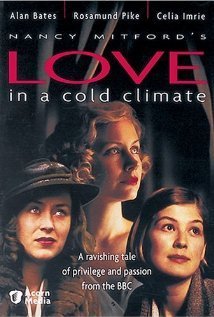
This movie Love in a Cold Climate (2001– ) is available at You Tube.
Cast:
Elisabeth Dermot Walsh as Linda
Rosamund Pike as Fanny
Megan Dodds as Polly
Javier Alcina as Juan Lopez
Sara Weymouth as Polly's Nurse
John Light as Christian
John Hopkins as Robert Parker
Zoe Waites as Lavender Davies
Christian Coulson as Matt
John Wood as Lord Merlin
Daniel Evans as Cedric
Samuel Labarthe as Fabrice
Anthony Andrews as Boy
Tom Ward as Alfred
Sheila Gish as Lady Montdore
Rupert Frazer as Lord Paddington
Alan Bates as. Uncle Matthew
Celia Imrie as Aunt Sadie
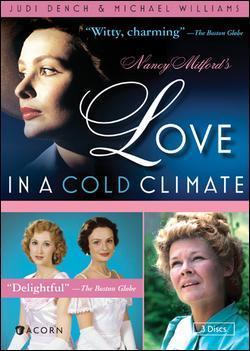
An earlier dramatization Love in a Cold Climate (1980– ) had Judie Dench acting as Sadie.
Cast:
Elisabeth Dermot Walsh as Linda
Rosamund Pike as Fanny
Megan Dodds as Polly
Javier Alcina as Juan Lopez
Sara Weymouth as Polly's Nurse
John Light as Christian
John Hopkins as Robert Parker
Zoe Waites as Lavender Davies
Christian Coulson as Matt
John Wood as Lord Merlin
Daniel Evans as Cedric
Samuel Labarthe as Fabrice
Anthony Andrews as Boy
Tom Ward as Alfred
Sheila Gish as Lady Montdore
Rupert Frazer as Lord Paddington
Alan Bates as. Uncle Matthew
Celia Imrie as Aunt Sadie
An earlier dramatization Love in a Cold Climate (1980– ) had Judie Dench acting as Sadie.

May 30, 2021
“Love in a Cold Climate” es una sátira. Una comedia de enredo ambientada en un vecindario lleno de Downton Abbeys, no pretende hacer daño pero tampoco deja títere con cabeza. Fanny no utiliza la ironía ni se ríe de sus vecinos y conocidos, pero Mitford sí. Y conseguir una narradora en primera persona que meta todas sus críticas dejando al lector quien crea lo que quiera, eso es escribir con maestría y un movimiento muy inteligente.

June 23, 2010
I have to give The Pursuit of Love five stars. Love in a Cold Climate is usually included as a sequel, but it doesn't quite measure up. The first is just hilarious, sort of P.G. Wodehouse without the slapstick. The Radletts are a looney family with little to do but think up fun mischief to amuse themselves in their country life between the wars. Take for example, the child hunt. Two of the children take off across the estate trying to mask their scent by walking through the creek or mingling with a flock of sheep. A couple hours later the bloodhounds (not the "hounds" used in fox hunting) are turned loose with the riders in close pursuit. Of course the dogs eventually find the girls and are handsomely rewarded--with marrow bones.
There are so many laughs in their insular little Cotswold world, most of them inside jokes, most of them terribly snobby. The Raphael and Carravagio are just “country house bedroom pictures”! Uncle rails against the use of words such as notepaper, perfume, mirror and mantelpieces! "It is called writing paper you know—don’t let’s hear any more about note, please." The “bolter is the narrator’s mother who tends to run off quite often with someone or other. Children in large families tend to invent their own universe, sometimes good, sometimes not so, often based on misbegotten facts or one’s vivid imagination.
Mitford does such a wonderful job of showing the lives of this family which, by the way, happens to be wealthy. Mitford is so quotable. “Poor old thing, I suppose she likes him, but, I must say, if he was one’s dog, one would have him put down.” It's not their fault they’re rich and they don’t really notice, any more than being poor or middle class children know their economic status. They really only know their own lives and usually tend to be happy. It's only when they’re exposed to the rest of the world, via modern communication devices, that the realization hits that they might be missing something. I guess what I’m saying is that your normal is not my normal; same thing with the rich and poor and cultures the world around. They are just different. It doesn’t hurt anything, unless you let it.
There are so many laughs in their insular little Cotswold world, most of them inside jokes, most of them terribly snobby. The Raphael and Carravagio are just “country house bedroom pictures”! Uncle rails against the use of words such as notepaper, perfume, mirror and mantelpieces! "It is called writing paper you know—don’t let’s hear any more about note, please." The “bolter is the narrator’s mother who tends to run off quite often with someone or other. Children in large families tend to invent their own universe, sometimes good, sometimes not so, often based on misbegotten facts or one’s vivid imagination.
Mitford does such a wonderful job of showing the lives of this family which, by the way, happens to be wealthy. Mitford is so quotable. “Poor old thing, I suppose she likes him, but, I must say, if he was one’s dog, one would have him put down.” It's not their fault they’re rich and they don’t really notice, any more than being poor or middle class children know their economic status. They really only know their own lives and usually tend to be happy. It's only when they’re exposed to the rest of the world, via modern communication devices, that the realization hits that they might be missing something. I guess what I’m saying is that your normal is not my normal; same thing with the rich and poor and cultures the world around. They are just different. It doesn’t hurt anything, unless you let it.

September 7, 2008
I was going to review the two novels seperately, but having now read both stories, I prefer the book as a whole. Naturally, the prim Polly -with her older man and overbearing mother- is close to my heart, while returning characters have acquired a familiar charm.
Curiously, this book kept talking to me about George. Another magical book from Rebecca! I tell you, the girl is a witch. ;)
Curiously, this book kept talking to me about George. Another magical book from Rebecca! I tell you, the girl is a witch. ;)

January 18, 2025
Nancy Mitford’s Radlett and Montdore #1-2 published together in this volume: The Pursuit of Love & Love in a Cold Climate are the beginnings of what may be a 4 or 6 book series. Normally I would look it up, but: Frankly my dear I don’t give a damn. I rather enjoyed the first book. Miss Mitford can write with an engaging letting you into the inside kinda of social satire. Comparing her to Jane Austin seems a disservice to Ms. Austin, but it seems to be a done thing. Certainly, family friendly for all the barest mentions of legitimate scandal, but not sure I would inflict this on the vary young.
All of these books are based, rather too much on the nose with the real Ms Mitford and her four sisters. For the sake of these books, the narrator places herself into a decidedly less well to do family that is for reason I am not going to confirm are still close to the much wealthier and connected household that give us the love and marriage storyline plots for the two books.
Of the two, Book 1 The Pursuit of Love is the better. Almost a 4 star read. This is the origins story, we meet the characters and get much of an insiders look into British high society between WWI and WWII. Everything is just so, we are entirely upstairs with no recognition of downstairs, or what constitutes life for the not well to do , well connected. Altogether an English version of
And THIS IS good old Boston,
The home of the bean and the cod,
Where the Lowells talk to the Cabots,
And the Cabots talk only to God.
A Boston Toast
by John Collins Bossidy
[Written by Dr. Bossidy for an alumni dinner of Holy Cross College.]
All with the same suggestion that we are not to take all as serious and that we are to note the wink and the suppressed smile, or is it giggle. These are such young girls after all.
By Book 2, Love in a cold Climate. We have been asked to ignore the somewhat silliness of one of the daughters falling in with the then emergent British Fascist Party and an iron hand romance between another daughter and their commonly handy, funny, lets just say it, molester uncle. So much of what may have been cute or satirical in Vol 1 has just become repetitious, and sour. Ms. Mitford has all the finer claws of a cat, but she is so severely tres snobbe, that I begin to care lots less. That and so much of her language is entre nous. I have no clue as to what neighborhoods rank where in what parts of London. Keeping in mind they changed over the generations and again remember that many would be re-classed not only by changes in fashion, but chances of bombings. Likewise we have many gradients of women’s fashion, but at this remove, so what?
All of these books are based, rather too much on the nose with the real Ms Mitford and her four sisters. For the sake of these books, the narrator places herself into a decidedly less well to do family that is for reason I am not going to confirm are still close to the much wealthier and connected household that give us the love and marriage storyline plots for the two books.
Of the two, Book 1 The Pursuit of Love is the better. Almost a 4 star read. This is the origins story, we meet the characters and get much of an insiders look into British high society between WWI and WWII. Everything is just so, we are entirely upstairs with no recognition of downstairs, or what constitutes life for the not well to do , well connected. Altogether an English version of
And THIS IS good old Boston,
The home of the bean and the cod,
Where the Lowells talk to the Cabots,
And the Cabots talk only to God.
A Boston Toast
by John Collins Bossidy
[Written by Dr. Bossidy for an alumni dinner of Holy Cross College.]
All with the same suggestion that we are not to take all as serious and that we are to note the wink and the suppressed smile, or is it giggle. These are such young girls after all.
By Book 2, Love in a cold Climate. We have been asked to ignore the somewhat silliness of one of the daughters falling in with the then emergent British Fascist Party and an iron hand romance between another daughter and their commonly handy, funny, lets just say it, molester uncle. So much of what may have been cute or satirical in Vol 1 has just become repetitious, and sour. Ms. Mitford has all the finer claws of a cat, but she is so severely tres snobbe, that I begin to care lots less. That and so much of her language is entre nous. I have no clue as to what neighborhoods rank where in what parts of London. Keeping in mind they changed over the generations and again remember that many would be re-classed not only by changes in fashion, but chances of bombings. Likewise we have many gradients of women’s fashion, but at this remove, so what?

August 1, 2022
Last week I walked into a Barnes and Noble and nearly choked on my spit to find that the bookstore had separated out "Women's Fiction" from the rest of the fiction section. There was a hand-lettered sign and everything in all caps: WOMEN'S FICTION. I stared at it for a long time, wondering "is this really helping?" Except I wasn't really wondering. The answer was very clear to me: It's not.
And I just can't help but think that the same impulse (to label a book "women's fiction") explains why this book isn't better known, read, or studied. If it's possible for any Mitford enterprise to be underrated, I don't believe Nancy Mitford gets her literary due. Her comedic sensibility is so strong, and her prose is ambrosia. The characters might be outlandish at times, but they're so finely and hilariously wrought.
This time, it hit me what an interesting case study The Pursuit of Love would be alongside The Great Gatsby, especially in regards to the 1st person omniscient narrator. Mitford, arguably, puts together a more plausible explanation. And then, of course, their larger-than-life topic characters, Linda Radlett/Jay Gatsby. It galls a bit that Fitzgerald's novel sits atop the canon. Meanwhile, this gem is shelved with all the beach-reads and amuse-bouches in, you guessed it, Women's Fiction.
And I just can't help but think that the same impulse (to label a book "women's fiction") explains why this book isn't better known, read, or studied. If it's possible for any Mitford enterprise to be underrated, I don't believe Nancy Mitford gets her literary due. Her comedic sensibility is so strong, and her prose is ambrosia. The characters might be outlandish at times, but they're so finely and hilariously wrought.
This time, it hit me what an interesting case study The Pursuit of Love would be alongside The Great Gatsby, especially in regards to the 1st person omniscient narrator. Mitford, arguably, puts together a more plausible explanation. And then, of course, their larger-than-life topic characters, Linda Radlett/Jay Gatsby. It galls a bit that Fitzgerald's novel sits atop the canon. Meanwhile, this gem is shelved with all the beach-reads and amuse-bouches in, you guessed it, Women's Fiction.

November 16, 2012
This was my very first Mitford and I have to say it completely delighted me – a big chunk of Archers-style English fun. This is the story of Fanny and her vivacious cousin Linda, a domestic drama nestled between two world wars that explores, among other things, the fragility of childhood, the transient nature of our relationships and the eccentricities of Englishmen. Fanny is a sensible, self-controlled child, a little girl left by her glamorous yet capricious parents to grow up alongside her exuberant cousins at their country pile. This book is full of character; snarling, grumpy Uncle Matthew, the eccentric and entirely camp Lord Merlin and the innocent Radlett children (calling themselves ‘The Hons’) – unburdened and filled with the preoccupations of the rich and comfortable (hunting, which family to marry into…etc). Linda, the star of the story, is the greatest ‘Hon’ of them all. Wild, idealistic and ever so slightly bonkers, Fanny recounts her various bad choices in love, the climax being a Parisian fling with Duke Fabrice de Sauveterre, a relationship soon threatened by rapidly advancing German troops.
I have nothing negative to say about this book. She will hardly change your life but Mitford’s writing (the lives of these children seeming to scarily mirror her own cloistered upbringing) is hugely entertaining – and isn’t that the point of reading after all? Fanny is the perfect narrator; sensible and neutral enough in her opinions to let the others shine through. The brief period lying between the two Word Wars inevitably makes for ripe storytelling material, as the novel spans a range of rapidly changing attitudes and countries. Mitford celebrates the innocently posh and unconventional folk in life and, particularly to an English girl like myself, gives us a good chuckle here and there. Linda’s account of getting to grips with the housework is hilarious:
”Oh dear, and I wish you could have seen the Hoover running away with me, it suddenly took the bit between the teeth and made for the lift shaft. How I shrieked – Christian only just rescued me in time. I think housework is far more tiring and frightening than hunting is, no comparison, and yet after hunting we had eggs for tea and were made to rest for hours, but after housework people expect one to go on just as if nothing special had happened.’ She sighed.’ p.78
My sentiments exactly.
Don’t be mistaken for thinking that Mitford is all fluffiness and light. This is a family drama after all and, with that, come all the trials, tribulations and tragedies that beset our own lives – and the book is all the richer for it. All the same, I felt immensely happy in my reading, full of romanticism and imagination. This was my first Nancy Mitford and I loved it:
‘She lay back, and all was light and warmth, Life, she thought, is sometimes sad and often dull, but there are currants in the cake and here is one of them’. p. 129
http://relishreads.wordpress.com/2012...
I have nothing negative to say about this book. She will hardly change your life but Mitford’s writing (the lives of these children seeming to scarily mirror her own cloistered upbringing) is hugely entertaining – and isn’t that the point of reading after all? Fanny is the perfect narrator; sensible and neutral enough in her opinions to let the others shine through. The brief period lying between the two Word Wars inevitably makes for ripe storytelling material, as the novel spans a range of rapidly changing attitudes and countries. Mitford celebrates the innocently posh and unconventional folk in life and, particularly to an English girl like myself, gives us a good chuckle here and there. Linda’s account of getting to grips with the housework is hilarious:
”Oh dear, and I wish you could have seen the Hoover running away with me, it suddenly took the bit between the teeth and made for the lift shaft. How I shrieked – Christian only just rescued me in time. I think housework is far more tiring and frightening than hunting is, no comparison, and yet after hunting we had eggs for tea and were made to rest for hours, but after housework people expect one to go on just as if nothing special had happened.’ She sighed.’ p.78
My sentiments exactly.
Don’t be mistaken for thinking that Mitford is all fluffiness and light. This is a family drama after all and, with that, come all the trials, tribulations and tragedies that beset our own lives – and the book is all the richer for it. All the same, I felt immensely happy in my reading, full of romanticism and imagination. This was my first Nancy Mitford and I loved it:
‘She lay back, and all was light and warmth, Life, she thought, is sometimes sad and often dull, but there are currants in the cake and here is one of them’. p. 129
http://relishreads.wordpress.com/2012...

July 18, 2009
Every bit as funny, effortlessly cultured and filled with insights about politics and social class as you might imagine (presuming you've heard of Nancy Mitford). The Pursuit of Love, from 1945, shows her keen awareness of the U/non-U linguistic distinction well before she elaborated it in her famous 1954 Encounter article, "The English Aristocracy". The irascible country squire character (molded on her father) is scolding his sister about the "dreadful" middle-class education the teenage narrator is receiving; "(she) talks about mirrors and mantelpieces, handbags and perfume" (the aristocratic equivalents for the first and last are "looking glass" and "scent" - not even sure about the rest).
Other intriguing detail includes casual mentions of the books on an upper-class girl's shelf - George Grossmith's Diary of a Nobody, Round the World in Forty Days, King Solomon's Mines and so on.
The number of quotable passages is half the length of the book - one I liked:
"The worst of being a Communist is the parties you may go to are - well - awfully funny and touching but not very gay...I don't see the point of sad parties, do you? And Left-wing people are always sad because they mind dreadfully about their causes, and the causes are always going so badly."
Other intriguing detail includes casual mentions of the books on an upper-class girl's shelf - George Grossmith's Diary of a Nobody, Round the World in Forty Days, King Solomon's Mines and so on.
The number of quotable passages is half the length of the book - one I liked:
"The worst of being a Communist is the parties you may go to are - well - awfully funny and touching but not very gay...I don't see the point of sad parties, do you? And Left-wing people are always sad because they mind dreadfully about their causes, and the causes are always going so badly."

February 18, 2012
I'm glad I finally got around to reading this, years after I picked up this battered copy in a used bookstore somewhere. It was an amusing and charming bit of fluff, notable mostly for how blithely Nancy Mitford writes purely to please herself. She ignores novelistic conventions in favor of a sort of disguised memoir, recording her family's peculiarly English personalities, habits, and disasters as if they were fiction, when they apparently largely were drawn entirely from life. The dialogue is frequently the best of the show, and it's absolutely worth reading all the way through The Pursuit of Love and halfway through Love in a Cold Climate to finally arrive at the bits with Cedric in them. He is delicious. I had to read bits out loud to people, interrupting them if necessary to make them listen, because I had to share the joy. Pity the novels lack form, particularly when it comes to satisfying conclusions. When Nancy feels like stopping she stops and that's that.

January 8, 2010
Perfect reading when you're snowed in for 2 or 3 days.
These are witty books with well-drawn characters. There's a kind of scary emotional distance sometimes, especially in The Pursuit of Love. (Some ending! Don't want to spoil it so will say no more.)
I adore the narrator of both stories. The plain girl who is all-knowing, all-seeing, all-understanding (although probably not all that plain).
If you sometimes want to cast and costume a Masterpiece Theatre series in your very own head, these books will give you excellent material.
The descriptions of clothing and manners are marvelous. Brit-o-maniacs, take note.
These are witty books with well-drawn characters. There's a kind of scary emotional distance sometimes, especially in The Pursuit of Love. (Some ending! Don't want to spoil it so will say no more.)
I adore the narrator of both stories. The plain girl who is all-knowing, all-seeing, all-understanding (although probably not all that plain).
If you sometimes want to cast and costume a Masterpiece Theatre series in your very own head, these books will give you excellent material.
The descriptions of clothing and manners are marvelous. Brit-o-maniacs, take note.

June 5, 2012
After reading I finished I Capture the Castle, Nancy Mitford was recommended as an author who wrote magically romantic stories. I was so disappointed by this book, especially after finding out that Mitford was buddies with one of my all time favorites, Evelyn Waugh. That connection, and the recommendation off of I Capture the Castle, had me expecting something more than the stale, perfunctory writing of this by the numbers account of a piece of cardboard of a character. It's a basic, flat account of an uninteresting story. It also takes WAY too long to realize who the story is actually about. It actually takes the narrator saying "This is Laura's story" for that to be apparent.

November 21, 2008
These books are soo funny! Particularly if you are a Historical Romance reader and are familiar with the goings on of the London Season. These stories, however, are NOT a romance although both novels deal with all the business of getting married and 'finding love'. But even with all the memorable characters and witty dialogue, the stories are very real: there are unhappy marriages and unhappy people.

March 18, 2023
I’m a Nancy Mitford fan but I returned the book after reading the introduction by Laura Thompson. She couldn’t contain her sneering right wing bias and makes offensive remarks against “woke”. This may be popular in Florida under the ugly, racist reign of Ron Desantis, but it will never be seen on my shelves. Shame on the editor for having allowed this.

February 13, 2008
In my next life, I am coming back as a Mitford.

March 6, 2018
Nancy Mitford grew up in the early 20th century in a wealthy British family. She wrote a handful of novels before attaining success with the 1945 release of "The Pursuit of Love". The autobiographical book provided the public a glimpse of the lifestyles of London high society.
In her life, Nancy had two ill-fated love affairs. After she temporarily called off her engagement to the homosexual Hamish St. Clair Erskine, she met and married Peter Rodd in 1933. The marriage was broken from the start. Peter cheated on Nancy throughout their unhappy time together.
Nancy volunteered for hospital work during World War II and finally met the love of her life, Frenchman Gaston Palewski. "The Pursuit of Love" is dedicated to Palewski.
"The Pursuit of Love" is told from the viewpoint of Fanny. Fanny is the daughter of the youngest of three sisters. Her mother, known at the Bolter, had Fanny at the age of 19 and left her father and Fanny at one month of age. Her mom's habit of loving and leaving men lead to her nickname. Her father also had numerous love interests and was on his fifth wife as Fanny tells her life story. With neither biological parent willing to settle down and care for Fanny, her mom's sister Aunt Emily raised Fanny. Aunt Emily surprises the extended family by announcing her engagement to family friend Davey when Fanny was 14 years old. Fanny's childhood is filled with memories of time spent with her Aunt Sadie and Uncle Matthew's 6 children. She is closest to her cousin Linda who is her same age.
Although the story is told by Fanny, the central character is Linda. Linda is a romantic. At the age of 10, she attempts suicide by eating yewberries in order to join her aged, beloved Border Terrier, who was put down by her father, in the afterlife. Linda is a beauty and has many interested suitors as she and Fanny are presented at coming out parties.
A young wealthy son of a banker, Anthony Kroseig, courts Linda. Despite objections from her parents, who find Tony's German heritage and banking background objectionable, Linda and Tony marry. Linda discovers that life with Tony is not what she imagined. The marriage is strained. In the meantime, Fanny meets and marries the easy going Alfred. Alfred and Fanny have a successful marriage and go on to have many children.
With her marriage on rocky ground, Linda meets Christian Talbot, a dedicated Communist. She is captivated by Christian's passion for the Communist cause, though she herself does not particularly understand or subscribe to Marxist doctrine. She leaves Tony, who grants her a divorce. She and Christian marry shortly after the divorce is finalized. Sadly, the marriage to Christian is also a mistake. She finds Christian's Communist friends to be joyless and boring. Christian and Linda head to France to help relocate refugees of the Spanish Civil War. When they get to France, Linda meets Lavender Davis, one of her bridesmaids from her marriage to Tony, at the refugee camps. In a short time, she realizes that Christian and Lavender have fallen in love. With torn emotions, she drops everything and heads to France. Her second marriage has come to a quick end. She is penniless and alone. Crying on the train to Paris, she is approached by a Frenchman. He intuitively guesses her situation. He is her salvation. He puts her in a hotel, buys her clothes and shows her around Paris. He is the wealthy and well-known playboy Fabrice.
Linda and Fabrice have a whirlwind romance. It is obvious to Linda that Fabrice has had many affairs before her. He is quick to admit that is true, but like Linda, he carries his passion intensely and does love her. With Fabrice, she has found her soulmate. With the war raging, Fabrice sends Linda to England to protect her the destruction of the invading Germans. Fabrice stays in France to fight for the French Resistance. Linda finds she is pregnant. The story concludes with Linda dying during childbirth. Fabrice is captured and killed by the Gestapo. Christian adopts the baby, little Fabrice, and the story ends.
In "Love in a Cold Climate", the story is again told by Fanny. The novel overlaps with "The Pursuit of Love" but focuses on a different set of characters. The central character is Polly, the only child of the Montdores. Fanny's father is related to the Montdores through his mother. The Montdores have just returned to England after a stay in India. Polly and Fanny, close in age are close friends.
A relation of the Montdores, Lady Patricia is married to Boy Dougdale. Fanny and her cousins call him the Lecherous Lecturer. He had tried to molest Fanny's cousins Linda and Jassy, and the name stuck. Despite his disturbing behavior to children, he and Lady Patricia have a happy and long marriage. The elderly Lady Patricia dies and leaves her longtime husband deeply saddened. At the time of Patricia's death, the beautiful and vivacious Polly is being pursued by numerous suitors. Shocking everyone, especially her father and mother, Polly has proposed to the newly widowed Boy. He accepts. Lord and Lady Montodore are besides themselves. Attempting to stop this ill-conceived union, they threaten to cut off both Boy and Polly's financial support. In spite of the financial challenges, Boy and Polly defiantly marry. Short of money, they depart to Italy where the cost of living is more reasonable.
The poorly matched couple is miserable. They miss the food, friends and family in England. The elderly Boy is poor company for the youthful Polly. With Polly disowned, Lord and Lady Montdore face the question of who will inherit their estate. They have a Canadian nephew Cedric they have yet to met. They decide to seek out Cedric to see if he is worthy of their inheritance. They finally track down Cedric who has been living in Paris in grand style.
As Cedric meets the Montdores, they are surprised and relieved to find Cedric is a sophisticated and charismatic young man. They had worried that he would be a backwater country bumpkin. Cedric's flamboyant style dazzles the elderly Lady Montdore. He provides health, beauty, makeup and dress tips to make Lady Montdore look and feel younger. Lady Montdore and Cedric prove to be inseparable and Cedric extends his stay with his relations.
After years of exile abroad, Polly and Boy decide to return to England to have their baby. The story ends with Polly's child dying shortly after being born. Polly and her mother reconcile. Ironically, Boy and Cedric become infatuated with each other.
--------------------------
Although the characters in "The Pursuit of Love" and "Love in a Cold Climate" are shared, the stories are quite different. In "The Pursuit of Love", Mitford rapidly moves the action and timeline along. Although told from Fanny's narrative, the Linda character is Mitford. In "Cold Climate", some of Polly may be taken from Mitford's personal experience, though more likely, Polly is taken from friends and family that she has known. Her detail in "Cold Climate" is far more extensive, as if she is looking in on the action and paying close attention to the behavior, scenery and interaction of the characters. In "Pursuit", the flow is different. Though we know that Fanny is telling the story, we often feel that Linda is the one telling her personal story, which is indeed the case. The difference between the inward versus outward views provide a striking difference between the two novels.
"The Pursuit of Love" is the more successful of these two books. The characters are vibrant. Linda comes across as a heroic woman bravely baring her soul for the sake of love. She finds disappointment, betrayal, and regret before finally discovering the man she was meant to love. In "Cold Climate", Polly's story is tragic. Her choice of Boy is baffling. The death of her baby is symbolic of her wasted youth. The introduction of Cedric lightens the tension of the novel, but we are still left wondering where Polly goes from here.
Mitford gives readers an insider view of the life of the upper class of Britain with her two famous novels. Though Polly and Boy experience some financial challenges in "Cold Climate", in general, the struggles of making ends meet or even the concept of working for a living are not to be found in the lives of these aristocrats. Coming out parties, proper and successful marriage matches, and appearances and dress are the primary concerns of the characters. A universal challenge that these blue bloods share with less affluent are the search for love, marital challenges, and parent/child relations. Mitford deals in these issues in a way that is both interesting and relatable. Both books are worth reading, but if you are to choose only one, "Pursuit" is the more interesting and enjoyable.
In her life, Nancy had two ill-fated love affairs. After she temporarily called off her engagement to the homosexual Hamish St. Clair Erskine, she met and married Peter Rodd in 1933. The marriage was broken from the start. Peter cheated on Nancy throughout their unhappy time together.
Nancy volunteered for hospital work during World War II and finally met the love of her life, Frenchman Gaston Palewski. "The Pursuit of Love" is dedicated to Palewski.
"The Pursuit of Love" is told from the viewpoint of Fanny. Fanny is the daughter of the youngest of three sisters. Her mother, known at the Bolter, had Fanny at the age of 19 and left her father and Fanny at one month of age. Her mom's habit of loving and leaving men lead to her nickname. Her father also had numerous love interests and was on his fifth wife as Fanny tells her life story. With neither biological parent willing to settle down and care for Fanny, her mom's sister Aunt Emily raised Fanny. Aunt Emily surprises the extended family by announcing her engagement to family friend Davey when Fanny was 14 years old. Fanny's childhood is filled with memories of time spent with her Aunt Sadie and Uncle Matthew's 6 children. She is closest to her cousin Linda who is her same age.
Although the story is told by Fanny, the central character is Linda. Linda is a romantic. At the age of 10, she attempts suicide by eating yewberries in order to join her aged, beloved Border Terrier, who was put down by her father, in the afterlife. Linda is a beauty and has many interested suitors as she and Fanny are presented at coming out parties.
A young wealthy son of a banker, Anthony Kroseig, courts Linda. Despite objections from her parents, who find Tony's German heritage and banking background objectionable, Linda and Tony marry. Linda discovers that life with Tony is not what she imagined. The marriage is strained. In the meantime, Fanny meets and marries the easy going Alfred. Alfred and Fanny have a successful marriage and go on to have many children.
With her marriage on rocky ground, Linda meets Christian Talbot, a dedicated Communist. She is captivated by Christian's passion for the Communist cause, though she herself does not particularly understand or subscribe to Marxist doctrine. She leaves Tony, who grants her a divorce. She and Christian marry shortly after the divorce is finalized. Sadly, the marriage to Christian is also a mistake. She finds Christian's Communist friends to be joyless and boring. Christian and Linda head to France to help relocate refugees of the Spanish Civil War. When they get to France, Linda meets Lavender Davis, one of her bridesmaids from her marriage to Tony, at the refugee camps. In a short time, she realizes that Christian and Lavender have fallen in love. With torn emotions, she drops everything and heads to France. Her second marriage has come to a quick end. She is penniless and alone. Crying on the train to Paris, she is approached by a Frenchman. He intuitively guesses her situation. He is her salvation. He puts her in a hotel, buys her clothes and shows her around Paris. He is the wealthy and well-known playboy Fabrice.
Linda and Fabrice have a whirlwind romance. It is obvious to Linda that Fabrice has had many affairs before her. He is quick to admit that is true, but like Linda, he carries his passion intensely and does love her. With Fabrice, she has found her soulmate. With the war raging, Fabrice sends Linda to England to protect her the destruction of the invading Germans. Fabrice stays in France to fight for the French Resistance. Linda finds she is pregnant. The story concludes with Linda dying during childbirth. Fabrice is captured and killed by the Gestapo. Christian adopts the baby, little Fabrice, and the story ends.
In "Love in a Cold Climate", the story is again told by Fanny. The novel overlaps with "The Pursuit of Love" but focuses on a different set of characters. The central character is Polly, the only child of the Montdores. Fanny's father is related to the Montdores through his mother. The Montdores have just returned to England after a stay in India. Polly and Fanny, close in age are close friends.
A relation of the Montdores, Lady Patricia is married to Boy Dougdale. Fanny and her cousins call him the Lecherous Lecturer. He had tried to molest Fanny's cousins Linda and Jassy, and the name stuck. Despite his disturbing behavior to children, he and Lady Patricia have a happy and long marriage. The elderly Lady Patricia dies and leaves her longtime husband deeply saddened. At the time of Patricia's death, the beautiful and vivacious Polly is being pursued by numerous suitors. Shocking everyone, especially her father and mother, Polly has proposed to the newly widowed Boy. He accepts. Lord and Lady Montodore are besides themselves. Attempting to stop this ill-conceived union, they threaten to cut off both Boy and Polly's financial support. In spite of the financial challenges, Boy and Polly defiantly marry. Short of money, they depart to Italy where the cost of living is more reasonable.
The poorly matched couple is miserable. They miss the food, friends and family in England. The elderly Boy is poor company for the youthful Polly. With Polly disowned, Lord and Lady Montdore face the question of who will inherit their estate. They have a Canadian nephew Cedric they have yet to met. They decide to seek out Cedric to see if he is worthy of their inheritance. They finally track down Cedric who has been living in Paris in grand style.
As Cedric meets the Montdores, they are surprised and relieved to find Cedric is a sophisticated and charismatic young man. They had worried that he would be a backwater country bumpkin. Cedric's flamboyant style dazzles the elderly Lady Montdore. He provides health, beauty, makeup and dress tips to make Lady Montdore look and feel younger. Lady Montdore and Cedric prove to be inseparable and Cedric extends his stay with his relations.
After years of exile abroad, Polly and Boy decide to return to England to have their baby. The story ends with Polly's child dying shortly after being born. Polly and her mother reconcile. Ironically, Boy and Cedric become infatuated with each other.
--------------------------
Although the characters in "The Pursuit of Love" and "Love in a Cold Climate" are shared, the stories are quite different. In "The Pursuit of Love", Mitford rapidly moves the action and timeline along. Although told from Fanny's narrative, the Linda character is Mitford. In "Cold Climate", some of Polly may be taken from Mitford's personal experience, though more likely, Polly is taken from friends and family that she has known. Her detail in "Cold Climate" is far more extensive, as if she is looking in on the action and paying close attention to the behavior, scenery and interaction of the characters. In "Pursuit", the flow is different. Though we know that Fanny is telling the story, we often feel that Linda is the one telling her personal story, which is indeed the case. The difference between the inward versus outward views provide a striking difference between the two novels.
"The Pursuit of Love" is the more successful of these two books. The characters are vibrant. Linda comes across as a heroic woman bravely baring her soul for the sake of love. She finds disappointment, betrayal, and regret before finally discovering the man she was meant to love. In "Cold Climate", Polly's story is tragic. Her choice of Boy is baffling. The death of her baby is symbolic of her wasted youth. The introduction of Cedric lightens the tension of the novel, but we are still left wondering where Polly goes from here.
Mitford gives readers an insider view of the life of the upper class of Britain with her two famous novels. Though Polly and Boy experience some financial challenges in "Cold Climate", in general, the struggles of making ends meet or even the concept of working for a living are not to be found in the lives of these aristocrats. Coming out parties, proper and successful marriage matches, and appearances and dress are the primary concerns of the characters. A universal challenge that these blue bloods share with less affluent are the search for love, marital challenges, and parent/child relations. Mitford deals in these issues in a way that is both interesting and relatable. Both books are worth reading, but if you are to choose only one, "Pursuit" is the more interesting and enjoyable.
May 16, 2023
As acerbic as her reputation, though never curmudgeonly, Nancy Mitford knows she is as much a sociologist as she is a novelist. I cannot remember the last time a book has made me howl with laughter.
In The Pursuit of Love, the narrator reminisces about childhood at an English country estate—cold, ugly, and inhospitable, like any proper rural seat of nobility. She tells the story of her hapless cousin, Linda Radlett, and her relationships with three men who represent very different areas of society. According the blurb of the Modern Library Edition, Linda ‘finally finds love,’ but I find this an odd claim antithetical to the theme and very title of the novel. Poor Linda wants so passionately to be loved in a romantic sense that she fails to recognize the love that surrounds her.
The ML blurb also says Love in a Cold Climate is about a Canadian heir, Cedric, but it is primarily concerned with the circumstances that lead to his inheritance. Its timeframe overlaps with The Pursuit of Love.
The narrator has more of a presence in this story, which focuses first on the beautiful but aloof Polly Hampton. Much to her mother’s chagrin, she seems incapable of forming any romantic attachment—that is, until she throws away her pedigree and fortune on a cartoonishly revolting marriage [**CONTENT WARNING: The topics of child sexual abuse and grooming are central to the plot. It is a striking revelation that Linda, who struggles to maintain relationships, was involved in this abuse as a child **].
Cedric—what one might call a cosmopolitan ‘kept boy’ with an impressive eye for aesthetics but not much else—arrives much later in the story. That’s a shame: His interactions with the stolid, tweedy English aristocracy is Mitford’s greatest tool in satirizing the latter.
What makes Mitford especially refreshing today is her utter lack of hostility. Her characters are all ridiculous, but there’s never a sense of mean-spiritedness. We are repeatedly told the character of Uncle Matthew, based on her father, is ‘terrifying.’ And he is, to an extent. Still, she treats him with an impressive degree of gentleness borne of a great deal of reflection—and distance.
Though her novels are always referenced as semi-autobiographical, this is true more so in fact than in form; it’s striking that she adopts the perspective of an ancillary cousin rather than one of the siblings of the central Radlett family. This is likely her way of disentangling herself from the madness of her childhood in order to make sense of it. She’s succeeded.
One notable feature of these books is an interwoven discussion of Mitford’s famous (though irreverently created) concept of ‘U’ vs ‘non-U’ English. This is essentially the idea that as wealthy, upper class speakers had less to prove, they didn’t have to use formal language, whereas more aspirational classes tried to bridge the gap with fancier words. Admittedly, this is why I’ve always been interested in Nancy Mitford. And also because—well, she was a Mitford. But I’ll definitely be reading more.
In The Pursuit of Love, the narrator reminisces about childhood at an English country estate—cold, ugly, and inhospitable, like any proper rural seat of nobility. She tells the story of her hapless cousin, Linda Radlett, and her relationships with three men who represent very different areas of society. According the blurb of the Modern Library Edition, Linda ‘finally finds love,’ but I find this an odd claim antithetical to the theme and very title of the novel. Poor Linda wants so passionately to be loved in a romantic sense that she fails to recognize the love that surrounds her.
The ML blurb also says Love in a Cold Climate is about a Canadian heir, Cedric, but it is primarily concerned with the circumstances that lead to his inheritance. Its timeframe overlaps with The Pursuit of Love.
The narrator has more of a presence in this story, which focuses first on the beautiful but aloof Polly Hampton. Much to her mother’s chagrin, she seems incapable of forming any romantic attachment—that is, until she throws away her pedigree and fortune on a cartoonishly revolting marriage [**CONTENT WARNING: The topics of child sexual abuse and grooming are central to the plot. It is a striking revelation that Linda, who struggles to maintain relationships, was involved in this abuse as a child **].
Cedric—what one might call a cosmopolitan ‘kept boy’ with an impressive eye for aesthetics but not much else—arrives much later in the story. That’s a shame: His interactions with the stolid, tweedy English aristocracy is Mitford’s greatest tool in satirizing the latter.
What makes Mitford especially refreshing today is her utter lack of hostility. Her characters are all ridiculous, but there’s never a sense of mean-spiritedness. We are repeatedly told the character of Uncle Matthew, based on her father, is ‘terrifying.’ And he is, to an extent. Still, she treats him with an impressive degree of gentleness borne of a great deal of reflection—and distance.
Though her novels are always referenced as semi-autobiographical, this is true more so in fact than in form; it’s striking that she adopts the perspective of an ancillary cousin rather than one of the siblings of the central Radlett family. This is likely her way of disentangling herself from the madness of her childhood in order to make sense of it. She’s succeeded.
One notable feature of these books is an interwoven discussion of Mitford’s famous (though irreverently created) concept of ‘U’ vs ‘non-U’ English. This is essentially the idea that as wealthy, upper class speakers had less to prove, they didn’t have to use formal language, whereas more aspirational classes tried to bridge the gap with fancier words. Admittedly, this is why I’ve always been interested in Nancy Mitford. And also because—well, she was a Mitford. But I’ll definitely be reading more.
Displaying 1 - 30 of 566 reviews