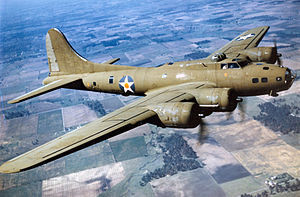
At the height of the air war in Europe, Captain Joe Farley and the baseball-loving, wisecracking crew of the B-17 Flying Fortress Fata Morgana are in the middle of a harrowing bombing mission over East Germany when everything goes sideways. The bombs are still falling and flak is still exploding all around the 20-ton bomber as it is knocked like a bathtub duck into another world.Suddenly stranded with the final outcasts of a desolated world, Captain Farley navigates a maze of treachery and wonder--and finds a love seemingly decreed by fate--as his bomber becomes a pawn in a centuries-old conflict between remnants of advanced but decaying civilizations. Caught among these bitter enemies, a vast power that has brought them here for its own purposes, and a terrifying living weapon bent on their destruction, the crew must use every bit of their formidable inventiveness and courage to survive.Fata Morgana--the epic novel of love and duty at war across the reach of time.
Steven R. Boyett is the author of Ariel, Elegy Beach, Mortality Bridge, Fata Morgana (with Ken Mitchroney) and numerous stories, articles, comic books, and screenplays.
As a DJ he has played clubs, conventions, parties, Burning Man, and sporting events, and produces two of the world’s most popular music podcasts: Podrunner and Groovelectric.
Steve has also been a martial arts instructor, professional paper marbler, advertising copywriter, proofreader, typesetter, writing teacher, and Website designer and editor. He also plays the didgeridoo and composes electronic music.
99 cent Kindle sale, Sept. 4, 2017. 3.5 stars for this 2017 SF novel, kind of a throwback, reminiscent of Golden Age SciFi. Final review, first posted on Fantasy Literature:
It’s 1943, at the height of the air war during World War II. US Air Force Captain Joseph Farley and his crew of nine men fly a B-17 bomber on missions out of England, bombing German factories and other military targets. On their last mission their bomber Voice of America, a never-ending source of problems (“fixing this one’s like taking a gator to the vet. You’re just making it better so it can try to kill you again”) finally bit the dust permanently, and the crew is assigned a brand new B-17F bomber, which they christen Fata Morgana after an unusual type of mirage, along with a new ball turret gunner, Sergeant Martin Proud Horse, a Native American of the Lakota tribe. One of the men, Shorty, is a gifted artist who paints a sorceress type of woman on the nose of the Fata Morgana, following Captain Farley’s detailed description of a woman who haunts his dreams.
Their next mission is to bomb a German munitions factory, and on this run the Fata Morgana and its crew, under heavy fire from German fighter planes, are drawn into a mysterious vortex near the factory. They emerge on the other side in an unrecognizable world, a barren, blackened plain where there are only two small, domed cities that are engaged in a bitter war with each other. The Fata Morgana is attacked by a huge winged monster, but they manage a relatively controlled crash landing. Then the crew promptly loses control of their wrecked plane to soldiers of one of the warring cities and is taken in by the other group, led by a woman who is the image of the painting on their plane. The crew tries to adjust to life in this technologically advanced but decaying world. Still, their ultimate mission is to recover and repair their plane and make their way back to their own world, to fulfill their duty despite almost insurmountable obstacles.
Fata Morgana (2017) reads as a retro type of science fiction novel, and not just because the main characters are WWII military men. It’s a straightforward, action-packed story with a focus more on the adventure and excitement than on characterization or depth. Captain Farley’s romance (such as it is) is courtly and sweet, if a little trite. There are detailed and true-to-life descriptions about B-17 bombers and bombing runs, particularly in the first eighty pages, which part reads like a straight WWII historical novel. For the most part this is a hard science fiction novel, but there’s a slight “there are more things in Heaven and Earth, Horatio” element to a couple of aspects of this novel that edges it just a bit toward fantasy. The dénouement managed to remind me of both the ending of the WWII memoir Band of Brothers and the love-beyond-time element from the movie Somewhere in Time.
Because the main characters are from the 1940s, most of them have outdated views toward, for example, women and minorities ― specifically, Sergeant Proud Horse. Steven Boyett and Ken Mitchroney don’t shy away from giving these men dialogue that is true to the era, but may make some modern readers cringe. When Proud Horse introduces himself and tells his new crew that he’s Lakota (which means nothing to the men) and an Indian, the flight engineer greets him with “How, Chief” and another crewman asks him if he’d left his teepee to come to England and shoot Germans. Proud Horse responds with broad humor and a sizzling baseball pitch that earns him general respect, though the “Chief” nickname lingers. To give them credit, the men do prove to be somewhat open-minded when they find themselves in a world where women are treated equally.
With a crew of ten men, it’s understandable that not all of them are distinguishable personalities, but Boyett and Mitchroney did a reasonable job of making several of them memorable, even if they are more or less familiar types. For example, there’s the brave and noble leader, the loyal lieutenant, and the engineer who’s improbably brilliant in figuring out completely unfamiliar technology. (How does he manage to hack a robot when he’s never seen a computer before?)
I have to admit I was initially rolling my eyes when the Fata Morgana crew landed among English-speaking people, but Boyett and Mitchroney eventually disclose the reason for that, and the overall plot is fairly well-constructed. I always appreciate it when elements that initially seem random eventually become relevant to the plot in ways that are surprising but logical. The one exception to the lucid story-telling is a climactic scene with some mysterious technology that seems to bend time and space. It was clearly supposed to be confusing, but it veered a little too far into the incomprehensible. On the other hand, the winged monster, a cyborg-like being called the Typhon, felt terrifyingly real, especially when some of the characters get to see it up close.
Fata Morgana is not a book that is likely to appeal to every science fiction fan, but if you’re interested in WWII history or like vintage-type hard SF, it’s worth taking the flight with Captain Farley and his crew.
I received a free copy of this book for review from the publisher. Thank you!
Content note: Somewhat surprisingly for a novel about military guys, there's only a single F-bomb here. There's some innuendo talk among the guys, and some violence, but it's all fairly tame. Call it a mild PG-13.
Fata Morgana: A Fata Morgana is an unusual and complex form of superior mirage that is seen in the narrow band right above the horizon. It is the Italian name for the Arthurian sorceress Morgan le Fay, from a belief that these mirages, often seen in the Strait of Messina, were fairy castles in the air or false land created by her witchcraft to lure sailors to their deaths. Source: Wikipedia
I have not read a great deal of Science Fiction but the premise of this book intrigued me.
In this story which takes place during World War II, the Fata Morgana is a B17 bomber on a mission over Germany. The crew are tasked with eliminating a munitions sight. Resistance is expected. What Captain Farley and his crew did not expect was to be sucked into a vortex in the midst of battle and find themselves pawns in a new war being waged by ancient enemies in an unknown realm.
Part one sets the time and place and introduces you to the Captain and crew of the B17, and as you become more familiar with their history as a crew, you get to know each of them better. I found the little bits I was served delicious and was hungry for more. Instead I found myself lost in operational and mechanical detail. Pages of it. For me it was overwhelming and only served to pull me out of the story. I yearned to know more about Captain Farley and his crew and how they came to be flying a bomber with a beautiful woman painted on the nose. They were endlessly fascinating to me but I never really got to know them even half as well as I would have liked.
The unknown realm in which Farley and his crew find themselves is a desolate and dangerous place. I am talking a grim, post apocalyptic landscape where there appear to be two distinct colonies engaged in a centuries old dispute. One has Farley and his crew while the other has laid claim to the Fata Morgana. I do not want to say too much more for fear of spoilers but allow me this. While Farley and Wennda ( a colony rep) are on a recon mission they encounter some bugs; bugs who it would seem are on a mission of their own. Woot, I loved this part. There will be more, bugs that is.
Here is the thing, for me at least the narrative did not flow very well. I kept getting bogged down on all the little hills of unnecessary detail that littered the pages. Climbing them became arduous and interrupted my journey. My eyes would glaze over, I would stumble and miss something intrinsic to the story being told, which typically resulted in backtracking. Argggh!
My thanks to Blackstone Publishing, Steven R. Boyett and Ken Mitchroney as well as Netgalley for an opportunity to read this book set to be published on June 13, 2017.
Oh my gosh! This book was soooo good. It made me cry a few times, and others had me laughing out loud. I really must read more by this author. It was about a WWII bomber, the Fata Morganna, that went through a vortex into the future. He met a girl and fell in love. This crossed a few genres-- historical fiction, sci-fi, romance... I liked the ending too, not what I expected, but now that I am done, I can see nothing else would have really worked. I received this book as an ARC from Netgalley. My thanks to the publisher, the author and Netgalley for this book.
I received this book for free via Netgalley in exchange for a fair review This WWII meets sci-fi story is very much in the tradition of H Rider Haggard and Edgar Rice Burroughs’ John Carter series, and indeed draws on a theme going much further back in legends and sagas. You can also point to similar themes in many works include those of HG Wells and CS Lewis The hero (here accompanied by a band of followers, here in the guise of a WWII bomber crew) is pulled into a mysterious realm where he faces challenges, falls for the “princess” and encounters tricksters and in the end must make hard choices to fulfil his “quest”. All of which leaves him unable to quite fit in either “world”. In the course of his adventures we have some engaging set piece sections from war-time air battles to unrelentless sci-fi creatures. This is not a surprise given the authors both have connections to film industry – indeed some of the sections would perhaps work better on screen. This may be particularly true of the surreal, “deus ex machina” sequence which didn’t particularly work on the page and didn’t leave me with a clear idea of what the “monster” had been protecting. There are plenty of “twists” along the way, although some are predictable because of the story telling traditions drawn on. However, some, especially one towards the end are cleverly put together and the clues are all in the story when you look back. Beyond the action set pieces, this book is strongest where it looks at people’s relationship with technology and this is the subtlest part of the story telling. From getting the plane in the air at the start to the final denouements we see people who have both symbiotic or problem-solving relationships, to those who are effectively in thrawl to it. The idea of coxing limping technology along and generations of engineers signing their work are great images that feed into this key theme and are well handled. For those like me, who read a lot of si-fi and fantasy – a warning, there is a frustrating element in the ending that left me muttering about paradoxes This is an easy read on the whole and the story carried me along but not one I will particularly remember.
The B-17 "Flying Fortress" really wasn't much of a fortress - it was an aluminum tube with some guns mounted on it, a bomb delivery system with the bare minimum equipment to keep its crew alive in order to reach its target and (hopefully) make it back.
The hundreds of air raids on Germany were the stuff of nightmares, both for the crews and for the civilian populations below.
Fata Morgana is one of those time-travel novels where a World War II crew somehow finds itself in an alternate reality. It will seem familiar to fans of Taylor Anderson's Destroyermen series. In this book, however, it's not a destroyer but a B-17 Flying Fortress that slips through a vortex in space-time and finds itself somewhere else.
Without going into spoilers, the crew naturally discovers that their plane, the Fata Morgana, is a powerful weapon that could chance the balance of power between rival forces in the setting where they land. Unlike the endless Destroyermen series, however, this is a self-contained novel, complete with an ending, and an epilogue, many, many years later.
I'm giving this 5 stars because it's really the best of its type I've ever read. It's classic science fiction, full of adventure, romance, clever space/time twists, heroes and villains, people from different eras all acting intelligently according to their own viewpoint, and of course, lots of air combat, with immaculate technical details that do not go overboard and interfere with the storytelling. The whole book is a paean to the B-17 and the crews that flew them - while the author was not born until long after WWII ended, he clearly did his research and his personal attachment shows.
This book is highly recommended for anyone who likes World War II stories, time travel stories, and old school pulp adventure. The novel is not written in a "pulpy" style, but the characters act like heroes and heroines of the Greatest Generation. There was nothing here not to like.
Picked up from the library on a whim. The first part is all WWII bomber crew fiction - the lingo, the camaraderie, the action. Then, just after a bombing run, it gets... weird.
I won't spoil the fun. For 400 pages, it's a pretty quick read. The audio book is well done, lots of different voices and accents. I really enjoyed the story, and said camaraderie was doubly fun because of baseball. Absolutely loved the new guy powering it in, as a former pitcher. Ow, my hand!
Why not 5 star? Would have liked to hear "where" asked much earlier. The romance seemed a little forced (but then there were those dreams...). Some of the solutions seemed a *little* too pat, especially towards the end.
So why not 3 star or less? Those are minor complaints, and besides, this is fun, darn it! Go check it out for yourself, or buy it if there isn't a library nearby - I recommend it :)
The nitty-gritty: An exciting time travel adventure that is, at its heart, a love letter to the B17 Flying Fortress bomber.
It’s been six years since Steve Boyett published Mortality Bridge, and so I was thrilled to find out he had a new book coming out this year, co-authored by his good friend Ken Mitchroney. Fata Morgana is set in two time periods, first in WWII Europe, where the crew of the B17F bomber the Fata Morgana is getting ready for their next mission, and later in a far-flung future Europe where the world has more or less been destroyed. As you might guess, both these time periods are connected by the Morgana, who somehow manages to fly through a rift in midair during a brutal flak attack.
Upon landing in this strange new world, Captain Joe Farley and his crew meet some of the locals, including a woman named Wennda who takes an interest in Farley. But not everyone in this world is friendly, and before they know it, the Fata Morgana has been captured for some nefarious purpose. Farley and the boys want nothing more than to go back home, but first they’re going to have to get their bomber back.
Boyett and Mitchroney have clearly done their homework, and then some. The beginning scenes of the book drop the reader firmly in the middle of the action, where we meet the crew members and are given a detailed and loving tour through the belly of the bomber. If you don't already know what ball turrets and bombardiers are, don’t worry. The authors manage to convey a lot of technical information about just how a B17 bomber runs without sacrificing story or characters. Usually I’m not that interested in war stories, but I have to admit the scenes in the air, flying along with Farley, Broben, Shorty and the rest, were some of my favorites. And despite the banter and laughter among the crew, this is war, and the violence is often unexpected and shocking.
And boy does the dialogue feel authentic! I can imagine Boyett and Mitchroney watching hours and hours of old movies starring Humphrey Bogart and Spencer Tracy in order to get their patter down. The story is filled with cheesy expressions like “Now we’re cooking with gas” and “What’s the beef?” but as cheesy as these are to the modern reader, they certainly added to the story. And true to the times, feminism is nowhere to be found (at least until Wennda enters the picture), so a word of warning to female readers who may not be too keen on hearing a “dame” described as a “blue plate special.” But all in all, it was great fun and I loved these details.
Once the Morgana winds up in the future, the story abruptly shifts gears. The world was a fascinating one—although the “event” that destroyed the world isn’t really explained, and you’re going to have to suspend your disbelief about how the entire planet has been blown up, except for a small group of people living in a crater. Once on the ground, Farley and his crew soon discover that there are two factions who don’t get along: those who live in the Dome, like Wennda and Yone, and those in the Redoubt. The authors spend quite a bit of time describing the lay of the land, but for some reason I could never clearly picture what was going on. This middle section was also the slowest, and after finishing the book I much preferred the action in the air to that on the ground.
But some of the SF details were wonderfully done. I especially loved the dangerous creature/robot called the Typhon (and I would have loved a whole story centered around it!). Part machine, part organic something, the few scenes with the Typhon were some of the creepiest in the book. I also enjoyed the biobots, spider-like mechanical repair drones who seem to be one thing, but turn out to be much more. The only futuristic detail I didn't care for—and made me laugh every time it was mentioned—was a “cellophone,” a cell phone made of, you guessed it, cellophane. It felt like Boyett and Mitchroney were trying to be too clever, and it just felt out of place with the rest of the story.
Stories about people from two different time periods coming together and trying to understand each other have been done plenty of times before, but I thought the authors did a great job. Some of the funniest moments were Wennda and Farley getting to know each other, but they were also some of the sweetest. Yes, there’s a romance, but it’s not the main focus of the story. Just like an old black and white movie, their relationship was sweet and G-rated.
The last quarter of the book is non-stop, as the Fata Morgana crew tries to get back home. Because the story takes place over Germany, I wasn’t surprised when the Nazis entered the picture, and I thought the authors did some very clever things with that scenario. I absolutely adored the Epilogue, which yes, ties just about everything up very nicely. The ending was unexpectedly bittersweet, which is how I like my endings, by the way.
A lot goes on in Fata Morgana, but Boyett and Mitchroney handle it all with grace and style, and for two seasoned writers, I wouldn’t expect anything less. Thrilling and nostalgic, with a cast of lovable characters that I couldn’t quit rooting for, history buffs and sci-fi fans alike are going to love this book.
A fascinating melange of WWII "aviation lit" (to coin a term) and hard sci-fi, with a side of metaphysics and fantasy, "Fata Morgana" is a unique book. It's not exactly something I would normally read, but I found it extremely interesting nonetheless.
Somewhat to my surprise, since I was expecting sci-fi, the book starts off with a detailed and lengthy scene about an American bomber crew flying missions over Germany in 1943. The planes and fight scenes are described in loving, exquisite detail, hence the designation of"aviation lit," which is a genre I've encountered before, but I don't know that I've ever seen named explicitly. Fans of flying, especially lovers of antique aircraft, are likely to enjoy these passages, regardless of their opinion of sci-fi; as a nervous flyer and a claustrophobe (imagine being in the ball turret!! My heart races just thinking about it!) these scenes just made my palms sweat, but they are masterfully executed. One day the crew finds themselves flying into a vortex during a mission, and...I'll let the reader discover the rest, for fear of spoilers.
The crew are charmingly vintage, and the plot is full of unexpected high-speed maneuvers, so that I honestly had no idea how it would end right up to the conclusion. There is also a love story, although that for me was fairly incidental: the machines, both real and imaginary, are the true objects of affection here, and against their backdrop the human characters seem a little flat. That being said, there are no shortage of readers who love this kind of tech-heavy literature, and history buffs as well as hard sci-fi fans are likely to get a tremendous kick out of this book.
My thanks to NetGalley for providing a free review copy of this book. All opinions are my own.
Thoughts- 5 Stars for Story Atmosphere 5 Stars for Narration by Macleod Andrews 3 Stars for Characters 4 Stars for Concept 2 Stars on Drawing Concept into Clear Visual/Action/Sequence
Normally a Nonfiction reader, I was unexpectedly unable to put this book down. The reader is thrust into the story of an American bomber crew - a part of the story that is sure to thrill every WW2 history fan - and then taken on an unexpected journey into another world. Part detailed history, part science fiction, it is a refreshing exploration of the impact of history on individuals and individuals upon history. The book is officially released in the US by Blackstone Publishing June 2017. If you like WW2 aviation, historical fiction and/or science fiction you will love this book!
The first section of the book is a terrifically exciting account of a B17 bomber raid over Germany in World War 2 that has a real sense of authenticity. It’s here we are first introduced to the wise-cracking but close-knit crew of the Fata Morgana, led by Captain Joe Farley. Suddenly, however, from WW2 historical fiction, the book suddenly mutates into science fiction as the aircraft and its crew is transported through some kind of vortex into a seemingly alien world.
They find themselves and their stricken plane in a bleak, desolate landscape where two competing cities are all that remains after a global apocalypse. Given shelter by one of the cities, the crew are introduced to the inhabitants’ advanced technology but, in a nice twist, they are still able to use their 20th century skills to solve some problems. The world they encounter has an unfamiliar social structure where, from necessity, both sexes perform equal roles, including combat. This is just one of the nods (sometimes rather signposted) to the changes brought about by WW2 in the real world.
Conveniently the inhabitants of the new world speak English although there are some amusing exchanges as they are introduced to the crew’s American idioms. For example this conversations between Farley and Wennda, the woman he finds himself attracted to and senses some strange connection with.
Farley scratched beneath his crush cap. “Look, I’ll level with you, okay?” “Okay”, she said. “Whatever levelling with me means.” “It means I’ll be honest.” “Have you not been?” “No, I’ve been straight with you.” “Is that the same as being level?” “You’re making my head hurt.”
I won’t spoil it by explaining much more of what happens but the whole thing is a glorious mash-up of The Twilight Zone, The Flight of the Phoenix and The Time Machine (not so much the H G Wells book as the 1960 film starring Rod Taylor).
It’s well-written, funny, with plenty of action and I really enjoyed it. I found the ending quite touching.
I received an advance reader copy courtesy of NetGalley and publishers, Blackstone Publishing, in return for an honest review.
This book made me a little sad in spots because my grandfather was a gunner on a B-17. He didn’t serve in Europe, though, he served in the South Pacific. It wasn’t until my son, then 5, started expressing an interest in airplanes, that he started talking about the war. Of course, he didn’t tell my son everything, just the names of the planes he flew on and he had pictures of “the ladies” as he called the planes. My son was fascinated that planes had people painted on them and was fascinated that Papa shot guns out of the back at the bad guys. He didn’t understand why Papa got weepy eyed when talking about people he served with who were KIA.
When he passed in 2015, we found his medals as we were cleaning his apartment. Among them was a Purple Heart….that was buried in the bottom of a draw. My mother wasn’t surprised and said he was injured during the war. We also found the pictures he had hidden away of his squadron with the dates of death and names written on the back. Everything was saved, I believe my mother has the pictures and the Purple Heart in a bank deposit box.
What I liked about Fata Morgana is that it was on point with everything that my grandfather had told my son and myself. From what the crews wore, to how the gunners were strapped into the shortwave radio operator to the people who handled the bombs, 100% accurate.
The science fiction aspect of the book was well written too. I liked that the Fata Morgana was taken 200 years into the future. A very bleak future, might I add, where the remnants of human society are forced to live in two domes in a crater. They are also fighting each other in a war that is as old as the domes themselves. Very surreal.
The B17 crew had to be my favorite characters to read. The personalities of each one come across the pages and make you smile. What I also liked is that the authors stayed true to how men from that era acted and their views on women and people of nationalities/color. I also like that they all smoked like chimneys.
I did like the romance between Captain Farley and Wennda. It was innocent, with only a kiss but it was real and I liked it.
There are a couple of twists that are thrown into the book that took me by surprise as I read it. One of the twists was big and it changed how I viewed the world that Wennda lived in. There was so much action and at one point, I was on the edge of my seat chanting “You are going to make. You are going to make it”. Want to know why I was chanting that? Read the book!!
The end was very bittersweet. I have a theory about what happened at the end of the book but I refuse to ruin the book for people. It is best that you read the book for yourself. Because I feel that people will have the same theory as I do.
How many stars will I give Fata Morgana: 4
Why: This is a book that will go on my keep shelf. It was action packed with memorable characters who quickly got under your skin. The storyline was pretty good too. It did lag in a couple of spots but the authors did a great job of getting the book back on track.
Will I reread: Yes
Will I recommend to family and friends: Yes
Age range: Older teen (16+)
Why: Violence and some language
**I chose to leave this review after reading an advance reader copy**
I received a free copy of this book from NetGalley in exchange for an honest review.
2.5 stars (rounded up to 3)
This was a weird book. I don't really know how to categorize it. The book is set during WWII and follows a group of men that crew a B-17 bomber. They are flying a mission over Germany when the plane is sucked into another dimension. The crew is stuck in a decaying world between two groups of last survivors. Their plane is confiscated by one group and the men are rescued by the other. Then there's the problem of a huge machine guarding the portal that seems to be alive. The rest of the book covers the crew's experience with this strange world and their attempt to recover their plane and return to the world they know.
The first third of the book is bogged down by far too much detail about planes and their mechanics and operation. I'm sure that some people would enjoy these details, but I feel that they dragged the story down considerably. I found myself skimming huge sections of the book during this part of the story. Once the plane enters the new dimension, it picks up a bit, but still found myself skimming sections that got bogged down in too much detail. Some of the crew members were entertaining, but overall I found the story blah. I liked the interaction between Farley and one of the females from the other dimension, but I didn't really buy their instant love connection and undying love for each other. It just seemed forced and out of place.
I guess this book is historical science fiction (Is that a thing?) because I can't think of any other way to describe it. It was just meh, and honestly, I couldn't wait to finish the book to just get it over with. All things considered, I'd pass on this book.
I got an ARC of this through NetGalley in exchange for an honest review.
This was a very up and down read. It started off shakily to then develop into something very promising. Then it fell again but managed to finish off in a decent way.
The story follows a crew on a bomber plane during World War II. They are sent on a mission over Nazi Germany but something goes wrong and they find themselves stranded in another world. A world struggling with its own problems.
I liked the concept of the story and was intrigued to read something set during WWII. The more relaxed chapters were really good, but as soon as there were action I just lost focus. Something about the writing style couldn't grip me while a lot was going on. This meant that the beginning with the bombing and the end with the climax just didn't deliver.
I liked the characters and the relationships between them. It was quite a big cast and the introductions brief, but it still did well and you came to like all of them.
In conclusion, it was a decent read but I won't pick it up again.
I guess this that I felt the same way about this book as I do many of the books I've been reading lately. I really appreciated the originality but frankly it got a little long and non-compelling. Probably says more about me than it does the book.
This is the perfect book for those who like historical fiction with a science fiction twist. This was a 'cover to cover in as close to one sitting as possible, book.'
Writer Boyett and Film director Mitchroney’s fiction collaboration has something for everyone, a fantastic genre meld of fantasy, WWII fiction and a sci-fi action thriller with a touching fated romance thrown in for good measure. The plot line is a tight, fast moving, inventive nail-biter, with brilliant world building to match. The narrative is fluent descriptive and exceptional. And then there’s the storytelling, which is masterful not leaving any of the aforementioned genres in the dust or dragging but featuring each in an original and unique creative light. The characters are all outstanding and all era appropriate from the consummate leader captain, the smack talking co-pilot, stoic Native American gunner to the folks from the future, in fact the only thing I didn’t like about it was that it ended too soon. The real stand out was seeing the absolute loyalty of captain and crew who would and did march through hell for each other.
NARRATION- 5 The narration of Macleod Andrews is a flawless rendition of this epic novel and he brilliantly epitomizes each and every character, all accents, intonations and emotions. He will bring his audience to their knees with his battle scenes and having them rolling on the floor with his 1943 impersonations and feeling like they’re in the stands of a ballpark when he calls the balls and strikes of an impromptu pick-up game. His voices were all impeccable but it was his rendition of Captain Farley that is award winning. Bravo!!!
SYNOPSIS: In 1943 Captain Joe Farley and his crew on the B17 Flying Fortress, Fata Morgana were one of several dozen in a squadron headed to mount an attack on one of Hitler’s munitions plants when they encountered enemy fire. While engaging in battle with bullets flying and losing ground they are suddenly surrounded by an eerie static, fly through a strange disturbance and right into a science fiction movie complete with flying monsters and an advanced civilization of humans who take control of the aircraft and unlikely though it may seem, speak English. The crew is rescued but separated from the aircraft’s abductors and learn this scarred desecrated landscape is a result of a centuries old battle. After the toxic dust settled the survivors of the apocalypse split into two opposing sides; The Redoubt who has captured the Fata Morgana and the Dome dwellers where Farley and his crew find themselves. But the dome is and has been failing for years and is now for all intents and purposes held together with spit wads and chewing gum so until they can form a plan to rescue the Fata Morgana, the crew try to make themselves useful by lending a hand wherever they can. But as the crew learn more about the dome they’re also discovering something much more disturbing, this place may not be as alien as they once thought and know their first priority has to be to retrieve their aircraft and get back home or die trying.
Science fiction authors love time travel stories, because it affords them abundant opportunities to build plots full of clever plot twists and turns. Sometimes the surprises are really anything but shocking. But that’s not the case with the ingenious tale Steven R. Boyett and Ken Mitchroney have written under the title Fata Morgana. Perhaps someone more discerning than I am could suss out the plot twists in advance, but I was taken aback when the reality descended on me of what really happens in this well-paced story.
In several opening chapters, Boyett and Mitchroney paint a detailed and engrossing picture of the experience of an American bomber crew based in England during World War II. Those chapters read like a well-researched and capably written war story. I read a great deal about World War II, but what I found here was revealing. In fact, both the beginning and the end of this book, which deal with the bomber crew’s experiences during the war, are exceptionally good. And the clever plot twists add a layer of fun.
Clever plot twists enliven this story
But once you’re lulled into the rhythms of that war story, the action suddenly shifts, and the characters we’ve gotten to know so well find themselves in the shockingly unfamiliar circumstances of Earth’s dystopian future. There’s no discernible difference in style between these middle chapters and the text at the beginning and end of the novel. Still, I would think that the two coauthors worked separately, one focusing on the wartime action, the other on the future—if I hadn’t learned that, of the two, Boyett is a professional writer and Mitchroney a storyboard artist who has worked on the likes of Teenage Mutant Ninja Turtles. Whichever of the two men did the writing, the book is stronger when it sticks to reality.
As if there weren't enough stories about military machines traveling through portals to other times or universes, we have this one. This one starts out as Twelve O'Clock High or Catch 22 and is pretty good at that point. Then the plane travels through the anomaly and it becomes a 60's B movie or an episode of Time Tunnel. A little bit of Connecticut Yankee action ensues as our heroes apply themselves in their new circumstances. It's downhill from this point as the plot becomes silly and then comes to an anticlimactic conclusion. Well really not a conclusion because the story goes on and on in a maudlin and boring manner, ending well after my interest could be sustained. I'm giving it two stars because some of it was entertaining.
This is a rip-roaring, fun adventure that is strongest in its first, WWII-era section and in its epilogue. The sudden introduction of a new plot and characters one-fifth into the book was quite jarring; once the transition was made the new story felt like it was comprised of recycled bits from the original series of Star Trek. That said, the writing and characterizations are excellent, elevating the whole and making Fata Morgana an easy, breezy ride (the other thing I found odd were two or three isolated moments of extremely graphic violence in a book that is otherwise equivalent to a PG rating).
The audiobook isn't so much read as it is performed; Ken Mitchroney is a vocal gymnast and really brings each character to life. Overall, this was a blast.
Here’s my problem with the story I began to care about these characters the man on board the Morgana so much reading was terrified. Every time I turned the page I was really worried about them because I really like them which is why it took almost a month to read. Can you tell how sucked in I was? I also will say this science-fiction held one of the most hilariousscenes I’ve ever read when they were teaching people how to play baseball it was priceless. This baseball lover could see the game it was so well conceived. I loved and was extremely pleased and satisfied with the ending.
What a fabulous book- I highly recommend it! My main reading genres are science and historical fiction. What a joy these two genres are melded in Fata Morgana, a very special B-17 Flying Fortress. I thoroughly enjoyed Steven Ambrose’s characters, who have a timeless feel. Fata Morgana was well-researched, fun and hard to put down. The pacing and action kept me up into the wee hours.
I received a free copy of this book in exchange for an honest review-thanks NetGalley!
I received this book free from the publisher through NetGalley in exchange for a fair and honest review.
Even though the first 20% or so reads like a WWII war story set in the air battle and bombing of Germany, this book is a science fiction novel. “Fata Morgana” is the name of a brand-new B-17 bomber that the crew of a bomber named “Voice of America” receives after that plane is shot down on a mission, and crash lands on a beach in northern England. The novel was written by Steven R. Boyett and Ken Mitchroney, and it was published by Blackstone Publishing in 2016. The first part of the story reads like a straight WWII war story, but then the sci-fi begins.
Fata Morgana is defined (at the beginning of the book, just before the Prologue) as “noun: an unusual form of mirage involving almost any kind of distant object, often distorted unrecognizably, and visible from land or sea, polar regions or deserts, at any altitude, including from airplanes.” Such mirages were believed to be “fairy castles in the air or false land created by witchcraft to lure sailors to their death.” The name is taken from the legends of King Arthur and the sorceress Morgan le Fay. And so, the name of the plane gives us a sort of premonition as to what is about to happen to the bomber and its crew.
The book starts out (almost literally) with a bang as the “Voice of America” is struck by anti-aircraft fire over Brunswick, Germany while on a bombing mission. One crew-member is killed, and the plane is subsequently destroyed, setting the stage for the story of the “Fata Morgana.” A new crew member arrives to replace the one who was lost, and the new nose art, with the plane’s new name, is painted on the plane. The new crew member is a Lakota Sioux Indian who has, incredibly, survived the shootdown of his previous bomber, the “Ill Wind.” Most of his Indian lore was learned by watching Western movies, but he carries a medicine bag that was made for him by his grandfather. He had given the medicine bag to the co-pilot of “Ill Wind” shortly before it crashed, and it was found in the dead pilot’s hand and returned to him. The medics tell him that the pilot had been dead for several hours before that could possibly have happened. The stage for the unexplained is now set.
After being struck by anti-aircraft shrapnel on its very first mission over Germany, “Fata Morgana” flies into a strange vortex and emerges in a different place. Far different, in fact. Despite severe damage to the plane, Captain Farley and his crew are able to make an emergency landing with only one engine running. They have no idea where they are, but it certainly isn’t Germany. They will, however, soon learn just where, and when, they really are. Even though it is 1943, the men soon learn about the advanced technologies we take for granted today: cell phones, infrared and night vision googles, computers, and much, much more. This is the “meat” of the story. Will Farley and his men ever get back home? Can they defeat the forces arrayed against them? Farley meets Wennda, a woman who looks exactly like the one painted on the nose of his B-17. Romance sparks, but Wennda’s father is the military commander of a small group of people who have taken the crew in and provided a safe haven for them, and he has little use for the crew and the burden they have placed on his already-stretched resources. No surprise, then, that conflict ensues.
A few aviation inconsistencies were noted, such as the assertion that, the first time the “Fata Morgana” took off, the pilot applied “rear elevator” to lift the tail. Pilots would tell you that it would be “down” elevator that would be applied to lift the tail, and that the only two directions an elevator could possibly be moved to were “up” and “down.” Also, the aircraft supposedly suffered a complete electrical failure after entering the vortex. Yet, one of the engines, an engine that is totally reliant on electrically-fired spark plugs, continues to run. Then, at 26% into the book, and even though there is no electricity in the aircraft, “Farley switched off the interior lights.” How does that work? At 30%, we are told that the plane has “deadsticked down into some Moon Man version of the Grand Canyon . . .”, but a deadstick landing would imply that all four engines had died, even though one of them is apparently still running.
There is also a reference to Edmund Hillary at one point, even though it is unlikely that some American bomber crewmen in 1943 would know who Edmund Hillary was. Hillary was a young man from New Zealand in 1943, and had not, yet, become famous for climbing Mount Everest.
You are, of course, thinking that the Fata Morgana and her crew certainly got back, but did they? Did they really? If you think you will be able to predict what happens next, you are probably wrong. There are some plot twists coming that I certainly did not foresee, and you probably won’t, either. Prepare for some surprises.
All in all, this is an easy, entertaining read. The WWII scenes are vivid and gripping. The dialogue is realistic for the time-period. Loose ends are tied up at the conclusion. I enjoyed reading it, and would not hesitate to recommend it to sci-fi fans who appreciate a little twist in their fiction, now and then.
Pretty good sci-fi/fantasy/time travel story. A WWII bomber gets snatched into a vortex during a bombing run over Germany. Adventures ensue. Nothing too unpredictable about the plot, but I loved the bomber crew characters. I was thinking a 3-something star review, but then the ending got me.
Interesting concept bringing in the love angle to a time traveling book. Never saw that before *sarcasm* Seriously though, to use Randy Jackson’s words,”It was just alright for me, dog.”
A WWII B-17 flying fortress crew goes through a wormhole above Germany during a bombing mission. The book is somewhat reminiscent of the Destroyermen series, except they don't end up on a wildly different Earth in the multiverse; but, it's close. They arrive at a time seemingly in the distant future when all but a tiny bit of humanity has been wiped off the face of the Earth.
The writing, characters, plot, everything is a good read. I was a bit dissapointed with the ending, or at least the climax scene just before the ending. I get the rationale for the decision made, but that's just stupid. It was a bit of the cliche let down, which I won't spoil for you, but it's not so bad as to not be worth reading.
Plot. This is a time travel mystery involving a US B-17 bombing run over Nazi Germany in 1943. During a riveting battle, the plane is pulled into a vortex that brings it to another time, another war, and ... another world? The tight-knit crew of bawdy Americans, their banter and bravery, and the strength of these characters travel through time, danger, with the American can-do attitude.
Narration by Macleod Andrews is great, just over twelve hours of listening. A little slow, bumped it up to 1.3 on the iPhone, but you may find it fine.
You'll enjoy it if you're willing to stretch your mind into the realm of time travel. A fun read. Movie?