

What do you think?

Zen Poetry: Let the Spring Breeze Enter
This anthology, jointly translated by a Japanese scholar and an American poet, is the largest and most comprehensive collection of its kind to appear in English. Their collaboration has rendered translations both precise and sublime, and their selection, which span 1,500 years, from the early T’ang dynasty to the present day, includes many poems that have never before been translated into English. Stryk and Ikemoto offer us Zen poetry in all its Chinese poems of enlightenment and death, poems of the Japanese masters, many haiku - the quintessential Zen art - and an impressive selection of poems by Shinkichi Takahashi, Japan’s greatest contemporary Zen poet. With Zen Poetry, Lucien Stryk and Takashi Ikemoto have graced us with a compellingly beautiful collection, which in their translations is pure literary pleasure, illuminating the world vision to which these poems give permanent expression.
124 pages, Paperback
First published January 1, 1988
About the author
Lucien Stryk
58 books10 followersLucien Stryk was born in Poland in 1924, and moved to the United States in 1927.
He was a student of the Indiana University Bloomington, the University of Maryland, the Sorbonne, the University of London, and the University of Iowa.
He was a student of the Indiana University Bloomington, the University of Maryland, the Sorbonne, the University of London, and the University of Iowa.
Ratings & Reviews
Friends & Following
Create a free account to discover what your friends think of this book!
Community Reviews
Displaying 1 - 24 of 24 reviews

July 13, 2015
"My hand's the universe,
it can do anything."
- Shinkichi Takahashi
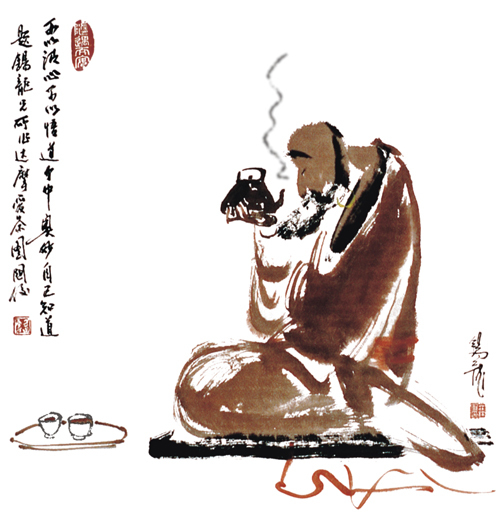
A nice survey of Zen poetry from the Southern Sung Dynasty to a segment highlighting Shinkichi Takahashi (who is probably best described as a Contemporary Zen Dadaist). While I can't read Japanese, the translations by Lucien Stryk & Takashi Ikemoto seem to strike a nice balance between translating the Zen experience of these poems while maintaining the poetic nature of the originals. While previously exposed to a bunch of Basho, Bunan, Issa & Shiki, I wasn't nearly as familiar with Shinkichi Takahashi. Takahashi's poems ALONE make this book worth the dime and time.
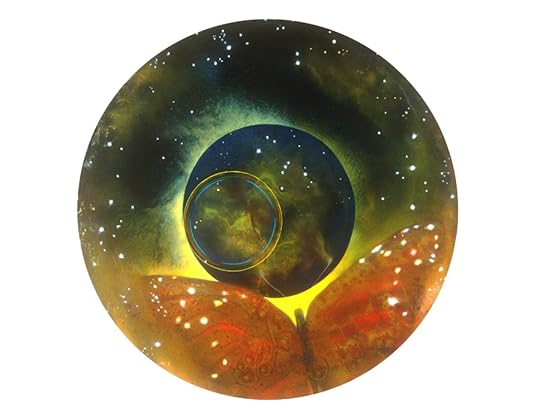
He seems to bridge the ideas of Zen with a modern atomic energy. Here is an example:
Destruction
The universe is forever falling apart --
No need to push the button,
It collapses at a finger's touch:
Why, it barely hangs on the tail of a sparrow's eye.
The universe is so much eye secretion,
Hordes leap from the tips
Of your nostril hairs. Lift your right hand:
It's in your palm. There's room enough
On the sparrow's eyelash for the whole.
A paltry thing, the universe:
Here is all strength, here is the greatest strength.
You and the sparrow are one
And, should he wish, he can crush you.
The universe trembles before him.
- Shinkichi Takahashi
it can do anything."
- Shinkichi Takahashi
A nice survey of Zen poetry from the Southern Sung Dynasty to a segment highlighting Shinkichi Takahashi (who is probably best described as a Contemporary Zen Dadaist). While I can't read Japanese, the translations by Lucien Stryk & Takashi Ikemoto seem to strike a nice balance between translating the Zen experience of these poems while maintaining the poetic nature of the originals. While previously exposed to a bunch of Basho, Bunan, Issa & Shiki, I wasn't nearly as familiar with Shinkichi Takahashi. Takahashi's poems ALONE make this book worth the dime and time.
He seems to bridge the ideas of Zen with a modern atomic energy. Here is an example:
Destruction
The universe is forever falling apart --
No need to push the button,
It collapses at a finger's touch:
Why, it barely hangs on the tail of a sparrow's eye.
The universe is so much eye secretion,
Hordes leap from the tips
Of your nostril hairs. Lift your right hand:
It's in your palm. There's room enough
On the sparrow's eyelash for the whole.
A paltry thing, the universe:
Here is all strength, here is the greatest strength.
You and the sparrow are one
And, should he wish, he can crush you.
The universe trembles before him.
- Shinkichi Takahashi

Read
March 17, 2018Tra le pagine e sottovoce: non sono ancora pronta per Zen, troppo sangue, sperma e lacrime per esta mi (cit. Jar Jar Binks), troppe parole assieme all'osservazione placida di onde che si increspano, troppo bisogno di spiegazioni, troppe domande, troppa curiosità, troppi gatti ancora...
Nessuna traccia di polvere.
Cos'è vecchio? O nuovo?
A casa sulla mia montagna azzurra.
Non desidero nulla.
(SHOFU)
Parlando: sette passi, otto cadute. (CADO TROPPO)
Tacendo: uno, due passi falsi. (PASSO POCO)
Zenisti dappertutto; (PURE TROPPI)
Siedi, lascia libera la mente. (SE N'E' GIA' ANNATA)
SHISHIN-GOSHIN
Nessuna traccia di polvere.
Cos'è vecchio? O nuovo?
A casa sulla mia montagna azzurra.
Non desidero nulla.
(SHOFU)
Parlando: sette passi, otto cadute. (CADO TROPPO)
Tacendo: uno, due passi falsi. (PASSO POCO)
Zenisti dappertutto; (PURE TROPPI)
Siedi, lascia libera la mente. (SE N'E' GIA' ANNATA)
SHISHIN-GOSHIN

July 24, 2014
non ho capito se è una presa in giro, o se parliamo di veri "versi" scritti da gente che ci credeva seriamente....
forse sono stati tradotti coi piedi? o magari sono io a non essere abbastanza illuminato da cogliere la rilevanza artistica/poetica di queste rime "zen"...
forse sono stati tradotti coi piedi? o magari sono io a non essere abbastanza illuminato da cogliere la rilevanza artistica/poetica di queste rime "zen"...

June 2, 2012
A good collection without being overwhelming. I especially like it’s selection of Japanese haiku: Basho, Buson, Issa, Masahide…

May 17, 2015
Forse perché non ho la sensibilità giusta, non conosco lo Zen o non so per quale motivo, ma queste "poesie zen" sono del tutto senza senso, per me.

October 30, 2022
Useful introductions and framing, wide selection of poetic forms and content, and pleasant to read. I knew very little about Zen poetry prior to reading this book, and it was a great way to start. I highlighted favorite poems as I read, through which I discovered my fondness for Isso's poetry. Here are some favorite poems in the collection:
Transmission outside doctrine
No dependencies on words
Pointing directly at the mind
Thus seeing oneself truly,
Attaining Buddhahood.
-Bodhidharma (xxxii)
We consider bibles and religions divine -- I do not say they are not divine,
I say they have all grown out of you, and may grow out of you still,
It is not they who give the life, it is you who give the life,
Leaves are not more shed from the trees, or trees from the earth, than they are shed out of you.
-Walt Whitman (xlvi)
The old master held up fluff
and blew from his palm
Revealing the Source itself.
Look where clouds hide the peak.
-Kaigen (7)
Eighty-three years -- at last
No longer muzzled.
The oak's a Buddha,
Void's pulled down.
-Kyurin-eki (19)
Coming, going, the waterfowl
leaves not a trace,
nor does it need a guide.
-Dogen (23)
At last I've broken Unmon's barrier!
There's exit everywhere - east, west; north, south.
In at morning, out at evening; neither host nor guest.
My every step stirs up a little breeze.
-Daito (24)
Thoughts arise endlessly,
There's a span to every life.
One hundred year, thirty-six thousand days:
The spring through, the butterfly dreams.
-Daichi (25)
Refreshing, the wind against the waterfall
As the moon hangs, a lantern, on the peak
And the bamboo window glows. In old age mountains
Are more beautiful than ever. My resolve:
That these bones be purified by rocks.
-Jakushitsu (25)
After ten years in the red-light district,
How solitary a spell in the mountains.
I can see clouds a thousand miles away,
Hear ancient music in the pines.
-Ikkyu (30)
Come, let's go
snow-viewing
till we're buried.
-Basho (44)
Melon
in morning dew --
mud-fresh.
-Basho (44)
Sprinkle water wide--
for the sparrow,
the cicada.
-Kikaku (48)
Sacred night,
through masks
white breath of dancers.
-Kikaku (48)
In the melon-patch
thief, fox
meet head-on
-Taigi (53)
Thunder--
voices of drowned
in sunken ships.
-Taigi (54)
Owls are calling
"Come, come"
to the fireflies.
-Issa (55)
Tonight you too
are rushed,
autumn moon.
-Issa (55)
Flies swarming--
what do they want of
these wrinkled hands?
-Issa (57)
Farmer,
pointing the way
with a radish.
-Issa (57)
Where there are humans
you'll find flies,
and Buddhas.
-Issa (57)
Let's take
the duckweed way
to clouds.
-Issa (58)
I'm leaving --
now you can make love,
my flies.
-Issa (59)
Don't weep, insects --
lovers, stars themselves,
must part.
-Issa (56)
Borrowing my house
from insects,
I slept.
-Issa (60)
Autumn wind --
mountain's shadow
wavers.
-Issa (60)
What a world,
where lotus flowers
are plowed into a field.
-Issa (59)
Under cherry trees
there are
no strangers.
-Issa (63)
Be respectful,
sparrows,
of our old bedding.
-Issa (63)
Geese, fresh greens
wait for you
in that field.
-Issa (64)
When I go,
guard my tomb well,
grasshopper.
-Issa (64)
Reflected
in the dragonfly's eye--
mountains.
-Issa (64)
After dream,
how real
the iris.
-Shushiki (67)
Are there
short-cuts in the sky,
summer moon?
-Lady Sute-Jo (66)
Piled for burning,
brushwood
starts to bud
-Boncho (70)
In the well-bucket
a morning glory--
I borrow water.
-Lady Chiyo-Jo (73)
On rainy leaves
glow
of the village lights.
-Ryota (73)
Cherry blossoms--
so many,
I'm bent over.
-Sobaku (74)
Barn's burnt down--
now
I can see the moon.
-Masahide (77)
Dew, clinging
to the potato field
the Milky Way.
-Shiki (78)
Autumn wind:
Gods, Buddha --
lies, lies, lies.
-Shiki (78)
White butterfly
darting among pinks --
whose spirit?
-Shiki (80)
"Quails:
It is the grass that moves, not the quails.
Weary of embrace, she thought of
Committing her body to the flame.
When I shut my eyes, I hear far and wide,
The air of the Ice Age stirring.
When I open the, a rocket passes over a meteor.
A quail's egg complete in itself
Leaving not room enough for a dagger's point
All the phenomena in the universe: myself.
Quails are supported by the universe
(I wonder if that means subsisting by God).
A quail has seized God by the neck
With its black bill, because there is no
God greater than quail.
(Peter, Christ, Judas: a quail.)
A quail's egg: idle philosophy in solution.
(There is no wife better than a quail.)
I dropped a quail's egg into cup for buckwheat noodles,
And made havoc of the Democratic Constitution.
Split chopsticks stuck in the back, a quail husband
Will deliver dishes on a bicycle, anywhere.
The light yellow legs go up the hill of Golgotha.
Those quails who stood on the rock, became the rock!
The nightfall is quiet, but inside the congealed exuviae
Numberless insects zigzag, on parade.
-Shinkichi Takahashi (87-88)
"Braggart Duck:
Duck lives forever,
daily. Waking, he finds
he's slept a billion years.
The very center of the universe, he has no use
for eyes, ears, feet.
What need for one
who know this world
of satellite stations?
Freed from time,
changeless.
Duck's not sharp as dog shooting
through space, a rocket.
Besides, he's
been there already.
-Shinkichi Takahashi (101-102)
and some other favorite quotes:
"The Zen experience is centripetal, the artist's contemplation of subject sometimes referred to as 'mind-pointing.' The discipline in an early stage of discipline is asked to point the mind at (meditate upon) an object, say a bowl of water. At first he is quite partially inclined to metaphorize, expand, rise imaginatively from water to lake, sea, clouds, rain. Natural, perhaps, but just the kind of 'mentalization' Zen masters caution against. The disiciple is instructed to continue until it is possible to remain strictly with the object, penetrating more deeply, no longer looking at it but, as the Sixth Patriarch Hui-neng maintained essential, as it. Only then will he attain the state of muga, so close an identification with object that the unstable mentalizing self disappears." (xxxviii)
"For one who believes in the interpenetration of all living things, the world is a body, and if he is apt like Takahashi, troubled by what the unenlightened inflict upon one another, he will write: Why this confusion // how restore the ravaged // body of the world?" (xlv)
Transmission outside doctrine
No dependencies on words
Pointing directly at the mind
Thus seeing oneself truly,
Attaining Buddhahood.
-Bodhidharma (xxxii)
We consider bibles and religions divine -- I do not say they are not divine,
I say they have all grown out of you, and may grow out of you still,
It is not they who give the life, it is you who give the life,
Leaves are not more shed from the trees, or trees from the earth, than they are shed out of you.
-Walt Whitman (xlvi)
The old master held up fluff
and blew from his palm
Revealing the Source itself.
Look where clouds hide the peak.
-Kaigen (7)
Eighty-three years -- at last
No longer muzzled.
The oak's a Buddha,
Void's pulled down.
-Kyurin-eki (19)
Coming, going, the waterfowl
leaves not a trace,
nor does it need a guide.
-Dogen (23)
At last I've broken Unmon's barrier!
There's exit everywhere - east, west; north, south.
In at morning, out at evening; neither host nor guest.
My every step stirs up a little breeze.
-Daito (24)
Thoughts arise endlessly,
There's a span to every life.
One hundred year, thirty-six thousand days:
The spring through, the butterfly dreams.
-Daichi (25)
Refreshing, the wind against the waterfall
As the moon hangs, a lantern, on the peak
And the bamboo window glows. In old age mountains
Are more beautiful than ever. My resolve:
That these bones be purified by rocks.
-Jakushitsu (25)
After ten years in the red-light district,
How solitary a spell in the mountains.
I can see clouds a thousand miles away,
Hear ancient music in the pines.
-Ikkyu (30)
Come, let's go
snow-viewing
till we're buried.
-Basho (44)
Melon
in morning dew --
mud-fresh.
-Basho (44)
Sprinkle water wide--
for the sparrow,
the cicada.
-Kikaku (48)
Sacred night,
through masks
white breath of dancers.
-Kikaku (48)
In the melon-patch
thief, fox
meet head-on
-Taigi (53)
Thunder--
voices of drowned
in sunken ships.
-Taigi (54)
Owls are calling
"Come, come"
to the fireflies.
-Issa (55)
Tonight you too
are rushed,
autumn moon.
-Issa (55)
Flies swarming--
what do they want of
these wrinkled hands?
-Issa (57)
Farmer,
pointing the way
with a radish.
-Issa (57)
Where there are humans
you'll find flies,
and Buddhas.
-Issa (57)
Let's take
the duckweed way
to clouds.
-Issa (58)
I'm leaving --
now you can make love,
my flies.
-Issa (59)
Don't weep, insects --
lovers, stars themselves,
must part.
-Issa (56)
Borrowing my house
from insects,
I slept.
-Issa (60)
Autumn wind --
mountain's shadow
wavers.
-Issa (60)
What a world,
where lotus flowers
are plowed into a field.
-Issa (59)
Under cherry trees
there are
no strangers.
-Issa (63)
Be respectful,
sparrows,
of our old bedding.
-Issa (63)
Geese, fresh greens
wait for you
in that field.
-Issa (64)
When I go,
guard my tomb well,
grasshopper.
-Issa (64)
Reflected
in the dragonfly's eye--
mountains.
-Issa (64)
After dream,
how real
the iris.
-Shushiki (67)
Are there
short-cuts in the sky,
summer moon?
-Lady Sute-Jo (66)
Piled for burning,
brushwood
starts to bud
-Boncho (70)
In the well-bucket
a morning glory--
I borrow water.
-Lady Chiyo-Jo (73)
On rainy leaves
glow
of the village lights.
-Ryota (73)
Cherry blossoms--
so many,
I'm bent over.
-Sobaku (74)
Barn's burnt down--
now
I can see the moon.
-Masahide (77)
Dew, clinging
to the potato field
the Milky Way.
-Shiki (78)
Autumn wind:
Gods, Buddha --
lies, lies, lies.
-Shiki (78)
White butterfly
darting among pinks --
whose spirit?
-Shiki (80)
"Quails:
It is the grass that moves, not the quails.
Weary of embrace, she thought of
Committing her body to the flame.
When I shut my eyes, I hear far and wide,
The air of the Ice Age stirring.
When I open the, a rocket passes over a meteor.
A quail's egg complete in itself
Leaving not room enough for a dagger's point
All the phenomena in the universe: myself.
Quails are supported by the universe
(I wonder if that means subsisting by God).
A quail has seized God by the neck
With its black bill, because there is no
God greater than quail.
(Peter, Christ, Judas: a quail.)
A quail's egg: idle philosophy in solution.
(There is no wife better than a quail.)
I dropped a quail's egg into cup for buckwheat noodles,
And made havoc of the Democratic Constitution.
Split chopsticks stuck in the back, a quail husband
Will deliver dishes on a bicycle, anywhere.
The light yellow legs go up the hill of Golgotha.
Those quails who stood on the rock, became the rock!
The nightfall is quiet, but inside the congealed exuviae
Numberless insects zigzag, on parade.
-Shinkichi Takahashi (87-88)
"Braggart Duck:
Duck lives forever,
daily. Waking, he finds
he's slept a billion years.
The very center of the universe, he has no use
for eyes, ears, feet.
What need for one
who know this world
of satellite stations?
Freed from time,
changeless.
Duck's not sharp as dog shooting
through space, a rocket.
Besides, he's
been there already.
-Shinkichi Takahashi (101-102)
and some other favorite quotes:
"The Zen experience is centripetal, the artist's contemplation of subject sometimes referred to as 'mind-pointing.' The discipline in an early stage of discipline is asked to point the mind at (meditate upon) an object, say a bowl of water. At first he is quite partially inclined to metaphorize, expand, rise imaginatively from water to lake, sea, clouds, rain. Natural, perhaps, but just the kind of 'mentalization' Zen masters caution against. The disiciple is instructed to continue until it is possible to remain strictly with the object, penetrating more deeply, no longer looking at it but, as the Sixth Patriarch Hui-neng maintained essential, as it. Only then will he attain the state of muga, so close an identification with object that the unstable mentalizing self disappears." (xxxviii)
"For one who believes in the interpenetration of all living things, the world is a body, and if he is apt like Takahashi, troubled by what the unenlightened inflict upon one another, he will write: Why this confusion // how restore the ravaged // body of the world?" (xlv)

September 8, 2021
Vincent Van Gogh said to his brother Theo “If you study Japanese art, you see a man who is undoubtedly wise, philosophic and intelligent, who spends his time how? In studying the distance between the earth and the moon? No. In studying the policy of Bismarck? No. He studies a single blade of grass. But this blade of grass leads him to draw every plant and then the seasons, the wide aspects of the countryside, then animals, then the human figure. So he passes his life, and life is too short to do the whole.”
The poems in this book reflect that simplicity, and range from Chinese poems of enlightenment and death to Japanese Zen masters past and present. Unfortunately many of them are unremarkable, particularly as compared to other collections, though you might feel differently if it’s among the first you read.
Quotes:
On night:
“It’s in the dark that eyes probe earth and heaven,
In dream that the tormented seek present, past.
Enough! The mountain moon fills the window.
The lonely fall through, the garden rang with cricket song.”
- Betsugen (1294-1364)
On life/death:
“Life: a cloud crossing the peak.
Death: the moon sailing.”
- Mumon (1323-1390)
On simplicity:
“Who prattles of illusion or nirvana?
Forgetting the equal dusts of name and fortune,
Listening to the night rain on the roof of my hut,
I sit at ease, both legs stretched out.”
- Ryokan (1757-1831)
On war:
“Summer grasses,
all that remains
of soldier’s dreams.”
- Basho
On death:
“A sudden chill –
in our room my dead wife’s
comb, underfoot.”
- Buson (1715-1783)
On good and evil in man:
“Where there are humans
you’ll find flies,
and Buddhas.”
- Issa
On death:
“When I go,
guard my tomb well,
grasshopper.”
- Issa
“Among Saga’s
tall weeds,
tombs of fair women.”
- Shiki
Lastly this one, called Shell:
“Nothing, nothing at all
is born,
dies, the shell says again
and again
from the depth of hollowness.
Its body
swept off by tide – so what?
It sleeps
in sand, drying in sunlight,
bathing
in moonlight. Nothing to do
with sea
or anything else. Over
and over
it vanishes with the wave.”
- Shinkichi Takahashi (1901-1987)
The poems in this book reflect that simplicity, and range from Chinese poems of enlightenment and death to Japanese Zen masters past and present. Unfortunately many of them are unremarkable, particularly as compared to other collections, though you might feel differently if it’s among the first you read.
Quotes:
On night:
“It’s in the dark that eyes probe earth and heaven,
In dream that the tormented seek present, past.
Enough! The mountain moon fills the window.
The lonely fall through, the garden rang with cricket song.”
- Betsugen (1294-1364)
On life/death:
“Life: a cloud crossing the peak.
Death: the moon sailing.”
- Mumon (1323-1390)
On simplicity:
“Who prattles of illusion or nirvana?
Forgetting the equal dusts of name and fortune,
Listening to the night rain on the roof of my hut,
I sit at ease, both legs stretched out.”
- Ryokan (1757-1831)
On war:
“Summer grasses,
all that remains
of soldier’s dreams.”
- Basho
On death:
“A sudden chill –
in our room my dead wife’s
comb, underfoot.”
- Buson (1715-1783)
On good and evil in man:
“Where there are humans
you’ll find flies,
and Buddhas.”
- Issa
On death:
“When I go,
guard my tomb well,
grasshopper.”
- Issa
“Among Saga’s
tall weeds,
tombs of fair women.”
- Shiki
Lastly this one, called Shell:
“Nothing, nothing at all
is born,
dies, the shell says again
and again
from the depth of hollowness.
Its body
swept off by tide – so what?
It sleeps
in sand, drying in sunlight,
bathing
in moonlight. Nothing to do
with sea
or anything else. Over
and over
it vanishes with the wave.”
- Shinkichi Takahashi (1901-1987)

November 22, 2024
This anthology, jointly translated by a Japanese scholar and an American poet, is the largest and most comprehensive collection of its kind to appear in English.
Art form Zen poetry is traditional and ancient form used by artists from T'ang Dynasty. The spring poetry of Zen poetry is quite illuminating. The longest preface had given us insight pf the poetry usage and influences
Their collaboration has rendered translations both precise and sublime, and their selection, which span 1,500 years, from the early T’ang dynasty to the present day, includes many poems that have never before been translated into English. The author gave us both influence of time in Zen poetry.
Stryk and Ikemoto offer us Zen poetry in all its diversity: Chinese poems of enlightenment and death, Japanese masters, many haiku , the quintessential Zen art , and an impressive selection of poems by Shinkichi Takahashi, Japan’s greatest contemporary Zen poet, which in their translations is pure literary pleasure.
Art form Zen poetry is traditional and ancient form used by artists from T'ang Dynasty. The spring poetry of Zen poetry is quite illuminating. The longest preface had given us insight pf the poetry usage and influences
Their collaboration has rendered translations both precise and sublime, and their selection, which span 1,500 years, from the early T’ang dynasty to the present day, includes many poems that have never before been translated into English. The author gave us both influence of time in Zen poetry.
Stryk and Ikemoto offer us Zen poetry in all its diversity: Chinese poems of enlightenment and death, Japanese masters, many haiku , the quintessential Zen art , and an impressive selection of poems by Shinkichi Takahashi, Japan’s greatest contemporary Zen poet, which in their translations is pure literary pleasure.

June 25, 2022
I came to this book with an interest in Eastern philosophy and culture and a renewed desire to begin reading more poetry, something I’ve not done much of since I graduated from college long ago. I respect what I know of Zen, though that’s admittedly little, and I have an interest in learning more. But I think perhaps I should have started elsewhere for all these subjects. I enjoyed some of the introductory essays about some of the poets and about Zen, in general. I enjoyed some of the poetry though most went over my head. I appreciated the range of poetry from multiple Chinese and Japanese poets, and the range of styles and forms. But all in all, this book just didn’t do much for me. Perhaps after I’ve learned more I will try it again, see if I can better appreciate it then.

February 23, 2026
"Zen Poetry: Let the Spring Breeze Enter" translated and edited by Lucien Stryk and Takashi Ikemoto is a little volume I found in a used book shop in White River Junction, Vermont. It’s divided into five sections: Chinese Poetry of Enlightenment and Death, Poems of the Japanese Zen Masters, Japanese Haiku, and Shinkichi Takahashi, a 20th century master. I’ve always thought of haiku as being moments frozen in time and this book is crammed with them. What can I say? It’s difficult to write about a subject that is designed to demonstrate the inadequacy of logical reasoning. The ambiguities, riddles, and paradoxical anecdotes might not get one straight to nirvana, but it might encourage one to think beyond conditioned rationality and explore heightened states of awareness. Om.

April 21, 2021
pretty neat stuff. my only gripe is that the intro wasn't good for introducing zen concepts, nor did it define zen poetry clearly. lots of bits and pieces that fit together somehow.
"Content with chipped bowl and tattered robe,
My life moves on serenely.
The single task: allaying hunger, thirst,
Indifferent to the murmurous world."
"To the willow --
all hatred, and desire
of your heart."
"Where there are humans
you'll find flies,
and Buddhas."
"Reflected
in the dragonfly's eye --
mountains."
"Content with chipped bowl and tattered robe,
My life moves on serenely.
The single task: allaying hunger, thirst,
Indifferent to the murmurous world."
"To the willow --
all hatred, and desire
of your heart."
"Where there are humans
you'll find flies,
and Buddhas."
"Reflected
in the dragonfly's eye --
mountains."

September 1, 2019
don't think the translations were always top-notch. overall, though: zen poetry deserves to be loved by all. specifically the work of Issa and Basho. and all those lady poets that showed up every once and a while.

July 1, 2017
A random pick:
From the bough
floating down river,
insect song.
-ISSA
From the bough
floating down river,
insect song.
-ISSA

February 17, 2018
Finalmente oltre il limite
Non più legami
Nè dipendenza
Com'è calmo l'Oceano
Che sovrasta il Nulla
Non più legami
Nè dipendenza
Com'è calmo l'Oceano
Che sovrasta il Nulla
January 26, 2019
È stato il libro che ha dato inizio alla stesura delle mie poesie, leggendolo mi ha comunicato emozioni che mi hanno incoraggiato a scrivere.
March 4, 2020
Pretty poetry

June 21, 2020
A solid introduction to Zen poetry with a thoughtful selection of Chinese and Japanese Poets.

February 8, 2022
I loved the poems in this volume. Touching, at times haunting. Poetry is the art form that helps us to see the beauty of what it means to be human.
December 13, 2024
5 star for Takahashi translations
That translations of the ancient poetry is variable in its effectiveness - especially with the haiku- but is excellent for the Takahashi.
That translations of the ancient poetry is variable in its effectiveness - especially with the haiku- but is excellent for the Takahashi.

January 9, 2016
L'unica cosa bella erano gli ideogrammi che rimanevano anche sulle o pagine precedenti o seguenti!
Boh, sarà che sono una materialista non dichiarata che fa finta di non esserlo e il mio spirito zen non fa capolino abbastanza, ma ne ho capito (o quantomeno riuscita a dare una spiegazione personale sensata) a 2/3 poesie (?) su 200 circa... Mah... Forse è anche la traduzione? Non so, ma non mi è piaciuto, anche se ho provato un pochino a farmelo piacere
Boh, sarà che sono una materialista non dichiarata che fa finta di non esserlo e il mio spirito zen non fa capolino abbastanza, ma ne ho capito (o quantomeno riuscita a dare una spiegazione personale sensata) a 2/3 poesie (?) su 200 circa... Mah... Forse è anche la traduzione? Non so, ma non mi è piaciuto, anche se ho provato un pochino a farmelo piacere

December 25, 2014
L'idea alla base della raccolta è intrigante,ma si scontra con una traduzione di basso livello e,soprattutto,la mancanza di testi a fronte(con pochissime eccezioni),cosa estremamente grave,visto che la disposizione dei Kanji è una parte fondamentale della poesia,ignorandola si perde moltissima dell'efficacia del componimento.

October 14, 2014
Ascolta,
ogni cosa rabbrividisce -
la campana della caducità.
ogni cosa rabbrividisce -
la campana della caducità.

February 17, 2015
A good collection of Zen poetry both historical and more contemporary, though this is primarily one poet.

Did Not Finish
March 23, 2021non ce la posso fare
Displaying 1 - 24 of 24 reviews