

What do you think?

Grumbles From The Grave
Long before his death in 1988, Robert A. Heinlein had expressed the desire to have a selection of his letters published, after he was gone, and entitled 'Grumbles from the Grave'. But increasing pressure from his work and a series of major illnesses made it impossible for him to undertake the job of editing this himself. Now his wife, Virginia Heinlein, has taken on the labor of fulfilling his wish. Jacket design by Darrin Ehardt.
281 pages, Hardcover
First published November 18, 1989
About the author
Robert A. Heinlein
1,084 books10.8k followersRobert Anson Heinlein was an American science fiction author, aeronautical engineer, and naval officer. Sometimes called the "dean of science fiction writers", he was among the first to emphasize scientific accuracy in his fiction, and was thus a pioneer of the subgenre of hard science fiction. His published works, both fiction and non-fiction, express admiration for competence and emphasize the value of critical thinking. His plots often posed provocative situations which challenged conventional social mores. His work continues to have an influence on the science-fiction genre, and on modern culture more generally.
Heinlein became one of the first American science-fiction writers to break into mainstream magazines such as The Saturday Evening Post in the late 1940s. He was one of the best-selling science-fiction novelists for many decades, and he, Isaac Asimov, and Arthur C. Clarke are often considered the "Big Three" of English-language science fiction authors. Notable Heinlein works include Stranger in a Strange Land, Starship Troopers (which helped mold the space marine and mecha archetypes) and The Moon Is a Harsh Mistress. His work sometimes had controversial aspects, such as plural marriage in The Moon Is a Harsh Mistress, militarism in Starship Troopers and technologically competent women characters who were formidable, yet often stereotypically feminine—such as Friday.
Heinlein used his science fiction as a way to explore provocative social and political ideas and to speculate how progress in science and engineering might shape the future of politics, race, religion, and sex. Within the framework of his science-fiction stories, Heinlein repeatedly addressed certain social themes: the importance of individual liberty and self-reliance, the nature of sexual relationships, the obligation individuals owe to their societies, the influence of organized religion on culture and government, and the tendency of society to repress nonconformist thought. He also speculated on the influence of space travel on human cultural practices.
Heinlein was named the first Science Fiction Writers Grand Master in 1974. Four of his novels won Hugo Awards. In addition, fifty years after publication, seven of his works were awarded "Retro Hugos"—awards given retrospectively for works that were published before the Hugo Awards came into existence. In his fiction, Heinlein coined terms that have become part of the English language, including grok, waldo and speculative fiction, as well as popularizing existing terms like "TANSTAAFL", "pay it forward", and "space marine". He also anticipated mechanical computer-aided design with "Drafting Dan" and described a modern version of a waterbed in his novel Beyond This Horizon.
Also wrote under Pen names: Anson McDonald, Lyle Monroe, Caleb Saunders, John Riverside and Simon York.
Heinlein became one of the first American science-fiction writers to break into mainstream magazines such as The Saturday Evening Post in the late 1940s. He was one of the best-selling science-fiction novelists for many decades, and he, Isaac Asimov, and Arthur C. Clarke are often considered the "Big Three" of English-language science fiction authors. Notable Heinlein works include Stranger in a Strange Land, Starship Troopers (which helped mold the space marine and mecha archetypes) and The Moon Is a Harsh Mistress. His work sometimes had controversial aspects, such as plural marriage in The Moon Is a Harsh Mistress, militarism in Starship Troopers and technologically competent women characters who were formidable, yet often stereotypically feminine—such as Friday.
Heinlein used his science fiction as a way to explore provocative social and political ideas and to speculate how progress in science and engineering might shape the future of politics, race, religion, and sex. Within the framework of his science-fiction stories, Heinlein repeatedly addressed certain social themes: the importance of individual liberty and self-reliance, the nature of sexual relationships, the obligation individuals owe to their societies, the influence of organized religion on culture and government, and the tendency of society to repress nonconformist thought. He also speculated on the influence of space travel on human cultural practices.
Heinlein was named the first Science Fiction Writers Grand Master in 1974. Four of his novels won Hugo Awards. In addition, fifty years after publication, seven of his works were awarded "Retro Hugos"—awards given retrospectively for works that were published before the Hugo Awards came into existence. In his fiction, Heinlein coined terms that have become part of the English language, including grok, waldo and speculative fiction, as well as popularizing existing terms like "TANSTAAFL", "pay it forward", and "space marine". He also anticipated mechanical computer-aided design with "Drafting Dan" and described a modern version of a waterbed in his novel Beyond This Horizon.
Also wrote under Pen names: Anson McDonald, Lyle Monroe, Caleb Saunders, John Riverside and Simon York.
Ratings & Reviews
Friends & Following
Create a free account to discover what your friends think of this book!
Community Reviews
Displaying 1 - 30 of 57 reviews

August 1, 2016
A man wearing a plaid sports jacket and mismatched polyester, elastic waist slacks walks out onto the stage. He looks smug and self confident, from his 70s era mustache to his back brace to his white patent leather casual dress shoes. His is the self-assurance of the gaudy male seed bearer. He knows his lusty effect on women.
He looks a great deal like a young Dan Akroyd.
“Good evening, folks. I’ll be presenting the review for Robert A. Heinlein’s posthumously published collection of letters to and from his editors, which serves as a chronological guide to his great science fiction bibliography.
My name is Fred Garvin. Male prostitute.
Grumbles from the Grave is a collection of letters to and from SF Grandmaster Robert A. Heinlein and his editors and agent.
One thing I loved about this book is Bob’s troubles writing the Scribner’s juveniles and having to deal with that heartless and emasculating shrew who wanted him to make a book for kids, but apparently these kids were conceived in a Brave New World test tube because he couldn’t make mention of S-E-X without that netherworld puritanical harpy picking his bones clean.
Kind of like the ladies do with me – Fred Garvin, male prostitute.
I also found it disconcerting that Bob communicated with his agent and with the editors the way real people talk – I was expecting his corny homespun colloquialisms. Like, “Either you publish as is or I’ll spank you.” Or “I’ll not publish a word at less than 2 cents or I’ll come over there and … spank you.”
The girls like to spank yours truly … Fred Garvin – male prostitute.
All joking aside, as entertaining and informative as this was, letters to and from my favorite writer, the highlight of this book was the frequent editors notes from Bob’s wife and widow, Virginia.
This one is for fans, like me, Fred Garvin – male prostitute.”
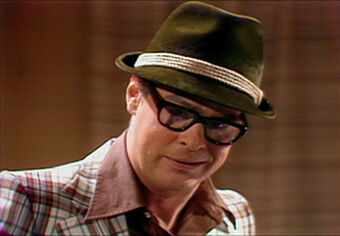
He looks a great deal like a young Dan Akroyd.
“Good evening, folks. I’ll be presenting the review for Robert A. Heinlein’s posthumously published collection of letters to and from his editors, which serves as a chronological guide to his great science fiction bibliography.
My name is Fred Garvin. Male prostitute.
Grumbles from the Grave is a collection of letters to and from SF Grandmaster Robert A. Heinlein and his editors and agent.
One thing I loved about this book is Bob’s troubles writing the Scribner’s juveniles and having to deal with that heartless and emasculating shrew who wanted him to make a book for kids, but apparently these kids were conceived in a Brave New World test tube because he couldn’t make mention of S-E-X without that netherworld puritanical harpy picking his bones clean.
Kind of like the ladies do with me – Fred Garvin, male prostitute.
I also found it disconcerting that Bob communicated with his agent and with the editors the way real people talk – I was expecting his corny homespun colloquialisms. Like, “Either you publish as is or I’ll spank you.” Or “I’ll not publish a word at less than 2 cents or I’ll come over there and … spank you.”
The girls like to spank yours truly … Fred Garvin – male prostitute.
All joking aside, as entertaining and informative as this was, letters to and from my favorite writer, the highlight of this book was the frequent editors notes from Bob’s wife and widow, Virginia.
This one is for fans, like me, Fred Garvin – male prostitute.”

March 17, 2023
This is an interesting book that collects excerpts from letters that Heinlein wrote, mostly to his agent and editors. It doesn't really serve as a biography or autobiography but is a good companion volume to the William Patterson books. It's heavily and carefully slanted to present the man as his widow, who edited the book, wanted him to be seen and remembered. It's surprising that a writer who was almost universally regarded as highly as he was suffered so much editorial interference and had so many behind-the-scenes problems in his career. I'd say it's of interest primarily to those who already have a broad knowledge and appreciation of RAH.

October 12, 2012
I don't search out author biographies but happened to pick this one up at a library sale. Heinlein has been my favorite author forever but this book was a big disappointment. It was edited by his wife after he was dead so I must assume that she is the one who messed it up. It is like he left a box of letters (mostly to his agent) that he was saving for his memoirs, his wife tripped and scattered them all over the place and then published them in the order that she picked them up off the floor.
In Heinlein's letters outlining plans for this book he states that he will include various anecdotes in the book but his wife blithely leaves us with notes like "Robert never did tell me what the crisis with Japan was about." Heinlein also says that he will name names but acknowledges that his wife will decide after his death if they will stay and names are blanked out in many places for no apparent reason. The book could hardly have been a tell-all in any case since it was edited by his 3rd wife, Virginia, who he met before his 2nd marriage broke up and married immediately after. It doesn't take much reading-between-the-lines to know that something interesting was omitted.
There is a lot of beating around the bush with vague references to his illnesses scattered throughout the book. If they were such a big part of his life, then explain them to us in a page; if they weren't then explain them to us in a paragraph, but explain!
Even though they were tied together so very badly, at least the letters were in Heinlein's own words and were somewhat revealing.
It is sad that Heinlein never came to terms with the fact that he had so many fans. The downside of selling thousands of books to schools and libraries was that thousands of school children wrote him letters that he felt compelled to answer individually and personally. His attempts to hire minions failed because micromanaging minions took even more time than answering the letters himself.
The thing that I do like about the book is the front cover illustration but I have a feeling that something is being concealed from us there, too.
In Heinlein's letters outlining plans for this book he states that he will include various anecdotes in the book but his wife blithely leaves us with notes like "Robert never did tell me what the crisis with Japan was about." Heinlein also says that he will name names but acknowledges that his wife will decide after his death if they will stay and names are blanked out in many places for no apparent reason. The book could hardly have been a tell-all in any case since it was edited by his 3rd wife, Virginia, who he met before his 2nd marriage broke up and married immediately after. It doesn't take much reading-between-the-lines to know that something interesting was omitted.
There is a lot of beating around the bush with vague references to his illnesses scattered throughout the book. If they were such a big part of his life, then explain them to us in a page; if they weren't then explain them to us in a paragraph, but explain!
Even though they were tied together so very badly, at least the letters were in Heinlein's own words and were somewhat revealing.
It is sad that Heinlein never came to terms with the fact that he had so many fans. The downside of selling thousands of books to schools and libraries was that thousands of school children wrote him letters that he felt compelled to answer individually and personally. His attempts to hire minions failed because micromanaging minions took even more time than answering the letters himself.
The thing that I do like about the book is the front cover illustration but I have a feeling that something is being concealed from us there, too.

March 27, 2012
I simply loved this book, and have re-read it several times. It has a apt title as it consists mostly of letter exchanges between he and his agent or publishers, which are mostly complaints over one thing or another. You really get an incite as to what sort of man Heinlein really was like no biography ever could. He comes off as one of his own characters: incredibly intelligent, opinionated and always right. Regardless of how he felt about that one thing or another, and even whether he was genuinely pissed off at you for what you said or did to him, it would have been an absolute great pleasure to receive and sort of correspondence from Heinlein. You might even have been tempted to 'bait' him just to get one of those priceless letters.

December 1, 2022
Grumbles from the Grave consists mostly of letters from Robert Heinlein to editor John W. Campbell, Jr. and his agent Lurton Blassingame, among others. It also has some great appendices in the back with a detailed bibliography, cuts from his novels, his speech for Edward R. Murrow's "This I Believe," and Heinlein's award from NASA. I learned a lot about Heinlein's own views of his works, especially Stranger In A Strange Land, Starship Troopers, and Beyond This Horizon, more than even in his biography.

June 3, 2019
I read a complaint by Fred Pohl that this book was edited with a too heavy hand by Heinlein’s widow Virginia. I think I agree with this assessment. I’d like to have read RAH’s thoughts with fewer punches pulled. He did get fired up about publishers, editors, nosy fans, and the Japanese, but I did not find any really juicy details. While I understand that this served as an overview of his professional life, I thought there was a bit too much emphasis on the personal. I guess I just don’t really care how much he liked cats, masonry, or traveling with his wife. Although I shouldn’t complain too much as any Heinlein writing is engaging.
“My notion of a story is an interesting situation in which a human being has to cope with a problem, does so, and thereby changes his personality, character, or evaluations in some measure because he coping has forced him to revise his thinking” (124).
“If an author writes his own blurb, he is caught between the horns of conceit and false modesty” (131).
“But if a writer does not entertain his readers, all he is producing is paper dirty on one side” (282).
“My notion of a story is an interesting situation in which a human being has to cope with a problem, does so, and thereby changes his personality, character, or evaluations in some measure because he coping has forced him to revise his thinking” (124).
“If an author writes his own blurb, he is caught between the horns of conceit and false modesty” (131).
“But if a writer does not entertain his readers, all he is producing is paper dirty on one side” (282).
November 27, 2008
This book I enjoyed because I find Heinlein a fascinating individual. Whether you AGREE with Heinlein or not--I often do not--he does offer thught provoking ideas.
Also, never having written a book, I found it interesting to see the process as it were from concept to publication. The discussions and problems with various publishers was also interesting.
A must for any Heinlein fan, but I would also recommend it to any curious about the process of dealing with publishers, agents, etc.
Also, never having written a book, I found it interesting to see the process as it were from concept to publication. The discussions and problems with various publishers was also interesting.
A must for any Heinlein fan, but I would also recommend it to any curious about the process of dealing with publishers, agents, etc.

June 17, 2025
2.5/5
The first part about the editors was kind of fun, but the rest of it was a bit dull and mostly uninteresting.
The first part about the editors was kind of fun, but the rest of it was a bit dull and mostly uninteresting.

December 28, 2014
E' estremamente fastidioso quando un libro ha tutte le potenzialità per piacerti molto ma, in qualche modo, il gusto della lettura viene rovinato da fattori più o meno esterni.
E' il caso di brontolio dalla tomba, autobiografia postuma di Robert A. Heinlein che raccoglie lettere, appunti e bozze di buona parte della sua vita di autore.
Partiamo dall'essenza del volume.
Il libro è un complemento perfetto per chiunque, come me, ami Heinlein, la sua capacità di analizzare la realtà e il mondo e, soprattutto, il suo desidero di far riflettere chi lo leggeva.
Heinlein era un uomo molto diretto e schietto, con fissazioni quasi maniacali e consapevolezza del proprio valore: le sue esperienze di vita si riflessero nei suoi scritti, a volte volutamente, altre quasi istintivamente.
Chiunque legga questo libro e ripensi a romanzi come "Lazarus Long" o "Straniero in terra straniera" non può non riconoscere la fonte di certe riflessioni o di certi, inutile girarci intorno, scazzi: anche solo per questo varrebbe la pena leggerlo.
Contemporaneamente capiterà di rendersi conto che il buon Robert si considerava "semplicemente" un onesto lavoratore che cercava di fare del suo meglio sfruttando i propri talenti: non si riteneva un filosofo, non un mentore, sicuramente non un guru e considerava folli quei lettori che finirono per considerarlo tale, soprattutto dopo la pubblicazione di "Straniero in terra straniera".
Lui non voleva dare risposte, ma gli piaceva che chi lo leggeva si ponesse domande, pensiero che è splendidamente riassunto in questa citazione, proprio a riguardo di "Straniero":
Un essere umano razionale non ha bisogno di risposte, di essere imboccato 'in fede'; ha bisogno di domande di cui preoccuparsi, di domande serie. Poi la qualità delle risposte dipende da lui… E può rivedere quelle risposte molte volte nel corso di una lunga vita, (si spera parentesi) andando sempre più vicino alla verità ogni volta.
Fin qui i lati estremamente positivi.
Quelli negativi?
L'edizione.
Io non conoscevo l'editore Fabrizio Ponzetta, ma leggere un libro contenente congiuntivi sbagliati, sillabazioni campate in aria e refusi sparsi fa pensare che:
- il traduttore è stato pagato veramente poco
- il traduttore è un incapace
- l'editor è più incapace del traduttore
- l'editor non esiste
- una combinazione qualunque delle suddette.
Per di più sull'edizione non risultano i nome né del traduttore né dell'editor.
Peccato, perché un buon libro rovinato da un'edizione lascia l'amaro in bocca.
Consiglio la lettura agli appassionati, questo di sicuro, ma se potete procuratevelo in originale, anche se non è facile procurarselo.
E' il caso di brontolio dalla tomba, autobiografia postuma di Robert A. Heinlein che raccoglie lettere, appunti e bozze di buona parte della sua vita di autore.
Partiamo dall'essenza del volume.
Il libro è un complemento perfetto per chiunque, come me, ami Heinlein, la sua capacità di analizzare la realtà e il mondo e, soprattutto, il suo desidero di far riflettere chi lo leggeva.
Heinlein era un uomo molto diretto e schietto, con fissazioni quasi maniacali e consapevolezza del proprio valore: le sue esperienze di vita si riflessero nei suoi scritti, a volte volutamente, altre quasi istintivamente.
Chiunque legga questo libro e ripensi a romanzi come "Lazarus Long" o "Straniero in terra straniera" non può non riconoscere la fonte di certe riflessioni o di certi, inutile girarci intorno, scazzi: anche solo per questo varrebbe la pena leggerlo.
Contemporaneamente capiterà di rendersi conto che il buon Robert si considerava "semplicemente" un onesto lavoratore che cercava di fare del suo meglio sfruttando i propri talenti: non si riteneva un filosofo, non un mentore, sicuramente non un guru e considerava folli quei lettori che finirono per considerarlo tale, soprattutto dopo la pubblicazione di "Straniero in terra straniera".
Lui non voleva dare risposte, ma gli piaceva che chi lo leggeva si ponesse domande, pensiero che è splendidamente riassunto in questa citazione, proprio a riguardo di "Straniero":
Un essere umano razionale non ha bisogno di risposte, di essere imboccato 'in fede'; ha bisogno di domande di cui preoccuparsi, di domande serie. Poi la qualità delle risposte dipende da lui… E può rivedere quelle risposte molte volte nel corso di una lunga vita, (si spera parentesi) andando sempre più vicino alla verità ogni volta.
Fin qui i lati estremamente positivi.
Quelli negativi?
L'edizione.
Io non conoscevo l'editore Fabrizio Ponzetta, ma leggere un libro contenente congiuntivi sbagliati, sillabazioni campate in aria e refusi sparsi fa pensare che:
- il traduttore è stato pagato veramente poco
- il traduttore è un incapace
- l'editor è più incapace del traduttore
- l'editor non esiste
- una combinazione qualunque delle suddette.
Per di più sull'edizione non risultano i nome né del traduttore né dell'editor.
Peccato, perché un buon libro rovinato da un'edizione lascia l'amaro in bocca.
Consiglio la lettura agli appassionati, questo di sicuro, ma se potete procuratevelo in originale, anche se non è facile procurarselo.

May 13, 2012
By no means is this an exhaustive undertaking, in fact in many places it is disappointingly spare. It frankly seems a lot like Virginia had a specific picture she was intending to paint, and only included letters that worked to that end.
Still if you are a fan, this is an interesting collection, and has a few belly laugh moments - for example, while writing his agent about a person at Playboy who is trying to get him to write something for them with only an agreement over the phone, he says:
"Apparently Blank thinks I am a nice accommodating guy, please explain to him that I am a son of a bitch"
I think that tells you most of what you need to know about the mindset of Robert Heinelin.
I would have liked to see more personal stuff, outside of the realm of house building and cats, but I guess Ginny didnt think we had it coming. Her husband, her prerogative, but it did make this feel like it could have been so much better. I was not expecting specifics about the swinging that may or may not have taken place based on the projected persona RAH gave his fans, but it wouldnt have surprised me either.
For a lot of people, who have read everything this fella ever put to paper, we already feel a bit like we know him, and this was a chance to REALLY get up close and personal. It did feel like a bit of a missed opportunity, but all in all still worth the read.
Still if you are a fan, this is an interesting collection, and has a few belly laugh moments - for example, while writing his agent about a person at Playboy who is trying to get him to write something for them with only an agreement over the phone, he says:
"Apparently Blank thinks I am a nice accommodating guy, please explain to him that I am a son of a bitch"
I think that tells you most of what you need to know about the mindset of Robert Heinelin.
I would have liked to see more personal stuff, outside of the realm of house building and cats, but I guess Ginny didnt think we had it coming. Her husband, her prerogative, but it did make this feel like it could have been so much better. I was not expecting specifics about the swinging that may or may not have taken place based on the projected persona RAH gave his fans, but it wouldnt have surprised me either.
For a lot of people, who have read everything this fella ever put to paper, we already feel a bit like we know him, and this was a chance to REALLY get up close and personal. It did feel like a bit of a missed opportunity, but all in all still worth the read.

June 7, 2012
Reading books like these are almost like being a peeping tom... sometimes you get insights into their thinking process and sometimes you see things you wish you hadn't because it alters your perception of the writer.
I always figured Heinlein to be somewhat curmudgeony and this book confirms that. It shows that he was confident of his work almost to the point of arrogance and that Ginny probably tempered that quite a bit.
But RAH surrounded himself with competent people. He also never promised anything he truly didn't believe he could deliver. He embraced technology and saw the positive aspects of it (to the detriment of his late works in some ways, but he was understandably feeling a little rushed... the clock was ticking!)
Overall though, this is a very good quasi-autobiography of one of the best SF writers... no, one of the best MODERN writers of all time. Fuck you if you don't think SF as "Serious Literature."
I always figured Heinlein to be somewhat curmudgeony and this book confirms that. It shows that he was confident of his work almost to the point of arrogance and that Ginny probably tempered that quite a bit.
But RAH surrounded himself with competent people. He also never promised anything he truly didn't believe he could deliver. He embraced technology and saw the positive aspects of it (to the detriment of his late works in some ways, but he was understandably feeling a little rushed... the clock was ticking!)
Overall though, this is a very good quasi-autobiography of one of the best SF writers... no, one of the best MODERN writers of all time. Fuck you if you don't think SF as "Serious Literature."

July 14, 2012
Meh. Just use wiki.
March 27, 2015
A fascinating look at the life and personality of RAH that confirms that he's actually as big an asshole as you'd think from his fiction writing.

November 27, 2018
Published a year and a half after his death, this work is the closest thing to an autobiography this writer ever penned. Edited by his widow, it includes an interesting examination of the long gestation period of Stranger in a Strange Land, as well as letters and other short writings. Frederick Pohl complained that he felt a broad swath of whitewash had been overlaid on this work (presumably by his wife), since 'what's left is actually rather boring and does a great disservice to the real Heinlein, whose physical person may have been embodied as a conventional right-wing conservative but whose writing was - sometimes vulgarly - that of a free-thinking iconoclast.' Other than the distaste with both RH's political views and weird sexual beliefs, not remembered.
June 29, 2026
У книжки есть два ощутимых минуса. Первый, конечно, то, что это именно выдержки из писем, подобранные и отредактированные, пусть и с участием самого Хайнлайна. Это оптику и сужает, и фигуру в оптике идеализирует. Второй - неполнота выборки. Очень много слов о периоде юношеских романов, много о жизни и хозяйстве, целая глава о "Чужаке в земле чужой", но много романов поставлены впроброс, в том числе и "звёздные" для самого Хайнлайна. Остаётся только радоваться, что я это не на бумаге купил и читал.

September 30, 2021
Disappointing.
The biggest failing of Grumbles from the Grave is that it delivers exactly what it intends: It's a final act from beyond the grave, trading on the Heinlein name for one last-gasp effort to generate income for his widow. Commendable through the lens of "providing for one's family", but absolutely shitty from the lens of "delivering quality to the legions of fans".
And I bought it. Swallowed it hook, line & sinker.
The IDEA is great. The execution is a disaster. IF RAH had fastidiously saved all of his correspondence (to & from), and IF that correspondence was used to shape, reveal and illustrate a more complete, focused and linear profile of RAH's life, and evolution as a writer, then this could have been a really great work. Insights into his writing and development process, more detail on editorial and revision battles, insight into his journey navigating the publishing world from a new, young writer to an established leader and "big dog" in the field - all would have made this book better.
It was not.
Rather, it was a VERY fractured and disconnected hodge-podge of (largely one-way) communications. Lacking completeness or context, and lacking any of the communications that preceded or followed it. Without that, readers just get fragments of a narrative (and often even only excerpts from that fragment), making for very confusing and unfocused reading.
Finally, the later communications in the book do no service or honor to the legacy of the man. Any communications around his final (and perhaps greatest) works from his last years are masked by rambling missives about cats, kittens and his disinclination for public speaking engagements.
In toto, a missed opportunity to give readers and fans a deeper insight into and appreciation for a great author. This book would have been WELL served by a ghost writer to pull it all together and to build a cohesive narrative framework. To call Ginny the "editor" is to either heavily gild the lily about her abilities, or to simply ascribe blame for a shoddy piece of work.
Bitterly disappointed.
The biggest failing of Grumbles from the Grave is that it delivers exactly what it intends: It's a final act from beyond the grave, trading on the Heinlein name for one last-gasp effort to generate income for his widow. Commendable through the lens of "providing for one's family", but absolutely shitty from the lens of "delivering quality to the legions of fans".
And I bought it. Swallowed it hook, line & sinker.
The IDEA is great. The execution is a disaster. IF RAH had fastidiously saved all of his correspondence (to & from), and IF that correspondence was used to shape, reveal and illustrate a more complete, focused and linear profile of RAH's life, and evolution as a writer, then this could have been a really great work. Insights into his writing and development process, more detail on editorial and revision battles, insight into his journey navigating the publishing world from a new, young writer to an established leader and "big dog" in the field - all would have made this book better.
It was not.
Rather, it was a VERY fractured and disconnected hodge-podge of (largely one-way) communications. Lacking completeness or context, and lacking any of the communications that preceded or followed it. Without that, readers just get fragments of a narrative (and often even only excerpts from that fragment), making for very confusing and unfocused reading.
Finally, the later communications in the book do no service or honor to the legacy of the man. Any communications around his final (and perhaps greatest) works from his last years are masked by rambling missives about cats, kittens and his disinclination for public speaking engagements.
In toto, a missed opportunity to give readers and fans a deeper insight into and appreciation for a great author. This book would have been WELL served by a ghost writer to pull it all together and to build a cohesive narrative framework. To call Ginny the "editor" is to either heavily gild the lily about her abilities, or to simply ascribe blame for a shoddy piece of work.
Bitterly disappointed.
August 27, 2015
This is not a collection of short stories published posthumously, as I thought when I bought it. It is, instead, a collection of letters and excerpts from letters written by Heinlein or sent to Heinlein (or, in a few cases, by and to his wife). This allows for a peek into the world behind the scenes: Heinlein's complaints to his agent about difficult publishers; his early working relationship and friendship with John Campbell, that fell apart during World War II; his efforts to handle fan mail, with the comment that a colleague actually had to beg his readers to send him feedback; his trouble building his houses; trip reports; discussions with his agent on contracts being negotiated; his trouble with unannounced house guests; etc.
And Heinlein shines through it all. He wasn't perfect (he asked his editor to explain to somebody that he was "a son of a bitch"), but I believe we're all friends with people like him. One of the reasons he had trouble with fan mail an unannounced house guests is that, although fans ate into his time, and although he repeatedly answered the same questions over the course of his career, he did his best to treat his fans well, even when he had to explain that he could either spend his days interacting with fans or writing books, but that there wasn't enough time to do both.
And Heinlein shines through it all. He wasn't perfect (he asked his editor to explain to somebody that he was "a son of a bitch"), but I believe we're all friends with people like him. One of the reasons he had trouble with fan mail an unannounced house guests is that, although fans ate into his time, and although he repeatedly answered the same questions over the course of his career, he did his best to treat his fans well, even when he had to explain that he could either spend his days interacting with fans or writing books, but that there wasn't enough time to do both.
January 1, 2011
This book contains numerous letters by Heinlein, or at least substantial excerpts from his letters. What struck me as very interesting, however, is the letters it did not include. Nine out of every ten letters seemed to be from Heinlein to his agent or editor. There were very few letters to him (by said agents or editors), and very few letters by his third wife Virginia. All letters were in some way on the subject of writing, with brief forays into the subjects of cats, housebuilding, travel, and politics.
If the book's intent was to cover Heinlein's letters on his writing process, then I'm not sure why there were occasional letters on cats, housebuilding, travel, and politics. If the book was intended to cover a broad range of Heinlein's interests, then there are too few letters on cats, housebuilding, politics, travel, and other topics. I don't recall a single letter to friends, family, or wives one or two. There is a brief mention of the emotional impact of a divorce, but only in the context of how it affected Heinlein's writing.
It was genuinely an interesting book, and I enjoyed reading it. I gave this book three stars mostly because reading letters--however well written--is not exactly Great Fun.
If the book's intent was to cover Heinlein's letters on his writing process, then I'm not sure why there were occasional letters on cats, housebuilding, travel, and politics. If the book was intended to cover a broad range of Heinlein's interests, then there are too few letters on cats, housebuilding, politics, travel, and other topics. I don't recall a single letter to friends, family, or wives one or two. There is a brief mention of the emotional impact of a divorce, but only in the context of how it affected Heinlein's writing.
It was genuinely an interesting book, and I enjoyed reading it. I gave this book three stars mostly because reading letters--however well written--is not exactly Great Fun.

July 18, 2021
Extremely good reading, much more compelling than I was expecting, very revealing: Heinlein is still my favorite author by far and I still identify or relate uncannily with his line of reasoning, even when disagreeing... Also, the writing, even of letters and notes, is fantastic.
To wit, two amazing quotes.
From a letter written 68 years ago (page 71 of the first edition, 1990) about "The Star Beast": "This epitomizes the nature of the objections; these watchful guardians of youthful morals do not want live characters, they want plaster saints who never do anything naughty and who are always respectful toward all the shibboleths and taboos of our present-day, Heaven-ordained tribal customs."
From a letter written 64 years ago (page 79 of the first edition, 1990) about "Citizen of the Galaxy": "I necessarily write science-fiction by one theory, the theory of extrapolation and change—but once it reaches the editor, it is tested by an older theory, the notion that this our culture is essentially perfect and I MUST NOT tinker with any part of it which is dear to any possible critic who may see the story."
Lots of photographs, mentions of Arthur C. Clarke in Sri Lanka, notes on the travels, 2 instances of "This I Believe" (when introduced and then on the NASA homage), a bibliography, a treasure trove.
And as always, a most brilliant title.
To wit, two amazing quotes.
From a letter written 68 years ago (page 71 of the first edition, 1990) about "The Star Beast": "This epitomizes the nature of the objections; these watchful guardians of youthful morals do not want live characters, they want plaster saints who never do anything naughty and who are always respectful toward all the shibboleths and taboos of our present-day, Heaven-ordained tribal customs."
From a letter written 64 years ago (page 79 of the first edition, 1990) about "Citizen of the Galaxy": "I necessarily write science-fiction by one theory, the theory of extrapolation and change—but once it reaches the editor, it is tested by an older theory, the notion that this our culture is essentially perfect and I MUST NOT tinker with any part of it which is dear to any possible critic who may see the story."
Lots of photographs, mentions of Arthur C. Clarke in Sri Lanka, notes on the travels, 2 instances of "This I Believe" (when introduced and then on the NASA homage), a bibliography, a treasure trove.
And as always, a most brilliant title.
May 29, 2022
If you're not a Heinlein fan this book will be of little interest to you. I'm a fan and only parts of it were interesting to me. His continual battles with editors and publishers, while true, become tedious before long. All that said, if you're not a fan and you come into possession of this book, paging through it and reading the various novel synopses might well make you want to look into the world of Robert Heinlein. From his early short stories, though his juvenile space adventure works, to the later more adult themes Heinlein merits the attention of anyone interested in - the term he preferred -speculative fiction.

July 12, 2022
A compliation of letters regarding the business of writing science fiction mainly in the 50s and 60s in the USA. Interesting if you're a fan of the science fiction of this period, or a writer who likes to know how other writers work. Mostly letters to his agent. At the end deals with some interesting tidbits coming from the trials of being a famous author, like intrusive fans, overwhelming fan mail, and dealing with invitations to give speeches. He is a very witty writer even in personal mail, highlighting the great difference between letter writing in those days and the almost sterile communication of email and texting today where there is no leeyway for self expression.
August 24, 2026
This collection of Heinlein's correspondence over the course of his career is a gold mine for anyone wanting to know the man behind the work. It gives insights into his arguments with publishers, the creative processes he used - this includes an account of where the idea behind 'Stranger in a Strange Land' came from, and a look at his private life. As a bonus included are the sections of Red Planet that were cut from the published version and the original version of the 'Postlude' to Podkayne of Mars as well as the correspondence outlining why Heinlein wrote them that way.
If you want to study Heinlein and his work in any serious way, this book is a must read.
If you want to study Heinlein and his work in any serious way, this book is a must read.
August 1, 2024
My rating for this book was "D+" - so it is no surprise that my Goodreads score is only one star. In fact, my Goodreads would show 1/2 star if such were allowed, or zero stars if I could, or perhaps even negative stars, if we were in an alternate universe (where poor books received their just desserts).
Isaac Asimov noted in his biography that he was sorry to see this book published, because it showed a darker aspect of Heinlein's personality that had not been previously revealed to the public.
Isaac Asimov noted in his biography that he was sorry to see this book published, because it showed a darker aspect of Heinlein's personality that had not been previously revealed to the public.

March 12, 2018
Did not find this book to hold much interest. There are a few good pointers here and there but basically the book was skimmed after getting a 1/4 of the way through. It is very impersonal, especially after reading Steinbeck A Life In Letters and Anne Sexton A Self-Portrait in Letters which were both 5 star books from this point of view. I would have liked to get to know Heinlein but it just was not the case through his letters.

May 3, 2023
Everything on nees to learn about Heinlein can be found in this biography composed of his correspondences with his friends and family. Virginia did an excellent job compiling the important letters and notes for us to understand just what an incredible person Heinlein truly was, he was so ahead of his time and he sincerely love writing in his own way (and he was honest about the why he had to keep writing). I found renewed strength to be myself and persue my own dreams too!
March 4, 2025
If you have read many (10 or more) of Heinlein’s books then I think this collection of his correspondence will be a great read! Ideas for many of his great novels are revealed; his constant sparring with editors and the publishers probably gave us better tales; but it’s fun to read his thoughts and pushback.
This is the first time to read this collection; read my first Heinlein book maybe 55 years ago. Pleasure to read!
This is the first time to read this collection; read my first Heinlein book maybe 55 years ago. Pleasure to read!

August 28, 2021
Scholars will be disappointed that these are extracts from his letters, not the full texts, and the chapter structure can make it a bit repetitive. However, neither Heinlein nor his wife seemed to want this book to be that kind of collection, so it's perhaps inevitable.

December 1, 2022
I liked finding out more about Heinlein and why he wrote under a pseudonym. The chapters on Stranger in a Strange Land were great.
Also this book was a bit clunky because Mrs Heinlein gives mainly snippets of letters and the timeline jumps a lot.
Also this book was a bit clunky because Mrs Heinlein gives mainly snippets of letters and the timeline jumps a lot.
January 7, 2024
I quite enjoyed this selection of letters to and from Heinlein, especially the ones having to do with the business and practice of writing. However, I do wish that it hadn't been so abridged. That's why my 3.5 stars gets rounded down rather than up.

January 21, 2021
This one was interesting. Written by his wife and really detailed his relationship with his publisher, which was different.
Displaying 1 - 30 of 57 reviews