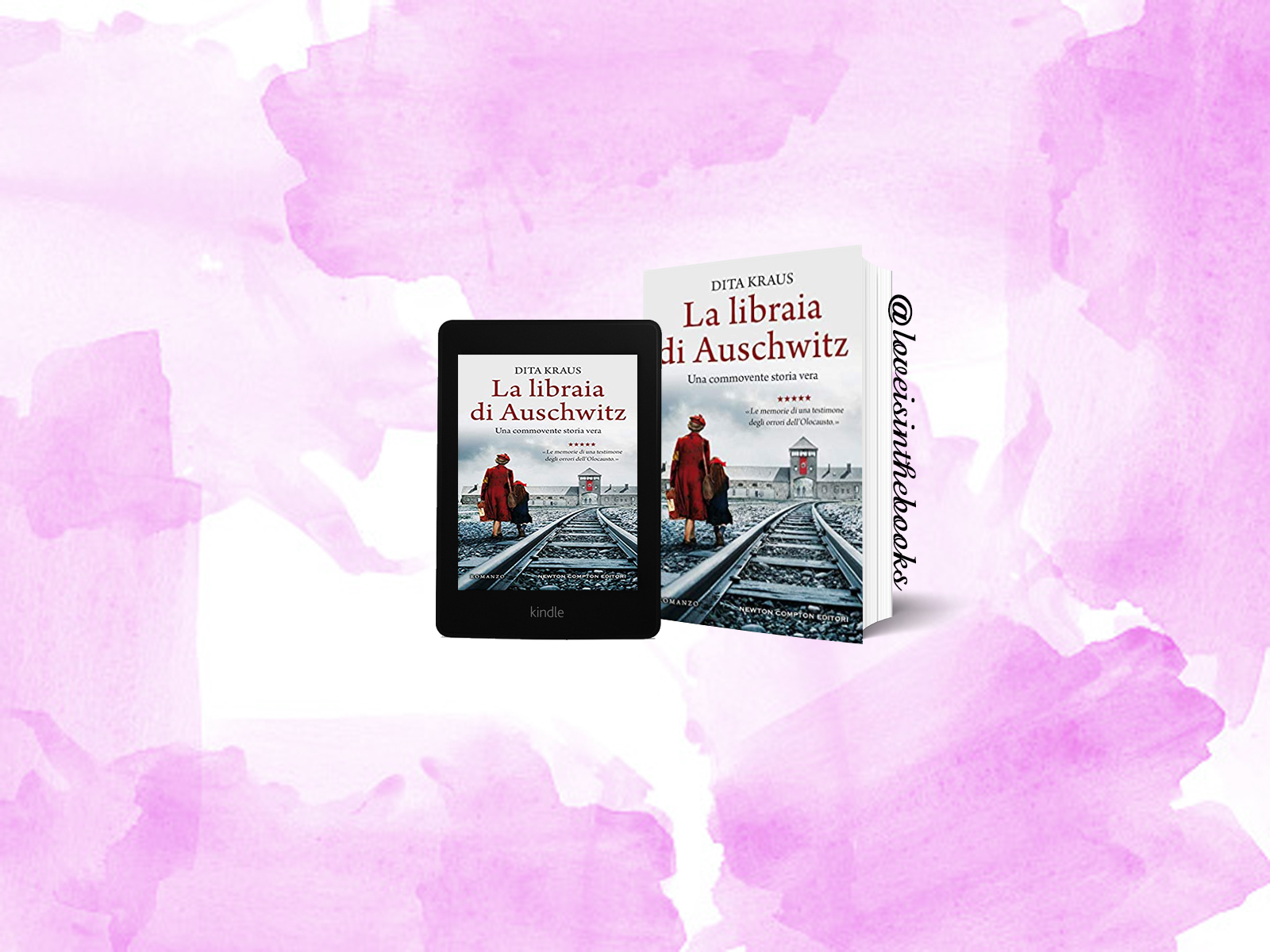
The powerful, heart-breaking memoir of Dita Kraus, the real-life Librarian of Auschwitz
Born in Prague to a Jewish family in 1929, Dita Kraus has lived through the most turbulent decades of the twentieth and early twenty-first centuries. Here, Dita writes with startling clarity on the horrors and joys of a life delayed by the Holocaust. From her earliest memories and childhood friendships in Prague before the war, to the Nazi-occupation that saw her and her family sent to the Jewish ghetto at Terezín, to the unimaginable fear and bravery of her imprisonment in Auschwitz and Bergen-Belsen, and life after liberation.
Dita writes unflinchingly about the harsh conditions of the camps and her role as librarian of the precious books that her fellow prisoners managed to smuggle past the guards. But she also looks beyond the Holocaust – to the life she rebuilt after the war: her marriage to fellow survivor Otto B Kraus, a new life in Israel and the happiness and heartbreaks of motherhood.
Part of Dita's story was told in fictional form in the Sunday Times bestseller The Librarian of Auschwitz by Antonio Iturbe. Her memoir tells the full story in her own words.
I found Dita’s biography to be extremely interesting - no matter what time period or part of the book I was reading. I don’t think many people realize the difficulties faced by the survivors after leaving the camps. This is one of the first accounts that I have read that goes into great detail of what life was like for Jewish immigrants immigrating to Israel.
While I often don’t focus on other readers’ reviews, I find some of the readers’ complaints - that they wished there was more on her life the during war and more on her time spent in Auschwitz-Birkenau - to be quite petty. I hope these reviews do not keep too many people from picking up this book. Dita explains those two periods of her life in details, many details I had not read in other Holocaust survivors’ biographies. I think Dita’s biography that pertain to those parts is exactly what Dita needed one to know about her life during those horrendous years, and nothing more or less.
As one who has read both the novel and biography, I suggest you read the novel if you want to be engrossed in the war-era life based on Dita. The person who wrote the novel worked closely with Dita. Read the biography if you want to know about her life in its entirety. Perhaps in the future, maybe it would be a common courtesy that one refrains from reviewing biographies based off of a novel and what one hoped/wanted the person’s biography to be like? I think this especially can be applied to one like Dita’s life. It seems odd that people assign it lower ratings or reviews all because those people read The Librarian of Auschwitz and wanted her biography to be of a similar experience.
I was looking forward to reading this book, learning about this ladies life and some history but I was very disappointed! I couldn’t connect with the her at all. It was so flat, unfeeling,dry and so horribly written I wanted to stop reading it just chapters in!! I have no idea why she titled it the way she did because there was only maybe a sentence that said she worked in the library in Auschwitz!!! Most of the book was about her life before and after the camps, who her family was and where she lived.
This book was a big disappointment and I would not recommend it.
Emanuela - per RFS . Bellissima autobiografia di una testimone eccezionale ancora in vita che, con lucidità e chiarezza, ci racconta la sua storia, a partire dall’infanzia spensierata nella Praga dell’anteguerra, sino al viaggio senza speranza verso i campi di concentramento di Auschwitz e Terezin. È un racconto vivo e crudo di una realtà vissuta con coraggio e con voglia di vivere, e sopravvivere, alle orribili violenze e privazioni subite; Dita le racconta quasi con lieve serenità, data dall’ineluttabilità degli accadimenti, queste si trasformarono però, con il passare del tempo, in un ricordo difficile con cui venire a patti.
Come una nonna che racconta ai nipoti quello che gli occhi videro e il cuore non può dimenticare, l’autrice si spinge con la memoria nelle baracche e nei campi di lavoro, citando nomi e avvenimenti continuamente, e interrompendosi spesso per narrarci cosa fu di questo o quello.
Dopo la liberazione, Dita Kraus e suo marito Otto si stabilirono in un Kibbutz, una fattoria moderna, una piccola società autosufficiente che consentì a emigrati e rifugiati ebrei di rifarsi una vita; questa parte mi ha particolarmente interessato, perché di quegli anni non conosco precisamente fatti ed avvenimenti; è stato quindi notevole conoscere l’organizzazione e la gestione di queste piccole realtà, e di come contribuirono alla nascita dello stato di Israele.
In tarda età l’autrice ha compiuto numerosi viaggi in tutto il mondo per far conoscere la propria storia e la vicenda dei disegni dei bambini di Terezin, che io ho avuto l’onore di vedere dal vivo; viene citata anche l’opera Brundibar di Hans Krasa, una rappresentazione giocosa che venne messa in scena nel campo di concentramento di Theresienstadt, della quale i nazisti permisero la rappresentazione per pure propaganda.
Dita Kraus, nonostante i dispiaceri e le perdite che continuarono a colpirla duramente anche in età adulta, ha conservato la capacità di amare e di essere amata ed è stata, credo, la sua più grande vittoria contro l’orrore Nazista.
Un’unica nota stonata concedetemela: la copertina. Non capisco perché la Newton si ostini a costruire immagini così stereotipate e poco originali, che nulla hanno a che vedere con la storia contenuta.
No soy de leer muchas autobiografías, pero siempre hay excepciones y tenia muchas ganas de conocer la vida de Dita, también conocida como la “Bibliotecaria de Auschwitz”. Y me he llevado una grata sorpresa, porque es mucho más… Cuando Dita tenia 13 años, los nazis la transportaron a ella y a su familia al gueto de Theresienstadt, y tras este al campo de concentración de Bergen Belsen. Dita y su abuela fueron los únicos miembros de su familia inmediata que sobrevivieron al Holocausto. Sabéis lo mucho que me gusta leer sobre esta época, sea ficción o no, y creo que aunque es una época horrible, este libro como muchos otros, son parte bastante importante de la historia humana, y lo veo necesario para que esto no se repita. Muchas reseñas de este libro tienen una mala crítica porque deseaban que hubiera mas sobre su vida durante la guerra y sobre el tiempo que paso en Auschwitz, es verdad que esas partes las trata, y da muchos detalles interesantes, pero se centra mucho más en su vida del después, en como tuvo que irse a Israel y todo lo que vivió después del campo. Dita a lo largo de todo el libro mostrara una fuerza y un optimismo que da gusto leerlo, pese a todos los hechos terribles que vio y que tanto la marcaron y como logro recomponerse. Porque después de salir de ese horror toco enfrentarse a la realidad, a empezar desde cero, a buscar un sitio en esa Europa destruida. Y no se merece menos de un cinco, porque es una historia real, te guste o no, es así. Añadir que Dita aun sigue vive después de muchos años de la liberación y actualmente se dedica a pintar y a divulgar su vida.
“Si repaso mi vida es difícil encontrar un momento al que quisiera volver. Quizás solo a mi infancia, antes de la guerra. Mi vida ha estado llena de dolor y pérdida. Siento que ha estado fuera de toda proporción, que ha habido mucho más mal que bien"
Cartea prezintă o radiografie a suferinței, dezvăluie viața unei femei curajoase Dita Kraus (cunoscută din cartea "Bibliotecara de la Auschwitz"), înzestrată cu o voință incredibilă de a supraviețui, într-o perioadă de coșmar trecând prin ororile de neimaginat ale lagărelor de concentrare. Mi-a plăcut că este redată copilăria autoarei și traiul după război, cum reușește să continue să trăiască împovărată de amintiri neplăcute, pierderea celor dragi, urmărită de coșmaruri îngrozitoare și totuși nu a pierdut dorința de a lupta reușind să-și reconstruiască viața. Recomand această carte, cu un impact emoțional major, despre o realitate dureroasă, dar totodată este o carte ce insuflă speranță și curaj. "Limbajul omenesc nu poate descrie ce s-a întâmplat la Auschwitz. Amploarea acelor experiențe oribile ar avea nevoie de un nou vocabular." "Tulburată, mi-am dat seama că desenul meu era singurul din expoziție făcut de un supraviețuitor." "Otto nu suporta să fie o povară, era convins că voi începe să-l urăsc dacă dependența lui de mine mi-ar fi limitat libertatea."
I prefer not to rate the memoirs written by the brave Holocaust survivors who record their testimonies so that we never forget the atrocities they endured. It interests me that after the publication of Iturbe's novel about Dita Kraus, "The Librarian of Auschwitz", Kraus penned her personal memoir. Thus, I had expected the text would elaborate on the details that Iturbe had so well researched or that she felt had been omitted. This was not the case, however.
Unexpectedly, there was relatively less about Dita's incarceration in the family unit of Auschwitz, as her written record took the reader through her life - from childhood in Czechoslavkia, to deportation, to Terezin, to Auschwitz-Birkenau, to Bergen-Belsen, to liberation, back to Prague, to the kibbutzim of Israel and to her residences outside of the kibbutzim, to her trips abroad, and through to eighty-nine years of age at the conclusion of her writing. Her accounts of the Holocaust years were clear and powerful, the most engaging parts of the memoir. However, as she related details about kibbutz life in Israel, I found myself frequently skipping pages about her work as a cobbler, for instance. I understand she was writing for a broad audience, but I found much of the last half of her memoir somewhat tedious. She rarely dealt with the impact of the Holocaust trauma, including the deaths of her parents, on her later life as a mother. Perhaps these reflections were too painful to record, but I felt that the psychological aspect of her experience on the woman she became would have been valuable.
Muchxs de vosotrxs conoceréis u os sonará la historia de “La bibliotecaria de Auschwitz” de Antonio Iturbe, historia que es de mi fav. Pues bien, esa historia trata de Dita, y ahora Dita ha escrito un libro donde nos cuenta toda su vida; desde su infancia hasta su vida actual.
Ya sabéis que me encantan este tipo de historias y siempre os diré que no sé cómo manejar este tipo de reseñas, al ser historias reales en las que viven semejante pesadilla como fue el holocausto y nos cuentan cómo vivieron todo aquello, es difícil de dar una opinión a tal vivencia, nos guste o no la historia.
Tengo que decir que este libro no es 100% holocausto, como ya os he dicho, Dita no se centra solo en aquello, se centra en ella misma, en su vida y su familia. Y a mí la historia de Dita me duele mucho 💔 Me ha gustado conocerla desde su infancia hasta lo que es hoy. Su camino no ha sido nada fácil y después de todo aquello, tampoco es que mejorara la cosa 😔 Pero ella es una mujer fuerte y le daría un gran achuchón de esos que duran minutos. Gracias Dita por contar tu historia al mundo y seguir luchando.
Imprescindible libro para conocer la vida de Dita Kraus y sus más allegados. Narra no solamente su vida en los campos de concentración de Auschwitz y Bergen-Belsen, sino también su anterior traslado al gueto de Terezín y su posterior emigración a Israel con otro superviviente del Holocausto, Otto Kraus. Acompaña todas sus memorias con fotografías de la época. Me han gustado mucho estas memorias porque Dita no dramatiza (y bien pudiera haberlo hecho tras todo lo que vivió). Simplemente cuenta su vida. No intenta hacerse la víctima por nada, solamente narra. Especialmente interesante me ha resultado la tercera parte del libro, donde narra su vida tras los campos de concentración, su boda con Otto y su emigración a Israel. Te das cuenta de que tuvieron que “sobrevivir” de nuevo para empezar una vida desde 0, cuando no tenían nada y habían perdido a tantos familiares y amigos. Totalmente recomendable para conocer un poco más sobre el Holocausto.
This is the autobiography of Dita Polach Kraus or, "The Librarian of Auschwitz," but it's also so much more than that. Dita was born in Prague in 1929. When she was 13 (1942) the Nazi's rounded up her family and transported them to the Theresienstadt ghetto, and later to Bergen-Belsen concentration camp. Dita and her grandmother were the only members of her immediate family to survive the horrific Holocaust. During her time in the camps, Dita met her future husband, Otto. Together they would have three children, Peter, Michaela, and Ronny.
First of all, I am an avid Holocaust reader. Anything I can get my hands on, fiction, non-fiction, I will read it. In 2009 I was subbing in a history class at my local high school and they were studying World War II. Upon my second day in the classroom, I asked the students how many of them had heard the name Anne Frank, ONE student out of probably 20 raised his hand. Since that day, I believe it is one of my many missions in life to pass history on to others, especially so it doesn't get repeated. Today less than half of the human population knows about the Holocaust. Therefore, though horrific, this book is an extremely important part of human history. It is also very different from the many other Holocaust memoirs I have read; it has pictures of Dita and her friends and family, perfectly placed to aid in telling her truth.
Though this book was published second, if you have not read the beginning of Dita's story, "The Librarian of Auschwitz" by Antonio Iturbe, I highly recommend reading it after reading A Delayed Life, since A Delayed Life gives a more well-rounded picture of Dita's full life. I gave A Delayed Life 5/5 stars.
Dita Kraus is still gracing this earth 75 years after the concentration camps were liberated, and currently resides in Netanya, Israel where she has dedicated her life to painting and giving her survivor testimony.
These types of stories only exist because of the people who survived them were willing to share their stories like Dita. Her story is one that I became invested in right away. Even without trying, Dita had me transported back in time as I stepped into her shoes.
I was there with her from the moment that her family had to leave and were prisoners in the camps. Which you would never wish that life on your worse enemy. To the moment when her father passed away; and her mother and her were released. Finally when she met her husband, got married, and had children.
Readers of Corrie Ten Boom's, The Hiding Place or The Diary of Anne Frank will want to pick up a copy of this book to read. This book is not one to be missed. My heart broke but was mended at the same time while reading this book.
„Şi eu înţelegeam, dar nu mă bucuram. Simţeam doar un fel de uşurare: de acum înainte totul avea să fie mai bine; urma să primim mâncare. Dar în lagăre nimeni nu-ţi face mari speranţe. Învăţasem că aşteptările privind ceva pozitiv nu se împlineau niciodată. Fiecare zi, fiecare lună, fiecare an aduseseră doar şi mai multă suferinţă. Amânai orice speranţă de mai bine, de multă vreme nu mai aşteptai nimic bun. Aşa ceva ar fi fost nu doar prostesc, ci chiar periculos. Căci fiecare nouă dezamăgire era şi mai greu de suportat – cu cât ţi se prăbuşea mai mult moralul, cu atât mai mult efort era necesar ca să te ridici şi să continui. Optimismul îţi mânca din puteri.”
Ogni anno, come un rituale, quando arriva la giornata della memoria, amo immergermi in una lettura a tema per poter capire meglio quei tempi e poter leggere delle storie vere che raccontano i fatti accaduti, seppur in modo un po' romanzato. In questi giorni la mia scelta è ricaduta su La libraia di Auschwitz di Dita Kraus, edito dalla Newton Compton Editori.
Purtroppo non ho molto da dirvi su questo romanzo, perché la lettura non ha sortito il risultato che speravo. Sono rimasta tremendamente delusa nel constatare che quest'opera, in realtà, anche se raccontata a distanza di anni dall'autrice stessa che ne è la protagonista, sembra una sorta di diario di bordo dove Dita ci racconta la sua vita dalla sua infanzia in avanti.
Lo stile è impersonale, non mi ha coinvolto nei racconti, cosa stranissima perché io amo quell'epoca e anche semplici usanze dei paesi diversi dal nostro mi affascinano. Ho provato zero partecipazione e andare avanti con le pagine è stato molto difficile. Mi è capitato di leggere altri libri sullo stesso genere e ritrovarmi a piangere durante la lettura, talmente la veridicità e il trasporto dei fatti narrati; a malincuore, con questo romanzo non è accaduto.
Tengo a precisare che non è assolutamente mia intenzione sminuire la vita dell'autrice/protagonista, anzi provo un rispetto reverenziale per lei che è una delle sopravvissute a quello scempio ma, semplicemente la narrazione non mi ha presa. Ovviamente, ogni lettore ha dei gusti diversi e del tutto soggettivi, quindi prendete la mia opinione con le pinze. Che ne dite di dare comunque un'occhiata a questo romanzo per farvi una vostra idea? Aspetto i vostri pareri!
As I read the story of Dita in Auschwitz, I couldn't help thinking that she was born in the same year as my mother, who, at the age of fifteen, read the horrifying stories of the British finding the camp at Belsen, where Dita eventually ended up. Dita's story was written with compassion and understanding, but what I appreciated most was that it wasn't too graphic. Yes, it described some of the most horrific incidents that occurred, but didn't linger on them and instead, concentrated on Dita's experiences. This story revolved around Dita's love of reading and how this made her the guardian of the few very battered and well-used books in Auschwitz; the discovery of which, would have meant immediate execution. It also drew me into the complex relationships in the camps, both the brave and the brutal; the kindness and the cruelty. It did give me hope for mankind, since many people did keep their humanity and their love for one another. I enjoyed the Epilogue, when the author detailed what happened to certain characters. It tied up the story very well. However, nothing was said if Dita ever retrieved the books that she had hidden in the camp. I can highly recommend this story.
Disappointed. I would have liked more written about prewar and war times. Felt like memories were kind of skipped over or described to have the least emotional impact.
Una historia que vale la pena leer. Aunque el relato no tiene la calidad de otros libros similares, la historia de Dita es única y aporta perspectivas muy interesantes de la vida en la post-guerra.
¡Hermoso testimonio! Sin duda, este libro me dejará una huella para siempre. Cada página está cargada de emoción. Más allá de ser una historia sobre el Holocausto, es el testimonio de una mujer que vivió la peor experiencia de su vida y, a pesar de ello, encontró la fuerza para seguir adelante.
Dita no solo nos cuenta su paso por diferentes campos de concentración, incluido Auschwitz, sino que también nos lleva a conocer su vida antes y después de la guerra, mostrando cómo el sufrimiento no termina con la liberación. Su historia es un recordatorio de la capacidad humana para resistir, adaptarse y reconstruirse incluso en las circunstancias más oscuras.
Actualmente, Dita Kraus vive en Israel y tiene 95 años. Me asombra su resistencia, su amor por la lectura y su fortaleza para seguir adelante después de tanta pérdida. Su testimonio no solo nos habla del pasado, sino que también nos deja una lección de vida: la esperanza y la determinación pueden resurgir incluso en el peor de los escenarios.
"Ya no espero a que termine la guerra, a que nos liberen, a casarme, a que nazca el bebé, a tener más dinero, a que termine el curso, a que llegue la paz. Ya no hay por qué aplazar nada, me he puesto al día con mi vida."— Dita Kraus.
Impresionante libro autobiográfico que describe de forma rotunda los horrores del Holocausto. Admito que el inicio del libro no me atrapó mucho, ya que comienza relatando lo que podría ser la vida una niña normal en cualquier punto de la que sería la Europa ocupada en muy poco tiempo. Sin embargo, el libro se vuelve más interesante cuando inicia el relato del paso de su familia por Auschwitz y Bergen-Belsen y su vida en un kibutz en el joven estado de Israel. Es, sin duda, una visión totalmente diferente a la que ofrecen habitualmente otros libros y películas sobre el Holocausto. Es sorprendente cómo una novela autobiográfica impacta mucho más, mostrando cómo el miedo y la valentía de los prisioneros les llevan a tomar decisiones que marcarán su vida, incluso después de superar la barbarie. No me sorprende que haya conmovido a más de 5 millones de lectores en todo el mundo.
"Už nemusím čekat až...Až skončí válka, až budeme osvobození, až se vdám, až se narodí dítě, až budeme mít více peněz, až skončí školní rok, až bude mír...Už nemusím nic odkládat, už jsem svůj život dohonila."
Těžko se, alespoň mně, hodnotí knihy, které jsou autobiografické či biografické. Hlavně z toho důvodu, že mi přijde zvláštní hodnotit něčí život, který se tak stal a já si teď řeknu "no hele to se mi vůbec nelíbilo, nebavilo mě to, že se ti nestalo to, nebo že si zažil toto", takže i když mě kniha chvílemi nebavila, tak nemůžu dát méně jak 5 hvězdiček, protože Paní Dita Krausová si zažila něco, co si my lidi, kteří nezažili holocaust, ani neumíme představit.
Lidé jako paní autorka by se měli stát vzory pro generace nadcházející přeživším druhé světové války, protože jsou důkazy toho, že to jde. Přežili nepředstavitelné a dokázali se z přeživších stát lidmi s plnohodnotnými životy, kteří vychovávají další generace, které by neměli zapomenout na to, co bylo.
Ditě Krausové je momentálně 94 let a žije život na plno.
Rozhodně doporučuji přečíst, člověk se zamyslí nad svým vlastním životem a řekne si, že se má vlastně i docela dobře.
This entire review has been hidden because of spoilers.
"O viață amânată" cuprinde memoriile uneia dintre supraviețuitoarele Holocaustului. Povestea ei cuprinde toată viața, din copilărie și până la vârsta de 89 de ani.
Născută în Cehoslovacia, Dita povestește atât perioada din cele 3 lagăre prin care a trecut, precum și traiul in Cehoslovacia comunistă și apoi în Israelul proaspăt înființat.
Cartea cuprinde și poze de familie, detalii despre părinți, prieteni, rude, copii.
Titlul este inspirat și mi-am dat seama că mulți dintre noi amânăm să trăim în prezent. Însă Dita ia o hotărâre importantă: "nu mai trebuie să aștept până...până se va termina războiul, până vom fi eliberați, până mă voi căsători, până mi se va naște copilul, până vom avea mai mulți bani, până se va încheia anul școlar, până va veni pacea..."
This is the real life story of Dita Kraus, a survivor of the Holocaust in her own words. These stories must be told. While many wish she wrote more about her time in Auschwitz, this book is a story of her whole life... how she survived and lived life after surviving such atrocities. I wanted to read about her life after I finished the book the Librarian of Auschwitz which was based on her story. Dita Kraus is an incredible human being who decided to tell her story because of all the Holocaust deniers. We must never forget. We must never let this happen again.
I can not recommend this book enough. It is a deeply moving memoir and is, of course, so relevant in June 2020. I am so glad that Dita’s story and that of her family, friends, and everyone she’s known has been captured in this book.
The book is in three parts: pre-war Czech Republic, WWII, and post-war and beyond. It is so readable and I stayed up late unable to put it down. I particularly enjoyed learning about the innocence of Dita’s life in pre-Communist Czech, without a telephone in the house. The sections on post-war (I won’t include spoilers) were also fascinating!
On a broader note:
I think reading books like this keeps us human; and makes us human if we read these books or hear these stories at a young age.
By that I mean that many people have read Anne Frank’s diary as a young person, been taught the story of the Holocaust, and been utterly shocked and really lost their innocence. I think it’s important to remind yourself continually that we should work to never again let any of the events happen. Not just the most awful events perpetrated during the war, but the gradual erosion of the Jews’ rights in the run up to the war; and then the utter destitution the post-war refugees were left in in the post war years. This book had a vivid depiction of the years /decades of struggles for Dita and her husband Otto, when trying to establish a modest life and home for their small family. Thank you for encouraging me to setup a new donation to the Red Cross today. There can never be enough memoirs like this.
Dita wrote this book at the age of 89, with a very long and very rich life to look back on; her wealth of experiences and her wisdom shines through in the way she reflects on events.
Thanks for a wonderful read. Recommended to absolutely everyone! (Except under-11s as there are some slightly mature bits).
This book is written without apologies or hesitation. Mrs Kraus conveys her recollection of her horrendous experienced during the Holocaust. There is much depth in her writing that reflects the period of time both during the Shoah, and after through her life in Israel and beyond. While there is much tragedy there is also joy as with most of our !lives. It is worthwhile as a reminder that unless we remember the past, we Are destined to repeat it.
Perché? Perché tradurre con "La libraia di Auschwitz" un titolo come "A delayed life"? Perché incentrare la descrizione su di un episodio marginale come la biblioteca, quando poi nel libro questo episodio è appena accennato? Perché creare false aspettattive sull a trama, rovinando così una bella e straziante biografia, sicuramente segnata dalla deportazione, ma i cui capitoli piu importanti sono quelli del rientro in Cecoslovacchia, la caduta nel regime comunista, la nuova fuga, questa volta in Israele, della difficile vita in un Paese nascente?
This book chronicles the life of Holocaust survivor Dita Kraus. It tells about her life before the war, during the war and to the present day. It provides a perspective that many could benefit from, especially those who try to rewrite history and say the Holocaust is a myth or those that compare Covid 19 precautions and rules are like that experienced during the Holocaust. Both of these stances are unforgiveable. Books like this should be read so that the Holocaust is never forgotten.
Slow at times and is a random collection of memories. I haven’t read Librarian of Aushwitz the YA novel, but at no time in this book does it talk about a librarian in Aushwitz although it’s in the title. Of course it’s her memoir and her story matters but there are better constructed Holocaust memoirs.
An interesting account of Dita Kraus's survival during the Holocaust and her life afterward. I enjoyed reading about life on an Israeli kibbutz and the fact that the book dedicated just as much time to her post Holocaust experiences.
Există fericire după război? Dar iubire de sine după ani de degradare fizică și morală? Se închid vreodată cicatricile pe care cruzimea și nedreptatea le-au sculptat în pielea și în sufletele supraviețuitorilor lagărelor de concentrare? Dita Kraus, cunoscută în întreaga lume ca „bibliotecara de la Auschwitz”, privește încă o dată spre trecut și își prezintă viața de la primele amintiri legate de părinții ei și de copilăria fericită pe care a avut-o până la Holocaust, retrăind apoi anii războiului, înfometarea, denigrarea și suferința pierderii oamenilor dragi.
Dita a ajuns pentru prima dată în lagăr la sfârșitul anului 1942, când avea doar 13 ani. S-a născut în fosta Cehoslovacie, la Praga, într-o familie nu foarte înstărită de intelectuali evrei. Toți au fost deportați inițial la Terezín, apoi la Auschwitz-Birkenau, unde Dita a avut grijă de cea mai mică bibliotecă din lume (aceasta conținea doar 12 cărți salvate cu greu de prizonierii care aveau misiunea de a sorta bagajele evreilor condamnați la moarte în camerele de gazare) și, în cele din urmă, la Bergen-Belsen, ultimul loc de supliciu înainte ca armata britanică să elibereze lagărul în aprilie 1945.
În ultima parte a cărții, Dita ne invită într-o călătorie emoționantă spre prezent, începând cu primii ani de după război, când, alături de cel care avea să-i devină soț, a depus eforturi imense pentru a reconstrui ceea ce lagărele au distrus, de cele mai multe ori, definitiv. După instaurarea comunismului în Cehoslovacia, emigrarea părea să constituie singura speranță la o viață liberă pentru tânăra familie Kraus. Cei doi au ales Israelul, un stat abia format și dornic să se dezvolte cât mai repede, fără să aibă însă și resurse materiale care să susțină valul de nou-veniți. Aici, viața Ditei se schimbă radical, aducând-o în fața unor provocări majore: traiul în comun într-un kibbutz, asimilarea unei limbi noi – ebraica, experiența maternității, căutarea unor slujbe corespunzătoare etc.
Dincolo de poveștile vibrante și lecțiile prețioase despre voință și speranță, această carte ne prezintă și un crâmpei din realitatea crudă cu care se confruntă un supraviețuitor al lagărelor de concentrare: viața nu s-a oprit cât timp el a luptat să trăiască și nici nu îl va aștepta să se reintegreze în vechea lui comunitate sau să-și depășească traumele. Acești oameni nu se pot vindeca decât prin suferință, căci eliberarea nu aduce cu sine și uitarea sau îngăduința celor din jur. Dita a înțeles repede această lecție, dar rămâne întrebarea: a avut ea cu adevărat o viață fericită după război? Doar citindu-i memoriile, veți afla răspunsul…