

What do you think?

Dracula's Heir
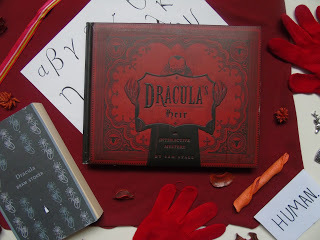
In 1897, Archibald Constable & Company published Bram Stoker’s Dracula , the most famous horror novel of all time. For reasons still debated by scholars, the first chapter of Dracula was cut from the book just weeks before publication. Here, it becomes the central clue in a spine-tingling original interactive mystery.
Dracula’s Heir begins 10 years after the horrific events described in the original novel. Jonathan and Mina Harker are happily married and enjoying life in Bixby, England. Meanwhile, their friend Dr. John Seward is tracking a string of crimes that seems eerily A 14-year-old girl sleepwalks out of her parents’ house and disappears into the night. Two “accident victims” are found drained of their blood, yet there is no crime scene evidence to explain its loss.
When Seward shares his discoveries with the famous vampire hunter Abraham Van Helsing, all the evidence points to Jonathan Harker. After all, Harker spent weeks imprisoned in Castle Dracula as a guest of the Count—was he infected without anyone realizing it? Has the mild-mannered English solicitor spent the last decade lurking in the shadows as a nosferatu? Or is someone (or something) else getting away with murder?
This chilling mystery novella features 8 removable clues, including a newspaper, a death certificate, Renfield’s private journal, and the original first chapter of Bram Stoker’s Dracula. When you think you’ve solved the crime, you can open the final signature (sealed at the printer) to test your powers of deduction.
Dracula’s Heir begins 10 years after the horrific events described in the original novel. Jonathan and Mina Harker are happily married and enjoying life in Bixby, England. Meanwhile, their friend Dr. John Seward is tracking a string of crimes that seems eerily A 14-year-old girl sleepwalks out of her parents’ house and disappears into the night. Two “accident victims” are found drained of their blood, yet there is no crime scene evidence to explain its loss.
When Seward shares his discoveries with the famous vampire hunter Abraham Van Helsing, all the evidence points to Jonathan Harker. After all, Harker spent weeks imprisoned in Castle Dracula as a guest of the Count—was he infected without anyone realizing it? Has the mild-mannered English solicitor spent the last decade lurking in the shadows as a nosferatu? Or is someone (or something) else getting away with murder?
This chilling mystery novella features 8 removable clues, including a newspaper, a death certificate, Renfield’s private journal, and the original first chapter of Bram Stoker’s Dracula. When you think you’ve solved the crime, you can open the final signature (sealed at the printer) to test your powers of deduction.
88 pages, Hardcover
First published August 1, 2008
Ratings & Reviews
Friends & Following
Create a free account to discover what your friends think of this book!
Community Reviews
Displaying 1 - 30 of 45 reviews

February 25, 2017
I absolutely loved reading this lovely little interactive mystery!
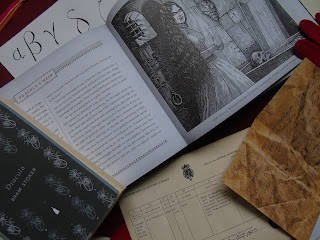
An interactive mystery is a mystery novel where the reader is the one solving it, alongside the main character. I loved how it had clues which you had to pull out and unfold, such as scrunched notes, envelopes which needed opening and little notebooks. It also had its own newspaper. Alongside all that fun, there were beautifully detailed illustrations that went along with the story. I just had to love that aspect of the novella.
I also really liked the writing style of the novella. I was pretty worried before I started reading this one because Dracula is a classic I have come to adore. I was anxious about someone else writing those characters, and trying to fit into Stoker’s style. But Stall does a wonderful job. Believe me, if I hadn’t known better, I would’ve been able to believe that Bram Stoker wrote this himself as well. Kudos to the author for mastering his writing style and writing it in a way I could love.
Then we have the mystery itself. Dare I say it was a better mystery and more so intriguing than that of the original novel? I did not guess the culprit myself, although I should’ve been able to, now that I know what the answer is. I really liked how it involved the previous characters and how they were accused as well. In fact, the evidence is so convincing that it’s hard to believe otherwise. But the clues were clever, and tricky, and it was just fun to read. I especially liked that we get to play along and try to figure it all out ourselves before the answer is given.
There were some new characters, and I did like them. I liked how they moved the time on ten years down the line, and how that played into the story. The ending was definitely haunting – the perfect atmosphere to leave with the reader after having read such a chilling read.
I’m so glad I had the chance to read this one!
This review and others can be found on Olivia's Catastrophe: http://olivia-savannah.blogspot.nl/20...
An interactive mystery is a mystery novel where the reader is the one solving it, alongside the main character. I loved how it had clues which you had to pull out and unfold, such as scrunched notes, envelopes which needed opening and little notebooks. It also had its own newspaper. Alongside all that fun, there were beautifully detailed illustrations that went along with the story. I just had to love that aspect of the novella.
I also really liked the writing style of the novella. I was pretty worried before I started reading this one because Dracula is a classic I have come to adore. I was anxious about someone else writing those characters, and trying to fit into Stoker’s style. But Stall does a wonderful job. Believe me, if I hadn’t known better, I would’ve been able to believe that Bram Stoker wrote this himself as well. Kudos to the author for mastering his writing style and writing it in a way I could love.
Then we have the mystery itself. Dare I say it was a better mystery and more so intriguing than that of the original novel? I did not guess the culprit myself, although I should’ve been able to, now that I know what the answer is. I really liked how it involved the previous characters and how they were accused as well. In fact, the evidence is so convincing that it’s hard to believe otherwise. But the clues were clever, and tricky, and it was just fun to read. I especially liked that we get to play along and try to figure it all out ourselves before the answer is given.
There were some new characters, and I did like them. I liked how they moved the time on ten years down the line, and how that played into the story. The ending was definitely haunting – the perfect atmosphere to leave with the reader after having read such a chilling read.
I’m so glad I had the chance to read this one!
This review and others can be found on Olivia's Catastrophe: http://olivia-savannah.blogspot.nl/20...

February 25, 2019
Coup de coeur ❤
C'est un magnifique objet livre à offrir aux enfants, ados ou même adulte.
L'histoire est quand même très bien ficelé, les illustrations sont magnifiques et tout ces objets dedans. C'est un vrai bonheur ce livre
C'est un magnifique objet livre à offrir aux enfants, ados ou même adulte.
L'histoire est quand même très bien ficelé, les illustrations sont magnifiques et tout ces objets dedans. C'est un vrai bonheur ce livre

December 22, 2008
This is just what it sounds like, an interactive mystery. It’s just plain fun. It’s no big mystery or the world’s best writing but it does do a passable job of looking like it was written in Stoker’s era. It starts off as a bequeath of some documents to a young attorney named Jonathan Kelso from Lady Godalming but the bulk of it is made up of John Seward’s pov and his journals. (He’s the psychiatrist in Dracula, who tried to help Lucy.)
The book is campy. It’s done in faux red leather and it is stuffed full of wood block like illustrations. The most fun part of it are the clues that you yourself have to read from Renfield’s and Jonathan Harker’s journals, to old time photos to newspapers. You must do that in order to solve the mystery, both parts of it (I did, rather easily but still I really appreciated it for the bit of fun it is).
Seward is made aware of a new killer on the scene and after a few letters exchanged with Van Helsing (which we get to read) they have an idea that maybe just being bitten once or twice passes on a quasi-vampiric state that allows the victim to walk the daylight hours but still needs to kill and that it could wax and wane like malaria. Seward has to investigate with the help of one of his colleagues, Dr. Dolores Morrigan, one of the first lady doctors in England. Much to Seward’s dismay it’s looking like the most likely candidate is Jonathan Harker himself. Like I said, it’s not hard to figure out who the vampire is, not really but it was fun. It’s a tad pricey though.

September 22, 2008
This book was quite fun to read. The mystery wasnt all together too complex, and I figured out most of it, but there was one part in particular that took me by suprise. I probably would have figured it out had i taken the time to reread the book. The removable clues were pretty cool, and the ilistrations were awsome. Not only was this book a fun mystery but it was also a fairly good story. I would recomend this book to any who enjoy vampire stories and a moderate challenge.
A few complaints.
First it was obvious that the author had read the book Dracula but had then reverted back to pieces of the storyline that had been cooked up by Hollywood.
Secondly, In one of the news paper articles (which was one of the clues) spoke of an underground explosion that had knocked out the electricity to one aria of the city, freasing clocks at the exact moment of the disaster. Considering the story was set ten years after the events in the Dracula novel, I am guessing that clocks still ran on old fashiond clock work and were most likely not electric. In the same article, there was a comical mention of Lovecraft, although I believe that it was intentionly put in the text for humorous reasons.
Lastly, One of the clues was the suposedly "missing" first chapter of Bram Stokers Dracula. It was enjoyable to read, but I cannot be sure if it is authentic or not. Not that it really matters, I would just like to know for sure.
Despite all of this, It was a very enjoyable book.
A few complaints.
First it was obvious that the author had read the book Dracula but had then reverted back to pieces of the storyline that had been cooked up by Hollywood.
Secondly, In one of the news paper articles (which was one of the clues) spoke of an underground explosion that had knocked out the electricity to one aria of the city, freasing clocks at the exact moment of the disaster. Considering the story was set ten years after the events in the Dracula novel, I am guessing that clocks still ran on old fashiond clock work and were most likely not electric. In the same article, there was a comical mention of Lovecraft, although I believe that it was intentionly put in the text for humorous reasons.
Lastly, One of the clues was the suposedly "missing" first chapter of Bram Stokers Dracula. It was enjoyable to read, but I cannot be sure if it is authentic or not. Not that it really matters, I would just like to know for sure.
Despite all of this, It was a very enjoyable book.

September 28, 2011
Normally, I'm not very interested in vampire books. I read Twilight and hated it. I read The Chronicles of Vladimir Todd and loved it. That's about all of my range in vampire novels. But Dracula's Heir just seemed so original and fun with all of the notes and pictures added to it: I simply couldn't resist.
Dracula's Heir isn't the best book I've ever read; nor is it my favorite. But it was one of the most genius mysteries I have ever read. By the end of the book my jaw had literally dropped in shock of the events that had taken place in this story. It wasn't all that captivating, but keeps you interested until the next twist in the plot. And when you see all of the twists finally coming together, you realize the cleverness of the story.
Dracula's Heir kinda brought me out of my usual reading zone: vampire books and mystery novels aren't things I usually read. But I must say I enjoyed this book quite a bit. I've never read The original Dracula by Bram Stoker, but I know the story (who doesn't?) well enough to understand Dracula's Heir. Anyone who is a fan of murder mysteries would love this book. It's set ten years after the famous events of Dracula so anyone who's a fan of the legend would enjoy this sequel. Although, I must warn you: It is not for the faint of heart.
Austin
Dracula's Heir isn't the best book I've ever read; nor is it my favorite. But it was one of the most genius mysteries I have ever read. By the end of the book my jaw had literally dropped in shock of the events that had taken place in this story. It wasn't all that captivating, but keeps you interested until the next twist in the plot. And when you see all of the twists finally coming together, you realize the cleverness of the story.
Dracula's Heir kinda brought me out of my usual reading zone: vampire books and mystery novels aren't things I usually read. But I must say I enjoyed this book quite a bit. I've never read The original Dracula by Bram Stoker, but I know the story (who doesn't?) well enough to understand Dracula's Heir. Anyone who is a fan of murder mysteries would love this book. It's set ten years after the famous events of Dracula so anyone who's a fan of the legend would enjoy this sequel. Although, I must warn you: It is not for the faint of heart.
Austin

August 7, 2012
Dracula's Heir is an "Interactive Mystery", which means that every few pages there is a pull-out handwritten note or fold-out newspaper which the reader can examine for clues and/or hidden messages. Gimmicky? Sure, a damn fun gimmick.
As a kid I had a similar book-- that one based on A Study in Scarlet. I loved it then, and the appeal of physical interaction with clues is just as strong now. Though the book feels slight in the hand, the nature of the enclosed objects is such that readers will spend more time with it than the page count would indicate.
Dracula's Heir is geared for ages 10+; that's my guess-- there's no age recommendation on the book, but there are a couple sections which might be frightening for younger readers, especially as things pick up towards the end.
The book's mystery is nicely structured, with clues hidden along the way. Even better, the answer is revealed slowly, allowing readers of different ages/aptitudes to solve more or less of the puzzle as their their skills of detection allow.
As a kid I had a similar book-- that one based on A Study in Scarlet. I loved it then, and the appeal of physical interaction with clues is just as strong now. Though the book feels slight in the hand, the nature of the enclosed objects is such that readers will spend more time with it than the page count would indicate.
Dracula's Heir is geared for ages 10+; that's my guess-- there's no age recommendation on the book, but there are a couple sections which might be frightening for younger readers, especially as things pick up towards the end.
The book's mystery is nicely structured, with clues hidden along the way. Even better, the answer is revealed slowly, allowing readers of different ages/aptitudes to solve more or less of the puzzle as their their skills of detection allow.

August 4, 2013
Lots of fun and the story is written really well. I guessed the big bad before it was revealed but failed to figure out the motive. So, I had to read the sealed "answer" at the back of the book. However, if I hadn't been so anxious to find out why and reread the first part of the book, I think I could have guessed it all. Maybe. ;)

April 3, 2009
A wonderful "what happens next" story. Sam Stall does an excellent job of continuing the Dracula saga and what occur in the lives of Dr. Van Helsing and Dr. Seward. The interactive mystery is a nice little twist that just made it all the more enjoyable.
September 22, 2008
Fun to read; almost like finding a stash of old mail/newspapers and figuring out the mystery. Granted, it was simple enough to solve.

October 21, 2008
This was a really fun book. The removable clues were nicely done, and the story was well-written and engaging. A great Halloween book.

August 13, 2011
I REALLY enjoyed this! The cover is awesome-the story was engaging- and I loved the multi-genre approach!

March 22, 2013
This was an interactive mystery book that came with props (party invitations, photographs) intended to be from the story.

August 26, 2013
I really enjoy these interactive mystery books. The page count is short but all of the bits and baubles that are included make it a captivating read anyway. It gets a 4 out of 5.

September 5, 2013
I *love* these cute books with little surprises hidden inside!! It's a shame the story was short, but at least it felt like the original, with journal entries and letters sealed in wax.

May 4, 2015
Fun and original, a little predictable but the fun made up for it.

March 18, 2026
Il s'agit là d'un livre-jeu particulièrement bien présenté et dont l'intrigue, inspirée par le "Dracula" de Bram Stoker, est amenée de façon convaincante.
L'auteur vous livre ici une série de documents dont il a lui-même hérité et dans laquelle se cache une énigme. À vous d'y remettre de l'ordre, de relever les indices, de créer des liens...
L'objet a été créé avec un réel soin : les pièces présentées sont convaincantes. Feuilles de journal, note manuscrite, photographie, fiche administrative... Tout est réaliste et contribue à vous plonger dans une ambiance à la fois oppressante et captivante.
Il vous faudra lire attentivement, observer, comparer et échafauder, pas à pas, une théorie solide. Lorsque vous serez convaincu d'avoir tout compris, un document scellé, à la fin de l'ouvrage, vous dévoilera la vérité et vous permettra de juger de vos qualités d'enquêteur.
En prenant le temps de savourer chaque élément, il y a matière à s'occuper tout un week-end d'hiver : plaid, Earl Grey et énigme élégante...
Une lecture à conseiller à tous ceux qui aiment jouer avec les livres.
L'auteur vous livre ici une série de documents dont il a lui-même hérité et dans laquelle se cache une énigme. À vous d'y remettre de l'ordre, de relever les indices, de créer des liens...
L'objet a été créé avec un réel soin : les pièces présentées sont convaincantes. Feuilles de journal, note manuscrite, photographie, fiche administrative... Tout est réaliste et contribue à vous plonger dans une ambiance à la fois oppressante et captivante.
Il vous faudra lire attentivement, observer, comparer et échafauder, pas à pas, une théorie solide. Lorsque vous serez convaincu d'avoir tout compris, un document scellé, à la fin de l'ouvrage, vous dévoilera la vérité et vous permettra de juger de vos qualités d'enquêteur.
En prenant le temps de savourer chaque élément, il y a matière à s'occuper tout un week-end d'hiver : plaid, Earl Grey et énigme élégante...
Une lecture à conseiller à tous ceux qui aiment jouer avec les livres.

February 11, 2025
Very fun interactive mystery, but not much else. I loved the little illustrations, notes, papers and other things added to enhance the immersion. The writing though, leaves much to be desired. To my understanding, the supposed redacted pre chapter 1 part of Dracula is an invention of this book and it, along the rest of the story with Dr. Seward, do not live up to the original novel. Dare I say, it ruins the original story. The idea itself is not too terrible, but the author should have not used the original cast for this story. It is very clear that the writing style of this and Dracula are very different, making the characters not feel authentic. Futhermore, the mystery was not that hard to put together, the book is very short and the ending is very bad and not satisfying at all. The only fun thing about this book are the interactivity and illustrations.

November 5, 2017
First, this is a beautifully packaged interactive mystery book. I was so lucky to find it untouched for sale for only one dollar at the library. Lucky me. The story does a nice job mimicking 19th century writing without being cumbersome and weighing down the mystery. It was a pleasant diversion and I enjoyed the book.

July 31, 2019
Utterly fabulous! Who wouldn't love examining the clues along with Dr. John Seward?! And while I did manage to figure out "whodunnit" before the end, the journey was still a ton of fun. The story was also well-written and a fitting tribute to the original. Vampire and puzzles fans alike will love picking up this work and uncovering the mystery of Dracula's Heir!

April 12, 2021
This was actually quite a nice continuation of the Dracula story by Bram Stoker. It felt genuine and had some lovely artistic elements to it in the form of added ephemera and illustrations. It is considered an "interactive mystery" but it didn't set itself up to be strictly that. It was worth a read and I'm glad I found it.
June 12, 2021
I absolutely loved this little book! It is a continuation of the original "Dracula" saga, presented as documents from 10 years after the Count's death. It took me back to books from my 80's youth, following clues to decider the answer...but this has photos and delicate handwritten clues, old newspapers and missing chapters from Bram's novel. I thoroughly enjoyed it!!

July 26, 2023
This book is most notable for the novelty of the handouts and attachments that are contained within—notes, newspaper pages, photographs, etc. These are all pretty well done, but they don't add a lot to the story ... and even less to the mystery. There is one big twist, which I found pretty obvious. All in all, not much of a follow-up to Bram Stoker's legacy.

April 12, 2020
This book, though short, was a lot of fun. It was a sequel to "Dracula" of course, and is a decent little mystery, with little pockets filled with evidence for the reader to examine. I liked the interactive aspect. Much lighter than "S" but still lots of fun.
May 11, 2025
Fun and creepy.

September 20, 2018
Loads of fun for all ages.

April 6, 2022
Eh. Interesting premise, and cool format.
But, eh.
But, eh.
Read
June 25, 2024Interesting interactive pieces.
July 9, 2024
This interactive secondary story to the original Dracula is a very fun read along. You get wrapped up in the invigorating detective work and mystery that's set before you.

December 20, 2015
I'll admit first that I've never read Dracula, but of course I'm familiar with the story. Who isn't? This interactive mystery was an interesting and fun book, more for the novelty of removable inserts, a couple of "reproduced" notes, a photograph of a young girl who disappeared with her mother after being attacked and bitten on the neck.
I stumbled across this book on the sale shelf at Half Price Books, and the only downside is that the last insert, which judging by the synopsis of the book is a "sealed certificate", is missing. The seal is broken, but there's nothing in the pocket. Not that it really took away from the story, but I am curious as to what exactly it was.
I stumbled across this book on the sale shelf at Half Price Books, and the only downside is that the last insert, which judging by the synopsis of the book is a "sealed certificate", is missing. The seal is broken, but there's nothing in the pocket. Not that it really took away from the story, but I am curious as to what exactly it was.

October 10, 2012
Comme tous les livres que je trouve en solderie à des prix très abordables, c'est toujours hit or miss, bien que ce soit de beaux-livres objets.
Celui ci ne fait pas exception. C'est un livre-enquête sympathique qui plaira à un jeune publique fan de Dracula.
Personnellement, bien qu'aimant les vampires dans la fiction, Dracula est celui qui m'intéresse le moins. Et donc je n'ai pas vraiment accroché a cette "suite".
C'est pourtant un beau livre qui plaira à certains Dracula aficionados ;)
Celui ci ne fait pas exception. C'est un livre-enquête sympathique qui plaira à un jeune publique fan de Dracula.
Personnellement, bien qu'aimant les vampires dans la fiction, Dracula est celui qui m'intéresse le moins. Et donc je n'ai pas vraiment accroché a cette "suite".
C'est pourtant un beau livre qui plaira à certains Dracula aficionados ;)
Displaying 1 - 30 of 45 reviews