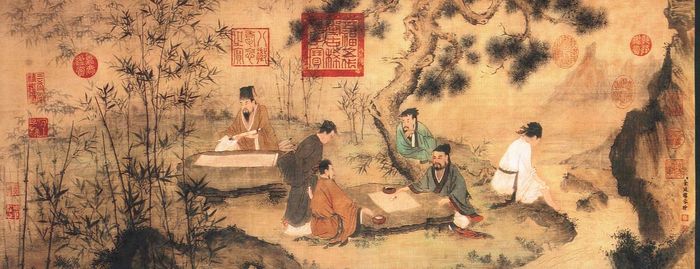
Die Vergangenheit Chinas liegt für die meisten Europäer im Dunkeln. Jonathan D. Spence, Historiker und Erzähler in einer Person, vermittelt mit der Biografie des großen Gelehrten und Exzentrikers Zhang Dai einen anschaulichen und lebendigen Eindruck der Ming-Zeit (1368-1644), die Politik, Kultur und Gesellschaft im Reich der Mitte zu höchster Blüte brachte.
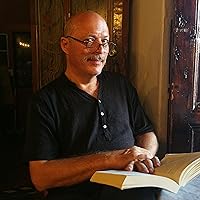
Jonathan Dermot Spence was a historian specializing in Chinese history. His self-selected Chinese name was Shǐ Jǐngqiān (simplified Chinese: 史景迁; traditional Chinese: 史景遷), which roughly translates to "A historian who admires Sima Qian."
He had been Sterling Professor of History at Yale University since 1993. His most famous book is The Search for Modern China, which has become one of the standard texts on the last several hundred years of Chinese history.
In Return to Dragon Mountain Jonathan Spence explores in detail the life and times of the privileged class in China just before and after the Manchu invasion in 1644 and the subsequent collapse of the Ming dynasty. And he does so using the extensive writings of a participant, one Zhang Dai, a prolific author of memoirs, histories, biographies, poetry, dramas and essays. Spence provides a fascinating look into a lost world, whose inhabitants, and this is one of the insights that a truly detailed examination of another time and culture reminds us of, have much more in common with us than not. The eccentric relatives, the more ruthless business competitors, the warmth of drink and literature in the company of fellow connoisseurs, the tensions when confronted with only bad choices, the opportunists of every description, all are reflected in our own lives.
But there is another matter, experienced by too many people but not by most of those living in America and Western Europe now: one must imagine living under a government which has hardly changed for 276 years; the rules of life have been the same for at least that long; everyone knows their place and most seem to be content with it. Then murderous barbarians sweep out of the north burning and pillaging, the seemingly eternal and omnipotent government cannot stop them as they penetrate deeper and deeper into the land. And finally the government collapses as more and more people flee to the far south. Zhang Dai was 49 when the Ming dynasty collapsed, and he lost his houses, his art collections, his library, and his livelihood when he fled with the rest. His best friend, not able to bear the loss of his world, committed suicide. With what was left of his family, he farmed a piece of land in the south and, in his spare time, reconstructed the lost life on paper. Spence uses Zhang's writings - often employing Zhang's own (translated) words - as well as other sources for this re-creation.
Return to Dragon Mountain is not an abstract history told from on high but is lived life; one feels as if one is at Zhang's elbow as he moves through his world, as if one is almost a participant. His world almost becomes one's own. Spence provides us with an opportunity to extend our necessarily limited lives in unexpected directions.
The author is a China expert and it is obvious that he loves ancient Chinese culture, especially the Ming dynasty cultural and literary scene. Zhang Dai was indeed a most interesting personage - born of a wealthy family but who cultivated an independent worldview all too different from his mundane gentry peers and relatives. Charged with a self-imposed duty of writing Ming history, he was at once a critical commentator on social ills and a romantic idealist who was obsessed with a past that was marked by cultural creativity and decadent materialism. I enjoyed Jonathan D. Spence's writing and his reconstruction of the life and times of a famous Ming historian and essayist.
I had hoped that this was a straight translation of Zhang Dai’s writing. Instead, what we have is Jonathan D Spence’s view of the best of Zhang Dai’s writing, summarized through Spence’s views of Chinese history. It’s well-written, vivid, often elegiac, sometimes poignant, and occasionally comical. Apparently as Zhang Dai himself was.
Zhang Dai lived an unconventional life, lasting through most of the 1600s, which included the fall of Ming Dynasty just before mid-century. At that time he pretty much lost everything, having to leave home and run. Overnight, wealth to poverty, high social standing to low. The hardest loss for him was his helplessness to feed his scattered family.
The most persistent of his many enterprises was his writing. He wrote biographies of many of his family members, as was common at certain ranks through Chinese history, and then he set out to chronicle the Ming Dynasty, which was pretty much his master work.
He’s quite frank about how he spent his youth in pleasure trips, pursuing dramatic productions, and such things as seeking the perfect water for tea making. (He found his water, and wrote so well about it the leaves unfold like seeing a hundred white orchid flowers open their petals in a wave of snow, that people flocked to the site and ruined everything, including the water.)
Spence’s choices of quotations and his detailed summaries of Zhang Dai’s biographical sketches of his various relatives’ lives briefly but memorably bring them all to life. Zhang writes with that same honesty he related about his own life to his family, highlighting good and bad qualities.
One of the subjects I was interested in seeing was his recounting of the state of the imperial examinations of his time. He castigates the legalistic insistence on the infamous “eight-legged essays” and goes into the grinding misery of testing, the cronyism of grading and reciprocity among scholars then looking for government jobs.
It’s interesting to see through Spence’s summaries how the tension between Confucian ideals and Buddist and Daoist ideas inform Zhang’s society and government, especially his insights in why and how it came crashing down. Criticizing emperors was a risky business, but at the end of his life, when he was so poor he had to scrabble for rent of a place to life, he apparently didn’t think he had much to lose.
Zhang Dai [pronunciation: jahng die] lived in an inauspiciously interesting time – the end of the Ming Dynasty, which fell to the Manchu invasion in 1644. Initially, his significance appears to be the parallel between his own life and a decadent culture. He expended his youth on aesthetic dabbling. Travel, creation of a dramatic troupe, the staging of extravagant parties, and intense indulgence in passing interests occupied his time. The lack of substance seems like a metaphor for the negligent attitude of those in government. Yet, it would be a mistake to dismiss this inquisitive and introspective mind so readily. RETURN TO DRAGON MOUNTAIN chronicles not only Zhang Dai's youth, but his past, and his intense reflections on their meaning.
Zhang Dai lived an unconventional life. One of his enterprises, along with his 3rd Uncle, was the search for the ideal water for making tea. After extensive sampling they lighted on the Speckled Bamboo Shrine springs. Not only was this the prescribed water, but the water must be allowed to sit for 3 days before being used with the prescribed porcelain utensils to brew the perfect tea. “...the leaves stretch and unfold...like 'seeing one hundred white orchid flowers open their petals in a wave of snow.'” They called the total experience Snow Orchid Tea. So great became it's reputation that within 5 years' time, greed destroyed the entire enterprise. Businessmen purloined the name for their own inferior teas. The spring was overrun with copycat manufacturers. A local official tried to monopolize the use of the spring. Cheap shops and crowds of tourists were drawn to the site. Finally, the spring became polluted by local monks tired of dealing with the crowds that had descended on the once tranquil site. This sad tale of human nature could have sprung from a contemporary news story, and it serves to lift Zhang Dai from the exotic shadows of history.
Zhang Dai was a prolific writer, and his accounts of various family members, going back to the generation of his great great grandfather, shed light on life in the Ming Dynasty. Great grandfather Wen Gong [pronounced: wun goong] placed first in the national exams in Beijing in 1571. As a student he formed a pact with his study mate Zhu Geng [pronounced: juu guung] that they would pledge their future children in marriage. Thus was formed the beginning of a cultured extended family of art connoisseurs, collectors, and poets well-connected to the Imperial Court, and not beyond some dodgy behavior to build their wealth.
Zhang Dai notes that their stories would not have been half as interesting had these people led more virtuous lives. At the same time, their flaws illustrate their ingenuity and limitations at coping with adversity given their inner temperaments. At one point he observes: “you should not take a person without obsessions as your friend, for such a person will lack deep feelings; a person without flaws also should not be made a friend, for he will lack true life.” He brings the same deep reflection to his history of the Ming Dynasty. He connects the formalized approach to grading the exam essays (the “eight-legged essays”) to a celebration of unimaginative thinking and moribund scholarship. He examines the virtue of loyalty. Loyalty of the last emperor Chongzhen's [Choong-jun]ministers did not compensate for their administrative mismanagement that had accelerated the catastrophe. “How could those ministers who followed Emperor Chongzhen in death during 1644 excuse their former dereliction of duty by merely giving their trivial lives?” And what good was sacrifice for an unworthy cause? “...what was one to make of those who gave their lives as martyrs to the incompetent and lecherous prince of Fu...?”
Zhang Dai lived an intellectually active life well into his '80's. His penetrating dedication to the truth impress on the reader that it was a life well spent. Jonathan Spence has done an excellent job of bridging the gap between scholarship and literary appeal.
Note: I have tried to add some pronunciations here, based on the website: http://www.1jn.com/chinese/pinyin.html; in the hope that this will enhance the prospective reader's enjoyment. These pronunciations are only approximations.
Most Westerners, even educated and well-read Westerners, know embarrassingly little about China. Professor Spence’s books provide the perfect introduction to a truly fascinating culture. Together they lead to a synthesis of two apparently contradictory impressions: on the one hand, the Western reader is struck by how different China can be, not only in outward tradition but in mindset, while at the same time the human characters of her people seem reassuringly familiar.
This particular volume, which some consider to be his masterpiece, is a perfect example of what he does well. it is the true story of Zhang Dai, a wealthy intellectual dilettante at the end of the Ming Dynasty in the early 17th Century AD. Born into a well-connected upper-middle class provincial family, his early life is one of privilege and luxury. This sets up the sharp decline in his material circumstances that parallels the fall of the Ming Dynasty to the Manchus, as it is revealed that beneath the facade of high culture and the conspicuous consumption there is nothing to sustain it, only weakness and corruption. There are obvious comparisons here with the contemporary West, but the Professor is wise not to make them explicitly and leaves the reader to make them for himself.
This particular reader could not stop thinking of ‘The Magnificent Ambersons.’ Zhang Dai and his family therefore become more sympathetic than, perhaps, they deserve. After all, they benefit from this decaying system and only rouse themselves to try to defend it when it is too late. Despite that, it is hard not to feel sorry for them when they end up in the former pleasure park on Dragon Mountain trying to scratch a living in the remains of the beauty they have lost.
Professor Spence marshals his facts well, as befits a Past President of the American Historical Association. The only small complaint is that, like too many modern historians, he is so determined not to ‘bury the lead’ that he starts effectively in the middle with descriptions of the high life enjoyed by Zhang Dai in early manhood. While this certainly grabs the reader’s attention, it would have been better to establish some context earlier. As it is, one ends up flicking between different parts of the book more than ought to have been necessary. Yet this is no great hardship and detracts only a little from a very interesting narrative that is in the end surprisingly moving.
Not Zhang Dai's words but a precis of his writings Perhaps you might call it a biography or a history of the Ming Dynasty from a unique perspective Haven't been able to put it down despite a lack of drama
Over 3 million characters to summarize including the man's inmost thoughts and his fall from riches along with the end of the Ming
Still he lived to be 83 and failed scholar though he considered himself to be never having passed the state examinations He left us a never-to-be-forgotten intense portrait of life in China from 1368 to 1644
Refining the short vignette or essay to a couple of paragraphs and giving us a portrait of all he thought might be contributors regardless of their status
“The people who roam these mountains are all but vain shadows. The mountains are changeless but another lifetime has passed.”
As the Ming Dynasty was coming to an end, Zhang Dai’s good friend exclaimed this reflection aloud before he passed away (pg. 206). Revealing much about the years before the Manchu invasion and life under the new Qing dynasty, his friend spoke to the changing nature of Chinese history and the failure to do anything to prevent it. In Return to Dragon Mountain, Jonathan Spence brings Ming historian Zhang Dai back to life by illuminating his life work and exposing his thoughts on the collapse of the Ming dynasty. Through his writing, Zhang Dai illustrates the life of the gentry society demonstrating its structure and practices, reveals the dynastic collapse and its devastating effects, and alludes to the meaning and significance of loyalty to the sinking ship that was the late Ming dynasty. The Zhang family was part of the gentry class of Chinese society during the Ming and early Qing Dynasties. About a century before Zhang Dai was born, the family moved from the southwestern province of Sichuan to the growing cultural and economic center of Shaoxing, near Shanghai. This type of move was typical of the period, as wealthy landholding families assumed a less central role in land management and became absentee landlords able to operate out of urban centers. The family possessed a rich history of success in the examination system and experienced the benefits of strategic marriages with other wealthy and intellectually distinct families. In the affluent city of Shaoxing, Zhang Dai’s family lived on luxurious estates, had many servants, cultivated expensive hobbies, and was entertained lavishly. As was typical of gentry society, much time was spent in serious study of Chinese texts in order to succeed in the exams. From 1540 until the end of the Ming Dynasty in the 1640s, members of the Zhang family served six ministries of the bureaucracy, and in a few cases, were in direct contact with core leaders of the central government. Zhang Dai was surrounded and inundated by learned family members and friends who influenced and encouraged him to aim high in his studies. The Zhang family and the gentry society in general, were separated from the rest of society by their ability to spend a significant amount of time pursuing study, passions, and entertainment. They also enjoyed the political power that came from their intellectual and economic advantages, including clout in local government decision-making, ability to buy themselves positions of power, as well as nepotistic power-grabbing through advantageously arranged marriages. The structure of the family and the expectations of gender roles in Ming China were understood by the age-old value of filial respect that demanded traditional values be expressed and upheld. The family was the fundamental unit of Chinese political and cultural society. Not limited to immediate relations, families operated in a hierarchal manner with elder males assuming formal authority. The males demanded the full respect of their wives; their subservience was expected. The role of the women in the family consisted of management of financial affairs, housekeeping, and basic nurturing. Women were not allowed to sit for examinations or serve in the bureaucracy, but wealthy women often were literate and pursued academic interests such as poetry and literature. Women of the upper classes also helped their children with elementary education. The senior males later would take young males under their tutelage in their preparation for the examinations. A certain closeness and respect was gained between generations of males as they worked together, and Zhang Dai alludes to such relationships he had with his grandfather and uncles. The intricate understanding for the passions of studying and life pursuits in the gentry society made the dynastic collapse quite difficult to withstand. To Zhang Dai, his friends, and the Chinese people of the Ming period, the invasion of the Manchu and the creation of their rule, was both predictable and devastating in its culmination. It marked the loss of prosperity and property, pride and connection, and ultimately, and entire way of life of a people. As signs of cracking began to take place in façade that was the central government, no one became more aware of these signs from the periphery than the gentry. Leading up to its collapse, the dynasty began teetering toward collapse as commoners were starving, peasants were constantly rebelling, and the Manchu empire was growing and mobilizing. As the dynasty was collapsing, many of Zhang Dai’s friends and family joined anti-Manchu forces, fled to the hills, or stayed on Dragon Mountain, each awaiting impending doom. Others did not know how to react to such an occurrence and had different responses. Many of the peasants who were continuously repressed and rebelling during the late Ming adjusted to the change and took on the Manchu demands. To the privileged gentry class who invested their lives to the central Ming government and Chinese intellectual culture, subservience to the Qing Dynasty represented the ultimate betrayal. Zhang Dai began his mission of writing the complete history of the Ming Dynasty and Dream Recollections for reasons that evolved. Beginning at an early age, he heard stories of his family’s involvement in political affairs and part of this information alluded to corruption. Part of his reason in writing the history of the dynasty was “to attempt a depiction of the way that deceit or outright dishonesty could be at the very heart of service to the state” (pg. 9). Much of his academic life was spent on failed attempts at the examinations; soon these pursuits led him to authorship of a variety of books and essays portraying different aspects of Chinese culture. When his dead friend Qi Biaojia met him in a dream and told him to finish his history before it was too late, Zhang Dai’s academic dream became a necessity, for someone had to memorialize the Ming time period and to truly do so, one had to explain the reasons behind its fall. He fled to the mountains and refusing to wear the Manchu braid signifying his subservience, he began writing his history as well as Dream Recollections which was his collection of life and family memories. At a time of such chaos and instability, Zhang Dai was writing not only to pay his family homage but also “using the images of the ancestors to hold the family together at the moment it seemed near disintegration” (pg. 237). Through his writings, it was his duty to give the Ming dynasty the history it deserved and to give his family the homage it demanded, to not only fulfill his intrinsic duty, but also to provide guidance and reflection for future generations. A value that began to emerge throughout the book was the loyalty of those who served the central government or took time in attempting to become a part of the bureaucratic elite. Because access was gained through accomplishment in the examination system, those demonstrating this particular loyalty were intensely involved in thoroughly understanding the history of China and cultural significance each event played. Many of these people were of the gentry class and whether or not they gained access to the political process, they were passionately engaged in aspects of the government, literature, and cultural formation of their time period which created a deep-rooted loyalty to their heritage. This loyalty is best demonstrated in those who fought against then Manchu as well as the friends of Zhang Dai who committed suicide before submitting to the outsiders. For the cultural elite, this loyalty was something to be reflected upon and its justification came into question. For those who were aware of the central government’s failure as well as the failure of the people to prevent the collapse, was their loyalty meaningful? Furthermore, was the loyalty of the oppressed to the central government justified if no action was taken on their behalf? Or, in their case, was submission to the Manchu invaders more easily understandable? Zhang Dai ponders the matter by asking if the loyalists were like “women married to an alcoholic and violent husband…who does not hate him for the abuse” (pg. 265). Put in this context, it becomes easier to understand why those with more invested in the government, as well as receiving more of the benefits of its success, would become fiercely loyal; and why those receiving a deaf ear to their starving cries would not consider their own loyalty as justified. Zhang Dai was a lifelong learner and passionate intellectual who spent his life in reflection and pondering, which—after the collapse of all he knew and understood—was all he had left. The devastating collapse of the Ming dynasty both taxed and invigorated Zhang Dai to create works that would illuminate the Ming dynastic history and procure it a place in minds and hearts of the Chinese people. His task was a difficult one that demanded details of a deep and complicated cycle of leaders, revolutions, and traditions. Much of his writing provided further understanding of the role the gentry class played in the local government, the structure and demands to the traditional Chinese family, the creeping influence of the Western powers, and most significantly, the demoralizing collapse of the Ming dynasty and the loyalty demonstrated by many.
This entire review has been hidden because of spoilers.
History occasionally delivers up the record of an extraordinary witness whose voice grants us entry into a vanished world. Just as rarely, the historical profession delivers a talent capable of capturing that voice and exhuming it both from the historical past and the obscurity of scholarly writing. This is what Jonathan Spence has done with the late Ming dynasty ne'er-do-well, aesthete, and leisured gentleman Zhang Dai.
Zhang Dai, by his own account, failed at everything he attempted. By the yardstick of his time this may have been true, but it was the collapse of such measures that activated his truest talent and led him, in the aftermath of personal loss and dynastic collapse, to pen the collection of anecdotes on late Ming life by which he has won fame, the Dream Recollections of Tao'an.
From this collection of nostalgic essays and other of Zhang Dai's biographical and historical writings, Spence surveys the affluent world of the urban, coastal elites at one of the high points of Chinese civilization, prior to the Manchu invasion and before the parity with recently arrived Western barbarians shifted to destabilizing exploitation at the hands of colonial powers.
Zhang Dai's life is a glittering fantasy of lantern festivals and tea connoisseurship, sexual and literary pleasures and the collection of antiquities, familiarity with and connection to the channels of state power and bureaucratic achievement. Shaoxing, Zhang Dai's native city in the southern hinterlands of Hangzhou, was a Chinese Venice of waterways, and Spence describes lantern-lit canals and several of Zhang'z excursions on Hangzhou's West Lake - in the snow, to chase the moon, reciting poetry, in pursuit of famous courtesans, trailing off in drunken slumber as he is safely punted back to shore. Incidental scenes and inconsequential moments make up these dream recollections which might have vanished forever had Zhang Dai not sought them out, hungry and dispossessed, living in mountain hideouts, as a link to his past after all of the others had been broken.
Zhang Dai is perhaps more of a historian than anything, though his historical writings, made use of by Spence, are less well-known or captivating than his essays. In his biographies and historical work he attempted to document the decline of the Ming and its parallel in the decline of his family, both of which he ultimately attributes to moral failures stemming from excess - whether of power, avarice, ambition, or any of the petty obsessions nurtured by affluence. Zhang Dai tells of the extreme behavior and occasional undoing of a number of uncles as a result of eccentricities pursued unchecked, whether art collecting, feasting, and gardening. His diagnosis of the ills affecting the dynastic house is similar: with the Emperor Wanli's extreme aversion to his ministers, and Emperor Chongshen's extreme fiscal conservatism, eccentric fixations block common-sense actions. The result is disaster, and the moral is best summed up by Zhang's Great-great-grandmother, Lady Liu: "Our fortune is now excessive, our fortune is now excessive." It was crucial to "know when enough [success] is enough."
Zhang Dai's is a very modern voice. His experiences are immediate to a Western sensibility. The downfall of the Ming was not simply a political upset, it was what we would think of as a revolution, with all the attendant complications of loyalty, resistance, collaboration, and destruction. Elsewhere Spence compares Zhang to Michel de Montaigne for his questioning, self-probing mentality. He might also be compared to Stephan Zweig, chronicler of the pre-World War One apogee of bourgeois Europe, a troubled but dazzling world lost in the flames of war and revolution.
The mandate of heaven has been rescinded and the dynasty is teetering. The barbarians are taking over proclaiming themselves the Qing to replace the Ming that is at an end. For all Chinese, but particularly the scholar-bureaucrats, it is a profound shock to their world view. In Return to Dragon Mountain by Jonathan Spence these grand events are the background to an intimate look at a single family, that of Zhang Dai. Dai is a historian and writer whose works Spence uses to paint a picture of life in China in these turbulent times.
Pros A good window on 17th century China Easy to read narrative with a biographical focus
Cons Somewhat meandering.
Jonathan Spence has long been the writer who I think is the best to go to for an easy read on Chinese history. Even where Spence has taken a somewhat obscure topic, as here, his books are always well paced, and provide the right level of detail and explanation that almost any reader with a little historical understanding could pick up the book and find it comprehensible.
The book is mostly structured as a biography and we roughly follow him through life. Something that always makes a book relatively easy to follow as well as giving a central character and personality. That said, many chapters do have a focus on a particular aspect of 17th Century Chinese life as seen through Dai’s writings.
Rich man, poor man, official, resistance fighter (kind of) Zhang Dai is many things in his life so is perhaps able to provide multiple perspectives. But most important is that he was a historian and a literary gentleman. So he wrote a lot. His main work was on the Ming Dynasty, but he also wrote considerably about the history of his family. And that is where Spence draws much of his material for the Return to Dragon Mountain. We get lots of vignettes of the lives of uncles, great-grandfathers and brothers.
I mention “uncles, great-grandfathers, and brothers” as a representative spread but this is a male dominated world and unsurprisingly women come into it less than they might. A historian writing about a historian has a bit of the feel of those Hollywood blockbusters that are about the film industry or filming a hollywood blockbuster. A paean to themselves. It does make Return to Dragon Mountain a bit meandering, a bit unclear what the book wants to be.
Nonetheless, this is an interesting ‘slice of life’ kind of history. With the change of dynasty it is a moment of significance but Dai has merely a bit part role. In that he is like many millions of others. He may be a bit better off than them but nonetheless not totally unrepresentative. He abhors the changes, he loses everything, and then he is reconciled to it.
As mentioned above the biographical focus means this would be comprehensible to anyone even if you don't know much about the period, or Chinese history. How likely someone without that initial interest would be to pick this up I am not sure, from an initial look the book seems very niche. But that should not put you off as it is a good window through which to look at life in 17th Century China.
Really fascinating. Zhang Dai belonged to the upper class of an artistically and culturally flourishing society that I’ve never encountered before—the last generation of Ming China, in the early seventeenth century—and we’re really lucky that in him we have a chronicler so thoughtful, well educated, and eager to write, as well as being the son of a family that had been prominent regionally and even at the imperial court back to the time of Zhang’s great-great-grandfather.
I’ve got to say, whoever wrote the flap copy understands how to tell a story much better than Spence himself. Spence’s book is a chronological biography of Zhang Dai: five chapters of the delights of life for the Ming upper class, two chapters on the Manchu invasion that led to the deaths of so many of Zhang’s family and friends and to the loss of his wealth and property (and the destruction of his library of thirty thousand volumes in a single night), and two chapters on the decades Zhang spent reconstructing the Ming world in writing after being reduced in life to being a simple tenant farmer. But the book’s flap copy opens by telling us that he lost everything he had to the invading barbarians at the age of fifty, and that’s the way this story should have been told—shift the last two chapters to the beginning, and all the fascinating and magical things of the book’s first half take on a sense of loss and nostalgia that makes the book even more compelling.
"Zhang Dai sized up her character with a simple anecdote: 'A man of quality once paid for her to sleep and eat with him for a spell of two weeks or so, but he failed to get a word out of her. One day her mouth moved as if she were to speak, and those in attendance on her rushed off to tell their master, calling out, 'Yuesheng is about to speak!' There was a surge of excitement and her patron hurried to be with her. her face grew animated for a moment, and then resumed its previous calm. The man begged her again and again to speak, and at last she graced him with just two words: 'I'm leaving."" (37)
"'If something is not written down at all, that is like having gaps missing from the moon. If it is not written down and yet we grasp what has not been written, then that is like an eclipse in the moon. If it is a lunar eclipse that caused those gaps in them moon, then the true spirit cannot said to be really missing: and if you continue seeking that true spirit, then the moon will appear in the whole form once again.'" (quoting Zhang Dai, 171)
I have not read something like this in a long time! Not only is this about Ming and Qing dynasty China, it's history that is absolutely tethered to the personage of one person, as a lens on the entire empire. It's a deceptively massive scope, inside a book littered with anecdotes about daily life of the scholastic wealthy who enters poverty before gradually being socially resurrected in the next age. Yes, a distinctive voice and not without privilege, but the central character (and Spence) are at pains to delineate the broadest claims.
A little boring at points, but this works as beach reading just as well as it does syllabus material.
I'm a big fan of any history book based on journals and/or personal memoirs. I find a first person account is often the best way to explore a different time and place, and this was no exception. Luckily, Zhang Dai was an extremely prolific writer who seemed to be quite self-aware of his place in the world and in history, so I found this a very vivid account of life at the end of the Ming/beginning of the Qing dynasty.
This also makes me want to read more by Jonathan Spence. Based on a quick scan, all his subject matters seem fascinating.
I really enjoyed this biography of Zhang Dai's life & thought while simultaneously finding it sort of unsatisfying -- not, I think, any fault of Spence, it is just that all the quoted bits of poetry and history were so interesting I really wanted to read the entirety of them! He was part of a very interesting family at a fascinating point in history, and I can imagine rereading this in a few years with a lot of pleasure.
Spence vividly unfurls Zhang Dai's state of mind during the Ming-Qing transition, crafting a narrative that is as haunting as it is enjoyable. Ultimately, the story leaves the reader with a sense of reluctant melancholy—reluctant given the extreme luxury in which the main character and his family reveled. Yet, the sense of helplessness that pervades the book remains deeply relatable.
I generally prefer direction translations over these sort of paraphrased biographies with various quotations, but this was not a bad read. I do find it mildly annoying that Zhang Dai doesn't note, or at least the writer doesn't note, the fact that Zhang Dai's own class failing to pay their fair share of taxes had an impact on the failure of the Ming Dynasty.
I would say it is pretty disorganised in terms of the structure of the book. The author seems to write anything in his mind haphazardly. It would hard to appeal to both serious readers and casual readers.
Somehow i thought this would be about the ming dynasty but it's more of a biography of the historian zhang dai. Interesting read but not exactly what i was looking for, hence unfinished
This is definitely not a book for popular consumption -- it's an incredible window, though, onto Chinese culture. It shows how much, under Confucianism and the scholarly exams for entry into government service made China an educational meritocracy -- a view of themselves that has not really gone away. Thus today's parents push and push their children as students to excel, because for centuries (milennia?) Chinese of any social or economic status could advance up the government and bureaucratic ladder by passing very, very scholarly exams. These exams of course, required that the individual know calligraphy and Chinese writing. But also know the writings of Confucius and centuries of commentaries on those writings. Further, every dynasty had historians who wrote of the strengths and weaknesses of the society and governance and there is this huge body of work, plus more centuries of commentary on it. Exam takers had to regurgitate, and comment themselves on this vast trove of writing.
Because they had to know so much to take the exams, families lavished vast resources the education of promising boy children who then became, as a result, afficionados of everything from theater and music to wine and culinary delights, as well as government bureaucrats, officials, even generals of the army and advisers to the emperor himself.
The cultural and intellectual life of China present is reflected and foretold in this story of one man, Zhang Dai.
Jonathan D. Spence is to me an intellectual hero, a historian who has made Chinese history accessible and intelligible, just as Elaine Pagels has done for the religious crucible of early Christianity and the versions of it that did not prevail. The late Ming Dynasty in the first four decades of the 17th century was a vibrant moment for Chinese literature. Even as the late Ming Emperors misplayed every possible hand, it was a Golden Age for reading, writing and even publication. Zhang Dai, the subject of this study, wrote obsessively--he spent perhaps a half century composing his history of the Ming Dynasty of his youth and completed it several decades after the Manchus replaced it. He did not neglect other writing -- he was a Boswell to his family, not only to his numerous and idiosyncratic uncles but to the strong women who seem to have kept it running while the scholars drank, studied, and failed. He also wrote what, at least in Spence's rendition, is a large number of accessible cultural essays. It is a measure of Spence's ability to write, and Zhang Dai's impressive eye for detail, that such prototyypical if not stereotypical subjects as lanterns, scholar studies, opera and even the examination system necessary to join the bureaucracy seem understandable, the first three of them even charming. Through it all, Zhang Dai emerges as a wry, thoughtful and genial companion.
Sometimes I learn more about history by reading about what people from a different place and time ate for breakfast or what their summer homes looked like. This is one of those books that concentrates on the lives of individuals rather than historic events. Zhang Dai, a prolific diarist, was a mid-level scholar during the close of the Ming dynasty. He wrote with earnestness and honesty about his life and the lives of his family and friends. Though for generations the men in Zhang Dai's family have held government positions earned through academic merit, the story turns with the fall of the Ming dynasty, which costs Zhang Dai his property and sends him out eke out sustenance on a rented farm. Vivid images of a garden decked out with paper lanterns or a lake dotted with pleasure boats while drunken song wafts through the air punctuate the narratives, which I can only attribute to Jonathan Spence's artistry. Intricately detailed, well written, and with enough supporting historical evidence to help explain the story without detracting from it, this was a joy to read.
A good overview of what life would have been like for wealthy people during the Ming period. The writing is very clear and descriptive; several times I find myself revolting at the sheer amount of excess that Zhang Dai and his family were entitled to.
A little interlude:
It saddens me that even over the course of history, the words of the wealthy and privileged are preserved, while the words of the poor and unprivileged are not. Who were Zhang's servants? What did they do? What were their hopes and dreams and aspirations? Who were the most important people in their lives? These are questions whose answers we will never know. We will never know them because these people were not educated enough to leave their records behind.
Still, this philosophical dilemma does not detract from the quality of the book itself. It is very much worth reading to any historical enthusiast, or anyone with an interest in China.
Well, if you ever wanted to learn, from first-hand accounts, what life in China was like in the 17th Century, then this book is for you. Zhang Dai was an armchair historian whose writings on important people and events of the Ming dynasty give a great overview of this culture. Spence keeps it moving along quite nicely, never staying too long on one topic and collecting Zhang's reminiscences into a logical progression of categories and timeline. But the centerpiece of the book is the lucid, fresh and poetical translation of Zhang's prose. Whether it be passages on festival celebrations, courtesans, examinations or theatrical productions, the imagery is breathtaking, the sense of his duty to record accurately for his audience is palpable and the passion he had for his environs is ever-apparent.
This is the newest book by Jonathan Spence, the best known writer and historian of Chinese writing in English. The story of Zhang Dai, as the book title stated, a late Ming man. I heard of his name in my high school history class, but hadn't read any his works. His lucidly writing style and poetic translation make me looking up the Zhang Dai's original works in Chinese. One of his most famous works is Tao An Meng Yi (Dream recollections of Tao An). The translation is beautifully done, however, it's impossible to capture the essence and the flavor of the original essay in Chinese. Thank you Professor Spence for reintroducing me the great writing from a late Ming man.
This entire review has been hidden because of spoilers.
Read the well-translated Chinese version. This is a tremendously heavy book, even though it's a quick read with few words. The life of Zhang Dai is the life of a typical classical Chinese literal and wealthy person. In the first half of his life, he experienced everything that came with wealth: best food, women, arts, antiques, firework, lamps, flowers, birds, musical instruments.. In the second half, he lost his family members while losing his dynasty: Qing conquered China and replaced Ming. Zhang Dai would be living a solitude life in the mountains writing books on his youth memories and his family members.