WHEN COMMUNISM LOST ITS GRIP ON EAST GERMANY
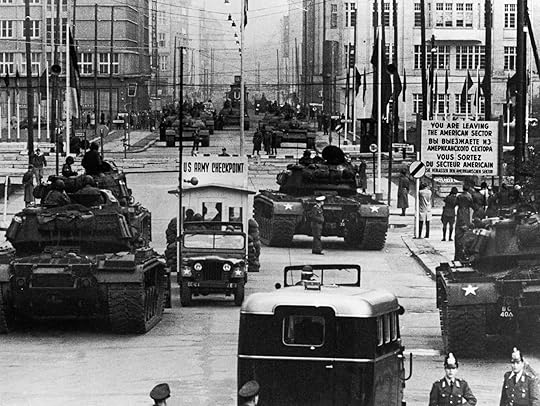
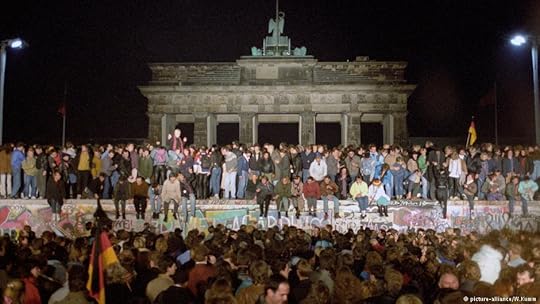
On November 9, 1989, the Berlin Wall fell, setting off a fast march to German reunification. But it was not a singular event, arising out of the blue. Because the reform movement launched by Mikhail Gorbachev in Moscow four years earlier had triggered a series of increasingly assertive protest movements throughout Communist-run Eastern Europe. And for many months in 1989, East Germans, tens of thousands at a time, had taken to the streets. With fury and self-confidence rising, they denounced the ruling Socialist Unity Party and its enforcement arm, the Ministerium für Staatsicherheit, or Ministry of State Security, known as the Stasi. And Henry Porter’s epic novel of espionage, Brandenburg Gate, plays out in the shadow of these momentous events before the Wall fell.
A CONVOLUTED OPERATION ENGAGING SIX SPY SERVICES
It’s September 1989. Dr. Rudi Rosenharte is a world-class art historian and a former foreign agent for the Stasi. The last thing he wants in his academically circumscribed life is to risk everything across the border—but that’s precisely what the Stasi now insists he do. They are forcing him to travel to Trieste to rendezvous with his former lover, Annalise Schering, then a secretary at NATO headquarters in Brussels. And to ensure that he follows through, they’ve imprisoned his twin brother and his wife and placed their children under the care of the state.
Rudi has no choice. His brother is ill and urgently needs care. He must do as they say. But there’s a catch. Annalise Schering is dead. He knows it because he saw her lying in a bathtub in bloody water on his last assignment. For some reason, though, he kept her death secret from the Stasi.
Clueless how he’ll win his brother’s release, he arrives in Trieste involved in a complex espionage operation mounted jointly by MI6 and the CIA. And when two months later the action reaches its climax, three other intelligence agencies will be have been involved as well in addition to the Stasi. West Germany’s BND. Poland’s SB. And the KGB. Somehow, frequently risking his life, Rudi must maneuver through this thicket of clashing agendas. And in the process he will learn long-hidden truths about his life.
EVEN TOTALITARIAN POWER HAS ITS LIMIT
Porter does a stellar job portraying the mounting turmoil within the Stasi during its final two months in power. He takes us behind the scenes of what at the time was known as one of the world’s most effective intelligence agencies. With 80,000 employees and one in every seven East Germans as informants, the Stasi was the tail that wagged the government’s dog. But even this seemingly absolute power wasn’t enough to resist the fast-growing anger of the East German people as they saw the reins loosening elsewhere in Eastern Europe and the Soviet Union. And in the end, when half a million people gathered to protest in Berlin on November 9, 1989, the government fell with the Wall. Will Rudi Rosenharte live to see that day? Read the book.
ABOUT THE AUTHOR
Henry Porter is an English journalist, author, and political activist. For long periods, he was the editor of the British version of Vanity Fair and a columnist for The Observer newspaper. But he has also won awards for his thrillers, of which he has published eight to date. Porter was born in 1953 and was educated at the University of Manchester.