

What do you think?

Deep Politics and the Death of JFK
Peter Dale Scott's meticulously documented investigation uncovers the secrets surrounding John F. Kennedy's assassination. Offering a wholly new perspective―that JFK's death was not just an isolated case, but rather a symptom of hidden processes―Scott examines the deep politics of early 1960s American international and domestic policies.
Scott offers a disturbing analysis of the events surrounding Kennedy's death, and of the "structural defects" within the American government that allowed such a crime to occur and to go unpunished. In nuanced readings of both previously examined and newly available materials, he finds ample reason to doubt the prevailing interpretations of the assassination. He questions the lone assassin theory and the investigations undertaken by the House Committee on Assassinations, and unearths new connections between Oswald, Ruby, and corporate and law enforcement forces.
Revisiting the controversy popularized in Oliver Stone's movie JFK, Scott probes the link between Kennedy's assassination and the escalation of the U.S. commitment in Vietnam that followed two days later. He contends that Kennedy's plans to withdraw troops from Vietnam―offensive to a powerful anti-Kennedy military and political coalition―were secretly annulled when Johnson came to power. The split between JFK and his Joint Chiefs of Staff, and the collaboration between Army Intelligence and the Dallas Police in 1963, are two of the several missing pieces Scott adds to the puzzle of who killed Kennedy and why.
Scott presses for a new investigation of the Kennedy assassination, not as an external conspiracy but as a power shift within the subterranean world of American politics. Deep Politics and the Death of JFK shatters our notions of one of the central events of the twentieth century.
Scott offers a disturbing analysis of the events surrounding Kennedy's death, and of the "structural defects" within the American government that allowed such a crime to occur and to go unpunished. In nuanced readings of both previously examined and newly available materials, he finds ample reason to doubt the prevailing interpretations of the assassination. He questions the lone assassin theory and the investigations undertaken by the House Committee on Assassinations, and unearths new connections between Oswald, Ruby, and corporate and law enforcement forces.
Revisiting the controversy popularized in Oliver Stone's movie JFK, Scott probes the link between Kennedy's assassination and the escalation of the U.S. commitment in Vietnam that followed two days later. He contends that Kennedy's plans to withdraw troops from Vietnam―offensive to a powerful anti-Kennedy military and political coalition―were secretly annulled when Johnson came to power. The split between JFK and his Joint Chiefs of Staff, and the collaboration between Army Intelligence and the Dallas Police in 1963, are two of the several missing pieces Scott adds to the puzzle of who killed Kennedy and why.
Scott presses for a new investigation of the Kennedy assassination, not as an external conspiracy but as a power shift within the subterranean world of American politics. Deep Politics and the Death of JFK shatters our notions of one of the central events of the twentieth century.
442 pages, Paperback
First published January 1, 1993
Ratings & Reviews
Friends & Following
Create a free account to discover what your friends think of this book!
Community Reviews
Displaying 1 - 25 of 25 reviews

July 25, 2011
A key foundational text of 20th-century American history. It succeeds in part because it wisely ignores the "Who *really* shot JFK, if it wasn't Oswald?" minutiae that bogs down most works on the subject. It is a meticulously documented study of the underlying bureaucracies and criminal enterprises that drive policy decisions by the U.S. government to this very day, one of whose collateral victims was our 35th President.
March 1, 2015
I found this book to be extraordinary. This despite the fact that it can be a difficult book to follow, due to the exhaustive detail that Prof. Scott gives about the overwhelming evidence for a cover-up following JFK’s death. (This is something the book has in common with Thy Will Be Done: The Conquest of the Amazon: Nelson Rockefeller and Evangelism in the Age of Oil by Gerard Colby and Charlotte Bennett, which lays out all of the connections between Standard Oil, the Wycliffe Bible Institute, Citibank, State Department, CIA, foreign governments, etc. in the attempt to fight the nationalization of oil production in Latin America and Asia.) Readers who are not already extremely well-versed in the details of the JFK assassination could find these parts of the book difficult. More important, however, is Prof. Scott’s thesis: the murder of JFK, and the behavior of the government about his murder, points to overwhelming evidence of complicity, even cooperation, among federal law enforcement agencies, local law enforcement, organized crime, and politicians at all levels of our government.
Prof. Scott notes that he will not, through this book, try to solve the mystery of who killed the President. Surprisingly, there is actually a bigger question to be answered: what kind of politics explains the lack of resolve by multiple government committees to solve a crime of this magnitude? The author’s term, “deep politics,” will be part of this explanation. The detail the author provides about names, dates, documents, government reports, testimony before Congress, and many other sources serves to demonstrate his mastery of the subject and to show that, in all likelihood, the confusing nature of the President’s murder is in part a deliberate attempt to divert investigations (as half-hearted as they were), mask meaningful connections among those associated with the crime, and stall for time.
Major points in the book: the image of “the Mafia” or “La Cosa Nostra” represents a kind of fallback position for the FBI, which for years denied the existence of any such organization. This denial works in two ways: by denying that there exists an organization made up of Sicilians that controls much of the drug traffic into the U.S. following WWII, the FBI could cover up a more complex truth – the existence of a multi-ethnic web of corruption, adapting itself to and corrupting local politics and law enforcement throughout the country. Scott shows that this web had extended its influence so far that it could affect U.S. foreign policy.
How so? Sicilian Mafia members, some of whom were repatriated to Sicily following World War II, were used as intelligence assets there in fighting communism. The FBI and CIA, since World War II, protected certain traffickers, who would turn in smaller and/or competing traffickers in return for favors or protection from the government; the evidence that Ruby had been an informant for the FBI is overwhelming. (At a minimum, the attempt to hide Ruby’s Mob connections was clear; even the Special House Committee on Assassinations conceded that the Warren Commission had this kind of omission.) Mob interests in Cuba were huge before Castro’s revolution, and the Mob shared the FBI’s loathing of communism for this reason, if nothing else.
Scott theorizes a two-part cover-up: 1) advancing of a theory of a Communist and foreign-supported attempt to murder the President, stemming from Cuba and/or the Soviet-Union; 2) advancing of the theory that Oswald acted alone, that is, a refutation of the first, bogus theory that is similarly bogus, but that could serve as a safe position for the Warren Commission to support in order to avoid a potential armed and maybe nuclear conflict with the USSR. Both of these theories divert attention away from the deep ties between organized crime, federal law enforcement, local politicians nationwide, far-right political groups, and at least in the 60s and 70s, organized labor.
Scott lays out a preponderance of evidence to show that JFK’s murder was almost certainly supported by a machinery of those with right-wing beliefs that wanted more aggressive action by the President against communism, particularly in Vietnam, as well as those defense contractors who would benefit from the increased military spending this would require. He points out other moments in History when presidents that have tried to move towards a less aggressive foreign policy have found fierce resistance from powerful interests in the military-industrial complex and national intelligence. He cites Nixon and Reagan as two other examples, with the former’s détente with China and the latter’s signing of arms treaties with the USSR.
Regarding Oswald himself, Scott presents the evidence that Oswald was working for the federal government, attempting to infiltrate groups like the Fair Play for Cuba Committee, a pro-Castro group, while remaining in contact with at least 5 members of the CIA-backed Cuban Revolutionary Council (81). Oswald publically disputed with and was fined for scuffling with Carlos Bringuier (of the anti-Castro group Directorio Revolucionario Estudiantil) in New Orleans in 1963. Oswald also appeared on a radio program “debate” with Bringuier in which Oswald revealed himself to be a Marxist; these actions would have served as creation of a “legend” (a false background reputation created for intelligence operations) of Oswald as a leftist. Later, the revelation that Oswald had gone to the Soviet Union was used to portray him as a leftist radical, when what was more likely was that Oswald was part of an intelligence program made up of “defectors” to the USSR who would work as double agents for the U.S.
Scott makes clear that it may be impossible to prove definitely which people (plural) fired at JFK that day. But the overwhelming evidence of a coverup shows that multiple interests combined to mount the forces that led to his death.
Prof. Scott notes that he will not, through this book, try to solve the mystery of who killed the President. Surprisingly, there is actually a bigger question to be answered: what kind of politics explains the lack of resolve by multiple government committees to solve a crime of this magnitude? The author’s term, “deep politics,” will be part of this explanation. The detail the author provides about names, dates, documents, government reports, testimony before Congress, and many other sources serves to demonstrate his mastery of the subject and to show that, in all likelihood, the confusing nature of the President’s murder is in part a deliberate attempt to divert investigations (as half-hearted as they were), mask meaningful connections among those associated with the crime, and stall for time.
Major points in the book: the image of “the Mafia” or “La Cosa Nostra” represents a kind of fallback position for the FBI, which for years denied the existence of any such organization. This denial works in two ways: by denying that there exists an organization made up of Sicilians that controls much of the drug traffic into the U.S. following WWII, the FBI could cover up a more complex truth – the existence of a multi-ethnic web of corruption, adapting itself to and corrupting local politics and law enforcement throughout the country. Scott shows that this web had extended its influence so far that it could affect U.S. foreign policy.
How so? Sicilian Mafia members, some of whom were repatriated to Sicily following World War II, were used as intelligence assets there in fighting communism. The FBI and CIA, since World War II, protected certain traffickers, who would turn in smaller and/or competing traffickers in return for favors or protection from the government; the evidence that Ruby had been an informant for the FBI is overwhelming. (At a minimum, the attempt to hide Ruby’s Mob connections was clear; even the Special House Committee on Assassinations conceded that the Warren Commission had this kind of omission.) Mob interests in Cuba were huge before Castro’s revolution, and the Mob shared the FBI’s loathing of communism for this reason, if nothing else.
Scott theorizes a two-part cover-up: 1) advancing of a theory of a Communist and foreign-supported attempt to murder the President, stemming from Cuba and/or the Soviet-Union; 2) advancing of the theory that Oswald acted alone, that is, a refutation of the first, bogus theory that is similarly bogus, but that could serve as a safe position for the Warren Commission to support in order to avoid a potential armed and maybe nuclear conflict with the USSR. Both of these theories divert attention away from the deep ties between organized crime, federal law enforcement, local politicians nationwide, far-right political groups, and at least in the 60s and 70s, organized labor.
Scott lays out a preponderance of evidence to show that JFK’s murder was almost certainly supported by a machinery of those with right-wing beliefs that wanted more aggressive action by the President against communism, particularly in Vietnam, as well as those defense contractors who would benefit from the increased military spending this would require. He points out other moments in History when presidents that have tried to move towards a less aggressive foreign policy have found fierce resistance from powerful interests in the military-industrial complex and national intelligence. He cites Nixon and Reagan as two other examples, with the former’s détente with China and the latter’s signing of arms treaties with the USSR.
Regarding Oswald himself, Scott presents the evidence that Oswald was working for the federal government, attempting to infiltrate groups like the Fair Play for Cuba Committee, a pro-Castro group, while remaining in contact with at least 5 members of the CIA-backed Cuban Revolutionary Council (81). Oswald publically disputed with and was fined for scuffling with Carlos Bringuier (of the anti-Castro group Directorio Revolucionario Estudiantil) in New Orleans in 1963. Oswald also appeared on a radio program “debate” with Bringuier in which Oswald revealed himself to be a Marxist; these actions would have served as creation of a “legend” (a false background reputation created for intelligence operations) of Oswald as a leftist. Later, the revelation that Oswald had gone to the Soviet Union was used to portray him as a leftist radical, when what was more likely was that Oswald was part of an intelligence program made up of “defectors” to the USSR who would work as double agents for the U.S.
Scott makes clear that it may be impossible to prove definitely which people (plural) fired at JFK that day. But the overwhelming evidence of a coverup shows that multiple interests combined to mount the forces that led to his death.
January 27, 2009
The book focuses on the intricate political circumstances surrounding Kennedy's assassination as opposed to the event itself. Consequently, it avoids the bickering over the typical points (the autopsy, the magic bullet, etc.) and transcends the easy criticisms that conspiratorial and cabal-based theories suffer. The book is incredibly dense, but necessarily so; Scott is careful to make the distance between facts short and avoid specious inferences or arguments. The early distinction between "deep politics" and "conspiracy" is good indicator of the quality of Scott's reasoning and methodology. By far, the best study of the assassination I've seen.
March 31, 2011
A masterwork in the search for truth about the JFK Assassination.

July 15, 2012
'Deep Politics and the Death of JFK' (1993) is one of the more challenging publications of this genre. Peter Dale Scott writes a rapid fire analysis of American twentieth century politics and power structures, that links covert intelligence agencies, a criminal underworld, military and big business forces that operate together beneath the democratic system.
There are no smoking guns in Dealey Plaza here, no Jack Lawrence in the storm drain. Rather Scott provides us with a deep tangled web that ensures truths are hidden for 'national security reasons'.
Scott asks, "to what extent has our visible political establishment become one regulated by forces operating outside the constitutional process, rather than through it?"
If I stray from this authors viewpoint, I find that he quibbles in his view that November '63 was not a coup d'etat. In accepting only a fraction of Lifton, I do not see the murder of the 35th president as anything other than the most cynical covert op and cover up.
'Deep Politics' is a steep climb, but worth the effort, no matter how repugnant and disturbing is PDS's historical journey.
There are no smoking guns in Dealey Plaza here, no Jack Lawrence in the storm drain. Rather Scott provides us with a deep tangled web that ensures truths are hidden for 'national security reasons'.
Scott asks, "to what extent has our visible political establishment become one regulated by forces operating outside the constitutional process, rather than through it?"
If I stray from this authors viewpoint, I find that he quibbles in his view that November '63 was not a coup d'etat. In accepting only a fraction of Lifton, I do not see the murder of the 35th president as anything other than the most cynical covert op and cover up.
'Deep Politics' is a steep climb, but worth the effort, no matter how repugnant and disturbing is PDS's historical journey.

December 8, 2016
This is like an extreme dot-to-dot book. At the start, you might be able to discern a vague outline of the thing represented. As you proceed your attention is on the multitude of numbers that lead from one part of the design to the other but now and again you pause to check whether the image has begun to make sense. The more numbers you've connected the more likely it is that you can guess where the next number will be. In a sense the end result is beside the point because what matters most is the effort and enjoyment of getting there. On the other hand, there's a deep satisfaction in completing a job as it was meant to be completed. When you connect the final numbers only to find that there was a horrible mistake in the printing and what you thought was the Eiffel Tower has turned out to be the Parachute Jump on Coney Island it's natural to feel a pang of disappointment.
It's a very good book in some ways and I admire the author's ability to process such a vast quantity of information (all of it fascinating) but in the end, although it presents a host of connections that might or might not mean something with respect to the death of JFK, it doesn't draw a clear enough picture of how those connections - many of them suggestive - or, more to the point, which ones, could have cooperated in leading to the assassination and its aftermath. There were moments when the author cast a line and I knew there was nothing to be caught which left me wondering how often he did it without my noticing. Because there's such a surfeit of information one can't always tell if it hides a truth, an untruth, or nothing at all.
Short version: Read it, it's useful and interesting and somewhat mind-boggling. Also, there are bananas. His distinction between 'conspiracy' and 'deep politics' frames the argument in a way that should be applied everywhere, but then I knew that already.
It's a very good book in some ways and I admire the author's ability to process such a vast quantity of information (all of it fascinating) but in the end, although it presents a host of connections that might or might not mean something with respect to the death of JFK, it doesn't draw a clear enough picture of how those connections - many of them suggestive - or, more to the point, which ones, could have cooperated in leading to the assassination and its aftermath. There were moments when the author cast a line and I knew there was nothing to be caught which left me wondering how often he did it without my noticing. Because there's such a surfeit of information one can't always tell if it hides a truth, an untruth, or nothing at all.
Short version: Read it, it's useful and interesting and somewhat mind-boggling. Also, there are bananas. His distinction between 'conspiracy' and 'deep politics' frames the argument in a way that should be applied everywhere, but then I knew that already.
February 2, 2025
A difficult read, owing to the subject matter and the sheer density of information contained. His central chilling premise is that JFK's assassination was not an aberration but business as usual for the American political system leading us to his coined term "Deep Politics."
Deep Politics references the symbiosis of the business, organized crime and intelligence community that are as much a part of our political system/ political economy as any branch of government or above board lobbying organization.
He does not end his exploration of these shadowy forces surrounding Kennedy with an explicit hypothesis as to who was on the grassy knoll, so to speak, but instead drills down with such profound focus into the minutia of Warren Comission and the House Comittee on Assassinations to find a "negative template" or who / what is missing from the official state sanctioned accounts. There is a lot.
Essential reading.
Deep Politics references the symbiosis of the business, organized crime and intelligence community that are as much a part of our political system/ political economy as any branch of government or above board lobbying organization.
He does not end his exploration of these shadowy forces surrounding Kennedy with an explicit hypothesis as to who was on the grassy knoll, so to speak, but instead drills down with such profound focus into the minutia of Warren Comission and the House Comittee on Assassinations to find a "negative template" or who / what is missing from the official state sanctioned accounts. There is a lot.
Essential reading.

November 14, 2010
There is a wealth of material here, but it is not fully digested, and it is not always easy to see what Scott (who himself holds back from conclusions) thinks is relevant and what he thinks tangential to the main issue. There are also occasional forays into theory -- which I find off-putting -- I have a VERY low opinion of most theorizing -- which comes, I suppose, from having spent a lifetime reading first-rate philosophers -- and there are plenty hints that he is attracted to fringe movements that themselves are dubious. There was a single reference to freemasonry that I found quite troubling; he is now into 9/11 conspiracy stuff; and there is more than one echo of Carl Ogelsby's Yankee-Cowboy War theory..., which I find/found unpersuasive. That said -- there is a wealth of material here, and the facts are carefully checked and double-checked, it seems -- and much of it is true and undeniable. Still - when this far out on a limb, you must be absolutely scrupulous - and even a hint of weakness in structure or method is fatal.
For anyone interested in pursuing this topic, I would suggest the following -- in the following order:
http://www.goodreads.com/book/show/56...
http://www.goodreads.com/book/show/16...
http://www.goodreads.com/review/show/...
And then, when you has thus gotten over your prejudices and assumptions about this issue ('that yeah, it's murky, but we'll never know', 'that I don't believe in conspiracies', 'that didn't that guy with the moustache on Larry King write a book that disproved all this?', 'that there are a lot of nuts on that side' -- true enough -- etc., etc), then you should actually READ Jim Garrison's book(s), because Garrison was (despite his many weaknesses -- girls, gabbing, drink) one of the few incorruptible men in American public office over the past many years, and has long been a hero of mine. He was not a crank or crackpot, as the media has tarred him -- just a man unlucky enough to have seen what others refused (and still refuse) to see: http://www.goodreads.com/book/show/16...
As to Clay Shaw, who was the target of Garrison's ill-starred probe, one should remember that it was Ralph Schoenman, Bertrand Russell's secretary, who helped to tip Garrison off to the connection between Shaw, il Centro mondiale commerciale, post WWII Italy -- and all that.
... and (speaking of Italy) I have STILL not met anyone who has been able or willing to explain to my dim mind why James Angleton named his early poetry journal "Furioso"...
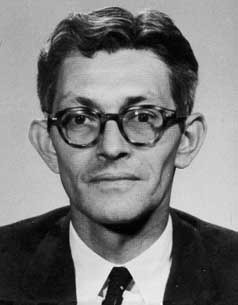
... Angleton, who apparently thought during the Nixon years that Henry Kissinger was a Soviet spy.
For anyone interested in pursuing this topic, I would suggest the following -- in the following order:
http://www.goodreads.com/book/show/56...
http://www.goodreads.com/book/show/16...
http://www.goodreads.com/review/show/...
And then, when you has thus gotten over your prejudices and assumptions about this issue ('that yeah, it's murky, but we'll never know', 'that I don't believe in conspiracies', 'that didn't that guy with the moustache on Larry King write a book that disproved all this?', 'that there are a lot of nuts on that side' -- true enough -- etc., etc), then you should actually READ Jim Garrison's book(s), because Garrison was (despite his many weaknesses -- girls, gabbing, drink) one of the few incorruptible men in American public office over the past many years, and has long been a hero of mine. He was not a crank or crackpot, as the media has tarred him -- just a man unlucky enough to have seen what others refused (and still refuse) to see: http://www.goodreads.com/book/show/16...
As to Clay Shaw, who was the target of Garrison's ill-starred probe, one should remember that it was Ralph Schoenman, Bertrand Russell's secretary, who helped to tip Garrison off to the connection between Shaw, il Centro mondiale commerciale, post WWII Italy -- and all that.
... and (speaking of Italy) I have STILL not met anyone who has been able or willing to explain to my dim mind why James Angleton named his early poetry journal "Furioso"...
... Angleton, who apparently thought during the Nixon years that Henry Kissinger was a Soviet spy.
August 4, 2022
This is probably the "best" (i.e., most secular, scholarly, venerable, etc.) book written on the deficiencies in the establishment narrative of the JFK assassination. PDS is an ex-Canadian diplomat turned professor at one of the nation's most important and respected universities, and the book is even published by the University of California Press; it's difficult to discredit this tome and its author by the usual means, which is why I think it's likely the best one to recommend to people who claim that they are "skeptical."
The last third of the book is the most readable and would probably do the most to convince the unconvinced that there were in fact unseen forces at play in Dealey Plaza after all; the bit on the NSAMs, LBJ, and the military establishment is also of note in that it illuminates one of the more important motives (of many) in getting rid of Jack, and highlights the (resultant?) shift in policy following formal succession. The middle section on Ruby and organized crime however is frankly just too dense and ends up being a bit of a slog, despite the value of the information. There are simply too many names (of which Ruby is only one) tied up in the morass of intl. drug-trafficking, murder, prostitution, gambling and gunrunning to keep a firm hold on the details of the gov-mob alliance narrative being constructed by Mr. Scott; this impenetrable density however I think only serves to bolster his argument.
I also want to point out the brilliantly designed dust jacket on this book: elegant formatting, great use of color, impeccable font choices. The purple-blue-green gradient checkerboard close-up of Kennedy works almost shockingly well.
The last third of the book is the most readable and would probably do the most to convince the unconvinced that there were in fact unseen forces at play in Dealey Plaza after all; the bit on the NSAMs, LBJ, and the military establishment is also of note in that it illuminates one of the more important motives (of many) in getting rid of Jack, and highlights the (resultant?) shift in policy following formal succession. The middle section on Ruby and organized crime however is frankly just too dense and ends up being a bit of a slog, despite the value of the information. There are simply too many names (of which Ruby is only one) tied up in the morass of intl. drug-trafficking, murder, prostitution, gambling and gunrunning to keep a firm hold on the details of the gov-mob alliance narrative being constructed by Mr. Scott; this impenetrable density however I think only serves to bolster his argument.
I also want to point out the brilliantly designed dust jacket on this book: elegant formatting, great use of color, impeccable font choices. The purple-blue-green gradient checkerboard close-up of Kennedy works almost shockingly well.
December 10, 2012
This clear, well-written and strongly argued book sets out to provide a convincing motive for the murder of JFK. It succeeds. The Warren Commission couldn't find a substantive motive, so dismissed the need for anything but a cursory piece of pop psychology. Peter Dale Scott delves back into the records, the history and the mood of the time to build a case for a coup d'etat. He makes the point with great conviction; to kill a president is not a trivial matter, one is, after all, attempting to change history. The scope of this work makes the notion of a 'lone screwball' with a mail order rifle, acting on a whim, seem as insane as it really is. Read this book.

April 26, 2014
A highly disturbing look at the deep forces at work behind our democracy. While the thesis of the book is incredibly compelling I did find my head spinning a bit due to the sheer number of characters introduced and briefly explored. Definitely worth the time for a close and focused read.
August 4, 2008
not your usual JFK assassination conspiracy book...much
more complicated...
more complicated...

August 18, 2008
Great information, just so damn academic it's difficult to get through

February 26, 2016
An eye opening book
January 6, 2022
'Deep Politics and the Death of JFK' is another book that came to me by way of the TrueAnon podcast. The Podcast did six episodes on JFK which you can find starting with part 1 here . TrueAnon has also extensively discussed 9/11 which references Scott and had him on for Part 6 . After constantly hearing about Scott and his writing I wanted to check it out for myself. For someone that likes to read physical copies of books, this was no easy task. There are not many copies of Scott's work, so this ended up being a tough find and a little expensive. Luckily I was able to snag a pristine edition off of eBay.
In my opinion Deep Politics and the Death of JFK is a great book. That being said it is anything but an easy read. There are two reasons I found this work to be tough. The first is that it is so meticulously researched that it is almost impossible to keep everything straight. There are so many names and places referenced it is hard to track. You will need to have a good understanding of 20th century geopolitics before coming into this, otherwise you will not make it. The second reason this is a tough read is that if you are to believe Scott's points, you will have to concede some uncomfortable viewpoints. For example, you will have to concede that in multiple shapes and forms that government is not acting in good faith, i.e. intelligence working with organized crime.
Other reviews have pointed this out, but it is important to note that this book is not concerned with who killed JFK. To go down that road is a waste of time. The focus of this book is what structures in society would produce a situation where the president could be killed and a coverup could be conducted.
I am particularly intrigued by Scott's writing about how Mcarthyism, JFK, Watergate and Iran-Contra all share similarities. Also, I find Scott's idea that the position of the presidency is more like a client than an actual position of power, to be novel and fascinating.
I've thought about how reading something like this makes me appear to be a tin foil hat guy. I think I've made my peace with it. There's plenty in here to work with that has given me a better understanding of how American power works, and I think that is worth the cost of entry.
In my opinion Deep Politics and the Death of JFK is a great book. That being said it is anything but an easy read. There are two reasons I found this work to be tough. The first is that it is so meticulously researched that it is almost impossible to keep everything straight. There are so many names and places referenced it is hard to track. You will need to have a good understanding of 20th century geopolitics before coming into this, otherwise you will not make it. The second reason this is a tough read is that if you are to believe Scott's points, you will have to concede some uncomfortable viewpoints. For example, you will have to concede that in multiple shapes and forms that government is not acting in good faith, i.e. intelligence working with organized crime.
Other reviews have pointed this out, but it is important to note that this book is not concerned with who killed JFK. To go down that road is a waste of time. The focus of this book is what structures in society would produce a situation where the president could be killed and a coverup could be conducted.
I am particularly intrigued by Scott's writing about how Mcarthyism, JFK, Watergate and Iran-Contra all share similarities. Also, I find Scott's idea that the position of the presidency is more like a client than an actual position of power, to be novel and fascinating.
I've thought about how reading something like this makes me appear to be a tin foil hat guy. I think I've made my peace with it. There's plenty in here to work with that has given me a better understanding of how American power works, and I think that is worth the cost of entry.
December 23, 2020
This is by far the best JFK book I have read, tangentially in the conspiracy genre. It is meticulously researched and poses the question "how could a conspiracy been orchestrated" rather than who orchestrated the conspiracy. The most intriguing fact pattern presented by the author concerned internal security / military memos written by JFK several days before his assassination and a follow up memo written by LBJ several days after the assassination regarding troop commitment in Vietnam. Basically, JFK was moving toward reducing troops while LBJ desired escalation. The rest is a matter of history. Of particular note regarding this fact pattern was that the author did not have the benefit of declassified Gulf of Tonkin information, which marked the formal U.S. involvement in the Vietnam conflict.
January 20, 2022
Technically 4.5.
You're crazy for this one, Peter Dale Scott.
Inarguably the most meticulously researched investigation into the Kennedy assassination I've encountered- almost to a fault. I think Scott is invariably correct in shifting the focus from finding a definitive answer for which person or person(s) killed JFK, to the more important questions of systemic corruption, documenting a complex web of interdependencies between intelligence agencies, organized crime, military units, and local political structures, and ultimately considering what kind of system we live in which allows for such an event to happen. His shock (?) at the idea that the U.S. does not function as a democracy is almost endearing to me, in a naïve way.
You're crazy for this one, Peter Dale Scott.
Inarguably the most meticulously researched investigation into the Kennedy assassination I've encountered- almost to a fault. I think Scott is invariably correct in shifting the focus from finding a definitive answer for which person or person(s) killed JFK, to the more important questions of systemic corruption, documenting a complex web of interdependencies between intelligence agencies, organized crime, military units, and local political structures, and ultimately considering what kind of system we live in which allows for such an event to happen. His shock (?) at the idea that the U.S. does not function as a democracy is almost endearing to me, in a naïve way.

October 30, 2021
What a fascinating read. This is one of those books that transcends the category of "history" to encompass "sociology." Scott has done an intricately detailed analysis of American society to explain how and why Kennedy was assassinated. Most people tend to think in terms of formalisms, institutions, official elites, etc. But Scott makes it clear that this is too simplistic. In fact, the agents of the assassination should not be viewed as exclusively "internal" or "external" to the system, but rather a commingling of the two, reflecting the normal state of affairs in America, where crime and corruption are actually intrinsic to the system itself. Brilliantly done.

October 14, 2023
put some notes together on what I thought were the most germane points for reference
https://aonchiallach.github.io/posts/...
Scott doesn't advance a single interpretation or come down on one side or the other so much as put together a number of details which together indicate that there are, to put it mildly, very serious questions the established narrative (whatever we take that to mean) ignores.
https://aonchiallach.github.io/posts/...
Scott doesn't advance a single interpretation or come down on one side or the other so much as put together a number of details which together indicate that there are, to put it mildly, very serious questions the established narrative (whatever we take that to mean) ignores.
June 13, 2024
Scott seems to know almost everything there is to know about intelligence in the 50's, 60's and 70's but it is to the detriment of this book. We are left to fill in the gaps, to make our own conclusions, while standing under a waterfall of suspicious information presented without conclusion. Still, this book is incredibly helpful if you, like me, are trying to put together a mental map of the American mid-century.
October 25, 2024
Banger
April 2, 2025
An indictment of the deep state and the establishment. Prophetic and eerily relevant today.
Want to Read
August 16, 20252nd book (magnum opus)

July 10, 2016
Substantive and persuasive. This was second time reading this well written book.
Displaying 1 - 25 of 25 reviews