

What do you think?

Die Hard #1
Die Hard
Traveling to Los Angeles for Christmas, Joe Leland, a veteran cop and former war hero, stumbles upon a sensational terrorist crime in progress and is forced to quickly make hard life or death decisions
261 pages, Mass Market Paperback
First published January 1, 1979
About the author
Roderick Thorp
29 books75 followersRoderick Mayne Thorp, Jr. was an American novelist specializing mainly in crime novels.
As a young college graduate, Thorp worked at a detective agency owned by his father. He would later teach literature and lecture on creative writing at schools and universities in New Jersey and California, and also wrote articles for newspapers and magazines.
Two of his best known novels were adapted into popular films: his 1966 novel The Detective was made into a 1968 film of the same name, starring Frank Sinatra as Detective Joe Leland, and his 1979 sequel to The Detective, Nothing Lasts Forever, was filmed in 1988 as Die Hard, starring Bruce Willis. Though Die Hard was relatively faithful to Nothing Lasts Forever, it was not made as a sequel to the film version of The Detective. Two other Thorp novels, Rainbow Drive and Devlin, were adapted into TV movies.
Thorp died of a heart attack in Oxnard, California.
As a young college graduate, Thorp worked at a detective agency owned by his father. He would later teach literature and lecture on creative writing at schools and universities in New Jersey and California, and also wrote articles for newspapers and magazines.
Two of his best known novels were adapted into popular films: his 1966 novel The Detective was made into a 1968 film of the same name, starring Frank Sinatra as Detective Joe Leland, and his 1979 sequel to The Detective, Nothing Lasts Forever, was filmed in 1988 as Die Hard, starring Bruce Willis. Though Die Hard was relatively faithful to Nothing Lasts Forever, it was not made as a sequel to the film version of The Detective. Two other Thorp novels, Rainbow Drive and Devlin, were adapted into TV movies.
Thorp died of a heart attack in Oxnard, California.
Ratings & Reviews
Friends & Following
Create a free account to discover what your friends think of this book!
Community Reviews
Displaying 1 - 30 of 539 reviews

January 14, 2017
Honestly, and with no shame, I knew that my opinion of this book would be tainted by close to three decades worth of the greatest action movie ever - Die Hard! Usually the book is better than the movie, but this movie is better (as expected) so . . . that's just how it is!
Moving on . . .
As an action book, this was decent. It takes place in the late 70s and in some ways it had aged well and in some ways it hasn't. With our modern technology, some people may have a hard time enjoying the CB communication that drives this book. Also, he spends a lot of time lamenting about some of the terrorists being females. I don't think that would be taken as much into consideration anymore - and it isn't really necessary for it to be. If they are terrorists, they are terrorists and male and female shouldn't really matter (it's interesting that they made all the terrorists male in the movie - were they still worried about this kind of controversy in the 80s?)
The writing seemed a bit choppy to me and the general progress of the storyline a bit disjointed. Perhaps this was done to reflect the urgency and chaos of the situation, but it just ended up occasionally throwing my focus for a loop.
Book to movie: a surprising amount of key events and dialogue made it from the book into the movie. Sadly, there was no yippie-kai-yay . . .
Summary - check it out if you are a die hard Die Hard fan (yup, that just came to me - you're welcome). If you are looking for an awesome action book, chances are you may leave this one only slightly satisfied.
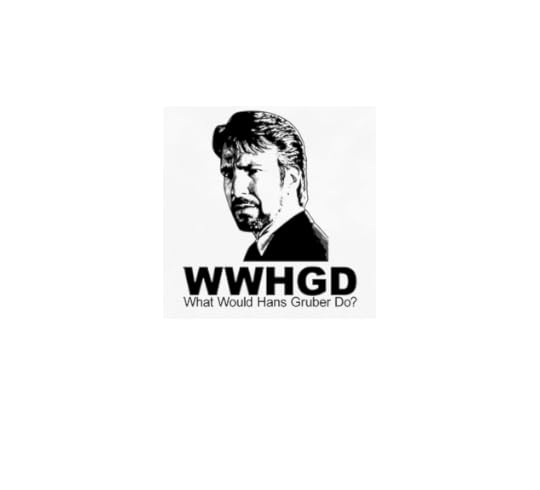
Interestingly, I just realized I finished this on the one year anniversary of Alan Rickman's passing - Hans Gruber is much better than Tony Gruber any day!
Moving on . . .
As an action book, this was decent. It takes place in the late 70s and in some ways it had aged well and in some ways it hasn't. With our modern technology, some people may have a hard time enjoying the CB communication that drives this book. Also, he spends a lot of time lamenting about some of the terrorists being females. I don't think that would be taken as much into consideration anymore - and it isn't really necessary for it to be. If they are terrorists, they are terrorists and male and female shouldn't really matter (it's interesting that they made all the terrorists male in the movie - were they still worried about this kind of controversy in the 80s?)
The writing seemed a bit choppy to me and the general progress of the storyline a bit disjointed. Perhaps this was done to reflect the urgency and chaos of the situation, but it just ended up occasionally throwing my focus for a loop.
Book to movie: a surprising amount of key events and dialogue made it from the book into the movie. Sadly, there was no yippie-kai-yay . . .
Summary - check it out if you are a die hard Die Hard fan (yup, that just came to me - you're welcome). If you are looking for an awesome action book, chances are you may leave this one only slightly satisfied.
Interestingly, I just realized I finished this on the one year anniversary of Alan Rickman's passing - Hans Gruber is much better than Tony Gruber any day!

November 27, 2011
Treasure of the Rubbermaids 14: Yippee kai yay, Mr. Falcon!
The on-going discoveries of priceless books and comics found in a stack of Rubbermaid containers previously stored and forgotten at my parent’s house and untouched for almost 20 years. Thanks to my father dumping them back on me, I now spend my spare time unearthing lost treasures from their plastic depths.
Gather around you whippersnappers and listen closely as Grandpa Kemper tells you another fascinating tale from his days of yore.
Many, many moons ago back in the late 1980s I once went to the movies with some friends and they showed a trailer for a film called Die Hard, and we were all very confused. It looked pretty cool, but why was the guy from Moonlighting fighting terrorists? Was it supposed to be serious or funny? It looked like a hard core action movie but Willis was cracking jokes, too. Was Arnold Schwarzenegger too busy for this one?
As hard as it is to believe now, back when he still had hair and long before he had helped that kid who saw dead people or chased 12 monkeys through time, Bruce Willis was seen by the viewing public as the kind of guy who would play the lead in romantic comedies and definitely not the dude who you’d see firing machine guns at villains. But some bright Hollywood type cast Willis in Die Hard after all the other action heroes of the day turned it down and the rest is history.
The film was based on this book originally titled Nothing Lasts Forever. Joe Leland* (not John McClane) is a middle aged ex-cop who now works as a security consultant with an emphasis on anti-terrorism tactics who goes to visit his daughter Steffie in L.A. After arriving at Steffie’s office in the middle of a Christmas Eve party Joe goes off to wash up and make a phone call when the building is invaded by 12 terrorists who take Steffie and her co-workers hostage. Joe manages to hide, but he’s trapped in the high rise and has to start fighting the bad guys to save his daughter and survive.
*(This book is actually a sequel to another Roderick Thorp novel called The Detective which was also turned into a film starring Frank Sinatra in 1968. The Interwebs tells me that due to contractual issues Sinatra had to be offered the role in Die Hard even though he was over 70 at the time. I don’t know if that’s true, but the idea of Sinatra saying “Yippee kai yay, motherfucker!” makes me smile.)
While there are some significant changes between the book and the film version like the age difference between Joe Leland and John McClane, there’s a surprising amount of material written here that got used in the movie. Running barefoot through broken glass, using a fire hose for an improvised bungee jump off the roof, dropping explosives down an elevator shaft on an office chair, and making a dangerous climb through an air shaft are all things are all things that seem like a Hollywood screenwriter putting an action hero through an obstacle course, but they’re all here in the book.
One thing the movie adapted very well is showing the toll that the fight takes on the hero. Joe Leland is seriously injured, exhausted, and absolutely filthy by the end of this. The film picked up on that and did a great job of making McClane a completely worn out mess by the time the credits rolled. I think one of the things that makes Die Hard such a great action movie is that they followed the book’s example of making the hero someone who can be hurt and who does get tired and runs out of bullets eventually instead of just having him stroll out of the fight at the end with just a little dirt on his face and a tiny cut on his forehead.
The book was published in 1979 so it does seem somewhat dated, and there’s a lot more political stuff as well as some hand wringing over this escalating terrorism issue. (So glad they got that worked out.) The ending is much darker and grimmer than the movie version, but it’s still very recognizable.
It’s a pretty decent action thriller for it’s time, but the film is an action classic and is one of those that has become so much bigger than it’s source material that the book has become an afterthought. It’s a fun read, but you’ve seen a bigger and more exciting version in the Bruce Willis movie.
The on-going discoveries of priceless books and comics found in a stack of Rubbermaid containers previously stored and forgotten at my parent’s house and untouched for almost 20 years. Thanks to my father dumping them back on me, I now spend my spare time unearthing lost treasures from their plastic depths.
Gather around you whippersnappers and listen closely as Grandpa Kemper tells you another fascinating tale from his days of yore.
Many, many moons ago back in the late 1980s I once went to the movies with some friends and they showed a trailer for a film called Die Hard, and we were all very confused. It looked pretty cool, but why was the guy from Moonlighting fighting terrorists? Was it supposed to be serious or funny? It looked like a hard core action movie but Willis was cracking jokes, too. Was Arnold Schwarzenegger too busy for this one?
As hard as it is to believe now, back when he still had hair and long before he had helped that kid who saw dead people or chased 12 monkeys through time, Bruce Willis was seen by the viewing public as the kind of guy who would play the lead in romantic comedies and definitely not the dude who you’d see firing machine guns at villains. But some bright Hollywood type cast Willis in Die Hard after all the other action heroes of the day turned it down and the rest is history.
The film was based on this book originally titled Nothing Lasts Forever. Joe Leland* (not John McClane) is a middle aged ex-cop who now works as a security consultant with an emphasis on anti-terrorism tactics who goes to visit his daughter Steffie in L.A. After arriving at Steffie’s office in the middle of a Christmas Eve party Joe goes off to wash up and make a phone call when the building is invaded by 12 terrorists who take Steffie and her co-workers hostage. Joe manages to hide, but he’s trapped in the high rise and has to start fighting the bad guys to save his daughter and survive.
*(This book is actually a sequel to another Roderick Thorp novel called The Detective which was also turned into a film starring Frank Sinatra in 1968. The Interwebs tells me that due to contractual issues Sinatra had to be offered the role in Die Hard even though he was over 70 at the time. I don’t know if that’s true, but the idea of Sinatra saying “Yippee kai yay, motherfucker!” makes me smile.)
While there are some significant changes between the book and the film version like the age difference between Joe Leland and John McClane, there’s a surprising amount of material written here that got used in the movie. Running barefoot through broken glass, using a fire hose for an improvised bungee jump off the roof, dropping explosives down an elevator shaft on an office chair, and making a dangerous climb through an air shaft are all things are all things that seem like a Hollywood screenwriter putting an action hero through an obstacle course, but they’re all here in the book.
One thing the movie adapted very well is showing the toll that the fight takes on the hero. Joe Leland is seriously injured, exhausted, and absolutely filthy by the end of this. The film picked up on that and did a great job of making McClane a completely worn out mess by the time the credits rolled. I think one of the things that makes Die Hard such a great action movie is that they followed the book’s example of making the hero someone who can be hurt and who does get tired and runs out of bullets eventually instead of just having him stroll out of the fight at the end with just a little dirt on his face and a tiny cut on his forehead.
The book was published in 1979 so it does seem somewhat dated, and there’s a lot more political stuff as well as some hand wringing over this escalating terrorism issue. (So glad they got that worked out.) The ending is much darker and grimmer than the movie version, but it’s still very recognizable.
It’s a pretty decent action thriller for it’s time, but the film is an action classic and is one of those that has become so much bigger than it’s source material that the book has become an afterthought. It’s a fun read, but you’ve seen a bigger and more exciting version in the Bruce Willis movie.

January 15, 2022
After reading this, I am now fully convinced that 'Die Hard' . . . is a Christmas movie. There are a lot of movies that take place on Christmas, but only certain ones feel Christmas-y. Right?
Nothing Lasts Forever is the inspiration for the movie 'Die Hard', which is the only reason I picked it up. I don't usually like to start with Book #2, but I've seen the movie based on 'The Detective', and it bored me to tears. The book The Detective is also around six hundred pages long, and has a lot of GR reviewers calling it one of the worst reads of their lives. So, . . . nope. Not for me.
There was a part of me that wanted the book to be better than the movie, which is so often the case. Granted, there is a heavy dose of nostalgia with which Roderick Thorp had to compete, but I still had high hopes that he would come out on top--much like his hero. There are still familiar scenes in the book that echo the movie, but the movie added a little something to each of these scenes to make them iconic. How? With a great sense of humour. The book has no sense of humour until about the half-way point, making it seem out of place.
Also out of place is the multi-page breaks in the action to discuss terrorism. The '70s had brought the idea of terrorism into the mainstream with events like the Munich Massacre and the constant skyjackings of passenger planes, so Thorp naturally had some thoughts to get off his chest. This, however, hurt the pacing of the story.
In the movie 'Die Hard', John McClane is just a regular guy--with police training--who is trying to survive an untenable situation. The fights between him and the bad guys are messy street scuffles that he barely wins. His goal is simple: the woman he loves needs to be rescued from certain death at the hands of a madman. But in Nothing Lasts Forever, Joe Leland (protagonist) is cold and calculating as he murders the terrorists in the building as if he were a high-end assassin. He seems to be more interested in securing a new love interest--who lives a few cities away--than his own daughter who is being held hostage below. And Joe Leland just so happens to be an expert on terrorism and terrorists, so he has an almost superhero status as the guy who is at the right place at the right time. Not like poor old John McClane, who is always at the wrong place, at the wrong time.
'Die Hard' is a movie about a separated family coming together for the holidays; it's about conquering greed, reviewing your priorities, and redeeming yourself; it's about good versus evil. (It's the adult Home Alone) And it gives each of the main characters a satisfying arc that leaves the audience with hope for the future by the roll of the credits.
Nothing Lasts Forever has some fun, recognizable scenes and an oddly surprising ending, but it has none of the elements I listed above. So that must mean that the 'Die Hard' production team inserted those endearing qualities to make a movie that would last forever.
Nothing Lasts Forever is the inspiration for the movie 'Die Hard', which is the only reason I picked it up. I don't usually like to start with Book #2, but I've seen the movie based on 'The Detective', and it bored me to tears. The book The Detective is also around six hundred pages long, and has a lot of GR reviewers calling it one of the worst reads of their lives. So, . . . nope. Not for me.
There was a part of me that wanted the book to be better than the movie, which is so often the case. Granted, there is a heavy dose of nostalgia with which Roderick Thorp had to compete, but I still had high hopes that he would come out on top--much like his hero. There are still familiar scenes in the book that echo the movie, but the movie added a little something to each of these scenes to make them iconic. How? With a great sense of humour. The book has no sense of humour until about the half-way point, making it seem out of place.
Also out of place is the multi-page breaks in the action to discuss terrorism. The '70s had brought the idea of terrorism into the mainstream with events like the Munich Massacre and the constant skyjackings of passenger planes, so Thorp naturally had some thoughts to get off his chest. This, however, hurt the pacing of the story.
In the movie 'Die Hard', John McClane is just a regular guy--with police training--who is trying to survive an untenable situation. The fights between him and the bad guys are messy street scuffles that he barely wins. His goal is simple: the woman he loves needs to be rescued from certain death at the hands of a madman. But in Nothing Lasts Forever, Joe Leland (protagonist) is cold and calculating as he murders the terrorists in the building as if he were a high-end assassin. He seems to be more interested in securing a new love interest--who lives a few cities away--than his own daughter who is being held hostage below. And Joe Leland just so happens to be an expert on terrorism and terrorists, so he has an almost superhero status as the guy who is at the right place at the right time. Not like poor old John McClane, who is always at the wrong place, at the wrong time.
'Die Hard' is a movie about a separated family coming together for the holidays; it's about conquering greed, reviewing your priorities, and redeeming yourself; it's about good versus evil. (It's the adult Home Alone) And it gives each of the main characters a satisfying arc that leaves the audience with hope for the future by the roll of the credits.
Nothing Lasts Forever has some fun, recognizable scenes and an oddly surprising ending, but it has none of the elements I listed above. So that must mean that the 'Die Hard' production team inserted those endearing qualities to make a movie that would last forever.

December 19, 2022
With Christmas rapidly approaching, I thought I’d try and get myself in the holiday spirit. So the time seemed right to try out a Christmas-themed story. When I think of a Christmas story, I think Christmas movies. So I went for one of the best Christmas movies ever made. No, not Home Alone. This is the book that inspired the first epic Die Hard movie.
Joe Leland is a security consultant and former cop who goes to visit his daughter in Los Angeles. But the Christmas party at her work goes horribly wrong when armed terrorists crash the party and take everyone hostage. Joe however manages to sneak out before he’s seen and caught. He may be barefoot and alone, but he’s determined to give the terrorists a run for their money. The terrorists are about to receive a Christmas present they’ll never forget.
There are quite a few differences between the original book and the popular movie. The names are all different. The protagonist is visiting his daughter in the book, not his wife. The antagonist is a bit less fleshed out and memorable. There are also female terrorists, which the protagonist makes quite a big deal of. The first half of the plot feels really familiar if you’ve seen Die Hard, but the second part takes you in a slightly different and more dark direction.
The difference that stands out the most though, is the protagonist. Joe Leland is not just an ordinary cop like John McClane in Die Hard. He’s not the everyman, the vulnerable underdog you can’t help but root for. He doesn’t nervously spit out funny one-liners because he’s scared and nervous. Joe Leland is quite a bit harder to care and root for to be honest. Joe Leland is highly skilled and wants to kill all the terrorists so he can leave the building and be with the cute stewardess he met on the plane. Saving the lives of his own daughter, his grandchildren and all the other hostages from the terrorists is not a priority for him. That’s just a rather unimportant consequence of his actions, and basically a happy little unintended side effect.
One thing of note: the ending is absolutely brutal and shocking. The ending of the movie is a feel good moment that makes you sleep well at night. The ending of the book is the thing that keeps you awake at night, thinking: what did I just read? I’ll say no more than that, but it is very memorable.
Overall, I think the movie definitely improved some things for the better, especially in terms of characters. The movie succeeded in making the protagonist more likeable and the antagonist more memorable. But the original story definitely lays the foundations of what makes the Die Hard movie so great. So it is definitely worth a read if you like the movie.
Joe Leland is a security consultant and former cop who goes to visit his daughter in Los Angeles. But the Christmas party at her work goes horribly wrong when armed terrorists crash the party and take everyone hostage. Joe however manages to sneak out before he’s seen and caught. He may be barefoot and alone, but he’s determined to give the terrorists a run for their money. The terrorists are about to receive a Christmas present they’ll never forget.
There are quite a few differences between the original book and the popular movie. The names are all different. The protagonist is visiting his daughter in the book, not his wife. The antagonist is a bit less fleshed out and memorable. There are also female terrorists, which the protagonist makes quite a big deal of. The first half of the plot feels really familiar if you’ve seen Die Hard, but the second part takes you in a slightly different and more dark direction.
The difference that stands out the most though, is the protagonist. Joe Leland is not just an ordinary cop like John McClane in Die Hard. He’s not the everyman, the vulnerable underdog you can’t help but root for. He doesn’t nervously spit out funny one-liners because he’s scared and nervous. Joe Leland is quite a bit harder to care and root for to be honest. Joe Leland is highly skilled and wants to kill all the terrorists so he can leave the building and be with the cute stewardess he met on the plane. Saving the lives of his own daughter, his grandchildren and all the other hostages from the terrorists is not a priority for him. That’s just a rather unimportant consequence of his actions, and basically a happy little unintended side effect.
One thing of note: the ending is absolutely brutal and shocking. The ending of the movie is a feel good moment that makes you sleep well at night. The ending of the book is the thing that keeps you awake at night, thinking: what did I just read? I’ll say no more than that, but it is very memorable.
Overall, I think the movie definitely improved some things for the better, especially in terms of characters. The movie succeeded in making the protagonist more likeable and the antagonist more memorable. But the original story definitely lays the foundations of what makes the Die Hard movie so great. So it is definitely worth a read if you like the movie.

March 6, 2013
I got a digital copy of this book from Netgalley, so first of all thanks to the publishers and Netgalley for a chance to read this one.
If you are like me, you have seen the movie Die Hard countless times. I had not read the book so my husband and I decided to make this one out next "buddy" read.
First of all, this book was published a while back, so there are few dated references. Also, the story is very different from the movie. So, if you see that this is the book the movie was based on, try not to go into it with any preconceived notions.
The action is just as tense, but one thing about a book is that we are able to listen in on Leland's thoughts while he's going through everything.
Despite the trauma and life and death decisions Leland has to make to stay alive and save the hostages, he also turns intropective. He thinks back over his life and his mistakes. He may have a sensitive side, but he is still a kick butt hero.
Overall this is still a model for many of the more modern thrillers we love today. This one gets an A.
If you are like me, you have seen the movie Die Hard countless times. I had not read the book so my husband and I decided to make this one out next "buddy" read.
First of all, this book was published a while back, so there are few dated references. Also, the story is very different from the movie. So, if you see that this is the book the movie was based on, try not to go into it with any preconceived notions.
The action is just as tense, but one thing about a book is that we are able to listen in on Leland's thoughts while he's going through everything.
Despite the trauma and life and death decisions Leland has to make to stay alive and save the hostages, he also turns intropective. He thinks back over his life and his mistakes. He may have a sensitive side, but he is still a kick butt hero.
Overall this is still a model for many of the more modern thrillers we love today. This one gets an A.
April 1, 2021
04/2021
From 1979
The huge movie based on this novel (Die Hard) follows its plot down to the detail, but it differs in these major ways: the hero is named Joe Leland. He is a grandfather of around 60, his divorced wife deceased, and it is his grown daughter who works in the terror-addled Klaxon Building. The main bad guy is named Anton (Tony) Gruber, not Hans, and Leland knows him already. So, though the movie follows it closely, the book doesn't have that great scene where Gruber speaks with an American accent and poses as one of the hostages.
From 1979
The huge movie based on this novel (Die Hard) follows its plot down to the detail, but it differs in these major ways: the hero is named Joe Leland. He is a grandfather of around 60, his divorced wife deceased, and it is his grown daughter who works in the terror-addled Klaxon Building. The main bad guy is named Anton (Tony) Gruber, not Hans, and Leland knows him already. So, though the movie follows it closely, the book doesn't have that great scene where Gruber speaks with an American accent and poses as one of the hostages.

December 13, 2018
Woop Woop! Sound the alarm! We have a movie that's better than the book!
The primary reason to read this sucker is because it's the basis for the movie Die Hard, a Christmas Classic (don't fight me on this, just accept).
This is one case where the movie WAY outshines the book.
John McClane is charming. He's an underdog. He's like Howard the Duck: Trapped in a world he never made.
Joe Leland is a dud. Also, he claims responsibility for encouraging stores to put high-theft items like pens on cardboard backing to discourage shoplifting. Seriously? In the middle of a firefight, that's what you're thinking about?
Can you imagine John McClane taking credit for that? Hell, no. If he did something that resulted in that, he'd regret it for the rest of his life, and he'd probably go on a minor bender every time he had to buy a pen at Walgreen's.
There are a lot of the specific little things from Die Hard in the book. Some of the key moments play out nearly the same. But take my word for it, this book is so skippable. The folks who tell you how faithful the adaptation is are folks who skimmed the book, saw the beats, and ignored that the tone and character are so different, and holy shit is it slower.
I'd sooner watch Die Hard's 4-6 (is that how many we have now?) than read this book again. Easy. No contest. Is John McClane crashing a truck into a jet absolutely insane? Yes. Does it really violate the appeal of the first, second, and third movie to make John McClane a superhero? Sure. But fuck it. At least it's entertaining as hell.
The primary reason to read this sucker is because it's the basis for the movie Die Hard, a Christmas Classic (don't fight me on this, just accept).
This is one case where the movie WAY outshines the book.
John McClane is charming. He's an underdog. He's like Howard the Duck: Trapped in a world he never made.
Joe Leland is a dud. Also, he claims responsibility for encouraging stores to put high-theft items like pens on cardboard backing to discourage shoplifting. Seriously? In the middle of a firefight, that's what you're thinking about?
Can you imagine John McClane taking credit for that? Hell, no. If he did something that resulted in that, he'd regret it for the rest of his life, and he'd probably go on a minor bender every time he had to buy a pen at Walgreen's.
There are a lot of the specific little things from Die Hard in the book. Some of the key moments play out nearly the same. But take my word for it, this book is so skippable. The folks who tell you how faithful the adaptation is are folks who skimmed the book, saw the beats, and ignored that the tone and character are so different, and holy shit is it slower.
I'd sooner watch Die Hard's 4-6 (is that how many we have now?) than read this book again. Easy. No contest. Is John McClane crashing a truck into a jet absolutely insane? Yes. Does it really violate the appeal of the first, second, and third movie to make John McClane a superhero? Sure. But fuck it. At least it's entertaining as hell.

January 14, 2020
The basis for the first DIE HARD movie by an incredible author in his prime. What's not to like? This book drips action.
December 27, 2021
“Nothing Lasts Forever” by Roderick Thorp
Plenty of other reviewers have compared & contrasted this exciting, action-packed novel—a fascinating snapshot (albeit a fictitious one) of antiterrorist perspectives in the mid-to-late 1970s—with the iconic blockbuster 1988 filmic adaptation “Die Hard,” so I’ll just focus on the differences in weaponry.
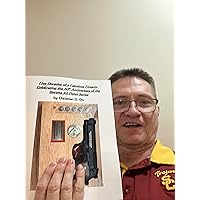
—In the novel, protagonist Joe Leland carries a 9mm Browning Hi-Power, which at the time of writing was THE most popular sidearm with military and /antiterrorist counterterrorist units around the world. In the film, NYPD Detective John McClane carries a Beretta 92F, which in real life had recently been adopted by LAPD and the U.S. Armed Forces; however, when it came to NYPD at the time, only their Emergency Services (i.e. SWAT) officers carried Berettas whilst their uniformed officers and plainclothes detectives alike were stuck with the .38 Special sixgun (mostly Smith & Wessons, with some Rugers and Colts in service).
—In the film, the terrorists carry 9mm Heckler & Koch MP5 submachine guns, which is ironic as that was the go-to SMG of choice for **antiterrorists** units around the world! In the book, the “Tangos” (military shorthand/slang for terrorists) carry the more typical terrorist weapons for that era, namely Kalashnikov rifles and at least one unspecified “Czech assault rifle” (probably the Vz-58 7.62x39mm). Meanwhile, ringleader “Little Tony” Gruber (as opposed to Hans Gruber in the movie) carries a Walther pistol, but Mr. Thorp doesn’t specify which model, i.e. the PP, PPK, PPK/S, P-38/P-1, or P-5 (contrast with the slick HKP7 that Hans wields in the film.
—Some technical nitpicks here (hence my downgrade from 5 stars to 4): several times the author refers to the Kalashnikov as a “‘machine gun” when it is in fact an automatic rifle (or assault rifle, if you prefer). He also makes the common mistake of referring to ammo magazines as “clips,” though in fairness even many experienced shooters and gun writers who should no better commit that same technical/semantic error. Last but not least, within the span of a page or two, the author refers to a female Tango’s handgun as an “automatic” and then as a “revolver;” ARGH, that’s a MAJOR pet peeve of mine!
Small arms discussions aside, it’s also interesting to see that Joe Leland is a seasoned combat veteran in more ways than one; he was a WWII fighter pilot with 20 air-to-air kills, making him w quadruple ace.
My technical nitpicks aside, this is still a very enjoyable read and a worthwhile companion to the more famous film it spawned.
Plenty of other reviewers have compared & contrasted this exciting, action-packed novel—a fascinating snapshot (albeit a fictitious one) of antiterrorist perspectives in the mid-to-late 1970s—with the iconic blockbuster 1988 filmic adaptation “Die Hard,” so I’ll just focus on the differences in weaponry.
—In the novel, protagonist Joe Leland carries a 9mm Browning Hi-Power, which at the time of writing was THE most popular sidearm with military and /antiterrorist counterterrorist units around the world. In the film, NYPD Detective John McClane carries a Beretta 92F, which in real life had recently been adopted by LAPD and the U.S. Armed Forces; however, when it came to NYPD at the time, only their Emergency Services (i.e. SWAT) officers carried Berettas whilst their uniformed officers and plainclothes detectives alike were stuck with the .38 Special sixgun (mostly Smith & Wessons, with some Rugers and Colts in service).
—In the film, the terrorists carry 9mm Heckler & Koch MP5 submachine guns, which is ironic as that was the go-to SMG of choice for **antiterrorists** units around the world! In the book, the “Tangos” (military shorthand/slang for terrorists) carry the more typical terrorist weapons for that era, namely Kalashnikov rifles and at least one unspecified “Czech assault rifle” (probably the Vz-58 7.62x39mm). Meanwhile, ringleader “Little Tony” Gruber (as opposed to Hans Gruber in the movie) carries a Walther pistol, but Mr. Thorp doesn’t specify which model, i.e. the PP, PPK, PPK/S, P-38/P-1, or P-5 (contrast with the slick HKP7 that Hans wields in the film.
—Some technical nitpicks here (hence my downgrade from 5 stars to 4): several times the author refers to the Kalashnikov as a “‘machine gun” when it is in fact an automatic rifle (or assault rifle, if you prefer). He also makes the common mistake of referring to ammo magazines as “clips,” though in fairness even many experienced shooters and gun writers who should no better commit that same technical/semantic error. Last but not least, within the span of a page or two, the author refers to a female Tango’s handgun as an “automatic” and then as a “revolver;” ARGH, that’s a MAJOR pet peeve of mine!
Small arms discussions aside, it’s also interesting to see that Joe Leland is a seasoned combat veteran in more ways than one; he was a WWII fighter pilot with 20 air-to-air kills, making him w quadruple ace.
My technical nitpicks aside, this is still a very enjoyable read and a worthwhile companion to the more famous film it spawned.

April 7, 2013
This review can also be found on Books as portable pieces of thought-blog.
I grew up watching action films with my Dad just as I grew up reading Harlequin novels with my Mum. Until I got older and broke out of the predetermined genre preferences, Bruce Willis, Arnold Schwarzenegger, Sylvester Stallone and Mel Gibson—before his descend to cray cray—were my childhood. Die Hard is one of those films I knew by heart and that has stood the test of time better than most. So, when I saw that the book that had inspired Die Hard was available on NetGalley I had to jump on it.
Nothing Lasts Forever was first published in 1979. Die Hard came out in 1988. The book focuses on Joseph Leland, a World War II veteran, retired cop, private detective, terrorism expert, and a security consultant, who just gave up flying his own place seven years earlier. Leland is divorced, widowed, and a grandfather of two. He never liked his son-in-law but has patched up his relationship with his daughter after he stopped drinking and is on his way to see her now. John McClane is a youngish married cop from New York on his way to see his estranged wife and two children for the Christmas. And he just happens to be afraid of flying. Both land in L.A., get a limo drive to a high rise and are in the middle of a phone call when the shooting starts.
As I said, I knew the story going in. There wasn’t a slightest chance that Thorp might surprise me with a plot twist, brutality, or gore. What surprised me was how Thorp filled the pages between the action scenes. Where Bruce Willis fills the solitary scenes with muttering and talking to himself, Leland in the book recounts his personal history. He reminiscences the war as he maps out the empty floors between 32nd and 40th. He laments over his failed marriage, his slightly skewed priorities in life, and friends he’s lost in the war and since the war. And there’s no question of which war he’s talking about. These passages could have easily been mind-numbingly boring but they’re not. They give Leland the room to think and the reader the feeling of time passing. And unlike John McClane, Leland is markedly in pain. He’s weary, tired and struggling each step of the way.
For all the details that the filmmakers changed—characters, relationships, making the company a Japanese conglomerate instead of an American oil company called Klaxxon (I’ll give you a minute to let that sink in)—I was more surprised to see the things that they didn’t change. From bare feet to the safe full of money, from the people thrown out the building to the explosions aside from snapped necks and led poisonings, it’s all there.
This book really is the bare bones of the film.
The film improved on the pacing and mixed some things up, like the bazooka attack happening much earlier in the film than in the book, but it also took a few steps in the wrong direction. Die Hard is a sexist creation and I’m not just talking about the unnecessary scene with a bare-chested woman or the titty pictures plastered on a service tunnel wall. I’m talking about female terrorists. The book has several, the film has none.
The motives and over all causality in the book is much more complex than it is in the film. Aside from the brothers, what motivates the terrorists and Hans Gruber especially is pure greed where as in the book Little Tony the Red has ideological objections to Klaxxon’s dealings in Chile. As the book focuses on Leland alone, it’s natural that the film adds to the character gallery—all additions men—and deepens a characterisation or two, but I would argue that what Al Powell does in the end of the book is far more complicated than any sob story told over the radio could ever be—and possibly worth an essay of its own.
For all their similarities Die Hard and Nothing Lasts Forever are two different creations that work well in their own mediums despite their flaws.
I received a copy of this book from the publisher through NetGalley.
I grew up watching action films with my Dad just as I grew up reading Harlequin novels with my Mum. Until I got older and broke out of the predetermined genre preferences, Bruce Willis, Arnold Schwarzenegger, Sylvester Stallone and Mel Gibson—before his descend to cray cray—were my childhood. Die Hard is one of those films I knew by heart and that has stood the test of time better than most. So, when I saw that the book that had inspired Die Hard was available on NetGalley I had to jump on it.
Nothing Lasts Forever was first published in 1979. Die Hard came out in 1988. The book focuses on Joseph Leland, a World War II veteran, retired cop, private detective, terrorism expert, and a security consultant, who just gave up flying his own place seven years earlier. Leland is divorced, widowed, and a grandfather of two. He never liked his son-in-law but has patched up his relationship with his daughter after he stopped drinking and is on his way to see her now. John McClane is a youngish married cop from New York on his way to see his estranged wife and two children for the Christmas. And he just happens to be afraid of flying. Both land in L.A., get a limo drive to a high rise and are in the middle of a phone call when the shooting starts.
As I said, I knew the story going in. There wasn’t a slightest chance that Thorp might surprise me with a plot twist, brutality, or gore. What surprised me was how Thorp filled the pages between the action scenes. Where Bruce Willis fills the solitary scenes with muttering and talking to himself, Leland in the book recounts his personal history. He reminiscences the war as he maps out the empty floors between 32nd and 40th. He laments over his failed marriage, his slightly skewed priorities in life, and friends he’s lost in the war and since the war. And there’s no question of which war he’s talking about. These passages could have easily been mind-numbingly boring but they’re not. They give Leland the room to think and the reader the feeling of time passing. And unlike John McClane, Leland is markedly in pain. He’s weary, tired and struggling each step of the way.
For all the details that the filmmakers changed—characters, relationships, making the company a Japanese conglomerate instead of an American oil company called Klaxxon (I’ll give you a minute to let that sink in)—I was more surprised to see the things that they didn’t change. From bare feet to the safe full of money, from the people thrown out the building to the explosions aside from snapped necks and led poisonings, it’s all there.
This book really is the bare bones of the film.
The film improved on the pacing and mixed some things up, like the bazooka attack happening much earlier in the film than in the book, but it also took a few steps in the wrong direction. Die Hard is a sexist creation and I’m not just talking about the unnecessary scene with a bare-chested woman or the titty pictures plastered on a service tunnel wall. I’m talking about female terrorists. The book has several, the film has none.
The motives and over all causality in the book is much more complex than it is in the film. Aside from the brothers, what motivates the terrorists and Hans Gruber especially is pure greed where as in the book Little Tony the Red has ideological objections to Klaxxon’s dealings in Chile. As the book focuses on Leland alone, it’s natural that the film adds to the character gallery—all additions men—and deepens a characterisation or two, but I would argue that what Al Powell does in the end of the book is far more complicated than any sob story told over the radio could ever be—and possibly worth an essay of its own.
For all their similarities Die Hard and Nothing Lasts Forever are two different creations that work well in their own mediums despite their flaws.
I received a copy of this book from the publisher through NetGalley.

September 3, 2024
Hard to decide between a three and a four star rating, so three and a half it is! The first 'Die Hard' movie is loosely based on this novel. The basic premise is the backbone of the book, but the setting is earlier in L.A.'s history, and our protagonist is a bit older--a veteran ace of World War II. Instead of visiting his ex-wife on Christmas Eve, it is his daughter who works at the oil company based in the high-rise. His grand kids are also in attendance at the company Christmas party. The ending is a little different, and believe it or not much more violence than in the movie. The reason I couldn't quite make it to the fourth star is that it just seemed to drag out towards the end. Thorp wrote a previous novel with the same character Joe Leland, called 'The Detective'. This was made into a movie starring Frank Sinatra. I'm still debating whether I want to read it, or the novel '58 minutes' by Walter Wager that 'Die Hard 2' was based on. This is one of the rare occasions I liked the movie version better. A couple of side notes--Thorp as a recent college graduate worked for his father's private detective agency, then later on taught college level literature and worked as a freelance journalist. He also wrote the novel 'Rainbow Drive' which also became a movie starring Peter Weller.
February 9, 2015
The cult novel that inspired Die Hard isn't actually quite as satisfying as the movie itself, but it's not a landslide victory. Far from it. Roderick Thorp's got some serious writing chops. He's not a great stylist, but his novel crackles with original thoughts and powerful exposition. Joe Leland's not quite John McClane, but he's quite the interesting cat nonetheless: he's a third degree black belt shit talker and rationalizes his fears the way only an alpha male can. He's fun to read, and belongs on the page at least as much as John McClane belongs on the silver screen.
Now, in order to answer the question everyone's obsessing about: the novel is maybe 60-70% similar to what the movie is. It's not where Nothing Lasts Forever is fun though. These scenes are action packed and rapid fire, so they're hard to conceptualize. It's through the original scenes that the novel stands out though, through the exposition and Thorp's über-efficient dialogues. If you worship the movie as much as I do, it's worth a read. If you're just a pulp fan, it's worth a read too. This is some seriously fun throwback stuff.
Now, in order to answer the question everyone's obsessing about: the novel is maybe 60-70% similar to what the movie is. It's not where Nothing Lasts Forever is fun though. These scenes are action packed and rapid fire, so they're hard to conceptualize. It's through the original scenes that the novel stands out though, through the exposition and Thorp's über-efficient dialogues. If you worship the movie as much as I do, it's worth a read. If you're just a pulp fan, it's worth a read too. This is some seriously fun throwback stuff.

February 25, 2019
This book was a total surprise stumbling across a reference that refers to this book as the inspiration for the movie Die Hard. Now I didn't even know there was such a thing so of course I had to find a copy of it and read it.
Well I must admit that I thoroughly enjoyed reading it- yes it was dated the book was written in the 70s after all. However rather than reading a novelisation of a film I quickly realised (in its style of course I know its relationship to the film) that this was the story that the film came from.
There are so many similarities in this story to the film (I know no spoilers however I think everyone knows the story of the film so I think its fair game) but there are also some massive differences too - those you will need to find for yourself.
So there is no doubt that this book was the source of the inspiration and yes some of the scenes are almost identical - I never knew this book existed but now I am glad that I do now and that I have read it.
As I say it is dated in places but still a ripping good story - the amazing this is that there is a prequel to it and that too was made in to a film this time staring Frank Sinatra. I may have to go and track that one down too.
Well I must admit that I thoroughly enjoyed reading it- yes it was dated the book was written in the 70s after all. However rather than reading a novelisation of a film I quickly realised (in its style of course I know its relationship to the film) that this was the story that the film came from.
There are so many similarities in this story to the film (I know no spoilers however I think everyone knows the story of the film so I think its fair game) but there are also some massive differences too - those you will need to find for yourself.
So there is no doubt that this book was the source of the inspiration and yes some of the scenes are almost identical - I never knew this book existed but now I am glad that I do now and that I have read it.
As I say it is dated in places but still a ripping good story - the amazing this is that there is a prequel to it and that too was made in to a film this time staring Frank Sinatra. I may have to go and track that one down too.

May 20, 2018
I'm glad I read it, because now I can say I read "Die Hard", one of the greatest movies of all time :D
They're very, very different. You can tell someone just read the book and went "holy shit, this is a great idea for a movie" and that was about it.
Yes, terrorists sieze a tower. Yes, John McClane kicks ass all over the tower. That's about it for similarities, though.
John McClane is a lot older. Divorced, his ex-wife has died, he's a recovering (ish?) alcoholic, Vietnam vet. He's visiting his daughter at the tower, and her two kids, THAT'S who he's ultimately trying to save.
Hans Gruber is nowhere near as big a character (and doesn't have that name), which made me sad, because he's one of my favorite movie bad guys.
This book is a lot more raw, a lot grittier, a lot more intense. No shiny Hollywood ending for this story. It definitely reads more like how that situation would go down in reality.
Three stars because the story was good enough to keep me reading, but the style was kind of choppy to me. Slashed and pieced together, it was odd to read.
They're very, very different. You can tell someone just read the book and went "holy shit, this is a great idea for a movie" and that was about it.
Yes, terrorists sieze a tower. Yes, John McClane kicks ass all over the tower. That's about it for similarities, though.
John McClane is a lot older. Divorced, his ex-wife has died, he's a recovering (ish?) alcoholic, Vietnam vet. He's visiting his daughter at the tower, and her two kids, THAT'S who he's ultimately trying to save.
Hans Gruber is nowhere near as big a character (and doesn't have that name), which made me sad, because he's one of my favorite movie bad guys.
This book is a lot more raw, a lot grittier, a lot more intense. No shiny Hollywood ending for this story. It definitely reads more like how that situation would go down in reality.
Three stars because the story was good enough to keep me reading, but the style was kind of choppy to me. Slashed and pieced together, it was odd to read.
November 16, 2022
*** 3 STARS ***
Nothing Lasts Forever is the basis for one of the greatest action films ever, Die Hard.
For the most part, the plot of Die Hard is within the pages of this book. There are a many small differences, here and there; probably the biggest being the motives of the 'bad guys' and the fact that it's Leland's/McClane's daughter, not his wife, who is in danger. Also, the book has much more emphasis on how physical pain and the killing the main character has to do, affects him; the book is told completely from the perspective of Leland. Which is interesting, but not very well done in this particular book.
The plot of the book is such a great concept. However, the writing is bad and the pace is dreadful. There are constant interruptions in the action to highlight something that doesn't add anything to the story. Saying that, I did enjoy it. Probably my bias towards the film helped me visualise what was going on, making the negative aspects, a little less so.
Nothing Lasts Forever is the basis for one of the greatest action films ever, Die Hard.
For the most part, the plot of Die Hard is within the pages of this book. There are a many small differences, here and there; probably the biggest being the motives of the 'bad guys' and the fact that it's Leland's/McClane's daughter, not his wife, who is in danger. Also, the book has much more emphasis on how physical pain and the killing the main character has to do, affects him; the book is told completely from the perspective of Leland. Which is interesting, but not very well done in this particular book.
The plot of the book is such a great concept. However, the writing is bad and the pace is dreadful. There are constant interruptions in the action to highlight something that doesn't add anything to the story. Saying that, I did enjoy it. Probably my bias towards the film helped me visualise what was going on, making the negative aspects, a little less so.

June 13, 2014
Warning! This book is chock full of balls. Probably too many balls for you. If you buy this puppy in hardcover and stick it on your shelf, it will be bro-ing it up with For Whom the Bell Tolls and impregnating Wuthering Heights within 15 minutes. You're going to have to case this sucker in lead and bury it in the garden or your wife and daughters will start growing chest hair. It's like a nuclear bomb of testosterone delivered straight to your brain through your eye-holes. You saw Die Hard? That guy was a charter school kindergarten teacher compared to the hard-core-terrorist-killing man-sack that inspired him. You've got two choices. Either avert your eyes from this book and get on with your every day life or buy every goddamn copy you can find and let sheer osmosis turn you into the fire driven mountain man you've always wanted to be.

February 24, 2019
Read more crime and thriller reviews on CriminOlly.wordpress.com
As good as it is (and it is good), ‘Nothing Lasts Forever’ is one of those books that would probably have vanished from the shelves completely if it hadn’t been made into a blockbuster movie. It was written in 1979 and is the sequel to a 1966 book called ‘The Detective’ (which itself was filmed with Frank Sinatra). In 1988 it was filmed as ‘Die Hard’. Yep, that’s right, ‘Die Hard’ is based on a book. I first came across a copy in my local library in the late 80s/early 90s, thought I’d give it a try because I liked the movie (who doesn’t?) and was surprised to find something which is very similar to the film in many ways but also quite different.
Rereading it with a few more years under my belt I didn’t enjoy it quite as much as I did first time around, but it’s still a gripping read. If you’ve seen the movie you know the plot (and if you haven’t, go watch the movie!). A New York cop travels to LA to visit his ex-wife at the Christmas party in the office where she works. The office is taken over by terrorists and the cop fights back, taking them down one by one. The plot in the book is pretty much identical for the first three quarters at least, and many of the incidents are exactly the same. We get the desperate lift shaft climb, the bloody feet, the dead terrorist with the “now I have a machine gun” sign around his neck, and a whole a load more.
Some key details are different though. The hero is Joe Leland not John McClane and he’s a lot older, a veteran of WW2 who is visiting his daughter rather than his ex-wife. He’s also a security consultant rather than a cop, and therefore has inside knowledge on the terrorists. The main difference though is the tone. ‘Die Hard’ the movie, as gripping and violent as it is, is also light-hearded and fun. Bruce Willis famously cracks wise as he takes down the bad guys. By contrast, Joe Leland is an angry man and the 'Nothing Lasts Forever’ is an angry book.
The age of the character plays a large part in this, as does the 70s origins of the book. Leland harks back to his glory days as a pilot in the war and it feels like the world has got away from him in the decades that has passed since then. Like Clint Eastwood in ‘Dirty Harry’ or the hero of Brian Garfield’s ‘Death Wish’ he is a man who is bitter that the world isn’t what he expected it would be. The terrorists in the book are all Europeans, as in the film, but here they are repeatedly described as naïve youngsters trying to make a better world without having a clue about how the world actually works. Leland feels like a man who is trying to save his way of life, not just his nearest and dearest, and that desperation comes across again and again as he ruthlessly dispatched the baby-faced villains.
That reactionary anger gives the book an entirely different feel to the movie. It’s just as tense and action-packed, but it’s far darker and ultimately quite depressing. Thorp is an accomplished thriller writer and the book moves at lightning speed, with sparse prose to match. That makes for a gripping quick read, but don’t go into it expecting anything life affirming. It is, in fact, just as bleak as the title suggests.
As good as it is (and it is good), ‘Nothing Lasts Forever’ is one of those books that would probably have vanished from the shelves completely if it hadn’t been made into a blockbuster movie. It was written in 1979 and is the sequel to a 1966 book called ‘The Detective’ (which itself was filmed with Frank Sinatra). In 1988 it was filmed as ‘Die Hard’. Yep, that’s right, ‘Die Hard’ is based on a book. I first came across a copy in my local library in the late 80s/early 90s, thought I’d give it a try because I liked the movie (who doesn’t?) and was surprised to find something which is very similar to the film in many ways but also quite different.
Rereading it with a few more years under my belt I didn’t enjoy it quite as much as I did first time around, but it’s still a gripping read. If you’ve seen the movie you know the plot (and if you haven’t, go watch the movie!). A New York cop travels to LA to visit his ex-wife at the Christmas party in the office where she works. The office is taken over by terrorists and the cop fights back, taking them down one by one. The plot in the book is pretty much identical for the first three quarters at least, and many of the incidents are exactly the same. We get the desperate lift shaft climb, the bloody feet, the dead terrorist with the “now I have a machine gun” sign around his neck, and a whole a load more.
Some key details are different though. The hero is Joe Leland not John McClane and he’s a lot older, a veteran of WW2 who is visiting his daughter rather than his ex-wife. He’s also a security consultant rather than a cop, and therefore has inside knowledge on the terrorists. The main difference though is the tone. ‘Die Hard’ the movie, as gripping and violent as it is, is also light-hearded and fun. Bruce Willis famously cracks wise as he takes down the bad guys. By contrast, Joe Leland is an angry man and the 'Nothing Lasts Forever’ is an angry book.
The age of the character plays a large part in this, as does the 70s origins of the book. Leland harks back to his glory days as a pilot in the war and it feels like the world has got away from him in the decades that has passed since then. Like Clint Eastwood in ‘Dirty Harry’ or the hero of Brian Garfield’s ‘Death Wish’ he is a man who is bitter that the world isn’t what he expected it would be. The terrorists in the book are all Europeans, as in the film, but here they are repeatedly described as naïve youngsters trying to make a better world without having a clue about how the world actually works. Leland feels like a man who is trying to save his way of life, not just his nearest and dearest, and that desperation comes across again and again as he ruthlessly dispatched the baby-faced villains.
That reactionary anger gives the book an entirely different feel to the movie. It’s just as tense and action-packed, but it’s far darker and ultimately quite depressing. Thorp is an accomplished thriller writer and the book moves at lightning speed, with sparse prose to match. That makes for a gripping quick read, but don’t go into it expecting anything life affirming. It is, in fact, just as bleak as the title suggests.

March 7, 2013
NOTHING LASTS FOREVER by Roderick Thorp has been re-released with the author's notes that built this over-the-top, non-stop action book! Movie goers, think DIE HARD-this is where it all started!
Joe Leland has flown out to Los Angeles to visit his daughter, an oil company executive for Christmas. He arrives during her company's annual Christmas party and is taken directly to the party. Terrorists take over the building and...start the non-stop, over-the-top action! Its Joe against a dozen terrorists holding hostages, including his daughter.
If you're like me, all of the blood, all of the action, everything Joe did was visualized as actor Bruce Willis doing it! Trust me, this does not take away from the book, it freed my imagination up to crawl right into the pages! The only reason Joe wasn't wearing a super hero cape was probably that it would get in the way!
Joe's character was damaged, during the lulls in action when he was strategizing his next move, knowing it could be his last hurrah, he was reflecting on his life, things that happened, regrets, etc. It made him all the more real, all the more the larger-than-life guy he was. Be warned: This does NOT end like the movie, those final pages held a shocker that I never saw coming-to say I loved it would seem cold-but it was incredibly brilliant and brave on the author's part!
This edition was provided by NetGalley and Graymalkin Media in exchange for my honest review.
Joe Leland has flown out to Los Angeles to visit his daughter, an oil company executive for Christmas. He arrives during her company's annual Christmas party and is taken directly to the party. Terrorists take over the building and...start the non-stop, over-the-top action! Its Joe against a dozen terrorists holding hostages, including his daughter.
If you're like me, all of the blood, all of the action, everything Joe did was visualized as actor Bruce Willis doing it! Trust me, this does not take away from the book, it freed my imagination up to crawl right into the pages! The only reason Joe wasn't wearing a super hero cape was probably that it would get in the way!
Joe's character was damaged, during the lulls in action when he was strategizing his next move, knowing it could be his last hurrah, he was reflecting on his life, things that happened, regrets, etc. It made him all the more real, all the more the larger-than-life guy he was. Be warned: This does NOT end like the movie, those final pages held a shocker that I never saw coming-to say I loved it would seem cold-but it was incredibly brilliant and brave on the author's part!
This edition was provided by NetGalley and Graymalkin Media in exchange for my honest review.

December 28, 2023
An enjoyable read. I enjoyed the human side of the hero with his many thoughts about his life and his decision making in this dire situation. While I did really enjoy this thriller, I did find the movie even better, where the best parts of the book were retained with additional action and thrills added to make a great action movie. Worth a read.

May 19, 2013
I can overlook a lot of less than stellar writing when the story is so good and well told, but all the flaws really seem to be in bold type when the story just doesn't work. I almost put Roderick Thorp's novel "Nothing Lasts Forever" down after the first couple of pages, and that was just introducing the protagonist by way of a taxi ride to the airport, but it was just so poorly done. The flaw was in the superfluous character of the taxi driver who is described as a young black man who has a daughter in college son in High School. The only reason for the conversation is to reveal that the passenger has a daughter with two children and he is going to visit her. A young man who has a son in High School just made me shake my head--I tried doing the math in my head, and even if he became a father at 16, he would still be about 30 to have an 16 year old son--so what did "young" mean, or why was it even brought up?
Quite a few years later I watched Bruce Willis bring the character to life in "Die Hard", and it is one of the few instances where the movie managed to correct something the author should have done with that first chapter. The odd thing is that as I watched the movie, I thought it was very familiar--turns out I had read the book past its shortcoming first chapter and thoroughly enjoyed it. The movie changed some other bits too, like it wasn't his wife he was visiting, it was his daughter, and the terrorists weren't there for the reasons given in the movie.
Sometimes it is worthwhile to get beyond the opening or any faults we may find with it. In this case, I'm glad I did. The story was compelling and well paced. I thoroughly enjoyed the rest of this book.
This would make a good Summer read out on the beach, in a hammock. It is different enough from the movie to make it a fun comparison.
Quite a few years later I watched Bruce Willis bring the character to life in "Die Hard", and it is one of the few instances where the movie managed to correct something the author should have done with that first chapter. The odd thing is that as I watched the movie, I thought it was very familiar--turns out I had read the book past its shortcoming first chapter and thoroughly enjoyed it. The movie changed some other bits too, like it wasn't his wife he was visiting, it was his daughter, and the terrorists weren't there for the reasons given in the movie.
Sometimes it is worthwhile to get beyond the opening or any faults we may find with it. In this case, I'm glad I did. The story was compelling and well paced. I thoroughly enjoyed the rest of this book.
This would make a good Summer read out on the beach, in a hammock. It is different enough from the movie to make it a fun comparison.

June 9, 2018
Book source ~ NetGalley
This is the book that Die Hard is based on. In many ways, the movie follows the book, but I have to say, the movie took many of the boring details of the book and either changed them or left them out entirely, making it a much better story. That’s just my opinion though. I kinda liked the main character who, in the book, is named Joseph Leland. He’s much older than John McClane and has a more varied experience than just being a cop. But he does too much introspection for my liking. In the movie John’s going to see his wife, in the book Leland is visiting his daughter. Which makes that ending very…whoa. Definitely not the way you want a movie to end. If you’ve never seen Die Hard then you should. If you prefer books to movies then this should entertain, too. Personally, for one of the rare instances in my life, I like the movie better.
Note: Ends at 86%, has bonus content.
This is the book that Die Hard is based on. In many ways, the movie follows the book, but I have to say, the movie took many of the boring details of the book and either changed them or left them out entirely, making it a much better story. That’s just my opinion though. I kinda liked the main character who, in the book, is named Joseph Leland. He’s much older than John McClane and has a more varied experience than just being a cop. But he does too much introspection for my liking. In the movie John’s going to see his wife, in the book Leland is visiting his daughter. Which makes that ending very…whoa. Definitely not the way you want a movie to end. If you’ve never seen Die Hard then you should. If you prefer books to movies then this should entertain, too. Personally, for one of the rare instances in my life, I like the movie better.
Note: Ends at 86%, has bonus content.
May 14, 2018
yippee ki yay mother f cker !!!! wow what a book , what a read , also what a great movie adaption bloody fantastic

June 7, 2018
This is one of those times where the movie is better than the book

December 12, 2024
This book was the basis for the movie Die Hard, and let's start by dismissing the elephant in the room immediately. I consider it a Christmas movie. It has to be one because I watch it at Christmastime and won't watch it if I see it on at any other time of the year (except that one time it won the lottery for my one allowable "Christmas in June/July" movie). Plus, I read this book as part of this year's Christmas reading. That should settle the matter.
However, please feel free to disagree; keep Christmas in your own way, and let me keep it in mine. This is not a hill I'm willing to die on (or a skyscraper I'm willing to die in, if you prefer), and if you like to watch it at any point in the year, or not watch it at all, or don't consider it a Christmas movie, I won't hold it against you. In fact, a friend of mine disagrees and expounded upon the matter in great detail. He's a lot smarter than I'll ever live to be, at least about movies, and pop culture's influence on society and vice-versa, and prosocial stuff, etc. He can also articulate all that better than I ever could, so I'd never debate him about it[1], but even he's allowed to be wrong.[2]
Having said I believe it's a Christmas movie, I will point out that I don't believe it to be a Christmas story at all. This is a distinction I picked up in the aforementioned blog post. Even though the entire thing takes place on Christmas Eve/Christmas morning, there isn't a single Christmas theme in it. That's a nice middle-of-the-road observation that should put "paid" to the issue, but it won't because people on the internet are psycho about inconsequential matters, so the Die Hard debate has no chance to die hard because it will never die at all.
But enough of that. This book could maaaaaaaybe be 3.5 stars, but then I'd have to round up to four in the Goodreads rating, and I'm sorry, it just doesn't deserve that. Let's call it 3.49 stars rounded back down to three. The movie is based on it, and the bones of each story are the same, but the flesh and clothes are different. It's kind of like the dissimilarities between Gone to Texas and The Outlaw Josey Wales. You don't get a completely different story, but there are enough changes to make the reading experience fresh.
The writing was good, meaning it was grammatically correct. There were good sentences. I loved the story, but something was off with it. The narrative bucked along with fits and starts here and there due to needless asides. They were usually kept to a paragraph or two, thankfully, but it interrupted the flow. Also, the relationship with the stewardess he met on the way to LA... I just wasn't buying it. Luckily this isn't the kind of story you're meant to think about too deeply (or at all, really). It's an action/thriller kind of thing, and I was able to enjoy it for being what it was, not what it wasn't, like a think piece, or something.
Outside of the main cast, the characters in the movie are such over-the-top caricatures that it's impossible for me to take them seriously, but damn if that doesn't help make the film a load of fun. This book isn't quite as much fun. The characters are more realistic in the way they handle what's in front of them no matter how outlandish the situation might be. Even the asshole, dipshit deputy police chief Robinson behaves in a realistic manner and doesn't come off like a complete idiot. In the film, you wonder how he could possibly have ever been promoted past traffic cop, and he's still a shithead in the book, but he's not a stupid shithead.
Anton "Little Tony" Gruber (Hans Gruber in the movie) is way too on top of things, and Joe Leland (John McClane in the movie) is way too resourceful at times. It's like they were reading each others' minds in how they figured out what move the other would make before he made it even though they never met until the very end. Again, don't think too deeply about it, and you'll be fine, but there was one what-the-fuck incident at the end which threw me for a loop. Al flat out This saves Joe, but still... God damn!
If you enjoy nice, imperfect thrillers, this will do in a pinch. If you're looking for the movie Die Hard in written form, you're apt to be disappointed. A lot of scenes are altered or flat out missing as are several plot points.
[1]: Mostly because I'd lose. I suck at arguing, or at least winning, and I don't enjoy doing it which usually leads to me throwing in the towel about halfway through round one. Like Mr. Fairlie in The Woman in White, I seek a peaceful life, yet I'm highly opinionated, have a predisposition towards self-righteousness, and I've been known to carry an argument to levels of insanity that leaves everybody within hearing range pissed the fuck off by the end of it whether they were involved in it or not if I allow myself to get sucked into an altercation. I come by this tendency to argue with a stump honestly, but it doesn't work well with my peace-seeking side. It used to be fun for me even if it wasn't for anybody else, but frankly, I don't have the energy anymore in my dotage for such silliness.
However, I've discovered that with a little bit of effort, one can temper his natural inclinations and attain a chance at the peace he seeks. First, never miss a good opportunity to shut up, (and remember that it's easier to step out of a whirlpool at the top than if you're already halfway down the thing). Second, step back and ask yourself "how important is this really?" 95% of the time the answer, for me, is "not that important." Of the remaining 5%, I ask myself "is this a hill I'm willing to die on?" Again, 95% of the time the answer, for me, is no. If my math is right (though it almost never is, so please feel free to correct me), that means that I need to get decisively engaged to the bitter end in only .25% of the disagreements that come my way. That allows me to yield the field of battle to my adversary 99.75% of the time and allows him to seek a more worthy opponent. This leaves me with my peace, him/her with his/her victory, and we're both happy as a pig in shit, so it's a win all the way around.
[2]: If I read the post correctly, he actually doesn't care whether or not anyone thinks it's a Christmas movie, but he mostly goes into how it fuels right-wing nut jobs (the left isn't the only side allowed to have those, thank you very much), the problem with Reagan era machoism depicted in it, a few other things, and why he'll never watch it again in spite of how much he loved it as a teen. He's uber-progressive, so it grates on his sensibilities, but my regressive ass still loves the hell out of it. (My apologies to Sean if I have stated any of this inaccurately.)
However, please feel free to disagree; keep Christmas in your own way, and let me keep it in mine. This is not a hill I'm willing to die on (or a skyscraper I'm willing to die in, if you prefer), and if you like to watch it at any point in the year, or not watch it at all, or don't consider it a Christmas movie, I won't hold it against you. In fact, a friend of mine disagrees and expounded upon the matter in great detail. He's a lot smarter than I'll ever live to be, at least about movies, and pop culture's influence on society and vice-versa, and prosocial stuff, etc. He can also articulate all that better than I ever could, so I'd never debate him about it[1], but even he's allowed to be wrong.[2]
Having said I believe it's a Christmas movie, I will point out that I don't believe it to be a Christmas story at all. This is a distinction I picked up in the aforementioned blog post. Even though the entire thing takes place on Christmas Eve/Christmas morning, there isn't a single Christmas theme in it. That's a nice middle-of-the-road observation that should put "paid" to the issue, but it won't because people on the internet are psycho about inconsequential matters, so the Die Hard debate has no chance to die hard because it will never die at all.
But enough of that. This book could maaaaaaaybe be 3.5 stars, but then I'd have to round up to four in the Goodreads rating, and I'm sorry, it just doesn't deserve that. Let's call it 3.49 stars rounded back down to three. The movie is based on it, and the bones of each story are the same, but the flesh and clothes are different. It's kind of like the dissimilarities between Gone to Texas and The Outlaw Josey Wales. You don't get a completely different story, but there are enough changes to make the reading experience fresh.
The writing was good, meaning it was grammatically correct. There were good sentences. I loved the story, but something was off with it. The narrative bucked along with fits and starts here and there due to needless asides. They were usually kept to a paragraph or two, thankfully, but it interrupted the flow. Also, the relationship with the stewardess he met on the way to LA... I just wasn't buying it. Luckily this isn't the kind of story you're meant to think about too deeply (or at all, really). It's an action/thriller kind of thing, and I was able to enjoy it for being what it was, not what it wasn't, like a think piece, or something.
Outside of the main cast, the characters in the movie are such over-the-top caricatures that it's impossible for me to take them seriously, but damn if that doesn't help make the film a load of fun. This book isn't quite as much fun. The characters are more realistic in the way they handle what's in front of them no matter how outlandish the situation might be. Even the asshole, dipshit deputy police chief Robinson behaves in a realistic manner and doesn't come off like a complete idiot. In the film, you wonder how he could possibly have ever been promoted past traffic cop, and he's still a shithead in the book, but he's not a stupid shithead.
Anton "Little Tony" Gruber (Hans Gruber in the movie) is way too on top of things, and Joe Leland (John McClane in the movie) is way too resourceful at times. It's like they were reading each others' minds in how they figured out what move the other would make before he made it even though they never met until the very end. Again, don't think too deeply about it, and you'll be fine, but there was one what-the-fuck incident at the end which threw me for a loop. Al flat out This saves Joe, but still... God damn!
If you enjoy nice, imperfect thrillers, this will do in a pinch. If you're looking for the movie Die Hard in written form, you're apt to be disappointed. A lot of scenes are altered or flat out missing as are several plot points.
[1]: Mostly because I'd lose. I suck at arguing, or at least winning, and I don't enjoy doing it which usually leads to me throwing in the towel about halfway through round one. Like Mr. Fairlie in The Woman in White, I seek a peaceful life, yet I'm highly opinionated, have a predisposition towards self-righteousness, and I've been known to carry an argument to levels of insanity that leaves everybody within hearing range pissed the fuck off by the end of it whether they were involved in it or not if I allow myself to get sucked into an altercation. I come by this tendency to argue with a stump honestly, but it doesn't work well with my peace-seeking side. It used to be fun for me even if it wasn't for anybody else, but frankly, I don't have the energy anymore in my dotage for such silliness.
However, I've discovered that with a little bit of effort, one can temper his natural inclinations and attain a chance at the peace he seeks. First, never miss a good opportunity to shut up, (and remember that it's easier to step out of a whirlpool at the top than if you're already halfway down the thing). Second, step back and ask yourself "how important is this really?" 95% of the time the answer, for me, is "not that important." Of the remaining 5%, I ask myself "is this a hill I'm willing to die on?" Again, 95% of the time the answer, for me, is no. If my math is right (though it almost never is, so please feel free to correct me), that means that I need to get decisively engaged to the bitter end in only .25% of the disagreements that come my way. That allows me to yield the field of battle to my adversary 99.75% of the time and allows him to seek a more worthy opponent. This leaves me with my peace, him/her with his/her victory, and we're both happy as a pig in shit, so it's a win all the way around.
[2]: If I read the post correctly, he actually doesn't care whether or not anyone thinks it's a Christmas movie, but he mostly goes into how it fuels right-wing nut jobs (the left isn't the only side allowed to have those, thank you very much), the problem with Reagan era machoism depicted in it, a few other things, and why he'll never watch it again in spite of how much he loved it as a teen. He's uber-progressive, so it grates on his sensibilities, but my regressive ass still loves the hell out of it. (My apologies to Sean if I have stated any of this inaccurately.)

March 24, 2023
Ok. I think the movie is better than the book. But the book is still pretty good. Rather than compare this to the film, which is kind of interesting to see what did and didn’t stay the same (just fair warning; the book is much bleaker), I compare this to the first Jack Leland book, The Detective. I thought that book was way too wordy, with too much navel-gazing and meandering conversations. This book, written 13 or so years later, shows fascinating changes in Thorp as a writer. This hits similar emotional and philosophical notes, but clocks in at 188 hardcover pages and is full of action. Thorp and the character he revisits have both become far more efficient. 3.5 stars.

March 10, 2013
Retired NYPD Detective Joe Leland visits his daughter in Los Angeles on Christmas Eve to spend the holiday period with her. He meets her at her place of work, the 40-story office that houses the headquarters of the Klaxon Oil Corporation. Only to find the building been taken by a group of Cold War-era German terrorists. Lead by Anton “Little Tony” Gruber, their plans are to steal documents that will publicly expose the Klaxon Corporation. With the help of LAPD Sergeant Al Powell, Leland must fight the terrorist one by one to save the hostages, and more importantly his daughter and grandchildren.
Nothing Lasts Forever by Roderick Thorp was re-released in December 2012 after being out of print for 20 years and if you haven’t guessed it by now, this is the novel Die Hard is based on. My biggest issue with the book was it was very similar to the classic movie (which I’ve seen so many times), yet it was missing all the one liners and humour. Most of the most iconic scenes do come from the book, including crawling around the elevator shafts, C4 down the elevator shaft, jumping off the roof with a fire hose and the gun tapped to his back. I’m surprised just how faithful to the book the movie does seem but then when you expect him to say “Now I have a machine gun, Ho Ho Ho” or something similar Leland says something similar but different and it just doesn’t feel right.
The similarities seem to be so numerous that it is almost pointless to read the book, especially if you know the movie back to front. The major differences between the book and the movie (not including names and slight character changes) include that Terrorist were really out to expose the company rather than robbing them and the ending was less Hollywood in the end. I feel this is one of the rare cases where the movie outshines the book, even if it is similar overall the movie was amazing and the book was fading away into obscurity (up till the rerelease). McClane is a far better character than Leland but interesting enough the book seems to focus a lot more on the complexity of the protagonist’s mind in regards to family, guilt and his alcoholism but I felt it didn’t work too well.
The book does feel like it’s aged too much, the political views on terrorism seem so dated, but if you read this book as just an action novel you probably can overlook this and even forgive it. I never was able to do this, I just felt like their responses to the hostile takeover felt wrong and somewhat amateurish. This is obviously to make sure Leland had to remain the single man that can save the 72 hostages but part of me was a little annoyed by that. One man taking on the world makes for a great story but I’m always bothered by that and while it’s entertaining in a book I feel like I question it more than I would with a movie.
Nothing Lasts Forever is a little darker than Die Hard but there is no real competition when comparing the two. Die Hard is a classic action film and spawned some great (and terrible) sequels. The book was interesting to explore but really there are more books out there that deserve the time; stick to the film. Interestingly enough, Nothing Lasts Forever was intended as a sequel to the 1966 film The Detective starring Frank Sinatra, then as a follow up to Commando (1985) starring Arnold Schwarzenegger. Both actors declined the role; after being rewritten, the script turned into a standalone film which has become one of the greatest Action movies of all time.
This review originally appeared on my blog; http://literary-exploration.com/2013/...
Nothing Lasts Forever by Roderick Thorp was re-released in December 2012 after being out of print for 20 years and if you haven’t guessed it by now, this is the novel Die Hard is based on. My biggest issue with the book was it was very similar to the classic movie (which I’ve seen so many times), yet it was missing all the one liners and humour. Most of the most iconic scenes do come from the book, including crawling around the elevator shafts, C4 down the elevator shaft, jumping off the roof with a fire hose and the gun tapped to his back. I’m surprised just how faithful to the book the movie does seem but then when you expect him to say “Now I have a machine gun, Ho Ho Ho” or something similar Leland says something similar but different and it just doesn’t feel right.
The similarities seem to be so numerous that it is almost pointless to read the book, especially if you know the movie back to front. The major differences between the book and the movie (not including names and slight character changes) include that Terrorist were really out to expose the company rather than robbing them and the ending was less Hollywood in the end. I feel this is one of the rare cases where the movie outshines the book, even if it is similar overall the movie was amazing and the book was fading away into obscurity (up till the rerelease). McClane is a far better character than Leland but interesting enough the book seems to focus a lot more on the complexity of the protagonist’s mind in regards to family, guilt and his alcoholism but I felt it didn’t work too well.
The book does feel like it’s aged too much, the political views on terrorism seem so dated, but if you read this book as just an action novel you probably can overlook this and even forgive it. I never was able to do this, I just felt like their responses to the hostile takeover felt wrong and somewhat amateurish. This is obviously to make sure Leland had to remain the single man that can save the 72 hostages but part of me was a little annoyed by that. One man taking on the world makes for a great story but I’m always bothered by that and while it’s entertaining in a book I feel like I question it more than I would with a movie.
Nothing Lasts Forever is a little darker than Die Hard but there is no real competition when comparing the two. Die Hard is a classic action film and spawned some great (and terrible) sequels. The book was interesting to explore but really there are more books out there that deserve the time; stick to the film. Interestingly enough, Nothing Lasts Forever was intended as a sequel to the 1966 film The Detective starring Frank Sinatra, then as a follow up to Commando (1985) starring Arnold Schwarzenegger. Both actors declined the role; after being rewritten, the script turned into a standalone film which has become one of the greatest Action movies of all time.
This review originally appeared on my blog; http://literary-exploration.com/2013/...

February 16, 2013
The only thing better than watching Die Hard is reading it. I had no idea that Die Hard was based off of a book until I saw a little pop up on Goodreads about it. Needless to say I was very excited to read this story. While reading, I have to say the movie stayed very close to the book, and it was probably the best adaptation I have seen/read.
Now, on to the review, I would say this is really more of a 4.5 start book only because there were things in this I wasn't all that thrilled with. In this book there are flashbacks that seem to come at random to fill in holes of information. These were not in the movie, but the story, in my opinion would have been just fine without them. They were not terribly long but they were rather dull. It always seemed to come right in the middle of the action so it kind of slowed the pace of the book a bit. Just as things were getting intense and the action was building Leland would have some sort of flash back to give us a little bit of information on other characters or his own past. I think if these interludes we placed differently throughout the book I might not have found them so dull.
Enough about the part I didn't care for, this book was otherwise awesome. There are a few subtle changes mainly the character name. Joe Leland is the main character who is John McClain in the movie. Instead of him visiting his wife at Christmas he is visiting his Daughter instead. Other than that a lot of the character names are the same and so are their personalities. It was a lot of fun to envision these characters with my own imagination, and they weren't far off from who was cast for the movie.
Here is the kicker, I have seen Die Hard a million times so I figured I had this whole thing figured out and for the most part I was right. I could see each scene from the movie as I read through this. Once I got to the end however, I was shocked. It ends pretty close to the movie so if you have seen it then you know what happens for the most part. Thorp throws in a curveball I was not expecting and I was shocked, I could actually feel my jaw drop when I read it and had anyone been paying attention to me I am sure someone would have made a joke at my expense. Not sure how I feel about it to be honest, but at the same time I was so glad that there was something I didn't expect, that it was almost refreshing. For anyone who is a fan of the movie, you must add this to your to-read list. No Die Hard fan would be complete without reading this book. It is a quick, fun read and I flew through this. So very glad I read it.
Now, on to the review, I would say this is really more of a 4.5 start book only because there were things in this I wasn't all that thrilled with. In this book there are flashbacks that seem to come at random to fill in holes of information. These were not in the movie, but the story, in my opinion would have been just fine without them. They were not terribly long but they were rather dull. It always seemed to come right in the middle of the action so it kind of slowed the pace of the book a bit. Just as things were getting intense and the action was building Leland would have some sort of flash back to give us a little bit of information on other characters or his own past. I think if these interludes we placed differently throughout the book I might not have found them so dull.
Enough about the part I didn't care for, this book was otherwise awesome. There are a few subtle changes mainly the character name. Joe Leland is the main character who is John McClain in the movie. Instead of him visiting his wife at Christmas he is visiting his Daughter instead. Other than that a lot of the character names are the same and so are their personalities. It was a lot of fun to envision these characters with my own imagination, and they weren't far off from who was cast for the movie.
Here is the kicker, I have seen Die Hard a million times so I figured I had this whole thing figured out and for the most part I was right. I could see each scene from the movie as I read through this. Once I got to the end however, I was shocked. It ends pretty close to the movie so if you have seen it then you know what happens for the most part. Thorp throws in a curveball I was not expecting and I was shocked, I could actually feel my jaw drop when I read it and had anyone been paying attention to me I am sure someone would have made a joke at my expense. Not sure how I feel about it to be honest, but at the same time I was so glad that there was something I didn't expect, that it was almost refreshing. For anyone who is a fan of the movie, you must add this to your to-read list. No Die Hard fan would be complete without reading this book. It is a quick, fun read and I flew through this. So very glad I read it.
March 4, 2013
World War II veteran and retired Detective Joe Leland was journeying across the country to see his daughter and grandchildren for Christmas. Events didn’t start well for him though, with a minor car accident in the cab on the way to the airport, then when he rang to let his daughter know the plane had been delayed because of the weather, he was informed he needed to go straight to her place of work, the Klaxon Oil Corporation, a 40 level skyscraper in the middle of Los Angeles, for their Christmas party.
On arrival, he excused himself to freshen up in Stephanie’s office and make a phone call. Suddenly all hell broke loose! The seventy-odd party goers on level thirty-five, including his daughter and her two children were taken hostage by twelve international terrorists. They were heavily armed, extremely dangerous, and didn’t know Leland was on the loose in the building. And so began an intense period which spanned the hours of darkness and into the following day, while Leland, a one-man army, took on the terrorists at their own game.
With police, snipers, the mayor, SWAT team, helicopter back-up and many spectators all outside the building and unable to do any more than watch, the action, violence and courage of one man with no shoes, and exhaustion threatening to get him killed was intense.
I loved this book! The parallels to Die Hard (the movie) are of course, all here. But I haven’t seen that for a long time, so the book was very fresh to me. I loved the storyline, the premise of good over evil, and one man trying to stop the terrorists in their tracks. All in all, a great read, one I have no hesitation in recommending.
With thanks to NetGalley and the publishers for my copy to read and review.
On arrival, he excused himself to freshen up in Stephanie’s office and make a phone call. Suddenly all hell broke loose! The seventy-odd party goers on level thirty-five, including his daughter and her two children were taken hostage by twelve international terrorists. They were heavily armed, extremely dangerous, and didn’t know Leland was on the loose in the building. And so began an intense period which spanned the hours of darkness and into the following day, while Leland, a one-man army, took on the terrorists at their own game.
With police, snipers, the mayor, SWAT team, helicopter back-up and many spectators all outside the building and unable to do any more than watch, the action, violence and courage of one man with no shoes, and exhaustion threatening to get him killed was intense.
I loved this book! The parallels to Die Hard (the movie) are of course, all here. But I haven’t seen that for a long time, so the book was very fresh to me. I loved the storyline, the premise of good over evil, and one man trying to stop the terrorists in their tracks. All in all, a great read, one I have no hesitation in recommending.
With thanks to NetGalley and the publishers for my copy to read and review.

March 9, 2013
Since I enjoy the movie "Die Hard" so much, I couldn't pass up this book. But, as is so often true, there are differences. The hero of the book and the hero of the movie have different names, different backgrounds, are different ages, and have different reasons for flying out to California. The terrorists are also different and have different motivations. Despite all that, large chunks of the story, as well as dialogue, made it into the movie and I could hear Bruce Willis as John McClane as I read. It was hard for me to separate the movie and the book. "Nothing Lasts Forever" takes place in less than a day but the action didn't feel fast, probably due to the fact that Thorp could get very detailed; I skimmed a lot. There's also a lot of internal monologues; Joseph is much more introspective than the movie's hero, John. I did some skimming there too. All of the introspection and detail slowed the pace down at times but gave depth to the story. Joseph agonizes over some of the choices he makes and the reader will not always agree with him, but he has depth and isn't a cartoon character.
"Nothing Lasts Forever" offers a scenario that is possible, suspense mixed with the hero's family life, is gritty, and is reflective of our times. It was entertaining and thrilling but I had too many expectations for "Nothing Lasts Forever" thanks to the movie "Die Hard". It just didn't quite do it for me.
"Nothing Lasts Forever" offers a scenario that is possible, suspense mixed with the hero's family life, is gritty, and is reflective of our times. It was entertaining and thrilling but I had too many expectations for "Nothing Lasts Forever" thanks to the movie "Die Hard". It just didn't quite do it for me.

March 24, 2013
People who have seen Bruce Willis Yippie-Kay-Yaying his way through the Die Hard movies may think they know the story.
They're wrong.
Credit for the taught terrorist takeover of a skyscraper thriller goes to author Roderick Thorp. The novel opens with Joe Leland, a wizened security consultant, pointing his gun at an unruly motorist preventing him from catching his plane to L.A.
Leland, not Willis' John McLane, is going to spend Christmas with his estranged daughter Stephanie Gennaro, an oil company executive. He's trying to patch up their relationship, which was spoiled by his frequent absences for work and his divorce.
Christmas, he hopes, will help mend fences. Upon arriving at her office, Leland finds dozens of people celebrating a huge deal - cocaine and booze included.
Staying off the clock, Leland retires to his daughter's office to freshen up when all Hell breaks loose.
Terrorists led by a criminal named Gruber take over the building and attempt to crack a safe full of cash they believe financed an arms deal by Stephanie's company.
Leland, like McLane in the movie, hides away without his shoes and quickly dispatches terrorists one-by-one.
Thorp's gift is his staccato action scenes seasoned with sharp dialogue and moral conflict.
Unlike McLane, Leland isn't glib as he kills. He's regretful at first, then furious after people are senselessly murdered.
Fans of both the Die Hard franchise and suspense thrillers will enjoy this book.
They're wrong.
Credit for the taught terrorist takeover of a skyscraper thriller goes to author Roderick Thorp. The novel opens with Joe Leland, a wizened security consultant, pointing his gun at an unruly motorist preventing him from catching his plane to L.A.
Leland, not Willis' John McLane, is going to spend Christmas with his estranged daughter Stephanie Gennaro, an oil company executive. He's trying to patch up their relationship, which was spoiled by his frequent absences for work and his divorce.
Christmas, he hopes, will help mend fences. Upon arriving at her office, Leland finds dozens of people celebrating a huge deal - cocaine and booze included.
Staying off the clock, Leland retires to his daughter's office to freshen up when all Hell breaks loose.
Terrorists led by a criminal named Gruber take over the building and attempt to crack a safe full of cash they believe financed an arms deal by Stephanie's company.
Leland, like McLane in the movie, hides away without his shoes and quickly dispatches terrorists one-by-one.
Thorp's gift is his staccato action scenes seasoned with sharp dialogue and moral conflict.
Unlike McLane, Leland isn't glib as he kills. He's regretful at first, then furious after people are senselessly murdered.
Fans of both the Die Hard franchise and suspense thrillers will enjoy this book.
Displaying 1 - 30 of 539 reviews