Isaias Hellman, a Jewish immigrant, arrived in California in 1859 with very little money in his pocket and his brother Herman by his side. By the time he died, he had effectively transformed Los Angeles into the modern metropolis we see today. In Frances Dinkelspiel's groundbreaking history, the early days of California are seen through the life of a man who started out as a simple store owner only to become California's premier money-man of the late 19th and early 20th century. Growing up as a young immigrant, Hellman quickly learned the use to which "capital" could be put, founding LA's Farmers and Merchants Bank, that city's first successful bank, and transforming Wells Fargo into one of the West's biggest financial institutions. He invested money with Henry Huntington to build trolley lines, lent Edward Doheney the funds that led him to discover California's huge oil reserves, and assisted Harrison Gary Otis in acquiring full ownership of the Los Angeles Times. Hellman led the building of Los Angeles' first synagogue, the Wilshire Boulevard Temple, helped start the University of Southern California and served as Regent of the University of California. His influence, however, was not limited to Los Angeles. He controlled the California wine industry for almost twenty years and, after San Francisco's devastating 1906 earthquake and fire, calmed the financial markets there in order to help that great city rise from the ashes. With all of these accomplishments, Isaias Hellman almost single-handedly brought California into modernity. Ripe with great historical events that filled the early days of California such as the Gold Rush and the San Francisco earthquake, Towers of Gold brings to life the transformation of California from a frontier society whose economy was driven by the barter of hides and exchange of gold dust into a vibrant state with the strongest economy in the nation.
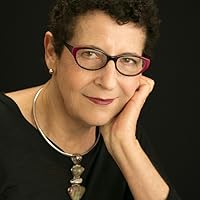
Frances Dinkelspiel is a freelance writer whose work has appeared in the New York Times, the Los Angeles Times, People Magazine and elsewhere. She is the co-founder of Berkeleyside, an award-winning news site. Her newest book is Tangled Vines: Greed, Murder, Obsession, and an Arsonist in the Vineyards of California. Her first book was the bestselling, award-winning Towers of Gold: How One Jewish Immigrant Named Isaias Hellman Created California.
This is a tough one to rate. The information and subject matter borders between 4-5 stars, while the writing is around 1-2. Dinkelspiel writes like the reporter she is, the book is like a series of feature pieces strung together in chronological order. This technique actually works by and large, but there are way to many mini-sections that come out of nowhere and don't connect at all to what follows. If you read Ron Chernow or Walter Benjamin you'll probably find Dinkelspiel frustrating. This is a 325 pg book that really rates at least 700 pgs. The upside is she did an excellent job of assembling her sources. This is the best non-academic account of mid to late 19th century California I've read. Strongly recommended as an entry level California history book, and frankly, there is no state in the Union that needs to understand that it does in fact have a history more than California.
This fascinating book gave me more insight into the development of modern California than almost anything I've read before. It is a testament to how one person with drive, vision, and intelligence can change the world around him. It is also a testament to the opportunity offered by the United States to people thwarted in their countries of origin.
Though Isaias Hellman was Jewish, that is really the least compelling thing about the book. I was riveted by how he, along with a group of other visionary individuals -- some Jewish, some not -- transformed Los Angeles from a small, insignificant frontier town into an important city. How he helped to found the University of California, an institution that has surely transformed the state and become one of the most prestigious universities in the world. How the financing his bank provided allowed California to grow into the economic powerhouse it is today. And, these are only a few of the many astonishing contributions Mr. Hellman made. His contributions also helped, in a major way, to form the modern city of San Francisco.
I was so swept up in the story that I felt truly mournful when Mr. Hellman died toward the end. And, the places were so well described that I lived in them while reading the book. A small caveat here: I have lived in Southern California and Los Angeles since 1950, and have spent much time in San Francisco where I have family, so I can more easily "see" all of the places described. Nevertheless, I still think the place descriptions in the book are so vivid that they would feel real to just about anyone.
If you are interested in the history of Los Angeles, this book, along with the biography of Otis Chandler (Privileged Son, Otis Chandler and the Rise and Fall of the Los Angeles Times Dynasty by Dennis McDougal) will give you a great breadth and depth of knowledge.
Despite my plunge of the last two years into California history, I had not heard or, or at least registered, Isaias Hellman, and I was completely glued to the first portion of this book. As the state civilized and developed in the late 19th and early 20th centuries, it focuses more on his business interests, and as banking isn't my thing, I did bog down a bit here and there towards the end. But over all this is fascinating.
I would recommend this book to anyone interested in the business/economic history of California or the history of Judaism in California. Traces the history of Isaias Hellman, grandfather of Warren Hellman (Hellman and Friedman, recently passed away), penniless migrant from bavaria, became CEO of Bank of America, one of the richest men in California in 1900.
I am first a family historian so the author had me by the end of her introduction. But this is so much more than a family history. The author has taken mounds of historical research and cleverly woven her family into it. Along the way she gives the reader a detailed description of how business got started in LA. She presents a somewhat different history of the Jewish experience in early California – at a time when a man was accepted for who he was and what skills he brought to the table. Not what church he attended. One interesting thing I noted is that when the Jews were getting along with the Gentiles and the Californios were getting along with the Mexicans, they still had to find someone to pick on – in this case, it was the Chinese. I'd like to think we've progressed as a species but sometimes I fear not!
This is so much more than the biography of just one man. Frances Dinkelspiel’s telling of the true story of Isaias Hellman brings to life the history of modern California, from its most humble beginnings. You’re brought back to see how a few adobe huts in the middle of nowhere led to the world’s most vibrant economy, and a state of vast cultural and social influence. “Towers of Gold” is rich with details about our past that will have you dazzling colleagues at the office water cooler.
Towers of Gold rediscovers Isaias Hellman, once justly celebrated as one of the most important businessmen in California's development, both in Los Angeles and San Francisco. There is hardly a major California economic development in a 50-year span with which Hellman was not involved. Dinkelspiel has created a fascinating history of the state's growth through the lens of one man's history.
Interesting but I felt a very biased book. Isaias Hellman is presented in very good light which I doubt was all true. It spoke of some prominent Jewish families but left out others like the Marcus Koshland.
Interesting read about Isaias Hellman and his family. I had never heard of Hellman, but he was one of the pioneers who built Los Angeles and later moved to San Francisco to build out an enormous banking empire which included Wells Fargo bank. He built the first banks of LA and later was one of the most important financiers of California.
What I found most interesting in this book was the early years of Isaias as a teenage immigrant from Bavaria in Germany to Los Angeles. Although there were very few jews in LA, they barely experienced anti-semitism and settled into building california and the american dream alongside mexican, irish, italian and other immigrants. Everyone of them was focused on building a better life and simply didn't have time for racism and hate.
After he was already successful and moved to San Francisco, he was re-united with a whole slew of other Jewish immigrants who became extremely important in building california -- including Levi Strauss (clothing), Adolph Sutro (mining and real estate), William Haas (groceries and the family later helped build out Levi Straus). Adolph Sutro because the first jewish mayor of San Francisco back in 1895 which demonstrates both the openness of californians towards Jews and their success.
Why did so many of the successful Jews come from Bavaria? In the early 19th century, Bavaria imposed heavy restrictions on Jews, limiting their ability to own land, marry without government approval, or enter certain professions. Many young Bavarian Jews sought better economic opportunities and religious freedom in America. The California Gold Rush (1848–1855) provided a unique opportunity, attracting Jewish merchants and financiers who set up businesses to serve miners and settlers. This is another example of countries who persecute their jews losing tremendous talent to America.
Last interesting point is that Warren Hellman was a great-grandson of Isaias. He was the founder of Hellman & Friedman *AND* Matrix partners and was also the head of of Lehman Brothers in 1973 after becoming their youngest partner at age 29.
----- ChatGPT addendum below -->
Isaias Hellman was undoubtedly one of the wealthiest financiers of his era, but he was not among the absolute richest men in America in the early 20th century.
Comparison to the Wealthiest Americans of the Time At the time of Hellman’s death in 1920, his fortune was estimated at $18 million (about $288 million in 2025 dollars). While this was an immense sum, it was dwarfed by the wealth of the country’s top industrialists and financiers:
John D. Rockefeller – Over $1 billion (~$16+ billion in today’s dollars) Andrew Carnegie – Over $300–$400 million (~$4.8–$6.4 billion today) Henry Ford – Estimated around $200 million (~$3.2 billion today) J.P. Morgan – Estimated at $80 million (~$1.2 billion today) Where Did Hellman Stand? California’s richest banker – Hellman was arguably the most powerful and wealthiest banker on the West Coast. His leadership at Wells Fargo, Nevada Bank, and Union Trust solidified his financial empire. Top-tier businessman – Among California’s wealthiest individuals, but not in the same league as national industrial magnates like Rockefeller or Carnegie. Highly influential – As a financier, his influence over California’s banking, transportation, and urban development was immense. Final Verdict While Isaias Hellman was one of the richest and most influential businessmen in California, he was not among the very wealthiest Americans of his time. His fortune, though significant, was a fraction of what industrial titans like Rockefeller and Carnegie controlled. However, his impact on Western banking and development was unparalleled.
This superb biography of Isais Hellman is the [largely] untold story of the Jewish immigrants who arrived in California in the mid-1800s and proceeded to make the state a powerhouse, leaving behind wealth and a civic, business and cultural legacy that thrives today. As someone who has lived in CA for many decades, much of this story, deeply researched and wonderfully written by his great, great granddaughter, was new to me. Isais started out in LA, a sleepy adobe outpost, disconnected from the rest of the world. Within a decade, he was becoming a powerbroker, leading banker, and investor in wine, transportation, education, newspapers, real estate, water, oil, Jewish places of workshop. He moved to San Francisco, founded more banks (including Wells Fargo), and continued his string of seminal investments, leveraging the trust that his conservative, pragmatic dealings engendered and the coast-to-coast diaspora of increasingly wealthy and powerful Jewish immigrants. All this against the context of dramatic political (populism, corruption, war, unionization), economic (recessions), social (anti-Semitism, immigration), technological (electricity), and environmental (the 1906 earthquake). What a life! What a legacy!
I really enjoyed learning about the immigrant and business history of early Southern California and the relationship between LA and San Francisco. Isaias Hellman accomplished so much in a relatively short period of time. I took California History while at UC Santa Barbara but don’t think he was even mentioned. The story extends into the early 1900’s and era of the 1918 Spanish influenza pandemic, which makes for an interesting comparison with the current 2020 pandemic. Well-written with just enough details.
Interesting history or early Los Angeles and San Francisco, I am in CA and used to live in LA and am now in the Bay Area. A little tough to read about the excesses of the Gilded Age in retrospect to continuing issues of inequality. Hellmann made a ton of money during unregulated times as the State got established, but he was never a criminal. Amazing stories of purchases of land that now would be in the billions (miles of Malibu Coastline for 10 cents an acre!). Not too much on the Jewish aspect, but it was there. An honest portrayal I feel.
Nicely written story of growth of California between 1860-1920 through the story of a Jewish immigrant from Bavaria Isaias Hellman. Hellman came to LA with his brother and practically nothing else as a teenager when LA was little more than a settlement and through his expertise in banking was involved in building California's railroads, water system, vineyards, colleges and more in the meantime becoming one of the richest men in the state - all told through the lens of the Jewish experience in late 19th, early 20th century California. Well worth the read!
FRances Dinkelspiel did it again. She has inside knowledge she being Isaias hellmans descendant. However. her research is excellent. I grew up in Alhambra and had a nearby street called Hellman Avenue. I never who it was named after until I read her book. Not only was he an adroit businessman but overcome anti-semitism without nary a pause. This book was so well researched that I felt I had just read one of the best books on early California History beyond a biography of Isaias Hellman. I hope she writes more books soon.
For those interested in California history it’s a must read
I knew nothing of Hellman before a friend recommended this which is embarrassing for a native California history buff. The one question and or comment is he must have been an astute man to pick the right people to run all the businesses he had a hand in and be able to travel and manage all the homes and estates. What drive.
This is an ok book. Perhaps the greatest problem is that it’s not really a true biography of Hellman. Instead the author basically chooses various points throughout his life and highlights major events that occurred themselves, often leaving Hellman completely out of the picture. I would almost describe it more as a description of the development of the geographic areas where Hellman happened to reside than a biography. It is certainly pretty good at accomplishing that goal.
I was given this book as a gift... and am super grateful. Having grown up in California, it was so illuminating to learn about the development of this area and our banking system. Highly recommend for people who are interested in history, banking, California and the insights of a great and courageous man. A great read!
One of the things I liked best about Towers of Gold was its comprehensive narrative of the early days of Los Angeles and its transformation from pueblo to city. I've read a good deal about the preceding period when Los Angeles was a Mexican territory; Towers of Gold told me about what came next. I also appreciated the well-told biography of Isaias Hellman that the author, his great-granddaughter, sets forth about this remarkable man.
This is a detailed look at the early years of Los Angeles that has been well researched and carefully annotated. It should be read by anyone who has an interest in Southern California.
If you want to learn some very interesting history about Los Angeles and California, this book is great. Content-wise, I learned so many interesting things and now look at Los Angeles, in particular DTLA, in a new light. Fascinating. So why only three stars? Well, it's not the most exciting writing. Everything is laid out just as it happened historically but, even the family intrigue, is dry. So, read it to learn about California history, El Pueble de Los Angeles, and the fascinating relationships between the immigrant families from Germany. Don't expect entertainment, and you'll enjoy it.
Frances Dinkelspiel has written a fascinating, meticulously researched portrait of her ancestor Isaias Hellman, one of the premier bankers of the late 19th and early 20th centuries. Hellman played such a key role in shaping not only California's economy, but it's educational system as well. He came to Los Angeles in 1859 from a small village in Germany, and through his founding of the Farmer's and Merchant's Bank helped transform it from a sleepy pueblo into the bustling financial capital it is today. Later he moved his base of operations to San Francisco and bought the failing Nevada bank of California, which he turned into a thriving institution, and later merged with Wells Fargo Bank. Isaias helped bankroll many industries that were integral in the growth of the state, including transportation, oil, wine, and water. He was one of the biggest landholders in the state, and later gave a parcel of his land to help found USC, he was also a regent of the University of California for many years. Sadly, most of his contributions have been largely forgotten today.
I really enjoy reading financial biographies like those written by Chernow, Strouse, Nasaw, etc. I am pleased to say that Ms Dinkelspiel's writing ranks right up there with theirs, but she managed to craft an in-depth portrait of her subject using half the pages that they normally do, this is quite a feat :)
If you're into California or Banking history at all, this book is a must read! It's my pick for best book of 2008, and one of my top 5 of the decade.