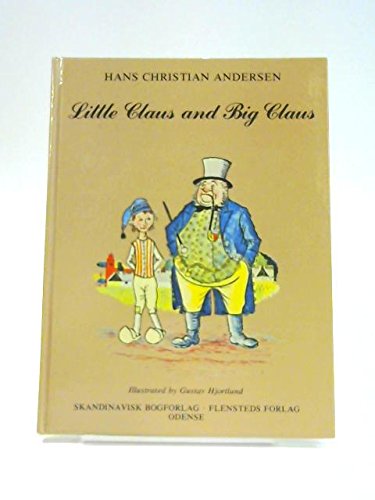
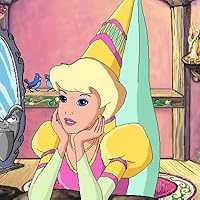
Vivían en un pueblo dos hombres que se llamaban Claus el Grande que tenía cuatro caballos, y Claus el Pequeño, dueño de uno solo. Durante toda la semana, Claus el Pequeño tenía que arar para el Grande, y prestarle su único caballo; luego Claus el Grande prestaba al otro sus cuatro caballos, pero sólo una vez a la el domingo. Ese día, Claus el Pequeño se mostraba orgulloso arando con los cinco caballos y en cuanto pasaba la gente, gritaba «¡Arre mis cinco caballos!».Esto no gustaba a Claus el Grande, que enfadado agarró un mazo y dio un golpe en la cabeza al caballo de Claus el Chico, y lo mató.El pobre Claus, echándose a llorar, despellejó el animal muerto, puso la piel a secar al viento, la metió en un saco, que se cargó a la espalda, y emprendió el camino de la ciudad para ver si la vendía. Se hizo tarde y tuvo que pasar la noche fuera. Al día siguiente volvió al pueblo cargado de dinero y fue a verle Claus el Grande.
Hans Christian Andersen (often referred to in Scandinavia as H.C. Andersen) was a Danish author and poet. Although a prolific writer of plays, travelogues, novels, and poems, Andersen is best remembered for his fairy tales. Andersen's popularity is not limited to children; his stories — called eventyr, or "fairy-tales" — express themes that transcend age and nationality.
Andersen's fairy tales, which have been translated into more than 125 languages, have become culturally embedded in the West's collective consciousness, readily accessible to children, but presenting lessons of virtue and resilience in the face of adversity for mature readers as well. Some of his most famous fairy tales include "The Little Mermaid", "The Ugly Duckling", "The Nightingale", "The Emperor's New Clothes" and many more. His stories have inspired plays, ballets, and both live-action and animated films.
بیشتر از خود داستان بامزه ی هانس کریستین اندرسن نحوه ی خوندن داستان بهم چسبید. اینطوری بود که عضو یه گروه تلگرامی شدم که اعضا به نوبت یه پاراگراف از داستان رو میخونن و فایل صوتی رو میفرستن تا بقیه هم گوش بدن. این روند تا اتمام داستان ادامه داره و بعد با داستانی جدید از سر گرفته میشه.اگه به خوندن و شنیدن داستان های کوتاه به زبان انگلیسی علاقمند هستین شما هم می تونین ملحق شین
From the clever, slyness of Little Clause, to the clumsy, idiocy of Big Clause, I loved this story from start to finish and laughed throughout. The vulgarity, brutality and ruthlessness of the plot aside, it was an enjoyable read from start to finish. A twisted fairytale from the master of it all.
There's something innately calming about Andersen's style that heightens his stories beyond just his impressive creativity. His storytelling is so casual, even when violence or evil occurs (which it does, often) within them. This unpretentiousness imparts a sense of sitting around the fire and listening to your grandmother speak the words rather than--in my specific case--reading one every so often in my office as I take a break from working. It reminds me of filmmaker Wes Anderson's work; timeless, whimsical, colorful.
While the stories themselves are not universally appealing to my tastes, I almost always find myself immediately enraptured whenever I do open one of his tales. This is telling of his quality, considering I typically prefer overly serious and more subtle stories and Andersen's work is most certainly not that. I believe their appeal should be nearly universal; to children and adults regardless of personal preference. Indeed history has shown it so, as these stories have been read and enjoyed for nearly two centuries and adapted (even aped) into countless other forms of media.
Little Claus and Big Claus is one of his less well-known stories, but one I enjoyed more than some of his other stuff I've read. Little Claus is an unabashed con-man who regularly outwits Big Claus, and I was also pleasantly surprised to see the dark humor the story features, as my own sense of humor is like a strong cup of black coffee.
I read a Tiina Nunnally translation of the original Danish, whom I believe has also done a well-regarded translation of the Scandinavian classic Kristin Lavransdatter. I found her work adequate. There are times which I could tell I was reading a translation, but such is to be expected if you want something reasonably accurate to the source material. I imagine it would be difficult to do a better job and thus I'd recommend her.
My recommendation: Read Hans Christian Andersen. Read him if you like Pixar. Read him if you like Harry Potter. Read him if you like Wes Anderson. And read him if you don't like these things anyway, because he'll probably still appeal to you on one level or another.
This is one of the underrated tales of ol' HCA himself. Sure, he often writes sweet, tragic, often saccharine fairytales that feel like overstuffing yourself with chocolate cake, but this is one of the really great ones. Witty enough to make you laugh, but disturbing enough to make you CRINGE. (Well, actually, all of his fairytales are disturbing in some shape or form, so…)
My one criticism of this tale was how absolutely stupid Big Claus was. No rich people are that idiotic, so I'm sorry, dear Mr. Andersen, but your story has helped little in our conspiracy to trick the top 1% into jumping into a volcano.
This story was in a collection thingy with other stories mocking the upper class such as The Princess on the Pea and The Tinderbox, and all three are just 👌👌👌. I recommend reading about HCA's rags-to-riches life to get a well-rounded idea on why he wrote these stories.
I was expecting a cosy Christmas story but that's not what this was at all. However, it was intriguing to see how smoothly and successfully Little Claus, a villain in his own right, outwits and cons everyone he comes across, including the equally (if not more) villainous Big Claus.
I didn't care for this one at first but it grew on me. Big Claus's stupidity and the lengths he was going through to get back at Little Claus was quite funny. I mean killing his home grandma? Come on Big Claus.
Felt tears within me with the death of the horse, but... whoom! What a change of heart and thus fortune! Hilarious and macabre in one go. Very similar to the Grimm Brothers tale "The Little Peasant."
This entire review has been hidden because of spoilers.
I gotta say that I found this tale more entertaining than The Tinderbox, because of all the cons Little Claus pulls of, but I still wish it would’ve given me something more. Everyone does bad things, and they don’t get punished, except by their own stupidity, and believe me, Little Claus is the only character who’s not stupid. He may not be a hero, or any kind of a good person, but his charm and cunningness makes him a compelling character to read. Link to video review: https://youtu.be/uDbEc1MyomI
The story is rather inadequate. If I recollect correctly, it is one of Andersen's few stories that is a retelling or refiguring of something else. The tale follows the rich and rash Big Claus and the sly and poor Little Claus. Both are horrible people who do horrible things to others. Like in life, the clever get away with the worst, and only those who cannot conceal get what is coming to them.
Me entretuvo mucho desde el principio, sobre todo me gustó ver cómo el Claus pequeño usa su ingenio y su valentía para salir adelante, incluso cuando todo parece injusto para él. Este cuento es ágil y tiene momentos muy inteligentes. Sin embargo, el final me pareció sombrío y duro; me habría gustado un cierre más esperanzador. Aun así, es un relato clásico que vale la pena leer y que deja una enseñanza clara sobre la astucia y la perseverancia.
This strange short story is sure to make you laugh as you read about how a desire for vengeance leads the witty Little Claus down a dark yet comical path. This path being one of great despair for Big Claus, undeniable satisfaction for Little Claus and a multitude of memorable/comical moments for the reader!
The most barbaric thing you could ever read to a child. Skip this story for the little ones, please.
No wonder why HC Andersen had so many bad reviews when he originally published this story, being described as "relativizing murder for children as if he was talking about killing a fly". Back then, of course, people had decency, character and strong moral values to speak up against these things, unlike now, but that's another story.....
Nunca pensei que um conto de fadas poderia mostrar as características necessárias de um vendedor , mantendo-o "honesto" enquanto aproveita as oportunidades que a vida lhe dá . Ou simplesmente ... Little Klaus é uma pessoa muito inteligente e sabe aproveitar TODAS as oportunidades que vida lhe dá .
While I don't enjoy the casual violence and killing in this story, I do enjoy finding out the various ways that Little Claus outwits Big Claus. I feel the same way about Grimms' Master Thief--highly entertaining but not commendable.
A hilarious story about a man fooling his enemy in the most insane ways possible. This is definitely the most bonkers fairy tale I’ve ever read. My favorite part was when Little Claus tricks Big Claus into murdering his own grandmother for money. Don’t know if I’d ever read this story to my kids.