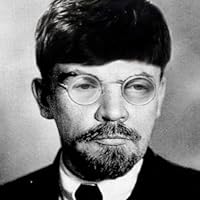
This compendium of poems by Gerard Manley Hopkins includes his most famous works, together with a careful selection of his most critically acclaimed verses. Hopkins is one of the Victorian era's best appreciated poets, gaining much of his fame for his unique and religiously inspired subjects. A committed Jesuit, his poems were notable for including a technique of Hopkins' own invention named sprung rhythm. This connotes verse which is designed to imitate the patterns and pace of typical human speech. By 1918, when this collection of Hopkins' poetry first appeared, he had gained much renown. To emphasise that several of the entries had never been published previously, the subtitle of 'Now First Published' was appended. This and other anthologies helped introduce the talents of Hopkins to a wider audience, cementing his status in England's literary pantheon.
Gerard Manley Hopkins (1844-1889) was an English poet, Roman Catholic convert, and Jesuit priest, whose 20th-century fame established him posthumously among the leading Victorian poets. His experimental explorations in prosody (especially sprung rhythm) and his use of imagery established him as a daring innovator in a period of largely traditional verse.
Gerard Manley Hopkins was a Jesuit priest; a playful, provocative (in language, not theme), strikingly original poet; quite possibly gay (there’s an interesting précis on wikipedia; as usual, we’ll never know for sure); a student of Welsh and old English; an outsider artist, writing for an audience of precisely two fellow priests, whose work was not published at any length until after his death; a genius, whose best poems are as great as anything in English.
He adopted his meter from Beowulf and called it “sprung rhythm;” his goal: to liberate English poetry from the relentless steady beat of the iam—not poetry without meter, but a meter of infinite plasticity, atwist and atremble with derring-do.
I’ve now read every word he ever wrote, and though the unfinished fragments and juvenilia that pad out his complete works are inessential and at times quite dreadful, it was well worth it, because who wouldn’t want to understand the many false turns and half-starts of a poet so sublime?
And the great poems, the ones Hopkins copied out for posterity? Those poems where he stretches all his energies towards a deep-rooted Germanic English, alliterative and perfect? They are sublime. I’ll use the word again: sublime, sublime, sublime, sublime
I caught this morning morning’s minion, king- dom of daylight’s dauphin, dapple-dawn-drawn Falcon, in his riding Of the rolling level underneath him steady air, and striding High there, how he rung upon the rein of a wimpling wing In his ecstasy! then off, off forth on swing, As a skate’s heel sweeps smooth on a bow-bend: the hurl and gliding Rebuffed the big wind. My heart in hiding Stirred for a bird, – the achieve of, the mastery of the thing!
On another note: do you see what AI, merely by existing, has done to me? It has murdered, dismembered, buried my very last compunction about punctuating sentences insanely; the old order has fallen to a flatulent sea of crapola, and all that is left us humans is the technically incorrect and the absurdly semicoloned; it’s a new morning, can’t you hear that rooster crowing? rabbit running down the road
136 years on and still one of the best poems ever.
Márgarét, áre you gríeving Over Goldengrove unleaving? Leáves like the things of man, you With your fresh thoughts care for, can you? Ah! ás the heart grows older It will come to such sights colder By and by, nor spare a sigh Though worlds of wanwood leafmeal lie; And yet you wíll weep and know why. Now no matter, child, the name: Sórrow’s spríngs áre the same. Nor mouth had, no nor mind, expressed What heart heard of, ghost guessed: It ís the blight man was born for, It is Margaret you mourn for.
I chose Hopkins as "my poet" whose voice I would live with and listen to—exclusively!—for a month (an assignment for our reading group, Lectio Borealis).
It was a wonderful experience, although I didn't read this volume quite so comprehensively as I wished. I was particularly interested in reading some of Hopkins' lesser known (and often more conventional) poems against his signature masterpieces. Almost all of his poems explore compelling ideas (theologically, metaphysically), but some of the poems shine, and some do not. When Hopkins cuts loose and piles up his descriptors and seems to be singing or playing a trumpet more than writing in the English language, then he's at his finest, ranking right up there with the best poets of all time. Reading many of these outstanding poems gave me some inklings as to his creative process, which was exciting to glimpse.
Many of Hopkins' poems are sonnets, which was a delightful realization to make; I am particularly susceptible to the charm of the sonnet, and we had, the previous month, been reading sonnets for Lectio. Without being quite able to put my finger on it, I continue to ponder the fact that there's something special about the sonnet, and Hopkins' preference for the form seems another piece of the puzzle.
This volume also includes a section of translations (both into and out of English) and poems in other languages by Hopkins. I didn't have time to look at these in detail, but I was tickled that he translated a number of passages from Shakespeare into Latin (and, on occasion, Greek), that he composed in both classical and medieval Latin meter, and that he even wrote a couple of poems in Welsh. Just to add to the list of marvels that is the oeuvre of Gerard Manley Hopkins!
Hopkins is dense, overwhelming, and sometimes bewildering with his wildly creative descriptions and play-on-words, but for all that he understands the beauty of language and how things should sound to the ear as excellently as any poet.
Owen’s Review: 5/5 speckled strawberries - I couldn’t understand half of what dad read, but it all sounded pretty beautiful.
Definitely my favourite repressed Catholic homosexual.
Bring it Gerry.
Seriously, GMH is the fucking king of the long dark night of the soul.
His beautiful poems are stunning, but I love his misery more. Carrion Comfort is ... just perfect. It's shocking to see the extraordinary music of something like Pied Beauty twisted into this wail of grief and fear.
NOT, I’ll not, carrion comfort, Despair, not feast on thee; Not untwist—slack they may be—these last strands of man In me ór, most weary, cry I can no more. I can; Can something, hope, wish day come, not choose not to be. But ah, but O thou terrible, why wouldst thou rude on me Thy wring-world right foot rock? lay a lionlimb against me? scan With darksome devouring eyes my bruisèd bones? and fan, O in turns of tempest, me heaped there; me frantic to avoid thee and flee?
Why? That my chaff might fly; my grain lie, sheer and clear. Nay in all that toil, that coil, since (seems) I kissed the rod, Hand rather, my heart lo! lapped strength, stole joy, would laugh, chéer. Cheer whom though? the hero whose heaven-handling flung me, fóot tród Me? or me that fought him? O which one? is it each one? That night, that year Of now done darkness I wretch lay wrestling with (my God!) my God.
I also once highly erroneously named a book The Leaden Echo & the Gold. Thankfully I was saved at the last minute. But this guy has a lot to answer for.
THE WORLD is charged with the grandeur of God. It will flame out, like shining from shook foil; It gathers to a greatness, like the ooze of oil Crushed. Why do men then now not reck his rod? Generations have trod, have trod, have trod; 5 And all is seared with trade; bleared, smeared with toil; And wears man’s smudge and shares man’s smell: the soil Is bare now, nor can foot feel, being shod.
And for all this, nature is never spent; There lives the dearest freshness deep down things; 10 And though the last lights off the black West went Oh, morning, at the brown brink eastward, springs— Because the Holy Ghost over the bent World broods with warm breast and with ah! bright wings.
In my penultimate year at school, the poetry component of my English Literature class was a comparative study of collections by Emily Dickinson and Gerard Manley Hopkins. Over the course of several months, these two poets - neither of whom I had been exposed to before - produced in me diametrically opposed reactions.
I instantly warmed to Dickinson's poetry; off-beat, quirky, ruthlessly innovative in its structure, cerebral and introspective to the point that she actually staged poems within the eerie 'corridors' of the mind (in poems such as One Need not be a Chamber to be Haunted and I Felt a Funeral in My Brain). Her poetry was, and still is, unlike that of any poet I have read. Madness, insanity, doubt, loneliness, detachment from oneself as well as others; such themes are wonderfully rendered in her work, although her more lighthearted work suffers in its loss of that unique slant of hers that she brings to darker material. The main appeal of Dickinson's poetry is the strength of her voice. Read to me any one of her 1800(!) poems and I would be able to distinguish who wrote it. This is particularly apparent in many of her nature poems, which combine awe and wonder (or sometimes their inversions) at nature's beauty and horror with a keen interest in the psychological implications for the speaker.
You gain nothing of this from Hopkins. As I read more of Dickinson's strange wisdom, I found Hopkins increasingly stale, pandering and tepid. He is known as the gold standard in Victorian religious devotional poetry, and this piety is evident in his writing. The beauty of nature is, to him, an expression of God's love for humanity, and poetry is, to him, a way of communicating gratitude to God. But in this cycle of admiration and dedication, there is something very crucial that is lost. We learn virtually nothing of Hopkins' own personality, and his writing, while lovely, fails to move past the pastoral and idyllic landscape. It's like a talented artist never progressing past the paintings of two hills and a gate he or she drew in high school.
There are two exceptions to this trend of his. The first is when he acknowledges the inadequacy of his ability as a poet and of language itself to capture, in words, the beauty he sees in the world. Finally, we see some humanity! Hopkins is not a devotional robot after all! The second is when he expresses actual thought and feeling other than that of pure, blind, dumbstruck faith. Thou Art Indeed Just, Lord and I Wake and Feel the Fell of Dark are full of questions, made all the more poignant by their lack of response, and express doubt, insecurity, curiosity, a longing for answers and a lamentation of the universe's silence to his words. While God's Grandeur and Pied Beauty are inoffensively pretty and pleasant, they fail to make any deep impression on me. We get a glimpse of greater complexity in Thou Art... and I Wake, but for anyone looking for truly masterful introspection of human experience, I would readily recommend Emily Dickinson.
(First read 12/2016) As a naive reader of GMH, his language feels immediately fresh and unfamiliar, potent with energy and unexpected explosions, such as in "Windhover" -- "Brute beauty and valour and act, oh, air, pride, plume, here / Buckle!", and even in his terrible melancholia "Time's eunuch, and not breed one work that wakes. /Mine, O thou lord of life, send my roots rain". Considering other English poets with more melodiously smoother verses (e.g., Tennyson), the language of GMH would jut out to mark his originality even for this uninformed reader.
GMH's poetry is also infused by his religious life. An Oxfordian converted Catholic, he was exiled from England's Anglicanism, his friends and acquaintances, his poetic pursue as a Jesuit. Even though besetting constantly by such triple deracinations, GMH "concentrates his images, communicating the instress of the poet’s perceptions of an inscape to his readers" (wikipedia entry). The "instress" and "inscape" are the "many" in the theological problem of "One-and-Many". Platonic Idealism stresses the One, the universal and the uniform, while the "Many" stresses the multiples. Human nature, in its manifested lives in individuals, often has to confront the One with the Many, a God-vs.-Man relationship. Anthony Domestico explains, "Inscape, for Hopkins, is the charged essence, the absolute singularity that gives each created thing its being; instress is both the energy that holds the inscape together and the process by which this inscape is perceived by an observer. We instress the inscape of a tulip, Hopkins would say, when we appreciate the particular delicacy of its petals, when we are enraptured by its specific, inimitable shade of pink."
Or the best example of that "singularity" and its energy is in the Windhover, the "mastery of a thing".
This collection is the most comprehensive of GMH's work, and the most updated version. A must re-read.
I didn't read everything in here, but definitely over half of it, and I'd like to save half for another time. I've enjoyed these poems SO much, and his journal entries and little excerpts of things (like the fictionalized discussion of beauty) were fascinating. There was also an in depth introduction about Hopkins' use of rhythm that I am looking forward to rereading at some point, because I did not understand it the first time haha, as well as a detailed notes section in the back that I discovered late. Hopkins' poetry is gorgeous. It feels saturated with motion and color and specificity. Never has poetry made me work *so hard* to read it and never have I felt *so* satisfied at the end. His grasp of words is so vast that it almost feels like reading another language sometimes -- the way he rearranges sentence structure, makes up words(?), and uses pauses and exclamations and repetition and sound. But it's like reading a language you have been studying, so that when you finally translate the sentence you feel accomplished and thrilled. He is so passionate. I love it all.
Gerard Manley Hopkins was a great Poe t of the 19th century. This is the Windhover: (line placements did not copy correctly)
I caught this morning morning's minion, kingdom of daylight's dauphin, dappledawn-drawn Falcon, in his riding
Of the rolling level underneath him steady air, and striding
High there, how he rung upon the rein of a wimpling wing
In his ecstacy! then off, off forth on swing,
As a skate's heel sweeps smooth on a bow-bend: the hurl and gliding
Rebuffed the big wind. My heart in hiding
Stirred for a bird,—the achieve of, the mastery of the thing!
Brute beauty and valour and act, oh, air, pride, plume, here
Buckle! and the fire that breaks from thee then, a billion
Times told lovelier, more dangerous, O my chevalier!
No wonder of it: shéer plód makes plough down sillion
Shine, and blue-bleak embers, ah my dear,
Fall, gall themselves, and gash gold-vermillion.
Hopkins was born in London and became a Jesuit priest after studying classics in Oxford. He was deeply religious but his poems also contain doubts about his God. There are indications of homoeroticism in his poetry. He was very influential especially after his death, the inventor of sprung rhythm. I really love some of his poems and his choice of words and rhythm impress.
I found this collection of poetry deeply touching. I learned so much from the array of topics! My only frustration was that this felt to me to be a very private collection of poems, some obviously works in progress. Posthumously published works sometimes leave one with the feeling that the author would not have released everything just yet. Some feel intensely spiritual and speak to Hopkins' understanding and relationship with God.
I don't often read poetry, but I did enjoy reading this collection of poems. Hopkins's poetry is thoughtful and I appreciated his poetry expressing his devotion to Christ. I'm not sure that I understood always what he was saying in his poems, even though I read many of them twice or more times. The footnotes in the back of the book were only so-so in terms of helpfulness.
I guess that I need to read more poetry in order to get the knack for better understanding!
Hopkins is my favorite poet which is sad because he's nowhere near as prolific as someone like Shakespeare, or Dickenson and I wish he were. His poems carry something in them which give off a pulse which draws one in--draws me in--like no other poet. Part of my love is, of course, relating to him as a person, but his poetry is pure bliss to read.
Like Jack Donne, this poet is a large part of the reason why I am comfortable calling myself a Christian, this poem is everything Christianity is to me.
As kingfishers catch fire, dragonflies draw flame; As tumbled over rim in roundy wells Stones ring; like each tucked string tells, each hung bell's Bow swung finds tongue to fling out broad its name; Each mortal thing does one thing and the same: Deals out that being indoors each one dwells; Selves — goes itself; myself it speaks and spells, Crying Whát I dó is me: for that I came. I say móre: the just man justices; Keeps grace: thát keeps all his goings graces; Acts in God's eye what in God's eye he is — Chríst — for Christ plays in ten thousand places, Lovely in limbs, and lovely in eyes not his To the Father through the features of men's faces.
Great freakin' cover. Used to sit and read "The Winderhover" once a day in 2005... "I caught this morning morning's minion, kingdom of daylight's dauphin dapple-dawn-drawn falcon, in his riding. Of the rolling level underneath him steady air, and striding. High there..." Gorgeous. Wonderful bio criticism of Hopkins in Buechner's "Speak What We Feel, Not What We Ought To Say", just FYI.
Picked this up in a tiny village in the Cotswolds, mostly because I like Hopkins, could stand to get further acquainted with him, and because I'm weak to a really pretty hardcover edition of poetry with its own case. Particularly when I'm on holiday. Even if it is a selected edition.
Beautiful poetry that feels like golden honey dripping, then flying, then cascading off the page.
I am aware that honey only really drips but I don't have the lyrical power of Hopkins. Read the poems and be transported into the very heart of Nature's power with all it's sounds, smells and tastes.
I'm always reading Hopkins, but this time through, I'm attempting to memorize a few of my favorites as well--especially since his poetry goes so well with walking while drinking in the wonder of the world.
I have owned and loved these poems since the Sixties and never forgotten several that I learned by heart in my teens, but I only started to appreciate them with the help of a biography of Hopkins by Paul Mariani, which I have just finished reading alongside a pretty Folio edition of the poems.
Lower rating because of the edition not because of the poems! I found the introduction very squeamish and conservative marked by a total inability to talk about his sexuality. Sort of new criticism esque.