

What do you think?

Children of The Cave
‘It’s dangerous to be different where everyone else is alike. Have you noticed?’
1819. Iax Agolasky, a young assistant to a notable French explorer, sets off on a journey to the Russian wilderness. They soon discover a group of creatures living in a cave: children with animal traits. But are they animals, or are they human? Faced with questions of faith, science and the fundamentals of truth, tensions rise in the camp. Soon the children’s safety becomes threatened and Agolasky needs to act.
Why Peirene chose to publish this book:
Greek legends, fables and fairy tales all share an interest in mythical beings. In this book Sammalkorpi imagines what would happen if these creatures really existed. How would we respond? The answer to this question matters hugely. It determines what it means to be human.
1819. Iax Agolasky, a young assistant to a notable French explorer, sets off on a journey to the Russian wilderness. They soon discover a group of creatures living in a cave: children with animal traits. But are they animals, or are they human? Faced with questions of faith, science and the fundamentals of truth, tensions rise in the camp. Soon the children’s safety becomes threatened and Agolasky needs to act.
Why Peirene chose to publish this book:
Greek legends, fables and fairy tales all share an interest in mythical beings. In this book Sammalkorpi imagines what would happen if these creatures really existed. How would we respond? The answer to this question matters hugely. It determines what it means to be human.
176 pages, Paperback
First published June 1, 2016
Ratings & Reviews
Friends & Following
Create a free account to discover what your friends think of this book!
Community Reviews
Displaying 1 - 30 of 37 reviews

December 10, 2018
On vaarallista olla erilainen paikassa, jossa kaikki muut ovat keskenään samanlaisia.
It's dangerous to be different, where everyone else is alike.
Children of the Cave has been translated by the mother-and-daughter team of Emily and Fleur Jeremiah, translators of inter alia White Hunger which featured on the 2016 Man Booker International longlist.
Both books are published by wonderful small independent publisher Peirene Press, who have the strapline Contemporary European Literature. Thought-provoking, well designed, short, as part of their 2019 “There Be Monsters” series. Their role in social activism (https://www.peirenepress.com/social-a...) is also key to their mission, including donating 50p for each book purchased direct to charity.
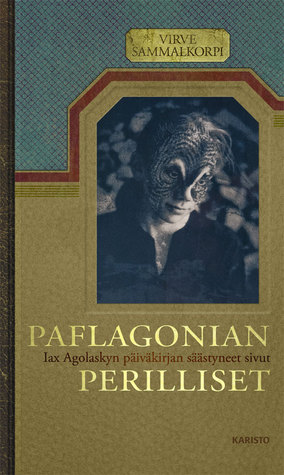
The original Finnish novel by Virve Sammalkorpi had the more literal title Paflagonian perilliset – Iax Agolaskyn päiväkirjan säästyneet sivut (literally - 'Pafagonian heirs - the saved pages from Iax Agolasky's diary').
And indeed the novel is told via the incomplete pages of the diary of (the fictitious) Iax Agolasky. A Russian, by birth in 1795, he had emigrated to France as a young man and, aged 22, secures a position on an expedition to north-west Russia with Professor Jean Moltique, an anthropologist interested in ancient people. They discover a tribe, living concealed in caves in the region, which they dub Les Enfants des Ombres (The Children of the Shadows, sometimes calling them Children of the Caves). Initially Moltique believes them to be heirs of the ancient Paphlagonians (https://en.wikipedia.org/wiki/Paphlag...) but after observation they prove to be children, part human but also with different animal traits - ranging from a girl with a tongue like a parrot but otherwise unremarkable to those more like animals such as a wild boar but with a human mouth and able to stand on two legs.
The setting of the novel in the early 19th Century is apposite since it enables Moltique to engage in pseudo-scientific theorising, seeing the children as possible proofs of the early evolutionary theories of Jean-Baptiste Lamarck (https://en.wikipedia.org/wiki/Jean-Ba...).
But Agolasky's compassion outweighs his scientific interest, and he forms a close relationship with the children, their leader (the aforementioned girl with a parrot's tongue) particularly, understanding how they came to be assembled in the caves, why there are no adults, and realising the need to protect them from the outside world, including Moltique but also his rather motley bunch of men, all outcasts from society. Agolasky's incomplete notes not only give us a description and backstory of some of the children, but also of some of the men (I couldn't help but take "Paul is a slight but has a big mouth. He is a harmless and, in his own way, amusing rogue." a little personally!). Agolasky muses:
I ask myself if a criminal character might not be a similar aberration of nature to feathers or a parrot’s tongue.
The story could have gone in a number of directions - a discussion of the ethical considerations of when a creature is or is not deemed human, or an account of how the discovery permeated in the scientific community for example. The first is present, but not in great detail, and the second takes place, if at all, off stage. Instead this is very much a human story, focused on Agolasky's personal feelings for the children, and indeed their effect on his own beliefs and feelings.
The author's afterword, still written in fictional mode, pays tribute to the artist Pekka Nikrus, as having brought Iax Agolasky's later photographs of the children, taken on a second visit to the region in the 1860s, to light.
In reality the photographs and the broad (fictional) story of Agolasky and Les Enfants des Ombres was a piece of art produced by Nikrus in 1991-4 as part of a thesis in photography: see http://skrubu.net/2016/06/18/paflagon...
Sammalkorpi's novel was her later response, with Nikrus's permission, to the photographs. In Nikrus's original account (https://www.behance.net/gallery/38440...) the documentation of Agolasky and Moltique's expedition was deliberately destroyed by both men, to protect the children from the scientific community. But Sammalkorpi chose to tell the children's story via the discovery of some 'saved' pages from Agolasky's diary, and now the photographs and novel act as a combined work of art, in dialogue with each other.
The Finnish original included one of the photographs on the cover, and I believe may have included the others in the text. It is slightly disappointing that these aren't included in the English version - see http://skrubu.net/pniportfolio/index.... for a full gallery.
Overall, 3.5 stars.
It's dangerous to be different, where everyone else is alike.
Children of the Cave has been translated by the mother-and-daughter team of Emily and Fleur Jeremiah, translators of inter alia White Hunger which featured on the 2016 Man Booker International longlist.
Both books are published by wonderful small independent publisher Peirene Press, who have the strapline Contemporary European Literature. Thought-provoking, well designed, short, as part of their 2019 “There Be Monsters” series. Their role in social activism (https://www.peirenepress.com/social-a...) is also key to their mission, including donating 50p for each book purchased direct to charity.
The original Finnish novel by Virve Sammalkorpi had the more literal title Paflagonian perilliset – Iax Agolaskyn päiväkirjan säästyneet sivut (literally - 'Pafagonian heirs - the saved pages from Iax Agolasky's diary').
And indeed the novel is told via the incomplete pages of the diary of (the fictitious) Iax Agolasky. A Russian, by birth in 1795, he had emigrated to France as a young man and, aged 22, secures a position on an expedition to north-west Russia with Professor Jean Moltique, an anthropologist interested in ancient people. They discover a tribe, living concealed in caves in the region, which they dub Les Enfants des Ombres (The Children of the Shadows, sometimes calling them Children of the Caves). Initially Moltique believes them to be heirs of the ancient Paphlagonians (https://en.wikipedia.org/wiki/Paphlag...) but after observation they prove to be children, part human but also with different animal traits - ranging from a girl with a tongue like a parrot but otherwise unremarkable to those more like animals such as a wild boar but with a human mouth and able to stand on two legs.
The setting of the novel in the early 19th Century is apposite since it enables Moltique to engage in pseudo-scientific theorising, seeing the children as possible proofs of the early evolutionary theories of Jean-Baptiste Lamarck (https://en.wikipedia.org/wiki/Jean-Ba...).
But Agolasky's compassion outweighs his scientific interest, and he forms a close relationship with the children, their leader (the aforementioned girl with a parrot's tongue) particularly, understanding how they came to be assembled in the caves, why there are no adults, and realising the need to protect them from the outside world, including Moltique but also his rather motley bunch of men, all outcasts from society. Agolasky's incomplete notes not only give us a description and backstory of some of the children, but also of some of the men (I couldn't help but take "Paul is a slight but has a big mouth. He is a harmless and, in his own way, amusing rogue." a little personally!). Agolasky muses:
I ask myself if a criminal character might not be a similar aberration of nature to feathers or a parrot’s tongue.
The story could have gone in a number of directions - a discussion of the ethical considerations of when a creature is or is not deemed human, or an account of how the discovery permeated in the scientific community for example. The first is present, but not in great detail, and the second takes place, if at all, off stage. Instead this is very much a human story, focused on Agolasky's personal feelings for the children, and indeed their effect on his own beliefs and feelings.
The author's afterword, still written in fictional mode, pays tribute to the artist Pekka Nikrus, as having brought Iax Agolasky's later photographs of the children, taken on a second visit to the region in the 1860s, to light.
In reality the photographs and the broad (fictional) story of Agolasky and Les Enfants des Ombres was a piece of art produced by Nikrus in 1991-4 as part of a thesis in photography: see http://skrubu.net/2016/06/18/paflagon...
Sammalkorpi's novel was her later response, with Nikrus's permission, to the photographs. In Nikrus's original account (https://www.behance.net/gallery/38440...) the documentation of Agolasky and Moltique's expedition was deliberately destroyed by both men, to protect the children from the scientific community. But Sammalkorpi chose to tell the children's story via the discovery of some 'saved' pages from Agolasky's diary, and now the photographs and novel act as a combined work of art, in dialogue with each other.
The Finnish original included one of the photographs on the cover, and I believe may have included the others in the text. It is slightly disappointing that these aren't included in the English version - see http://skrubu.net/pniportfolio/index.... for a full gallery.
Overall, 3.5 stars.

February 25, 2019
The premise of Virve Sammalkorpi “Children of the Cave” is tantalizingly dark: in 1819 Iax Agolasky, a young assistant to a notable French explorer, travels on an archaeological expedition to rural Russia where they discover a cave inhabited by children with animal traits. The story plays out partly as a thriller and partly as a psychological study about what makes us human. It's presented as a series of journal fragments by Iax which chart developments in their discoveries and recount dramatic events in the camp. This frames the story like an artefact and there’s something pleasingly old fashioned about this style of narrative. Like in Mary Shelley’s “Frankenstein” we’re at a remove from the central character himself so it leaves the reader wondering what’s real and what’s a figment of Iax’s troubled mind. Iax finds himself torn between commitment to their scientific study and his desire to connect with and protect the children while also ruminating about his own upbringing in Russia. Like many expeditions into the wild, the results reveal more about the explorers than they do about the subjects they go to study.
Read my full review of Children of the Cave by Virve Sammalkorpi on LonesomeReader
Read my full review of Children of the Cave by Virve Sammalkorpi on LonesomeReader

February 13, 2019
Children of the Cave, by Virve Sammalkorpi (translated by Emily Jeremiah and Fleur Jeremiah), is the first book in the latest Peirene series: There Be Monsters. Presented in the form of annotated and incomplete diary entries, it tells the story of an ill fated scientific expedition to a remote forested area in north west Russia.
Setting out from Paris in 1819, the leader of the group is Professor Jean Moltique, a controversial figure within the Académie des Sciences. His assistant, translator and author of the diaries is Iax Agolasky, a Russian born twenty-four year old eager to travel and work alongside a man he naively admires.
A year into the expedition the group comes across signs of life outside a cave. They set up camp and prepare to observe. What they encounter is a group of small creatures – not quite human yet not quite animal. The reactions of the various adventurers to this discovery lead to disagreements due to ethical issues. The arrogant Moltique pounces on the opportunity to present an exciting discovery to the scientific community. Agolasky is learning that sometimes facts will be bent to fit a preformed conclusion.
“I am surprised that an experienced and esteemed scientist like him, albeit one who is sensational and controversial, is not more critical of his own ideas.”
Agolasky succeeds in getting close to what are now referred to as the children. He no longer fully trusts Moltique but recognises that the professor is more likely to protect his research subjects than the other men in the group, who are described as rogues. They have their uses as labourers and hunters but have appetites that repel the young scholar who is more used to academic life.
“It is unfortunate, but the men who have ended up on this journey are better off outside the reach of officialdom.”
While Moltique is mulling over the best way to collate and present his findings, Agolasky is tasked with learning more about the strange creatures they are attempting to study. The children grow to trust him, something that places them in danger. Caught between the needs of these anomalous beings and his own people the young man struggles to stand up against Moltique’s stated plans.
“I fear his ambition blinds him.”
Agolasky notes in his diary that the professor sympathises most with the creatures that look most human, most like him.
The story builds around the attitudes of so called civilised society towards beings that are different from what is regarded as the norm. Given the way members of the expedition behave, the creatures’ looks are given precedence over their actions. Moltique’s theories require that they be animal yet he punishes those in his cohort who treat them as similar to the creatures they must feed on to survive. Agolasky now understands where the children came from but has neither the strength nor influence to fully protect them. He grows disillusioned with Moltique and at times in fear of his own life.
“To tell the truth I was impressed by the certainty with which the scientist I admired pursued the theory he desired. I could not help considering what the truth was about the yeti and his other achievements.”
The difficulties of living in an inhospitable forest take their toll as the years pass with Moltique still struggling to document his findings with any coherence. Meanwhile the other men in the group see a different potential for the children. Agolasky despairs at his ineffectiveness as events approach their inexorable conclusion.
The staccato style of writing serves to move the story forward quickly, offering snapshots of the changes taking place in each of the explorers. Their behaviour highlights the animal traits in all.
Although set two centuries ago this story has contemporary relevance. With fear of the other growing and swathes of society being dehumanised to protect the comfort of the privileged it is worth questioning the rights we grant humans, and how these are so inequitably enforced.
In many ways this is a disturbing read because of the truths it tells about man’s behaviour. Poignant and piercing, it is a story for our times.
Setting out from Paris in 1819, the leader of the group is Professor Jean Moltique, a controversial figure within the Académie des Sciences. His assistant, translator and author of the diaries is Iax Agolasky, a Russian born twenty-four year old eager to travel and work alongside a man he naively admires.
A year into the expedition the group comes across signs of life outside a cave. They set up camp and prepare to observe. What they encounter is a group of small creatures – not quite human yet not quite animal. The reactions of the various adventurers to this discovery lead to disagreements due to ethical issues. The arrogant Moltique pounces on the opportunity to present an exciting discovery to the scientific community. Agolasky is learning that sometimes facts will be bent to fit a preformed conclusion.
“I am surprised that an experienced and esteemed scientist like him, albeit one who is sensational and controversial, is not more critical of his own ideas.”
Agolasky succeeds in getting close to what are now referred to as the children. He no longer fully trusts Moltique but recognises that the professor is more likely to protect his research subjects than the other men in the group, who are described as rogues. They have their uses as labourers and hunters but have appetites that repel the young scholar who is more used to academic life.
“It is unfortunate, but the men who have ended up on this journey are better off outside the reach of officialdom.”
While Moltique is mulling over the best way to collate and present his findings, Agolasky is tasked with learning more about the strange creatures they are attempting to study. The children grow to trust him, something that places them in danger. Caught between the needs of these anomalous beings and his own people the young man struggles to stand up against Moltique’s stated plans.
“I fear his ambition blinds him.”
Agolasky notes in his diary that the professor sympathises most with the creatures that look most human, most like him.
The story builds around the attitudes of so called civilised society towards beings that are different from what is regarded as the norm. Given the way members of the expedition behave, the creatures’ looks are given precedence over their actions. Moltique’s theories require that they be animal yet he punishes those in his cohort who treat them as similar to the creatures they must feed on to survive. Agolasky now understands where the children came from but has neither the strength nor influence to fully protect them. He grows disillusioned with Moltique and at times in fear of his own life.
“To tell the truth I was impressed by the certainty with which the scientist I admired pursued the theory he desired. I could not help considering what the truth was about the yeti and his other achievements.”
The difficulties of living in an inhospitable forest take their toll as the years pass with Moltique still struggling to document his findings with any coherence. Meanwhile the other men in the group see a different potential for the children. Agolasky despairs at his ineffectiveness as events approach their inexorable conclusion.
The staccato style of writing serves to move the story forward quickly, offering snapshots of the changes taking place in each of the explorers. Their behaviour highlights the animal traits in all.
Although set two centuries ago this story has contemporary relevance. With fear of the other growing and swathes of society being dehumanised to protect the comfort of the privileged it is worth questioning the rights we grant humans, and how these are so inequitably enforced.
In many ways this is a disturbing read because of the truths it tells about man’s behaviour. Poignant and piercing, it is a story for our times.
January 18, 2017
Virve Sammalkorven vähän aikaa sitten Savonia palkitun teoksen Paflagonian perilliset - Iax Agolaskyn päiväkirjan säästyneet sivut tarina pohjaa Pekka Nikruksen 1990-luvulla toteuttamaan valokuvasarjaan Varjojen lapset - muistuttaen hieman Ransom Riggsin teosta Neiti Peregrinen koti eriskummallisille lapsille, jonka tarina on syntynyt vuosikymmenten takaisten, erikoisten valokuvien ympärille. Sammalkorpi oli aluksi halunnut kertoa valokuvien lasten tarinan heidän itsensä kertomina, mutta kirjoittamisen aikana Iax oli noussut teoksen keskeiseksi henkilöksi.
En ollut kuullut tästä pienoisromaanista juurikaan mitään ennen palkintoa. Kannen olin nähnyt ainakin kerran vilahtavan kirjablogistaniassa, mutta muutoin lähdin aivan puhtaalta pöydältä kirjan kanssa ja sisältö pääsikin yllättämään erittäin positiivisesti. Ollessani puolivälissä kirjaa luin jostain väitteen, että teosta voi lähestyä niin historiallisena romaanina kuin fantasiakirjanakin. Tämä pitää mielestäni paikkaansa. Hienoa, että nämä hieman erikoisemmatkin teokset päärjäävät kirjallisuuspalkintoja jaettaessa. Enkä yhtään ihmettele, miksi Sammalkorven teos voitti. Se saanee paljon ansaittua huomio palkinnon myötä.
Fragmentaarisena säilyneen fiktiivisen päiväkirjan sivujen kirjoittaja on Iax Agolasky, Ranskassa asuva, mutta Venäjällä 1795 syntynyt nuorimies, joka on Luoteis-Venäjälle vuonna 1819 suuntautuvan tutkimusmatkan tulkki. Académie des sciencen professori Moltique on anropologi, joka haluaa tutkia huhua metsässä asuvasta erikoisesta ihmisryhmästä, jonka ensin ajattelee olevan myyttisen Palflagonian kansan jälkeläisiä.
Jokaista löytöä kohti tarvitaan lukuisa määrä haaveilijoita ja seikkailijoita kokeilemaan, erehtymään - ja viitoittamaan tietä itseään viisaammille ja onnekkaammille. (s. 7)
1800-luku kuvataan teoksessa suuren mullistuksen aikakautena, mitä se todella onkin. Kun Iax lähtee tutkimusmatkalle, ovat sellaiset meille arkipäiväiset asiat kuten auto, kamera ja sähkövalo vasta ajatuksen tasolla, joskin ne realisoituvat vielä Iaxin elinaikana. Moltique on tunnettu ranskalaisten tiedepiirien kohahduttamisesta ja vaikka Iax ihailee tutkijaa, hän arvelee tämänkin retken olevan vain uusi julkisuutta tavoitteleva tempaus. Samainen mies on nimittäin väittänyt löytäneen todistusaineistoa itsestään lumimiehestä, vaikka Iax ei tähän ihan kokonaan usko.
Emme silti voisi olla koskaan täysin varmoja siitä, mikä on totta, mikä harhaa. (s. 137)
Melko pian saavuttuaan syrjäiseen, venäläiseen metsään tutkimusseurue löytää luolan, jossa asuu joukko erikoisen näköisiä lapsia. Iax ja Moltique, jonka saneluita mies tulkkaamisen lisäksi kirjaa ylös, eivät kuitenkaan pääse yhteisymmärrykseen, ovatko asukkaat eläimiä vai lapsia, sillä kaikilla heidän näkemillään lapsilla on jokin eläimellinen piirre, esimerkiksi paksu turkki. Joidenkin eläimellinen piirre on toisia hienovaraisempi, eikä näy päällepäin.
Tämä johtaakin eettisiin ja moraalisiin kysymyksiin ihmisyyden määrittämisestä ja siitä, mitä tieteen nimissä lapsille saa tehdä. Iax itse kutsuu luolan asukkaita lapsiksi, sillä hän näkee heidät inhimillisinä olentoina fyysisistä eroistaan huolimatta. Iax solmiikin läheiset suhteet tutkimuskohteisiin ja saa kuulla lasten surullisista kohtaloista, kuinka heidä on hylätty poikkeavina elämään keskenään.
On vaarallista olla erilainen paikassa, jossa kaikki muut ovat keskenään samanlaisia. (s. 73)
Vaikka suuri osa Iaxin muistiinpanoista on tuhoutunut, tarjoavat katkelmat ja muutamat pidemmätkin päivitykset kattavan kuvan leirin tapahtumista. Onneksi Iax usein viittaa myöhemmissä merkinnöissään aiempiin tapahtumiin, joista ei ole säilynyt muuta tietoa. Välillä kuvailu saavuttaa samoja inhorealismin tasoja kuin Audrey Mageen Sopimus, etenkin kun tutkimusmatka pitkittyy ja jo valmiiksi hieman kyseenalaisten miesten mielenterveys on koetuksella.
Olen luonteeltani ja koulutukseltani enemmän kielitieteilijä ja tarinoiden tallentaja. Minä haaveilen ajatusten kuolemattomuudesta, en niinkään elämän mysteerien ratkaisemisesta. (s. 23)
Paflagonian perilliset on melankolinen, vangitseva kuvaus mielikuvitusta ruokkivista ihmishybrideistä, tieteen etiikasta ja tutkimusmatkailusta, unohtamatta pohjoisen luontoa, joka tarjoaa omat haasteensa niin seurueelle kuin luolan lapsille. Teos on Sammalkorven seitsemäs julkaisu.
En ollut kuullut tästä pienoisromaanista juurikaan mitään ennen palkintoa. Kannen olin nähnyt ainakin kerran vilahtavan kirjablogistaniassa, mutta muutoin lähdin aivan puhtaalta pöydältä kirjan kanssa ja sisältö pääsikin yllättämään erittäin positiivisesti. Ollessani puolivälissä kirjaa luin jostain väitteen, että teosta voi lähestyä niin historiallisena romaanina kuin fantasiakirjanakin. Tämä pitää mielestäni paikkaansa. Hienoa, että nämä hieman erikoisemmatkin teokset päärjäävät kirjallisuuspalkintoja jaettaessa. Enkä yhtään ihmettele, miksi Sammalkorven teos voitti. Se saanee paljon ansaittua huomio palkinnon myötä.
Fragmentaarisena säilyneen fiktiivisen päiväkirjan sivujen kirjoittaja on Iax Agolasky, Ranskassa asuva, mutta Venäjällä 1795 syntynyt nuorimies, joka on Luoteis-Venäjälle vuonna 1819 suuntautuvan tutkimusmatkan tulkki. Académie des sciencen professori Moltique on anropologi, joka haluaa tutkia huhua metsässä asuvasta erikoisesta ihmisryhmästä, jonka ensin ajattelee olevan myyttisen Palflagonian kansan jälkeläisiä.
Jokaista löytöä kohti tarvitaan lukuisa määrä haaveilijoita ja seikkailijoita kokeilemaan, erehtymään - ja viitoittamaan tietä itseään viisaammille ja onnekkaammille. (s. 7)
1800-luku kuvataan teoksessa suuren mullistuksen aikakautena, mitä se todella onkin. Kun Iax lähtee tutkimusmatkalle, ovat sellaiset meille arkipäiväiset asiat kuten auto, kamera ja sähkövalo vasta ajatuksen tasolla, joskin ne realisoituvat vielä Iaxin elinaikana. Moltique on tunnettu ranskalaisten tiedepiirien kohahduttamisesta ja vaikka Iax ihailee tutkijaa, hän arvelee tämänkin retken olevan vain uusi julkisuutta tavoitteleva tempaus. Samainen mies on nimittäin väittänyt löytäneen todistusaineistoa itsestään lumimiehestä, vaikka Iax ei tähän ihan kokonaan usko.
Emme silti voisi olla koskaan täysin varmoja siitä, mikä on totta, mikä harhaa. (s. 137)
Melko pian saavuttuaan syrjäiseen, venäläiseen metsään tutkimusseurue löytää luolan, jossa asuu joukko erikoisen näköisiä lapsia. Iax ja Moltique, jonka saneluita mies tulkkaamisen lisäksi kirjaa ylös, eivät kuitenkaan pääse yhteisymmärrykseen, ovatko asukkaat eläimiä vai lapsia, sillä kaikilla heidän näkemillään lapsilla on jokin eläimellinen piirre, esimerkiksi paksu turkki. Joidenkin eläimellinen piirre on toisia hienovaraisempi, eikä näy päällepäin.
Tämä johtaakin eettisiin ja moraalisiin kysymyksiin ihmisyyden määrittämisestä ja siitä, mitä tieteen nimissä lapsille saa tehdä. Iax itse kutsuu luolan asukkaita lapsiksi, sillä hän näkee heidät inhimillisinä olentoina fyysisistä eroistaan huolimatta. Iax solmiikin läheiset suhteet tutkimuskohteisiin ja saa kuulla lasten surullisista kohtaloista, kuinka heidä on hylätty poikkeavina elämään keskenään.
On vaarallista olla erilainen paikassa, jossa kaikki muut ovat keskenään samanlaisia. (s. 73)
Vaikka suuri osa Iaxin muistiinpanoista on tuhoutunut, tarjoavat katkelmat ja muutamat pidemmätkin päivitykset kattavan kuvan leirin tapahtumista. Onneksi Iax usein viittaa myöhemmissä merkinnöissään aiempiin tapahtumiin, joista ei ole säilynyt muuta tietoa. Välillä kuvailu saavuttaa samoja inhorealismin tasoja kuin Audrey Mageen Sopimus, etenkin kun tutkimusmatka pitkittyy ja jo valmiiksi hieman kyseenalaisten miesten mielenterveys on koetuksella.
Olen luonteeltani ja koulutukseltani enemmän kielitieteilijä ja tarinoiden tallentaja. Minä haaveilen ajatusten kuolemattomuudesta, en niinkään elämän mysteerien ratkaisemisesta. (s. 23)
Paflagonian perilliset on melankolinen, vangitseva kuvaus mielikuvitusta ruokkivista ihmishybrideistä, tieteen etiikasta ja tutkimusmatkailusta, unohtamatta pohjoisen luontoa, joka tarjoaa omat haasteensa niin seurueelle kuin luolan lapsille. Teos on Sammalkorven seitsemäs julkaisu.

July 18, 2016
Oliko tässä tämän vuoden merkittävin kirja (minulle)? Ehkä. Mieleen jää ainakin ja vinkkaukseen otan ehdottomasti. Mikä on totta ja mikä ei. Ja kirjan lähtötarina jo niin hieno. Lukekaa!

December 14, 2018
This latest novella from Peirene Press is fine, maybe even charming, but overall forgettable. It’s the rather familiar story of an idealistic young explorer encountering a strange tribe, befriending them, and then trying to protect them from the violence and greed of supposedly “civilised” people. The fact that the tribe in question is made up of children with animal-like traits does not constitute much of a twist, especially as “children with unusual qualities banding together” has also been done a lot—think X-Men, Miss Peregrine, Octavia Butler’s Wild Seed. I also feel like “Who is the real monster—the creatures who look like monsters, or apparently normal human beings?” is a question I’ve heard many times before. Of course, the fact that Sammalkorpi’s story doesn’t strike me as particularly original doesn’t mean it’s bad. It’s certainly not thought-provoking, however, and it doesn’t make up for this through particularly exciting formal devices—the translators’ prose is smooth and pleasing but overall unremarkable, and though the idea of presenting the whole text as fragments from a recovered diary works well (particularly in the way it speeds up the pacing), it is also, again, far from mind-blowing.

September 16, 2019
Once upon a time, far away, in the middle of a forest, there was a cave inhabited by a group of unusual children..and probably it is still there today.
Children Of The Cave by Virve Sammalkorpi (translated by Emily and Fleur Jeremiah ) is a fascinating novel based on the 1990s work of Finnish artist Pekka Nikrus, and Iax Agolasky’s written biography.
Professor Jean Moltique, renowned French explorer, leads a party of ten men into the forest, uncharted territory in north-west Russia searching for descendants of ancient Paphlagonia that bordered the Black Sea.
Invited along is the young Iax Agolasky, a Russian who studied French in Paris, as interpreter and documentarian. What the scientific team found was the stuff of myths. The Children Of The Shadows exhibit both human and animal traits; thirty years before Charles Darwin, the explorers are unsure what to make of it; werewolves? goblins? a type of hominin? and where are the adults?
Years into the expedition, some members of the team descend into animalistic behaviour enabling Sammalkorpi’s to delve into the meaning of being human, and it is very much a story for our times, asking the question why our society frequently ostracises those who are different.

December 27, 2020
This novel is historical science fiction about two scientists who discover a group of feral children living in a cave. It’s a quick read with strong Jules Verne vibes, so if you’re a fan of his stuff, check this book out. The novel is written like a diary. The writing style is extremely realistic for a fake, fantastical journal. The diarist doesn’t explain everything because he’s writing the entries for himself. Then things go wrong, and he can’t always write consistently. Just like with a real diary, the reader is left to piece together what happened between the diary entries. The book also has interesting observations about human behavior. When the scientists first see the “children,” they’re not sure if they’re humans or animals. They kill some of the children and preserve their bodies for science, but then they panic because they don’t know if they just committed murder. The wilderness guides who travel with the scientists want to kill all the children because the creatures don’t fit with the guides’ religion or understanding of the world. It’s a thought-provoking book. It shows that humans are terrible at dealing with the unknown. We destroy things before we can truly understand them.
My only complaint is about the character development. There are a lot of characters, and the diary format doesn’t allow for all of them to be fully developed. Since I didn’t feel anything for the characters, I had a hard time caring about the science-and-love-and-murder dilemma. It’s an intellectually fascinating dilemma. I just wasn’t emotionally invested in the characters’ lives.
Do you like opinions, giveaways, and bookish nonsense?
I have a blog for that.
My only complaint is about the character development. There are a lot of characters, and the diary format doesn’t allow for all of them to be fully developed. Since I didn’t feel anything for the characters, I had a hard time caring about the science-and-love-and-murder dilemma. It’s an intellectually fascinating dilemma. I just wasn’t emotionally invested in the characters’ lives.
Do you like opinions, giveaways, and bookish nonsense?
I have a blog for that.

January 5, 2019
i have discovered this independent publisher, Peirene Press last year and subscribed to their books. Peirene Press specializes in contemporary European novellas and short novels in English translation. So far, the novels i read have all been excellent. Shatila Stories, written in a collaborative way by nine Syrian and Palestinian refugees from the Shatila refugee camp. And the Wind sees All, a novella about a small Icelandic village. Shadows on the Tundra is survival literature, a distressing testimony of a young girl who had been exiled to Siberia in 1941 under the dictatorship of Stalin. Children of the Cave, which i am currently reading, is a Finnish novella about a scientific expedition in the early 19th century. The team discovers a strange species of animals with human traits living in a cave, but soon they are no longer certain whether these are animals with human traits or humans with animal traits. The novella deals with what it means to be human and the associated ethical and moral questions.

January 24, 2019
The Children of the Cave should be a tired book. It should suffer from its stereotypes, as it makes use of clichés of science fiction and voyages of discovery to formulate its entire narrative. But I opened this book, and I started reading, and I have not ever returned. Its influences are so familiar that they become unfamiliar, and fresh, and easy. I am lost in the forest and dreaming of those hidden at the edge of society.

August 8, 2016
Olipa herkullinen tapaus! 1800-luvun alun matkapäiväkirja tutkimusmatkalta Luoteis-Venäjälle, jossa elää joukko hyvin erityislaatuisia olentoja... Tyyli on huolellinen ja lukija koukuttuu matkaan mukaan. Lisänä upeat valokuvat.

June 8, 2017
Upeasti Frankensteinille ja Pimeyden sydämelle flirttaileva lyhyt matkakertomus. Valokuvat ovat tarina tarinassa, julmuus ja hiipivä karmeus ja pelko ihan mahtavaa.
November 9, 2024
caves + anthropology = a more likely combination than you’d think

June 15, 2017
1800-luvun matkakertomuksen malliin kirjoitettu. Matka Luoteis-Venäjän metsiin ja siellä suvien varjojen lapsiksi kutsuttujen luokse. Päiväkirja professorin apulaisen kirjoittama. Mukana myös ikävä miesjoukko, joka väkivaltainen ja tuhoava voima. Pohjautuu Pekka Nikruksen vaikuttaviin sadunomaisiin valokuvamuotokuviin lapsista, joilla eläimellisiä piirteitä.

February 24, 2017
Tummasävyinen, herkkä ja kiinnostava päiväkirjamatka Luoteis-Venäjän metsiin 1800-luvun alussa. Pekka Nikruksen valokuvasarjan inspiroima teos on taiten kirjoitettu repaleiseksi ja aukkoiseksi, kuumeiseksi ja intohimoiseksi kertomukseksi ihmeellisistä löydöistä ja yksinäisistä lapsista. Mukaansatempaava ja sopivalla tavalla häiritsevä.
February 18, 2019
Into a Heart of Darkness in Karelia
Review of the English translation of Paflagonian perilliset – Iax Agolaskyn päiväkirjan säästyneet sivut (Heirs of Paphlagonia - The Surviving Pages of Iax Agolasky's Diary)
The joseph Conrad reference of my title is not totally correct. An Island of Dr. Moreau reference wouldn't be correct either. But those were the two works that I kept thinking back to throughout this fantasy fiction which related more to natural mutations than mythical beings.
Children of the Cave is presented as a "found footage" reconstruction of the diary of Iax Agolasky, a Russian student in Paris who becomes the assistant to a Professor Moltique for an expedition to Northwestern Russia near the border of Finland (i.e. Karelia) in the early 19th century. They go there to seek evidence of a reported tribe of mythical creatures for which Moltique has a theory that relates to an ancestry in the Anatolian region of Paphlagonia.
The story was inspired by a photography project Les Enfants des Ombres (Children of the Shadows) of Pekka Nikrus which had a somewhat similar (though not identical) fictional construct. One of the Nikrus photographs is also on the cover of the original Finnish edition, and perhaps more of them are included there as well. None of the photographs are used in this English translation from Peirene Press, although Nikrus is mentioned in the fiction's epilogue along with historical portrait photographer Gaspard-Félix Tournachon aka Nadar which provide it some "true-life" references.
I was especially drawn to this novel due to the synopsis teaser which seemed to promise more of a tie-in to "Greek legends, fables and fairy tales." That promise isn't really fulfilled though and we're more set into a world where a group of explorers are gradually being driven insane (esp. the Professor) or greedy (in the case of some of the expedition workers) while on the hunt for naturally-genetically mutated humans. The setup premise was intriguing but I just didn't feel totally satisfied by the explanation and result. My expectations were too distorted and inflated perhaps by the promotional material, which admittedly was a great hook.
The translation by Emily and Fleur Jeremiah read very well.
Review of the English translation of Paflagonian perilliset – Iax Agolaskyn päiväkirjan säästyneet sivut (Heirs of Paphlagonia - The Surviving Pages of Iax Agolasky's Diary)
The joseph Conrad reference of my title is not totally correct. An Island of Dr. Moreau reference wouldn't be correct either. But those were the two works that I kept thinking back to throughout this fantasy fiction which related more to natural mutations than mythical beings.
Children of the Cave is presented as a "found footage" reconstruction of the diary of Iax Agolasky, a Russian student in Paris who becomes the assistant to a Professor Moltique for an expedition to Northwestern Russia near the border of Finland (i.e. Karelia) in the early 19th century. They go there to seek evidence of a reported tribe of mythical creatures for which Moltique has a theory that relates to an ancestry in the Anatolian region of Paphlagonia.
The story was inspired by a photography project Les Enfants des Ombres (Children of the Shadows) of Pekka Nikrus which had a somewhat similar (though not identical) fictional construct. One of the Nikrus photographs is also on the cover of the original Finnish edition, and perhaps more of them are included there as well. None of the photographs are used in this English translation from Peirene Press, although Nikrus is mentioned in the fiction's epilogue along with historical portrait photographer Gaspard-Félix Tournachon aka Nadar which provide it some "true-life" references.
I was especially drawn to this novel due to the synopsis teaser which seemed to promise more of a tie-in to "Greek legends, fables and fairy tales." That promise isn't really fulfilled though and we're more set into a world where a group of explorers are gradually being driven insane (esp. the Professor) or greedy (in the case of some of the expedition workers) while on the hunt for naturally-genetically mutated humans. The setup premise was intriguing but I just didn't feel totally satisfied by the explanation and result. My expectations were too distorted and inflated perhaps by the promotional material, which admittedly was a great hook.
The translation by Emily and Fleur Jeremiah read very well.
This entire review has been hidden because of spoilers.

February 3, 2020
“Every discovery needs numerous dreamers and adventurers behind it: to experiment, to err and to show the way to others who may yet prove wiser and more fortunate.”
Powerful quotes and the right wording of sentences leave a very strong impression on me. I’m not speaking about general wisdoms, but rather the right words at the right time. That is what I often look for in books I read and what leaves a lasting memory. Some quotes don’t mean anything if you haven’t read the book, but others work independent of the source.
At first the book isn’t very eloquent. The notes are short, professional and to the point. Very much like the journal or academic work it is supposed to be. At some point though you start to ignore the form of the narrative and the story sucks you in. Iax becomes more of a real person and a very passionate one at that. You feel his happiness and sorrow and share his fear. He doubts himself, but you as the reader don’t doubt him. Not the goodness in him. Yet even though the others of his party aren’t depicted in a very positive way, they are not all as unhuman as Iax describes them.
In time, the children and the men “grow” closer, with the kids’ descriptions becoming more human and the men becoming more animal. So what is human nature? If you go back to the basics and leave society behind, will you become like that? Or are you born like it, with the physical features merely confirming the facts?
The last page of the author’s postscript is the most intense of them all. You start to feel sorry for the main character. Good job, Iax, you made a great effort, it was all for nothing. We’ll never know what is real and what is an illusion. But you seem like a great guy, so let’s meet somewhere over there, soon, ok?
Children of the Cave gets better with every page you read. The beginning is not very impressive, nor is the story very exciting. But Iax is, and he doesn’t disappoint. He might be an illusion of my mind, by proxy via the author of the book, but he is a person of flesh and blood who takes you on a journey questioning humanity.
After rereading the previous paragraph: no this book wasn’t exciting at all and at the same time it was. An excellent execution, and a recommendation for sure.
I started my review with a quote from the preface and I’d like to finish with a quote from the last few pages. “During our joint expedition, I understood that, however hard we try to capture our experiences, we still cannot be totally sure about what is real and what is illusionary.” Iax went from an optimistic dreamer to someone doubting himself. He seems to think that when you die it is like your sorrows and joys never existed and like you were an illusion of yourself. Iax, I don’t agree with you on that. You did all you could and I am sure you left an impression on some of the people who knew you.
Powerful quotes and the right wording of sentences leave a very strong impression on me. I’m not speaking about general wisdoms, but rather the right words at the right time. That is what I often look for in books I read and what leaves a lasting memory. Some quotes don’t mean anything if you haven’t read the book, but others work independent of the source.
At first the book isn’t very eloquent. The notes are short, professional and to the point. Very much like the journal or academic work it is supposed to be. At some point though you start to ignore the form of the narrative and the story sucks you in. Iax becomes more of a real person and a very passionate one at that. You feel his happiness and sorrow and share his fear. He doubts himself, but you as the reader don’t doubt him. Not the goodness in him. Yet even though the others of his party aren’t depicted in a very positive way, they are not all as unhuman as Iax describes them.
In time, the children and the men “grow” closer, with the kids’ descriptions becoming more human and the men becoming more animal. So what is human nature? If you go back to the basics and leave society behind, will you become like that? Or are you born like it, with the physical features merely confirming the facts?
The last page of the author’s postscript is the most intense of them all. You start to feel sorry for the main character. Good job, Iax, you made a great effort, it was all for nothing. We’ll never know what is real and what is an illusion. But you seem like a great guy, so let’s meet somewhere over there, soon, ok?
Children of the Cave gets better with every page you read. The beginning is not very impressive, nor is the story very exciting. But Iax is, and he doesn’t disappoint. He might be an illusion of my mind, by proxy via the author of the book, but he is a person of flesh and blood who takes you on a journey questioning humanity.
After rereading the previous paragraph: no this book wasn’t exciting at all and at the same time it was. An excellent execution, and a recommendation for sure.
I started my review with a quote from the preface and I’d like to finish with a quote from the last few pages. “During our joint expedition, I understood that, however hard we try to capture our experiences, we still cannot be totally sure about what is real and what is illusionary.” Iax went from an optimistic dreamer to someone doubting himself. He seems to think that when you die it is like your sorrows and joys never existed and like you were an illusion of yourself. Iax, I don’t agree with you on that. You did all you could and I am sure you left an impression on some of the people who knew you.

November 10, 2020
No spoilers. I hate to leave bad reviews but this book was really just not my cup of tea. I am giving three stars for originality. But I honestly could not even push myself to finish it. The description fascinated me. It was about these children who live in a cave, having been abandoned because they were born with some animal feature -- for instance, a boy covered in hair or a girl with birds wings. The story is based in the 1800s, narrated by the assistant to a brilliant scientist who is studying the children. They are accompanied by a large group of brutes who haul, cook, etc. So, the premise is fascinating, right? I love the premise of this. However, I don't know if it is something in the translation that didn't express the writing from the original language, I just don't know, but I found the story tedious and boring. There was not enough information about the children, not enough differentiation; the personalities of the men seemed like stereotypes from a pirate movie, and all of the places that were really beginning to be interesting were dropped and not explored. I believe some people will LOVE this book and others will HATE it. I could appreciate aspects of it but just couldn't get through the whole thing. I got through about 2/3rds of it. This book feels more like a draft msp that hasn't been adequately edited. I feel so horrible to leave a bad review but when I read reviews, I very much appreciate if someone tells me why they don't like a book so I can make better reading decisions that suit my own tastes.

July 30, 2023
‘It’s dangerous to be different where everyone else is alike. Have you noticed?’
Juist... dàt is de zogenaamde "beschaving".
Twee zaken hebben mij specifiek aangetrokken tot deze novelle uit de Peirene Series... ten eerste had ik tijdens de lectuur voortdurend het beeld voor ogen van de Grot van Spy waar Neanderthalers gewoond hebben en waar ik jaren geleden geweest ben... ten tweede ben ik jarenlang een fervent natuurfotograaf geweest.
En verder bracht het werk van Virve Sammalkorpi mij ook terug naar mijn studie wetenschapsfilosofie en mijn interesse voor de evolutieleer.
Maar goed, dat alles is misschien niet zo erg van belang voor de essentie van deze novelle, namelijk de manier waarop wij omgaan met "anders zijn"... en, wat dat betreft zijn we op het hoogtepunt van onze "beschaving" waarschijnlijk wel veel "primitiever" dan we zelf willen toegeven.
Juist... dàt is de zogenaamde "beschaving".
Twee zaken hebben mij specifiek aangetrokken tot deze novelle uit de Peirene Series... ten eerste had ik tijdens de lectuur voortdurend het beeld voor ogen van de Grot van Spy waar Neanderthalers gewoond hebben en waar ik jaren geleden geweest ben... ten tweede ben ik jarenlang een fervent natuurfotograaf geweest.
En verder bracht het werk van Virve Sammalkorpi mij ook terug naar mijn studie wetenschapsfilosofie en mijn interesse voor de evolutieleer.
Maar goed, dat alles is misschien niet zo erg van belang voor de essentie van deze novelle, namelijk de manier waarop wij omgaan met "anders zijn"... en, wat dat betreft zijn we op het hoogtepunt van onze "beschaving" waarschijnlijk wel veel "primitiever" dan we zelf willen toegeven.
March 13, 2019
It's a very interesting and thought-provoking read, with moments of real emotion. I could really feel for Agolasky, who seems to me to be the only morally-intact member of the research team, but maybe all the great scientific discoveries and cures for past illnesses would never have been found with such high moral standards. It would be a great title for a book club to discover, as there are so many different viewpoints that could be offered and argued over.
full review on my blog : https://madhousefamilyreviews.blogspo...
full review on my blog : https://madhousefamilyreviews.blogspo...

July 30, 2024
On vaarallista olla erilainen paikassa, jossa kaikki muut ovat keskenään samanlaisia.
Hurmaava, hämmentävä, päänsekoittava tarina, jossa fakta ja fiktio lyövät kättä niin, että mie jäin vain miettimään: mitäköhän justiinsa luin?
Paflagonian perilliset johdattavat 1800-luvun tutkimusmatkalle, jolla ihmisyyden rajaa tutkaillaan monelta kantilta. Sammalkorven kirja on täydellisen mittainen kokonaistaideteos, jossa olennaisessa roolissa on Pekka Nikruksen valokuvat. Vähän samaa henkeä tässä on kuin Neiti Peregrinessä perheineen.
Hämmennys on ihana tunne.
Hurmaava, hämmentävä, päänsekoittava tarina, jossa fakta ja fiktio lyövät kättä niin, että mie jäin vain miettimään: mitäköhän justiinsa luin?
Paflagonian perilliset johdattavat 1800-luvun tutkimusmatkalle, jolla ihmisyyden rajaa tutkaillaan monelta kantilta. Sammalkorven kirja on täydellisen mittainen kokonaistaideteos, jossa olennaisessa roolissa on Pekka Nikruksen valokuvat. Vähän samaa henkeä tässä on kuin Neiti Peregrinessä perheineen.
Hämmennys on ihana tunne.
January 27, 2020
A short award winning weird fantasy novel from Finland. This is the first time one of her books has been translated into English. Set in 1820 Iax Agolasky sets off with his master to explore the Russian wilderness. They find a cave with what appears to be children with animal traits living in the cave.
The narrative takes the form of contemporary notes, 'found' at a later date. It's very compelling and thought provoking material.
The narrative takes the form of contemporary notes, 'found' at a later date. It's very compelling and thought provoking material.

February 8, 2019
Vivre Sammalkorpi’s seven novel, and first to be translated into English, is about nineteenth century exploration, the loss of innocence, responses to difference and the animal that lives in us all.
Full review
Evolution and Devolution: The Book of Joan & Children of the Cave https://annegoodwin.weebly.com/1/post...
Full review
Evolution and Devolution: The Book of Joan & Children of the Cave https://annegoodwin.weebly.com/1/post...

December 27, 2019
I read this book in one sitting which, for me, is an exceptional feat. I did like it a lot, and the reason I gave it three stars might be linked to its brevity more than anything else. There isn't much in the way of structure or characterisation in this book, but the atmosphere is fantastic -- and the translation, stellar.
October 15, 2018
Alkaa kiinnostavasti. Sitten päiväkirjan kirjoitukset muuttuu vähän tylsimmäksi. Sitten jossain kirjan keskipuolella asiat menee taas kinnostavaksi, mut loppu on sitten täyspettymys. Hyvää kirjaa ennen nukkumaanemenoa, koska parin sivun jälkeen tulee jo uni.

January 24, 2019
Ok, this was a little bit difficult to read, but nonetheless a gripping. You almost have to remind yourself this did not happen!
You fear for the children and the brutality of their world.
The camp is gruesome.
Although sad, I enjoyed the ending.
You fear for the children and the brutality of their world.
The camp is gruesome.
Although sad, I enjoyed the ending.

March 16, 2019
This is the first of Peirene Press's "There Be Monsters" series, and since I am not a fantasy fan I was not enthralled. It started off with a good premise but in the end, failed to deliver whatever point the author was trying to make.

May 23, 2017
Outo, kauhea, kaunis, unenomainen.
February 12, 2019
Interesting concept but I feel like it's done before somehow. I enjoyed the writing a lot but wasn't quite satisfied. Planning to discuss with dad soon!!
February 17, 2019
English translation by Periene
Displaying 1 - 30 of 37 reviews