

What do you think?
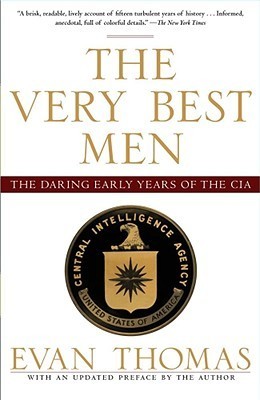
The Very Best Men: The Daring Early Years of the CIA
The Very Best Men is the story of the CIA's early days as told through the careers of four glamorous, daring, and idealistic men who ran covert operations for the government from the end of World War II to Vietnam. Evan Thomas re-creates the personal dramas and sometimes tragic lives of Frank Wisner, Richard Bissell, Tracy Barnes, and Desmond FitzGerald, who risked everything to contain the Soviet threat.
Within the inner circles of Washington, they were regarded as the best and the brightest. They planned and acted to keep the country out of war—by stealth and “political action” and to do by cunning and sleight of hand what great armies could not, must not be allowed to do. In the end, they were too idealistic and too honorable, and were unsuited for the dark, duplicitous life of spying. Their hubris and naïveté led them astray, producing both sensational coups and spectacular blunders like the Bay of Pigs and the failed assassination attempts on foreign leaders in the early 1960s. Thomas draws on the CIA's own secret histories, to which he has had exclusive access, as well as extensive interviews, to bring to life a crucial piece of American history.
Within the inner circles of Washington, they were regarded as the best and the brightest. They planned and acted to keep the country out of war—by stealth and “political action” and to do by cunning and sleight of hand what great armies could not, must not be allowed to do. In the end, they were too idealistic and too honorable, and were unsuited for the dark, duplicitous life of spying. Their hubris and naïveté led them astray, producing both sensational coups and spectacular blunders like the Bay of Pigs and the failed assassination attempts on foreign leaders in the early 1960s. Thomas draws on the CIA's own secret histories, to which he has had exclusive access, as well as extensive interviews, to bring to life a crucial piece of American history.
440 pages, Paperback
First published October 1, 1995
About the author
Evan Thomas
72 books386 followersEvan Thomas is the author of nine books: The Wise Men (with Walter Isaacson), The Man to See, The Very Best Men, Robert Kennedy, John Paul Jones, Sea of Thunder, The War Lovers, Ike’s Bluff, and Being Nixon. Thomas was a writer, correspondent, and editor for thirty-three years at Time and Newsweek, including ten years (1986–96) as Washington bureau chief at Newsweek, where, at the time of his retirement in 2010, he was editor at large. He wrote more than one hundred cover stories and in 1999 won a National Magazine Award. He wrote Newsweek’s fifty-thousand-word election specials in 1996, 2000, 2004 (winner of a National Magazine Award), and 2008. He has appeared on many TV and radio talk shows, including Meet the Press and The Colbert Report, and has been a guest on PBS’s Charlie Rose more than forty times. The author of dozens of book reviews for The New York Times and The Washington Post, Thomas has taught writing and journalism at Harvard and Princeton, where, from 2007 to 2014, he was Ferris Professor of Journalism.
Ratings & Reviews
Friends & Following
Create a free account to discover what your friends think of this book!
Community Reviews
Displaying 1 - 30 of 31 reviews

August 6, 2012
A fascinating and in-depth look into the early pre-Church Committee years of the Agency. Thomas introduces us to a the colorful, idealistic and dashing characters that sought to use the Agency to fight global communism, and how their idealism clashed with the often brutal realism that their profession required.
An easy read, the book is loaded with substance without bogging down in detail.Benefiting from extensive interviews, Thomas' book seeks to portray the CIA "as it saw itself". One can appreciated the fact that Thomas is both respectful of the purpose and intent of the CIA (never seeking to dismiss or minimize the very real concerns over the Communist threat) and yet writing with a critical eye towards the moral quandaries of their profession. As Thomas concludes: "In the end, they were too idealistic and too honorable, and were unsuited for the dark and duplicitious life of spying. Their hubris and naivete led them astray, producing both sensational coups and spectacular blunders").
To a large extent, the four principal figures of Thomas's book are all idealists, out to create a better world by containing the evils of the Soviet Union. Of the four, Frank Wisner dominates the early part of the book, as he laid the foundation for the post-World War II intelligence agency that would become the CIA. Wisner would eventually be overcome by his own demons and Richard Bissell would take his place. Also important, but to a lesser degree, were Tracy Barnes and Desmond Fitzgerald.
Thomas makes the distinction between the two types of operations the CIA would be involved in. The first sort involved espionage, the secret gathering of information. The second sort (often in conflict with the first) involved trying to effect political outcomes, often through covert operations. Both types would have their victories in the 1950s, leading to a hubris that would hurt the CIA in later years. For example, the successes in creating coups in Iran and Guatemala would lead to the belief that other governments could be as easily overthrown, resulting in the fiasco of the Bay of Pigs invasion. Similarly, the U2 spy plane would provide some great intelligence but also embarrassment when the Soviets shot it down. These attempts to win the Cold War often made it worse.
Beyond the wins and losses for the agency, Thomas also delves into the human toll, as his four "heroes" pay a price for their efforts. At best, they would be burned out, but there would also be damaged reputations (Bissell had a leading role in Bay of Pigs) and physical and mental effects. The CIA would go on, of course, and suffer perhaps greater damage in its faulty intelligence on WMDs in Iraq. To many, this would be even a greater crime than the Bay of Pigs: the seeming cherry-picking of information to suit the goals of a particular administration, with all the resulting costs.
Evan Thomas also does an excellent job of recreating the atmosphere of the time period. While the public and the rest of the government later came to see the CIA as a sinister, out-of-control Frankenstein monster, the CIA's employees and supporters saw the Agency as a dashing outfit that could be used to fight tyranny without exposing the hand of the US government.
The Very Best Men is a reminder that even in the seemingly simpler time of the Cold War, things weren't really that simple. It also reminds the reader that the CIA is not a bunch of James Bonds and Jason Bournes, but a bureaucracy with all the attendant issues. Thomas has done a good job of bringing one part of our Cold War history to life.
An easy read, the book is loaded with substance without bogging down in detail.Benefiting from extensive interviews, Thomas' book seeks to portray the CIA "as it saw itself". One can appreciated the fact that Thomas is both respectful of the purpose and intent of the CIA (never seeking to dismiss or minimize the very real concerns over the Communist threat) and yet writing with a critical eye towards the moral quandaries of their profession. As Thomas concludes: "In the end, they were too idealistic and too honorable, and were unsuited for the dark and duplicitious life of spying. Their hubris and naivete led them astray, producing both sensational coups and spectacular blunders").
To a large extent, the four principal figures of Thomas's book are all idealists, out to create a better world by containing the evils of the Soviet Union. Of the four, Frank Wisner dominates the early part of the book, as he laid the foundation for the post-World War II intelligence agency that would become the CIA. Wisner would eventually be overcome by his own demons and Richard Bissell would take his place. Also important, but to a lesser degree, were Tracy Barnes and Desmond Fitzgerald.
Thomas makes the distinction between the two types of operations the CIA would be involved in. The first sort involved espionage, the secret gathering of information. The second sort (often in conflict with the first) involved trying to effect political outcomes, often through covert operations. Both types would have their victories in the 1950s, leading to a hubris that would hurt the CIA in later years. For example, the successes in creating coups in Iran and Guatemala would lead to the belief that other governments could be as easily overthrown, resulting in the fiasco of the Bay of Pigs invasion. Similarly, the U2 spy plane would provide some great intelligence but also embarrassment when the Soviets shot it down. These attempts to win the Cold War often made it worse.
Beyond the wins and losses for the agency, Thomas also delves into the human toll, as his four "heroes" pay a price for their efforts. At best, they would be burned out, but there would also be damaged reputations (Bissell had a leading role in Bay of Pigs) and physical and mental effects. The CIA would go on, of course, and suffer perhaps greater damage in its faulty intelligence on WMDs in Iraq. To many, this would be even a greater crime than the Bay of Pigs: the seeming cherry-picking of information to suit the goals of a particular administration, with all the resulting costs.
Evan Thomas also does an excellent job of recreating the atmosphere of the time period. While the public and the rest of the government later came to see the CIA as a sinister, out-of-control Frankenstein monster, the CIA's employees and supporters saw the Agency as a dashing outfit that could be used to fight tyranny without exposing the hand of the US government.
The Very Best Men is a reminder that even in the seemingly simpler time of the Cold War, things weren't really that simple. It also reminds the reader that the CIA is not a bunch of James Bonds and Jason Bournes, but a bureaucracy with all the attendant issues. Thomas has done a good job of bringing one part of our Cold War history to life.

May 17, 2018
Abandoned the Hungarians in their uprising.
So many outrageous ideas to get rid of Castr0!
4 very dedicated men.
So many outrageous ideas to get rid of Castr0!
4 very dedicated men.

August 12, 2009
Evan Thomas has written a wonderfully engaging account of the early years of the CIA in The Very Best Men. Set against 20 years of history, from the lead up to WWII to the start of Vietnam, Thomas traces the careers of the early leaders of CIA and characterizes these men in a most telling way.
Of course the irony is that they weren't the very best men at all. Like Alice, these men wandered through the looking glass thinking they'd conquer the game at hand. Instead they had fallen prey to their own illusions and proved to be more helpless than helpful in the end.
At Groton and Yale they saw in their country a suitable successor to Britain, and, to a greater extent, Rome. America would be the ruling empire, and they would be the mighty men behind the cause - aristocrats chosen to safely chaperone the world through to another century. In the lead up to WWII, Allen Dulles, Frank Wisner, Richard Bissell, Tracy Barnes, and Des FitzGerald joined the Office of Strategic Service (OSS) - a forerunner to CIA - seeking adventure, power, and mystery. Read men, they enjoyed Rudyard's Kim and Fleming's Bond, fancied themselves Anglophiles, and were taken by romantic notions of empire; rightly, world affairs were to be thought of shrewdly. Armed with supreme confidence and striking intelligence, this Georgetown set had it in mind to mold the world quite squarely in America's palm. Their methods were harsh but were aligned to their guiding principle: to extinguish evil - communism, Castro, Kruschev - they would have to take any measure, go to any extreme. To Thomas, anyway, these men were reckless, ruthless, arrogant, stubborn, and simply ill-suited for the job (an altogether American theme that seems to haunt us time and again). But they had convinced others they were the best; after all they were jolly, all-American men - graceful, witty, and clever.
Folly after folly, these men were thrown from their pedestals, their egos badly bruised. But they were WASPy Yankees through and through - unwilling to admit defeat or to back down. After missions failed, they would double up on the next, raising the stakes, hoping to right past wrongs with hoped for successes that never came to fruition. It was misguided hubris at best.
'It was like it hit [Barnes:] that this really was a dirty business, no more James Bond. It was dawning on him that the CIA was not a 'second cherishing mother' ... but rather a creature that eats its own.'
Of course the irony is that they weren't the very best men at all. Like Alice, these men wandered through the looking glass thinking they'd conquer the game at hand. Instead they had fallen prey to their own illusions and proved to be more helpless than helpful in the end.
At Groton and Yale they saw in their country a suitable successor to Britain, and, to a greater extent, Rome. America would be the ruling empire, and they would be the mighty men behind the cause - aristocrats chosen to safely chaperone the world through to another century. In the lead up to WWII, Allen Dulles, Frank Wisner, Richard Bissell, Tracy Barnes, and Des FitzGerald joined the Office of Strategic Service (OSS) - a forerunner to CIA - seeking adventure, power, and mystery. Read men, they enjoyed Rudyard's Kim and Fleming's Bond, fancied themselves Anglophiles, and were taken by romantic notions of empire; rightly, world affairs were to be thought of shrewdly. Armed with supreme confidence and striking intelligence, this Georgetown set had it in mind to mold the world quite squarely in America's palm. Their methods were harsh but were aligned to their guiding principle: to extinguish evil - communism, Castro, Kruschev - they would have to take any measure, go to any extreme. To Thomas, anyway, these men were reckless, ruthless, arrogant, stubborn, and simply ill-suited for the job (an altogether American theme that seems to haunt us time and again). But they had convinced others they were the best; after all they were jolly, all-American men - graceful, witty, and clever.
Folly after folly, these men were thrown from their pedestals, their egos badly bruised. But they were WASPy Yankees through and through - unwilling to admit defeat or to back down. After missions failed, they would double up on the next, raising the stakes, hoping to right past wrongs with hoped for successes that never came to fruition. It was misguided hubris at best.
'It was like it hit [Barnes:] that this really was a dirty business, no more James Bond. It was dawning on him that the CIA was not a 'second cherishing mother' ... but rather a creature that eats its own.'

November 29, 2024
Organizations, especially newly formed ones, bear the attitudes and values of the people instrumental in their creation. No start-up will last long whose founder isn’t working hard, sacrificing, and generally ambitious.
Few organizations bore this out as strongly as the Central Intelligence Agency in its first decades. Born out of the action-oriented Office of Strategic Services created during the Second World War, the men tapped to lead the CIA were, in many cases, archetypal WASPs. Educated on the East Coast, sons of elite boarding schools and Wall Street, they were driven by a desire “to do something” about communism and tyranny, and were, often to a man, men of action. This led to overpromises to Hungarian anti-communists, the overthrow of Central American presidents, suicidal attempts to penetrate Red China, and more. Their successes, often as they came, in many cases did not forward a result that was truly in the national interest of the United States, broadly defined. The subjects of this book hated him at the time, but the portrait of a clueless American spy penned by Graham Green in the Quiet American is painfully correct.
But sometimes these jobs performed in the gray worked: U-2 missions over Russia were critical in assuring the calibrated defense strategies of the 1950s, for example, and they were daring. Even setbacks, such as the downing of Gary Powers, did not dissuade the leadership of the CIA to stop; it was the White House that more often than not applied the brakes on operations. But even this rule was broken. Eisenhower may have approved what became the Bay of Pigs disaster, but he was hesitant. The CIA under Kennedy, being driven hard by RFK, continued with the plan, but JFK’s apprehensions eventually whittled away the campaign until its failure became almost foreordained. Too often, the Agency’s Ivy League leadership valued political action and dramatic change, including through the consideration of coups and assassinations, over the slower, but fruitful, efforts of espionage and building networks of agents.
The four men that Thomas presents this narrative through were, like Acheson, present at the creation, and their fingerprints are present in the Agency’s conduct until the mid-1960s. Throughout this story, the reader can’t help but sympathize with them: communism was monstrous and had to be stopped. They were just not always very good at it, regardless of their personal bravery and ingenuity. In the end, it crushed these men. One died by heart attack in the midst of his career, another by suicide, yet another was cached out of the Agency to find new opportunities (usually short-lived) until dying in his old age, and the last also died by heart attack after being fired by the Agency. But these were not four men chosen at random; their lives intersected, often from boarding school, and they were more than contemporaries. They were almost four soul mates in the hard business of espionage, a job many love to hate, but one that must absolutely be done, and done to the edge. Some of them, Richard Bissell, for example, are among the most important men of the early Cold War, yet they are relatively unknown. Thomas—with a bit too much verve (this is so obviously a book written by a writer of a certain type in the 1990s it is almost painful)—writes these stories well. They are thrilling at times, enjoyable at times (one truly does wish to have spent a week living with the Georgetown Set in the 1950s), and painful at times. But they are honest, and Thomas deserve credit for his meticulous examination of the Agency’s archives and his interviews in making them so true to life.
Few organizations bore this out as strongly as the Central Intelligence Agency in its first decades. Born out of the action-oriented Office of Strategic Services created during the Second World War, the men tapped to lead the CIA were, in many cases, archetypal WASPs. Educated on the East Coast, sons of elite boarding schools and Wall Street, they were driven by a desire “to do something” about communism and tyranny, and were, often to a man, men of action. This led to overpromises to Hungarian anti-communists, the overthrow of Central American presidents, suicidal attempts to penetrate Red China, and more. Their successes, often as they came, in many cases did not forward a result that was truly in the national interest of the United States, broadly defined. The subjects of this book hated him at the time, but the portrait of a clueless American spy penned by Graham Green in the Quiet American is painfully correct.
But sometimes these jobs performed in the gray worked: U-2 missions over Russia were critical in assuring the calibrated defense strategies of the 1950s, for example, and they were daring. Even setbacks, such as the downing of Gary Powers, did not dissuade the leadership of the CIA to stop; it was the White House that more often than not applied the brakes on operations. But even this rule was broken. Eisenhower may have approved what became the Bay of Pigs disaster, but he was hesitant. The CIA under Kennedy, being driven hard by RFK, continued with the plan, but JFK’s apprehensions eventually whittled away the campaign until its failure became almost foreordained. Too often, the Agency’s Ivy League leadership valued political action and dramatic change, including through the consideration of coups and assassinations, over the slower, but fruitful, efforts of espionage and building networks of agents.
The four men that Thomas presents this narrative through were, like Acheson, present at the creation, and their fingerprints are present in the Agency’s conduct until the mid-1960s. Throughout this story, the reader can’t help but sympathize with them: communism was monstrous and had to be stopped. They were just not always very good at it, regardless of their personal bravery and ingenuity. In the end, it crushed these men. One died by heart attack in the midst of his career, another by suicide, yet another was cached out of the Agency to find new opportunities (usually short-lived) until dying in his old age, and the last also died by heart attack after being fired by the Agency. But these were not four men chosen at random; their lives intersected, often from boarding school, and they were more than contemporaries. They were almost four soul mates in the hard business of espionage, a job many love to hate, but one that must absolutely be done, and done to the edge. Some of them, Richard Bissell, for example, are among the most important men of the early Cold War, yet they are relatively unknown. Thomas—with a bit too much verve (this is so obviously a book written by a writer of a certain type in the 1990s it is almost painful)—writes these stories well. They are thrilling at times, enjoyable at times (one truly does wish to have spent a week living with the Georgetown Set in the 1950s), and painful at times. But they are honest, and Thomas deserve credit for his meticulous examination of the Agency’s archives and his interviews in making them so true to life.

August 31, 2007
A great social history of the early CIA... a band of debonair ivy league gaddabouts, all--Bloomsbury-like parties in Georgetown, flippantly calling the CIA "the pickle factory." Better than the morose movie version, which turned out to be "The Good Shepherd."
September 20, 2023
This same author’s biographies of Nixon and RFK had a certain je ne sais quoi that this history of the CIA’s early years seriously lacked.
Nevertheless, I found that it picked up once it got to the last one-third, encompassing the late 1950s and 1960s — I’d even say the last third saved this book from receiving 3 stars.
This is a history of the CIA told through the careers of four men: Richard Bissell, Tracy Barnes, Desmond FitzGerald, and Frank Wisner—“the very best.” But as the author shows, even the very best can be destroyed. And so Wisner was destroyed by the Hungarian Revolution (he killed himself several years later). Bissell and Barnes were destroyed by the Bay of Pigs. And FitzGerald was destroyed by Vietnam.
I especially enjoyed reading about Des FitzGerald. A Manhattan attorney who worked on Wall Street before joining the Agency, FitzGerald was head of the CIA’s Far East Division. He was also for a time the overseer of CIA’s plots to kill Fidel Castro before becoming chief of covert operations. He had a complicated and morally corrosive relationship with Bobby Kennedy (who was obsessed with Castro), and a far more respectable relationship with JFK, whom he deeply respected. A consummate stoic, FitzGerald cried for the first and last time, as far as his family members were concerned, when Lee Harvey Oswald was shot, saying, “Now we’ll never know.”
I got chills reading about how at the moment JFK was assassinated, a CIA agent in Paris was being handed a “poison pen” to assassinate Fidel Castro. “It was at the very least a grim coincidence.”
A very short book — took me a whopping four months to finish.
Nevertheless, I found that it picked up once it got to the last one-third, encompassing the late 1950s and 1960s — I’d even say the last third saved this book from receiving 3 stars.
This is a history of the CIA told through the careers of four men: Richard Bissell, Tracy Barnes, Desmond FitzGerald, and Frank Wisner—“the very best.” But as the author shows, even the very best can be destroyed. And so Wisner was destroyed by the Hungarian Revolution (he killed himself several years later). Bissell and Barnes were destroyed by the Bay of Pigs. And FitzGerald was destroyed by Vietnam.
I especially enjoyed reading about Des FitzGerald. A Manhattan attorney who worked on Wall Street before joining the Agency, FitzGerald was head of the CIA’s Far East Division. He was also for a time the overseer of CIA’s plots to kill Fidel Castro before becoming chief of covert operations. He had a complicated and morally corrosive relationship with Bobby Kennedy (who was obsessed with Castro), and a far more respectable relationship with JFK, whom he deeply respected. A consummate stoic, FitzGerald cried for the first and last time, as far as his family members were concerned, when Lee Harvey Oswald was shot, saying, “Now we’ll never know.”
I got chills reading about how at the moment JFK was assassinated, a CIA agent in Paris was being handed a “poison pen” to assassinate Fidel Castro. “It was at the very least a grim coincidence.”
A very short book — took me a whopping four months to finish.

May 13, 2017
A pretty good book, it gives something of a history of the early CIA by way of following four of its leading men. It started slow; Thomas did such a good job of being thorough, he basically repeated the same thing about each of his four protagonists over and over again, as he quoted a number of people saying virtually the same thing. The good news is that he does endnote his points generously, and he names most of his sources. Once the story gets rolling, and he has finished introducing the people that carry his narrative, it moves along nicely. It covers the post-WWII period through the mid-1960s, or through Laos and into the early Vietnam period.
Thomas does capture a number of good lessons from his material, either from his own reflections or, most often, quoted from his sources. Thomas does fall in love a bit with his subjects, as is common among biographers. He also reveals his own political biases, as he lavishes praise on the Georgetown set, rich but not snobby like the Chevy Chase bunch, and not all fuddy-duddy like the Eisenhower set, etc. He does successfully capture the atmosphere of the moments the people worked in, the demands made of them, their own goals and aspirations. So while it is not written as a history, it gives a very granular aspect of history from that period.
I would recommend it for anyone interested in the CIA, intelligence, or the early Cold War, though I would balance it with other works. Once through the repetition of the early part of the book, it reads pretty well. A person completely unfamiliar with the topic may get lost in some of the abbreviations and acronyms, though Thomas does introduce them before using them.
Thomas does capture a number of good lessons from his material, either from his own reflections or, most often, quoted from his sources. Thomas does fall in love a bit with his subjects, as is common among biographers. He also reveals his own political biases, as he lavishes praise on the Georgetown set, rich but not snobby like the Chevy Chase bunch, and not all fuddy-duddy like the Eisenhower set, etc. He does successfully capture the atmosphere of the moments the people worked in, the demands made of them, their own goals and aspirations. So while it is not written as a history, it gives a very granular aspect of history from that period.
I would recommend it for anyone interested in the CIA, intelligence, or the early Cold War, though I would balance it with other works. Once through the repetition of the early part of the book, it reads pretty well. A person completely unfamiliar with the topic may get lost in some of the abbreviations and acronyms, though Thomas does introduce them before using them.

October 25, 2020
A fun if a little dated look at the early years of the CIA and its major personalities. It punctures the myth of omnipotence and emphasizes that the CIA could do very little in the closed societies of the Communist world because their counterparts were permitted to be bloodier and more ruthless than they could be. It shows how lucky some of their early successes (Guatemala, Iran) really were and how silly some of their plans really were. The Kennedys in particular come off as buffoons, simultaneously risk-averse and terrified of being thought soft and so willing to countenance much but unwilling to accept the risk necessary to give things a chance of success (the Bay of Pigs in particular). Bobby comes across as an enfant terrible, running roughshod over the CIA even though it wasn’t his express portfolio and doing so with the threat to tell big brother. It demonstrates quite persuasively the pitfalls of a free society trying to act covertly and the hubris of powerful men unwilling to accept the limits of their knowledge and their power, especially in trying to unsettle and to mold entire societies that they often understood little if at all.
January 13, 2022
Journalist (former editor of Newsweek magazine), Evan Thomas, author of The Very Best Men, here details some of the workings within the Central Intelligence Agency during the 1950s and 1960s. He briefly traces the lineage of the CIA back to the Office of Strategic Services in World War Two, but states that the book is not an organizational study, but a "more of a social history." His introduction deftly frames that social history.
He draws a post WWII geopolitical landscape that is bipolar. A climate of conflict exists between democratic and communist blocs of countries, with the struggle largely taking place in the remaining uncommitted Third World nations. Thomas populates this social history with four men of privilege intensely engaged in the American side of this conflict: Frank Wisner, and three of his recruits or staffers, Richard Bissell, Tracy Barnes, and Desmond FitzGerald. All had served in WWII, some in the OSS, and all came from well-to-do families, were educated at prestigious universities where they trained as lawyers, financiers and academics. They were well connected and associated with people of similar privileged backgrounds.
Wisner was from Laurel, Mississippi but as his relatives proudly claimed, they were not Mississippians. He graduated from the University of Virginia and from its law school. He enlisted in the Navy during WWII, transferred to OSS and experienced "the greatest moral outrage of his life, the Soviet takeover of Romania." He established a close relationship with married Tanda Caradja, a "twenty-four-year-old Romanian Princess (descended from Vlad the Impaler) with a wide sensuous mouth and close ties to the royal family." She shared her many contacts with Wisner, leading to his learning and reporting back to Washington on Soviet actions and intents. These warnings were not well received, as no one there was looking for a new war. The sight of Soviets loading thousands of Romanians onto boxcars for shipment to Russia for forced labor or execution instilled in Wisner a lifelong hatred for the Soviets.
When the war ended the OSS was quickly disbanded. Wisner returned briefly to practicing law then went to the State Department. While there he worked on a project dealing with refugees in Europe, many of whom were strong opponents of communism. He proposed a project, Bloodstone, to utilize these people to counter Soviet activities, but the idea was not adopted.
In 1948, national security planning authorized a group known as the Office of Policy Coordination (OPC). Working under George Kennan at State, Wisner was involved in creating the new organization, then "asked to run it." "OPC was attached to the CIA [another new creation], but only for quarters and provisions." Thomas writes, "The CIA director...exercised almost no control over Wisner. Nor did anyone else in government." This lack of oversight would become a disturbing pattern in his career, and those of the other three men, as Thomas carefully details.
The pressures of their work and the magnitude of their responsibilities took a toll on Wisner and the other three profiled here. In each case there was a negative impact on the man because of the way he chose to operate: by avoiding supervision as much as possible, by shunning advice and help from others, and by taking risks with possible repercussions against the nation he loved. Only one of the four men would live beyond the age of 62.
Desmond FitzGerald would join Wisner's OPC in 1950 and serve in Asia during the Korean War and as head of station for Asia during the Vietnam War. Back in Washington he gained increasing responsibilities including working on some of the fanciful schemes to dispose of Fidel Castro. He was hounded relentlessly by Bobby Kennedy to get Castro so as to avenge the shame of the failed Bay of Pigs invasion in 1961. FitzGerald was later troubled following the assassination of John Kennedy when Lee Harvey Oswald's connections with Cuba became known. FitzGerald was concerned that direct contacts he had with a Cuban major as a possible killer of Castro might have led Castro to strike first.
Tracy Barnes was perhaps the most star-crossed of the four subjects. He was successful in the CIA operation to remove the Guatemalan president Arbenz by staging a mini invasion by a presumed liberator. He supplemented this with a psychological warfare campaign to frighten the president into resigning. His breezy, informal style, while charming, was disastrous before the Bay of Pigs operation when he failed in providing a crucial briefing.
Richard Bissell emerges as both the most productive of the four men, but also the most duplicitous.
"Bissell, a brilliant Yale economics professor who helped organize the Marshall Plan to rebuild Europe after {World War II]" also organized US shipping during that war. Astoundingly, "Beginning in late 1954, Bissell had been in charge of developing and operating the U-2 spy plane."
Because CIA, not the Air Force, was funding the project, Bissell could avoid "teams of colonels writing plans and more plans." As a result, his staff "was able to move with astonishing speed: eighty-eight days to prototype, eight months to a test flight, eighteen months to a fully operational airplane." President Eisenhower ordered that the flights of the U-2 over Russia be limited. The aircraft was based in England and the British were also interested in scheduling missions. Thomas Quotes a statement Bissell gave to another historian in which Bissell explained how worked out a way to circumvent Eisenhower's orders.
Bissel's downfall came with the Bay of Pigs invasion effort in 1961. An report by the CIA Inspector General was scathing, "accusing Bissell and Barnes of 'playing it by ear,' by setting up a command structure that was, 'anarchic and disorganized,' going on from there to criticize other aspect of the operation in detail. Bissell and Barnes submitted a rebuttal in which "they argued that the plan would have worked if Kennedy had not decided to cut off the air strikes." Thomas writes, "Allen Dulles had fallen for Barnes's charm and Bissell's arrogance and the CIA had been disgraced."
So elite, so self satisfied--but so flawed; so brilliant==but so stupid. These contrasts Thomas recognizes, cites, and offers supporting quotes from friends and critics. In the end, so human.
Beyond the vagaries of personality and character this book offers some repeating motifs concerning the institution of intelligence operations. These include the following:
The conflict between the gatherers of intelligence and the action figures of operations;
The lack of knowledge of these four managers of actual field operations;
And, finally, the more philosophical matters of the ethics, efficacy, and economics of the conduct of intelligence.
Although I give the book three stars, I highly recommend it. The research and writing are excellent. The subject is interesting and important. But, I don't "really like" the characters. I "like' their intentions, but not any of them, even if they do represent the class of "The Very Best Men."
He draws a post WWII geopolitical landscape that is bipolar. A climate of conflict exists between democratic and communist blocs of countries, with the struggle largely taking place in the remaining uncommitted Third World nations. Thomas populates this social history with four men of privilege intensely engaged in the American side of this conflict: Frank Wisner, and three of his recruits or staffers, Richard Bissell, Tracy Barnes, and Desmond FitzGerald. All had served in WWII, some in the OSS, and all came from well-to-do families, were educated at prestigious universities where they trained as lawyers, financiers and academics. They were well connected and associated with people of similar privileged backgrounds.
Wisner was from Laurel, Mississippi but as his relatives proudly claimed, they were not Mississippians. He graduated from the University of Virginia and from its law school. He enlisted in the Navy during WWII, transferred to OSS and experienced "the greatest moral outrage of his life, the Soviet takeover of Romania." He established a close relationship with married Tanda Caradja, a "twenty-four-year-old Romanian Princess (descended from Vlad the Impaler) with a wide sensuous mouth and close ties to the royal family." She shared her many contacts with Wisner, leading to his learning and reporting back to Washington on Soviet actions and intents. These warnings were not well received, as no one there was looking for a new war. The sight of Soviets loading thousands of Romanians onto boxcars for shipment to Russia for forced labor or execution instilled in Wisner a lifelong hatred for the Soviets.
When the war ended the OSS was quickly disbanded. Wisner returned briefly to practicing law then went to the State Department. While there he worked on a project dealing with refugees in Europe, many of whom were strong opponents of communism. He proposed a project, Bloodstone, to utilize these people to counter Soviet activities, but the idea was not adopted.
In 1948, national security planning authorized a group known as the Office of Policy Coordination (OPC). Working under George Kennan at State, Wisner was involved in creating the new organization, then "asked to run it." "OPC was attached to the CIA [another new creation], but only for quarters and provisions." Thomas writes, "The CIA director...exercised almost no control over Wisner. Nor did anyone else in government." This lack of oversight would become a disturbing pattern in his career, and those of the other three men, as Thomas carefully details.
The pressures of their work and the magnitude of their responsibilities took a toll on Wisner and the other three profiled here. In each case there was a negative impact on the man because of the way he chose to operate: by avoiding supervision as much as possible, by shunning advice and help from others, and by taking risks with possible repercussions against the nation he loved. Only one of the four men would live beyond the age of 62.
Desmond FitzGerald would join Wisner's OPC in 1950 and serve in Asia during the Korean War and as head of station for Asia during the Vietnam War. Back in Washington he gained increasing responsibilities including working on some of the fanciful schemes to dispose of Fidel Castro. He was hounded relentlessly by Bobby Kennedy to get Castro so as to avenge the shame of the failed Bay of Pigs invasion in 1961. FitzGerald was later troubled following the assassination of John Kennedy when Lee Harvey Oswald's connections with Cuba became known. FitzGerald was concerned that direct contacts he had with a Cuban major as a possible killer of Castro might have led Castro to strike first.
Tracy Barnes was perhaps the most star-crossed of the four subjects. He was successful in the CIA operation to remove the Guatemalan president Arbenz by staging a mini invasion by a presumed liberator. He supplemented this with a psychological warfare campaign to frighten the president into resigning. His breezy, informal style, while charming, was disastrous before the Bay of Pigs operation when he failed in providing a crucial briefing.
Richard Bissell emerges as both the most productive of the four men, but also the most duplicitous.
"Bissell, a brilliant Yale economics professor who helped organize the Marshall Plan to rebuild Europe after {World War II]" also organized US shipping during that war. Astoundingly, "Beginning in late 1954, Bissell had been in charge of developing and operating the U-2 spy plane."
Because CIA, not the Air Force, was funding the project, Bissell could avoid "teams of colonels writing plans and more plans." As a result, his staff "was able to move with astonishing speed: eighty-eight days to prototype, eight months to a test flight, eighteen months to a fully operational airplane." President Eisenhower ordered that the flights of the U-2 over Russia be limited. The aircraft was based in England and the British were also interested in scheduling missions. Thomas Quotes a statement Bissell gave to another historian in which Bissell explained how worked out a way to circumvent Eisenhower's orders.
Bissel's downfall came with the Bay of Pigs invasion effort in 1961. An report by the CIA Inspector General was scathing, "accusing Bissell and Barnes of 'playing it by ear,' by setting up a command structure that was, 'anarchic and disorganized,' going on from there to criticize other aspect of the operation in detail. Bissell and Barnes submitted a rebuttal in which "they argued that the plan would have worked if Kennedy had not decided to cut off the air strikes." Thomas writes, "Allen Dulles had fallen for Barnes's charm and Bissell's arrogance and the CIA had been disgraced."
So elite, so self satisfied--but so flawed; so brilliant==but so stupid. These contrasts Thomas recognizes, cites, and offers supporting quotes from friends and critics. In the end, so human.
Beyond the vagaries of personality and character this book offers some repeating motifs concerning the institution of intelligence operations. These include the following:
The conflict between the gatherers of intelligence and the action figures of operations;
The lack of knowledge of these four managers of actual field operations;
And, finally, the more philosophical matters of the ethics, efficacy, and economics of the conduct of intelligence.
Although I give the book three stars, I highly recommend it. The research and writing are excellent. The subject is interesting and important. But, I don't "really like" the characters. I "like' their intentions, but not any of them, even if they do represent the class of "The Very Best Men."
August 24, 2018
Published in 1995 with an updated preface in 2006, Evan Thomas' book The Very Best Men promised an intriguing look at the early years of the Agency through the lives and times of four men at the heart of it all:
Frank Wisner, the former OSS man who saw first-hand Soviet activities in Romania who oversaw the efforts to "rollback" the Soviets in Eastern Europe as Deputy Director for Plans (DDP) yet suffered from manic depression. Or Desmond FitzGerald, who ran CIA operations in the Far East (referred to as FE) against Chinese communists and in the lead-up to the Vietnam War. There's Tracy Barnes, a natural athlete who was involved in everything from the 1954 Guatemalan coup to London Station Chief in the late 1950s. Last but not least is Richard Bissell, a latecomer to the CIA but a master planner and risktaker who had been central to the Marshall Plan but rose to DDP where he oversaw the U-2 and the Bay Of Pigs.
For those intrigued by the early Cold War era or who wish to separate the facts from the fiction that has surfaced over the decades, it is a most useful volume. It also puts a much needed human face on this era and those defining years of modern American intelligence.
Full Review: http://spybrary.com/the-very-best-men...
Frank Wisner, the former OSS man who saw first-hand Soviet activities in Romania who oversaw the efforts to "rollback" the Soviets in Eastern Europe as Deputy Director for Plans (DDP) yet suffered from manic depression. Or Desmond FitzGerald, who ran CIA operations in the Far East (referred to as FE) against Chinese communists and in the lead-up to the Vietnam War. There's Tracy Barnes, a natural athlete who was involved in everything from the 1954 Guatemalan coup to London Station Chief in the late 1950s. Last but not least is Richard Bissell, a latecomer to the CIA but a master planner and risktaker who had been central to the Marshall Plan but rose to DDP where he oversaw the U-2 and the Bay Of Pigs.
For those intrigued by the early Cold War era or who wish to separate the facts from the fiction that has surfaced over the decades, it is a most useful volume. It also puts a much needed human face on this era and those defining years of modern American intelligence.
Full Review: http://spybrary.com/the-very-best-men...
June 9, 2010
Frank Wisner, Dick Bissell, Des Fitzgerald, Tracy Barnes - all Dad's contemporaries, all lived lives remarkably similar in many ways to his. Well written and historically accurate, even if a lot of their working lives couldn't be disclosed in 1995.

January 14, 2018
The Very Best Men.....were flawed.
Insightful review of the lives of four men and their contributions to espionage, the Marshall Plan, U2, Bay of Pigs, Vietnam to name a few of the top liners.
Reminder of the 50's era, Communist threat, through Vietnam.
Insightful review of the lives of four men and their contributions to espionage, the Marshall Plan, U2, Bay of Pigs, Vietnam to name a few of the top liners.
Reminder of the 50's era, Communist threat, through Vietnam.

July 17, 2008
A pretty good story. But I don't trust Evan Thomas. He's a Newsweek editor. Newsweek is, on it's best week, a factually inaccurate screed. So forgive me if I don't trust this book.
July 10, 2022
Authoritative read about the so-called “golden age” of the CIA in the post-war era, a time when the CIA could do no wrong in the eyes of the President, the public, and themselves.
Told through the lens of three early leaders at the CIA, Richard Bissell, Desmond FitzGerald, and Tracy Barnes, author Evan Thomas occasionally falls in love with his subjects—but he remains clear-eyed about the massive ignorance and occasional wickedness of US intelligence at this time. At the core of the story, these were a few bold WASPs working to pull the strings of world events in places they knew embarrassingly little about.
If you’ve read “The Quiet Americans” or “The Devil’s Chessboard,” you’ll appreciate this unique angle about a crucial period at the height of American power and international prestige.
Told through the lens of three early leaders at the CIA, Richard Bissell, Desmond FitzGerald, and Tracy Barnes, author Evan Thomas occasionally falls in love with his subjects—but he remains clear-eyed about the massive ignorance and occasional wickedness of US intelligence at this time. At the core of the story, these were a few bold WASPs working to pull the strings of world events in places they knew embarrassingly little about.
If you’ve read “The Quiet Americans” or “The Devil’s Chessboard,” you’ll appreciate this unique angle about a crucial period at the height of American power and international prestige.

December 26, 2022
A solid but not spectacular book. Good summary of the creation of the CIA and it’s early leadership personas. Kind of interesting that the profile was heavily skewed to tony prep schools (esp Groton) and Ivy League students.
Book covers key events from the late 1940s into the late 1960s…. After which the CIA had its wings clipped pretty severely.
The other interesting (albeit long and a bit slow) section was the whole pursuit of Fidel Castro including the Bay of Pigs disaster and numerous other assassination attempts. I used to dismiss the whole JFK assassination conspiracy thinking as far fetched. How could there be any nexus between Russia, the Mafia and US attempts to kill Castro? Now I’m not so sure!
Book covers key events from the late 1940s into the late 1960s…. After which the CIA had its wings clipped pretty severely.
The other interesting (albeit long and a bit slow) section was the whole pursuit of Fidel Castro including the Bay of Pigs disaster and numerous other assassination attempts. I used to dismiss the whole JFK assassination conspiracy thinking as far fetched. How could there be any nexus between Russia, the Mafia and US attempts to kill Castro? Now I’m not so sure!
January 12, 2018
A very good and informative book on the lives and work of the men who created the worlds foremost intelligence agency. It starts at the very beginning with the early lives and wartime careers of men such as Richard Bissell, Tracy Barnes, Frank Wisner Desmond Fitzgerald, and many more; following these men up until their retirement and eventual deaths. This book will give you a look behind the curtains to see what lead up to the most tumultuous times in history an how these men had a direct role to play in causing and defusing the matter in what is considered the peak of espionage in the cold war if not the golden age of the Agency.

January 13, 2026
Although it was an interesting book, a lot of time was spent on the psychological aspect of the men running the CIA. It was, at times, a slog to get through, but it was very fascinating to learn some of the political machinations and the moral fortitude and idealism with which the original CIA members went into the world. I also learned some overviews of some very large events in world history.
One of the things I found interesting was the amount of weapons given to the army of Tibet in 1958 and 59. close to 10 tons of weapons and supplies were given to them. I wonder how many of those guns ended up used against us.
One of the things I found interesting was the amount of weapons given to the army of Tibet in 1958 and 59. close to 10 tons of weapons and supplies were given to them. I wonder how many of those guns ended up used against us.
November 17, 2020
This was a fun book about the early years of the CIA and its predecessor, the OSS. Or the INR's predecessor. Though it's really about four men who worked operations during the Cold War, rose through the ranks, formed bonds (and grudges), and sacrificed mental and physical health for the national interest. The stories, the operations, and the scandals are well known today, but this book went deeper into the world that shaped these men and really showed the reader what it was like to work the mission at that time. A great book, in my opinion, but not as a history of the overall agency.
June 27, 2019
I don't know if the title is supposed to be ironic - the early years of the CIA were the years of the OSS, a group of reckless amateurs and dilettantes who had less impact on WW2 than real soldiers, then put their "talents" to use in the support of American oil, fruit, and sugar interests during the Cold War. Thomas has a great ear and eye for anecdotes however, which combined with stories of operations I was unaware of (Tibet, Laos) makes this a pretty good read for CIA fans of all ages.
July 9, 2024
Superb chronicle of the early years of the CIA and the men who formed it. Thomas does an excellent job showing how the agency came together, along with how the good intentions of a civilian spy agency were slowly perverted. Great read on the history of one of the the US's most notorious agencies.

August 16, 2019
Pretty solid read. Makes you think about the CIA. Takes the tale from WWII and OSS up to CIA. I recommend it.
Read
March 1, 2020I manage to do 25% of it, but it's too chaotic in my opinion. And I was expecting more information on specific operations. I liked Legacy of ashes by Tim Weiner better and would recommend it.

Read
May 5, 2010Dr Michael S Goodman has chosen to discuss The Very Best Men: Four Who Dared: The Early Years of the CIA by Evan Thomas on FiveBooks as one of the top five on his subject - Pioneers of Intelligence Gathering, saying that:
This is about the four people who were recruited into the predecessor of the CIA during WWII and how they were brought back in when the organisation was recreated in 1947 to resurrect their wartime successes. The idea was that the CIA would act as a warning signal, as the dog that barked before the attack, so that there would never be another Pearl Harbor.
The full interview is available here: http://fivebooks.com/interviews/dr-mi...
This is about the four people who were recruited into the predecessor of the CIA during WWII and how they were brought back in when the organisation was recreated in 1947 to resurrect their wartime successes. The idea was that the CIA would act as a warning signal, as the dog that barked before the attack, so that there would never be another Pearl Harbor.
The full interview is available here: http://fivebooks.com/interviews/dr-mi...

May 29, 2014
Thomas traces the development of the CIA out of the OSS after World War II into the Johnson administration. It follows the lives of four career spooks as a framing device, showing the agency's beginning with wealthy Ivy League graduates smitten with public service and the idea of the gentleman spy. It traces the gradual politicization of the agency and is particularly revealing about the Eisenhower and Kennedy administrations. Of special interest are the developing policies of regime-building and the often harebrained schemes brought up in all seriousness. For example, the agency once considered air drops over the USSR of enormous condoms marked "medium" to give a false impression of American virility!

June 3, 2012
Very interesting book the dives into the hearts and minds of the key people who ran the clandestine desk of the CIA. It's amazing to read that the CIA was basically started by a bunch of neophytes trying to emulate the Russians and the British, and are actually quite unsophisticated. I think Hollywood plays up the hype of the power of the CIA and our intelligence service, but after reading this book, I wonder how much they actually know. But what concerns me is that they think they know a lot.

July 20, 2015
Excellent book, well laid out and made for a brisk read in spite of a lot of heavy technical/intelligence related jargon. These kind of books about famous people in intelligence/political circles are the author's specialty - Edward Bennett Williams, Robert F. Kennedy, Nixon are some other examples. Sometimes he was a little overboard with all the Groton/eastern establishment/Yale/prep school examples. We get their background. Good book though.
February 2, 2016
the book is all initials
The Very Best Men is the story of the CIA's early days as told through the careers of four glamorous, daring, and idealistic men who ran covert operations for the government from the end of World War II to Vietnam.
The Very Best Men is the story of the CIA's early days as told through the careers of four glamorous, daring, and idealistic men who ran covert operations for the government from the end of World War II to Vietnam.
December 3, 2007
A great view of the early years of the CIA the follows the lives of 4 interesting WASPs.

December 28, 2013
A fascinating and detailed account of the early years of the CIA. Very readable.
May 30, 2014
Was interesting, but felt a little tough to get through it.
Displaying 1 - 30 of 31 reviews