

What do you think?

The Scottish Clearances: A History of the Dispossessed, 1600-1900
'A superb book ... Anybody interested in Scottish history needs to read it' Andrew Marr,
Sunday Times
Eighteenth-century Scotland is famed for generating many of the enlightened ideas which helped to shape the modern world. But there was in the same period another side to the history of the nation. Many of Scotland's people were subjected to coercive and sometimes violent change, as traditional ways of life were overturned by the 'rational' exploitation of land use. The Scottish Clearances is a superb and highly original account of this sometimes terrible process, which changed the Lowland countryside forever, as it also did, more infamously, the old society of the Highlands.
Based on a vast array of original sources, this pioneering book is the first to chart this tumultuous saga in one volume, with due attention to evictions and loss of land in both north and south of the Highland line. In the process, old myths are exploded and familiar assumptions undermined. With many fascinating details and the sense of an epic human story, The Scottish Clearances is an evocative memorial to all whose lives were irreparably changed in the interests of economic efficiency.
This is a story of forced clearance, of the destruction of entire communities and of large-scale emigration. Some winners were able to adapt and exploit the new opportunities, but there were also others who lost everything. The clearances created the landscape of Scotland today, but it came at a huge price.
Eighteenth-century Scotland is famed for generating many of the enlightened ideas which helped to shape the modern world. But there was in the same period another side to the history of the nation. Many of Scotland's people were subjected to coercive and sometimes violent change, as traditional ways of life were overturned by the 'rational' exploitation of land use. The Scottish Clearances is a superb and highly original account of this sometimes terrible process, which changed the Lowland countryside forever, as it also did, more infamously, the old society of the Highlands.
Based on a vast array of original sources, this pioneering book is the first to chart this tumultuous saga in one volume, with due attention to evictions and loss of land in both north and south of the Highland line. In the process, old myths are exploded and familiar assumptions undermined. With many fascinating details and the sense of an epic human story, The Scottish Clearances is an evocative memorial to all whose lives were irreparably changed in the interests of economic efficiency.
This is a story of forced clearance, of the destruction of entire communities and of large-scale emigration. Some winners were able to adapt and exploit the new opportunities, but there were also others who lost everything. The clearances created the landscape of Scotland today, but it came at a huge price.
496 pages, Paperback
First published October 4, 2018
About the author
T.M. Devine
43 books63 followersSir Thomas Martin Devine, Kt OBE FBA FRSE HonMRIA FRHistS FSA Scot, is a Scottish academic historian. Devine's main research interest is the history of the Scottish nation since c. 1600 and its global connections and impact. He is regarded as the leading authority on the history of modern Scotland.
He is the author or editor of some three dozen books and close to 100 articles on topics as diverse as emigration, famine, identity, Scottish transatlantic commercial links, urban history, the economic history of Scotland, Empire, the Scottish Highlands, the Irish in Scotland, sectarianism, stability and protest in the 18th century Lowlands, Scottish elites, the Anglo-Scottish Union, rural social history, Caribbean slavery and Scotland, the global impact of the Scottish people and comparative Irish and Scottish relationships. The Scottish Nation (1999) became an international best-seller, and for a short period even outsold in Scotland the adventures of Harry Potter when first published. In 2013 the volume was listed first in the '100 Best Books to Build a Better Scotland' compiled by ListMuse.com.
http://en.wikipedia.org/wiki/Tom_Devine
He is the author or editor of some three dozen books and close to 100 articles on topics as diverse as emigration, famine, identity, Scottish transatlantic commercial links, urban history, the economic history of Scotland, Empire, the Scottish Highlands, the Irish in Scotland, sectarianism, stability and protest in the 18th century Lowlands, Scottish elites, the Anglo-Scottish Union, rural social history, Caribbean slavery and Scotland, the global impact of the Scottish people and comparative Irish and Scottish relationships. The Scottish Nation (1999) became an international best-seller, and for a short period even outsold in Scotland the adventures of Harry Potter when first published. In 2013 the volume was listed first in the '100 Best Books to Build a Better Scotland' compiled by ListMuse.com.
http://en.wikipedia.org/wiki/Tom_Devine
Ratings & Reviews
Friends & Following
Create a free account to discover what your friends think of this book!
Community Reviews
Displaying 1 - 30 of 65 reviews

April 15, 2021
In the context of Scottish history, “The Clearances” refers to the forced removal of peasant communities from land they had traditionally farmed (as tenants) for many generations, and the replacement of those communities with livestock farms, principally sheep runs. This happened during the 18th and 19th centuries. In modern-day Scotland the word “Clearance” is used almost exclusively in relation to the Highlands (in the NW of the country) although in this book Prof. Devine shows us that the process also happened in the Lowlands. The lack of urbanisation in the modern Highlands means that the ruins of cleared settlements are largely undisturbed, except by bracken, and it is easy to visit them. The issue still generates a fair amount of emotion, although in this book the author eschews the emotional side in favour of a thorough analysis of cause and effect, and some prodigious myth-busting.
Prof. Devine starts with descriptions of early modern Scotland before looking at how the process of clearance began in the 1720s in the Scottish Borders and in neighbouring Galloway. Both areas saw the pattern, later repeated in the Highlands, of an arable landscape being replaced by a pastoral one - sheep in the Borders and cattle in Galloway. The latter area was one of the few to see organised resistance to the changes, with a group called the “Levellers” pulling down the dykes built to enclose cattle parks. One of the themes of the book was how these immense social changes generally happened without much resistance from the peasantry. During the 18th and 19th centuries rural Scotland was far quieter than rural Ireland and even England – the latter saw considerable unrest during the 1820s and 1830s. Prof. Devine carefully assesses and presents possible reasons for the differences. There was a somewhat different pattern of Clearance in the Central Lowlands.
At the beginning of the 18th century Highland Scotland was a place apart, and a society still organised largely on a tribal basis. The area experienced enormous economic and social shocks in its rapid transition to a modern, commercialised world. One aspect was that the Highland population, although tenants, saw themselves as having a right to farm the land their ancestors had, and Prof. Devine outlines how they had good reasons for that belief. Within this lay the feelings of betrayal that many people had when they were forced out, something which was less the case in the Lowlands. In terms of the wider picture, one of the most surprising bits of information for me was that the population of the west and north Highlands increased significantly between the 1750s and the 1840s, and that there was far more of a decrease in population in the second half of the 19th century, after mass clearance had largely ceased. Again, the reasons for this pattern are told via detailed research and analysis.
I did notice one minor error*, but overall this book is superbly researched and argued, and has radically improved my understanding of the Clearances. I suppose it is a fairly specialised interest, being essentially an economic and social history of rural Scotland between 1700 and 1900. Perfect for me!
* The emigrant community of Baldoon in Canada, founded by the Earl of Selkirk, was described as being on Prince Edward Island, whereas I’m fairly sure it was located by Lake St. Clair in Ontario, near the US border.
Prof. Devine starts with descriptions of early modern Scotland before looking at how the process of clearance began in the 1720s in the Scottish Borders and in neighbouring Galloway. Both areas saw the pattern, later repeated in the Highlands, of an arable landscape being replaced by a pastoral one - sheep in the Borders and cattle in Galloway. The latter area was one of the few to see organised resistance to the changes, with a group called the “Levellers” pulling down the dykes built to enclose cattle parks. One of the themes of the book was how these immense social changes generally happened without much resistance from the peasantry. During the 18th and 19th centuries rural Scotland was far quieter than rural Ireland and even England – the latter saw considerable unrest during the 1820s and 1830s. Prof. Devine carefully assesses and presents possible reasons for the differences. There was a somewhat different pattern of Clearance in the Central Lowlands.
At the beginning of the 18th century Highland Scotland was a place apart, and a society still organised largely on a tribal basis. The area experienced enormous economic and social shocks in its rapid transition to a modern, commercialised world. One aspect was that the Highland population, although tenants, saw themselves as having a right to farm the land their ancestors had, and Prof. Devine outlines how they had good reasons for that belief. Within this lay the feelings of betrayal that many people had when they were forced out, something which was less the case in the Lowlands. In terms of the wider picture, one of the most surprising bits of information for me was that the population of the west and north Highlands increased significantly between the 1750s and the 1840s, and that there was far more of a decrease in population in the second half of the 19th century, after mass clearance had largely ceased. Again, the reasons for this pattern are told via detailed research and analysis.
I did notice one minor error*, but overall this book is superbly researched and argued, and has radically improved my understanding of the Clearances. I suppose it is a fairly specialised interest, being essentially an economic and social history of rural Scotland between 1700 and 1900. Perfect for me!
* The emigrant community of Baldoon in Canada, founded by the Earl of Selkirk, was described as being on Prince Edward Island, whereas I’m fairly sure it was located by Lake St. Clair in Ontario, near the US border.

December 27, 2018
A history of the dispossessed...
The Highland Clearances of the 19th century are one of the great factors in the Scottish psyche, a period which has left a legacy of bitterness against landlordism, and about which we can still become outraged, even while being proud of the Scottish Diaspora of which it formed a considerable part. The legend is that landowners and clan chiefs, in pursuit of profit, turned the land over to sheep and forcibly evicted the crofters who had traditionally eked out a precarious subsistence from their small portions of land. Some were driven to emigrate semi-voluntarily for economic reasons; some were forced into emigration by landowners who simply wanted to rid themselves of these inconvenient hindrances to “improved” land use. The story is made worse by the feelings of betrayal – the breaking of the bonds of kinship that were at the heart of the clan system.
Tom Devine doesn’t exactly aim to overturn the legend in this scholarly and convincing work. Rather, he sets out to expand and explain – to strip out the emotion and look more closely at the historical factors that led to the Clearances, and to give an accurate, and therefore more balanced, picture of what actually happened. He also seeks to answer the question of why the similar patterns of altered land use and emigration that took place in the rural Lowlands were neither as traumatic at the time, nor have the same emotional resonances today.
He starts by looking at Highland society in the centuries prior to the Clearances, debunking some of the myths embedded in the later romanticisation of the clan system. For example, he points out that bonds of kinship weren’t as strong as we like to think, since warring clan chiefs regularly took territory from their opponents and inherited the occupants of the land as they did so. However, in return for their military service, the clan leaders were seen as having a responsibility to provide clan members with land. Rents were initially paid in kind, but over the years this gradually changed to cash transactions, so that eventually the relationship became more akin to landlord and tenant. Devine suggests, therefore, that the clan system had begun to decline long before the 19th century, helped on its way by the repressive measures various monarchs used against their unruly Highland subjects, culminating in the deliberate attempt to break the power of the clan chiefs following the last Jacobite rebellion in 1745.
Devine then discusses the similarities and differences between Lowland and Highland society. Geographical factors made the Lowlands more suitable for arable farming while the Highlands were largely given over to livestock farming. This led to longer leases in the Lowlands, which in turn meant that evictions could only happen more slowly. In the Highlands leases tended to be annual so that large numbers of people could be evicted in short spaces of time. Arable farming required more labour, especially in the early stages of improvement, giving more time for the rural population to adjust and to develop other marketable skills, such as the small cottage industries that grew up in Border villages around this time. The Lowlands had the further advantage of proximity to the towns which were beginning to grow in response to the industrial revolution, absorbing some of the excess population from the rural areas.
Devine also points to religion as a factor, with the Presbyterian church acting as a socially cohesive factor in the Lowlands, while in the Highlands their Episcopalian and Catholic religions were out of favour and seen as a focus for disloyalty and rebellion. There was also a level of racism involved that reduced the sympathy for Highlanders – Celts were seen as throw-backs, aborigines, lazy, while Anglo-Saxon Lowlanders were hard-working achievers. So, following the years of famines when Highlanders depended on various charities to survive, charitable impulses ran dry and there was a general feeling that ridding the country of these sub-standard parasites would be of benefit to the nation as a whole. (I’m glad to say that I think that particularly vile strand of racism doesn’t exist any more, though I feel there were still remnants of it around during my childhood).
Even in the Highlands, though, Devine does a little to absolve the landlords of their reputation for callous greed. He makes the point that many of the hereditary chiefs by this time were in severe financial straits. Some had sold out to incomers, others had had to put their bankrupt estates in the hands of trustees, usually based in far-away Edinburgh and with a legal responsibility to return the land to profitability regardless of the human cost. He gives examples of how some landlords tried to mitigate the effects of the changes, with varying degrees of success. And he makes the point that a system that depends on small land-holdings only works as long as population numbers remain stable – if the population rises, as it began to do when healthcare and general conditions improved, then the system of subsistence crofting is bound to fail.
This is only a brief flavour of what is covered in the book. It’s very well written and all the points are clearly explained, so that it’s easily accessible to the general reader, but it also has plenty of tables of facts and figures for those who are looking at it more academically. I have a reasonable familiarity with Scottish history of this period but still learned a great deal and appreciated the comparisons between the two very different societies which make up our small country. I also found it put the period into context with events happening elsewhere in Britain and the western world. I would highly recommend it to anyone with an interest in Scottish history.
But I’d go further, and say that it’s a real insight into how societies react to major changes in economic circumstances, relevant to many of those communities currently being hit by the advances from the industrial 20th century to the technological 21st. The comparisons between the impacts on the Lowlands and the Highlands of changes in land use and economic systems surely have lessons we can learn about how such changes can be managed to minimise the trauma for the people caught up in these often unavoidable shifts.
So I’m not ready to let go of my bitterness completely nor to entirely forgive, but I have a fuller understanding now of the historical forces behind the events, and that can only be a good thing.
NB This book was provided for review by the publisher, Allen Lane.
www.fictionfanblog.wordpress.com
The Highland Clearances of the 19th century are one of the great factors in the Scottish psyche, a period which has left a legacy of bitterness against landlordism, and about which we can still become outraged, even while being proud of the Scottish Diaspora of which it formed a considerable part. The legend is that landowners and clan chiefs, in pursuit of profit, turned the land over to sheep and forcibly evicted the crofters who had traditionally eked out a precarious subsistence from their small portions of land. Some were driven to emigrate semi-voluntarily for economic reasons; some were forced into emigration by landowners who simply wanted to rid themselves of these inconvenient hindrances to “improved” land use. The story is made worse by the feelings of betrayal – the breaking of the bonds of kinship that were at the heart of the clan system.
Tom Devine doesn’t exactly aim to overturn the legend in this scholarly and convincing work. Rather, he sets out to expand and explain – to strip out the emotion and look more closely at the historical factors that led to the Clearances, and to give an accurate, and therefore more balanced, picture of what actually happened. He also seeks to answer the question of why the similar patterns of altered land use and emigration that took place in the rural Lowlands were neither as traumatic at the time, nor have the same emotional resonances today.
He starts by looking at Highland society in the centuries prior to the Clearances, debunking some of the myths embedded in the later romanticisation of the clan system. For example, he points out that bonds of kinship weren’t as strong as we like to think, since warring clan chiefs regularly took territory from their opponents and inherited the occupants of the land as they did so. However, in return for their military service, the clan leaders were seen as having a responsibility to provide clan members with land. Rents were initially paid in kind, but over the years this gradually changed to cash transactions, so that eventually the relationship became more akin to landlord and tenant. Devine suggests, therefore, that the clan system had begun to decline long before the 19th century, helped on its way by the repressive measures various monarchs used against their unruly Highland subjects, culminating in the deliberate attempt to break the power of the clan chiefs following the last Jacobite rebellion in 1745.
Devine then discusses the similarities and differences between Lowland and Highland society. Geographical factors made the Lowlands more suitable for arable farming while the Highlands were largely given over to livestock farming. This led to longer leases in the Lowlands, which in turn meant that evictions could only happen more slowly. In the Highlands leases tended to be annual so that large numbers of people could be evicted in short spaces of time. Arable farming required more labour, especially in the early stages of improvement, giving more time for the rural population to adjust and to develop other marketable skills, such as the small cottage industries that grew up in Border villages around this time. The Lowlands had the further advantage of proximity to the towns which were beginning to grow in response to the industrial revolution, absorbing some of the excess population from the rural areas.
Devine also points to religion as a factor, with the Presbyterian church acting as a socially cohesive factor in the Lowlands, while in the Highlands their Episcopalian and Catholic religions were out of favour and seen as a focus for disloyalty and rebellion. There was also a level of racism involved that reduced the sympathy for Highlanders – Celts were seen as throw-backs, aborigines, lazy, while Anglo-Saxon Lowlanders were hard-working achievers. So, following the years of famines when Highlanders depended on various charities to survive, charitable impulses ran dry and there was a general feeling that ridding the country of these sub-standard parasites would be of benefit to the nation as a whole. (I’m glad to say that I think that particularly vile strand of racism doesn’t exist any more, though I feel there were still remnants of it around during my childhood).
Even in the Highlands, though, Devine does a little to absolve the landlords of their reputation for callous greed. He makes the point that many of the hereditary chiefs by this time were in severe financial straits. Some had sold out to incomers, others had had to put their bankrupt estates in the hands of trustees, usually based in far-away Edinburgh and with a legal responsibility to return the land to profitability regardless of the human cost. He gives examples of how some landlords tried to mitigate the effects of the changes, with varying degrees of success. And he makes the point that a system that depends on small land-holdings only works as long as population numbers remain stable – if the population rises, as it began to do when healthcare and general conditions improved, then the system of subsistence crofting is bound to fail.
This is only a brief flavour of what is covered in the book. It’s very well written and all the points are clearly explained, so that it’s easily accessible to the general reader, but it also has plenty of tables of facts and figures for those who are looking at it more academically. I have a reasonable familiarity with Scottish history of this period but still learned a great deal and appreciated the comparisons between the two very different societies which make up our small country. I also found it put the period into context with events happening elsewhere in Britain and the western world. I would highly recommend it to anyone with an interest in Scottish history.
But I’d go further, and say that it’s a real insight into how societies react to major changes in economic circumstances, relevant to many of those communities currently being hit by the advances from the industrial 20th century to the technological 21st. The comparisons between the impacts on the Lowlands and the Highlands of changes in land use and economic systems surely have lessons we can learn about how such changes can be managed to minimise the trauma for the people caught up in these often unavoidable shifts.
So I’m not ready to let go of my bitterness completely nor to entirely forgive, but I have a fuller understanding now of the historical forces behind the events, and that can only be a good thing.
NB This book was provided for review by the publisher, Allen Lane.
www.fictionfanblog.wordpress.com

June 25, 2025
A wonderful book about a depressing time in the history of Scotland.
Having recently visited Barra in the Outer Hebrides I can say that these clearances continued until 1923. Some landlords were providing relief for food shortages whilst at the same time serving summonses against their tenants who were in arrears.
What is extraordinary is the amount of racism directed against the people of the Highlands and Islands who were regarded with contempt, seen as lazy, and described as an inferior race of Celts by some of their fellow Scots.
The details provided in this book are tremendous as are the explanations of everyday life. The research is academic in nature and yet delightfully written and easily followed.
Having recently visited Barra in the Outer Hebrides I can say that these clearances continued until 1923. Some landlords were providing relief for food shortages whilst at the same time serving summonses against their tenants who were in arrears.
What is extraordinary is the amount of racism directed against the people of the Highlands and Islands who were regarded with contempt, seen as lazy, and described as an inferior race of Celts by some of their fellow Scots.
The details provided in this book are tremendous as are the explanations of everyday life. The research is academic in nature and yet delightfully written and easily followed.

May 28, 2020
Professor Devine has written a history of the Scottish Clearances, as opposed to the Highland version, and his is a very different tale from the one made very popular by John Prebble (a book which I have read and thoroughly enjoyed). Devine argues that the clearing of Scottish lands of small holders and cottars (agricultural workers) was a process that took place across the country, in the Lowlands from the 1750s to the turn of the century, and in the Highlands subsequent to that, reaching a peak in the 1850s and subsequently tailing off.
There is no disputing his facts. He is an erudite and excellent economic historian who backs up his arguments with a plethora of data (unlike Prebble, for example, who relies heavily on persona and third party accounts). The first half of the book, which is devoted to the Lowland Clearances and in particular the issue of why they have gone ‘unrecorded’ was absolutely fascinating and all pretty much news to me. There is no question that the upset, turmoil and heartbreak of what happened in the Lowlands was severe, and has been unjustly ignored by historians (because it’s not got the romance of the Highlands) but there’s also no doubt that it is a very complex process. I must confess to being a bit meh when it comes to economic history generally, but one of Devine’s real talents is to make it highly readable, to draw you in to the actual data without making it dry. And he really does write a coherent and convincing case.
Then we come to the Highlands, and it is here that Devine does a lot of myth-dispelling. There’s no question of the horror of it, of the forced migrations, the burnings, even the deaths. He doesn’t ignore these facts, but what he does is put them in a context that dispels the previously-held landowners are bad, tenants are good telling of the story. The situation was highly complex. There is an element of necessity in the clearing because the system simply couldn’t survive. But there’s a whole cupboardful of baddies that haven’t been exposed before – the creation of the Highland warrior and the feeding of them to the British war machine up until the Napoleonic Wars ended, for example. And the racism that condemned Highlander and Irish alike as work-shy, inferior, vermin to be rid of in order to allow progress to continue. At one terrible stage of forced deportation, landlords were actively seeking out the extreme poor, those with a ‘bad’ reputation, the rebels and the likely leaders of resistance and packing them off on ships to the colonies.
Devine doesn’t write purple prose and he doesn’t play on the heartstrings, he lays out the history from both sides, and gently draws you along, making it almost impossible for you to disagree with his arguments: it wasn’t that simple; there were far bigger factors involved than simply landlords wanting their lands to pay; there were landlords who were ‘good’ and ‘bad’; the agricultural revolution made the clearing inevitable; racism was endemic, and on until you are left feeling that you must have been an idiot to have been persuaded by simpler versions of this sad and tragic and sorry tale.
This isn’t light reading, but nor is it the dense, data-filled version of economic history that makes you fall asleep before you turn a single page. It’s beautifully constructed, engrossing, almost lawyerly history. It’s made me want to find out much more about my mother’s family in Lewis who were forcefully emigrated – there must be so many stories in that. It’s made me wonder if my last book, in which my heroine was cleared, presents too simple a version of the story. It’s made me want to know more. And that is what an excellent history like this one does. Not for everyone, but for anyone interested in a sound exposition of the period, I’d highly recommend it.
Economic history
There is no disputing his facts. He is an erudite and excellent economic historian who backs up his arguments with a plethora of data (unlike Prebble, for example, who relies heavily on persona and third party accounts). The first half of the book, which is devoted to the Lowland Clearances and in particular the issue of why they have gone ‘unrecorded’ was absolutely fascinating and all pretty much news to me. There is no question that the upset, turmoil and heartbreak of what happened in the Lowlands was severe, and has been unjustly ignored by historians (because it’s not got the romance of the Highlands) but there’s also no doubt that it is a very complex process. I must confess to being a bit meh when it comes to economic history generally, but one of Devine’s real talents is to make it highly readable, to draw you in to the actual data without making it dry. And he really does write a coherent and convincing case.
Then we come to the Highlands, and it is here that Devine does a lot of myth-dispelling. There’s no question of the horror of it, of the forced migrations, the burnings, even the deaths. He doesn’t ignore these facts, but what he does is put them in a context that dispels the previously-held landowners are bad, tenants are good telling of the story. The situation was highly complex. There is an element of necessity in the clearing because the system simply couldn’t survive. But there’s a whole cupboardful of baddies that haven’t been exposed before – the creation of the Highland warrior and the feeding of them to the British war machine up until the Napoleonic Wars ended, for example. And the racism that condemned Highlander and Irish alike as work-shy, inferior, vermin to be rid of in order to allow progress to continue. At one terrible stage of forced deportation, landlords were actively seeking out the extreme poor, those with a ‘bad’ reputation, the rebels and the likely leaders of resistance and packing them off on ships to the colonies.
Devine doesn’t write purple prose and he doesn’t play on the heartstrings, he lays out the history from both sides, and gently draws you along, making it almost impossible for you to disagree with his arguments: it wasn’t that simple; there were far bigger factors involved than simply landlords wanting their lands to pay; there were landlords who were ‘good’ and ‘bad’; the agricultural revolution made the clearing inevitable; racism was endemic, and on until you are left feeling that you must have been an idiot to have been persuaded by simpler versions of this sad and tragic and sorry tale.
This isn’t light reading, but nor is it the dense, data-filled version of economic history that makes you fall asleep before you turn a single page. It’s beautifully constructed, engrossing, almost lawyerly history. It’s made me want to find out much more about my mother’s family in Lewis who were forcefully emigrated – there must be so many stories in that. It’s made me wonder if my last book, in which my heroine was cleared, presents too simple a version of the story. It’s made me want to know more. And that is what an excellent history like this one does. Not for everyone, but for anyone interested in a sound exposition of the period, I’d highly recommend it.
Economic history

September 25, 2021
Richly detailed and compelling analysis of the historical and political and cultural and economic reasons for the Scottish Clearances and wide-spread emigration away from the Highlands and Lowlands
Like all good historical analyses, this book delves below the superficial attitude that "the Clearances was simply greedy landlords driving out Highland crofters in favour of more profitable sheep farming". There may be some element of that, but the real picture is vastly more complicated and nuanced, with fewer clear-cut villains or heroes. If you want to understand many of the key factors in very well-researched details, this is the book for it.
The audiobook is expertly narrated by Ruth Urquhart, a Scot who knows the proper pronunciations of Scottish place names and family names, which is a huge relief from some of the dreadful non-Scottish narrators who have butchered these things shamelessly in other audiobooks.
Like all good historical analyses, this book delves below the superficial attitude that "the Clearances was simply greedy landlords driving out Highland crofters in favour of more profitable sheep farming". There may be some element of that, but the real picture is vastly more complicated and nuanced, with fewer clear-cut villains or heroes. If you want to understand many of the key factors in very well-researched details, this is the book for it.
The audiobook is expertly narrated by Ruth Urquhart, a Scot who knows the proper pronunciations of Scottish place names and family names, which is a huge relief from some of the dreadful non-Scottish narrators who have butchered these things shamelessly in other audiobooks.
May 26, 2021
This is hardcore history, but not of the readable kind. Clearly, a tremendous amount of research and effort went into this, and as a work of scholarship, it’s outstanding. Contrary to the blurbs on the front and back cover, though, it is definitely not “riveting” or “damn readable” (with apologies to Diana Gabaldon). Perhaps I’m part of the problem here: I was looking for a popular history aimed at a general audience with no prior background in the subject; this book has convinced me that maybe I’m not as interested in the subject matter as I though I was. Shame. Still though, I couldn’t help but feel that in almost every instance, whenever an interesting narrative was beginning to emerge it was quickly enveloped in a mist of economic and social analyses and contextualization. It reads more like Devine is engaging with other scholars in his field than attempting to present the history of this issue to a new audience.
I firmly believe Devine is an excellent scholar and he must surely be one of the leading authorities on Scottish history; people who are intensely interested in the social changes of Scotland circa 1600 - 1900 will find some interesting data and resources to nerd out over. For me, though, I’m feeling a little underwhelmed.
I firmly believe Devine is an excellent scholar and he must surely be one of the leading authorities on Scottish history; people who are intensely interested in the social changes of Scotland circa 1600 - 1900 will find some interesting data and resources to nerd out over. For me, though, I’m feeling a little underwhelmed.

March 25, 2025
A very good, if somewhat depressing, book 🐑

July 14, 2019
We have all heard about The Clearances, and seen the ruins of long gone houses up and down the west of Scotland. I have read John Prebble's book on the subject, and Iain Crichton Smith's novel about an old woman being put out of her home. However I didn't really know much detail, where the truth ends and fiction begins.
This book by historian Tom Devine looks at the wider picture. The changes from a rural to an urban society in Scotland are seen in the round, such as the lesser known, but just as widespread, changes in the south of Scotland. Also the economic drivers of the change, how "the clearances" played out differently in different parts of the country, and the effects of famine and poverty on the emigration and movements of people are explored.
Anyone who has spent any time researching their family history in Scotland will find lots of insight here into why their relatives moved around the country, and around the globe. I really found a lot of fascinating stuff in this book, in particular it revealed how little we hear about the actions of the people themselves who were affected by these changes, and how and where they took a stand against their evictions.
This book by historian Tom Devine looks at the wider picture. The changes from a rural to an urban society in Scotland are seen in the round, such as the lesser known, but just as widespread, changes in the south of Scotland. Also the economic drivers of the change, how "the clearances" played out differently in different parts of the country, and the effects of famine and poverty on the emigration and movements of people are explored.
Anyone who has spent any time researching their family history in Scotland will find lots of insight here into why their relatives moved around the country, and around the globe. I really found a lot of fascinating stuff in this book, in particular it revealed how little we hear about the actions of the people themselves who were affected by these changes, and how and where they took a stand against their evictions.
September 7, 2025
Picked this up on a whim in Kitazawa Bookstore, one of Tokyo's best spots for English-language books. I struggled a bit after the initial unfamiliarity — lochs! kelp farming! — wore off, but I'm glad I stuck with it.
In brief, this is an attempt to tackle a compelling national myth — the tragic story of how thousands of subsistence farmers in Scotland were pushed off of their land during the Industrial Revolution, a process known as "the Clearances" — and see what it leaves out.
As the traditional story goes, the evil lairds (once clan chieftains, now landlords) heartlessly evicted people en masse to turn a profit. There's a lot of truth to that: a generation of Adam Smith-pilled "factors," basically property managers hired by the nobles, were convinced that they needed to *improve* the land by making it more efficient, i.e. getting rid of the small-scale tenants. And they did do brutal things to accomplish that goal.
But Devine also turns up some data that complicates whether that narrative — the most gut-wrenching, immediate aspect of the Clearances — applies to the whole country. For example, the rate of out-migration only reached a fever pitch in the later 1800s, after the typical timeline of the evictions had run their course. Part of the reason, he says, is that the growth of towns cushioned the blow, and the oppression of Ireland meant that Scotland soaked up more opportunities to trade with England, so many of the evicted farmers were able to find jobs.
This is a pretty random topic, but the book's basic premise resonated because I think everyone is dealing with something similar right now, for different reasons — we have access to so much information, and it's easy to counter any compelling story with a million caveats pulled from the endless cloud of digitized collective knowledge. But where does that leave you? Humans want to believe in things.
When you strip away the romance and tragedy of the Clearances — which are valid — an alternate version is that a bunch of Scottish nobles suddenly got rich, blew all their money partying in London, and then had to figure out how to make it back. Then some guys showed up with a solution: get rid of everyone on your property, replace them with sheep, and you'll be saved. (Converting your land into grazing grounds, or a "sheep walk," was more lucrative than having lots of farmers on tiny plots.)
These were not completely rational decisions. One laird committed "financial suicide" by building an extension on his house to add a personal library, when he was already deeply in debt. Others held out for decades before finally trading ethics for solvency.
So in the Highlands, sheep slowly replaced people; in the Lowlands, it was cows. Near the town of Galloway, huge crowds of "Levellers" showed up with guns in the broad daylight to kick down the fences of the "parking lairds," who were trying to set up cattle enclosures called parks.
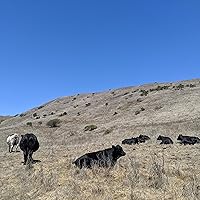
Again, where does that leave us? I don't think that Devine is interested in offering another straightforward story to fill the vacuum of the one he's disassembling. Instead, it seems like his impulse has something to do with landscapes — early on, he talks about how if you're taking a train across Scotland, much of it will look like empty, rolling pastures. (That's the first image that comes up when you go to visitscotland.com, the country's official tourism site.) But that scene — which looks like the most natural thing in the world — is unnatural. People lived on that land, farmed it, and bayonets made them leave.
A friend gave me another book recently, Owen Hatherly's Walking the Streets/Walking the Projects: Adventures in Social Democracy in NYC and DC, which is a walking tour of socialist co-ops in New York City. The subject's a world away, but it's the same concept. They're both trying to make you look twice: if you squint, you can see what Scotland might have been if the Levellers had successfully driven out the cows and there hadn't been a mass exodus to the US, or if NYC had given civic-minded architects a blank cheque to build mass transit, and on and on. Stare at the pasture, and it starts to shimmer.
In brief, this is an attempt to tackle a compelling national myth — the tragic story of how thousands of subsistence farmers in Scotland were pushed off of their land during the Industrial Revolution, a process known as "the Clearances" — and see what it leaves out.
As the traditional story goes, the evil lairds (once clan chieftains, now landlords) heartlessly evicted people en masse to turn a profit. There's a lot of truth to that: a generation of Adam Smith-pilled "factors," basically property managers hired by the nobles, were convinced that they needed to *improve* the land by making it more efficient, i.e. getting rid of the small-scale tenants. And they did do brutal things to accomplish that goal.
But Devine also turns up some data that complicates whether that narrative — the most gut-wrenching, immediate aspect of the Clearances — applies to the whole country. For example, the rate of out-migration only reached a fever pitch in the later 1800s, after the typical timeline of the evictions had run their course. Part of the reason, he says, is that the growth of towns cushioned the blow, and the oppression of Ireland meant that Scotland soaked up more opportunities to trade with England, so many of the evicted farmers were able to find jobs.
This is a pretty random topic, but the book's basic premise resonated because I think everyone is dealing with something similar right now, for different reasons — we have access to so much information, and it's easy to counter any compelling story with a million caveats pulled from the endless cloud of digitized collective knowledge. But where does that leave you? Humans want to believe in things.
When you strip away the romance and tragedy of the Clearances — which are valid — an alternate version is that a bunch of Scottish nobles suddenly got rich, blew all their money partying in London, and then had to figure out how to make it back. Then some guys showed up with a solution: get rid of everyone on your property, replace them with sheep, and you'll be saved. (Converting your land into grazing grounds, or a "sheep walk," was more lucrative than having lots of farmers on tiny plots.)
These were not completely rational decisions. One laird committed "financial suicide" by building an extension on his house to add a personal library, when he was already deeply in debt. Others held out for decades before finally trading ethics for solvency.
So in the Highlands, sheep slowly replaced people; in the Lowlands, it was cows. Near the town of Galloway, huge crowds of "Levellers" showed up with guns in the broad daylight to kick down the fences of the "parking lairds," who were trying to set up cattle enclosures called parks.
Again, where does that leave us? I don't think that Devine is interested in offering another straightforward story to fill the vacuum of the one he's disassembling. Instead, it seems like his impulse has something to do with landscapes — early on, he talks about how if you're taking a train across Scotland, much of it will look like empty, rolling pastures. (That's the first image that comes up when you go to visitscotland.com, the country's official tourism site.) But that scene — which looks like the most natural thing in the world — is unnatural. People lived on that land, farmed it, and bayonets made them leave.
A friend gave me another book recently, Owen Hatherly's Walking the Streets/Walking the Projects: Adventures in Social Democracy in NYC and DC, which is a walking tour of socialist co-ops in New York City. The subject's a world away, but it's the same concept. They're both trying to make you look twice: if you squint, you can see what Scotland might have been if the Levellers had successfully driven out the cows and there hadn't been a mass exodus to the US, or if NYC had given civic-minded architects a blank cheque to build mass transit, and on and on. Stare at the pasture, and it starts to shimmer.

November 27, 2023
Well, that was thorough and very well documented and researched. Conclusions are very clear, and understandable, numerous factors played roles in the Clearances. This might be the best testament to Lowland Clearances, as I was just as guilty of thinking only the Highlands and Islands were subjected to that.
He also makes clear that there’s quite a difference between the nostalgic views and stereotyping of the clearances, versus the reality. While doing so, he also makes clear that the stereotyping came from some very real & factual occurrences.
When you read a book that takes the time to properly explain and analyze a topic of this magnitude, it helps a lot to understand the context that it occurs within. This is a great strength of the book, that it understands and acknowledges numerous contextual information and factors.
Suffice to say, it’s not as simple as “evil landowners robbed the brave and noble Scottish peoples of their lands”….BUT…there’s definitely some serious truth in there, but by no means the sole reason. Some landowners were not on board and did all they could to save the old system and be the ancient laird who took care of those on his land in return for all they did for him and his clan.
A fascinating story, and one that I will share with the poor bastards that ask me about it. Being nearly 50% Scottish DNA, most of it Highland/Hebridean, this hits close to home, and helps me know why I am Canadian and not Scottish.
Highly recommended.
He also makes clear that there’s quite a difference between the nostalgic views and stereotyping of the clearances, versus the reality. While doing so, he also makes clear that the stereotyping came from some very real & factual occurrences.
When you read a book that takes the time to properly explain and analyze a topic of this magnitude, it helps a lot to understand the context that it occurs within. This is a great strength of the book, that it understands and acknowledges numerous contextual information and factors.
Suffice to say, it’s not as simple as “evil landowners robbed the brave and noble Scottish peoples of their lands”….BUT…there’s definitely some serious truth in there, but by no means the sole reason. Some landowners were not on board and did all they could to save the old system and be the ancient laird who took care of those on his land in return for all they did for him and his clan.
A fascinating story, and one that I will share with the poor bastards that ask me about it. Being nearly 50% Scottish DNA, most of it Highland/Hebridean, this hits close to home, and helps me know why I am Canadian and not Scottish.
Highly recommended.

June 16, 2025
A very complete history of replacing tenant farmers with sheep in the highlands, islands and lowlands of Scotland. Common history has this as a clearance by greedy land owners, but the full story is much more complex. This book goes into detail (where possible) about immigrant communities in the US and Canada and also connects economic hardships of the times and even the various wars (most involving Scots mercenaries).
I liked the pace and plan of the book, which I read as an audiobook over many hours commuting. The physical book has tables and graphs demonstrating the trends, and I used maps to see particular communities mentioned. Especially liked some of the annotated poems included in this work. Gaelic is very pleasing to the ear.
While being complete, it is also a bit long, in both pages and hours. For the history enthusiast, this will all be time well spent.
I liked the pace and plan of the book, which I read as an audiobook over many hours commuting. The physical book has tables and graphs demonstrating the trends, and I used maps to see particular communities mentioned. Especially liked some of the annotated poems included in this work. Gaelic is very pleasing to the ear.
While being complete, it is also a bit long, in both pages and hours. For the history enthusiast, this will all be time well spent.
March 24, 2020
This is a meticulous and persuasive history that challenges many of the common assumptions about the Scottish clearances. There is a mass of detail about the clan system and how this relates to the Jacobite rebellions. While Devine is careful not to suggest that the clearances did not happen or that some of the causes did not include morally wrong actions by the ruling class, he looks at the data and tells us that a lot of people emigrated, to North America in particular, while others moved away within Scotland, seeking a better life.

May 13, 2021
From the early 18th century until the mid 19th century whole communities in Scotland's Highlands and Lowlands were uprooted, evicted from their homes and displaced in the name of cultivating the land for farming, often with bloodshed; agrarian vulture capitalism at its most ruthless, it forced mass emigration to the Colonies and even famine. This bold attempt at a single-volume documentation of an important but often overlooked area of British community history only really becomes readable in the second half, but the research that has gone into it is truly masterly.

December 31, 2022
An interesting book that is going to help me in my researches!

August 4, 2024
Interesting about so called primitive accumulation in Scotland

July 18, 2019
Land ownership in Scotland remains the most inequitable in the Western world. At last census, 1,125 owners owned over 70% of the landmass. These landowners are not only benefiting from the land they own, but from various environmental and energy subsidies given to them by the government. This state of affairs has persisted relatively untouched, despite various acts of Parliament (both Westminster and Holyrood), since 1560. One man- Richard Scott, the 10th Duke of Buccleuch – owns more than 80,000 ha (200,000 acres), spread across multiple properties, and his family has held these lands since 1663. So, in case you were wondering whether this history of the Scottish Clearances matters in this modern era of Scottish independence votes and Brexit, let me emphatically say "You bet your ass it does!"
This book is one of the most comprehensive ever written about the Scottish Clearances. Rather than limiting itself like past works to a particular region and/or time period (looking your way John Preeble), T.M. Devine takes a holistic look at the whole of Scotland's relationship with its land and its landed peasantry. Devine traces the origins of the clearances all the way back to the 11th century, and shows the different types and stages throughout the country. Devine also makes the story more nuanced. Rather than simply a story about out of touch rich landowners heartlessly driving cottars of their land (although he does point out very gruesome instances where that DID happen- in one noted instance the Sunderlands and MacLeods of Skye attempted to sell over 30 families into indentured servitude to cover their debts), Devine tells a story of the varying geographic, political, economic, philosophical, and cultural forces that led to the mass divorce of the majority of the Scottish population from the land. Rather than talk about The Clearances as a specific event, clearance is an “omnibus term” and its manifestations ranged from silent abandonment of traditional townships and voluntary emigration as a way of rejecting loss of status in the new regime, to events of extreme violence and coercion brought about by a cruel ruling class. He deals with events in the border of southern Scotland and familiar events in Sutherland and other areas of the Highlands. In some ways the most compelling sections of the book are the chapters that deal with the eradication of the cottar class in Lowland Scotland, the “clearance by stealth” and the “forgotten history” of dispossession in the borders as large-scale sheep and cow herding encroached into this part of Scotland long before it was contemplated in the Highlands.
Many of the people who visit Scotland picture a beautifully desolate landscape, punctuated by ancient ruins and forgotten villages. The emptiness of the Scottish countryside, north and south, is seen as integral to its national identity. But as Tom Devine lays out, there was a traumatic process that created such conditions. Maybe we should pause whenever we see that to wonder just how many people were driven or starved out of their homes to make that vista possible.
This book is one of the most comprehensive ever written about the Scottish Clearances. Rather than limiting itself like past works to a particular region and/or time period (looking your way John Preeble), T.M. Devine takes a holistic look at the whole of Scotland's relationship with its land and its landed peasantry. Devine traces the origins of the clearances all the way back to the 11th century, and shows the different types and stages throughout the country. Devine also makes the story more nuanced. Rather than simply a story about out of touch rich landowners heartlessly driving cottars of their land (although he does point out very gruesome instances where that DID happen- in one noted instance the Sunderlands and MacLeods of Skye attempted to sell over 30 families into indentured servitude to cover their debts), Devine tells a story of the varying geographic, political, economic, philosophical, and cultural forces that led to the mass divorce of the majority of the Scottish population from the land. Rather than talk about The Clearances as a specific event, clearance is an “omnibus term” and its manifestations ranged from silent abandonment of traditional townships and voluntary emigration as a way of rejecting loss of status in the new regime, to events of extreme violence and coercion brought about by a cruel ruling class. He deals with events in the border of southern Scotland and familiar events in Sutherland and other areas of the Highlands. In some ways the most compelling sections of the book are the chapters that deal with the eradication of the cottar class in Lowland Scotland, the “clearance by stealth” and the “forgotten history” of dispossession in the borders as large-scale sheep and cow herding encroached into this part of Scotland long before it was contemplated in the Highlands.
Many of the people who visit Scotland picture a beautifully desolate landscape, punctuated by ancient ruins and forgotten villages. The emptiness of the Scottish countryside, north and south, is seen as integral to its national identity. But as Tom Devine lays out, there was a traumatic process that created such conditions. Maybe we should pause whenever we see that to wonder just how many people were driven or starved out of their homes to make that vista possible.

August 14, 2019
A well researched, broad and nuanced contribution to the historical and cultural role of the Scottish clearances. Although they have come to be culturally associated with the Highlands, Devine broadens the conversation into a greater Scottish and British economic history. Through a significant collection of unique primary sources, he paints a realistic picture, across wider Scotland while remaining respectful to the worst offenders of the Improvers who are already widely documented.
January 2, 2024
Three stars for the research that went into this but as has been stated in other reviews this is primarily a work of scholarship, specialisation and endless sifting of statistical and economic data which feels like it was written as academic reference for professional historians of the period rather than the average reader. And that is perfectly fine- except that it is perhaps too arid and impenetrable a read for the Penguin imprint, it would better suit a University publisher. The style for one, such as it is, does not have any of the colour or journalistic edge that is associated with so many memorable Penguin titles on all subjects down through the decades. A scientific paper for the initiated shorn of the vernacular elements of classic history doesn’t fit here.
Devine seeks to be corrective rather than expansive. He is right to argue that land clearance in Scotland was the result of larger processes that were centuries in the making but the Highland people dispersed to the Americas and preserving an often traumatised folk memory of the injustices of dispossession and emigration remain disappointingly, frustratingly elusive in this book (some laments and poems are reproduced) as ever more data, price indexes and population analyses are added to buttress the unrelieved dry statistical account Devine restricts himself to. That’s problematic for me because if market forces are inevitable then the stories that the victims tell themselves to make sense of their experiences ultimately don’t matter. Equally it is letting the perpetrators of injustices off the hook because their actions are interpreted in the light of economic logic, rather than admitting ideological and racist motives. Devine tries to cover these angles but I feel he was content with the economic arguments as a rule. (Problematic and again frustrating given the current hegemony of Neo-Liberal thinking in today’s universities. Even the suggestion of activist interpretations of facts are taboo in order to guarantee ongoing corporate funding.) I don’t think that is Devine’s objective, he is an excellent technician and there is a lot to commend in other aspects of the work, but to produce just an exposition of data assumes that the average reader is already sufficiently informed of all the background history. Again, Devine states in his preamble that are many myths and false narratives that are dispelled by a study of the hard data and relevant trends, but sometimes it’s not clear exactly what argument or assumption Devine is seeking to debunk so the lay reader (me in this case) is forced to construct the impression of one to keep soldiering on. As I have said, advanced students of the period are the only set of people likely to be able to sustain this form of dialectic as they are bringing much more seminar expertise or schemata to a reading of this work than the rest of us. That reader could only be a PhD student to survive the welter of economic data and historiographical allusion (or “pyrotechnics” according to some breathless reviews) on show here, however worthy.
It’s not as readable an account as is claimed in reviews, and the subtitle ‘A History Of The Dispossessed’ doesn’t really apply until the second to last chapters when Devine realises as an afterthought he needs to throw some in for balance. Even so there is not much tension between the statistical survey and the more literate approach, the former predominates in this book. Ultimately that’s a shame because the lay reader who is sufficiently engaged enough by the songs and stories of the clearances will feel short changed as folk narratives and memoirs are parked in favour of statistics and more statistics. Definitely an excellent overview of the macro-economic forces which shaped the Highlands but an opportunity lost, I felt there was much more of a story to be told -eg history of ideas, identity, racial attitudes, contemporary newspaper accounts, testimonies, private correspondence, personal biographies, the 40s clearances -instead of just an account of the numbers. A definitive history is yet to be written.
Devine seeks to be corrective rather than expansive. He is right to argue that land clearance in Scotland was the result of larger processes that were centuries in the making but the Highland people dispersed to the Americas and preserving an often traumatised folk memory of the injustices of dispossession and emigration remain disappointingly, frustratingly elusive in this book (some laments and poems are reproduced) as ever more data, price indexes and population analyses are added to buttress the unrelieved dry statistical account Devine restricts himself to. That’s problematic for me because if market forces are inevitable then the stories that the victims tell themselves to make sense of their experiences ultimately don’t matter. Equally it is letting the perpetrators of injustices off the hook because their actions are interpreted in the light of economic logic, rather than admitting ideological and racist motives. Devine tries to cover these angles but I feel he was content with the economic arguments as a rule. (Problematic and again frustrating given the current hegemony of Neo-Liberal thinking in today’s universities. Even the suggestion of activist interpretations of facts are taboo in order to guarantee ongoing corporate funding.) I don’t think that is Devine’s objective, he is an excellent technician and there is a lot to commend in other aspects of the work, but to produce just an exposition of data assumes that the average reader is already sufficiently informed of all the background history. Again, Devine states in his preamble that are many myths and false narratives that are dispelled by a study of the hard data and relevant trends, but sometimes it’s not clear exactly what argument or assumption Devine is seeking to debunk so the lay reader (me in this case) is forced to construct the impression of one to keep soldiering on. As I have said, advanced students of the period are the only set of people likely to be able to sustain this form of dialectic as they are bringing much more seminar expertise or schemata to a reading of this work than the rest of us. That reader could only be a PhD student to survive the welter of economic data and historiographical allusion (or “pyrotechnics” according to some breathless reviews) on show here, however worthy.
It’s not as readable an account as is claimed in reviews, and the subtitle ‘A History Of The Dispossessed’ doesn’t really apply until the second to last chapters when Devine realises as an afterthought he needs to throw some in for balance. Even so there is not much tension between the statistical survey and the more literate approach, the former predominates in this book. Ultimately that’s a shame because the lay reader who is sufficiently engaged enough by the songs and stories of the clearances will feel short changed as folk narratives and memoirs are parked in favour of statistics and more statistics. Definitely an excellent overview of the macro-economic forces which shaped the Highlands but an opportunity lost, I felt there was much more of a story to be told -eg history of ideas, identity, racial attitudes, contemporary newspaper accounts, testimonies, private correspondence, personal biographies, the 40s clearances -instead of just an account of the numbers. A definitive history is yet to be written.

October 6, 2025
Devine is an eminent, thorough historian, but not always the most invigorated of writers - we see this right at the very beginning of the book, the second paragraph possessing considerably more flair than the drier "here's why I wrote this book" paragraph the author chose to open his book with - and his zeal for ample documentation does make this a dryer read than it perhaps needed to be, better consumed not in a oner but in doses of individual chapters, many of which are packed with enough ideas and primary sources so as to animate seminar discussions or simply individual persual. Devine's academicist refusal to succumb to any kind of generalities or wholesale attribution of guilt can be frustrating when the ripple effects of what he is discussing are so clearly felt in the Highlands and Islands of Scotland today, but his detailed look at all the various factors involved in the Scottish enclosures ultimately make this the most authoritative book possible on the subject. Below are quoted in full what I considered to be the two best passages in the box, the first a marvellous example of the way Devine inculpates Scottish Enlightenment thinkers for laying the ideological groundwork for future violent eviction, the second testifying to the causal complexity of the Clearances.
"It was McNeil’s Report to the Board of Supervision in Scotland, published in 1851, which finally and authoritatively discredited charitable relief as a solution to the Highland problem and presented a powerful case for large-scale emigration of the ‘surplus’ population as the only possible way forward. The Report led to the passage of the Emigration Advances Act of 1851, which provided loans at low interest to those proprietors willing to ‘encourage’ emigration from their estates. This legislation can be seen as a cataclysmic factor triggering a major increase in clearance and ‘compulsory’ emigration." [319]
"The narrative [of greedy clan chiefs turned landlords betraying their own people] is compelling and poignant but one in which some uncomfortable truths rarely intrude: the limitations of natural endowment in the Highlands; a marked increase of population on poor land with no long-term alternative for subsistence or employment for a people who had always lived close to the edge of subsistence in the old clan-based society; the destruction of infant Highland manufacturing by Lowland competition; bankruptcy of the traditional landed class; the overwhelming power of market capitalism; and the absence of any viable long-term alternative to pastoral husbandry. These were all factors of fundamental importance and cannot be ignored in any serious examination of the history of the Highlands. There is no question, however, that those who seek to defend the people affected by these forces have in the main avoided or downplayed them. Instead, they have opted for the single explanation of human wickedness, a resolution of the problem which does not fit with the historical evidence which is now to hand." [360-61]

September 8, 2024
Thorough narrative of the economic history of the crofters, cotters, peasants, and landlords in Scotland during the "clearances." The traditional narrative is that after the loss of the Battle of Culloden (1746), the highland culture was persecuted. Part of that, included clearing the land of peasants and replacing them with sheep farmers.
There is some truth to this, but it does not adequately describe the long process. I really enjoyed this presentation. Like most long-run economic changes, the process takes generations and has many different causes.
The clearances initially began in the lowlands earlier in the late 1600's and into the 1700's, long before Culloden.
While in general, these Lowland clearances happened without recorded incident, one exception is the 1724 Galloway Levellers' Revolt. They levelled the newly built sheep walls (dykes). Unlike other lowland areas, the Galloway peasants did not have other options. Other farmers had closer access to work in growing Edinburgh, Kelso, Hawick, Selkirk, and Jedburgh. Galloway was not near any town of substance.
Interestingly, they were not against land improvement. "the tenant will hereby be capable and encouraged to improve the breed of sheep and black cattle and the ground which without enclosures is impossible."
This is an important lesson for all economic change. In the long run, economic growth brings prosperity and an increased material quality of life. Dynamism is necessary for this. But dynamism comes with short-run transition costs. These are often ignored by economists, policy makers, and of course, the other landowners and business powers.
The next century, it was the Highlanders turn. While again, many of these clearances were done slowly without issue, other times they lead to severe hardship. The Sutherland and Argyle estates, in particular, used more forceful and draconian means.
But, even in the north, many of the forces leading to clearance were slow and unforced (military recruitment, urbanization and wage labor, emigration to America or Canada) Of course, many of these emigrations were forced.
Again, excellent book. Extremely well balanced. I enjoyed he complexity of the 3 century period.
There is some truth to this, but it does not adequately describe the long process. I really enjoyed this presentation. Like most long-run economic changes, the process takes generations and has many different causes.
The clearances initially began in the lowlands earlier in the late 1600's and into the 1700's, long before Culloden.
While in general, these Lowland clearances happened without recorded incident, one exception is the 1724 Galloway Levellers' Revolt. They levelled the newly built sheep walls (dykes). Unlike other lowland areas, the Galloway peasants did not have other options. Other farmers had closer access to work in growing Edinburgh, Kelso, Hawick, Selkirk, and Jedburgh. Galloway was not near any town of substance.
Interestingly, they were not against land improvement. "the tenant will hereby be capable and encouraged to improve the breed of sheep and black cattle and the ground which without enclosures is impossible."
This is an important lesson for all economic change. In the long run, economic growth brings prosperity and an increased material quality of life. Dynamism is necessary for this. But dynamism comes with short-run transition costs. These are often ignored by economists, policy makers, and of course, the other landowners and business powers.
The next century, it was the Highlanders turn. While again, many of these clearances were done slowly without issue, other times they lead to severe hardship. The Sutherland and Argyle estates, in particular, used more forceful and draconian means.
But, even in the north, many of the forces leading to clearance were slow and unforced (military recruitment, urbanization and wage labor, emigration to America or Canada) Of course, many of these emigrations were forced.
Again, excellent book. Extremely well balanced. I enjoyed he complexity of the 3 century period.

October 2, 2021
Most have heard of the highland clearances, and I thought I understood the reason for them. This book argues that the clearances were widespread, encompassing lowland Scotland as well, and that simplistic reasons such as those I held, are part of a more complex picture. Indeed, I am not sure the view I held was even mentioned, suggesting it was poorly conceived, insignificant or just wrong. Apparently I am far from alone in holding an uninformed, romanticized view, with spurious ideas in circulation for at least 150 years, most recently popularized by the outlander book/tv series (the author of which providing praise on the cover!)
In terms of the push factors landlords played a big role, but more often with good intent than is imagined. Land was under pressure as well, and despite the marvel of the potato, fertility and famine was out competing crops. Hence the attraction of the pull factors - migration to towns, cities and industrial jobs - and immigration to the open spaces available in Canada and Australia. This is not the whole picture of course, and only covers the later highland clearances, the lowland events taking place earlier and often for other reasons.
For me it provides an idea of what my ancestors on Mull might have been going through prior to their voyage to Australia in 1839. Leaving from tobermory, they were perhaps already displaced from their crofts. Mill avoided one of the potato famines in the 1830s, but perhaps secondary food shortages affected them. The impression is that the large family would have been desperately poor. Once in Australia they would likely have been grateful to have again avoided the widespread potato blight event of 1846, settling eventually in northern NSW.
I'll certainly be going back over some of the details in this book in the future.
In terms of the push factors landlords played a big role, but more often with good intent than is imagined. Land was under pressure as well, and despite the marvel of the potato, fertility and famine was out competing crops. Hence the attraction of the pull factors - migration to towns, cities and industrial jobs - and immigration to the open spaces available in Canada and Australia. This is not the whole picture of course, and only covers the later highland clearances, the lowland events taking place earlier and often for other reasons.
For me it provides an idea of what my ancestors on Mull might have been going through prior to their voyage to Australia in 1839. Leaving from tobermory, they were perhaps already displaced from their crofts. Mill avoided one of the potato famines in the 1830s, but perhaps secondary food shortages affected them. The impression is that the large family would have been desperately poor. Once in Australia they would likely have been grateful to have again avoided the widespread potato blight event of 1846, settling eventually in northern NSW.
I'll certainly be going back over some of the details in this book in the future.
May 14, 2025
clearly more of an academic text than a light lucid read. the overall thesis of the clearances which the Scottish people perpetrated against their own countrymen is displayed though in all the complex reasons for it and not the usual arguments of the anti English simpletons who see it as Westminster Vs gallant Scotland. The role of emigration, some encouraged, some forced but much invited by the apparent benefit of it before any force was applied. the role of labour opportunities and how the subsidiary labour declined which made the worth of running a croft or a tenant farm redundant. the role of things getting better elsewhere but remaining stubbornly restrictive and resistant to change and improvement thus attracting rather than forcing people to leave the land. the odd romanticising of the hard highland life that continues to this day such that people in the Scottish diaspora and their descendants claim against the facts that they are all descended from noble but hard done to highlanders. The ignoring of the larger clearances which beset the lowlands (and for that matter the enclosures in England) but which, mainly due to economic factors had lesser detrimental effect on the population. Tom Devine is never shy of putting the facts into the open air. This so often dispels many of the myths on which nearly 35% of the modern Scottish people exist in their closed minds at each national and Scottish election and is this welcome for that alone

November 2, 2020
A remarkable work from a first-rate historian, Devine’s work is meticulously sourced and scholarly but eminently readable. He pairs a clear sympathy for his subjects, the dispossessed, with a willingness to challenge long-held canards and to acknowledge with a sort of fatalism the economic realities behind these sometimes saccharine myths. Devine demonstrates persuasively that dispossession happened on a comparable scale in the Lowlands with minimal publicity, for reasons that he acknowledges are not well-understood. He does not spill as much ink as some of his predecessors on the Highlands as the story is more familiar, but he does a superb job of laying out the context, where the emigrants went, what economic forces were pushing them out and what (like cratering costs for the transportation of goods to the Highlands) were making life in hitherto inaccessible regions more tolerable in the 19th C. He seeks to understand the lairds and their motivations, the brakes and accelerants on their behavior. He sympathizes with the downtrodden and emphasizes their plight with poetry and song, but it doesn’t overwhelm his historical judgment. This is popularly accessible history at its finest. I may disagree with his political leanings or some of his characterizations but the work as a whole is well worth the effort.
August 11, 2025
For the Scottish history buff. There are a lot of stats, and the book is very thorough, which can be laborious at times. But, it gives a complete picture of what is known of the Clearances. I appreciated the fact that the author intentionally set aside modern views and stepped back in time to view things (as best we can) through the eyes of those who lived then. This approach made the book much easier to read and eliminated the subjective opinions that muck up so many “historical” accounts these days. I’m here to know what happened then, not what we think of it now. Thankfully, the author seemed to agree.
The one quibble I had was with a misrepresentation of Presbyterian/covenant theology—the idea that some Covenanters endured the clearances and suffering without protest because they believed enduring suffering was required for salvation. That is a works-based belief system that is inconsistent with Presbyterian/covenanter theology (and ironically, it’s consistent with Catholic theology, which Covenanters were strongly against). Presbyterian/covenanter theology is built on the concept that salvation is a gracious gift from God and the result of faith alone. It is *sanctification* (the gradual development of holiness/Christ-like character and conquering of sin) that results from patient, perseverance amidst suffering.
The one quibble I had was with a misrepresentation of Presbyterian/covenant theology—the idea that some Covenanters endured the clearances and suffering without protest because they believed enduring suffering was required for salvation. That is a works-based belief system that is inconsistent with Presbyterian/covenanter theology (and ironically, it’s consistent with Catholic theology, which Covenanters were strongly against). Presbyterian/covenanter theology is built on the concept that salvation is a gracious gift from God and the result of faith alone. It is *sanctification* (the gradual development of holiness/Christ-like character and conquering of sin) that results from patient, perseverance amidst suffering.

October 6, 2019
I very much enjoyed this book. As a Scot it really gave me a good understanding of a very important period in the history of my country. Being born and brought up in the Borders it also brought to light some little known history of that area too.
The book is written in a very readable style, quotes directly from many sources and seeks to give an even handed account of a very emotive subject. In doing this the author digs deeper than many who have gone before him and provides a detailed and fascinating analysis of the underlying reasons for the clearances. He really helps you to see and feel the tragedy that befell so many of the poorest and most vulnerable. He did this without descending into sentimentalism and carefully avoided painting what was a complex picture in black and white tones.
One thing I really appreciated is the way that he often introduced a subject first then returned to it later restating what he’d already said and then expanding on it. This helped me to keep the thread of his arguments and analysis without having to go back and reread previous sections.
This is the sort of history I like reading. It tells you what happened, why and what the human consequences were. I now have a much deeper understanding of many aspects of why Scotland is as it is today.
The book is written in a very readable style, quotes directly from many sources and seeks to give an even handed account of a very emotive subject. In doing this the author digs deeper than many who have gone before him and provides a detailed and fascinating analysis of the underlying reasons for the clearances. He really helps you to see and feel the tragedy that befell so many of the poorest and most vulnerable. He did this without descending into sentimentalism and carefully avoided painting what was a complex picture in black and white tones.
One thing I really appreciated is the way that he often introduced a subject first then returned to it later restating what he’d already said and then expanding on it. This helped me to keep the thread of his arguments and analysis without having to go back and reread previous sections.
This is the sort of history I like reading. It tells you what happened, why and what the human consequences were. I now have a much deeper understanding of many aspects of why Scotland is as it is today.

March 28, 2026
This was such a good book. I am in no position to judge its accuracy but it is very convincing.
[If you read for 'story' this is not the book for you. If you read for analysis, you will love it.]
The material on the gradual clearances of the lowlands was utterly new to me. I was particularly interested in the creation of new villages (I live near one, Scone); and also in the way that end of season pay made migration possible.
The 'long game' of the Highlands was a revelation: I live in Perth where the Blackwatch Museum is situated, and I had no idea about the 'farming' of the Highlands for the military, nor that at various points migration was prevented in order to maintain a resource of poorly paid small land holders who needed additional work to survive.
Of the aspects of the story of clearances I had not grasped was the position of cottars as 'sub-tenants' (see above); also the sheer amount of debt the traditional landowners had accrued, creating the space for incomers to take over the land as just that, land, rather than relationships.
[If you read for 'story' this is not the book for you. If you read for analysis, you will love it.]
The material on the gradual clearances of the lowlands was utterly new to me. I was particularly interested in the creation of new villages (I live near one, Scone); and also in the way that end of season pay made migration possible.
The 'long game' of the Highlands was a revelation: I live in Perth where the Blackwatch Museum is situated, and I had no idea about the 'farming' of the Highlands for the military, nor that at various points migration was prevented in order to maintain a resource of poorly paid small land holders who needed additional work to survive.
Of the aspects of the story of clearances I had not grasped was the position of cottars as 'sub-tenants' (see above); also the sheer amount of debt the traditional landowners had accrued, creating the space for incomers to take over the land as just that, land, rather than relationships.

June 16, 2020
I picked up this book because I felt that, despite being Scottish, I don’t really know too much about Scottish history.
This book is split into two halves. The highland clearances, and the much less known about, lowland clearances. It’s written in a way that I found it very easy to read, and absorbed lots of the information. I never knew that there were clearances in areas where I have lived.
The thing I liked most about Devine’s writing is that it isn’t over-complicated. It seems to make the information written, more accessible for normal people, not just history buffs. The events are laid out in a chronological way, and explains very clearly how things played out the way they did. I also liked that the book shows something that most people would not have been aware of.
This book would be a good book for kids to learn about at school, and it should be in local libraries all over the country.
This book is split into two halves. The highland clearances, and the much less known about, lowland clearances. It’s written in a way that I found it very easy to read, and absorbed lots of the information. I never knew that there were clearances in areas where I have lived.
The thing I liked most about Devine’s writing is that it isn’t over-complicated. It seems to make the information written, more accessible for normal people, not just history buffs. The events are laid out in a chronological way, and explains very clearly how things played out the way they did. I also liked that the book shows something that most people would not have been aware of.
This book would be a good book for kids to learn about at school, and it should be in local libraries all over the country.

June 30, 2025
A comprehensive look into a subject that I hadn’t known much about, beyond a small unit covered on the highland clearances in school history classes and odd bits of reading here and there. This book dives into how the clearances in both the lowlands and highlands came to happen, and the economical, social, religious, and political factors that drove masses of people off of their ancestral lands and into cities and onto boats abroad.
As someone that’s lived across the central belt, it was interesting hearing about not just the plight of the highlands but of the east and west farmlands down here as well. (Queue me thinking ‘I’ve been there!’ Whenever places in East Lothian were mentioned) However I would say that this text is very heavy, and as an academic text is excellent, but as a read inspired by general interest… can be a bit of a graft to get through. Honestly fantastically researched, and well presented though, would recommend to anyone curious about the subject!
As someone that’s lived across the central belt, it was interesting hearing about not just the plight of the highlands but of the east and west farmlands down here as well. (Queue me thinking ‘I’ve been there!’ Whenever places in East Lothian were mentioned) However I would say that this text is very heavy, and as an academic text is excellent, but as a read inspired by general interest… can be a bit of a graft to get through. Honestly fantastically researched, and well presented though, would recommend to anyone curious about the subject!

June 18, 2023
The intro to this threw me off a little as the tone made me feel like the text was going to play down the impact of the clearances on the Highlands & serve as apologia for pseudo colonialism but thankfully this wasn’t the case. The book does undermine the traditional romanticised mythology around the Highland including pointing out that said clearances weren’t actually exclusively a highland phenomenon & did in fact impact & transform the rural lowlands of Scotlands almost as much. That being said the account of lowland clearances is a little more dry & lacks the racialised nature of the more famous Highland equivalent. The Lowland stuff is still very informative & clearly well researched & the account of the Highland clearance is more moving than the original preface of the book led me to believe it would be. Recommended for anyone looking to know the facts of the events.

August 27, 2022
This was my introduction to the Clearances as a subject, so I'm not able to put this in context of other histories. But I can say that it's thoroughly researched, well-argued, and engaging without falling on a narrative crutch.
While the author hits on the same argument a few times over, it's never to the book's detriment and was actually kind of helpful for a casual reader like me.
I was a bit puzzled by the introduction, which sets the book up as being some sort of 'setting the record straight' against popular misconceptions. But outside of giving serious time to lowland clearances - whereas most writing is apparently focused on the highlands - there's nothing here that seems particularly controversial. Maybe it's just a history writer making a case for why his book matters.
While the author hits on the same argument a few times over, it's never to the book's detriment and was actually kind of helpful for a casual reader like me.
I was a bit puzzled by the introduction, which sets the book up as being some sort of 'setting the record straight' against popular misconceptions. But outside of giving serious time to lowland clearances - whereas most writing is apparently focused on the highlands - there's nothing here that seems particularly controversial. Maybe it's just a history writer making a case for why his book matters.
Displaying 1 - 30 of 65 reviews