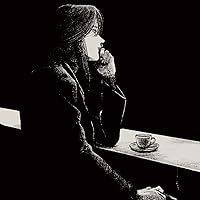
일본 본격 추리소설의 거장, 요코미조 세이시의 일곱 번째 작품. 1948년부터 1949년까지 잡지 「남녀」와 「대중소설계」에서 연재되었다. 1978년, 1990년 두 번 드라마화된 이 작품은, 영화화된 <이누가미 일족> <팔묘촌> 등에 비해 대중적으로 크게 알려지지 않았으나 요코미조 세이시 마니아에게 높은 평가를 받고 있다.
삼류 추리소설가 야시로는 동창 나오키의 부탁으로 그의 저택을 찾는다. 마침 그곳에 꼽추화가 하치야가 후루가미 가家의 외동딸 야치요의 정혼자 자격으로 머물고 있었는데, 그는 다음날 머리가 없는 시체로 발견된다. 우연하게도 하치야와 비슷한 용모를 한 야치요의 오빠가 사라지고, 그날 밤 몽유병 증세를 보였던 야치요 역시 의심 받기 싫다는 쪽지를 남긴 채 모습을 감춘다.
명탐정 긴다이치 코스케는 이 참혹한 사건 뒤에 검은 의도가 있음을 눈치 챈 야시로와 함께 미궁으로 빠지는 사건에 뛰어든다. 아름다운 여인에 의한 저격사건, 머리 없는 시체, 과거의 원한과 저주로 인해 삐뚤어진 가족, 그리고 의지의 통제에서 벗어난 잠재의식의 발현, 몽유병. 추악하게 일그러진 인간의 애증을 다룬 작품이다.
Seishi Yokomizo (横溝 正史) was a novelist in Shōwa period Japan. Yokomizo was born in the city of Kobe, Hyōgo (兵庫県 神戸市). He read detective stories as a boy and in 1921, while employed by the Daiichi Bank, published his first story in the popular magazine "Shin Seinen" (新青年[New Youth]). He graduated from Osaka Pharmaceutical College (currently part of Osaka University) with a degree in pharmacy, and initially intended to take over his family's drug store even though sceptical of the contemporary ahistorical attitude towards drugs. However, drawn by his interest in literature, and the encouragement of Edogawa Rampo (江戸川 乱歩), he went to Tokyo instead, where he was hired by the Hakubunkan publishing company in 1926. After serving as editor in chief of several magazines, he resigned in 1932 to devote himself full-time to writing. Yokomizo was attracted to the literary genre of historical fiction, especially that of the historical detective novel. In July 1934, while resting in the mountains of Nagano to recuperate from tuberculosis, he completed his first novel "Onibi" (『鬼火』), which was published in 1935, although parts were immediately censored by the authorities. Undeterred, Yokomizo followed on his early success with a second novel Ningyo Sashichi torimonocho (1938–1939). However, during World War II, he faced difficulties in getting his works published due to the wartime conditions, and was in severe economic difficulties. The lack of Streptomycin and other antibiotics also meant that his tuberculosis could not be properly treated, and he joked with friends that it was a race to see whether he would die of disease or of starvation. However, soon after the end of World War II, his works received wide recognition and he developed an enormous fan following. He published many works via Kodansha's Weekly Shōnen Magazine in serialized form, concentrating only on popular mystery novels, based on the orthodox western detective story format, starting with "Honjin Satsujin Jiken" (『本陣殺人事件』) and "Chōchō Satsujin Jinken" (『蝶々殺人事件』) (both in 1946). His works became the model for postwar Japanese mystery writing. He was also often called the "Japanese John Dickson Carr" after the writer whom he admired. Yokomizo is most well known for creating the private detective character Kosuke Kindaichi (金田一 耕助). Many of his works have been made into movies. Yokomizo died of colon cancer in 1981. His grave is at the Seishun-en cemetery in Kawasaki, Kanagawa (神奈川県 川崎市).
old review: Really impressive murder mystery, I couldn't see the ending coming at all when I first read this splendid crime novel (by Seishi Yokomizo) years ago.
Updated@15/12/2021:
A new book cover for this Yokomizo's classic! How can I resist...
New review starts here:
Night Walk is one of the finely crafted classic Detective Kindaichi mystery novels.
This time the story is narrated by a third-ranked detective novelist, he was invited to the remote family manor of his well-to-do friend. In the manor, the novelist met his friend's eerie family members, one of them being a beautiful but wanton young woman, and she had an unusual suitor: a humpbacked painter.
The men within the family seemed to all harbor complicated/incestuous feelings toward this young woman, plus when cursed bloodline, family's secrets, madness, lust and greed came into play, murder and beheading ensured.
Beheading! All the beheading in the story is really...interesting to say the least. Plus it's also worth noticing that the story takes place in a time period when DNA testing hadn't ever existed, that enables the murderer to do what they did.
Overall, the story is on the melodrama side but for a whole novel I'm fully entertained, the plot twists are neat and the murder mysteries really can keep you guessing, although Kindaichi only shows up at around the late 2/3 part of the story, still the story carries itself nicely, from start to end.
There is one thing, since it's a novel penned decades ago, so it's hard to overlook all the discrimination against disable people and women in the text, the characters in the book always talk like humpbacked people are mentally unbalanced and abnormal because they are handicapped! At the back of the book, I found the Taiwanese publisher noted that they are aware of the outdated discriminations in the story so they had already adjusted the wording and the tone in this reprint! If what I'd read is already the 'adjusted' version then the original text has to be really offensive. *sighs* I'm not holding it against Mr. Yokomizo, but still.
PS: here is one small detail, the murderer in the end confessed that they were 'used to beheading people during the war', *sighs* now I remember I read from another book that the Imperial Japan Army tended to kill their war prisoners by beheading them because they claimed they 'didn't have enough resource to keep war prisoners alive', that really sucks.
PSS: Now we know that, Kindaichi, the great detective he is, still he actually has name card like any other salary men who work in the office. 😁
PSSS: After reading this story, if you feel that people who are potential murderers, just trust me, we are not.😂😂
My Top Ten Yokomizo's Detective Kosuke Kindaichi Mysteries novels
Estaba navegando por NetGalley y, al ver las categorías y la portada de este libro, me intrigó, así que fui a leer la sinopsis y no tuve más remedio que solicitarlo. Ya solo con eso me tenía totalmente cautivada. No me importó ni siquiera que solo tuviera dos días para leerlo antes de que se archivara; al contrario, eso me motivó a terminarlo más rápido.
Les cuento muy por encima la sinopsis para que me entiendan: Imagínense una mansión gigante en el campo, una familia de la alta sociedad donde todos se odian y tienen secretos turbios, y de la nada aparece un cuerpo decapitado y mutilado.
El detective Kosuke Kindaichi (nada que ver, pero me recordó a Hércules Poirot) tiene que meterse en este círculo lleno de locura, alcoholismo, secretos y hasta una supuesta maldición familiar (y una espada) para descubrir al asesino antes de que sea demasiado tarde.
Esto es una locura brutal. Nunca había leído nada de este estilo y con lo único que puedo compararlo es con un misterio de Agatha Christie, pero en versión siniestra. Claramente seguiré leyendo al autor; esta fue la mejor carta de presentación que pude tener de él.
Thanks to NetGalley and the publisher for providing me with an advance copy of the book in exchange for an honest review.
My least favourite of the Kosuke Kindaichi novels so far.
This one comes in a totally different format to the previous novels, being told by an unsuccessful detective novelist who finds himself unwillingly dragged into a series of very confusing murders beginning with the death of a hunchback, possibly at the hands of another hunchback who are fighting over the affections of a woman related to the novelist's friend.
After this the family involved decamp to their country retreat but further deaths occur and it isnt until Kosuke Kindaichi appears to solve the mystery.
This novel just didn't quite gel for me. Kindaichi arrives on the scene very late in the day and up to that point it felt quite farce-like. Certainly not the carefully plotted mysteries I have previously read by Seishi Yokomizo. Still, they cannot all be winners.
I would recommend this to any die-hard fans and it is still worth a read if you are unfamiliar with Yokomizo's usual calibre. The characters are interesting and, even though I guessed it, there was a good twist at the end.
Thankyou to Netgalley and Pushkin Vertigo for the digital review copy.
She Walks At Night is a classic mystery whodunit. The story is told from the perspective of a self described "third-rate mystery novelist" who is pulled into a murderous family drama by his university friend Yashiro.
This excellently written and translated novel takes the reader on a journey involving sleepwalking, cursed swords, mistaken identities, old resentments and many enjoyable twists and turns.
I recommend picking up this book to see if you can solve the mystery before Detective Kosuke Kindaichi reveals the hidden motives and actions of the sinister killer preying on the Furugami Family.
Thanks to NetGalley and the publisher for providing an advance reading copy in return for an honest review.
She Walks at Night by Seishi Yokomizo ~ another chilling case featuring our beloved detective, Kosuke Kindaichi.
It begins with unexplained incidents and mysterious letters, followed by a headless corpse, a locked samurai sword, and a family drowning in secrets…This isn’t just a whodunit, and not only about solving a murder; it’s about unraveling the darkness of human obsession and family legacy.
On the Furugami estate, a decapitated body is found. The supposed murder weapon, an antique sword is inexplicably sealed inside a safe. The Furugami clan itself is steeped in feuds, grotesque prophecies, and hidden resentments. At the center is Yachiyo Furugami, a beautiful yet unstable young woman plagued by sleepwalking, who receives ominous letters warning her not to walk at night.
The tale unfolds through Torata Yashiro, a struggling mystery writer, who becomes entangled in the Furugami family’s labyrinth of madness. Through his eyes, we see eerie sleepwalking episodes and the heavy shadow of family secrets, slowly unraveling the reasons behind the tragedies.
My one frustration: Kindaichi’s late arrival. His entry feels delayed, and once he appears, the resolution comes almost too swiftly. Still, his brilliance shines when suspicion peaks, cutting through the chaos with his trademark precision.
Overall, I really enjoyed the plot. It’s a macabre, golden-age style mystery set in a post-war and shadowy Japanese mansion, where a headless corpse, a locked sword, and a sleepwalking heiress make this one of Kindaichi’s most unsettling cases.
What a great read! Yokomizo is a master of the classics, and this is no exception. None are to be trusted, and even those closest to our narrator could be hiding secrets.
As an outsider, Yashiro gives his impressions of the Furugami house cast freely. At the side of his long time friend, Naoki, he’s drawn in immediately to the overbearing and overwhelming energy of the Furugami estate. His telling of the events is tense and fast paced as murder after murder plague the group, even as Kosuke Kindaichi appears. This may be the only down side of the book, as Kindaichi adds so much fun to some of the more tragic stories, and he was only mildly in this one. Overall, it felt like I knew where this was going, bounced around a few “it has to be them” and even skimmed across the truth at times, but ultimately found this inclusion into the series to be a thrill!
Scruffy sleuth Kosuke Kindaichi returns to solve another puzzle Seishi Yokomizo’s “She Walks at Night”, the seventh book to be translated in this outstanding series, originally published as a serial in 1948.
We are in post-war Japan, still trying to recover from defeat and struggling with the changing culture of great families no longer having their exalted positions in society. Naoki Sengoku gets in touch with an old friend of his from university, Torata Yashiro, who narrates this story. Torata is a detective fiction mystery writer, although not very successful, and Naoki asks him to help solve a mystery involving Yachiyo Furugami, a beautiful girl who Naoki grew up with. Yachiyo has been receiving threatening letters from a mysterious hunchback who is threatening to claim her, and Naoki thinks that Torata can help solve the mystery. To make matters even more difficult, Yachiyo shot an artistic hunchback named Koichi Hachiya, a man who she had never met. Was this the letter writer?
And so we travel to the estate and meet the Furugami family, an odd set of characters in typical Seishi Yokomizo fashion. There’s Tetsunoshin, Naoki’s father, perpetually drunk and threatening people with a sword. He is basically the kept man of Lady Oryu Furugami, the wealthy widow and mother of Yachiyo, and possibly the actual father of Yachiyo. There’s also Morie, the shy hunchback brother of Yachiyo who has his own designs on his sister. And, just to get even more confusing, the hunchback Hachiya is also present, engaged to Yachiyo and living on the estate.
Almost immediately after they arrive they witness Yachiyo having a sleepwalking episode, and they discover a headless corpse the very next day. Although it’s a hunchback, the head is missing, and so are both Morie and Hachiya. Since the police are puzzled, Kosuke Kindaichi is called in, but before he can get grounded another murder throws everything into disarray. Can Kindaichi figure out not only the killer but also the victims before more lives are lost?
Sleepwalking, vengeful servants, bloody swords, incestual relationships – just another day in the office for Kindaichi. As I’ve stated above, this is my seventh mystery in this series and all of them have been superb, a throwback to the British golden age mysteries with a very definite Japanese twist.
I requested and received a free advanced electronic copy from Steerforth & Pushkin, Pushkin Vertigo via NetGalley. Thank you!
She Walks at Night is one of the finest murder mysteries I have read in recent times and another reminder of why Seishi Yokomizo remains my favorite mystery author.
The premise is intriguing from the very beginning. A wealthy family with secrets, grudges, and morally grey members is thrown into chaos when an outsider enters their lives. Then comes a murder with an unusual twist: no one is even sure who the victim is. From there, the mystery only grows more complex as the question becomes whether the detective can stop the next murder before it happens. What Yokomizo does better than almost anyone else is atmosphere.
Long before the first murder takes place, there is an overwhelming sense of unease. The family dynamics, the mansion, and the relationships between the characters all create an oppressive feeling that something terrible is about to happen. Even without blood being spilled in the opening chapters, I found myself anxious about what awaited the characters. That slow burn is precisely what makes Yokomizo's novels so distinctive.
The cast is another major strength.
Every member of the family has their own motives, secrets, and personal agenda. Combined with the eerie setting, the novel constantly keeps you questioning everyone's intentions. Once the murders begin, the pacing becomes relentless. The story keeps moving while carefully revealing enough information for you to understand what is happening, but never enough to fully explain how it is happening.
That balance is what kept me turning pages.
Every time I thought I had a grasp on the mystery, Yokomizo introduced another revelation that forced me to rethink everything. The final twist was particularly brilliant and completely caught me off guard.
If I had one criticism, it would be that the novel asks for a little patience at the beginning. There are many characters and relationships to absorb, and understanding the family's dynamics is essential for appreciating the mystery. Readers looking for an immediate murder on the opening pages may find the initial setup slow. For me, though, that deliberate buildup is exactly what makes the payoff so satisfying.
Overall, She Walks at Night is an atmospheric, meticulously constructed mystery that rewards patience with one of the most satisfying detective stories I have read.
If you enjoy classic murder mysteries filled with dread, intricate family secrets, and clever twists, this is an easy recommendation.
I have read very few Japanese works and I'm always doubtful whether the translation will be good. But after reading this story, I can't help but say the translation was so good that I didn't even feel like I was reading a story set in a different language and culture!
The story's mystery element worked really well. For one thing, the setting with few mysterious characters brought in a suspenseful setting. Along with that, the narration of Torata, who was as much an outsider, as a reader was capable of showing the characters and the events in an objective manner.
What was so striking of this story was that I couldn't even guess who the killer was nor find the clue. Everything was carefully concealed from the readers, giving the story and its ending a memorable experience.
One thing I expected was for Kindaichi to appear from the beginning itself. But his appearance came only by the end and that too was a passive person. Even then, the work of the detective was supplemented by Torata who did the narration and found clues in the first half of the story.
Overall, it was a great book. I'm happy to have found a great author whose books have a touch of mystery and classic. And now, my goal is to read more of Seishi Yokomizo's works!
I love Seishi Yokomizo’s Kosuke Kindaichi mystery series and have read all the books currently available in English from Pushkin Press, of which this is the eighth. Originally published in 1948, She Walks at Night has a slightly different feel from most of the others in the series and it’s one of my favourites so far.
The novel is narrated by Torata Yashiro, a struggling mystery writer, who is approached by a friend, Naoki Sengoku, to ask for his opinion on a series of strange incidents involving members of Naoki’s family. Like many people, Naoki thinks that because Torata writes mysteries he must also know how to solve them – but of course that’s not necessarily the case, and when Torata hears the story he’s just as confused as his friend.
It seems that Naoki’s father, once a servant of the wealthy Furugami family, has grown close to the widowed Lady Oryu since her husband’s death. In fact, Naoki believes that the relationship started earlier than that and Lady Oryu’s daughter, Yachiyo, is actually his father’s child and therefore his own half-sister. A family prophecy has stated that Yachiyo will marry a hunchback – and, surprisingly, there are two of these in the Furugami household. One is Morie, another half-brother of Yachiyo’s who developed rickets as a child; the other is Koichi Hachiya, an artist who has just become engaged to Yachiyo.
The reason for Naoki’s concern is that Yachiyo shot Hachiya in the leg at a nightclub the previous year and hasn’t given a satisfactory explanation for what she did. She has also been receiving anonymous letters warning her not to ‘walk at night’ – a reference to her habit of sleepwalking. Torata agrees to accompany Naoki to his family home to meet Yachiyo and see if he can provide any answers, but almost as soon as he arrives the mystery deepens when a dead body is found with the head removed. How can they track down the murderer when they can’t even be sure who the victim is?
You may be wondering where Kosuke Kindaichi comes into all of this. In some of the books, he’s there from the beginning, but in others we don’t see him until later on – this is one of the latter and our dishevelled, stammering private detective makes his appearance almost exactly halfway through the book. People often underestimate Kindaichi, as Torata and Naoki initially do here, but his talents are hidden beneath his unimpressive exterior and as soon as he begins to investigate, the mystery starts to unravel. However, I felt that things unfold too quickly and easily once Kindaichi arrives on the scene and with the whole story told from Torata’s perspective, we don’t really get to see how the detective reaches any of his conclusions. The final solution, when it’s revealed, is clever and surprising, though, and I certainly hadn’t guessed it (it had crossed my mind once or twice, but I’d quickly dismissed it).
Japanese crime novels tend to focus more on the plot than on the characters, but I’m finding that Yokomizo’s books have a better balance and there are several interesting characters here, as well as Kindaichi himself, including Naoki’s father, the drunken, sword-wielding Tetsunoshin, and the bitter, vengeful old family nurse, Okita. This book overall has many of the same elements as a typical country house mystery by authors like Agatha Christie or John Dickson Carr, with some Gothic touches such as sleepwalking, family curses and the murders being carried out with a legendary Muramasa sword.
Jesse Kirkwood is the latest of several translators who have worked on this series and although I’ve been happy with all of the translations, this one feels particularly smooth and easy to read. The use of a first person narrator also gives it a more intimate, personal feel than some of the other books (I think The Village of Eight Graves and The Honjin Murders are the only other ones written in the first person). If you’re new to the series, this could be a good place to start, but as they’re all separate mysteries you could really start anywhere. I’m already looking forward to the next one to be translated, The Queen Bee Mystery, coming next year!
absolutely everything about this book had me gasping for air. i’ve now read all the kōsuke kindaichi books available in english, and honestly, this one has secured a spot in my top two. as someone who reads a lot of translated japanese murder mysteries, i can confidently say that seishi yokomizo remains unmatched.
she walks at night follows torata, a third-rate detective novelist, who accompanies his wealthy friend naoki to the furugami estate in the countryside. the furugamis are infamous for their eccentricity, their ominous family history, and the strange physical traits that seem to haunt every generation. naturally, once the visitors arrive, a string of gruesome deaths begins to unfold.
since she walks at night primarily follows the detective novelist torata as the narrator, we're seeing events through torata's eyes, and kindaichi doesn't appear until much later in the story.
jesse kirkwood’s translation is brilliant as always, preserving both the atmosphere and the mounting dread that make yokomizo’s mysteries so addictive. i also have to admit that this one completely fooled me. i didn't figure out the murderer at all, and the final reveal caught me entirely off guard.
that said, it is important to situate the novel within its historical and cultural context. written in post-war japan, the text reflects a number of social attitudes and views on women that were prevalent at the time of its publication. certain remarks and perceptions surrounding women are bound to be uncomfortable or dated to modern readers. so, please keep that in mind :)
My first Yokomizo read and honestly this book got me so, so hooked. A brilliant mystery reading experience. He is definitely a classic for a reason. Where have I been!!!
The narrator template brings me back to Strange series by Uketsu, which I really enjoy, so it didn’t take me long before I was completely absorbed in this book. I must say it was quite scary in a very realistic way, where I became conscious of my surroundings while reading it because it was just so…eerie. Which I love!
I thoroughly enjoyed all the characters from this book. So flawed. Mysterious. And I was very much impressed by the ending. I wouldn’t say it was a complete surprise, but it was a really good twist! So wicked, and somehow satisfying. I was like: OOOOYEAH.
I already have Yokomizo’s other books waiting in line. I don’t usually fancy postwar mystery, but I am definitely a new fan.
I usually prefer murder mysteries that you are given all the pieces foe throughout. I thought I had it but the twist at the end was enjoyable enough. Maybe it’s because I’m reading this on my honeymoon and another day I could have rolled my eyes at it. I can see why some may find it an unsatisfying twist or end. That said, I had fun with it!
I feel like with every Seishi Yokomizo book I read, and now in the process of re-reading, I see it is my favorite, and now I'm going to say it with this one. Yokomizo is truly one of my favorite authors of all time and my favorite mystery writer. Yokomizo balances the dark aspects of a murder mystery with the narrator's personality, who constantly addresses the reader, and leads detective Kosuki Kindaichi to create a dynamic narrative that keeps you on your toes.
Kosuke Kindaichi is one of my favorite characters; he is witty and charming, and he comes to life off the page. The way he interacts with others leads to many situations that are funnier than serious. Torata Yashiro, who serves as our narrator and is a self-proclaimed "third-rate mystery novelist," not only brings the story to life but also often breaks the fourth wall to keep the reader engaged, directly addressing readers, which I love, and one of the reasons I keep coming back to Yokomizo's books.
The book is haunting and violent as the murders are gruesome and the tension constantly rises, and as we learn more about each character, Yashiro and Kindaici find more ways each person around them could be the culprit, which makes the novel feel suffocating in a good way and constantly guessing until the tension reaches it's highest point and we get the answers we need as readers, bring the whole story full cylce.
It is, like many books, a reflection of its time, and it is hard to overlook how people with disabilities are described; I cannot review the book without mentioning that. However, I think the translator, Jesse Kirkwood, did a good job of trying to be as respectful as the original text would allow and brought to life other aspects of the characters' lives and personalities that helped them become well-rounded characters despite the narrator constantly labeling them by their disability.
Ôi trời ơi, quyển này chính là quyển mình yêu thích nhất của Yokomizo đây, đọc mê quá mê !!
“Yachiyo Furugami, người mắc chứng mộng du, liên tục nhận được những bức thư bí ẩn, kết thúc bằng lời cảnh báo: “Đừng đi lại vào ban đêm.” Không lâu sau, một thi thể bị chặt đầu bằng thanh kiếm samurai cổ được phát hiện trong khuôn viên gia tộc Furugami. Khi cảnh sát rơi vào bế tắc, thám tử Kosuke Kindaichi được mời điều tra, nhưng hung thủ đã kịp gây ra thêm một vụ án mạng nữa.”
Cuốn này là tập hợp tất cả những điểm mạnh của cụ Yokomizo: Án mạng rùng rợn, không khí u uất, điều tra hồi hộp, twist cực hay. Đọc tầm 30% là mình chắc chắn là cuốn mình thích nhất ở thời điểm này rồi, dẫn truyện quá mượt. Giữa những đoạn căng thẳng thì lại cho mấy tình huống đọc buồn cười dã mann :)))
Chỉ có một điểm mình không thích là phần twist cuối tác giả hơi tham, thêm vào vài động cơ hơi khiên cưỡng, và cũng giấu khá nhiều thứ nên cảm giác không fair, nhưng cái twist ở giữa truyện phải gọi là ĐỈNH ĐỈNH ĐỈNH 🥹🥹
Mình chấm 8.5/10, tưởng đã rành cụ quá rồi nhưng mà khônggg, nể quá đi 🙏
I find the Kosuke Kindaichi series really interesting as I always either love the book or feel really disappointed.
Unfortunately this book was the latter. I really enjoyed the last 3 chapters they were incredible but I found overall the book to be kind of boring. We don't meet our detective until just over halfway through. Narrative wise I understand why we prioritised the narrator but I find Kosuke Kindaichi to really be the glue that holds the books together and without him I don't really care about the story.
I also felt a lack of our main detective means that he solves the mystery with so much ease and it feels way too easy. Honestly this whole book would have been better served as a standalone novel than a series as Kosuke Kindaichi legit did nothing in this book. I would have felt a lot more compelled by a standalone rather than waiting for a detective to show up and barely do anything.
ARC Review This is a new genre for me, and there is some cultural references that I did not understand and probably would have helped me to understand more about the families presented in this story. It took me about 100 pages to become invested in the intensity of the suspense and murder mystery. There is a LOT of back stories of the two families, so much so I got overwhelmed. But once we started on the path of sleepwalking and beheading I was all in! The author gives us a slow burn, explaining the landscape with eerie shadows, much like if you were there and could feel someone’s eyes on you. Again, there were many references I missed, but the translation is eloquent and language almost poetic, with great care to grow the story at a pace I found maddening until then suddenly we were running at full speed. A great whodunnit with a Japanese backdrop, with swords and beheadings and detective work
it’s unfortunate, but i figured out who the murderer was close to the start! still, the menagerie of a cast and sinister atmosphere make this book worth reading. i didn’t love it as much as i’ve loved some of yokomizo’s previous mysteries, though, and i think the changing settings made it less easy to fall into the mystery (i’ve gotten too used to the one singular manor housing all the murders ig).
I’m assuming this was partially inspired by The Murder of Roger Ackroyd by Agatha Christie, which I found to be tedious, but does have its famous ending. If so, this was by far the better version of it!!
I did not see the iconic ending coming, and got a good jaw drop with the last couple of lines which sealed the eeriness and disturbing nature of the one sided revenge the whole story is predicted on.
This entire review has been hidden because of spoilers.