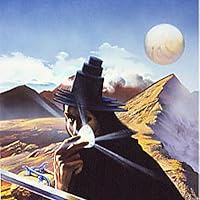
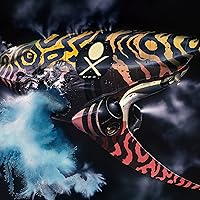
Roy Barch is taken slave by the Klau, along with the golden Lekthwan, Komeitk Lelianr. On the industrialized world Magarak, the Klau hunt Barch and others for recreation. Barch refuses to fall prey—and fights a grim battle to return to Earth.
John Holbrook Vance was an American writer widely celebrated for his imaginative contributions to science fiction, fantasy, and mystery literature. Over a career that spanned more than six decades, he became known for richly detailed worlds, inventive language, and stories that combined adventure with sharp social observation. His work influenced generations of speculative fiction writers and helped expand the literary possibilities of the genre. Vance wrote more than sixty books and numerous short stories, many first appearing in science fiction magazines before later being expanded into novels and collections. His fiction was widely translated and developed an international readership. Vance grew up in California and spent part of his youth on a ranch near the Sacramento River delta, where he developed a love of the outdoors and an appetite for reading. The family experienced financial hardship during the Great Depression, prompting him to take a variety of jobs before completing his studies at the University of California, Berkeley. During these years he worked in several trades and cultivated interests in music, travel, and sailing, experiences that later informed many of the settings and themes in his fiction. Before becoming a full-time writer he held numerous occupations, including shipyard worker, merchant seaman, carpenter, and surveyor. His earliest published story appeared in the mid 1940s in a science fiction magazine, marking the beginning of a long writing career. Throughout the following decades he produced stories across multiple genres, though he became best known for science fiction and fantasy cycles that combined imaginative settings with elaborate cultures and social systems. Among his most famous works are The Dragon Masters and The Last Castle, both of which received Hugo Awards. The Last Castle also earned the Nebula Award, confirming Vance's reputation as one of the most distinctive voices in speculative fiction. His fantasy trilogy Lyonesse later received the World Fantasy Award, while his memoir This Is Me, Jack Vance! earned another Hugo decades later. In addition to speculative fiction, Vance wrote several mystery novels, some under pseudonyms including Ellery Queen. These works often blended crime elements with psychological or social themes and sometimes anticipated ideas that later appeared in his science fiction. His storytelling frequently emphasized cultural conflict, moral ambiguity, and intricate social customs rather than large-scale warfare, setting him apart from many contemporaries in the genre. Vance maintained close friendships with other science fiction writers and participated in literary communities that shaped postwar American speculative fiction. He traveled widely with his family and spent extended periods abroad, experiences that influenced the exotic settings and cosmopolitan tone found in many of his books. Music also played a role in his life and writing, reflecting his long-standing enthusiasm for traditional jazz. Despite gradually losing his eyesight later in life, Vance continued writing with the aid of specialized software and completed both fiction and autobiography in his later years. Over time his reputation grew steadily, and he received numerous honors, including the World Fantasy Award for Life Achievement and recognition as a Grand Master by the Science Fiction and Fantasy Writers of America. Critics and fellow writers often praised his distinctive style, wit, and imagination, and his stories remain widely read within the science fiction and fantasy community.
With Vance's characteristic narrative thrust and a strong-willed protagonist. A pre-study for the Tschai-books. First time read in Underwood-Miller. Second time in VIE. I liked the old ending better.
Gold and Iron was Vance's preferred title for this novel. It was first published in December of 1952 by Standard Magazines in a magazine issue. In that edition the title was changed from Vance’s title of “Gold and Iron” to “Space Stories”. In 1958 Ace published it in paperback book form as an Ace Double with Big Planet. They changed the title to “Slaves of the Klau" and made major cuts in the text. When it was published by Coronet as “Slaves of the Klau” in paperback in 1980 they restored the text without the Ace cuts. In 1982 Underwood-Miller published it in a limited edition, again under the title Slaves of the Klau. They used the original edited magazine version. The novel was finally published under Vance's preferred title of "Gold and Iron" in 2002 in the Vance Integral Edition but the mawkish ending was modified after Vance indicated that he had not written it. The original manuscript of Gold and Iron was subsequently located and it was learned that Vance had written the mawkish ending but apparently forgot that he had done so. When Spatterlight released their edition it was under Vance's preferred title of Gold and Iron and it included Vance's original ending that was in the manuscript. Although the original ending is indeed quite maudlin, I prefer it to the more abrupt ending in the VIE edition. It is currently in print and is highly recommended as are all Spatterlight Vance books which are high quality trade paperbacks at very reasonable prices. For reviews of all of the published writings of Jack Vance please visit: Vancelot: Jack Vance in Review at: https://vancealotjackvanceinreview.bl...
In the title "Gold and Iron," gold refers to the Lekthwan woman Komeitk Lelianr whose "skin shone lustrous gold" and iron refers to our main character Roy Barch from Earth who has an iron will and a constitution to match. Vance indicated that he was rather fond of this book. Although it is not one of his very finest efforts, I found that I liked it better after rereading it. I've now read it three times, once in the Coronet edition (121 pages), once in the Ace double (126 pages) and finally in the Spatterlight Press edition (145 pages). The Spatterlight edition includes a four page forward by Ted Gioia.
The story begins on Earth where our main character, the Earthling Roy Barch, works as an attendant for Markel the Lekthwan. Lekthwans are an advanced human like species from another planet that visited Earth where some of them now live. They shared much of their highly advanced technology with Earthers. Their medications, for example, significantly decreased the death rate of humans. But for Barch their arrival was a personal disaster. Like his father Barch studied to be a scientist, but when the Lekthwans arrived, all of his knowledge and training was obsolete and he could no longer function as a scientist. Now he is little more than a servant. Earthers had considered themselves unique in the universe but were now feeling inferior to another more advanced species. For many years the rather benevolent Lekthwans have been at war with the brutal, warlike Klau who capture and enslave species from other planets to work in their factories and mines. The Klau, fortunately, had not yet discovered Earth.
Markel is visited by his family, including his wife and anthropologist daughter. Barch falls in love with Markel’s beautiful Lekthwan daughter, Komeitk, who seems to like Barch but not romantically. When Aarch asks if she could ever love him, for example, she replies, "We Lekthwans are a peculiar race. Try to think of us as impersonal beings." Barch is able to spend social time with her, though, and takes her one evening to hear the Yerba Buena Jazz Band. This is a famous San Francisco area jazz band that broke up in 1950 but is humorously transported into the future in this novel. It allows for several pages of discussion about jazz music between the jazz loving Barch and a cultural anthropologist from an alien world. As a jazz fan, I found this section totally delightful.
The disparity between the optimistic, independent, self reliant Barch and the highly intelligent but rather effete Komeitk provides contrast throughout the novel. Barch is a very Vancean protagonist, with even less of a dark side than most. His only obvious personality flaw is that he is rather arrogant. But he is arrogant in his self confidence and not a braggart or egoist. As Komeitk said about jazz music, "It's too forthright, too uncompromising." Barch's reply to her was, "We live with this drive, this thrust to the future--a dynamism that speaks in music." Later in the novel he even tries to bolster his own morale by thinking to himself, "Confidence bred confidence...Be arrogant in your confidence."
When Barch and Komeitk return home after the concert, they find that Earth has been invaded by the Klau and they are taken hostage to be transported to a planet where they will be worked like slaves. Komeitk is resolved to her fate and feels no hope. Barch feels "like an ant in a thrashing machine" and vows that, "if there's a way out of this Magarak slave-camp, I'll try to find it." Komeitk tells him that he needs "to think realistically, to limit your idealism by possibility." Barch never gives up, telling her "Who says it cannot be done, if we give ourselves entirely?" Escaping from the Klau, surviving in the wild and returning home all seem like unrealistic dreams, but to Barch they are practical goals to be accomplished after obstacles are overcome with clear thinking, careful planning, hard work and determination.
Some interesting alien creatures are depicted in the story, although they are not as fully developed as in some of Vance's later works. There are some loose ends in the story with a few scenes that might seem improbable, but these did not bother me at all. The plot is rather simple but is still interesting, with plenty of adventure and intrigue. At one point Barch and others are pursued by Klau warriors called Podruods who hunt them for entertainment. Instead of simply hiding Barch proposes that the tables be turned and that they hunt the Podruods. A similar alien hunting idea with a twist would later be developed in even more detail in one of Vance's amazing masterpieces "The Dirdir."
The novel also introduces a number of interesting inventions including "air-sandals" that levitate the wearer to be able to walk in the air and describes how on other planets "ships are grown, like you Earthers grow cabbages...they grow their dwellings, their ocean-ships, their air-ships." In "The Houses of Iszm," a novella written by Vance a year later, he depicted trees that grew into multilevel houses with plumbing, etc. but here they also grow into spaceships and nautical ships.
Gold and Iron is interesting and easy to read and should appeal to most Vance fans. There are other writings that would be better starting points for readers who are not yet familiar with Vance's wonderful writings. (Moon Moth, Blue World, Dragon Masters, Cugel's Saga, Last Castle, Suldrun's Garden, Star King, etc.) Overall I think Gold and Iron is underrated although it might require repeated readings in order to better appreciate it. Although this is not one of Vance's masterpieces, it has a lot of Jack Vance in it and is not lacking in interest or appeal despite the melodramatic ending. I've read this novel four times so far and rate it a 4.
Gold and Iron was Vance's preferred title for this novel. It was first published in December of 1952 by Standard Magazines in a magazine issue. In that edition the title was changed from Vance’s title of “Gold and Iron” to “Space Stories”. In 1958 Ace published it in paperback book form as an Ace Double with Big Planet. They changed the title to “Slaves of the Klau" and made major cuts in the text. When it was published by Coronet as “Slaves of the Klau” in paperback in 1980 they restored the text without the Ace cuts. In 1982 Underwood-Miller published it in a limited edition, again under the title Slaves of the Klau. They used the original edited magazine version. The novel was finally published under Vance's preferred title of "Gold and Iron" in 2002 in the Vance Integral Edition but the mawkish ending was modified after Vance indicated that he had not written it. The original manuscript of Gold and Iron was subsequently located and it was learned that Vance had written the mawkish ending but apparently forgot that he had done so. When Spatterlight released their edition it was under Vance's preferred title of Gold and Iron and it included Vance's original ending that was in the manuscript. Although the original ending is indeed quite maudlin, I prefer it to the more abrupt ending in the VIE edition. It is currently in print and is highly recommended as are all Spatterlight Vance books which are high quality trade paperbacks at very reasonable prices. For the most recent review and other Vance reviews please see: https://vancealotjackvanceinreview.bl...
In the title "Gold and Iron," gold refers to the Lekthwan woman Komeitk Lelianr whose "skin shone lustrous gold" and iron refers to our main character Roy Barch from Earth who has an iron will and a constitution to match. Vance indicated that he was rather fond of this book. Although it is not one of his very finest efforts, I found that I liked it better after rereading it. I've now read it three times, once in the 1980 Coronet edition (121 pages), once in the 1958 Ace double (126 pages) and finally in the 2002 Spatterlight Press edition (145 pages). The Spatterlight edition includes a four page forward by Ted Gioia.
The story begins on Earth where our main character, the Earthling Roy Barch, works as an attendant for Markel the Lekthwan. Lekthwans are an advanced human like species from another planet that visited Earth where some of them now live. They shared much of their highly advanced technology with Earthers. Their medications, for example, significantly decreased the death rate of humans. But for Barch their arrival was a personal disaster. Like his father Barch studied to be a scientist, but when the Lekthwans arrived, all of his knowledge and training was obsolete and he could no longer function as a scientist. Now he is little more than a servant. Earthers had considered themselves unique in the universe but were now feeling inferior to another more advanced species. For many years the rather benevolent Lekthwans have been at war with the brutal, warlike Klau who capture and enslave species from other planets to work in their factories and mines. The Klau, fortunately, had not yet discovered Earth.
Markel is visited by his family, including his wife and anthropologist daughter. Barch falls in love with Markel’s beautiful Lekthwan daughter, Komeitk, who seems to like Barch but not romantically. When Aarch asks if she could ever love him, for example, she replies, "We Lekthwans are a peculiar race. Try to think of us as impersonal beings." Barch is able to spend social time with her, though, and takes her one evening to hear the Yerba Buena Jazz Band. This is a famous San Francisco area jazz band that broke up in 1950 but is humorously transported into the future in this novel. It allows for several pages of discussion about jazz music between the jazz loving Barch and a cultural anthropologist from an alien world. As a jazz fan, I found this section totally delightful.
The disparity between the optimistic, independent, self reliant Barch and the highly intelligent but rather effete Komeitk provides contrast throughout the novel. Barch is a very Vancean protagonist, with even less of a dark side than most. His only obvious personality flaw is that he is rather arrogant. But he is arrogant in his self confidence and not a braggart or egoist. As Komeitk said about jazz music, "It's too forthright, too uncompromising." Barch's reply to her was, "We live with this drive, this thrust to the future--a dynamism that speaks in music." Later in the novel he even tries to bolster his own morale by thinking to himself, "Confidence bred confidence...Be arrogant in your confidence."
When Barch and Komeitk return home after the concert, they find that Earth has been invaded by the Klau and they are taken hostage to be transported to a planet where they will be worked like slaves. Komeitk is resolved to her fate and feels no hope. Barch feels "like an ant in a thrashing machine" and vows that, "if there's a way out of this Magarak slave-camp, I'll try to find it." Komeitk tells him that he needs "to think realistically, to limit your idealism by possibility." Barch never gives up, telling her "Who says it cannot be done, if we give ourselves entirely?" Escaping from the Klau, surviving in the wild and returning home all seem like unrealistic dreams, but to Barch they are practical goals to be accomplished after obstacles are overcome with clear thinking, careful planning, hard work and determination.
Some interesting alien creatures are depicted in the story, although they are not as fully developed as in some of Vance's later works. There are some loose ends in the story with a few scenes that might seem improbable, but these did not bother me at all. The plot is rather simple but is still interesting, with plenty of adventure and intrigue. At one point Barch and others are pursued by Klau warriors called Podruods who hunt them for entertainment. Instead of simply hiding Barch proposes that the tables be turned and that they hunt the Podruods. A similar alien hunting idea with a twist would later be developed in even more detail in one of Vance's amazing masterpieces "The Dirdir."
The novel also introduces a number of interesting inventions including "air-sandals" that levitate the wearer to be able to walk in the air and describes how on other planets "ships are grown, like you Earthers grow cabbages...they grow their dwellings, their ocean-ships, their air-ships." In "The Houses of Iszm," a novella written by Vance a year later, he depicted trees that grew into multilevel houses with plumbing, etc. but here they also grow into spaceships and nautical ships.
Slaves of the Klau is interesting and easy to read and should appeal to most Vance fans. There are other writings that would be better starting points for readers who are not yet familiar with Vance's wonderful writings. (Moon Moth, Blue World, Dragon Masters, Cugel's Saga, Last Castle, Suldrun's Garden, Star King, etc.) Overall I think this novel is underrated although it might require repeated readings in order to better appreciate it. Although this is not one of Vance's masterpieces, it has a lot of Jack Vance in it and is not lacking in interest or appeal despite the melodramatic ending. I've read this novel four times so far and rate it a 4.
Gold and Iron play no more than a metaphorical role in this early Vance story. The original title, Slaves of the Klau, while considerably less poetic, is more accurate. The story concerns an Earthman and a woman from another, more advanced race, who are taken captive by the Klau.
This is a very John Campbell-esque story, in that it's apparent early on that only Earthmen, despite their low level of civilization, have the strength and dynamism to keep going in the face of adversity. There's little of the usual Vance wordplay and aloof would-be sophisticates come in only via the aliens. Instead, it's a straightforward adventure story. That said, it's still well-written, and worth reading.
Not a good introduction to Vance, but if you're looking for good old fashioned space opera, when men were men (and women were unfortunately mostly decorative), this fits the bill.
Reading this early Vance alongside very late Vance (Lurulu) is jarring indeed.
Lurulu is thoughtful and the product of unhurried wisdom. Klau is the formulaic and market-driven attempt of a young man trying to find a voice and an audience. The qualities that would make Vance great are present in Klau if you look hard, but they are more-or-less drowned out by less impressive aspects. The scenario is uninspired. The hero is a man's man, the heroine is arm candy, there's an overarching sense of unthoughtful Western (American) jingoism. Don't read this unless you're looking for an middling example of 50s U.S. pulp sci-fi.
Some authors peak in their 20s or early 30s. Thankfully Vance just improved and improved for decades on end.
Gold and Iron play no more than a metaphorical role in this early Vance story. The original title, Slaves of the Klau, while considerably less poetic, is more accurate. The story concerns an Earthman and a woman from another, more advanced race, who are taken captive by the Klau.
This is a very John Campbell-esque story, in that it's apparent early on that only Earthmen, despite their low level of civilization, have the strength and dynamism to keep going in the face of adversity. There's little of the usual Vance wordplay and aloof would-be sophisticates come in only via the aliens. Instead, it's a straightforward adventure story. That said, it's still well-written, and worth reading.
Not a good introduction to Vance, but if you're looking for good old fashioned space opera, when men were men (and women were unfortunately mostly decorative), this fits the bill.
Classic classic Vance. This one is very similar to his later masterwork The Tschai Series. Rather good, but, like a lot of Vance's earlier works, a bit lacking in characterization.
Reminded of this early Vance effort by Neal Asher: https://www.goodreads.com/author_blog... He gave it middling marks, which was my vague recollection: I read it (ims) as the other half of an Ace Double, b/w Big Planet, which happens to be the edition I own. Sadly, neither of these is of much interest now. No plans to reread.
I think this is my first ever science fiction book. I distinctly remember picking this up in a library and having a blast with it. I was probably 10 or 12 at the time, and really enjoyed it. 4 stars for the nostalgia. But as far as I remember, this is pulp, and not from the better ones. Guy hates aliens, aliens look down on humans, they get into stereotypical troubles (in my mind the Klau starts to resemble the Affront, which would make more sense than an advanced race actually needing slaves for work), the guy mans up, fights themselves out of it, they have sex, credits. Classic, well enough executed, nothing brilliant.
U knížek, které se chystám číst, nečtu texty na zadní straně, které obvykle prozrazují devadesát procent celého děje. Vyplácí se mi to, nekazím si všechna překvapení. A tahle (v podstatě ryze pulpová) kniha je servíruje v opravdu velkém množství.
Hlavní hrdina, spolu se svým přítelem, jsou v podstatě služebníci u mimozemské rodiny žijící na Zemi. Bytosti se zlatou kůži přiletěly s dary… a tak trochu Zemi ovládly. Ve vší slušnosti a morální nadřazenosti. Čili čtenář čeká, že kniha bude o tom, jak hrdina rozjede revoluci.
Chyba lávky. Hrdina se stane posedlým dcerou svého mimozemského zaměstnavatele, snaží se na ní udělat dojem – a když se spolu vrací z neúspěšného rande (jazz nefunguje na ženský všeho druhu), zjistí že dům někdo přepadl, a zabil jak lidi, tak mimozemšťany. Ukázalo se, že ta mimozemská rasa není ve vesmíru sama. Je tu ještě jedna, brutální a potrpící si na otroky. A právě ta hrdinu a mimozemskou dívku zajme a odveze jí na svou planetu, aby tam makali coby otroci. Dobře, říkáte si, bude to o jejich životě v zajetí, sbližování se, přizpůsobování se, seznamování se se světem a ve finále dojde k útěku.
Zase vedle. Hrdina (i s holkou) uteče ještě dřív, než stihne kosmický dopravní prostředek dolétnout k cíli, uprostřed lesa se potká se skupinou uprchlíků a začne s nimi okamžitě budovat vesmírnou loď. Hrdina není žádný detailsta.
Kniha má předmluvu, kde se vysvětluje, že jde o postokoloniální román, který ukazuje, jak byl kolonialismus špatný. No, nějak jsem si nevšiml. Spíš mi přišlo, že celá předmluva má jen knize krýt zadek, aby nebyla obviněná z nějakých nehezkých věcí. Protože pozemšťan přistane na planetě plné všech možných zajatých jiných ras, okamžitě začne všechny dirigovat (s tím, že momentálního šéfa tlupy zastřelí) – a to vše s takovým přesvědčením o svých schopnostech a budovatelský optimismem, že to až zavání šílenstvím.
Do toho je to psané velmi zvláštním způsobem, kdy se spousta podstatných událostí bere hopem či přeskakuje. Takže třeba jedna kapitola začíná tím, jak se hrdina vrací zpátky do jeskyně bez ruky a parťáka, přičemž akce, při které se to stalo, není vůbec popsaná. Čím zásadnější událost, tím lakoničtěji je shrnutá. I hrdinův vztah s mimozemšťankou je prostě posunutý dál s tím, že – ačkoliv je kniha cudnější než církevní večírek a máte pocit, že hrdina jí celou dobu jen zdálky obdivuje – mu dívka oznámí, že s ním má dítě… a že ho nemůže mít s nikým jiným, s kým v poslední době spala, protože jeho jediné geny jsou s jejími slučitelné.
Je to heroický brakový příběh popsaný stylem sociopatického účetního. A fakt si nechci tipovat, jestli v tom byl nějaký záměr, nebo prostě Vance musel rychle dodělat knihu, a tak vynechával všechno, co ho nebavilo. A ano, tahle věc se mi z Vanceových knih četla asi nejhůř, ale přesto nemůžu zapřít, že měla své kouzlo.
Hmm. My husband loves Jack Vance. I’ve only read the Lyonesse trilogy. I asked him for three recommendations- this was the first of them I’ve read. The writing was fine, and there were some interesting anthropological and linguistic ideas. However. There is an obsession with the idea of superior/inferior races and how that aligns or not with technological progression. Roy, the protagonist, sees earthers being to the Lekwan as an African to a US citizen. Alien races are often seen as being very much all of a type. The characteristic of earthers as portrayed by Roy is their dynamism. It’s hard to know how much Roy is the authors voice piece here. There is some writing that suggests not, but I may be giving Vance too much credit. Sexual politics is also a tough swallow here. Roy falls for the beautiful Lekwan, but knows nothing more about her than that. To Vance’s credit, Komeitk Lelianr points this out. But even at the end of the book Roy sees her as a thing (he uses the word twice in one page) he wants to possess. He has actually possessed her - she is pregnant. It’s clear she submitted to sex because their refugee society considers all women the property of a man. Most of the other women do not even get names. Speaking of names, Roy renames any alien who’s name he considers too hard to pronounce. Komeitk Lelianr (which it seems to me he could make a stab at) becomes Ellen, another alien becomes Tick and another Porridge! But apparently earthers, unlike the Lekwan, are attempting to beat prejudice! This renaming is a good metaphor for how little he tries to understand any of the other characters and how little he respects them.
Roy is the most rounded character in the book. His determination is admirable but he is also a bully and can be brutal and callous. At one point the word liquidate is even used to describe the murder of the previous leader. Some of the above I ascribe to it being 1950s genre sci-fi. I will read more from Vance but the next one I choose will be a later work!
This entire review has been hidden because of spoilers.
3.5 stars. Early work, and definitely not Vance's best but there are some flashes of the good stuff there--hints at the complexity of alien cultures, meditations on the advantages of civilization vs. savagery, etc. What I found most interesting was that the main character is supposed to be admirable, and is in some ways, but is also intensely dislikable. He's crude, violent, self-centered, and the prototypical "ugly American" who cannot even be bothered to learn to pronounce foreign names. I'm not sure what Vance's attitude towards his protagonist is...he plays it close to the vest here. Of course there is the usual insensitivity about race and gender, so if you are offended by such things, stay away from this and 20th century sci-fi in general (well, at least the stuff written by white men...I don't recall elements of racism from any of the great women sci-fi writers of the 20th century though you could probably dig something up if you tried hard enough.) Personally I look at it as a cultural artifact of the times, regrettable but understandable (again, we're talking about insensitivity, not racism or sexism per se.) Of course it is easier for a white male to take that tack than it might be for others.
2.5 stars. As a fan of Jack Vance, I have read a good number of his books and unfortunately I feel like I've found his weakest yet, with Slaves of the Klau (SOTK). While you'll still find some classic Vancian motifs here, such as: odd and intriguing aliens and worlds, witty banter and dry humor, and a protagonist getting screwed over, the story left a lot to be desired. SOTK was originally published in 1958, but I still expected better of Jack. The protagonist is a smug and unlikeable asshole, like in most other Vance, but I didn't find any redeemable qualities in him this time. The ending was rushed and weak (again not uncommon for Vance) but lacked that subtle wit that usually makes up for it. There are also unnecessary racial stereotypes that were disappointing to see. I don't recommend unless you are already a Vance fan and are looking to digest everything, or are someone looking for some specifically cheap pulpy 50's sci-fi with an above average word smith at the helm.
Short early Jack Vance novel which I found it hard to know what the purpose of it was. There's certainly a place for a science fiction novel about slavery, referencing the suffering and helplessness of historical slavery its aftermath of prejudice in America (and elsewhere, I can't forget the role that the British - my own nationality - played in the slave trade). But this isn't it: slavery is used mainly as the motivation of a John Campbell era adventure story, in which the human slaves triumph. And for humans it's pretty clear that the story means white male humans. All this makes the novel for me an uncomfortable read for what is really a straightforward adventure story. The most I can say about this is that thankfully Jack Vance got a lot better later on in his career!
Vance was no stranger to extracting the core conceit of one of his existing works, refining and recasting it. In this way much of his early work resides in the shadow of the later.
Slaves of the Klau is a distinct exception. Whilst not T'schai's equal in flair and creativity, it is not wholly invalidated by its conceptual successor. As while T'schai meanders, at times aimlessly, Klau is lean. When T'schai ends like a controlled demolition, Klau ties up in a nice little bow.
One of Vance's earlier efforts, which much like The Rapparee (The Five Gold Bands) lacks Vance's usual style of dialogue. This is not a good introduction to Vance, and I would warn off new readers. However for those exploring his oeuvre, there is a decent yarn.
First published in 1958, Slaves of the Klau is vintage Vance with many of the ingredients that later became his trademark style of inventiveness with a bitter twist lurking around the corner.
Gold and Iron by Jack Vance aka Slaves of the Klau, Planet of the Damned
Gold and Iron—which was previously released under the titles Slaves of the Klau and Planet of the Damned—tells the story of Roy Barch and his personal and physical struggle against two alien races: the Lekthwan and the Klau.
The Lekthwans are an advanced species who have peacefully made contact and settled amongst humans on Earth. They see themselves as superiors to humans, being that they are far more technologically advanced. Roy Barch—the story's main protagonist—has developed a strong dislike towards the Lekthwans, due to the way that they patronise the human race and view them as inferior. Despite this fact, Roy works as an attendant for a successful Lekthwan called Markel, who has a home on Earth.
Komeitk Lelianr is the daughter of Roy Barch's employer, Markel, and she is typical of the Lekthwan race: brash, confidant, ambitious and dismissive of “Earthers” and their place amongst the various races of the galaxy. At first Roy sees Komeitk as somewhat of a challenge; he thinks her beautiful and exotic and strives to make her see that he—and the rest of his species—are equals to the Lekthwan. As the story progresses it becomes clear that this is no mean feat and the essence of the story is that the human race is unique in character and spirit—despite being technologically behind the Lekthwans.
The other race prominant in Gold and Iron is the mysterious Klau—who are at war with the Lekthwans. When Roy and Komeitk are taken prisoner by the Klau and sent to a slave world called Magarak, it is only because of the human endeavour displayed by Roy—who refuses to accept this fate—that a way back to Earth becomes a possibility. The Klau themselves and the grim slave world of Magarak are intriguing at first, but—uncharacteristic of Vance—are rather underdeveloped, which is unusual but understandable giving consideration to the date that that the novel was written.
The most enjoyable part of the story is the opening section, seeing how the relationship between Roy and Komeitk develops. Unfortunately, it felt like the story lost it's way somewhat after the characters arrived on Magarak. Therefore, Gold and Iron was a slightly disappointing read; it started off strongly with an intriguing theme and cast of characters, but unfortunately, it didn't quite deliver. There was little of Vance's usual wit and characteristic world building, and instead, a large part of the story felt laboured and slightly tedious. It was still an enjoyable novel in parts, but definitely lacking that magic spark.
I first read this in 1973 and I bought this copy in 1984 so this is probably the fourth time I have read it. First published in 1958 this is a pretty straightforward adventure novel. Roy Barch, a man from Earth is captured and taken to a slave planet but escapes and tries to find a way to build a spaceship to return to Earth. Among the escaped slaves are exotic aliens who are much more technologically advanced than Barch so his fantastic plan becomes more feasible. I was not impressed the first time I read it because it was different from the other books by the author. However this time around and over twenty years since I last read it I enjoyed it more. There is some grim humour and things certainly do not work out well for Barch which make this more than just a pulp SF story.
Vance is one of my favorite authors. This slight novel about and Earthman trapped on a planet of slaves is an excellent example of his craftsmanship. Characterizations are adequate--you have a believable hero and heroine. The milieu of the galactic society rich but not cluttered with details. The aliens, possibly just branches of humanity, are interesting. The plot is a simple one of revolt and escape. All of this in less than 200 pages!
A fun, thrilling read. Blasted through it in two days. It won't have you questioning the meaning of life, but it's an enjoyable romp. I would have given it three and a half stars, but I felt it deserved to be rounded up to a 4 rather than a 3.