Who is the most foolish? The prince who turns himself into a swineherd to go courting the emperor's daughter? The princess who hates the sweet red rose because it's not artificial? Or perhaps the emperor who throws his slipper at them both when he finds them kissing. Classic Hans Christian Andersen tale about human nature. Full-color illustrations.
Hans Christian Andersen (often referred to in Scandinavia as H.C. Andersen) was a Danish author and poet. Although a prolific writer of plays, travelogues, novels, and poems, Andersen is best remembered for his fairy tales. Andersen's popularity is not limited to children; his stories — called eventyr, or "fairy-tales" — express themes that transcend age and nationality.
Andersen's fairy tales, which have been translated into more than 125 languages, have become culturally embedded in the West's collective consciousness, readily accessible to children, but presenting lessons of virtue and resilience in the face of adversity for mature readers as well. Some of his most famous fairy tales include "The Little Mermaid", "The Ugly Duckling", "The Nightingale", "The Emperor's New Clothes" and many more. His stories have inspired plays, ballets, and both live-action and animated films.
Ich mag Märchen, und Hans Christian Andersen hat auch einige sehr schöne Märchen geschrieben. "Die Prinzessin und der Schweinehirt" gehört zwar nicht zu meinen Lieblingsmärchen von ihm, aber es ist dennoch ein schönes Märchen mit einer guten Botschaft. Ich kenne Varianten des Märchens mit Happy End und ohne. Mir persönlich gefällt die Geschichte mit Happy End besser.
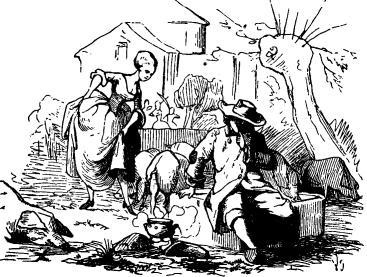
The Swineherd is one of the Danish author Hans Christian Andersen's fairy tales, with a heavily moral and melancholy feel. It is about about an arrogant princess, and the price she eventually pays for her pride. The story was first published as "Svinedrengen", in December 1841. Here is one of the first illustrations, by Vilhelm Pedersen,
The story begins,
"There was once a prince who didn't have any money. But he had a kingdom, and though it was small, it was enough for two."
The prince loved the Emperor's daughter and dearly wanted to marry her. He had just two beautiful things he could give; a rose tree which only flowered once every five years, producing one bloom, and a nightingale with a most beautiful song. These were presents fit for any princess, thought the prince, so he sent them to the Emperor's daughter.
However, the Emperor's daughter wanted something manufactured instead, such as a clockwork kitten. She impatiently rejected the humble offerings. But the prince was not to be deterred. He disguised himself and applied for the position of swineherd at the palace. Once there, he constructed a cooking pot, with bells hanging all around the edge, so that it would cleverly play a tune as it boiled. The princess was delighted when she saw the pot, and wanted it for her very own. She insisted on knowing what the price was.
The prince, disguised of course as the swineherd, demanded ten kisses - and he got them. The princess spent the next few days playing with her new trinket, but meanwhile the prince, as the swineherd, was creating a new gimmick to entice her. It was a musical rattle. Of course the princess wanted this for herself too, and tried to persuade the swineherd to accept kisses from her ladies-in-waiting.
But the prince would have none of it, and demanded one hundred kisses for the musical rattle. The princess obliged, but asked her ladies-in-waiting to shield her from view. The Emperor, hearing a commotion in the pigsty, made his way through the mud, to see what was going on with the ladies-in-waiting. Nobody noticed him, as they were all so engrossed with counting the kisses.
The punishing of proud princesses seems to be a stock theme in folk and fairy tales. The brothers Grimm wrote a similar story called, "King Thrushbeard", in which a royal figure disguises himself, in order to court an arrogant princess. Most of the traditional tales, however, end happily, with the chastened princess having learnt her lesson; now sorry and humbled, and continuing to love the man once he is revealed to be royalty.
Hans Christian Andersen is typically less sentimental in his story, and far more downbeat. The Swineherd comes across as a harsh cautionary tale.
بازنويسى خوکچران هانس کریستین اندرسن با تصرف (مخصوصاً در پايان بندى قصه، كه مال اندرسن به طرز عجيبى بد تموم شد!)
یه روزی از روزها، یه شاهزاده ای بود که عاشق یه شاهزاده خانمی از کشور همسایه شده بود. شاهزاده برای خواستگاری، کلی هدیه فرستاد برای شاهزاده خانم. اما شاهزاده خانم از هیچ کدوم از هدیه ها خوشش نیومد. شاهزاده غصه شد و از هر کس که می تونست پرسید که چطور دل شاهزاده خانم رو به دست بیاره. تا این که یکی از خدمتکارهای شاهزاده خانم، بهش گفت: «شاهزاده خانم از جعبه موسیقی خیلی خوشش میاد، اون قدر جعبه موسیقی رو دوست داره که حاضره همه چیزش رو براش بده.»
شاهزاده، با خوشحالی رفت لباس مردم عادی رو پوشید و به کشور همسایه رفت. بعد به دربار پادشاه رفت و به عنوان خوکچران توی قصر پادشاه استخدام شد. وقت هایی که خوک ها رو می برد چرا، می نشست یه گوشه و برای شاهزاده خانم جعبه موسیقی می ساخت. اما جعبه موسیقی های شاهزاده مثل جعبه موسیقی های معمولی نبودن. یه جعبه موسیقی ساخت که شبیه کتری بود و دور تا دورش زنگوله آویزون بود، وقتی آب جوش میومد، زنگوله ها می رقصیدن و آهنگ های خیلی قشنگ می زدن.
یه روز که شاهزاده خانم با ندیمه هاش داشت از اون اطراف رد میشد، کتری رو گذاشت روی آتیش و زنگوله ها شروع کردن به رقصیدن و آهنگ زدن. شاهزاده خانم توجهش جلب شد. اومد به سمت شاهزاده – که حالا خوکچران شده بود – و دید این آهنگ ها داره از کتری روی آتیش بلند میشه. با کلی ذوق و شوق گفت: «من این کتری رو ازت می خرم و هر چقدر بخوای بهت میدم.» خوکچران گفت: «قیمت این کتری ده تا بوسه ی شاهزاده خانمه.» شاهزاده خانم بهش برخورد، با عصبانیت گفت: «انگار عقل نداری! کی به خاطر یه کتری همچین کاری می کنه؟ نکنه می خوای به پدرم بگم تا از قصر بیندازدت بیرون؟ اصلاً نخواستم.» و راهش رو کشید که بره. اما خوکچران کتری رو گذاشت روی آتیش، و صدای آهنگش پاهای شاهزاده خانم رو متوقف کرد. شاهزاده خانم برگشت و گفت: «باشه، اما نباید کسی ما رو ببینه.» دستور داد ندیمه هاش دورشون حلقه زدن، و شاهزاده خانم، ده بار خوکچران رو بوسید. بعد کتری رو گرفت و با خوشحالی رفت.
خوکچران شروع کرد به ساختن یه جعبه موسیقی دیگه که با باد کار می کرد. هر وقت باد می وزید، جعبه موسیقی عین بادبان می چرخید و قشنگ ترین آهنگ های جهان رو می زد، که همراه با باد تا دورترین جای شهر می رفت و دل هر کس که صداش رو می شنید، می لرزوند. این قدر که قشنگ بود آهنگ هاش.
یه روز که باز شاهزاده خانم با ندیمه هاش رد می شد، خوکچران شروع کرد به فوت کردن توی جعبه موسیقی ش و موسیقی توجه شاهزاده خانم رو جلب کرد. فوری فهمید که این موسیقی از طرف خوکچران میاد. پس زود اومد و گفت: «من این دستگاه رو می خوام. هر چقدر قیمتش باشه حاضرم بدم، ولی دیگه ده تا بوسه نمی دم.» خوکچران گفت: «عیب نداره. چون قیمت این ده تا بوسه نیست.» شاهزاده خانم گفت: «خب، پس قیمتش چیه؟» خوکچران گفت: «قیمتش صد تا بوسه ی شاهزاده خانمه.» شاهزاده خانم این بار دیگه واقعاً عصبانی شد. گفت: «تو راستی راستی عقل نداری. کی به خاطر یه فرفره بادی صد تا بوسه می ده؟ نکنه می خوای به پدرم بگم که تو رو از قصرش بیندازه بیرون؟ اصلاً نخواستم.» ولی همین که داشت می رفت، خوکچران توی دستگاهش فوت کرد و موسیقی شاهزاده خانم رو متوقف کرد. شاهزاده خانم برگشت و گفت: «نمی شه حالا پنجاه تا از بوسه ها رو ندیمه ها بدن؟» خوکچران سرش رو تکون داد و گفت: «فقط صد تا بوسه ی شاهزاده خانم.» شاهزاده خانم گفت: «باشه، ولی کسی نباید ما رو ببینه!» پس دستور داد ندیمه ها دورشون حلقه زدن، و بعد، شروع کرد به بوسیدن خوکچران. یک بوسه. دو بوسه. سه بوسه. چهار بوسه. پنج بوسه. شش بوسه... از قضا، همون موقع پادشاه اتفاقی از پنجره ی قصر به بیرون نگاه می کرد. دید ندیمه ها جمع شدن یه جا، گفت: «چه خبره که همه جمع شدن اون گوشه؟ برم ببینم.» از قصر اومد بیرون و رفت به طرف جایی که ندیمه ها دور خوکچران و شاهزاده خانم حلقه زده بودن، دید ندیمه ها دارن میگن: هفتاد و شش، هفتاد و هفت، هفتاد و هشت، هفتاد و نه، هشتاد... ولی همه اون قدر غرق شمردن بوسه ها بودن، حواس شون به پادشاه نبود. پادشاه رفت بین ندیمه ها و روی نوک انگشت های پاش بلند شد و از بین شونه های ندیمه ها نگاه کرد، و دید دخترش داره خوکچران رو می بوسه. هنوز بیست تا از مبلغ توافق شده مونده بود، که پادشاه داد زد: «ببینم چه خبره اینجا؟؟ دختره ی نالایق! حاضر نشدی خواستگاری یه شاهزاده رو قبول کنی، اومدی خوکچران رو می بوسی؟؟» و با عصبانیت خوکچران و شاهزاده خانم رو از قصرش بیرون کرد.
شاهزاده خانم و خوکچران دو تایی با هم دیگه از شهر رفتن بیرون، توی جنگل. شاهزاده خانم یه گوشه نشست و بنا کرد به گریه کردن، گفت: «کاش خواستگاری اون شاهزاده رو قبول کرده بودم، الان می تونستم برم پیش شاهزاده توی قصرش. اما حالا توی این جنگل با یه خوکچران، کجا رو دارم که برم؟» اما خوکچران رفت پشت یه درخت، لباس هاش رو عوض کرد و با لباس شاهزاده اومد بیرون. چشم های شاهزاده خانم از تعجب باز مونده بود. شاهزاده گفت: «من خوکچران نیستم، من همون شاهزاده م که ازت خواستگاری کردم. حالا حاضری در ازای قشنگ ترین جعبه موسیقی هایی که من توی ساختن شون ماهرم، با من ازدواج کنی؟» شاهزاده خانم فوری با خوشحالی قبول کرد، و با هم به شهر شاهزاده رفتن و ازدواج کردن.
میگن شاهزاده یه قصر برای شاهزاده خانم ساخت که همه ی ابزار و وسایلش جعبه موسیقی بودن. وقتی صبح پرده ها رو کنار می زدن، یه موسیقی نواخته می شد؛ وقتی شاهزاده خانم موهاش رو شونه می کرد، یه موسیقی؛ وقتی غذا می پخت، یه موسیقی؛ وقتی خدمتکار جارو می زد، یه موسیقی... و تا پایان عمر اون دو نفر، تمام شهر از صدای موسیقی های قشنگی که از قصر نواخته می شد، شاد بودن. روزی که اون ها مردن، همه ی جعبه موسیقی ها از کار افتادن، و یه بار دیگه سکوت غمگین به کل شهر حاکم شد.
The Swineherd, illustrated and retold by Deborah Hahn.
This revisionist retelling of Hans Christian Andersen's original fairy-tale, The Swineherd, misses the mark entirely, inserting a bizarrely inappropriate "happy" ending that demonstrates a fundamental misunderstanding of the story on Deborah Hahn's part. Andersen himself plays a role in this adaptation, reading his fairy-tale "play" to a boisterous crowd of animals and children, who simultaneously enact the story. When he reaches his (traditional) conclusion, there is an outcry from his audience, who declare that it is "Unjust...Fierce...Cruel," and set out to provide an alternative ending...
The problem with this scenario, and with the entire project, is that The Swineherd is not a tale meant to have a happy ending. The disillusionment of the lover, who discovers that his idol has feet of clay, is the entire point of the story. Not only does Hahn seem to have missed that fact, she also appears to be suffering under the misapprehension that it is the prince who is at fault. Her cast of characters produce a happy ending by reforming him, having him declare that he has been "arrogant and revengeful," "foolish and greedy." This is a rather curious inversion, as it places the blame for the princess' exile on the prince, rather than her own shallow insincerity, and takes as its assumption that he is somehow obligated to continue desiring her, even after a closer acquaintance has demonstrated her lack of both discernment and principle.
A very odd misinterpretation indeed, and one I do not recommend to any Andersen lover.
These are the stories in the Project Gutenberg files: -- The emperor's new clothes -- The swineherd -- The real princess -- The shoes of fortune -- The fir tree -- The snow queen -- The leap-frog -- The elderbush -- The bell -- The old house -- The happy family -- The story of a mother -- The false collar -- The shadow -- The little match girl -- The dream of little Tuk -- The naughty boy -- The red shoes.
First published as Svinedrengen in 1841, this original fairy-tale from Hans Christian Andersen follows the story of a prince from a fairly modest kingdom, who attempts to court the daughter of the emperor. When his initial gifts - a sweet-singing nightingale and a beautiful rose - are rejected because they are too "natural," the prince disguises himself and assumes the role of the Imperial Swineherd. Now close to his love, he creates a number of cunning treasures, which he barters for her kisses. But will they bring him happiness...?
This edition of The Swineherd features the charming artwork of Dorothée Duntze, who has also illustrated Andersen's The Princess and the Pea and The Emperor's New Clothes. With adorable pig-strewn end-papers - Duntze's endpapers are always so entertainingly decorated! - an appealing palette, and many lovely details, this volume is a pleasure to peruse, from beginning to end. I particularly liked the pretty clothing Duntze created for her characters! Of the three versions of this tale I have read, this probably ranks as my favorite, and I would recommend it to any reader who appreciates beautiful fairy-tale artwork.
The tale of an impoverished prince who attempts to woo a proud (and very foolish) emperor's daughter, only to discover that the object of his desire is not so desirable after all, The Swineherd displays a number of the recurring themes to be found in Hans Christian Andersen's work. From an unhappy and unfulfilled love, to the oppositional relationship of nature and artifice, the sentiments which inform this tale will be quite familiar to the Andersen reader.
Translated by Anthea Bell, and illustrated by the talented Lisbeth Zwerger - who has also worked on Andersen's Thumbeline, The Nightingale, and The Little Mermaid - this edition of The Swineherd reads well, and has great visual appeal. Zwerger's fans will recognize her unique sense of humor and fun in these pages, enjoying the many spot-on depictions, from the pompous emperor to the prancing ladies-in-waiting.
Beautiful, magical, moral ... and comical. " 'Superb! Charmant!', exclaimed the ladies, for they all used to chatter French, each one worse than her neighbor." Lol...
Book Title: The Swineherd Book Author: Hans Christian Andersen Source: Free for Kindle on Amazon Rating: 5 stars
It is free for download, beautiful illustrations by Heinrich Lefler.
Sometimes, it's good to go back to the 'good old days' of story telling, back to when things were less complicated and great authors roamed the land, adding life lessons into their works of art. I have read this story in Russian long ago when I was a child so it was nice to read it again, in English.
I highly recommend for book lovers to go back in time with Hand Christian Anderson. It's not always a good thing reading the next big thing.
A prince wants to marry a princess, and gives her a rose and a nightingale from his father's grave. The rose is from a tree that only bloom every fifth year, and the nightingale can sing every song. When the princess doesn't like the presents, he disguises himself as a swineherd.
It is about appreciating what is real. The rose and the nightingale were wonderful presents, and the princess was arrogant, but it is even more arrogant to expect that a girl would want to marry you even though you don't know each other, and not accept that people are different. Not appreciating the presents should only show the prince that the princess was not right for him. Instead, he wants revenge.
This story is amazing! Most of you may know that I love Hans Christian Andersen and I must admit that this story is at my top 5 favorites. This beign number 4. The story centers around this spoiled princess and a humble prince who wants to marry her. The princess rejects him because his presents are natural. The prince actually pretends to be a swine herd so that he could be close to the princess. Quite romantic don't you think? But of course the ending itself was not predictable at all and that is the reason why I loved this story. I recommend it to everyone.
I loved this fairy tale at first I though it was going to be one of those fairy tales that made a prince buy his love but the ending was just perfect and so different to other fairy tales.
Tal vez esté mal yo por mirarlo con ojos actuales pero voy a desglosar cosas que no me parecieron del cuento. Entiendo el mensaje de la superficialidad perooo yo voy por el statement de que la princesa tenía todo el derecho de rechazar a quien quisiera y más si este príncipe iba con las justas de dinero, se supone que el matrimonio acá es un acto político y considero que la princesa debe elegir al mejor pretendiente.
Viéndolo ya desde una perspectiva simbólica, podemos ver que critica a las personas que eligen la superficialidad en lugar de lo verdadero y lo natural pero la manera en la que lo hace, en términos más modernos, me resulta la imagen de un hombre a quien hirieron en el ego masculino solo porque una mujer lo rechazó. Los típicos resentidos que se ponen a odiar a las mujeres solo porque sus sentimientos no han sido correspondidos. Cuando..., en términos del cuento, ¿por qué quería casarse este príncipe con la princesa? ¿por el dinero que ella tenía? teniendo en cuenta que al principio se nos dice que el príncipe andaba mal de dinero y solo quería casarse. En ese sentido, el príncipe no amaba a la princesa así que no entiendo con qué derecho moral se atreve a reclamar por un rechazo. Si bien se demuestra que la princesa es capaz de traicionar sus estándares para conseguir algo superficial, el hecho de que el príncipe se burle de ella cuando la princesa ya no tiene nada, me hace pensar que el "amor" que él ofrecía tampoco era natural ni romántico como él quiere hacer creer. En ese sentido, considero que el "castigo" por la vanidad fue más una venganza cruel que algo justo.
„Świniopas” Hansa Christiana Andersena, to jedna z najlepszych baśni, jakie czytałam. Mamy tutaj do czynienia z opowieścią ponadczasową, z historią głupoty, powierzchowności i krótkowzroczności. Lecz jest to także baśń mówiąca o nauczce, karze za zuchwałość i pochopność. Książę daje niezapomnianą lekcję księżniczce, która już nigdy nie będzie taka, jak kiedyś. Wspomnę również o istotnej roli „straty”, bo co raz utracone, odzyskać czasem nie sposób.
8/10 Jeśli jeszcze nie czytaliście tej baśni, to mocno namawiam do jej poznania. Robi wrażenie i pozostawia w sercu ślad nie do zatarcia.
* Czytałam tę z "mocnym" zakończeniem, nie wiem, czy wszystkie wersje są takie, czy wydawnictwa nie pokusiły się o "łagodniejszy" koniec - mam nadzieję, że nie, bo to zupełnie zmieniłoby przesłanie i cała baśń byłaby do niczego...
Сказка, когда-то давным-давно прочитанная в детстве, сейчас приобрела совсем другой контекст. В детстве я не очень любила Андерсена, но сейчас "Свинопас" мне показался просто шедевром :) Ну, не чудесен ли диалог между Свинопасом и Королем: — Здравствуйте, император! — сказал он. — Не найдется ли у вас во дворце местечка для меня? — Много вас тут ходит да ищет! — отвечал император. — Впрочем, постой, мне нужен свинопас! У нас пропасть свиней! К сожалению, очень даже злободневно. А уж про принцессу я вообще молчу, ибо слишком популярный образ. И вот тут становится совсем грустно - так что ж мы, люди, совсем не меняемся? так и ходим по кругу? раз Андерсен в середине 19го века высмеивал то, чего пруд пруди в начале 21го?
Первоклассные иллюстрации Анатона Ломаева, для всех любителей книжной иллюстрации будут настоящим праздником. История о принце, который решил поквитаться с напыщенной и недалекой принцессой, которая не приняла его «руки и сердца» и его даров. Нарядившись свинопасом, принц таки принуждает принцессу себя поцеловать, выменивая поцелуи на различные магические побрякушки. Основная мораль истории что, погнавшись за мишурой и внешней красотой можешь оказаться ни с чем, так сказать у разбитого корыта. Пожалуй, все, найти что-то еще в истории у меня не получается. История забавная, простая и как по мне такая же недалекая, как и сама принцесса.
I don't think this one is denouncing the princess for simply not wanting the prince but for being shallow. She did not like the rose or nightingale just because they were real and would not even consider marrying the prince, but she gives over a hundred kisses to a swineherd so she can have the toys he made. She only desires things for herself, and she desires what is nonauthentic and trifling.
i always love that the prince becomes a swineherd, it makes me think of lloyd alexander’s assistant pigkeeper…this version i am logging is for lisbeth zwerger’s illustrations, which while humorous are not as pretty as some of her other ones. why is the arrogant princess wearing a violet magician’s cape and dorky yellow cap? lol. love zwerger’s dutch clogs though, as always.