

What do you think?

In Search Of Dracula: The History of Dracula and Vampires – The Biography of Vlad the Impaler and Bram Stoker's Diaries
The true story behind the legend of Dracula - a biography of Prince Vlad of Transylvania, better known as Vlad the Impaler. This revised edition now includes entries from Bram Stoker's recently discovered diaries, the amazing tale of Nicolae Ceausescu's attempt to make Vlad a national hero, and an examination of recent adaptations in fiction, stage and screen.
320 pages, Paperback
First published January 1, 1972
About the author
Raymond T. McNally
17 books23 followersRaymond T McNally was an American author and professor of Russian and East European History at Boston College. He specialized in the history of horror and wrote many books around the subject.
Ratings & Reviews
Friends & Following
Create a free account to discover what your friends think of this book!
Community Reviews
Displaying 1 - 30 of 116 reviews

March 19, 2019
In Romania, Dracula seems to be everywhere. Some Romanians consider him a national hero for defending his homeland against invading Ottoman forces -- even if, in the process, he impaled an unknown but undeniably substantial number of victims. The bloody-minded and unmistakably real Wallachian prince Vlad Ţepeş -- or Vlad the Impaler, or Vlad III Dracula -- appears at sites throughout Romania: the Borgo Pass that connects the historical regions of Transylvania and Moldavia; the cities of Sibiu and Braşov, where the local German Saxons often experienced Dracula's wrath; atmospheric Bran Castle, a virtual Ground Zero for Dracula tourism; and down through Vlad Dracula's actual Wallachian realm in what is now southern Romania. The modern-day tourist who travels to Romania in search of all things Dracula will not be disappointed.
Interestingly, it is entirely possible that none of that Dracula tourism would be a feature of modern Romania's cultural landscape if not for the book In Search of Dracula. Written collaboratively by Boston College scholars Raymond T. McNally and Radu Florescu (one American, one Romanian) and originally published in 1972, In Search of Dracula was the first book to draw a direct link between the Prince Dracula of history and the Count Dracula of Bram Stoker's novel Dracula (1897), who has gone on to become a ubiquitous presence in film, television, and popular culture generally. Today, we take the link between the historical and fictive Draculas for granted; in 1972, it was quite a new thing, and any reader with an interest in Dracula and vampires owes a debt of gratitude to McNally and Florescu.
The book's subtitle -- The History of Dracula and Vampires -- provides an accurate sense of its trajectory. The early portions of In Search of Dracula relate the fictive Dracula to the real-life Vlad Dracula (McNally and Florescu describe in Chapter 2 an expedition that they undertook to find the real Castle Dracula; Stoker's great novel notwithstanding, it is nowhere near the Borgo Pass of northern Romania). Chapters 3 through 9 chronicle the life, the bloody reign, and the violent death of Vlad Dracula. After a brief look at Old World vampire folklore, the authors then examine the manner in which Bram Stoker conducted thorough research regarding Dracula and vampire stories in preparation for writing Dracula, and then go on to consider Dracula on stage, in fiction, and in film.
When I first read In Search of Dracula, I found the author's invocation of the tangled politics of Vlad Dracula's time somewhat confusing. Now that I have lived in Hungary and traveled in Romania, I found that part of the book, on a second reading, much more understandable. Many readers will already know that Vlad III Dracula's father, Vlad II Dracul, gained the nickname "Dracul" ("the dragon") because of his membership in the Order of the Dragon, a Christian chivalric order organized to resist Ottoman incursions into Europe; the "-a" in Dracula's name is a diminutive, and thus "Dracula" literally means "son of the dragon." Not that there's going to be a major movement to start referring to Vlad Ţepeş as Vlad Dragonson or anything, but it's still interesting to know.
One impression I got from these portions of the book was that, when Vlad Dracula carried out his acts of impalement against his many victims, he no doubt knew that word of his cruelty would spread widely -- a possible deterrent to potential enemies, and a grim convergence of sadism and realpolitik. In Dracula's own time, the sight of a "forest" of impalement victims was enough to cause Mehmet II, the Ottoman sultan who had taken Constantinople, to end his invasion of Wallachia and return home; and more than 500 years later, those true stories of the horrors inflicted by Dracula still echo down the ages.
From the bloodthirsty voivode of Wallachia to the blood-drinking vampire of Stoker's novel and endless films, McNally and Florescu guide us in a manner that is horrifying and compelling, right down through an account of how the Romanian communist dictator Nicolae Ceauşescu may have identified with the historical Dracula during the long grim years of the Cold War.
The book is well-illustrated with maps, engravings, paintings, photographs, and film stills. Helpful supplements include original German, Russian, and Romanian stories about Dracula; for the Germans, who remembered Vlad Dracula's brutal actions against the Saxons of Sibiu (German name, Hermannstadt) and Braşov (German name, Kronstadt), Dracula is an unreasoning psychopath; for the Russians and Romanians, Dracula is depicted somewhat more sympathetically, as a harsh ruler in a harsh time. A filmography lets the reader know of Dracula and vampire films that include the good (few), the mediocre (many), and the bad (very many). There is even a travel guide that lets the reader know of opportunities for Dracula tourism in England, Scotland, Ireland, and (of course) Romania.
This updated edition of In Search of Dracula was published in 1994. Another update might be welcome; I would be interested, for example, in hearing the authors' thoughts regarding Shadow of the Vampire, the 2000 film that imagines F.W. Murnau, director of the classic Dracula film Nosferatu (1922), hiring an actual vampire to play the film's Dracula character and suffering the consequences. But the book is great as it is, setting forth as it does the grim saga of a cruel medieval ruler whose life story evolved into the undying legend of an undead monster. For anyone with an interest in Dracula and vampires, In Search of Dracula is essential.
Interestingly, it is entirely possible that none of that Dracula tourism would be a feature of modern Romania's cultural landscape if not for the book In Search of Dracula. Written collaboratively by Boston College scholars Raymond T. McNally and Radu Florescu (one American, one Romanian) and originally published in 1972, In Search of Dracula was the first book to draw a direct link between the Prince Dracula of history and the Count Dracula of Bram Stoker's novel Dracula (1897), who has gone on to become a ubiquitous presence in film, television, and popular culture generally. Today, we take the link between the historical and fictive Draculas for granted; in 1972, it was quite a new thing, and any reader with an interest in Dracula and vampires owes a debt of gratitude to McNally and Florescu.
The book's subtitle -- The History of Dracula and Vampires -- provides an accurate sense of its trajectory. The early portions of In Search of Dracula relate the fictive Dracula to the real-life Vlad Dracula (McNally and Florescu describe in Chapter 2 an expedition that they undertook to find the real Castle Dracula; Stoker's great novel notwithstanding, it is nowhere near the Borgo Pass of northern Romania). Chapters 3 through 9 chronicle the life, the bloody reign, and the violent death of Vlad Dracula. After a brief look at Old World vampire folklore, the authors then examine the manner in which Bram Stoker conducted thorough research regarding Dracula and vampire stories in preparation for writing Dracula, and then go on to consider Dracula on stage, in fiction, and in film.
When I first read In Search of Dracula, I found the author's invocation of the tangled politics of Vlad Dracula's time somewhat confusing. Now that I have lived in Hungary and traveled in Romania, I found that part of the book, on a second reading, much more understandable. Many readers will already know that Vlad III Dracula's father, Vlad II Dracul, gained the nickname "Dracul" ("the dragon") because of his membership in the Order of the Dragon, a Christian chivalric order organized to resist Ottoman incursions into Europe; the "-a" in Dracula's name is a diminutive, and thus "Dracula" literally means "son of the dragon." Not that there's going to be a major movement to start referring to Vlad Ţepeş as Vlad Dragonson or anything, but it's still interesting to know.
One impression I got from these portions of the book was that, when Vlad Dracula carried out his acts of impalement against his many victims, he no doubt knew that word of his cruelty would spread widely -- a possible deterrent to potential enemies, and a grim convergence of sadism and realpolitik. In Dracula's own time, the sight of a "forest" of impalement victims was enough to cause Mehmet II, the Ottoman sultan who had taken Constantinople, to end his invasion of Wallachia and return home; and more than 500 years later, those true stories of the horrors inflicted by Dracula still echo down the ages.
From the bloodthirsty voivode of Wallachia to the blood-drinking vampire of Stoker's novel and endless films, McNally and Florescu guide us in a manner that is horrifying and compelling, right down through an account of how the Romanian communist dictator Nicolae Ceauşescu may have identified with the historical Dracula during the long grim years of the Cold War.
The book is well-illustrated with maps, engravings, paintings, photographs, and film stills. Helpful supplements include original German, Russian, and Romanian stories about Dracula; for the Germans, who remembered Vlad Dracula's brutal actions against the Saxons of Sibiu (German name, Hermannstadt) and Braşov (German name, Kronstadt), Dracula is an unreasoning psychopath; for the Russians and Romanians, Dracula is depicted somewhat more sympathetically, as a harsh ruler in a harsh time. A filmography lets the reader know of Dracula and vampire films that include the good (few), the mediocre (many), and the bad (very many). There is even a travel guide that lets the reader know of opportunities for Dracula tourism in England, Scotland, Ireland, and (of course) Romania.
This updated edition of In Search of Dracula was published in 1994. Another update might be welcome; I would be interested, for example, in hearing the authors' thoughts regarding Shadow of the Vampire, the 2000 film that imagines F.W. Murnau, director of the classic Dracula film Nosferatu (1922), hiring an actual vampire to play the film's Dracula character and suffering the consequences. But the book is great as it is, setting forth as it does the grim saga of a cruel medieval ruler whose life story evolved into the undying legend of an undead monster. For anyone with an interest in Dracula and vampires, In Search of Dracula is essential.

July 25, 2011
In Romania, Dracula seems to be everywhere. By some, he is considered a national hero for defending his homeland against the invading Ottoman forces -- even if, in the process, he impaled an unknown but undeniably substantial number of victims. The bloody-minded and undeniably real Wallachian prince Vlad Ţepeş -- or Vlad the Impaler, or Vlad II Dracula -- shows up at sites throughout Romania: the Borgo Pass that connects the historical regions of Transylvania and Moldavia; the cities of Sibiu and Braşov, where the local German Saxons often experienced Dracula's wrath; atmospheric Bran Castle, a virtual Ground Zero for Dracula tourism; and down through Vlad Dracula's actual Wallachian realm in what is now southern Romania. The modern-day tourist who travels to Romania in search of all things Dracula will not be disappointed.
Interestingly, it is entirely possible that none of that Dracula tourism would be a feature of modern Romania's cultural landscape if not for the book In Search of Dracula. Written collaboratively by Boston College scholars Raymond T. McNally and Radu Florescu (one American, one Romanian) and originally published in 1972, In Search of Dracula was the first book to draw a direct link between the Prince Dracula of history and the Count Dracula of Bram Stoker's novel Dracula (1897), who has gone on to become a ubiquitous presence in film, television, and popular culture generally. Today, we take the link between the historical and fictive Draculas for granted; in 1972, it was quite a new thing, and anyone with an interest in Dracula and vampires owes a debt of gratitude to McNally and Florescu.
The book's subtitle -- The History of Dracula and Vampires -- provides an accurate sense of its trajectory. The early part of In Search of Dracula relates the fictive Dracula to the real-life Vlad Dracula (McNally and Florescu describe in Chapter 2 an expedition that they undertook to find the real Castle Dracula; Stoker's wonderful novel notwithstanding, it is nowhere near the Borgo Pass of northern Romania). Chapters 3 through 9 chronicle the life, the bloody reign, and the violent death of Vlad Dracula. After a brief look at Old World vampire folklore, the authors then examine the manner in which Bram Stoker conducted thorough research regarding Dracula and vampire stories in preparation for writing Dracula, and then go on to consider Dracula on stage, in fiction, and in film.
When I first read In Search of Dracula, I found the author's invocation of the tangled politics of Vlad Dracula's time somewhat confusing. Now that I have lived in Hungary and traveled in Romania, I found that part of the book, on a second reading, much more understandable. Many readers will already know that Vlad II Dracula's father, Vlad I Dracul, gained the nickname "Dracul" ("the dragon") because of his membership in the Order of the Dragon, a Christian chivalric order organized to resist Ottoman incursions into Europe; the "-a" in Dracula's name is a diminutive, and thus "Dracula" literally means "son of the dragon." Not that there's going to be a major movement to start referring to Vlad Ţepeş as Vlad Dragonson or anything, but it's still interesting to know.
One impression I got from these portions of the book was that, when Vlad Dracula carried out his acts of impalement against his many victims, he no doubt knew that word of his cruelty would spread widely -- a possible deterrent to potential enemies, and a grim convergence of sadism and Realpolitik. In Dracula's own time, the sight of a "forest" of impalement victims was enough to cause Mehmet II, the Ottoman sultan who had taken Constantinople, to end his invasion of Wallachia and return home; and more than 500 years later, those true stories of the horrors inflicted by Dracula still echo down the ages.
From the bloodthirsty voivode of Wallachia to the blood-drinking vampire of Stoker's novel and endless films, McNally and Florescu guide us in a manner that is horrifying and compelling, right down through an account of how the Romanian communist dictator Nicolae Ceauşescu may have identified with the historical Dracula during the long grim years of the Cold War.
The book is well-illustrated with maps, engravings, paintings, photographs, and film stills. Helpful supplements include original German, Russian, and Romanian stories about Dracula; for the Germans, who remembered Vlad Dracula's brutal actions against the Saxons of Sibiu (German name, Hermannstadt) and Braşov (German name, Kronstadt), Dracula is an unreasoning psychopath; for the Russians and Romanians, Dracula is depicted somewhat more sympathetically, as a harsh ruler in a harsh time. There is also a filmography that lets the reader know of Dracula and vampire films that include the good (few), the mediocre (many), and the bad (very many). There is even a travel guide that lets the reader know of opportunities for Dracula tourism in England, Scotland, Ireland, and (of course) Romania.
This updated edition of In Search of Dracula was published in 1994. Another update might be welcome; I would be interested, for example, in hearing the authors' thoughts regarding Shadow of the Vampire, the 2000 film that imagines F.W. Murnau, director of the classic Dracula film Nosferatu (1922), hiring an actual vampire to play the film's Dracula character and suffering the consequences. But the book is great as it is, setting forth as it does the grim saga of a cruel medieval ruler whose life story evolved into the undying legend of an undead monster. For anyone with an interest in Dracula and vampires, In Search of Dracula is essential.
Interestingly, it is entirely possible that none of that Dracula tourism would be a feature of modern Romania's cultural landscape if not for the book In Search of Dracula. Written collaboratively by Boston College scholars Raymond T. McNally and Radu Florescu (one American, one Romanian) and originally published in 1972, In Search of Dracula was the first book to draw a direct link between the Prince Dracula of history and the Count Dracula of Bram Stoker's novel Dracula (1897), who has gone on to become a ubiquitous presence in film, television, and popular culture generally. Today, we take the link between the historical and fictive Draculas for granted; in 1972, it was quite a new thing, and anyone with an interest in Dracula and vampires owes a debt of gratitude to McNally and Florescu.
The book's subtitle -- The History of Dracula and Vampires -- provides an accurate sense of its trajectory. The early part of In Search of Dracula relates the fictive Dracula to the real-life Vlad Dracula (McNally and Florescu describe in Chapter 2 an expedition that they undertook to find the real Castle Dracula; Stoker's wonderful novel notwithstanding, it is nowhere near the Borgo Pass of northern Romania). Chapters 3 through 9 chronicle the life, the bloody reign, and the violent death of Vlad Dracula. After a brief look at Old World vampire folklore, the authors then examine the manner in which Bram Stoker conducted thorough research regarding Dracula and vampire stories in preparation for writing Dracula, and then go on to consider Dracula on stage, in fiction, and in film.
When I first read In Search of Dracula, I found the author's invocation of the tangled politics of Vlad Dracula's time somewhat confusing. Now that I have lived in Hungary and traveled in Romania, I found that part of the book, on a second reading, much more understandable. Many readers will already know that Vlad II Dracula's father, Vlad I Dracul, gained the nickname "Dracul" ("the dragon") because of his membership in the Order of the Dragon, a Christian chivalric order organized to resist Ottoman incursions into Europe; the "-a" in Dracula's name is a diminutive, and thus "Dracula" literally means "son of the dragon." Not that there's going to be a major movement to start referring to Vlad Ţepeş as Vlad Dragonson or anything, but it's still interesting to know.
One impression I got from these portions of the book was that, when Vlad Dracula carried out his acts of impalement against his many victims, he no doubt knew that word of his cruelty would spread widely -- a possible deterrent to potential enemies, and a grim convergence of sadism and Realpolitik. In Dracula's own time, the sight of a "forest" of impalement victims was enough to cause Mehmet II, the Ottoman sultan who had taken Constantinople, to end his invasion of Wallachia and return home; and more than 500 years later, those true stories of the horrors inflicted by Dracula still echo down the ages.
From the bloodthirsty voivode of Wallachia to the blood-drinking vampire of Stoker's novel and endless films, McNally and Florescu guide us in a manner that is horrifying and compelling, right down through an account of how the Romanian communist dictator Nicolae Ceauşescu may have identified with the historical Dracula during the long grim years of the Cold War.
The book is well-illustrated with maps, engravings, paintings, photographs, and film stills. Helpful supplements include original German, Russian, and Romanian stories about Dracula; for the Germans, who remembered Vlad Dracula's brutal actions against the Saxons of Sibiu (German name, Hermannstadt) and Braşov (German name, Kronstadt), Dracula is an unreasoning psychopath; for the Russians and Romanians, Dracula is depicted somewhat more sympathetically, as a harsh ruler in a harsh time. There is also a filmography that lets the reader know of Dracula and vampire films that include the good (few), the mediocre (many), and the bad (very many). There is even a travel guide that lets the reader know of opportunities for Dracula tourism in England, Scotland, Ireland, and (of course) Romania.
This updated edition of In Search of Dracula was published in 1994. Another update might be welcome; I would be interested, for example, in hearing the authors' thoughts regarding Shadow of the Vampire, the 2000 film that imagines F.W. Murnau, director of the classic Dracula film Nosferatu (1922), hiring an actual vampire to play the film's Dracula character and suffering the consequences. But the book is great as it is, setting forth as it does the grim saga of a cruel medieval ruler whose life story evolved into the undying legend of an undead monster. For anyone with an interest in Dracula and vampires, In Search of Dracula is essential.

November 22, 2008
A very good introduction to both historical figure of Dracula and knowledge of vampirism. Contained a short biography of Bram Stoker, his work ,and its impact on popular culture. Studied by two experts who spends most of their lifetime professions for investigating the dark history of the man known for his cruelty as 'the Imparler'. Based on ancient manuscripts, folklores, and field study of Transylvania, those efforts come out of excited-reading, well-written text which brings, Vlad Tepes, Prince of Wallachia, or known as Dracular back to life, and also his struggle, politics, and context of fifteenth-centuried Eastern Europe threatened by Ottoman Turk and Roman Catholics. I think the most interesting part is about vampirism and its folk beliefs. It is almost shocked for knowing that killing victims by biting their throats and sucking blood is real event by hands of aristocrat families. I became aware of my limited historical knowledge and wanted to read more and more. This book is a good example of cultural history presenting you that there are always more interesting studied subjects than those presented by boring school textbooks.

September 10, 2013
A very fascinating book for fans of Dracula, esp. if you are interested in the history behind the real figure (Vlad Tepes), locations, etc.... Part history, part folklore, part opinion, this book has a nice variety of information.
In addition to the historical sections about Romania & the Dracula family, I also enjoyed the section on Bram Stoker, his research, & other books that have been variations on the Dracula/vampire legends. The film section was fine (but I haven't seen any of the films mentioned, so it wasn't entirely applicable to me).
That said, between the sections on the mass murders & extreme cruelty of Vlad Tepes and Elizabeth Bathory, real life is much scarier & horrific than fiction. Dracula, the vampire character, seems tame in comparison to these blood-thirsty sadists of history. There is definitely some disturbing information in this book.
The extensive bibliography is wonderful. I do wish there had been more/better maps.
Overall, highly-recommended for Dracula fans.
----------------
(Earlier comments while I was reading the book...)
Still in progress, but I'm finding this to be a bizarre, creepy, & riveting history book.
For those interested in some of the history of Dracula (the real, historical person, not the vampire), a few quotes from In Search of Dracula: The History of Dracula and Vampires...
(Again, referring to the historical figure of Dracula...)
And, just as I was thinking the same thing, the authors state...
Indeed. I believe that may be an understatement.
And, on an interesting side note, I saw this portrait (Petrus Gonsalvus) & two of his "wolf children" in the book:
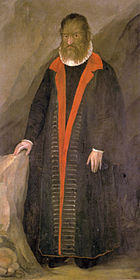
Wondering why this portrait would be in a book about Dracula?...
In addition to the historical sections about Romania & the Dracula family, I also enjoyed the section on Bram Stoker, his research, & other books that have been variations on the Dracula/vampire legends. The film section was fine (but I haven't seen any of the films mentioned, so it wasn't entirely applicable to me).
That said, between the sections on the mass murders & extreme cruelty of Vlad Tepes and Elizabeth Bathory, real life is much scarier & horrific than fiction. Dracula, the vampire character, seems tame in comparison to these blood-thirsty sadists of history. There is definitely some disturbing information in this book.
The extensive bibliography is wonderful. I do wish there had been more/better maps.
Overall, highly-recommended for Dracula fans.
----------------
(Earlier comments while I was reading the book...)
Still in progress, but I'm finding this to be a bizarre, creepy, & riveting history book.
For those interested in some of the history of Dracula (the real, historical person, not the vampire), a few quotes from In Search of Dracula: The History of Dracula and Vampires...
"The names of Dracula and his father, Dracul, are of such importance in this story that they require a precise explanation. Both father and son had the given name Vlad. The names Dracul and Dracula and variations thereof in different languages (such as Dracole, Draculya, Dracol, Draculea, Draculios, Draculia, Tracol) are really nicknames. What's more, both nicknames had two meanings. Dracul meant "devil," as it still does in Romanian today; in addition it meant "dragon." In 1431, the Holy Roman Emperor Sigismund invested Vlad the father with the Order of the Dragon, a semimonastic, semi-military organization dedicated to fighting the Turkish infidels. Dracul in the sense of dragon stems from this. It also seems probable that when the simple, superstitious peasants saw Vlad the father bearing the standard with the dragon symbol they interpreted it as a sign that he was in league with the devil."
(Again, referring to the historical figure of Dracula...)
"The progressive popularization of the Dracula story, however, was due to the coincidence of the invention of the printing press in the second half of the fifteenth century and the production of cheap rag paper. The first Dracula news sheet destined for the public at large was printed in 1463 in either Vienna or Wiener Neustadt. Later, money-hungry printers saw commercial possibilities in such sensational stories and continued printing them for profit. This confirms the fact that the horror genre conformed to the tastes of the fifteenth-century reading public as much as it does today. We suspect that Dracula narratives became bestsellers in the late fifteenth century, some of the first pamphlets with a nonreligious theme. One example of the many unsavory but catchy titles is: The Frightening and Truly Extraordinary Story of a Wicked Blood-thirsty Tyrant Called Prince Dracula.
No fewer than thirteen different fifteenth- and sixteenth-century Dracula stories have been discovered thus far in the various German states within the former empire. Printed in Nuremberg, Lubeck, Bamberg, Augsburg, Strasbourg, Hamburg, etc., many of them exist in several editions."
And, just as I was thinking the same thing, the authors state...
"The deeds attributed to Dracula in the German narratives are so appalling that the activities of Stoker's bloodsucking character seem tame by comparison."
Indeed. I believe that may be an understatement.
And, on an interesting side note, I saw this portrait (Petrus Gonsalvus) & two of his "wolf children" in the book:
Wondering why this portrait would be in a book about Dracula?...
"Ironically, the only existing life-size portrait of Dracula is at Castle Ambras near Innsbruck. Ferdinand II, Archduke of the Tyrol, who owned Castle Ambras during the sixteenth century, had a perverse hobby of documenting the villains and deformed personalities of history. He sent emissaries all over Europe to collect their portraits and reserved a special room in the castle for displaying them. It made no difference whether the subjects were well known or comparatively obscure. What did matter was that they were actual human beings, not fictional ones. If such persons could be found alive, the archduke tried to settle them, at least temporarily, at his court, where paintings could be made of them on the spot. A few giants, a notorious dwarf, and the wolfman from the Canary Islands stayed on at Castle Ambras for some years. Dracula was already dead by the time this degenerate Hapsburg began his hobby, but the prince's reputation as a mass murderer was already largely established in the Germanic world because of the tales told by the Saxons of Transylvania. We do not know how or where Ferdinand's portrait of Dracula was painted or who the artist was."

January 17, 2008
This is one entertaining volume, one I can refer back to time and time again. The writers give a very matter-of-fact account of the life and times of Vlad Tepes, occasionally laced with a bit of wry humor, and relate the legends that have grown around ye olde impaler. From there, they take us through Bram Stoker and his background, and on to the celluloid versions of Dracula, all without pausing for breath...and happily so. My favorite bits are the various legends about Prince Vlad told from several points of view, and how they compare with each other. Very revealing, and always entertaining. Great fun for vampire afficionados and "serious" devotees alike.

April 9, 2008
I love this book. It's the historical account of the real Dracula (Vlad Tepes). Historians Radu Florescu and Raymond McNally reconstruct the historical man and how he is related to the vampire legend. This is also just a groundbreaking history book--it's the first ever historical account of Vlad the Impaler, and I think it's extremely significant.

March 1, 2012
This books covers the history of Vlad Tepes (Order of the Dragon (or Dracul)) and then goes on to explain how Bram Stoker took the figure of Tepes and converted him into a horror figure. A nice quick read that provides some really interesting tidbits on: the history of what became Romania in the times immediately after the fall of Constantinople to the Ottoman Turks, the differing accounts of Tepes (Ethnic Germans, who ran afoul of his trade policies, demonized him as “The Impaler”; Romanians glorified him as crusader savior of an area about to be conquered by the Turks; and Russians focused on his crushing of Boyar resistance (Ivan the Terrible was inspired by Vlad.) and his leaving of the Orthodox Church for Roman Catholicism.); and the emergence of the myth of the vampire from the combination of peasant superstition and warping of oral tales told about the abuses of sadistic nobles (Vlad as well as Elizabeth Bathory of bathing in maidens’ blood infamy.).
Interesting Tidbits from In Search of Dracula:
• The abuses of common people seen under Vlad and other crusaders (Vlad, for instance, impaled not only Turks but his own people; he also, on occasion, flayed them, burned them to death, and enslaved them for building projects. (In another account he had the turbans of Turkish emissaries nailed to their heads, as they would not uncover their heads before a ruler. He did this, even though he was well aware of the Muslim custom of keeping the head covered, to send a message to the Sultan that he would not be cowed; the incident, nonetheless, is indicative of his sadism.) did not weigh upon the minds of these individuals as they believed that later efforts, especially construction of churches and monasteries, would absolve them of their sins. Reading this in this context made certain things “click” for me, especially the importance of the Reformation of changing the Western way of thinking (Post Luther, and reactive Counter-Reformation, even those not of the good works AND faith mindset would think twice about their fate in the next life before ordering atrocities. Also, as there was not a Reformation in the Orthodox world, it goes to show how Eastern European figures could maintain the Absolutist mindset when ruling.)
Interesting Tidbits from In Search of Dracula:
• The abuses of common people seen under Vlad and other crusaders (Vlad, for instance, impaled not only Turks but his own people; he also, on occasion, flayed them, burned them to death, and enslaved them for building projects. (In another account he had the turbans of Turkish emissaries nailed to their heads, as they would not uncover their heads before a ruler. He did this, even though he was well aware of the Muslim custom of keeping the head covered, to send a message to the Sultan that he would not be cowed; the incident, nonetheless, is indicative of his sadism.) did not weigh upon the minds of these individuals as they believed that later efforts, especially construction of churches and monasteries, would absolve them of their sins. Reading this in this context made certain things “click” for me, especially the importance of the Reformation of changing the Western way of thinking (Post Luther, and reactive Counter-Reformation, even those not of the good works AND faith mindset would think twice about their fate in the next life before ordering atrocities. Also, as there was not a Reformation in the Orthodox world, it goes to show how Eastern European figures could maintain the Absolutist mindset when ruling.)

November 11, 2014
An old favorite of mine that would be in small pieces if I wasn't lucky enough to snag a hardcover copy; it was one of my few sources for horror fix (others being Stoker's book, Sam J. Lundwall's translations of H P Lovecraft shorts and Poe). This historical/documentary book focuses on the real life Vlad Tepes and what little is known about him (much of the research made by the authors).
A small section of the book regard the vampire and related legends and stories in popular culture.
I really cannot recommend this book enough, it is absolutely spellbinding and brings some perspective to roots and mechanisms into the vampire myths. On a side note I would say that everything from the 1400's up to 1972 is so far from Twilight that you will have to find another book to make the connection.
This book was made in to a (Swedish produced) feature-length movie in 1975, it is available in original version here and in English (only the edited TV version) here. The movie largely ignores the structure of the book and focuses much more on vampire in popular culture, but it's still worth watching and a fascinating document of a time in history.
A small section of the book regard the vampire and related legends and stories in popular culture.
I really cannot recommend this book enough, it is absolutely spellbinding and brings some perspective to roots and mechanisms into the vampire myths. On a side note I would say that everything from the 1400's up to 1972 is so far from Twilight that you will have to find another book to make the connection.
This book was made in to a (Swedish produced) feature-length movie in 1975, it is available in original version here and in English (only the edited TV version) here. The movie largely ignores the structure of the book and focuses much more on vampire in popular culture, but it's still worth watching and a fascinating document of a time in history.

August 1, 2024
this was good! a bit outdated since they wrote it in the 70s, id be interested to know how far along the restoration and archeological work they mentioned in here is. wish i read this before i went to romania cuz now there's a whole bunch of places i want to visit

June 3, 2022
This was just me feeding my hyper obsessive fascination and intrigue with vampire lore (specifically Dracula lore) and anything Vlad the Impaler related. That being said, if being obsessed with a certain type of history (specifically a certain tyrant and his influence) is a personality trait then you can say that’s me. This was insightful and highly informative over the period of Vlad Dracula’s reign and influence afterwards, it delves you into every question that could be asked, almost reads as fiction yet you realize while reading that no, this man was real and these horrifying things are historically correct. And for it all to be the influence of one of my favourite books (Dracula) was amazing. I thank Bram Stoker for his masterpiece/ genius and I will continue to obsessively read more Dracula based books and anything influenced by it here on onwards
thank you
bye
thank you
bye
September 28, 2015
I first read the original 1972 edition of In Search of Dracula back in high school when I first began to really explore the backstory of the character and novel Dracula. As a young child I became fixated on old horror films and Dracula being one of my absolute favorite fixations. Bela Lugosi, Christopher Lee, Lon Chaney Jr., John Carradine, Frank Langella. I had seen them all and then some and I became completely hooked!
As I grew older, I learned more about where the idea of the story came from and I sought every resource at my disposal to assimilate every factoid and tidbit possible. One of the very first books I was able to acquire was In Search of Dracula. I don't remember a great deal about that edition other than it kept me mesmerized until I had finished it and it became a great resource for determining where I would go next in my explorations.
Fast forward a decade or so and I am a bit older, but my interest in the subject of Dracula in all forms, historical and literary, has not waned much at all. I had read many more books. I had seen quite a few documentaries. And in the interim, I had even traveled to Romania to see much of what remains of the historical figure first hand. Yes it is safe to say I was still hooked!
Well imagine my surprise when I am walking through the book store one day and I see a copy of In Search of Dracula on the bookshelf! I always wanted a copy of the book, but I had long given up hope of finding one, being that the original had long since been out-of-print. To see that the work had been updated and revised excited me greatly as I knew much had been discovered about both Dracula the figure and Dracula the character since the time of the original in the 1970s. I instantly purchased it and I am so glad I did! It proved to be every bit as exciting to read as the original!
Like the original, the updated edition is not an overly scholarly work like the authors' other work Dracula: Prince of Many Faces. It is intended to provide a general and fairly well-rounded body of knowledge to a general audience of individuals with a casual interest in the subject matter. Is the book as exciting as a Stephen King novel? Not by a long shot, but the authors do make efforts to present the information contained within in a readable and somewhat entertaining fashion.
The books contains a fair amount of information on the connection between Bram Stoker's novel Dracula and Vlad the Impaler, who served as the inspiration for the story. Some history relating to both aspects are covered along with bits and pieces of vampire folklore and discussions of the character of Dracula in pop culture. For me one of my favorite aspects of both this and the original editions were the stories told towards the end of the book. Taken from Romanian, German and Russian sources, the tales of Vlad's exploits read like the synopsis of a modern horror film and give a great insight into just what type of person the known as "The Impaler" was!
I highly recommend this book for anyone with a casual and not overly scholastic interest in the subject of the fictional Dracula or Vlad the Impaler. Not a book I immediately wanted to read again, but certain on the list for somewhere down the road!
As I grew older, I learned more about where the idea of the story came from and I sought every resource at my disposal to assimilate every factoid and tidbit possible. One of the very first books I was able to acquire was In Search of Dracula. I don't remember a great deal about that edition other than it kept me mesmerized until I had finished it and it became a great resource for determining where I would go next in my explorations.
Fast forward a decade or so and I am a bit older, but my interest in the subject of Dracula in all forms, historical and literary, has not waned much at all. I had read many more books. I had seen quite a few documentaries. And in the interim, I had even traveled to Romania to see much of what remains of the historical figure first hand. Yes it is safe to say I was still hooked!
Well imagine my surprise when I am walking through the book store one day and I see a copy of In Search of Dracula on the bookshelf! I always wanted a copy of the book, but I had long given up hope of finding one, being that the original had long since been out-of-print. To see that the work had been updated and revised excited me greatly as I knew much had been discovered about both Dracula the figure and Dracula the character since the time of the original in the 1970s. I instantly purchased it and I am so glad I did! It proved to be every bit as exciting to read as the original!
Like the original, the updated edition is not an overly scholarly work like the authors' other work Dracula: Prince of Many Faces. It is intended to provide a general and fairly well-rounded body of knowledge to a general audience of individuals with a casual interest in the subject matter. Is the book as exciting as a Stephen King novel? Not by a long shot, but the authors do make efforts to present the information contained within in a readable and somewhat entertaining fashion.
The books contains a fair amount of information on the connection between Bram Stoker's novel Dracula and Vlad the Impaler, who served as the inspiration for the story. Some history relating to both aspects are covered along with bits and pieces of vampire folklore and discussions of the character of Dracula in pop culture. For me one of my favorite aspects of both this and the original editions were the stories told towards the end of the book. Taken from Romanian, German and Russian sources, the tales of Vlad's exploits read like the synopsis of a modern horror film and give a great insight into just what type of person the known as "The Impaler" was!
I highly recommend this book for anyone with a casual and not overly scholastic interest in the subject of the fictional Dracula or Vlad the Impaler. Not a book I immediately wanted to read again, but certain on the list for somewhere down the road!
February 12, 2014
I am a sucker (ha!) for a vampire book.
This is one of the first research works into the Dracula mythology, the book that cements the fact that Stoker's Dracula was, in fact, based on Vlad Tepes of Romania. That the real-life Dracula committed horrific crimes against humanity is unquestionable.
The book itself is 200 pages of history, literary and film exploration, and some interpretation. The other hundred pages is bibliography, filmography, maps, family trees, and other appendix-typical info.
There are times when it's obvious the writers are historians of some form or another, as the writing doesn't necessarily flow off the page the way one might like. But the information (which has been worked into many a book since its initial publication in the 1970s) is well researched and necessary for anyone who fancies themselves a connoisseur of vampire novels.
This is one of the first research works into the Dracula mythology, the book that cements the fact that Stoker's Dracula was, in fact, based on Vlad Tepes of Romania. That the real-life Dracula committed horrific crimes against humanity is unquestionable.
The book itself is 200 pages of history, literary and film exploration, and some interpretation. The other hundred pages is bibliography, filmography, maps, family trees, and other appendix-typical info.
There are times when it's obvious the writers are historians of some form or another, as the writing doesn't necessarily flow off the page the way one might like. But the information (which has been worked into many a book since its initial publication in the 1970s) is well researched and necessary for anyone who fancies themselves a connoisseur of vampire novels.

April 15, 2021
As a lover of Vlad the Impaler and all things Dracula related, this was a disappointing read. Would have appreciated some citations. At least the Edward Gorey cover is great.
December 6, 2024
Pretty cursory. This would have been a fun read when it was first published in the 70s and when it was rereleased in the 90s, but nowadays I could just have read a few Wikipedia articles and gotten the same content.
I did especially enjoy the chapter on Bram Stoker, and I would read a biography of him by this team if they ever wrote one! I also liked the appendices containing stories German, Russian and Romanian stories of Vlad Țepeș, and actually getting to compare the different views of him held by different societies.
I did especially enjoy the chapter on Bram Stoker, and I would read a biography of him by this team if they ever wrote one! I also liked the appendices containing stories German, Russian and Romanian stories of Vlad Țepeș, and actually getting to compare the different views of him held by different societies.
December 31, 2023
I LOVE when history books are super readable and interesting!!!! and guess what? this book exemplifies that trait! I thought that the combination and intertwining of the historical figure Dracula and Eastern Europe’s lore around vampirism with Stoker’s novel and vampire works since then was so well-done. I really enjoyed it and felt like I was reading fiction at times. also, the annotated bibliography is AMAZING for finding other sources.

March 15, 2026
An absolutely phenomenal feat of information. The original publication was the first to connect the historical figure Vlad Tepes to Count Dracula and the authors expand on the history impact of Dracula, Bram Stoker, and their own contributions of historical fact.

October 2, 2020
A interesting volume relating to the historical influences on Bram Stoker's novel and the subsequent impact it had had on culture
June 16, 2015
I really enjoyed this book.
My favorite part was the chapter about the movies/pop culture.
And the chapter about vampire myths.
I personally had no idea that after 7 years of being a vampire you could move to another country that spoke another language and turn back into a human. Then you can get married and have kids. The downside is that when your kids die they become vampires.
But seriously... that is cool!
You also learn about real life vampires. For example: Sweeney Todd was based on the Hanover Vampire of the 1920s.
This book teaches you a history lesson on the Dracula the OG - Vlad the Imapaler. And is up to date on stuff until around 1992.
So, Twilight isn't mentioned. The Vampire Diaries are mentioned but there are only 3 books when this was printed.
The pictures are great too!
*Vampires that Greta recommends that aren't in the book*
Only Lovers Left Alive - movie that has Tom Hiddleston shirtless
Kresley Cole's vampires in her books
Hotel Transylvania - Kid movie
Let me In - movie about a kid vampire but not a kid movie
Underworld - movie also has werewolves
All in all ... this is a great reference book if you are looking for a book or a movie. There are lists of both.
Also, a great book to learn about the OG Dracula
And the pictures will make you want to visit Romania to find vampires and stuff.
My favorite part was the chapter about the movies/pop culture.
And the chapter about vampire myths.
I personally had no idea that after 7 years of being a vampire you could move to another country that spoke another language and turn back into a human. Then you can get married and have kids. The downside is that when your kids die they become vampires.
But seriously... that is cool!
You also learn about real life vampires. For example: Sweeney Todd was based on the Hanover Vampire of the 1920s.
This book teaches you a history lesson on the Dracula the OG - Vlad the Imapaler. And is up to date on stuff until around 1992.
So, Twilight isn't mentioned. The Vampire Diaries are mentioned but there are only 3 books when this was printed.
The pictures are great too!
*Vampires that Greta recommends that aren't in the book*
Only Lovers Left Alive - movie that has Tom Hiddleston shirtless
Kresley Cole's vampires in her books
Hotel Transylvania - Kid movie
Let me In - movie about a kid vampire but not a kid movie
Underworld - movie also has werewolves
All in all ... this is a great reference book if you are looking for a book or a movie. There are lists of both.
Also, a great book to learn about the OG Dracula
And the pictures will make you want to visit Romania to find vampires and stuff.

July 6, 2014
This book was decent, but apparently I knew more about Vlad Tepes (Dracula) then I thought I did, because the chapters that detail his life and death were kind of dry and repetitive. The chapter about Bram Stoker was short but informative. Overall, this is a good book if you are unfamiliar with the "real" Dracula. The chapter on Vampires in stage, film, and fiction is good, but my copy of this book was published in 1994, so it's missing 20 years of vampire media. I would have enjoyed reading the author's take on how the mythology has evolved to its current state.
January 9, 2022
First of all, the photographs are pathetic. Some were taken during the research of this book. One is left wondering with what. I had to stop and look them up on my phone. Ridiculous.
As for the writing, it reads like a text book. The only reason the reader might get engrossed is due to the horrific forms of torture dear Vlad employed.
I much preferred the historical fiction, “The Historian,” which included all of the gory details this book does. That said, this is a much shorter, straight to the point book. The photos were just really annoying.
As for the writing, it reads like a text book. The only reason the reader might get engrossed is due to the horrific forms of torture dear Vlad employed.
I much preferred the historical fiction, “The Historian,” which included all of the gory details this book does. That said, this is a much shorter, straight to the point book. The photos were just really annoying.
October 20, 2015
This is an extraordinary book about the man, who's name has become a symbol for vampires... I want to thank to Raymond McNally and Radu Floresku for writing it... It was really interesting to me and very helpful. On the end, you have list of historical and fictional films and books about Vlad III.

December 10, 2011
Separates the fact from fiction, adds much intelligence, and even adds color to some dry history. Quite a character, Vlad.

November 21, 2013
I do love reading the history of where my ancestors came from. Interesting read
March 20, 2022
The topic of the book is quite interesting but the writing is very erratic and broken up jumping from thought to thought. Needed organized better.

October 19, 2021
I am LIVING for McNally’s hot takes on every vampire movie ever made, as well as the absolutely adorable "travel guide" suggesting how to travel about Romania for Dracula sites, the UK for Stoker sites.
Overall, this was excellent! Exactly my preferred brand of pop history/literature. McNally does not shy away from dropping random tangential references - Stoker was (loosely) connected to George Bernand Shaw, to Dante Rosetti, to Sir Richard Burton! - but also displays a pretty systematic approach, delineating essentially from beginning to end the life of Vlad Tepes, the history of his various castles, the crusades against the Turks, the life of Bram Stoker, and re-imaginings of the Dracula story through maybe the early 90s or so. I’m sure much is glossed over, but I feel confident I could engage in further research with a relatively narrow lens, if I wish.
I enjoyed the accessible style, and I LOVE the vibe of these professors antiquarianing around rural Romania, but I have to say I was extremely surprised we did not find out until the last page that I think McNally handles the issue of judging Vlad’s moral character respectfully. My favorite individual part is probably the saga of Snagov. That has to be the most haunted lake in the world!
The appendices are over one hundred pages, full of contemporary sources, some of which McNally is the first to translate, which I think is super super cool. And, of course, the play by play with commentary of EVERY vampire movie. Top tier!
Overall, this was excellent! Exactly my preferred brand of pop history/literature. McNally does not shy away from dropping random tangential references - Stoker was (loosely) connected to George Bernand Shaw, to Dante Rosetti, to Sir Richard Burton! - but also displays a pretty systematic approach, delineating essentially from beginning to end the life of Vlad Tepes, the history of his various castles, the crusades against the Turks, the life of Bram Stoker, and re-imaginings of the Dracula story through maybe the early 90s or so. I’m sure much is glossed over, but I feel confident I could engage in further research with a relatively narrow lens, if I wish.
I enjoyed the accessible style, and I LOVE the vibe of these professors antiquarianing around rural Romania, but I have to say I was extremely surprised we did not find out until the last page that I think McNally handles the issue of judging Vlad’s moral character respectfully. My favorite individual part is probably the saga of Snagov. That has to be the most haunted lake in the world!
The appendices are over one hundred pages, full of contemporary sources, some of which McNally is the first to translate, which I think is super super cool. And, of course, the play by play with commentary of EVERY vampire movie. Top tier!

July 9, 2023
3.7 stars
Apparently, these authors are the go-to guys for the history of Dracula and vampires. When I first picked up the book to read, I put it back down almost immediately. Wasn’t connecting with it. Then after re-reading a favorite Dracula novel, The Historian (and starting to read Bram Stoker’s Dracula for the first time), I was able to go back to In Search of Dracula with more appreciation for the topic.
At just 198 pages, the book is a combination of folklore, myth, history, fiction and film. I learned more about Vlad the Impaler, Bram Stoker, his gothic horror novel and how it compared to the rest of the literature of that era. I think those were my favorite chapters. Although the last 100+ pages include maps, historical chronologies and more, including an appendix with summaries of the different (but surprisingly similar) folklore tales regarding Vlad III (Dracula) that originated in Germany, Romania and Russia. My second favorite part of the book.
I think this book is a great place to start if you’re interested in history, Dracula, vampires or just enjoy vampire fiction. Originally written in the seventies, the authors updated the book in 1996 to commemorate the 100th anniversary of Stoker’s famous novel. From what I understand, their 1989 book, Dracula, Prince of Many Faces: His Life and Times is a better read — more history/less pop culture. Adding it to my TBR list and will judge for myself down the road.
Apparently, these authors are the go-to guys for the history of Dracula and vampires. When I first picked up the book to read, I put it back down almost immediately. Wasn’t connecting with it. Then after re-reading a favorite Dracula novel, The Historian (and starting to read Bram Stoker’s Dracula for the first time), I was able to go back to In Search of Dracula with more appreciation for the topic.
At just 198 pages, the book is a combination of folklore, myth, history, fiction and film. I learned more about Vlad the Impaler, Bram Stoker, his gothic horror novel and how it compared to the rest of the literature of that era. I think those were my favorite chapters. Although the last 100+ pages include maps, historical chronologies and more, including an appendix with summaries of the different (but surprisingly similar) folklore tales regarding Vlad III (Dracula) that originated in Germany, Romania and Russia. My second favorite part of the book.
I think this book is a great place to start if you’re interested in history, Dracula, vampires or just enjoy vampire fiction. Originally written in the seventies, the authors updated the book in 1996 to commemorate the 100th anniversary of Stoker’s famous novel. From what I understand, their 1989 book, Dracula, Prince of Many Faces: His Life and Times is a better read — more history/less pop culture. Adding it to my TBR list and will judge for myself down the road.

November 9, 2024
This is a fair history of Vlad III of Wallachia, or Vlad the Impaler. The cover and subtitle may make you think it is about the fictional Dracula. He is certainly addressed in a couple of pretty thorough chapters covering Bram Stoker and his novel as well as previous literature on vampires and movies that have been made about (mostly) Stoker’s Dracula. There is also a chapter on vampirism.
In the main, however, this book is about the life and times of one of the cruelest rulers during the birth of the Enlightenment in Europe. In his lifetime, Vlad had the reputation of excess in his punishments of those he disliked—impaling forests of victims, or even punishing locals that he deemed not to be working hard enough to improve his princedom. Vlad was a warrior and impressed his Turkish foes. He was held hostage by the Turks when he was young.
The book also contains some useful appendices. They are a bit repetitive if read straight through, but they are the first-time English translations of German and Russian tracts about Vlad, and a summary of Romanian folklore about him. There’s also a bibliography and an annotated filmography. Although dated, this is a useful resource for anyone interested in how vampires were understood in the seventies. There is more on the book here: Sects and Violence in the Ancient World
In the main, however, this book is about the life and times of one of the cruelest rulers during the birth of the Enlightenment in Europe. In his lifetime, Vlad had the reputation of excess in his punishments of those he disliked—impaling forests of victims, or even punishing locals that he deemed not to be working hard enough to improve his princedom. Vlad was a warrior and impressed his Turkish foes. He was held hostage by the Turks when he was young.
The book also contains some useful appendices. They are a bit repetitive if read straight through, but they are the first-time English translations of German and Russian tracts about Vlad, and a summary of Romanian folklore about him. There’s also a bibliography and an annotated filmography. Although dated, this is a useful resource for anyone interested in how vampires were understood in the seventies. There is more on the book here: Sects and Violence in the Ancient World

May 24, 2024
Loved loved loved this. The team of McNally/Florescu are the 1960s Indiana Jones pairing who "proved" that Bram Stoker's Dracula is based on non-other than Vlad Tepes, a true historical figure who ruled with Wallachia (part of modern Romania).
I read another book by this duo: Dracula, Prince of Many Faces, which essentially mirrors this text, but not as effectively. I read "Many Faces" first, so the information here wasn't new, but it was edited much better.
This book explains who the historic Dracula was - a violent despot who killed only to satisfy his bloodlust, a vulnerable nationalist focused on preserving the livelihood of his people, a devout Christian bent on fighting outside religious threat... he's all of the above. This book explains more.
From there, the authors also explain how Stoker's famous monster came to be, the lore of vampires worldwide and their impact on fiction.
This was so good, I'm actually reducing a star from my earlier read of "many faces" so people are pointed here as the original source. Also, there's apparently a documentary out there based on this work with Christopher Lee narrating and playing both Dracula and Vlad Tepes in re-enactments. Which is certain to be a decent way to spend 90 minutes.
NOTE: I'm not sure why this text is not linked with Radu Florescu's author profile, but Goodreads should correct this.
I read another book by this duo: Dracula, Prince of Many Faces, which essentially mirrors this text, but not as effectively. I read "Many Faces" first, so the information here wasn't new, but it was edited much better.
This book explains who the historic Dracula was - a violent despot who killed only to satisfy his bloodlust, a vulnerable nationalist focused on preserving the livelihood of his people, a devout Christian bent on fighting outside religious threat... he's all of the above. This book explains more.
From there, the authors also explain how Stoker's famous monster came to be, the lore of vampires worldwide and their impact on fiction.
This was so good, I'm actually reducing a star from my earlier read of "many faces" so people are pointed here as the original source. Also, there's apparently a documentary out there based on this work with Christopher Lee narrating and playing both Dracula and Vlad Tepes in re-enactments. Which is certain to be a decent way to spend 90 minutes.
NOTE: I'm not sure why this text is not linked with Radu Florescu's author profile, but Goodreads should correct this.

January 4, 2022
This is an exciting book to own as a piece of vampire and vampire scholarly history. This book was one of the first to academically compare Bram Stoker's Dracula to the historical Vlad Dracula the Impaler. They do come to the accurate conclusion that while Stoker knew the name and brief information, he did not actively base his vampire character on the historical man. Half the book describes Vlad's life and his many castles (lots of photos and descriptions of the castles and ruins they found), while the other half is a dated look at vampire myths and the films coming out up to the decade of the 1970's. Very interesting and informative if you are keen on learning about the historical Vlad the Impaler. My pet peeve is the lack of proper historical annotation (i.e, foot or end notes and where their info came from aside from the bibliography at the end)
My copy also came with a taped in review of the book as well as some 1970's articles about the Frank Langella film and the play! Super cool find!
My copy also came with a taped in review of the book as well as some 1970's articles about the Frank Langella film and the play! Super cool find!
September 24, 2017
I only got about 8 pages into chapter 2 before I stopped reading... I was very excited to read this book because it's getting close to Halloween and I love learning about the history and inspiration behind the various traditions. Vlad Tepes was a very controversial figure in history depending on what side you were on, and I was looking forward to learning more about him and why the people of Transylvania and Romania view him as a hero when much of the world sees him only as the viscious and ruthless Vlad the Impaler. I was really disappointed that the authors were more like fanboys than researchers; they never once referred to Vlad Tepes by his real name, it was always "Dracula this" and "Dracula that," even when they were talking about actual recorded history of Prince Vlad. It was like the couldn't get past the myth of the blood-sucking fictional character. Honestly, I found the whole thing somewhat disrespectful and stopped reading.
Displaying 1 - 30 of 116 reviews