

What do you think?
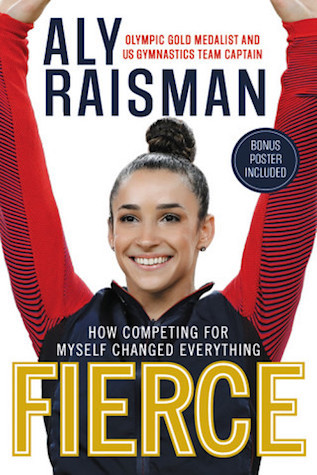
Fierce: How Competing for Myself Changed Everything
Discover Aly Raisman's inspiring story of dedication, perseverance, and learning to think positive even in the toughest times on her path to gold medal success in two Olympic Games--and beyond.
Aly Raisman first stepped onto a gymnastics mat as a toddler in a "mommy & me" gymnastics class. No one could have predicted then that sixteen years later, she'd be standing on an Olympic podium, having achieved her dreams.
Aly's road to success was full of hard work, perseverance, and victories, but not without its hardships. Aly faced many obstacles, from naysayers who said she'd never make it in gymnastics to classmates who shamed her for her athletic body to a devastating betrayal of trust. Through it all, Aly surrounded herself with supportive family, friends, and teammates and found the inner strength to remain positive and believe in herself. Now, in her own words, Aly shows what it takes to be a champion on and off the floor, and takes readers on a behind-the-scenes journey before, during, and after her remarkable achievements in two Olympic Games--through her highest highs, lowest lows, and all the moments in between.
Honest and heartfelt, frank and funny, Aly's story is enhanced with never-before-published photos, excerpts from the personal journals she's kept since childhood that chronicle memorable moments with her teammates, and hard-won advice for readers striving to rise above challenges, learn to love themselves, and make their own dreams come true.
Aly Raisman first stepped onto a gymnastics mat as a toddler in a "mommy & me" gymnastics class. No one could have predicted then that sixteen years later, she'd be standing on an Olympic podium, having achieved her dreams.
Aly's road to success was full of hard work, perseverance, and victories, but not without its hardships. Aly faced many obstacles, from naysayers who said she'd never make it in gymnastics to classmates who shamed her for her athletic body to a devastating betrayal of trust. Through it all, Aly surrounded herself with supportive family, friends, and teammates and found the inner strength to remain positive and believe in herself. Now, in her own words, Aly shows what it takes to be a champion on and off the floor, and takes readers on a behind-the-scenes journey before, during, and after her remarkable achievements in two Olympic Games--through her highest highs, lowest lows, and all the moments in between.
Honest and heartfelt, frank and funny, Aly's story is enhanced with never-before-published photos, excerpts from the personal journals she's kept since childhood that chronicle memorable moments with her teammates, and hard-won advice for readers striving to rise above challenges, learn to love themselves, and make their own dreams come true.
359 pages, Hardcover
First published November 14, 2017
About the author
Aly Raisman
4 books41 followersAlexandra Rose "Aly" Raisman (born May 25, 1994) is an American gymnast and two-time Olympian. She was a member and captain of both the 2012 "Fierce Five" and 2016 "Final Five" U.S. women's Olympic gymnastics which won their respective team competitions.
Ratings & Reviews
Friends & Following
Create a free account to discover what your friends think of this book!
Community Reviews
Displaying 1 - 30 of 503 reviews

December 21, 2017
This is definitely the best gymnastics memoir that has come out from gymnasts who have competed in the past 20 or so years. I was looking forward to reading this the second I heard it was coming out, and when I found out my friend and BRILLIANT gymnastics writer Blythe Lawrence was ghostwriting, I was sold. I very rarely read gymnastics memoirs anymore because they're nothing more than glorified wikipedia entries with terribly incorrect gymnastics references (in Gabby's book, her ghostwriter had her doing a double layout on beam), and besides, these are mostly teenage girls. Sure, they've been to the Olympics, but are they really that insightful being only a year removed from what they've accomplished? The answer is overwhelmingly NO, and so these books end up being factually inaccurate retellings with zero in-depth analysis of each situation. But with Blythe behind this one, and with Aly a bit older and generally WAY more outspoken and insightful (in 2015 I talked to Aly in the mixed zone at nationals for more than 20 minutes because she had SO much to say about literally everything and to this day she remains one of my favorite people to talk to at meets), I knew this would be great. And it is. For the gymnastics memoir genre, this is one of the best. There are still aspects of narration that tend to get a little fact-driven where I would've liked a little more of a look into how Aly was thinking and feeling, and I did feel like a few important moments were kind of skimmed over, but I get that there are constraints to these kinds of books as well, and within these constraints, both Aly and Blythe did an incredible job bringing as much of her career, her personality, and her experiences to life as they possibly could. I cried reading the depiction of Team USA winning gold in Tokyo, remembering the fans going NUTS when Alicia got injured, some going as far as thinking the U.S. wouldn't qualify a full team to the Olympics without Alicia and expecting a full meltdown from the girls, most of whom were literal babies who ended up MURDERING IT and it just made my heart so happy finally hearing about what they went through from Aly's perspective. I also cried reading the chapter where Aly learns she has been sexually abused by national team doctor Larry Nassar, which coincided with her comeback and preparation for 2015 worlds. I remembered everyone giving her such a hard time in 2015, so hearing about all she was going through outside the gym and how it affected her entire life is heartbreaking and the way she talks about it here is just really well-done. As a fan of Aly's from day one -- I was in the crowd at the American Cup in 2010 when she made her senior debut, and covered her as a journalist who tried so hard to be unbiased but always ended up singing her praises as such a huge fan at every single meet after that -- I loved this book so much and am so proud of her and Blythe for putting this together in a way that perfectly captures her career. I also LOVED the insight into her "forever fourth place" finishes, because she always put so much of herself into the team competitions and then never got any of the individual glory. It was what drew me to her initially, that underdog aspect, though I'm glad she was eventually able to get that individual success and become one of the most decorated U.S. Olympic gymnasts in history.

December 22, 2017
Aly Raisman is the coolest, okay, and when I saw this at Target, I decided to put all the other books I'm reading aside and binge read this. 🤷♀️.

Read
February 25, 2019I have very very mixed feelings on this book. DNF at 70%.
Stats:
Romance- None
Bad language- Clean for the most part
Violence- None
Content- ok ... here's where I struggle.
Aly was s*xually abused by a terrible doctor. Mentions of this, and to stay cautious! This made me uncomfortable, but is an important part of her story. Several other mentions of s*x throughout the book.
Ok, so this next part is what REALLY threw me over the edge. Aly speaks about doing a n*ked photoshoot for a magazine company. This made me VERY uncomfortable!!! Everyone has their own individual opinion, but this just made me uncomfortable enough to not read it again;)
I have such a hard time rating this book. I ADORE reading gymnast's biographies, and so far, I have loved every one that I've read. They have all been clean. This book was amazing until I got about 60%-70% in. The writing style was intriguing, it had been a clean book. But, then the content struck. The content I mentioned above, and other things in the book made me personally too uncomfortable to keep this book, or to re-read it. 80% of the content was fine, but that extra 20% killed me. I wouldn't recommend this to all ages, but everyone has their own unique opinion:))))
Despite my review for this book, my full respect goes to Ms Raisman! What you have accomplished in your gymnastics career is AMAZING! You go, girl!
Stats:
Romance- None
Bad language- Clean for the most part
Violence- None
Content- ok ... here's where I struggle.
Aly was s*xually abused by a terrible doctor. Mentions of this, and to stay cautious! This made me uncomfortable, but is an important part of her story. Several other mentions of s*x throughout the book.
Ok, so this next part is what REALLY threw me over the edge. Aly speaks about doing a n*ked photoshoot for a magazine company. This made me VERY uncomfortable!!! Everyone has their own individual opinion, but this just made me uncomfortable enough to not read it again;)
I have such a hard time rating this book. I ADORE reading gymnast's biographies, and so far, I have loved every one that I've read. They have all been clean. This book was amazing until I got about 60%-70% in. The writing style was intriguing, it had been a clean book. But, then the content struck. The content I mentioned above, and other things in the book made me personally too uncomfortable to keep this book, or to re-read it. 80% of the content was fine, but that extra 20% killed me. I wouldn't recommend this to all ages, but everyone has their own unique opinion:))))
Despite my review for this book, my full respect goes to Ms Raisman! What you have accomplished in your gymnastics career is AMAZING! You go, girl!

November 16, 2017
I always rate books on a sliding scale relative to their genre (or sub-genre, in this case), and this is definitely as good as it gets for gymnastics biographies, particularly from a gymnast without the perspective that years of retirement bring. Aly leans less heavily on a ghostwriter than other gymnasts, relying instead on journals she kept while growing up. With ghostwritten books you get platitudes about how training was hard or descriptions that betray a clear lack of knowledge of how gymnastics training works. Chapters about the big competitions often just rattle off scores and retell things covered on TV, ignoring competitors or outside factors. This is an entirely different memoir. Based on her journals, Aly is able to tell us exactly what she was thinking before various routines, what her coach told her beforehand to calm her down, how competitors' routines affected her, how the national team coordinator reacted to falls or successes. Even the most knowledgeable gymnastics fan will learn something about Raisman here, beyond the hundreds of articles that have been written about her achievements.
I appreciate so much how she shows the good and bad of national training camps instead of just glossing over the hardships because she ended up successful. You read about the lack of nutritional advice, officials admonishing Aly for eating pizza, Aly being cut off from her family at competitions, logistical ways the system abandoned her when she was injured, etc. But you also see how some of the same emotionally intimidating coaches and officials supported her with sympathy and kind words in some harder moments of her career. There's a shade of gray to her descriptions that is worlds apart from the bright rainbow brushstrokes of the average gymnast's biography. Raisman also manages to flesh out the gymnastics landscape a little bit more than others, including details about teammates, Russian competitors, who was injured when, up-and-coming seniors, etc.
Raisman clearly caters her book toward the teenage girls most likely to read her book, but delightfully leaves out tween babble and text-speak that so many of her peers lean on. It's impossible to write a gymnastics memoir without including motivational blurbs for young gymnasts, but Raisman's encouragements do not make up the main substance of the book.
Finally, as a gymnastics fan, I have followed the case of Larry Nassar closely since it first broke, so I know the gruesome details all too well. And yet, seeing the story unfold through Raisman's eyes tore my heart open all over again. It's unbelievable how USA Gymnastics forced her to meet with an investigator, then silenced her and her mother after opening that Pandora's box, without offering her any help to deal with the trauma she had encountered. It's one thing to theoretically understand the pain so many gymnasts went through, but seeing Aly's struggles recounted brings it to life in an entirely different way. I hope Raisman is able to effect change and that USA Gymnastics is held accountable for their failure to protect children. She's shown remarkable courage in publishing such a realistic and raw memoir.
I appreciate so much how she shows the good and bad of national training camps instead of just glossing over the hardships because she ended up successful. You read about the lack of nutritional advice, officials admonishing Aly for eating pizza, Aly being cut off from her family at competitions, logistical ways the system abandoned her when she was injured, etc. But you also see how some of the same emotionally intimidating coaches and officials supported her with sympathy and kind words in some harder moments of her career. There's a shade of gray to her descriptions that is worlds apart from the bright rainbow brushstrokes of the average gymnast's biography. Raisman also manages to flesh out the gymnastics landscape a little bit more than others, including details about teammates, Russian competitors, who was injured when, up-and-coming seniors, etc.
Raisman clearly caters her book toward the teenage girls most likely to read her book, but delightfully leaves out tween babble and text-speak that so many of her peers lean on. It's impossible to write a gymnastics memoir without including motivational blurbs for young gymnasts, but Raisman's encouragements do not make up the main substance of the book.
Finally, as a gymnastics fan, I have followed the case of Larry Nassar closely since it first broke, so I know the gruesome details all too well. And yet, seeing the story unfold through Raisman's eyes tore my heart open all over again. It's unbelievable how USA Gymnastics forced her to meet with an investigator, then silenced her and her mother after opening that Pandora's box, without offering her any help to deal with the trauma she had encountered. It's one thing to theoretically understand the pain so many gymnasts went through, but seeing Aly's struggles recounted brings it to life in an entirely different way. I hope Raisman is able to effect change and that USA Gymnastics is held accountable for their failure to protect children. She's shown remarkable courage in publishing such a realistic and raw memoir.

Did Not Finish
December 12, 2023DNF at 27% without prejudice. I'm... bored. There's nothing obvious about the writing that's bad; it's possible that the subject matter just isn't gripping me.

November 18, 2017
Many athlete biographies, particularly those of young Olympians, are bogged down in empty platitudes about working hard and dreaming big. Not so with Aly Raisman’s, one of the best sports bios to come out in a long while.
While Aly does spend time taking us chronologically through her grueling schedule, and extolling the virtues of hard work, Fierce is much more than that. Days before this book was released, Aly admitted publicly that she was one of the sexual abuse victims at the hands of Larry Nassar, USA Gymnastics’ team doctor for over twenty years. While Fierce doesn’t go into any vivid details of the abuse (a good choice), Aly pulls no punches in placing the blame for the fact that Nassar was able to continue abusing young girls for two decades squarely on the shoulders of USA Gymnastics.
Reading about how isolated the gymnasts are kept at the National Team camps (cell service isn’t even good enough for these minors to get in touch with their parents), and how the Martha Karolyi would punish an athlete for showing emotion, and how a higher up at USAG tried to not allow Aly a chance to talk to Vanity Fair as punishment for her poor performance at 2015 Worlds, it’s easy to see exactly how USAG allowed Nassar to operate for so long.
As a gymnastics fan, I wasn’t surprised by a lot of the revelations in this book, but I am surprised reading this how Aly came out of two Olympics cycles with not just six medals, but also a good head on her shoulders.
While Aly does spend time taking us chronologically through her grueling schedule, and extolling the virtues of hard work, Fierce is much more than that. Days before this book was released, Aly admitted publicly that she was one of the sexual abuse victims at the hands of Larry Nassar, USA Gymnastics’ team doctor for over twenty years. While Fierce doesn’t go into any vivid details of the abuse (a good choice), Aly pulls no punches in placing the blame for the fact that Nassar was able to continue abusing young girls for two decades squarely on the shoulders of USA Gymnastics.
Reading about how isolated the gymnasts are kept at the National Team camps (cell service isn’t even good enough for these minors to get in touch with their parents), and how the Martha Karolyi would punish an athlete for showing emotion, and how a higher up at USAG tried to not allow Aly a chance to talk to Vanity Fair as punishment for her poor performance at 2015 Worlds, it’s easy to see exactly how USAG allowed Nassar to operate for so long.
As a gymnastics fan, I wasn’t surprised by a lot of the revelations in this book, but I am surprised reading this how Aly came out of two Olympics cycles with not just six medals, but also a good head on her shoulders.
September 12, 2026
Aly did such a nice balance of feeling like you were close to her while reading it but also was cognizant of respecting herself in what she shared which is powerful given her experiences with media and her being a sexual assault survivor as well as just the overall journey of sacrificing for Olympic dreams. I loved her anecdotes. While there were some other things I wanted to know about her career and fame, I am touched by her honest, joyful, and fierce self!!

March 29, 2021
“Fierce: How Competing for Myself Changed Everything” by Ali Raisman is an uplifting book by a very inspiring lady.
Ali shows her circuitous route to making the Olympic Games. I was truly amazing at all the people it took to support her in achieving he dream.
She shows her ups and downs of getting to the Olympics. From tears to jumping for joy, she described many emotions.
She is a wonderful role model, especially for young girls.
I recommend this wonderful book to
Ali shows her circuitous route to making the Olympic Games. I was truly amazing at all the people it took to support her in achieving he dream.
She shows her ups and downs of getting to the Olympics. From tears to jumping for joy, she described many emotions.
She is a wonderful role model, especially for young girls.
I recommend this wonderful book to

February 13, 2018
This book was really good. 🏅So well written that it felt as though Aly was sitting across from me telling me all about her life. I’ve always wanted to know more about what it took these amazing athletes to get to the Olympics. She’s wise and yet funny. I even appreciated her description about her diet. And I loved reliving the moments I remembered seeing while watching the Olympics. I give her 5 gold medals for this book! 🥇🥇🥇🥇🥇

February 20, 2018
I absolutely loved this memoir!
Let me preface this review by saying that I've been watching women's gymnastics since I was very little and still continue to love it. Aly Raisman has been a favorite of mine and this book just reaffirms that for me.
For anyone who has wondered how much work goes into becoming an Olympian, this book will tell you. It starts off by Aly recounting her early days of mommy and me gymnastics classes and how her love for gymnastics started.
Even from early on, Aly admits to her struggles in gymnastics and that she wasn't gifted with the raw talent of a gymnast. This girl worked her ASS off for it. We get insight into all of her training and nutrition. And on top of all of it, how she remained in school!
We also get detailed accounts of the emotions Aly Raisman felt competing in not only one, but two Olympics! From the stress and the nervousness, to the fun and silly moments shared with her teammates.
Her journey to becoming an Olympian aside, I can't spoil all the details you have to read for yourself, my favorite part about this memoir is that it's so evident how much Aly Raisman wants to help young girls and be someone that they can look up to. From being a sexual abuse survivor, to body positivity, and learning self love/self care. It's very easy to see how kind, loving, and generous of a person she is. It is poured out in the pages.
I would very highly recommend this to young girls especially, but it can be read and enjoyed by all.
Let me preface this review by saying that I've been watching women's gymnastics since I was very little and still continue to love it. Aly Raisman has been a favorite of mine and this book just reaffirms that for me.
For anyone who has wondered how much work goes into becoming an Olympian, this book will tell you. It starts off by Aly recounting her early days of mommy and me gymnastics classes and how her love for gymnastics started.
Even from early on, Aly admits to her struggles in gymnastics and that she wasn't gifted with the raw talent of a gymnast. This girl worked her ASS off for it. We get insight into all of her training and nutrition. And on top of all of it, how she remained in school!
We also get detailed accounts of the emotions Aly Raisman felt competing in not only one, but two Olympics! From the stress and the nervousness, to the fun and silly moments shared with her teammates.
Her journey to becoming an Olympian aside, I can't spoil all the details you have to read for yourself, my favorite part about this memoir is that it's so evident how much Aly Raisman wants to help young girls and be someone that they can look up to. From being a sexual abuse survivor, to body positivity, and learning self love/self care. It's very easy to see how kind, loving, and generous of a person she is. It is poured out in the pages.
I would very highly recommend this to young girls especially, but it can be read and enjoyed by all.

November 30, 2017
I read a fair amount of memoirs (This is the 20th book I've shelved under that tag and probably more out there that I've read and haven't logged). I make it a point not to read books that are rushed into publication to capitalize on the subject's current 15 minutes of fame, as they tend to be heavily ghostwritten and offer a series of platitudes and flimsy introspections. Sometimes the details of the subject's life aren't even correct (like, seriously ghostwritter, just do a quick google search or something).
HOWEVER.
Raisman is far enough removed from her "celebrity" moment - the 2016 Olympics were over a year and a half ago, and the 2012 Olympics are even further back. She has also been outspoken on body positivity in an era that desperately needs her voice. Also, I have such a soft spot for her I decided to take the plunge.
It was so worth it.
Yes, there are a few moments of "you can do it" and "be your best self" messages in there, but it wasn't overly cloying. The overall message is an important one, and I applaud Aly (and it definitely felt like Aly wrote MOST of this book and only used a ghostwriter to put some shine on her narrative) for the incredibly bravery it took to publish some of the stories that didn't shine a favorable light on USA Gymnastics, an organization that she may hope to continue competing for in the future. I was also honestly surprised at just how good the writing was.
This story is important, bold, honest, and moving. I only hope Aly's voice inspires many to achieve their dreams, but also to speak up if something isn't right, and to have confidence in their own person and body.
My younger self would have LOVED this book and I think that the younger generation will too. There's a future Olympian in that crowd somewhere.
HOWEVER.
Raisman is far enough removed from her "celebrity" moment - the 2016 Olympics were over a year and a half ago, and the 2012 Olympics are even further back. She has also been outspoken on body positivity in an era that desperately needs her voice. Also, I have such a soft spot for her I decided to take the plunge.
It was so worth it.
Yes, there are a few moments of "you can do it" and "be your best self" messages in there, but it wasn't overly cloying. The overall message is an important one, and I applaud Aly (and it definitely felt like Aly wrote MOST of this book and only used a ghostwriter to put some shine on her narrative) for the incredibly bravery it took to publish some of the stories that didn't shine a favorable light on USA Gymnastics, an organization that she may hope to continue competing for in the future. I was also honestly surprised at just how good the writing was.
This story is important, bold, honest, and moving. I only hope Aly's voice inspires many to achieve their dreams, but also to speak up if something isn't right, and to have confidence in their own person and body.
My younger self would have LOVED this book and I think that the younger generation will too. There's a future Olympian in that crowd somewhere.

December 27, 2017
I loved this book so much more than I expected. Whenever the Olympics are on, I love watching and following the stories of the competing athletes, but until I read Fierce, I never truly knew what it meant to make it to the Olympics.
Aly Raisman’s writing is so honest that I had a hard time putting her book down. I really was shocked by the sacrifices she and other athletes had to make in order to compete on the Olympic stage. It also gave me great insight into the sport of gymnastics and a much deeper appreciation for the dedication these women show.
I recommend this book to any lover of athletics, the Olympic Games, or people who love a great story of determination beating the odds.
Aly Raisman’s writing is so honest that I had a hard time putting her book down. I really was shocked by the sacrifices she and other athletes had to make in order to compete on the Olympic stage. It also gave me great insight into the sport of gymnastics and a much deeper appreciation for the dedication these women show.
I recommend this book to any lover of athletics, the Olympic Games, or people who love a great story of determination beating the odds.

February 26, 2018
The wisdom this young woman has achieved in her life! I was amazed. I felt like I was reading a much older person's life experiences. And this was so different for me having the upper hand on history and already knowing how she does in the Olympics, yet I found myself nervous and crying with excitement as she went through what emotions and such she went through experiencing it.
I dreaded the sexual assault parts but she was very encouraging to others about her own experience and gave great advice about seeking help.
I read this book way too quickly I wish I could have made it last longer but it was just so good I kept on trucking and didn't put it down much!
I dreaded the sexual assault parts but she was very encouraging to others about her own experience and gave great advice about seeking help.
I read this book way too quickly I wish I could have made it last longer but it was just so good I kept on trucking and didn't put it down much!

December 10, 2018
As far as gymnast memoirs go, this is definitely one of the best. I think this is because by the time Aly wrote this book, she had a very important thing: perspective. Aly could have written a much lighter book after her first olympics and I'm sure it would have been a hit then. But to wait write her book after her second olympics and maturing not only as a gymnast and a woman made it so much better. She thoughtfully describes how she was "always fourth" and also did an excellent job with the Larry Nassar content to make it meaningful but also appropriate for young girls who look up to her to read.
Great job, Aly.
Great job, Aly.
January 30, 2019
An amazing look at what Aly Raisman went through during her Olympic career. I especially loved the author's note at the end of the book. She also talks about her experience with the abuse from the Larry Nassar. She reminds us to be true to who we are and not to let anyone tell us how to be ourselves.
A very good read.
A very good read.
November 14, 2017
Fierce is a thoughtful, detailed account of Aly Raisman's journey to Olympic success and beyond. From Aly's hilariously juicy accounts of memorable moments with family, friends, teammates, and coaches along her gymnastics journey, to her honest and important advice about how to make the sport better for future girls, Fierce feels complete in a way many young adult memoirs do not. Each chapter is well-crafted, with nothing left unsaid. Aly's decision to string together both her original rise to the London Olympics in 2012 and her comeback in Rio 2016 is a brilliant one, creating an engaging, and hopeful tale of hard work, self discovery, and persistance. Great gift for parents, young ambitious girls, and gymnastics enthusiasts alike. A must read for coaches, sports doctors, trainers, gym owners, and anyone else involved with the development of young athletes.

January 27, 2018
I really enjoyed reading Aly's story. What a remarkable and compassionate young woman. I'm so happy she was able to make a comeback that was even better than her first time! And I love the messages she's spreading.
November 19, 2019
Very good book had very good information

July 3, 2020
As a gymnastics fan for over 50 years and someone who’s read a number of nonfiction books on the sport, I’m more impressed Aly Raisman’s gymnastics than her memoir.
The flat all-telling-no-showing writing in FIERCE: HOW COMPETING FOR MYSELF CHANGED EVERYTHING lacked both emotion and insight. This happened, then this happened, I felt this and that, this happened, the end dulled down what could have been an exciting tale of the ups and downs of competitive gymnastics. Raisman led a privileged life with family support, never worrying about money. She had struggles, as does everyone in life. As one of Larry Nasser’s victims, she was betrayed by someone she trusted and not protected by adults who ran USA gymnastics, an American tragedy and trauma for Raisman and all the survivors.
The world saw Raisman’s fire when she gave a victim impact statement at Nasser’s sentencing hearing, but none of that passion transferred to the pages. To be fair, Raisman is young and not a trained writer. FIERCE, like many celebrity memoirs, was published because of who Raisman is and what she accomplished, not the quality of her word-building and storytelling.
Gymnastics fans eager to read anything on their sport will probably enjoy FIERCE. Readers of well-written memoirs won’t be impressed.
The flat all-telling-no-showing writing in FIERCE: HOW COMPETING FOR MYSELF CHANGED EVERYTHING lacked both emotion and insight. This happened, then this happened, I felt this and that, this happened, the end dulled down what could have been an exciting tale of the ups and downs of competitive gymnastics. Raisman led a privileged life with family support, never worrying about money. She had struggles, as does everyone in life. As one of Larry Nasser’s victims, she was betrayed by someone she trusted and not protected by adults who ran USA gymnastics, an American tragedy and trauma for Raisman and all the survivors.
The world saw Raisman’s fire when she gave a victim impact statement at Nasser’s sentencing hearing, but none of that passion transferred to the pages. To be fair, Raisman is young and not a trained writer. FIERCE, like many celebrity memoirs, was published because of who Raisman is and what she accomplished, not the quality of her word-building and storytelling.
Gymnastics fans eager to read anything on their sport will probably enjoy FIERCE. Readers of well-written memoirs won’t be impressed.

July 29, 2021
Given that it's the Olympics once again, I binge-watched multiple documentaries on the USAG as well as replayed the 2012 and 2016 performances of Team USA several times. As someone who has always enjoyed watching gymnastics, I've followed the careers of some USA gymnasts throughout the years - Aly Raisman being one of them. I still remember the first documentary on the Karolyi Ranch that I watched way ahead of the Nassar scandal, and how it tripled the enormous respect I already had for the training that these girls had to undergo in pursuit of their Olympic dreams.
Aly Raisman has always stood out to me for being the underdog (making the USA Olympics team twice is no mean feat), team captain, and heroine - particularly for finding the courage to speak out on the abuse the USA gymnasts faced in light of the #MeToo movement. While this memoir does not go into detail about her abuse, it still provided an in-depth view of her gymnastics career. This was an easy, inspirational, and light read that I could not put down as her writing was so candid. I enjoyed reading about her fond memories with the team and the teasing from Simone about Aly being a grandma. It was also interesting to know what went on behind the scenes at the Olympics, as well as what was running through her mind while performing during such a high-pressured event. Although there is certainly room for improvement, this is a pretty solid memoir that can appeal to a wide demographic, especially Aly's younger fans.
Aly Raisman has always stood out to me for being the underdog (making the USA Olympics team twice is no mean feat), team captain, and heroine - particularly for finding the courage to speak out on the abuse the USA gymnasts faced in light of the #MeToo movement. While this memoir does not go into detail about her abuse, it still provided an in-depth view of her gymnastics career. This was an easy, inspirational, and light read that I could not put down as her writing was so candid. I enjoyed reading about her fond memories with the team and the teasing from Simone about Aly being a grandma. It was also interesting to know what went on behind the scenes at the Olympics, as well as what was running through her mind while performing during such a high-pressured event. Although there is certainly room for improvement, this is a pretty solid memoir that can appeal to a wide demographic, especially Aly's younger fans.

January 28, 2018
More like 2.5.
Solid, and Aly's glasses are certainly less rose-colored than Simone and Gabby's (though, to be fair to them, any book pushed out by an Olympian and their team only a year after winning gold is likely going to gloss over the hardships in favor of inspirational messages)... but still there wasn't much substance to this memoir. A two-time Olympian in her early twenties, Aly has the experience, maturity, and clout to address and even sometimes criticize USA Gymnastics's training program. She reflects on the abuse she suffered at Larry Nassar's hands and how difficult it was for her to come to terms with what he had done; on a "minor" note, she also has a couple of anecdotes showing the US team's draconian approaches to dieting and discipline.
Apart from these short sections, however, most of the memoir feels like a fast-forward recap of her various competitions leading up to and including the Olympics. Her opening floor tumbling pass, once considered impossible, is barely addressed except when she's reminding herself to take a small step at the beginning - but surely that pass took hours and hours of work, and it would have been nice to read more of the details on that (although perhaps this might have been too much for the non-gymnast reader). I also would have liked to read more about Aly's relationships with her teammates and what went on behind the scenes at the Ranch, Worlds, Olympics, Tour of Champions, etc. Instead, there were a couple of lines about bad cell service at the Ranch and all the girls having crushes on Justin Bieber. But maybe this is only the sort of thing that you can write about with more distance, like Dominique Moceanu did in her memoir - especially because most of the gymnasts involved are still public figures.
Overall, a decent read, but there wasn't really anything a gymnastics fan wouldn't already know.
Solid, and Aly's glasses are certainly less rose-colored than Simone and Gabby's (though, to be fair to them, any book pushed out by an Olympian and their team only a year after winning gold is likely going to gloss over the hardships in favor of inspirational messages)... but still there wasn't much substance to this memoir. A two-time Olympian in her early twenties, Aly has the experience, maturity, and clout to address and even sometimes criticize USA Gymnastics's training program. She reflects on the abuse she suffered at Larry Nassar's hands and how difficult it was for her to come to terms with what he had done; on a "minor" note, she also has a couple of anecdotes showing the US team's draconian approaches to dieting and discipline.
Apart from these short sections, however, most of the memoir feels like a fast-forward recap of her various competitions leading up to and including the Olympics. Her opening floor tumbling pass, once considered impossible, is barely addressed except when she's reminding herself to take a small step at the beginning - but surely that pass took hours and hours of work, and it would have been nice to read more of the details on that (although perhaps this might have been too much for the non-gymnast reader). I also would have liked to read more about Aly's relationships with her teammates and what went on behind the scenes at the Ranch, Worlds, Olympics, Tour of Champions, etc. Instead, there were a couple of lines about bad cell service at the Ranch and all the girls having crushes on Justin Bieber. But maybe this is only the sort of thing that you can write about with more distance, like Dominique Moceanu did in her memoir - especially because most of the gymnasts involved are still public figures.
Overall, a decent read, but there wasn't really anything a gymnastics fan wouldn't already know.

January 10, 2018
One of the better books written by a gymnast. She is one of the luckier children whose home life offered a sanctuary from the gym; whose parent’s didn’t try to live vicariously through their child and whose siblings lives weren’t destroyed because one child received all the attention. However, she was one of the many unfortunate victims of Dr. Larry Nasser, USAG’s team doctor, who sexually molested Aly and many other American gymnasts. Her story is a definite “to be read” if you are at all interested in strong female role models and/or gymnastics.
This entire review has been hidden because of spoilers.

January 29, 2018
Gymnastics memoirs are my guilty pleasure reading, but Aly took the genre to a new level. The book is geared toward younger readers (as most of these memoirs are), but her insights are valuable for all ages, and I could tell she poured a lot of time, effort, and heart into these pages. Maybe it's silly to be proud of someone I've never met, but I'm extremely proud of Aly. And more than that, she's someone I admire. 4.5 stars.

April 22, 2019
3.5 stars - I’ve always loved women’s gymnastics and it was fun learning about how Aly was able to train for two Olympic Games and the hardships she faced along the way. I did not care for the voice of the woman who recorded the audible, so that made it slightly tough.

February 13, 2024
This was a reread and just as good the second time

December 28, 2025
I read this immediately after Dominique Moceanu’s memoir, and it was interesting to learn about what USA Gymnastics looked like nearly two decades later - Aly competed at both London 2012 & Rio 2016. This memoir was very engaging as I remember both Olympics, and the iconic Simone Biles was one of Aly’s Rio team mates. Aly is clearly a very strong woman, and I appreciated reading her account of her career and journey to a second Olympics, which was basically unheard of at the time for women’s gymnastics. However, it didn’t hit quite as hard as other memoirs for me as the emotions felt a bit more surface level. That being said, I can absolutely understand why Aly chose not too delve deeper into any emotions as she was a victim survivor of Larry Nasser - and that topic has been extensively covered in the media. All in all this was another memoir I really enjoyed, and would recommend if you are also in a USA Women’s gymnastics hyper fixation or just love the Olympics!

April 10, 2024
i grew up watching aly raisman at the olympics in 2012 and 2016 and was super excited to read this book!! aly’s underdog story and unwavering dedication to the sport is SO inspiring. her floor routine at the all around final in 2016 inspired me to do gymnastics. i truly loved reading about all of these major competitions from her perspective and her relationships with her teammates and coaches! i cried multiple times throughout this book, espically during her wins at the 2016 games after her comeback. as a gymnast, many parts of this book resonated me but a great takeaway was aly’s mindset of competing for yourself and to always put forth your best effort!! five stars, loved everything about this book😊😊😊💗💗💗

April 17, 2021
Aly's story is one I hadn't yet read, and rare in gymnastics, according to the other books that have been published. Her coach, while tough, was kind and supportive, not abusive. He didn't force her to keep training on a serious injury. Martha Karolyi, who has been described as an evil dragon lady in other memoirs, was kind to Aly, even encouraging her and giving her hugs. While Aly was among the hundreds of gymnasts abused by "doctor" Larry Nassar, she kept what happened to her private and only touched on the trauma that resulted.
Her story and experience in gymnastics was mostly positive, with her biggest demons coming from within. (With the exception of Nassar, of course.)
This book could have benefited from more structure, and/or a more judicious editor. There are details that don't add much to the story, and it reads sometimes like a breathless teenager going, "And then this happened--and this--and this other thing--and Simone talked all night and it was so FUNNY!" I get it--Aly was young when she wrote this book, and has every right to be excited about her incredible life, but she has an important story to tell, and all the unnecessary details and not-so-interesting inclusions took away from her message.
That said, it was nice to hear of a female gymnast who had a strong support system and, aside from Nassar, was treated well.
Her story and experience in gymnastics was mostly positive, with her biggest demons coming from within. (With the exception of Nassar, of course.)
This book could have benefited from more structure, and/or a more judicious editor. There are details that don't add much to the story, and it reads sometimes like a breathless teenager going, "And then this happened--and this--and this other thing--and Simone talked all night and it was so FUNNY!" I get it--Aly was young when she wrote this book, and has every right to be excited about her incredible life, but she has an important story to tell, and all the unnecessary details and not-so-interesting inclusions took away from her message.
That said, it was nice to hear of a female gymnast who had a strong support system and, aside from Nassar, was treated well.

October 17, 2020
As a former cheerleader who went through years of tumbling lessons (but never, ever was able to do a back handspring unassisted - still a sore spot), I can't even imagine how difficult it is to be a gymnast, let alone an Olympic gymnast. This book provided a lot of insight and it was at times really horrifying to read about what some of these girls went through. I'm not sure if it was ghostwritten but I thought it was well written for a celebrity memoir.

March 22, 2020
Check out my full review at: https://thereadingsofanenglishteacher...
I just finished reading Aly Raisman's Fierce: How Competing For Myself Changed Everything. Aly Raisman is now one of the most decorated US Olympic gymnasts, first American gymnast to win a gold medal in the floor exercise, and finalist on Dancing with the Stars. While it's interesting to read all about her achievements and these amazing accomplishments, what readers really want to know is how she got to that point?
How do you go from being a normal child, like everyone else, to a top athlete? What it really boils down to for Aly is hard-work. She demonstrates over and over again through anecdotes and stories from her experience that shows that she wasn't born with a natural ability to do gymnastics and many times, she felt like her peers were always one step ahead of her. But in the end, it was her hard work and perseverance that paid off.
I just finished reading Aly Raisman's Fierce: How Competing For Myself Changed Everything. Aly Raisman is now one of the most decorated US Olympic gymnasts, first American gymnast to win a gold medal in the floor exercise, and finalist on Dancing with the Stars. While it's interesting to read all about her achievements and these amazing accomplishments, what readers really want to know is how she got to that point?
How do you go from being a normal child, like everyone else, to a top athlete? What it really boils down to for Aly is hard-work. She demonstrates over and over again through anecdotes and stories from her experience that shows that she wasn't born with a natural ability to do gymnastics and many times, she felt like her peers were always one step ahead of her. But in the end, it was her hard work and perseverance that paid off.
Displaying 1 - 30 of 503 reviews