When Julie Jacobs inherits a key to a safety-deposit box in Siena, Italy, she is told that it will lead her to an old family treasure. Soon she is launched on a winding and perilous journey into the history of her ancestor Giulietta, whose legendary love for a young man named Romeo rocked the foundations of medieval Siena. As Julie crosses paths with the descendants of the families immortalized in Shakespeare’s unforgettable blood feud, she begins to realize that the notorious curse—“A plague on both your houses!”—is still at work, and that she is the next target. It seems that the only one who can save Julie from her fate is Romeo—but where is he?
Anne Fortier grew up in Denmark, but immigrated to the United States in 2002. She holds a Ph.D. in the History of Ideas and co-produced the Emmy-winning documentary Fire and Ice: The Winter War of Finland and Russia (2005). Her first novel in English, JULIET (2010), was published in over 30 countries and became a New York Times bestseller. Her next book, THE LOST SISTERHOOD (2014), will be out in paperback on September 1, 2015.
Is it wrong to list my own book here? Probably. But seriously, I love this story, and I can't tell you how hard it was for me to sign off on the manuscript and -- after three years of writing and editing -- move out of the lush, mysterious world of Siena ... Would I love to write a sequel? You bet I would! And maybe, God willing, one day I will.
I'm in love with this book. That's not an understatement, I would probably have picked it straight up and read it again but, I'm so behind schedule that it wasn't an option (although I might have to stick a post-it on the front to remind myself in future ;))
I've always been the stereotypical woman who has swooned appropriately at Romeo & Juliet so I picked this book up thinking it would be a fun modern re-write that I could forget about soon after. Turns out though that this was so much more - it went beyond the Shakespeare tale (and was the better for it) and mingled pastlives, romance, destiny, soulmates, history, crime, mystery, adventure, betrayals and all the fun stuff to make a book that I want to re-read immediately. I'm a sucker for all that so it's like the book was written exactly to my own specifications, which I clearly cannot complain about at all. Also - added bonus, every chapter is prefaced with a R&J quote - how can you not appreciate that?
It's set for the most part in Siena and the descriptions of the town makes the locales easy to imagine even for someone who has never been there and I almost want to go and book a holiday to Siena solely to experience some of it. The two tales - modern and past blend together beautifully and it says a lot about the author that I was equally invested in both stories, even though I knew that one was going to end tragically. The premise involved Julie travelling to Italy on a quest to get something her mother had bequeathed her after her aunt died, in the belief that it will be worth a lot of money and clear her debts after she was written out her aunt's will unexpectedly. In Italy, she travels under her real name, Giulieta Tolomei and discovers that her family is at the centre of an ancient feud with another family and that her name holds some medieval weight nowadays. Her inheritance turns out to be some books and a crucifix, and disappointed begins to read in the hope it explains where the treasure is and the book turns out to be a diary that talks about Giulieta and Romeo, her ancestor and her lover who were the inspiration for the early Italian tellings of Romeo & Juliet before Shakespeare got ahold of it.
It was a wonderful book, and although I'm sure there were aspects of it that people could find fault with - the characterisation of Janice was maybe a little ott and a little out there, but I didn't really mind it that much tbh. I just didn't mind it that much, and I honestly didn't have any complaints. It checked every box that I could possibly want it to check and the balance just felt right.
The film rights to this have been sold already. As a person who loved the book as completely as I did, I'm delighted to have another way to enjoy it but I just really hope they do it justice. No crappy casting choices just to have some big name in the role who is completely unsuitable, and although I love her, no Amanda Seyfried either. If they are going to botch up the casting, I'd rather they just left it personally.
Now I'm just sad that this was a new release - it means I'm going to have years for the author's follow-up book.
EDIT: Because LOOK WHAT I GOT!!!!!!!!!!!!!!!!!!!!!!!!
I won! It's a major award!
“Everything we say is a story. But nothing we say is just a story.”
What can I say about Juliet??????
Well, yeah. That sums it up pretty precisely. Juliet begins with the MC Julie mourning the death of the aunt who raised her and the shocking discovery that said aunt left her estate to Julie’s twin. The only thing left to Julie? A key to a safety deposit box in Siena, Italy. (Don't worry - Julie's not a total butthole. She's just always believed the estate would be divided 50/50 and this new revelation comes as a shock.) Left with no other option, Julie packs it up and heads off to claim her inheritance. Upon arriving in Italy, Julie discovers what she has really been left is something known as “Juliet’s Eyes” and also discovers the classic tale of Romeo & Juliet might not have been fiction. It is up to Julie to unravel the mysteries of the past as well as her part in it.
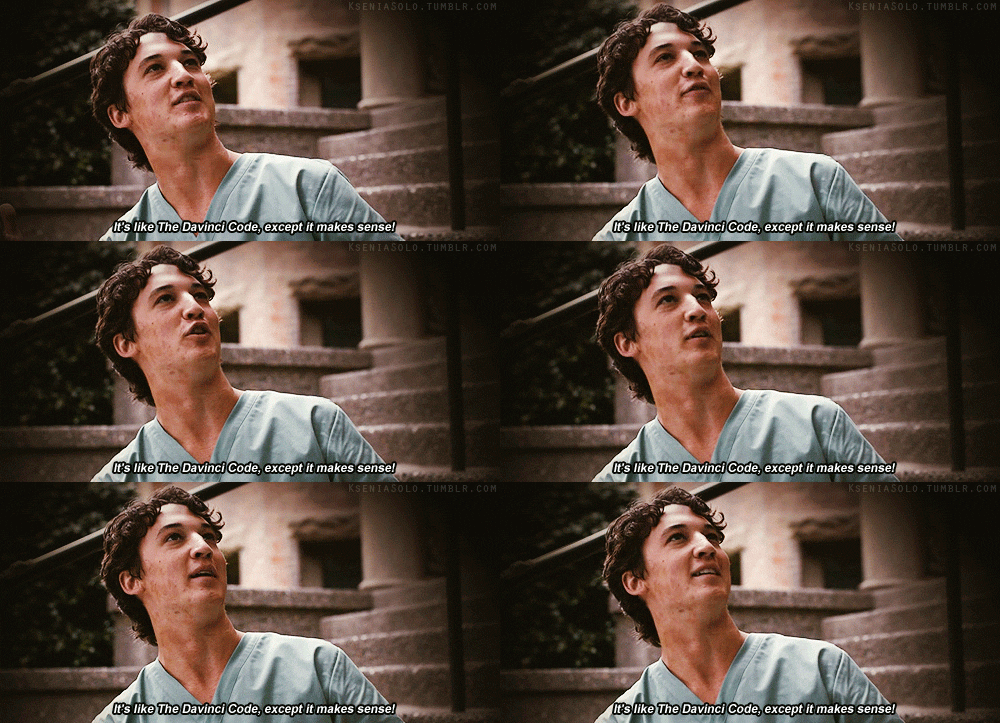
So like the gif above said, if you enjoyed The DaVinci Code . . .
Oh stop with the disappointed judgey face. The son-of-a-bitch didn’t sell eleventy trillion copies by Dan Brown buying them all. Like I was saying, if you enjoy Brown’s books, this one will be right up your alley. As you can tell by my rating, I liked it just fine and the blurb isn’t lying when it says the writing is beautiful. The main problem I had was it was just soooooo long for not a whole lot of action. Yes, there was “intrigue” and the plot was “intricately woven” but (much like with Brown’s works) sometimes it felt as though I was on a Tour of Italy . . .
Mmmmmmm Tour of Italy . . . .
Where was I? Oh yeah, I sometimes wished the book would get to the point already. I guess I’m just a dummkopf who likes more action with my historical intrigue . . .
*shrug*
This was the FINAL selection for the library Winter Reading Challenge. You can bet your ass I’ll be floating this review once I pick up my awesome limited edition beer mug.
In the meantime, go read Shelby’s review. It’s super insightful ; )
I saw great reviews about this book in several places, including at least two magazines. So I gave it a go. But now I'm left with the confusion that comes when you don't like something that everyone else seems to love.
The story follows the modern-day ancestors of the real-life Romeo and Juliet, who believe themselves to be victims of a curse that has plagued the families for 600 years, ever since Romeo and Juliet were not allowed to be together. The book provides some insight into the historical family feud from the 14th century, on which Shakespeare based his play.
However, there were things in the book that did not make it past my suspension of disbelief. I find it hard to believe that the Virgin Mary would curse a family for 600 years just because she didn't get her way with the original Romeo and Juliet. I also didn't like how the ancestors of Romeo and Juliet seemed to have this "Well, you're named after Romeo and I'm named after Juliet, so we're supposed to be with each other and fall in love" attitude. It was weird and I didn't find it to be the least-bit romantic. And I found it infuriating the way that none of the characters were ever straight with each other on anything until the very end. And while the climax of the book was satisfying, a great portion of the book left me rolling my eyes.
If you have a deep love of Romeo and Juliet, can buy into the idea of your life being controlled by "fate" and curses, and have sappy notions about romance, then you might like this book. Otherwise, I recommend that you pass it up.
Shakespeare bu kitabı okusaydı hiç mutlu olmazdı, çünkü kendi hikayesinden daha heyecanlı, daha hüzünlü ve daha gerçekçiydi.
Kitabın kapağını kapadığımda, son 100 sayfada nefes almayı unuttuğumu fark ettim ve derin bir nefes aldım. O kadar farklı o kadar heyecanlı ve etkileyiciydi ki yorum yapmak bile çok zor geliyor.
Çok fazla yorumunu görmediğim bir kitaptı. Tamamen isminden etkilenip almak istedim. Farklı bir hikaye çıkacağını, sürpriz yumurtam olacağını elime alınca hissetmiştim. Gerçekten de öyle oldu, Romeo ve Juliet’in hikayesi bambaşka bir şekilde anlatılmış ve muhteşem bir ustalıkla günümüze bağlanmış.
Tarihin en duygusal aşk hikayelerinden biri anlatılmasına rağmen okurken Dan Brown kitabı okuyormuş gibi hissediyorsunuz. Çünkü içinde aksiyon bitmiyor, sürekli bir sır ve merak yumağını çözmeye çalışıyorsunuz. Hikayenin hüzünlü aşk kısmı çoğunlukla 1340 yılında anlatılan olaylarla sınırlı kalmış.
Bir bölüm 1340 yılında geçen olayları anlatırken, sonraki bölüm günümüz olaylarını anlatıyor. İki hikayeninde her bölümünün sonunda bir şaşırma nidası size eşlik ediyor. Yazar bu kadar şeyi nasıl toplamış, bu kitabı yazmak için kaç yıl araştırma yapmış çok merak ettim okurken.
Bu kadar güzel bir kitabın tek ufacık kötü yanı, çok ağır ilerliyor. Normalde günde 1 kitap rahatlıkla bitirirken bu kitabı resmen yeni okumayı öğrenmiş birisi gibi okudum. Nedeni ilk başlarda İtalyanca yer-mekan isimleri, kişi isimleri, mekan tasvirleri vs çok fazla kafa yoruyor, hatta ortalarına doğru bir ara beynimden duman çıkıyordu sanki. Bir de paragrafları çok uzun, 560 sayfalık kitabın her sayfası dolu dolu sanki. Uzun paragraflar, 1340 lı yıllar ve yabancı isimler sayesinde kitap akıcılığını bir parça kaybetmiş sanırım. Ama hikaye o kadar heyecan ve merak uyandırıcı ki sayfaları buna rağmen yutmak, kitabı hiç durmadan okumak istiyorsunuz. Sonuna bakmamak için çok ciddi çaba harcadım okurken.
Kısacası biraz romantik, fazla aksiyon, gizem, sır ve farklı bir kitap arıyorsanız bence şans verin bu hikayeye. Ben bir süre sonra tekrar okumak ve iyice sindirmek istiyorum kitabı.
Bir de keşke bu kitabın bir filmi çekilse dedim, İtalya sokaklarını, mekanları, sürekli peşinde koştuğumuz hazineyi o kadar güzel anlatmış ki ben hep film izler gibi gözümde canlandırdım okurken. Siena’da elimde kitapla gezmiş gibi hissettim.
Kitap Goodreads’te 2010 En İyi Tarihsel Kurgu seçilmiş, buna rağmen keşfedilmemiş bir hazine. Aynı Juliet’in gözleri gibi 💙💙
”Arkadaş olamamamız çok fena.” Bu Alessandro için yeni bir haberdi. “Arkadaş olamaz mıyız?” “Tabii ki hayır. Sen bir Salimbeni’sin, ben bir Tolomei’yim. Düşman olmak kaderimizde var.” Gülümsemesi geri döndü. “Ya da sevgili olmak.” “Ah, hayır! Sen bir Salimbeni’sin ve Salimbeni, Shakespeare’in Paris’ydi. Juliet gizlice Romeo’yla evlendikten sonra onunla evlenmek isteyen zengin adam!” “Ah evet, artık hatırlıyorum: zengin, yakışıklı Paris. O ben miyim?” “Görünüşe göre öyle.” “Bu rolü sevmeye başladım. Aramızda kalsın, her zaman Paris’in Romeo’dan çok daha iyi bir erkek olduğunu düşünmüşümdür. Bence Juliet aptalın tekiydi.”
”Korkarım ki hayal kırıklığına uğrayacaksın. O, şu anda düşündüğün Romeo’ya hiç benzemiyor. Kafiyeli beyitlerle sevişmez. O gerçek bir pisliktir. Eğer senin yerinde olsaydım, bu sefer balkonumu Paris’le paylaşırdım.” “Balkonumu ikinizle de paylaşmaya niyetim yok. Tek istediğim cencio’yu geri almak ve gördüğüm kadarıyla cencio’yu almak için sebebi olan tek kişi Romeo.” “Bence bunu o yapmadı. Ama bu Romeo suçsuz anlamına gelmiyor. ...Romeo’nun elleri kanlı. İnsanlar onun lanetli olduğunu düşünüyor. Herkes onun öldüğünü düşünmeyi tercih eder.” “Ölmediğine nasıl bu kadar eminsin?” “Bunu hissedebiliyorum.” “Pislikleri hissedebiliyor musun?” “Rakiplerimi hissedebiliyorum.” 😃😃
Sen tam bir pisliksin Alessandro 😍😍
”Geçmişin kötülüklerini telafi etmiyor muyuz? Her şeyi düzeltmiyor muyuz? Mutlu bir son yazmıyor muyuz?” “Aklımı çelme.” “Neden?” “Çünkü seni sevip kaybetmektense bütün bir hayat boyunca sana neredeyse sahip olmayı tercih ederim.”
Kollarına yerleşmişken, “Gerçekten lanetlere inanıyor musun?” diye fısıldadım. Şakağıma doğru, “Lütuflara inanıyorum,” diye yanıt verdi. “Her lanete karşılık bir lütuf olduğuna inanıyorum. ❤️❤️❤️
So, where to begin? The first page is wonderfully crafted; the first page. I thought, wow, this is going to be really wonderful. And I still love that first page, but the other 446 pages not so much. I wanted to love all of it, I really did. O, I am fortune’s fool to have believed in you, first page! There are two main stories running throughout the book. The modern day one is about the search for a priceless treasure which will possibly lift the curse on the two houses, Shakespeare’s Capulets and Montagues or the Salimbenis and the Tolomeis from the historical version. The other story is a re-telling of the story of Romeo and Juliet, supposedly the actual historical people and events. I don’t know if it is the real story or not, but I do know it’s far more entertaining than the modern story. I don’t know if the real Juliet or Giulietta had a twin sister. I kind of hope that’s historically accurate because the sister character in the modern parts was a huge problem for me and I’d have preferred not to have her in the story. She didn’t add anything, nor did she move the plot along. She seemed like a very cardboard character tossed in for no real reason. She is presented as this selfish, self-centered almost evil creature, always grasping and taking from her twin sister, very rapacious and greedy. Juliet doesn’t like her or trust her or want her around, but she shows up in Italy anyway. Juliet is angry with her for a bit and then they work together. They are now just good buddies. Wait! What? WTH??? This person has made her life miserable, ruining everything all the time, making sure anything that Juliet dreamed of was put down, stomped on. There is not any resolution of this, other than Juliet thinks she actually looks contrite a time or two. Really? Really??? Someone has made your life a misery and you just shrug it off because she looks a bit sad or sincere? Hogwash! Poppycock! Balderdash! I didn’t quite get into the character of Juliet, either. Her attitude toward men seemed odd. She behaves or thinks like an uptight spinster which seems somewhat odd for a woman of twenty-five. I get that she had to remain a virgin for the plot, but her attitude that all men are wanting her for some kind of prize made me think she thought pretty highly of herself while at the same time she would be remembering that people only ever noticed her sister. And while we’re on that subject of the characters, how about describing the people just a bit? I’ve finished this and I still have no idea what Juliet or Janice look like. I don’t know their eye color, hair color, nothing. Oh, one has princess hair and one has bear hair; what the heck does that mean? I know Allesandro has green eyes and dark hair and a lean, muscled physique, I guess. I could understand the non-descriptions if everything was that way, but the buildings and places and scenery are almost overly described so I don’t quite know why the main character still remains such a blank. There are descriptions of palazzos and towers and cathedrals and castellos and fields and alleys so I know the author does enjoy describing things; I guess just not people. The romance of historical Romeo and Juliet was beautifully told and that was what kept me reading. The twists and turns and the way the author wove in the Palio horse race and the conflicts between the powerful families was really well done. The historical part was page-turning and heartbreaking until toward the end when it becomes a bit too much telling and not enough showing, but there are centuries to be closed up so I understood that. The romance in the modern day, sorry to say, didn’t work. I could feel the author pushing this romance forward, but it felt very forced. I think she was going for witty banter, but instead what appears is too many distrustful question and answer sessions and I didn’t feel anything happening between them. Even the love scenes, if you can call them that, are very flat. I wasn’t even sure what had happened when they finally got together in the physical sense. Not that I need a play by play, but I wasn’t even sure it had taken place. Okay, rumpled sheets, did they sleep together or did they sleep together? If you’re going to write something about Romeo and Juliet, then (although it’s a tragedy, it’s the romance that folks remember) or now, you need the story to be romantic. The romance is somewhat central to the story, both historical and modern, so it really needed to soar. I’m sad that it didn’t do that and sad that I felt somewhat blah about it. I really wanted the modern story to get out of the way so I could enjoy the historical one and since the majority of the story is the modern one, that isn't good. In the last chapters, there is tons of backstory which took away a lot of the urgency of the plot. I know there was a need for all the information, but I wish it had been presented in some different way. It’s like the story suddenly got in the way of it’s own plot. Yeah, I know that seems confusing, but it’s the only way I can describe it. The ending was okay. However, there is something introduced on the last pages which leads me to believe there will be a sequel or related book at some point in the future. I don’t know whether or not I’d read it. This one was a bit of a slog to get through. The historical story was brilliant and full of emotion; the modern one, not so much.
1.5 stars. This book has garnered a lot of hype. Many have called it a woman's DaVinci Code. I can somewhat buy the comparison but only a little bit. First of all, in DaVinci Code, the "exposed secrets" are much further reaching than the "true story" behind Romeo and Juliet. Many complained about the terrible writing in DaVinci Code but, to be honest, the story was intriguing enough that I didn't notice it too much. Such is not the case with "Juliet." First of all, the author uses "had" before everything... had spoken, had said, had started. Why not "the last time I saw you" versus "the last time I had seen you"? There were some pages where had-something was used twenty times or more, so much so I couldn't even focus on the words between them. All I saw was had, had, had. For such an "active" book the writing was incredibly passive. I can't believe her editor, or her agent for that matter, let her get away with it.
Also, the author over-explains everything. For example, one character clearly makes a sarcastic remark, which the author tags with, "he said, meaning the opposite." Gee, thanks for dropping that mad knowledge, lady. And the dialogue? Atrocious, awful. People do not talk like the characters in this book. What bitchy, privileged twenty-five year old American woman exclaims (at a pivotal point), "Creepers!" Ack! Creepers, indeed. There is also holy cow and hates my guts and taking the love train to cherry town, to name a few. And the word friggin’ is used way too friggin’ much. The author lived in the US for many years but apparently didn’t hang out with too many actual people. It’s like some European teenager’s idea of how Americans speak.
Furthermore, the main character (e.g. modern day "Juliet"), is flat and not believable in the slightest. We know nothing about her other than she has credit card debt and is the "nice sister," versus her twin who is the "mean sister." I didn't care about her journey because she wasn't even a person to me, which was not helped by the aforementioned dialogue issues.
Apparently I really disliked this book! I didn’t even realize it until I started typing this review. I will give it points for concept and a fantastic setting (Siena). Also, the author clearly did a ton of research. I do think it will be a massive bestseller because it seems like the type of book a lot of people like. I imagine book clubs all over the world picking it. Hopefully mine does not.
Ein wirklich gelungener Roman rund um die Geschichte von Romeo und Julia, transportiert in unsere Gegenwart, voller Spannung, Historie und natürlich der Liebe. Ich hätte nicht geglaubt,das soviel in diesem Buch steckt,daher eine echte Empfehlung. Ein bisschen Abzug gibt es für die Zeichnung eines Charakters,der mich nicht ganz überzeugt hat und die Grenze der Mystik,die aber nicht zu sehr überschritten wurde.😉 Ein richtig tolles Buch,das mein Regal nicht verlassen wird.
Ein Überraschungsbuch und das ganz positiv gemeint. Seit 3 Jahren lag es auf meinem SuB (Stapel ungelesener Bücher) und jetzt habe ich es endlich (in einer wunderbaren Leserunde mit Anja von den Bookfriends4ever (YouTube) gelesen. Und fast ärgere ich mich, dass ich nicht viele her dazu gegriffen habe, aber so geht es mir im Grunde mit allen tollen Büchern, die ich erst später nach dem Kauf lesen kann.
Erwartet hatte ich eine Liebesgeschichte, die irgendwie etwas mit Romeo & Julia zu tun hat und in Italien genauer gesagt der Toskana spielt, welche ich eigentlich dieses Jahr bereist hätte. Ein Glück, dass die Reise nur auf 2021 verschoben ist, denn nach der Lektüre habe ich noch mehr Lust dorthin zu fahren und ganz besonders Siena, den Hauptort von Julia, zu erkunden. Bekommen habe ich aber sehr viel mehr als "nur" eine Liebesgeschichte an einem schönen Ort. Denn hier geht es hauptsächlich um ein Familiengeheimnis und die wahre Geschichte von Romeo & Julia, welche eben nicht die Shakespeare Version aus Verona ist.
Ich habe so viel spannendes zur Geschichte erfahren und die Passagen aus der Vergangenheit - die echte Romeo & Julia Geschichte - war sooooo toll, dass ich diese Abschnitte sogar noch mehr mochte als die Gegenwart. Julia erlebt ein rasantes Abenteuer, welches Thriller-, Geschichts- und Spannungselemente enthält, dass man manchmal an Dan Brown Romane und sogar Indiana Jones denken muss. Viele Wendungen haben wir nicht kommen sehen und standen beide immer wieder mit offenem Mund vor diesem Text. Die Sprache und Athmosphäre ist super, auch wenn ich mir manchmal sogar noch mehr Erklärungen des Settings gewünscht hätte.
Leider gibt es einen Charakter, welcher zu Beginn und am Ende viel Raum einnimmt, den ich so gar nicht leiden konnte und ich mich noch immer frage, warum die Autorin diesen Charakter so unsympathisch und nahezu bösartig gezeichnet hat. Das wäre in der Intensität gar nicht nötig gewesen. Auch der mystische Part war fast schon grenzwertig, aber die Autorin hat noch ganz gut die Kurve bekommen und faszinierend war es zum Teil ja auch.
Alles in allem ist es aber ein tolles Buch gewesen mit viel Geschichte, die wunderbar spannend verpackt wurde. Ich habe jetzt riesige Lust den Film mit Leonardo DiCaprio nochmal zu schauen (einer meiner liebsten Filme) und auch Shakespeares Romeo & Julia noch ein gefühlt 10.Mal zu lesen. Auch wenn ich jetzt weiß, dass Shakespeare nur geklaut und abgewandelt hat. Trotzdem ist es eine tolle Geschichte.
Wer also Lust hat mehr über Romeo & Julia in Siena zu erfahren und dabei einen spannenden, wendungsreichen Roman lesen möchte >> Greift zu Julia!
Εξαιρετικό!!! Η γυναικεία θα έλεγε κανείς απάντηση στον κώδικα Ντα Βιντσι του Νταν Μπράουν βέβαια με μια πιο ρομαντική και νοσταλγική ματιά και διάθεση. Ένα μαγικό ταξίδι ανάμεσα στο παρελθόν και το παρόν, ένα ταξίδι στη μεσαιωνική Σιένα του 1340 και στη νοσταλγική Σιένα του σήμερα. Μια διαφορετική εκδοχή μαλλον ένα retelling της ιστορίας των δύο πιο γνωστών εραστών της παγκόσμιας λογοτεχνίας. Κρυμμένα μυστικά, ενας θησαυρός, μια κατάρα από το παρελθόν που μπορεί να υπάρχει ακόμα και σήμερα και μια σύγχρονη Ιουλιέτα που ρίχνεται στη μάχη της αναζήτησης. Είναι άραγε ο Αλεσάντρο Σαντίνι ο άντρας που συναντά στο διάβα της και φαίνεται να κρύβει μυστικά που σχετίζονται με κείνη και την καταγωγή της ο δικός της Ρωμαίος που θα τη βοηθήσει να βρει την άκρη του νήματος ή μήπως θα είμαστε μάρτυρες μιας νέας ερωτικής τραγωδίας? Σιγά μη σας πω καλέ να διαβασετε το βιβλίο για να πάρετε την απάντηση σας. Είναι τετοιο το βιβλίο που νομίζω ότι πρέπει να μάθετε μόνοι σας τις εξελίξεις και να διατηρήσετε έτσι την μαγεία που συνοδεύει τούτη εδώ την ιστορία από την αρχή μέχρι το τέλος της. Οι εραστές της σιένα είναι ένα βιβλίο γεμάτο σασπένς, μυστήριο, αν��τροπές, φυσικά τις απαραίτητες δόσεις ρομάντζου για μας τις ρομαντικές ψυχές και μια μοναδική μαέστρο. Η Αν Φορτιερ με την αξιοζήλευτη και τη γεμάτη δεξιοτέχνια πένα της υφαίνει μια μοναδική ιστορία που ισορροπεί με ένα τρόπο μοναδικό και σχεδόν ευλαβικό ανάμεσα στο τώρα, ανάμεσα στο μύθο και την πραγματικόπτητα, ανάμεσα σε δύο κόσμους που είναι στιγμές που μοιάζουν να συμπληρώνουν μαεστρικά ο ένας με τον άλλο λες και η μοίρα και το πεπρωμένο κληρονομείται από αιώνα σε αιώνα. Ένα μυθιστόρημα που μυρίζει Ιταλία με πανέμορφες εικόνες της όμορφης Σιένα, ένα βιβλίο που φιλοδοξεί να γίνει το αντίδοτο σε κάθε <<κατάρα>> και του πιο δύστροπου αναγνώστη. Περπατήστε μαζί με τους ήρωες της ιστορία στα γραφικά καλντερίμια της Σιένα, λύστε μαζί τους το γρίφο , αφεθείτε στη μαγεία μιας άλλης εποχής, ανακαλύψτε τα παιχνίδια της μοίρας και τον κρυμμένο αναγνωστικό θησαυρό που έχετε στα χέρια σας. Ένα υπέροχο και ρομαντικό ταξίδι με μόνο ταξιδιωτικό σας οδηγό τη μαγεία και τον έρωτα!!!
Bleh... Really predictable Juliet reincarnation (genealogically speaking) story. Think 'Letters for Juliet' movie mixed with 'The DeVinci Code' and you get the picture.
It started out strong with an interesting and sympathetic heroine. But once the hero was introduced the dialogue got really, really corny. Like roll-my-eyes corny. And the heroine was TSTL in one of my pet peeve ways. She'd miss tons of tons of really obvious clues, and then think to herself, "wow, I feel stupid. It would have been so much easier if I'd gotten all this in the first place." Yes. It would have. Especially since I figured it all out and kept wondering why you hadn't.
Which leads to the next problem. Everything was SO contrived. That the heroine was TSTL and couldn't put two and two together allowed the plot to continue. Otherwise the book would have been must shorter.
The ending was hugely disappointing. There was a big 'explanation' scene where all the bizarre happenings are explained by one character. Only it all felt so silly. Clearly the character behaved as he/she did to make the plot interesting and not because what he/she was doing made any sense whatsoever. (The happenings at the country estate were just bizarre.)
Anyways, this book was hugely disappointing, especially since the author is a decent writer and she did a great job with the history and setting of Seina. It is the story and plot that need help.
This book started out with a good hook; the sad-sack Julie is viciously cut out of her dead Aunt’s will and her sister gets everything. But Julie gets a key to a safety deposit box in Siena that will be—in a completely obvious literal and metaphorical sense—the key to her past.
I was with Fortier at this point. I couldn’t really get a handle on Julie yet as a character but there were still about 400 pages to go so I thought the book would get there. That’s where the problems for me started. It seemed like I kept turning pages and nothing was happening that made me interested in Julie or her quest. I don’t believe a main character has to be likable to make a story work. However they should be interesting in some way; intelligent, clever, tough, stubborn. Julie was nothing. I think Fortier wanted to create sympathy for Julie by making her the meek, lost counterpart to her outgoing, abrasive twin sister. But instead Julie was presented as someone with no personality who was just letting life carry her along; she has no career, massive debt, and her participation in war protests is only a result of her desire to prove to her sister she can do something.
It just didn’t work. There’s no reason to care about Julie. The story is told through her point of view, and since Julie doesn’t have a real point of view, or at least not one that she can’t be talked out of in two sentences, it makes the book read flat. Her emotions toward the events in the story do not read true because Fortier never gives us a sense of what is driving them. At best she seems ambivalent toward discovering the truth about her past. She just doesn’t have anything better to do.
The twin sister is horribly characterized. If Fortier wanted to make her evil, she should have just gone for it. You can have a character who is a jerk and give them redeeming qualities. Janice seemed to have multiple personality disorder. I think Fortier was trying to create a character who was headstrong and street smart but also protective, but if this was the case it did not come off. She was very mean and blunt, and then suddenly she was loving and protective. It did not read like a true person. I found it unbelievable when she suddenly popped up in Siena. I also found her disguise hard to swallow. One of the few physical descriptions we get of a main character is that Janice is curvy; Julie asks her in the beginning of the book when she got her most recent addition, referring to her chest. So could a buxom woman put on a leather jacket and pass for a man? I’m not so sure. I also don’t buy into the idea that she knows how to drive a motorcycle. There is some mention of Janice being interested in cars, but how does that translate to riding a motorcycle? We are not in Janice’s head, we are in Julie’s, so Janice’s true thoughts can only come out through her dialogue. And that was the biggest problem of the book for me.
Janice’s dialogue is so jarringly off base it made me wince. I’m a 25 year old American woman, I’m almost offended; creepers, Cocco-Nut, Womeo, driving the love bus into cheery town—that last one was part of the most ridiculous sentence I’ve ever heard. Many have pointed out that Fortier is not American, but I cannot let her off that easily. As an author, you should understand that your strength is not American slang, and don’t use it. I think it would have been more successful if Fortier had written it as she would have said it in her native langue, and then strip it of any colloquialisms.
But it’s not just Janice. The modern day dialogue between all the characters was stilted and jarring and came off as very immature. Usually characters had no more than two or three lines of dialogue at a time, and it never carried the plot forward.
The love story between Julie and Alessandro is laughable, or better yet, invisible. Fortier did a pretty decent job building a little tension between these two, but she gives no real reason why Julie, who never seems to have had a relationship in her life, suddenly falls in love with him. There’s never a reason for him to fall for her either. She never shows any kind of pluck or intelligence or charm that would have attracted him to her. At least none that felt believable. And their strange marriage ceremony and wedding night was just bizarre. I think you can successfully write around a sex scene, but after so much was made of Julie being a virgin, and so many references to virginity throughout, it felt like that scene should have been given more weight. I also find it hard to believe that a woman of 25 wouldn’t have a deep reaction to losing her virginity.
The mystery part of the story was too drawn out and convoluted to really follow, as were some of the final “wrap up” conclusions.
I found the historical parts of the novel to be the best written, however I did have issues. The 1340 is supposed to be a journal entry but it doesn’t read like one. It seemed like omnipotent narration. I think she dwelled too much on them at the expense of characterizing her modern day characters. The “real” story of Romeo and Juliet is interesting, however the problem with spending so much time on it is we already know the end. Even if we don’t know the details, we know more or less what happens. What we don’t know is what will happen to the modern day characters. I found myself rushing through the historical parts in the hopes that something interesting would happen between the modern day characters. It never really did.
The end was predictable and it did not feel very modern. Julie just drifts through life until a man saves her and marries her. One author once suggested to aspiring writers, don’t be satisfied with using your first idea. Try to give it a little more of a twist. A lot of this novel, especially the end, felt like it was the first idea. I would warn people before they started this novel that it’s not a very rewarding read.
Skimming through the comments of other GoodReads reviewers, I am definitely voicing a minority opinion when I fail to wax enthusiastic about this "cute" book. And, I think that is my criticism of Fortier's re-telling of Shakespeare's story---she just strived too hard to make it readable and clever. And, she ended up with cute. What a shame.
I hoped this would be an academic quest similar to A.S. Byatt's Posession, and Fortier's concept for the novel could have led to a much more interesting and sophisticated story. Either she or her editors opted to make the book so mainstream that it just didn't have any magic for me. The heroine's dialogue and musings were so self-consciously sassy that instead of making the heroine, Juliet, feel like a real, modern woman, she seemed like a character on a TV sit-com.
A book doesn't have to be inaccessible to be smart. It was very disappointing to me that a good concept for a book was diminished in its execution by dumbing it down every step of the way: particularly the language and the characters.
What's not to love? It has everything! It is a retelling of Romeo and Juliet, so rich in history, and laced with mystery and action in every page, that it becomes reminiscent of The DaVinci Code!
This was a difficult book to put down and not devour in one sitting. I struggled to slow my pace and savor each line and page from the very start.
Anne Fortier did a remarkable job in crafting this amazing book! One could tell how much research was done to capture the old and timeless tragic love story of Romeo and Juliet and to successfully infuse it with fictional characters and events that feel as antiquated and believable as the original players.
So the book claims that the tragedy of Romeo and Juliet really happened in the 1340s, and that Romeo and Juliet were real people and that they lived in Siena under the names of Romeo Marescotti and Guilietta Tolomei. Just like Shakespeare's timeless love story, they died of a tragic death and that their love story was doomed from the very beginning. Awesome, right? I just love history, even if it's fictional in nature. Though the book is so rich in history, it is well-paced and the story building is well executed without it feeling overburdened with historical facts. I loved reading about the feuding families in Siena, Italy in the 14th century, about the different families/contradas, the Palio, and about the history of Siena itself and how it has worked its hardest to keep its integrity and to keep the infrastructure well-preserved to this day. Such a romantic setting to have!
And so when we continue on with this book, we find that, the female protagonist, the 25-year old Julie Jacobs, is a descendant of Guilietta Tolomei, the real Juliet. Further in the book, we find that Julie's real name is Guiletta Tolomei. She finds this out after her great-aunt, Rose, who raised her and her twin sister, Janice, left her a letter and a key and nothing else while her sister inherits everything. The letter tells Juliet that her mother, who died when she was 3 years old, left her a most valuable treasure in Siena. With the letter came a key to a safety deposit box to a bank in Siena. Disappointed and feeling cheated, Julie leaves for Siena without telling her twin sister where she was headed. And so the mystery and action begins as Julie finds out who she really is and the history of her family, the Tolomeis. But as she searches for her and her family's identity, and the hidden treasure left by her mother, she finds that her father and mother could have been murdered and that who ever was after her parents were now after her and in search of the treasure. This book has kept me at the edge of my seat at the turn of every page! Mysteries unfolded over and over again! And when you thought you've had the story all figured out, Anne Fortier throws a curve ball at you and throws you back on that roller coaster ride of twists and turns!
And what about that old tale of Romeo and Juliet? Anne's retelling and her sharing of what was found through research of the real Romeo and Juliet was by far a better story that the one retold by Shakespeare. It is definitely more romantic and horribly tragic. The Friar definitely played a bigger part in this retelling than in Shakespeare's. The fictional addition of the curse placed on the Tolomei's and the Salimbeni's (Paris' family in Shakespeare) as well as the sought-out treasure and where it was hidden were such intelligent and creative inventions!
Anne Fortier did an amazing job moving back in time to tell the story of Romeo Marescotti and Guilietta Tolomei in 1340 and return back in the present time to weave the story of Julie Jacobs/21st century Guilietta. The movement of going back and forth and the dialogues were expertly done that I was not confused for once as the POVs changed in time.
As for our present day Romeo and Juliet/Guilietta, I thought Romeo was swoon-worthy. But that Alessandro Salimbeni (Paris' counterpart)was definitely to die for! I almost hoped for him and Juliet to get together and forget about Romeo. Until of course, Maestro Lippi tells Juliet that there is a real Romeo and that he comes to his studio at night to look at the portrait of the original Juliet/Guilietta, do I start to wonder about this present-day-Romeo and how romantic he sounds! Swoon 3x! Lots of twists and turns happens before present-day-Juliet finds her present-day-Romeo and more twists and turns before we finally find out whether theirs have a happy ending or if it is another tragic one like their ancestors.
Anne Fortier's writing was so awe-inspiring and believable! It has compelled me to want to visit Siena and visit all the places mentioned in this book. Her Romeo-and-Juliet has captivated and has definitely inspired me to add this book to my book shelf!
If falling in love with a book is possible, then I'm madly in love with this one! Great debut!
I really wonder at the person in our bookclub who chose this book. And I wonder even more at all those readers on GR who gave it more than 2--more than 3!--stars. Just goes to show: mediocrity is alive and well.
I try to be fair when I review and give stars for every book based on its context. I would not, therefore, rate this silly book badly simply because it's not a Jane Austen or Ernest Hemingway one!
Even so, I struggled from the first page, had to fight not to skip the historical chapters, which read like chick-lit posing as history, and almost bit my lips at the end.
I won't go into the story, but here are some of the (many, many) problems as I see them:
Characters are paper-thin and unbelievable, as if lifted right out of a corny (and not very good) 1930s or 50s British book for teen girls. Aunt Rose, the good twin (who always loses), bad twin (who’s gorgeous and always wins), the inscrutable but fatherly man-servant with the European name, even the setting, Virginia (which not once seemed a real place). It was all so cardboard like that I didn’t believe in the relationships between all these people for one instant. And the premise between the characters seemed incredible, too: I’ve a hard time believing that two orphan girls—twins!—living with an elderly eccentric aunt and even more eccentric butler/nanny, two girls so obviously alone in the world would really grow up to be so different to the point of hating each others’ guts. Unless the writing is strong enough to prove the motivations, I just don’t buy it. Even less believable, then, is the bad twin's sudden appearance mid-way through the book to save her sister: a sister whom, it turns out, she actually loves very much. Really? All too Sweet Valley High for the 21st C chick lit crowd.
Ah, the 21st C: it apparently doesn’t exist in this mediocre author’s head. Not once through all these adventures do we have any indication of, say, cell phones, i-Pads, computers, TV or the Internet—not even a good old-fashioned phones! When exactly is this ridiculous story supposed to be set, anyway? I’m pretty sure that even the most die-hard Italian mafia thug has an I-phone hiding somewhere! Don’t you know, it’s a lot easier to catch and kill your prey when you have the benefit of, say, a GPS?
Which brings me to another problem: dialogue. It’s so bad for most of the time that it presents a perfect illustration of why writing teachers everywhere, in all languages, tell us: “write what you know”! That’s a major problem here, you see. Anne Fortier has decidedly not written what she knows. She grew up in Denmark and only moved to Canada, and then the US, as a full-fledged adult. Now, I’ve been teaching ESL for years and I know perfectly well that Scandinavians—as opposed to, say, Italians: but we’ll get to that later—are some of the best English-as-Second-Language speakers on the planet. They learn it, and learn it well, from an early age (as opposed to, for eg, in Germany, where I live now), read a lot directly in English and have no problems assimilating it. However, the fact remains that English is still only their second language—and not at all the language of their thoughts, their feelings, how they see the world. Of course, once a writer emigrates to the US—a true melting pot—that in and of itself shouldn’t be a major handicap (see Nabokov, who switched from Russian to English and thus penned the great “Lolita”) when there’s real talent and perception. Again, think of Nabokov. In Fortier’s case, her written English would have been perfectly fine—above average for a cheap popular novel such as this, really—if she’d stuck to writing what she knows. If, for example, her heroine had been Danish.
Instead, she presents us with two 25-year-old post collegiate girls who not once sound like real American contemporaries. Her mistakes vary from Julie describing ‘bins’ everywhere (a ‘bin’ is the Brit term for a trashcan) which totally jolted my suspense of disbelief, to sister Janice crying out ‘Creepers’! Seriously! Has Fortier no 25 year old female friends she could have eavesdropped on? If she hasn’t, she has no business writing these characters, since she herself has never been a 25-year-old American girl and has not enough talent to pretend in these pages.
Then we get to Italy. Full disclosure: my paternal family is Italian and I know Italy—especially Sienna and the Tuscany area—very well indeed. I also know Italians very well. And I can safely say I’ve never met one who 1) talked the way the ‘Juliet’ Italian characters talk and 2) behaved like this. Alessandro, for once, is completely unbelievable. Even that whole backstory sketch—he fought in Iraq (talk about sniffing for points in Middle America!) and shared quarters with Americans, which is how he perfected his English, even this info isn’t enough to redeem his essential non-Italianness. He actually comes off more like a chick-lit hero in Brit novels. Unsurprising, really, considering that in reality Anne Fortier is married to a Brit and knows very few real Italians intimately.
Now we get to plot and story points. Here, there is so much awkwardness and so many holes that I’ve no energy to go through them all, one by one. Suffice it to say that—with a strong background in Shakespeare, in classic lit, in Italy and Italians—I couldn’t muster enough enthusiasm for the “Wow, did you know the REAL Rome and Juliet was set in Sienna, not Verona?”! I just couldn’t. All I kept thinking was: So what? The genius of Romeo and Juliet lies not in its history or geography or, even, in its star-crossed lovers—it is the genius of Shakespeare which is, in essence, the genius of his language and the ideas about love, life, death and humanity expressed therein. Everything else is pretty much inconsequential. Sure, Sienna is a fascinating city with a fascinating history—but this adds very little to the story of Romeo and Juliet. Even discovering that “Wow, did you know that there was an ORIGINAL Rome and Juliet” is simply not half as earth-shattering as the author would like it to be. Again: So what? In the context of the time—and the continent’s—history and society, why should this be that surprising? There were probably other fascinating star-crossed lovers, too, and so what? Rome and Juliet is what it is as a piece of literature because of Shakespeare, period.
So finally we get to the weakest and most idiotic aspect of this essentially teen-romance novel: I found it really hard to care for modern-day Julie’s quest. This is a girl presented to us as fickle and financially irresponsible because she’d always reckoned on inheriting her aunt’s fortune. And I’m supposed to feel empathy? Worse, after her ‘adventure’ what has she really learned? Well, she may not have found her fortune but she sure found Prince Charming—so who cares that she’s never created a career for herself or is deep in debt, right? In the end, this is a conservative, superficial chick-lit tale written as if for an even younger audience—those Twilight readers—with a supposedly metaphysical sheen (a centuries-old family feud! A curse on the family! A heroine who apparently dies only to be revived, Sleeping Beauty style, by the true descendant of Romeo!). Pleeease!
My goodreads challenge is making me feel guilty about all my unfinished books (how will I ever reach 100 books this year if I keep giving up on what I'm reading?); yet I've decided that it really doesn't pay to listen to an audiobook if turning it on is increasingly serving as a cue to space out with my own slightly less predictable thoughts. Because I just. Can't. Listen. To this any more.
The rose on the cover of this book should have served as a cue that it wasn't for me, but it was available for free library download and had a high goodreads rating. And I was in the mood for something light.
Within the first few minutes of listening, though, the problems began. I do try to suspend my judgmental tendencies when it comes to book characters. I never considered myself one of those people who has to like or admire the main character in order to enjoy the book; in fact, some of the best books I've read have had rather vicious main characters. But the problem with Julie, our heroine, is that while I think I was supposed to sympathize with her, I just couldn't.
It stirs something up in me when a young woman never applies herself to anything or chooses a direction in life simply because she's expecting an inheritance when her great-aunt dies. I mean, I've known lots of people who weren't particularly ambitious or directed but that was usually because they were also not very materialistic, not because they were sure they'd inherit the old lady's fortune and therefore decided to be lazy and passive (writing 101: no one wants to read about lazy, passive characters). I probably could have made my peace with it had Julie been a charismatic Becky Sharp, but she was way too bland and boring for that. She was clearly meant to be the "nice twin" a la Sweet Valley High, but I didn't think it was very nice that her sorrow at her great-aunt's death appeared to revolve mostly around the loss of the inheritance.
Equally boring was Julie's twin sister Janice, an over-the-top belle dame sans merci. Beautiful and nasty, Janice did not appear to have a single redeeming feature although a perusal of other goodreads reviews suggests that she does an abrupt 180 in the middle of the book. I guess when characterization is that thin and one-dimensional, anything's possible. I wasn't interested in sticking around for it.
Apparently the book was going to develop into some kind of mystery around the original Romeo and Juliet story. Unfortunately, that wasn't enough to motivate me when the characterization and dialogue were so utterly ridiculous. And other goodreads reviews have told me that a clicheed romance for Julie is in store as well. Oh, goody. Who'd have thunk?
Goodreads challenge notwithstanding, this book is annoying me way too much to continue. Maybe I'd persist if it were shorter, but I really can't imagine listening to sixteen 75-minute segments of this.
Don't let the flower on the cover fool you. This is a book that superficially will appeal to women (Romeo and Juliet, forebidden love, etc.), but I believe will be enoyed by anyone who liked The Divinci Code and has at least a passing interest in Shakespeare. I thought that Fortier did a masterful job at weaving a most intriguing story through over six hundred years of Italian history and folklore. A very entertaining, fast paced book; and I would recommend it to anyone.
Opsežan roman u kojem se isprepliću Šekspirova ljubavna priča o Romeu i Juliji i savremena priča o potomcima njihove loze i ostvarenju njihove ljubavi. Neki dijelovi su bili holivudski predvidljivi, likovi ponekad banalni i plitki, ali ukupni dojam je ocjena 3.5.
5/5 Yıllardır -evet, maalesef yıllardır- kitaplığımda bu kadar müthiş bir kurgunun olduğunu bilmeden yaşadığıma inanamıyorum arkadaşlar. Yuh kere yuh bana! Kitap, elime aldığım andan itibaren sonunun gümbür gümbür olacağını; beni ters köşeye yatırıp şaşkınlığıma şaşkınlık katacağını zaten hissettirmişti ve nitekim öyle de oldu. Kitabın sonlarına doğru Romeo hakkındaki tahminlerimi tuttursam da kurgu heyecanından hiçbir şey kaybetmedi. 😍 Shakespeare mezarından gülümsüyordur kesin kendi kurgusunun bu kadar ustaca yeniden yazıldığını gördüğünde. Aşkı, tutkuyu iliklerime kadar hissettirdiğin ve bunu klişe yollardan yapmadığın için seni alnından öpmek istiyorum sevgili yazar.🥲
I'm so happy to be finished with this book - it feels like I've been reading it forever! Unfortunately, my stash of books didn't last the whole vacation so I was forced to pick this one up for the lengthy flight from Los Angeles to Columbus.
I always test books I buy by reading the first page and this book had the most outstanding first page out of all my options. I breezed through the first part of the book and then it dragged.
I tried reading one chapter a night. Now, two weeks later, I finally forced myself to finish it in one swoop.
The book itself wasn't bad - it just didn't draw me in. It was like looking at a pretty picture - nice, but kind of flat. The characters were rather lifeless. The plot was confusing - it bounced between a modern-day story and the ancient story that supposedly inspired Romeo and Juliet.
I've heard lots of good things about this book, so I'm sad it was disappointing.
Çok güzeldi, o kadar güzeldi ki güzelliği kalbimi kırdı.. Romeo ve Juliet'e neden bu kadar hayran olduğumu neden binlerce çevirisini okuduğumu bir kez daha hatırladım... Muhteşemdi <3
Julie saw Umberto at the back of the room as she was leaving the stage. She knew this wasn't going to be good news because he wasn't smiling like always. "Aunt Rose has died" were the words that tumbled out of his mouth. As sad as Julie was, she also knew there would be something even more distressing....she had to face her twin sister Janice. Janice was four minutes younger than Julie, but she always upstaged her no matter what, and there was always conflict when Janice arrived on the scene.
It was pouring down rain the day they buried Aunt Rose. As soon as she was buried and they were leaving the gravesite, Janice demanded to see the will right then. The attorney did have the will and showed it to both girls, but nothing had been left to Julie...everything was left to Janice.
Julie was devastated, but then Umberto said he had something that her mother had left for her....a key, a passport, and a letter. The letter wanted Julie to go to Italy, but Julie knew she couldn't go to Italy because she had been thrown out of the country when she was 18. Umberto had another means to get her to the country she was born in and to carry out her mother's wishes that Aunt Rose kept secret until she had passed away. Julie had no desire to go to Italy, but Umberto insisted...who couldn't resist a trip to Italy...mama mia :)
Julie Jacobs aka as Giulietta Tolomei was on the plane to Italy the next day and met Eva Maria, an Italian citizen. She informed Giulietta that she knew her family and that her family and Giulietta's family were rivals back in the Middle Ages. Eva Marie took her under her wing and insisted that her grandson show Giulietta the town of Siena and keep her safe.
The next day Giulietta went to the bank with her key. The bank manager had known Giulietta's father, and he took Giulietta to the safety deposit box with the matching key. What Giulietta found was her family and frightening and wonderful adventures. The key, the box her mother left her, and the story of Romeo and Juliet is the novel's main theme with lots of mystery and intrigue surrounding them.
Your interest won't wane especially if you look at Random House's website ( http://www.randomhouse.com/rhpg/featu...) that corresponds with the book in pictures from the scenes of the book. I loved it as the mysteries unraveled.
This book is outstanding...the storyline, the descriptions, the characters, and Italy.
I loved how the book went back and forth from the 1300's to present day using the story of Romeo and Juliet as the main plot and how the main characters unraveled family and life-long mysteries....you will love the present-day characters Julie and Janice Jacobs also known as Giulietta and Giannozza Talomei.
I couldn't put it down. I loved "being in Italy" again, and could just see the buildings and all the quaintness of the country and the city of Siena. The web page Random House set up for the book adds to your interest because the pictures go along with the pages of the book.
I can't see how it wouldn't be liked...it is a book you won't want to miss. It has something for everyone...history, romance, mystery, betrayal, life in the 1300's in Italy, ancestors, middle-age family feuds, suspense, and a great author. Ms. Fortier did a superb job with her novel.
It is absolutely wonderful right up to the last page. You will not want it to end. What an extraordinary novel. ENJOY!!
Dois romances interligados, que têm tanto de lírico como de moderno, e que nos encantam e nos levam a viajar por tempos e lugares que só visitamos em sonhos. Anne Fortier entrançou inúmeros fios de informação e excertos da história romântica e eterna de Romeu e Julieta. Quem já ouviu falar nas suas mortes trágicas, no seu amor e na sua paixão, e se apaixonou por essa pureza de sentimentos vai-se apaixonar novamente e até meter em causa algumas palavras de William Shakespeare. Este foi o livro com as frases mais românticas e eruditas que já li! Há muito tempo que não suspirava tanto com um livro. Mas Julieta não é só constituída com romance. Nela podemos encontrar perigo, coragem, traição, amizade, mas, principalmente, o Passado e o Presente que nos são apresentados de forma tão astuta e artística. O humor também presente reflecte-se nas conversas entre o Romeu Marescotti de 1340 e o Mestre Ambrogio, que acaba por se uma personagem tão caricata como o seu substituto na actualidade. É interessante apercebermos-nos da importância tanto dos mestres e artistas como dos frades, que com a sua fé poderosíssima se dedicam a juntar e a proteger o casal de apaixonados de tudo e de todos. Esta dedicação e amizade é também um grande marco nesta história. A animosidade dos diálogos acaba também por dar um toque mais alegre, principalmente entre as duas irmãs do século XXI, Julie e Janice. Estas duas vão ser bastante importantes para o desenrolar da história e a sua relação vais ser uma de muitas que nos prendem e que nos fazer sentir mil e uma emoções, desde irritação a comoção. Mas, o que vai agradar mesmo às mais românticas vão ser as duas histórias de amor que escritora nos oferece. Confesso que a minha preferida foi mesmo entre Julie Roberts e Alessandro Santini. A minha cena preferida é quando Julieta Tolomei descobre quem é o seu Romeu. Confesso que nunca me entusiasmei muito com a história de Shakespeare, e a capa e sinopse deste livro também não me cativaram muito, mas ainda bem que a minha amiga Nennya falou e alimentou a minha curiosidade, porque sem dúvida alguma foi um livro que me conquistou e que não poderia deixar de ler.
Citações Preferidas: "- Se fosse minha - continuou Romeu, bloqueando os esforços do monge, descuidado com a sua segurança -, seguia-a até ao Paraíso e trazia-a de volta. Ou ficava com ela para sempre." p.98 "- Porque - disse mestre Ambrogio, divertido com a irritação do jovem - custa aos olhos de um artista ver um pombo branco como a neve a perder tempo com corvos." p.106 "- Vi-vos, bela selvagem, antes de vós me verdes. No entanto ouvistes-me, antes de eu vos ouvir. E assim tivéssemos de viver, o nosso amor separado pelos nossos sentidos, a Fortuna, esta noite, não teria concedido a vós olhos e a mim ouvidos." p. 137 "Qual ave de rapina que desce sobre a sua presa e que sabe que volta a subir para o céu, Romeu roubou-lhe um beijo antes que os lábios lhe fugissem de novo. Momentaneamente atordoada, a sua presa deixou de se debater e ele abriu as asas, deixando que o vento os levasse para o céu fora, ao ponto de o próprio predador perder a esperança de regressar." p.155
Re-read...just cause I couldn't remember it and I want to get rid of some hardcovers in the house. Review stands..didn't "wow" me this time either and in fact brought it down to 3 1/2 stars.
Normally I wont buy a hard cover...III wait till it comes out in paperback or borrow from the library. But as I was reading the inside flap of the book Juliet, it seemed to be told comparable to authors like Barbara Erskine & Kate Mosse both favorite authors of mine. So of course I figured this would be right up my alley. The story is told in past/present as Barbara Erskine does with her books. Anne Fortier did a good job with this. The story also has a Labyrinthine structure which Kate Mosse does in hers which also was well done. Though the medieval parts are good, I found them not always exciting or riveting as I expected them to be. I also found the character of Romeo to be rather in-mature and as I read further into the story I preferred the modern story line better. There were times that if I wasn't paying attention, I would quickly get lost and have to flip back to find out who someone was to refresh my memory. I also found sometimes the dialogue to be a bit forced & out of character. I really like the character Julie as she brought the humor to the story, but when the humor was displayed in the past it was out of place to me..too comic like. All & all it was a enjoyable read...I highly recommend for those who like mystery/suspense and a touch of romance. I look forward to future books by this author.
"Karanlık ölüm değil, potansiyeldi. Lütuf saatinde tekrar doğacak ve şimdiye kadar asla hayal edemediğim bir hayata uyanacaktım." 3.5 Romeo ve Juliet'in bu versiyonunu sevdim. Kitap benim için ilk 150 sayfadan sonra açıldı. Merak uyandıran bir olay örgüsü var. Bunun yanında yazar önemli bilgilerin çoğunu aceleyle anlatmış. Romeo ve Juliet'e yakışan bir dram yaratsa atmosfer daha iyi olabilirmiş. 555 sayfa az değil fakat çoğu eskiden yaşananları çözmekle geçiyor. Bu sahneler daraltılıp, günümüzde yaşayan çift ön plana çıkartılabilirdi. Öylesi daha romantik ve asıl hikayeye daha uygun olurdu diye düşünüyorum. ^^ Bölüm başlarındaki Romeo ve Juliet'ten olan alıntılar güzeldi. Eski yapıtların uyarlamalarını seviyorsanız Lanetler ve Lütuflar'a şans verebilirsiniz. Bu arada en kısa zamanda Romeo ve Juliet'in hikayesini derinlemesine araştıracağım. ^-^
Ένα εξαιρετικό ταξίδι στη Σιένα. Με έναν Ρωμαίο και μια Ιουλιέτα του σήμερα χωρίς βέβαια να λείπουν οι αναδρομές στο μεσαιωνικό παρελθόν του 1340 με τους πρώτους ήρωες που έφεραν αυτό το όνομα. Η κυρία Fortier πήρε τη γνωστή ιστορία του Σαίξπηρ, την ανακάτεψε με μια αληθινή ιστορία της μεσαιωνικής Σιένα, πρόσθεσε μια γερή δόση μυστηρίου και έρωτα και το αποτέλεσμα θεωρώ πως τη δικαίωσε. Το βιβλίο με μάγεψε και με ταξίδεψε από την πρώτη σελίδα. Στο τέλος, δεν ήθελα να φύγω από τη Σιένα. Το μόνο μου παράπονο αυτή τη στιγμή είναι πως το αντίτυπο που διάβασα ήταν δανεικό και πρέπει να το επιστρέψω, έτσι δε μπορώ να το έχω να κοσμεί τη βιβλιοθήκη μου μιας και η έκδοση του βιβλίου στη χώρα μας έχει καταργηθεί. Βέβαια η ελπίδα πεθαίνει τελευταία, οπότε ελπίζω.
bence 3.9 bu kitap için düşük bir puan. açıkçası yazar romeo ve juliet'e farklı bir soluk getirmiş. ki benim favorim Hamlet'tir. ama burada yazarın yarattığı romeo ve juliet'i özellikle de günümüz ikilisini daha bir beğendim. iş yüzünden ara vermek zorunda kalsam da akıcıydı. sadece belli yerlerde durağanlaştı. mesela Alessandro ve Julie'i çok daha fazla okumak isterdim. ama ikilinin arasındaki ilişki çok detaya inilmemiş sadece 1340 ikilisinin üzerine daha ağırlık verilmiş. şahsen kurgu bakımından çok başarılı buldum. kesinlikle tavsiye ederim. ama seri olmalıydı. çünkü merakta kaldığım birçok konu oldu. ucu açıkta kalanlar oldu. ve doğrusunu isterseniz karakterlerin geçmiş kısmını değil de gelecekteki hallerini de okumak isterdim.