Amy Hill Hearth uncovers the story of a little-known figure in U.S. history in this biography. In 1854, a young African American woman named Elizabeth Jennings won a major victory against a New York City streetcar company, a first step in the process of desegregating public transportation in Manhattan.
One hundred years before Rosa Parks refused to give up her seat on a bus in Montgomery, Alabama, Elizabeth Jennings’s refusal to leave a segregated streetcar in the Five Points neighborhood of Manhattan set into motion a major court case in New York City.
On her way to church one day in July 1854, Elizabeth Jennings was refused a seat on a streetcar. When she took her seat anyway, she was bodily removed by the conductor and a nearby police officer and returned home bruised and injured. With the support of her family, the African American abolitionist community of New York, and Frederick Douglass, Elizabeth Jennings took her case to court. Represented by a young lawyer named Chester A. Arthur (a future president of the United States) she was victorious, marking a major victory in the fight to desegregate New York City’s public transportation.
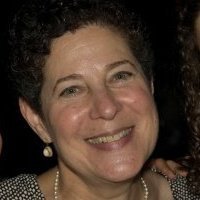
"I'm a risk taker with my writing," Amy Hill Hearth (pronounced HARTH) says about her work. "I like to try new genres because I love to be challenged. Following my instincts without thinking of sales potential usually works out for me, anyway." Indeed, Amy's first book, which shocked the publishing world with its completely unexpected success, was the international bestselling oral history, HAVING OUR SAY: THE DELANY SISTERS' FIRST 100 YEARS, a N.Y. Times bestseller for more than two years which was adapted for Broadway and film. That book is still going strong, with new audiobook and ebook editions published Jan. 3, 2023. Since the 1993 publication of HAVING OUR SAY, Amy has written ten more books and won many national awards, with genres ranging from Southern fiction and oral histories for adult readers to biographies for young readers. Next up is Amy's first historical thriller, SILENT CAME THE MONSTER, a novel of the 1916 Jersey Shore shark attacks which will be published May 16, 2023. What her books have in common, she says, is that they are "stories from the past that resonate today." This reflects Amy's lifelong passion for American history as well as a lifelong fascination with the complexities of human nature and interactions. Born in Pittsfield, Mass., Amy has lived in various locations in her life, including Columbia, SC as a child, and, for the last 25 years, at the Jersey Shore.
RATING: 4.5 STARS 2018; Greenwillow Books/HarperCollins Canada (Review Not on Blog)
What a fabulous book for children and adults. Before Rosa Parks there was Elizabeth Jennings trying to win the right to ride on a streetcar. On her way to church she decides to board the first streetcar that comes and is forcibly removed by the driver. She takes this fight to court and wins, but we don't really hear about Jennings in history so this was great to read. I love the way this book is outlined and would recommend it to anyone to read. This would be a great read with kids.
This is really quality middle grade nonfiction. It’s engaging abd the language is accessible, and I really appreciate all the research and notes and everything that went into it. Will be a valuable teaching tool!
Almost exactly 100 years before Rosa Parks, Elizabeth Jennings fought for and won (with the help of a young Chester A. Arthur as her lawyer) the right to ride public transportation in New York City. Hearth's excellently researched book brings her story back into our understanding of the ongoing battle for equal rights, and hopefully will earn her more than a footnote spot in history. (At least a plaque by her sign in NYC?) Hearth also provides an exhaustively annotated bibliography and other historical references, making this appealing to an older readership as well.
Quick and interesting middle grade nonfiction. What makes the book particularly special, I think, is its joint focus on Jennings' story AND on how stories like hers can be virtually lost to history (and later uncovered). I think some kids will be fascinated by the idea that they, too, can discover a great historical mystery.
I can see why Amy Hill Hearth is a New York Times best-selling author. This book is multifaceted, containing layers of information, giving a broad picture of the history of the time and its impact on the present. One thing that struck my interest was how the author came to write the book and the process she used to ferret out little known information. She saw an abandoned house that interested her, discovered it belonged to President Chester Arthur, and learned that one of his first cases as a lawyer was that of Elizabeth Jennings v. Third Avenue Railroad Company. Hearth then went on to do multiple library and web searches over a more than 10 year period to gain more information. She retraced the steps of Elizabeth Jennings twice.
The next layer is a broad picture of New York City in the period surrounding the 1850s: the landscape, the industries, education, and the political climate particularly surrounding the treatment of black Americans. She was able to discover newspapers, photos, and drawings depicting life in the city at that time.
Hearth does an excellent job conveying the contributions of Elizabeth Jennings and her family. 100 years before Rosa Parks rode the bus, Jennings, a middle class black woman in her early twenties, was on her way to play the organ for her church choir practice. She was ordered off the bus because of her skin color and refused to leave. She was brutally man-handled. Chester Arthur helped to win her case against the railroad company. This case ensured that black people would be able to ride the street cars in NYC and set a precedent for America. Jennings went on to start the first free kindergarten for black children in NYC. She taught school throughout her adult life advocating for education for black children.
Jennings’ father, Tomas, started and joined many organizations “to promote the improvement of colored people in morals, literature, and the mechanic arts." He was awarded what was perhaps the first patent received by a black American signed by John Quincy Adams. Thomas volunteered in the military in the war of 1812 and his wife Elizabeth Cartwright’s father Jacob had been a black soldier in the Revolutionary War.
Along with the illustrations and documents in the book, there is also a time line of events in history, list of important locations, and a list of suggested readings. This is an excellent book to use for either Black History Month (February) or Woman’s History Month (March).
Although this is a book written for middle school aged children, I decided to read it. First, I had never heard of the woman the book is about: Elizabeth Jennings. Second, I wondered if it might be a good read for my 10 year old granddaughter. Besides that I enjoy reading a YA book now and then as a change of pace.
This book did not disappoint in many respects. Hill Hearth skillfully portrayed Jennings' actions and life in the context of the physical, social, and historical circumstances of 1850's New York City. The book included numerous paintings, copies of newspaper articles, and photos which demonstrated aspects of the narrative being described. Abolitionists relevant to the efforts she, her father, and other local African Americans made were also briefly discussed: Frederick Douglass, Horace Greeley, and William Lloyd Garrison. Issues such as the early history of slavery and its abolition in the northern states, the Fugitive Slave Law of 1850, the Underground Railroad, the Draft Riots in NYC in 1863, etc were also noted in enough detail to provide the young readers with a sense of the times in which the events took place.
In the last few chapters the author included follow up on a number of related topics. These included why Jennings was not remembered as time went on, how Jennings lived the rest of her life, and how Hill Hearth discovered her in the first place. She also speculated as to why Jennings was 'lost to history,' so to speak.
There is a comprehensive bibliography. And also a short list of recommended readings for those who wish to learn more about slavery and Abolitionism.
IMHO, two aspects of this book merit modest criticism. First, I wondered if young readers might find the many sidebars to be distracting. Second, the prose is rather dry. Will it sustain the interest of young readers all the way through to completion?
Overall, however, it was an informative and engaging read. So much so that I will buy a copy for my granddaughter. And I will look to read other books by Hill Hearth.
Hearth tells the story of Elizabeth Jenkins, an African-American woman who refused to give up her (streetcar) seat 100 years before Rosa Parks famously launched the Montgomery bus boycott by refusing to give up her (bus) seat. This book is more than the story of Jenkins, it is the history of New York City and the history of slavery and its aftermath in this country. After Jenkins, a middle-class woman on her way to church, was physically ejected from a New York City streetcar, she and her lawyer (future US President Chester A. Arthur) sued the railroad company in civil court and won. Jenkins, a teacher by trade, went on to found the first free kindergarten for African-American children in New York City. Hopefully this important work will mean more people will learn about the remarkable (and ordinary) life of Elizabeth Jenkins.
This book was meticulously researched and includes reproductions of primary source materials, an annotated bibliography, detailed endnotes, suggested readings, and an index. This book is well-written and accessible to middle school readers. Simply put: a tour de force.
Amy Hill Hearth uncovers the story of a little-known figure in U.S. history in this biography. In 1854, a young African American woman named Elizabeth Jennings won a major victory against a New York City streetcar company, a first step in the process of desegregating public transportation in Manhattan.
One hundred years before Rosa Parks refused to give up her seat on a bus in Montgomery, Alabama, Elizabeth Jennings’s refusal to leave a segregated streetcar in the Five Points neighborhood of Manhattan set into motion a major court case in New York City.
On her way to church one day in July 1854, Elizabeth Jennings was refused a seat on a streetcar. When she took her seat anyway, she was bodily removed by the conductor and a nearby police officer and returned home bruised and injured. With the support of her family, the African American abolitionist community of New York, and Frederick Douglass, Elizabeth Jennings took her case to court. Represented by a young lawyer named Chester A. Arthur (a future president of the United States) she was victorious, marking a major victory in the fight to desegregate New York City’s public transportation.
Before there was Rosa Parks in Alabama, there was Elizabeth Jennings in New York City. In 1854 Elizabeth wanted to get to church where she was accompanist for the choir. At the time there was a very convoluted system of which streetcars African Americans could ride and when, however there were also exceptions to the rules. Elizabeth tried to capitalize on the exceptions but was literally thrown off the streetcar she tried to board. Thus starts a legal fight to gain rights to board streetcars in New York City. This interesting book includes many photos, drawings and use of primary sources. Not only was Elizabeth an African American but also a woman. Extensive notes, a bibliography, index, and illustration credits make this not only a fascinating read but a valuable look at life during this period of time in New York City and the country as a whole.
This tells the story of basically unknown Elizabeth Jennings, an African American women, who challenged unfair laws in the late 1800s. When Jennings was violently forced off of a streetcar for being African American, she fought back legally, in hopes of changing the law and fighting for equality. This early equality fighter challenged her time and even though she slipped through the public's knowledge, her actions helped those that came after her.
I think this was an interesting historical figure and I am glad she has been brought to light. Most of this novel felt like it was written for adults/educators, instead of being written for children. I am glad this book exists, but it was rather dry.
I appreciate learning more about historical figures lost to time. I give credit that I'm reading an uncorrected proof, so the grammatical errors and blank captions are understandable. But I'm baffled by the dry writing, wasted space, and the 38 pages at the end that are either bibliography or completely blank. This is meant for children, but they will be really bored. The historical facts could have been worked into the narrative to make it more engaging and less choppy. It reads like a book report of a textbook. I would want more for my students and children.
This was an informative, middle grades novel reflective of the hardships faced by African-American individuals while segregation was still quite prevalent in the United States. There were a number of facts, statistics, and citations that allowed the author to seem credible and reliable. Though it wasn't my favorite book (more so because non-fiction and middle grades are not my genres of choice), I think this would be a very informative and educational book for the appropriate age range, especially for those who enjoy historical facts.
100 years before Rosa Parks refused to give up her seat on a bus, Elizabeth Jennings basically did the same thing on a streetcar in New York City. Yet few people have heard about her story and the court case that won black people the right to ride integrated street cars. An important piece of history for sure, well told and appears to be thoroughly researched. Lots of archival newspapers clippings and interesting tidbits about how the author found out about the story and followed through about various things.
This book is very well researched and an incredibly important moment in history that deserves everyone’s attention. There are plenty of mediocre illustrations and some grammar school level explanations throughout. These mild let downs do not even dent the five star review. This should be a required read for all students studying history. Amy Hill Hearth does a wonderful job capturing this moment of history. The author does a great job of truly celebrating the life of Elizabeth Jennings; a true American hero.
Amy Hill Hearth brings to life this little-known story of a fascinating, historical figure. The tale of how Elizabeth Jennings stood firm against racial injustice and discrimination takes place one hundred years before Rosa Parks and the civil rights movement. Hearth includes much of her research via comprehensive notes and references. This book is a must-have for anyone, young or old, who is interested in the origins of civil rights in America.
I'm glad to learn about Elizabeth Jennings and her lawsuit against the New York streetcar company that forcibly and violently cast her off of a streetcar in 1854. Sadly, the writing is dry and the story of her experience is overwhelmed by related historical information. I don't know if kids will pick this up.
(JF) highly annotated story of a young African American girl trying to get to church to lead the choir and being discriminated against; there were over 40-pages of additional documentation after the story ended; per CCBC 2019 recommendation; 2018 hardback via Madison County Public Library, Richmond; 102 pgs.
I found the subject of this book fascinating, but the writing style was so very dry and clinical. I think younger readers would not be willing to plow through a book that reads so much like a textbook.
A fascinating read for older elementary and middle school students about a nearly unknown Civil Rights hero. I highly recommend this book for classrooms and libraries.
I love how it's a youth book that goes through an actual trial and event. I live how there are lots of pictures and articles from that time throughout the book.