

What do you think?

Millard Fillmore: Biography of a President
Harry S. Truman “characterized Fillmore as a weak, trivial thumb-twaddler who would do nothing to offend anyone".
But is such a statement justified?
Robert J. Rayback in this fascinating biography re-evaluates the career and presidency of Millard Fillmore.
Rather than viewing him as a leader who only had two and a half years in office to implement his policies, he places Fillmore within the tumultuous political context of the 1840s and 1850s.
While the United States was gripped by division Fillmore worked tirelessly through his years, both before and after his presidency, to keep the Union together and his people united.
Rayback’s work provides brilliant insight into how the American political party system was developing through the nineteenth century and how it was becoming increasingly likely through Fillmore’s career that the country was developing into a two-party system.
Drawing his evidence from a variety of sources but particularly from a collection of 8,500 pieces of correspondence between Fillmore and his friends and rivals allows Rayback to fully uncover the mindset of the political leaders of the mid-nineteenth century.
“It is the story of a life not only of dignity and integrity but of permanent achievement on both the local and national scene. … This is a curious and complicated story well told.” American History Review
Robert J. Rayback was a professor of history at Syracuse University who died in 1996. Millard Biography of a President was first published in 1959.
But is such a statement justified?
Robert J. Rayback in this fascinating biography re-evaluates the career and presidency of Millard Fillmore.
Rather than viewing him as a leader who only had two and a half years in office to implement his policies, he places Fillmore within the tumultuous political context of the 1840s and 1850s.
While the United States was gripped by division Fillmore worked tirelessly through his years, both before and after his presidency, to keep the Union together and his people united.
Rayback’s work provides brilliant insight into how the American political party system was developing through the nineteenth century and how it was becoming increasingly likely through Fillmore’s career that the country was developing into a two-party system.
Drawing his evidence from a variety of sources but particularly from a collection of 8,500 pieces of correspondence between Fillmore and his friends and rivals allows Rayback to fully uncover the mindset of the political leaders of the mid-nineteenth century.
“It is the story of a life not only of dignity and integrity but of permanent achievement on both the local and national scene. … This is a curious and complicated story well told.” American History Review
Robert J. Rayback was a professor of history at Syracuse University who died in 1996. Millard Biography of a President was first published in 1959.
360 pages, Kindle Edition
First published January 1, 1959
Ratings & Reviews
Friends & Following
Create a free account to discover what your friends think of this book!
Community Reviews
Displaying 1 - 30 of 178 reviews

December 14, 2014
Book thirty-one of my Presidential Challenge.
Quick, name one thing that you know about Millard Fillmore. Oh, come one, nothing big, I'm just talking greatest hits here. (Crickets) Yeah, same here.
I knew very little about Fillmore going into this and the little I knew was all bad. He seemed to appease slaveholders and ... yeah that was about it.
In truth, Fillmore was a good man who was President during a pivotal time in charge of a political party that was having an existential crisis.
Favorite parts of the book:
- The history of the Anti-Masonic and American (Know Nothing) Parties. I love learning about anything founded purely on fear, hate and misinformation. Any one that thinks there was ever a "civilized" time in American culture needs to read about these. The Anti-Masonic Party in particular was fascinating. It started with the same level of information your parents have when they simply forward an email on without checking Snopes. A Mason published a book with a lot of Masonic secrets, he was then kidnapped and more than likely tortured and killed by Masons. This caused everybody to freak out and say "These Masons have to be stopped!" It reminded me a lot of today's hysteria over terrorism. Clearly if the Masons killed one guy, they're going to kill us all! This party couldn't have REALLY been about that it was a Catholic organization and Catholics were scary and weird back then to the powers at be, right? Never!
- The history of the Whig party. I'd always read about how the Slavery issue tore the Whig party apart but before this book, I'd never really understood why. The Whig Party was a Frankenstein made of two distinct parts that tolerated but never liked each other: Northerners and Southerners. Obviously both disagreed on the Slavery issue. Therein lies why Millard Fillmore was the perfect man for the moment and why we only remember bad things about him. He appeased both sides but ultimately came across as pro-Slavery in his policies. This isn't because he was pro-Slavery. He wasn't. If he was anything, he was pro-Union and was willing to do whatever it took to keep it (and his party) together. By that metric, he was a phenomenal success. No, Fillmore appeased the South because those politicians were bat shit cray-cray and kept talking about leaving the Union. This was truly a case of the squeaky wheel getting the grease. In fairness to Southern politicians of the era (those slaveholding, racist monsters) they probably saw the writing on the wall and knew that if they didn't keep Slavery going now, they were going to lose. It's the same reason the anti-gay and anti-immigration people are freaking out so hard today. They know it's only a matter of time before they lose.
Ultimately, Fillmore was a boring guy and that's just the way he liked it. He never put himself first and always assumed the best of people. This frequently bit him in the butt like with Thurlow Weed, the Whig newspaper editor who started as his friend and in a very Citizen Kane way ended up his mortal enemy. I want to see that movie!
As for the book, it is widely regarded as the best book ever written on Fillmore and I can see why. Good stuff.
Quick, name one thing that you know about Millard Fillmore. Oh, come one, nothing big, I'm just talking greatest hits here. (Crickets) Yeah, same here.
I knew very little about Fillmore going into this and the little I knew was all bad. He seemed to appease slaveholders and ... yeah that was about it.
In truth, Fillmore was a good man who was President during a pivotal time in charge of a political party that was having an existential crisis.
Favorite parts of the book:
- The history of the Anti-Masonic and American (Know Nothing) Parties. I love learning about anything founded purely on fear, hate and misinformation. Any one that thinks there was ever a "civilized" time in American culture needs to read about these. The Anti-Masonic Party in particular was fascinating. It started with the same level of information your parents have when they simply forward an email on without checking Snopes. A Mason published a book with a lot of Masonic secrets, he was then kidnapped and more than likely tortured and killed by Masons. This caused everybody to freak out and say "These Masons have to be stopped!" It reminded me a lot of today's hysteria over terrorism. Clearly if the Masons killed one guy, they're going to kill us all! This party couldn't have REALLY been about that it was a Catholic organization and Catholics were scary and weird back then to the powers at be, right? Never!
- The history of the Whig party. I'd always read about how the Slavery issue tore the Whig party apart but before this book, I'd never really understood why. The Whig Party was a Frankenstein made of two distinct parts that tolerated but never liked each other: Northerners and Southerners. Obviously both disagreed on the Slavery issue. Therein lies why Millard Fillmore was the perfect man for the moment and why we only remember bad things about him. He appeased both sides but ultimately came across as pro-Slavery in his policies. This isn't because he was pro-Slavery. He wasn't. If he was anything, he was pro-Union and was willing to do whatever it took to keep it (and his party) together. By that metric, he was a phenomenal success. No, Fillmore appeased the South because those politicians were bat shit cray-cray and kept talking about leaving the Union. This was truly a case of the squeaky wheel getting the grease. In fairness to Southern politicians of the era (those slaveholding, racist monsters) they probably saw the writing on the wall and knew that if they didn't keep Slavery going now, they were going to lose. It's the same reason the anti-gay and anti-immigration people are freaking out so hard today. They know it's only a matter of time before they lose.
Ultimately, Fillmore was a boring guy and that's just the way he liked it. He never put himself first and always assumed the best of people. This frequently bit him in the butt like with Thurlow Weed, the Whig newspaper editor who started as his friend and in a very Citizen Kane way ended up his mortal enemy. I want to see that movie!
As for the book, it is widely regarded as the best book ever written on Fillmore and I can see why. Good stuff.

October 20, 2021
Millard Fillmore seemed like an unpretentious, uncomplicated kind of guy, and Robert Rayback’s biography of him is unpretentious and uncomplicated as well. He covers a lot of ground, with just enough detail that you feel like you’re getting everything you need to know, without it becoming overwhelming or dull. When you consider certain biographies of other New York state politicians-turned-president like Martin Van Buren or Chester Arthur, which delve deeply into the sometimes arcane world of 19th-century New York state politics, it’s refreshing that Rayback is able to tell the story of Filllmore’s rise to national prominence without getting too bogged down in parochial politics.
In his introduction, Rayback describes how he had initially set out to write a history of the Whig party before settling on Fillmore as something of a vehicle to tell his story, since, by following Fillmore’s career, one can trace the party’s rise and fall. So while the book is a biography and not a comprehensive history of the Whig party, Rayback does manage to make it something of a two-in-one story.
The book is something of a revisionist (for its time) history, since Rayback blames Thurlow Weed’s autobiography for the tone of most of the critical Fillmore evaluations that followed. Rayback aims to tell a more balanced story that portrays Fillmore in a rather more flattering light.
Not overly flattering, though, since even the most fawning biographer can’t make Fillmore’s life story more exciting than it really was. Rayback doesn't give you a great sense of Fillmore's personality, but that could be because he just comes across like a guy who wasn't particularly complex. He generally seemed like a decent enough man who did his best after he was unexpectedly thrust into the presidency. His retirement years as a well-respected civic leader in Buffalo echoed his earlier career as an up-and-coming attorney and local politician - he seemed like someone who might have been best suited as a small-town president of the local Rotary Club, who instead somehow found himself president of the United States for a short time.
Rayback’s writing is generally straightforward and matter-of-fact, except for a few florid scenes that are described in such detail that those details could only have come from Rayback’s imagination. And he has an odd habit of not describing campaigns and elections - Fillmore decides to run, or is nominated, for an office and then seemingly in the next sentence he’s taking up the duties of that office, so you can only assume that he won. This happens for each of his two nonconsecutive stints in Congress, as well as for his election as Vice President - the nominating convention is well-described, but the entire campaign and election is skipped and there’s only an oblique mention that he and Zachary Taylor actually won before they’re abruptly being sworn in.
But in general, this may be about as thorough and well-written a Fillmore biography as you're likely to find. While Rayback seems fond of Fillmore, he doesn't overly praise him, nor does he overly criticize him - he just tells his story and gives him his due as a former president whose story deserves to be told, even if it's mostly unexciting and uninspiring. One can find fault with Fillmore for being too conciliatory toward the South and enforcing the Fugitive Slave Act as part of the Compromise of 1850 that he supported, but Fillmore was really the last antebellum president who managed to keep the peace and hold the Union together in a spirit of compromise. It only got worse after he left the presidency, so you have to at least give him that.
In his introduction, Rayback describes how he had initially set out to write a history of the Whig party before settling on Fillmore as something of a vehicle to tell his story, since, by following Fillmore’s career, one can trace the party’s rise and fall. So while the book is a biography and not a comprehensive history of the Whig party, Rayback does manage to make it something of a two-in-one story.
The book is something of a revisionist (for its time) history, since Rayback blames Thurlow Weed’s autobiography for the tone of most of the critical Fillmore evaluations that followed. Rayback aims to tell a more balanced story that portrays Fillmore in a rather more flattering light.
Not overly flattering, though, since even the most fawning biographer can’t make Fillmore’s life story more exciting than it really was. Rayback doesn't give you a great sense of Fillmore's personality, but that could be because he just comes across like a guy who wasn't particularly complex. He generally seemed like a decent enough man who did his best after he was unexpectedly thrust into the presidency. His retirement years as a well-respected civic leader in Buffalo echoed his earlier career as an up-and-coming attorney and local politician - he seemed like someone who might have been best suited as a small-town president of the local Rotary Club, who instead somehow found himself president of the United States for a short time.
Rayback’s writing is generally straightforward and matter-of-fact, except for a few florid scenes that are described in such detail that those details could only have come from Rayback’s imagination. And he has an odd habit of not describing campaigns and elections - Fillmore decides to run, or is nominated, for an office and then seemingly in the next sentence he’s taking up the duties of that office, so you can only assume that he won. This happens for each of his two nonconsecutive stints in Congress, as well as for his election as Vice President - the nominating convention is well-described, but the entire campaign and election is skipped and there’s only an oblique mention that he and Zachary Taylor actually won before they’re abruptly being sworn in.
But in general, this may be about as thorough and well-written a Fillmore biography as you're likely to find. While Rayback seems fond of Fillmore, he doesn't overly praise him, nor does he overly criticize him - he just tells his story and gives him his due as a former president whose story deserves to be told, even if it's mostly unexciting and uninspiring. One can find fault with Fillmore for being too conciliatory toward the South and enforcing the Fugitive Slave Act as part of the Compromise of 1850 that he supported, but Fillmore was really the last antebellum president who managed to keep the peace and hold the Union together in a spirit of compromise. It only got worse after he left the presidency, so you have to at least give him that.

April 11, 2018
Immediately after beginning Robert Rayback's biography of Millard Fillmore, the reader will note that, while billed as a biography, it is not quite that. In his Preface, Rayback writes that his original intention was not to do a biography of Fillmore, but rather to explain the creation, short life, and fairly quick demise of the Whig Party in the mid-1800s. And a good portion of the book reads exactly as that: Fillmore is a character more or less in the background, periodically coming into spotlight, but usually only as it relates to Whig politics. There are many chapters where the focus is much more on the principles that the Whig party was founded on, and the founders of the party, than it is on Fillmore's life. At times it seems like Fillmore is more of an after-thought that anything else.
Because of the above, Fillmore's personality does not come out. Rayback flies through his youth – there is very little about his ancestors or family. He stops briefly to talk about Fillmore's rise in the legal profession, and then jumps into Whig politics. Fillmore's wife and children are barely mentioned, and when they are it is fleeting. The births of his children, ostensibly two of the biggest and most important events in a his personal life, are not written about at all. Every now and then, Rayback gives a single paragraph to Fillmore's personality or private life. Then it is right back to New York Whig politics.
Rayback whizzes past the election of 1848 so quickly that I had to go back a page to find the one sentence that mentions Fillmore winning the Vice Presidency. Fortunately, once into Fillmore's time as Vice-President, the narrative moves a bit quicker, although still heavily laden with New York Whig politics. Fillmore's primary adversary is the political boss Thurlow Weed. Rayback mentions that Weed has contributed unfavorably to Fillmore's historical reputation because he outlived him and thus was able to write things about him without any fear of Fillmore disputing and possibly proving that Weed was lying about him. While there is not much doubt that Weed did his best to disparage Fillmore both while he was alive and after his death, Fillmore's low ranking amongst the Presidents is his own fault, not Weed's. Fillmore is just one of a series of timid and incompetent men to occupy the Executive Mansion in the decade prior to Abraham Lincoln.
Fillmore tried to govern by compromising on all of the tough issues. While, unfortunately, compromise today is considered a dirty word in Washington and it would be really nice to see some of it from today's politicians, it can also be a negative. And in Fillmore's case, at times it was. The Compromise of 1850 was supported by Fillmore. Really, all it did was delay the coming of the Civil War and exacerbate the crisis once it did come. While antislavery in feeling, Fillmore was not an abolitionist and did not press his views strongly on others. Instead of actively opposing the slave-holding Southerners, and fighting against an institution that he knew was wrong, he temporized to avoid possible secession and bloodshed. I do not blame him for wanting the latter, but he had to know that the conflict would eventually reach a head, and the longer it festered the worse it would be.
Rayback has a thoughtful chapter on Fillmore's foreign policy, mainly concerning the opening of trade in the Far East and also U.S. relations with Latin American countries. The narrative then moves onto the Whig nomination for the presidency in 1852. Oddly, Fillmore did not appear to be interested in being elected President in his own right – at least not at this stage. Yet, neither did he make any statement refusing to run if nominated. Fillmore's ambivalence helped lead to him losing the nomination to Winfield Scott. As with other parts of the book, Rayback focuses here more on party politics than he does on Fillmore.
As he did with the 1848 election, Rayback zooms by 1852 and before we know it, Fillmore is leaving the Executive Mansion. We know almost nothing of Fillmore's personal feelings upon leaving the presidency. There is nothing written about the personal side of he and his family being in the White House, nothing of what he thought about the duties of the office, if he liked it or not, if his family liked it or not. There is little mention of his relations with Congress, nor any mention at all of any interactions with the new President Franklin Pierce. Fillmore's wife dies only a few weeks after he leaves office, and up until that time, we had no idea that she was sick. To be fair, Rayback (or any other biographer tackling Fillmore's life) is hampered by the absence of most of Fillmore's papers, which his son stupidly destroyed. But Rayback offers little in the way of analysis about Fillmore's actions and motives. We do not get a good sense of who the man was.
Once out of office, Fillmore decides to do nothing for a year. Then he slowly gets back into politics, taking some trips around the country and a lengthy one to Europe. Fillmore, in my estimation, sullies himself by becoming the presidential nominee of the American Party in 1856. A big segment of the supporters of this party were nationalists, very anti-Catholic and highly discriminatory against anyone who was considered a foreigner. It reminds me, in some respects, of the Republican Party today. For someone seemingly indifferent to staying in the office of the presidency four years earlier, Fillmore is now willing to join forces with a movement that has some less than desirable qualities about it in order to become President again. At any rate, he comes in a distant third in the race, remarries (this time to a wealthy woman), and decides to live in a very large house and not worry about money.
Rayback concludes with a detailed chapter of Fillmore's philanthropic and civic duties over the last two decades of his life. Fillmore was very involved in his home city of Buffalo and made significant efforts to be a leading citizen and lend his weight to good causes such as the University of Buffalo and various community endeavors such as a historical society and a library. I appreciated this review of his post-presidential years, as many biographers brush past this past of a president's life as an after-thought. Unfortunately, Rayback does not provide an overall evaluation of Fillmore as president in particular or his life in general.
Grade: C-
Because of the above, Fillmore's personality does not come out. Rayback flies through his youth – there is very little about his ancestors or family. He stops briefly to talk about Fillmore's rise in the legal profession, and then jumps into Whig politics. Fillmore's wife and children are barely mentioned, and when they are it is fleeting. The births of his children, ostensibly two of the biggest and most important events in a his personal life, are not written about at all. Every now and then, Rayback gives a single paragraph to Fillmore's personality or private life. Then it is right back to New York Whig politics.
Rayback whizzes past the election of 1848 so quickly that I had to go back a page to find the one sentence that mentions Fillmore winning the Vice Presidency. Fortunately, once into Fillmore's time as Vice-President, the narrative moves a bit quicker, although still heavily laden with New York Whig politics. Fillmore's primary adversary is the political boss Thurlow Weed. Rayback mentions that Weed has contributed unfavorably to Fillmore's historical reputation because he outlived him and thus was able to write things about him without any fear of Fillmore disputing and possibly proving that Weed was lying about him. While there is not much doubt that Weed did his best to disparage Fillmore both while he was alive and after his death, Fillmore's low ranking amongst the Presidents is his own fault, not Weed's. Fillmore is just one of a series of timid and incompetent men to occupy the Executive Mansion in the decade prior to Abraham Lincoln.
Fillmore tried to govern by compromising on all of the tough issues. While, unfortunately, compromise today is considered a dirty word in Washington and it would be really nice to see some of it from today's politicians, it can also be a negative. And in Fillmore's case, at times it was. The Compromise of 1850 was supported by Fillmore. Really, all it did was delay the coming of the Civil War and exacerbate the crisis once it did come. While antislavery in feeling, Fillmore was not an abolitionist and did not press his views strongly on others. Instead of actively opposing the slave-holding Southerners, and fighting against an institution that he knew was wrong, he temporized to avoid possible secession and bloodshed. I do not blame him for wanting the latter, but he had to know that the conflict would eventually reach a head, and the longer it festered the worse it would be.
Rayback has a thoughtful chapter on Fillmore's foreign policy, mainly concerning the opening of trade in the Far East and also U.S. relations with Latin American countries. The narrative then moves onto the Whig nomination for the presidency in 1852. Oddly, Fillmore did not appear to be interested in being elected President in his own right – at least not at this stage. Yet, neither did he make any statement refusing to run if nominated. Fillmore's ambivalence helped lead to him losing the nomination to Winfield Scott. As with other parts of the book, Rayback focuses here more on party politics than he does on Fillmore.
As he did with the 1848 election, Rayback zooms by 1852 and before we know it, Fillmore is leaving the Executive Mansion. We know almost nothing of Fillmore's personal feelings upon leaving the presidency. There is nothing written about the personal side of he and his family being in the White House, nothing of what he thought about the duties of the office, if he liked it or not, if his family liked it or not. There is little mention of his relations with Congress, nor any mention at all of any interactions with the new President Franklin Pierce. Fillmore's wife dies only a few weeks after he leaves office, and up until that time, we had no idea that she was sick. To be fair, Rayback (or any other biographer tackling Fillmore's life) is hampered by the absence of most of Fillmore's papers, which his son stupidly destroyed. But Rayback offers little in the way of analysis about Fillmore's actions and motives. We do not get a good sense of who the man was.
Once out of office, Fillmore decides to do nothing for a year. Then he slowly gets back into politics, taking some trips around the country and a lengthy one to Europe. Fillmore, in my estimation, sullies himself by becoming the presidential nominee of the American Party in 1856. A big segment of the supporters of this party were nationalists, very anti-Catholic and highly discriminatory against anyone who was considered a foreigner. It reminds me, in some respects, of the Republican Party today. For someone seemingly indifferent to staying in the office of the presidency four years earlier, Fillmore is now willing to join forces with a movement that has some less than desirable qualities about it in order to become President again. At any rate, he comes in a distant third in the race, remarries (this time to a wealthy woman), and decides to live in a very large house and not worry about money.
Rayback concludes with a detailed chapter of Fillmore's philanthropic and civic duties over the last two decades of his life. Fillmore was very involved in his home city of Buffalo and made significant efforts to be a leading citizen and lend his weight to good causes such as the University of Buffalo and various community endeavors such as a historical society and a library. I appreciated this review of his post-presidential years, as many biographers brush past this past of a president's life as an after-thought. Unfortunately, Rayback does not provide an overall evaluation of Fillmore as president in particular or his life in general.
Grade: C-

May 7, 2013
http://bestpresidentialbios.com/2014/...
“Millard Fillmore: Biography of a President” is Robert Rayback’s 1959 biography of the thirteenth U.S. president. At the time of the book’s publication Rayback was a professor of history at Syracuse University.
Time and history have not conspired to generate an abundance of biographies of Millard Fillmore. In fact, for more than sixty years following his departure from the White House this long-neglected and relatively obscure president was viewed primarily through the pronouncements of his political rivals. Not until 1915 was the first true Fillmore biography even published.
Rayback’s contribution to Fillmore scholarship almost never happened either. This book was originally intended not as a full-fledged presidential biography but rather as an analysis of the rise and fall of the Whig political party. While conducting his research, Rayback found Fillmore surprisingly interesting and concluded that a thorough examination of his life might provide unique insight into the evolution of his political party. The result is a fairly comprehensive, and rather flattering, biography of Fillmore.
Because of its original purpose as a Whig treatise, one of its strengths is the author’s weaving together of narratives involving the Whig party’s birth and death along with the evolution of Fillmore’s political career. Owing to Fillmore’s political birth in New York, much of the book’s first half centers on New York state politics. But where the discussion of New York machine politics in Van Buren’s biographies was generally tedious and tiresome, Rayback’s description of the political battles between Fillmore and his political nemesis, Thurlow Weed, is more often fascinating.
Rayback’s portrayals of Fillmore and Weed also perfectly demonstrates the author’s obvious affinity for his subject. Despite the fact that both gentlemen were engaged in the same high-stakes game of political chess, Fillmore is always the hero…and Weed is always the villain. Fillmore would be pleased at the author’s consistent and passionate defense of his reputation and legacy, but fortunately the favoritism is easy to identify and decrypt. And rather than seeming obtusely fawning, the author’s exoneration of Fillmore often proves provocative and thought-provoking.
Like many biographies of the early and more secluded presidents, Rayback’s book focuses primarily on Fillmore’s politics and public service rather than his personal life. Though his two wives are mentioned (his first died shortly after he left the presidency) they are only perfunctorily described. Based on what is described of Fillmore’s private and family life, however, the more interesting focus may well be on his careers in law and politics.
Overall, “Millard Fillmore: Biography of a President” is a laudable and impressive analysis of an otherwise remote and little-known president. The book felt about twenty-percent too long and the narrative was not always exciting (or straightforward). But the 1840s and 1850s were a fractious and complex time in American history, and Robert Rayback’s biography proves itself a praiseworthy, well-researched and rewarding (if not always interesting) exploration of Fillmore’s life.
Overall rating: 3¾ stars
“Millard Fillmore: Biography of a President” is Robert Rayback’s 1959 biography of the thirteenth U.S. president. At the time of the book’s publication Rayback was a professor of history at Syracuse University.
Time and history have not conspired to generate an abundance of biographies of Millard Fillmore. In fact, for more than sixty years following his departure from the White House this long-neglected and relatively obscure president was viewed primarily through the pronouncements of his political rivals. Not until 1915 was the first true Fillmore biography even published.
Rayback’s contribution to Fillmore scholarship almost never happened either. This book was originally intended not as a full-fledged presidential biography but rather as an analysis of the rise and fall of the Whig political party. While conducting his research, Rayback found Fillmore surprisingly interesting and concluded that a thorough examination of his life might provide unique insight into the evolution of his political party. The result is a fairly comprehensive, and rather flattering, biography of Fillmore.
Because of its original purpose as a Whig treatise, one of its strengths is the author’s weaving together of narratives involving the Whig party’s birth and death along with the evolution of Fillmore’s political career. Owing to Fillmore’s political birth in New York, much of the book’s first half centers on New York state politics. But where the discussion of New York machine politics in Van Buren’s biographies was generally tedious and tiresome, Rayback’s description of the political battles between Fillmore and his political nemesis, Thurlow Weed, is more often fascinating.
Rayback’s portrayals of Fillmore and Weed also perfectly demonstrates the author’s obvious affinity for his subject. Despite the fact that both gentlemen were engaged in the same high-stakes game of political chess, Fillmore is always the hero…and Weed is always the villain. Fillmore would be pleased at the author’s consistent and passionate defense of his reputation and legacy, but fortunately the favoritism is easy to identify and decrypt. And rather than seeming obtusely fawning, the author’s exoneration of Fillmore often proves provocative and thought-provoking.
Like many biographies of the early and more secluded presidents, Rayback’s book focuses primarily on Fillmore’s politics and public service rather than his personal life. Though his two wives are mentioned (his first died shortly after he left the presidency) they are only perfunctorily described. Based on what is described of Fillmore’s private and family life, however, the more interesting focus may well be on his careers in law and politics.
Overall, “Millard Fillmore: Biography of a President” is a laudable and impressive analysis of an otherwise remote and little-known president. The book felt about twenty-percent too long and the narrative was not always exciting (or straightforward). But the 1840s and 1850s were a fractious and complex time in American history, and Robert Rayback’s biography proves itself a praiseworthy, well-researched and rewarding (if not always interesting) exploration of Fillmore’s life.
Overall rating: 3¾ stars

June 25, 2020
Fillmore, our nation’s 13th president is obviously one of the more obscure leaders in our country’s history. He was one of four presidents from the Whig Party and one of four presidents never elected to the office. While both of these subsets were more often than not handicaps, Fillmore appears to be the one man from both camps that was actually a successful president. His rise to the presidency came at a critical moment in our nation’s history and likely prevented the Civil War from happening earlier than it did. His failure to be elected in his own right when he ran again in 1856 gave rise to the disastrous Buchanan and his bungling of growing sectional strife.
Obviously, in hindsight, the Civil War was necessary to stop a great evil…but until it was begun and won the most likely outcome was a breakup of the Union. Fillmore understood and feared that and helped to stave it off with a spirit of compromise between sectional interests. He also spearheaded several reforms (bankruptcy law and elimination of debtor’s prisons) and business and civic improvements (especially in his home of Buffalo). In addition to covering his presidency, the book offers some interesting perspective on the Whig Party and the reasons for its failure to become a permanent rival to the Democrats (with particular focus on Fillmore’s rivalry with NY Whig Party boss Thurlow Weed). Fillmore comes out looking like a decent human being and elder statesman (though the book is rarely critical and has a clear villain in Weed so it would be interesting to read an alternative point of view). 3 stars.
What follows are my notes on the book:
His parents left Vermont for Cayuga County, NY, were Millard was raised in poverty in the wilderness. Work on the farm was hard so his father apprenticed his sons out to other professions (Millard to a cloth-dressing mill). Being the son of an ignorant dirt farmer he vigorously read during off times at the mill. His father convinced a lawyer to take on Millard as a clerk for 7-years.
He had a falling out with a greedy judge and left to his father’s place in Buffalo, then in the midst of a building and shipping boom. He got another clerkship and so impressed all, he was permitted to practice law within a year. He practiced for 2-years in East Aurora. After six years, he married Abigail Powers.
Fillmore joined in the growing Anti-mason hysteria then sweeping western NY, battling against this “invisible empire” that colored government for its own purposes. Newspaperman (and later party boss) Thurlow Weed used his influence to swing this third party to support Adams over Jackson in the Electoral College. However, with the fracture with National Republicans, they failed to get a majority.
While Jackson, Van Buren, and the Democrats swept the country, Fillmore won a seat in the state assembly for western NY. He spent his first year in the assembly accomplishing little but observing everything and learning much. After his reelection, he was prepared to advance his party’s cause. He was not an eloquent orator but his simple sincerity won many to his cause. Despite being in a dying party, Fillmore accomplished much, helping to pass NY’s first laws banning debtor’s prisons & creating a new bankruptcy law.
In 1830 Fillmore moved back to Buffalo, a city expanding rapidly because of the Erie Canal. The Fillmores quickly adapted to this flourishing cosmopolitan lifestyle. He joined the Lyceum (self-improvement club) and the Unitarian Church (previously unchurched). He acquired high professional stature as a lawyer in Buffalo. The Anti-mason Party was dying as Jackson’s popularity skyrocketed. They threw their little remaining weight behind Henry Clay. Fillmore was elected to Congress where he fought for expansion to Buffalo’s canal and harbor.
After the Anti-mason and National Republican coalition fell apart, Fillmore abandoned anti-masonry as a driving force. Jackson’s bank veto opened up an opportunity for the Whig Party to emerge as the Democrats nemesis for the next 20 years. Fillmore was one of the few bright spots as most Whigs went down in stunning defeat.
1836 saw economic collapse amid rampant speculation with all the private banks. Fillmore detested Van Buren’s plan to repeat Jackson’s mistakes (a system of local depositories run by the treasury that divorced the government from private banking). This would allow the government to hoard specie (gold) and leave nothing for the nation’s currency and credit for business. Fillmore wanted a “free-banking system,” and an end to politically owned or influenced banks.
The depression results in a flood of votes for Whig party. They swept the state as well as a majority in the US House. Despite heroic efforts to get western NY on board with the Whig candidate, many from his area were denied patronage positions by Governor Seward, undermining Fillmore’s political stature.
With Whig strength growing, they turned to the upcoming presidential election. Clay, Webster, and Harrison were all possibilities. Trying to win without alienating any faction proved a challenge. Clay fell short in NY and Harrison won the nomination. The Whig Party swept the country, presidency, both houses of Congress, and 12 governorships. For the first time in his 12 year career, Fillmore belonged to the nation’s ruling clique.
Clay, Webster and others strove to implement their own relief plans and embarrass their opponents. Harrison’s sudden death catapulted Tyler into the presidency. Tyler was ardently pro-states rights/slavery, and against taxpayer-funded internal improvements. He was hard-headed and unwilling to compromise. Tyler vetoed Clay’s effort to re-establish a national bank to help with the depression, fracturing any party unity. Clay tried to orchestrate a mass resignation of Tyler’s Cabinet while Webster and Fillmore hatched a counter plot. Tyler again vetoed a second bank bill and the Whigs renounced him, leaving him a president without a party.
The depression being the main issue, Fillmore had a huge opportunity to shape the course of the nation as the new chair of the powerful Ways and Means Committee with 3/4s of relief funds passing thru him. He helped pass two major relief bills, a national bankruptcy law, and an increase in tariffs to restore plummeting Federal revenues.
Having broken with his own party, Tyler grew increasingly close to Democrats. Fillmore used the tariff bill as a wedge to try and drive them apart. It was lose-lose for Tyler. If he vetoed (he did) he perpetuated the economic slump, if he signed, the agricultural-focused Democrats would call him traitor for protectionism of northern industry. After a third attempt, Fillmore succeeded in pushing thru a tariff that Tyler would sign. Whigs claimed credit for the rebounding economy. However, growing debt due to excess spending coupled with internal Whig feuding led to a crushing defeat in 1841. Fillmore did not run for re-election and returned to NY.
With such a capable man sitting idle, the Whigs moved to make him their VP nominee. Weed moved to sabotage this, wanting him to serve as governor. Angry, he rejected the nomination for governor. When Clay flipped on Texas annexation, his position in NY plummeted. Fillmore might be useful as a known anti-slavery supporter. He was drafted as the Whig candidate for governor anyway.
The Dems painted the Whigs (falsely) as nativist. Fillmore actually worked hard to reach out to Germans and Catholics. He retired to Buffalo, his practice, and a loving family life. Having campaigned against annexation of Texas, he was distraught over the election of Polk. In addition to land grabs, Polk vetoed a harbor improvement bill that would have aided Buffalo and resurrected the credit killing sub treasury scheme.
Fillmore was furious that the Federal government wouldn’t support improving Buffalo’s booming harbor as well as for engaging in a land grab during the Mexican-American War.
Fillmore helped engineer a string of Whig victories in NY in 1846, including placing his friend in the governor’s office. In 1847, Fillmore defeated the Democrats for the position of State Comptroller, arguably the most powerful position in the state as it controlled finance, the banks, and the canal board that dominated the state economy. Exercising the power of his new position, he began funding canal and basin enlargements.
As national issues began to weigh heavier in local elections, the Whigs fumblingly experimented with the issue of slavery. This experimentation would prove fatal to their party and the nation’s unity. With growing anti-southern sentiment, southern Whigs put together a strategy to win in 1848 and hope northern Whigs would return to orthodoxy. They chose General Zachary Taylor, currently moving from one victory to another in the war. Taylor’s managers knew they needed a Northerner for VP.
At the convention, Collier proposed Fillmore for VP (both to blunt Weed’s reclaiming power and to remove Fillmore as a future competitor for Senate). When Taylor accepted some Democratic support, northern Whigs were outraged. Fillmore’s intervention likely salvaged the northern vote, keeping NY in the Whig column in a close national election.
In an unguarded moment, Fillmore agreed to Weed’s recommendation to back Seward for senate. After it was done, Weed and Seward would go on to stab Fillmore in the back, working feverishly to minimize his influence in state elections and patronage posts. Fillmore fought back opening newspapers in NY as well as meeting with Taylor to restore his influence. Taylor’s plan to admit California as a free state almost led to civil war as southerners (Whigs included) abandoned him. Fillmore was sidelined throughout the crisis.
Taylor and Clay fought aggressively over a compromise proposal rather than go with the president’s plan to admit CA and NM as states immediately. Taylor threatened to veto the bill. However, President Taylor passed away before he had the opportunity to do so. Now President, Fillmore accepted the resignations of the entire cabinet that were hostile to him. With the threat of veto removed and Fillmore’s express interest in compromise rather than national suicide, a slew of compromise measures passed (TX/NM border, CA statehood, fugitive slave law, and abolition of slavery in DC). In 10 weeks, he had resolved the threat of disunion that had plagued the country.
The one piece of the Compromise that required enforcement was the Fugitive Slave Act and abolitionists continued to attack Fillmore over his signing it. Fillmore, who hated slavery, enforced the act in the north with troops but also sent troops to the South to stifle the fire-eaters agitating for secession. Weed took every opportunity to undermine Fillmore, further splitting the Whigs. Fillmore retaliated by removing Weed men from patronage posts.
With the tamping down of sectional strife, prosperity abounded, which further dampened Southern agitation. Fillmore’s foreign policy largely mirrored his domestic policy: efforts to expand business with railroads, canals, and stable currency. He opposed territorial land grabs (Hawaii, etc). Early on Fillmore decided against running for re-election in 1852. His decision was met with repeated pleas to reconsider as his departure risked the death of the Whig Party as well as potential for sectional strife. Even on his deathbed, Clay, the founder of the Whigs, endorsed Fillmore for another run.
Seward continued to undermine Fillmore at every turn. Fillmore, in a final act, facing loss of dignity or sectional discord set out to foil Seward and his push to make the Whigs a sectional party. After the convention adopted language fully endorsing the Compromise, he planned to withdraw but his friends wouldn’t let him. He still led in a 3-way race after 46 ballots. Plans to transfer votes from Fillmore to Webster or vice versa faltered and dark horse Winfield Scott was elected on the 53rd ballot. Scott was anathema to the South and Pierce would go on to win 27 states to Scott’s 4.
Approaching retirement, he believed slavery would eventually lead to civil war and that the only solution was recolonization of Africa or the West Indies. During the inauguration festivities, Fillmore’s wife contracted pneumonia and died. Retirement was to be a horrible loneliness.
The passage of the Kansas-Nebraska Act upended Fillmore’s compromise and threw the nation into chaos. The Whig Party fractured into Republicans, Know-Nothings, and National Whig remnant. Fillmore cut short his retirement to tour the country trying to restore a nationwide party that could prevent the north-south split. When the nativist Know-Nothings swept the elections, Fillmore believed they could be coopted into the party of National Union.
Possibly to console his grief at the sudden death of his 22 year old daughter, Fillmore reentered politics as the presidential candidate for the nativist American Party after a year-long tour of Europe. The new Republican Party nominated Fremont and the Democrats Buchanan. His primary campaign issue was national union; nativism taking a clear back seat. Northern Republicans and their radical anti-slavery position drove many who otherwise would’ve voted for Fillmore into the arms of the Democrats.
Buchanan won easily, defeating Fremont and Fillmore. Fillmore was close to winning 4 states, had he done so it would’ve thrown the election into the House and, if the compromising Fillmore was elected, the coming Civil War may have been averted. Cast out of politics, he eventually remarried at age 61. He was a strong critic of Buchanan and his bungling of events leading up to secession. Despite his known anti-Republicanism, he supported the war with the sole aim of preserving the Union.
He rallied the men of wealth as well as spurred patriotism and recruitment in Buffalo. Fearing a British entry into the war and attack on Buffalo he badgered the government for defense of the city and canal. Still, he believed the war was avoidable and Republicans largely to blame for its outbreak.
Frustrated with 3 years of failed efforts in the war, he called for a change in leadership. Fillmore endorsed McClellan in the upcoming election. Republicans (falsely) painted Fillmore as a Copperhead. He was pilloried after the patriotic surge following Lincoln’s assassination.
After the war, his former position in the eyes of the public was restored. In the last 18 years of life he dedicated himself to civic improvement as Buffalo’s patriarch. He established libraries, a historical society, a hospital, a university, an art gallery, and countless efforts on behalf of the canal, harbor, and business community.
He died of a stroke at age 74 in 1874.
Obviously, in hindsight, the Civil War was necessary to stop a great evil…but until it was begun and won the most likely outcome was a breakup of the Union. Fillmore understood and feared that and helped to stave it off with a spirit of compromise between sectional interests. He also spearheaded several reforms (bankruptcy law and elimination of debtor’s prisons) and business and civic improvements (especially in his home of Buffalo). In addition to covering his presidency, the book offers some interesting perspective on the Whig Party and the reasons for its failure to become a permanent rival to the Democrats (with particular focus on Fillmore’s rivalry with NY Whig Party boss Thurlow Weed). Fillmore comes out looking like a decent human being and elder statesman (though the book is rarely critical and has a clear villain in Weed so it would be interesting to read an alternative point of view). 3 stars.
What follows are my notes on the book:
His parents left Vermont for Cayuga County, NY, were Millard was raised in poverty in the wilderness. Work on the farm was hard so his father apprenticed his sons out to other professions (Millard to a cloth-dressing mill). Being the son of an ignorant dirt farmer he vigorously read during off times at the mill. His father convinced a lawyer to take on Millard as a clerk for 7-years.
He had a falling out with a greedy judge and left to his father’s place in Buffalo, then in the midst of a building and shipping boom. He got another clerkship and so impressed all, he was permitted to practice law within a year. He practiced for 2-years in East Aurora. After six years, he married Abigail Powers.
Fillmore joined in the growing Anti-mason hysteria then sweeping western NY, battling against this “invisible empire” that colored government for its own purposes. Newspaperman (and later party boss) Thurlow Weed used his influence to swing this third party to support Adams over Jackson in the Electoral College. However, with the fracture with National Republicans, they failed to get a majority.
While Jackson, Van Buren, and the Democrats swept the country, Fillmore won a seat in the state assembly for western NY. He spent his first year in the assembly accomplishing little but observing everything and learning much. After his reelection, he was prepared to advance his party’s cause. He was not an eloquent orator but his simple sincerity won many to his cause. Despite being in a dying party, Fillmore accomplished much, helping to pass NY’s first laws banning debtor’s prisons & creating a new bankruptcy law.
In 1830 Fillmore moved back to Buffalo, a city expanding rapidly because of the Erie Canal. The Fillmores quickly adapted to this flourishing cosmopolitan lifestyle. He joined the Lyceum (self-improvement club) and the Unitarian Church (previously unchurched). He acquired high professional stature as a lawyer in Buffalo. The Anti-mason Party was dying as Jackson’s popularity skyrocketed. They threw their little remaining weight behind Henry Clay. Fillmore was elected to Congress where he fought for expansion to Buffalo’s canal and harbor.
After the Anti-mason and National Republican coalition fell apart, Fillmore abandoned anti-masonry as a driving force. Jackson’s bank veto opened up an opportunity for the Whig Party to emerge as the Democrats nemesis for the next 20 years. Fillmore was one of the few bright spots as most Whigs went down in stunning defeat.
1836 saw economic collapse amid rampant speculation with all the private banks. Fillmore detested Van Buren’s plan to repeat Jackson’s mistakes (a system of local depositories run by the treasury that divorced the government from private banking). This would allow the government to hoard specie (gold) and leave nothing for the nation’s currency and credit for business. Fillmore wanted a “free-banking system,” and an end to politically owned or influenced banks.
The depression results in a flood of votes for Whig party. They swept the state as well as a majority in the US House. Despite heroic efforts to get western NY on board with the Whig candidate, many from his area were denied patronage positions by Governor Seward, undermining Fillmore’s political stature.
With Whig strength growing, they turned to the upcoming presidential election. Clay, Webster, and Harrison were all possibilities. Trying to win without alienating any faction proved a challenge. Clay fell short in NY and Harrison won the nomination. The Whig Party swept the country, presidency, both houses of Congress, and 12 governorships. For the first time in his 12 year career, Fillmore belonged to the nation’s ruling clique.
Clay, Webster and others strove to implement their own relief plans and embarrass their opponents. Harrison’s sudden death catapulted Tyler into the presidency. Tyler was ardently pro-states rights/slavery, and against taxpayer-funded internal improvements. He was hard-headed and unwilling to compromise. Tyler vetoed Clay’s effort to re-establish a national bank to help with the depression, fracturing any party unity. Clay tried to orchestrate a mass resignation of Tyler’s Cabinet while Webster and Fillmore hatched a counter plot. Tyler again vetoed a second bank bill and the Whigs renounced him, leaving him a president without a party.
The depression being the main issue, Fillmore had a huge opportunity to shape the course of the nation as the new chair of the powerful Ways and Means Committee with 3/4s of relief funds passing thru him. He helped pass two major relief bills, a national bankruptcy law, and an increase in tariffs to restore plummeting Federal revenues.
Having broken with his own party, Tyler grew increasingly close to Democrats. Fillmore used the tariff bill as a wedge to try and drive them apart. It was lose-lose for Tyler. If he vetoed (he did) he perpetuated the economic slump, if he signed, the agricultural-focused Democrats would call him traitor for protectionism of northern industry. After a third attempt, Fillmore succeeded in pushing thru a tariff that Tyler would sign. Whigs claimed credit for the rebounding economy. However, growing debt due to excess spending coupled with internal Whig feuding led to a crushing defeat in 1841. Fillmore did not run for re-election and returned to NY.
With such a capable man sitting idle, the Whigs moved to make him their VP nominee. Weed moved to sabotage this, wanting him to serve as governor. Angry, he rejected the nomination for governor. When Clay flipped on Texas annexation, his position in NY plummeted. Fillmore might be useful as a known anti-slavery supporter. He was drafted as the Whig candidate for governor anyway.
The Dems painted the Whigs (falsely) as nativist. Fillmore actually worked hard to reach out to Germans and Catholics. He retired to Buffalo, his practice, and a loving family life. Having campaigned against annexation of Texas, he was distraught over the election of Polk. In addition to land grabs, Polk vetoed a harbor improvement bill that would have aided Buffalo and resurrected the credit killing sub treasury scheme.
Fillmore was furious that the Federal government wouldn’t support improving Buffalo’s booming harbor as well as for engaging in a land grab during the Mexican-American War.
Fillmore helped engineer a string of Whig victories in NY in 1846, including placing his friend in the governor’s office. In 1847, Fillmore defeated the Democrats for the position of State Comptroller, arguably the most powerful position in the state as it controlled finance, the banks, and the canal board that dominated the state economy. Exercising the power of his new position, he began funding canal and basin enlargements.
As national issues began to weigh heavier in local elections, the Whigs fumblingly experimented with the issue of slavery. This experimentation would prove fatal to their party and the nation’s unity. With growing anti-southern sentiment, southern Whigs put together a strategy to win in 1848 and hope northern Whigs would return to orthodoxy. They chose General Zachary Taylor, currently moving from one victory to another in the war. Taylor’s managers knew they needed a Northerner for VP.
At the convention, Collier proposed Fillmore for VP (both to blunt Weed’s reclaiming power and to remove Fillmore as a future competitor for Senate). When Taylor accepted some Democratic support, northern Whigs were outraged. Fillmore’s intervention likely salvaged the northern vote, keeping NY in the Whig column in a close national election.
In an unguarded moment, Fillmore agreed to Weed’s recommendation to back Seward for senate. After it was done, Weed and Seward would go on to stab Fillmore in the back, working feverishly to minimize his influence in state elections and patronage posts. Fillmore fought back opening newspapers in NY as well as meeting with Taylor to restore his influence. Taylor’s plan to admit California as a free state almost led to civil war as southerners (Whigs included) abandoned him. Fillmore was sidelined throughout the crisis.
Taylor and Clay fought aggressively over a compromise proposal rather than go with the president’s plan to admit CA and NM as states immediately. Taylor threatened to veto the bill. However, President Taylor passed away before he had the opportunity to do so. Now President, Fillmore accepted the resignations of the entire cabinet that were hostile to him. With the threat of veto removed and Fillmore’s express interest in compromise rather than national suicide, a slew of compromise measures passed (TX/NM border, CA statehood, fugitive slave law, and abolition of slavery in DC). In 10 weeks, he had resolved the threat of disunion that had plagued the country.
The one piece of the Compromise that required enforcement was the Fugitive Slave Act and abolitionists continued to attack Fillmore over his signing it. Fillmore, who hated slavery, enforced the act in the north with troops but also sent troops to the South to stifle the fire-eaters agitating for secession. Weed took every opportunity to undermine Fillmore, further splitting the Whigs. Fillmore retaliated by removing Weed men from patronage posts.
With the tamping down of sectional strife, prosperity abounded, which further dampened Southern agitation. Fillmore’s foreign policy largely mirrored his domestic policy: efforts to expand business with railroads, canals, and stable currency. He opposed territorial land grabs (Hawaii, etc). Early on Fillmore decided against running for re-election in 1852. His decision was met with repeated pleas to reconsider as his departure risked the death of the Whig Party as well as potential for sectional strife. Even on his deathbed, Clay, the founder of the Whigs, endorsed Fillmore for another run.
Seward continued to undermine Fillmore at every turn. Fillmore, in a final act, facing loss of dignity or sectional discord set out to foil Seward and his push to make the Whigs a sectional party. After the convention adopted language fully endorsing the Compromise, he planned to withdraw but his friends wouldn’t let him. He still led in a 3-way race after 46 ballots. Plans to transfer votes from Fillmore to Webster or vice versa faltered and dark horse Winfield Scott was elected on the 53rd ballot. Scott was anathema to the South and Pierce would go on to win 27 states to Scott’s 4.
Approaching retirement, he believed slavery would eventually lead to civil war and that the only solution was recolonization of Africa or the West Indies. During the inauguration festivities, Fillmore’s wife contracted pneumonia and died. Retirement was to be a horrible loneliness.
The passage of the Kansas-Nebraska Act upended Fillmore’s compromise and threw the nation into chaos. The Whig Party fractured into Republicans, Know-Nothings, and National Whig remnant. Fillmore cut short his retirement to tour the country trying to restore a nationwide party that could prevent the north-south split. When the nativist Know-Nothings swept the elections, Fillmore believed they could be coopted into the party of National Union.
Possibly to console his grief at the sudden death of his 22 year old daughter, Fillmore reentered politics as the presidential candidate for the nativist American Party after a year-long tour of Europe. The new Republican Party nominated Fremont and the Democrats Buchanan. His primary campaign issue was national union; nativism taking a clear back seat. Northern Republicans and their radical anti-slavery position drove many who otherwise would’ve voted for Fillmore into the arms of the Democrats.
Buchanan won easily, defeating Fremont and Fillmore. Fillmore was close to winning 4 states, had he done so it would’ve thrown the election into the House and, if the compromising Fillmore was elected, the coming Civil War may have been averted. Cast out of politics, he eventually remarried at age 61. He was a strong critic of Buchanan and his bungling of events leading up to secession. Despite his known anti-Republicanism, he supported the war with the sole aim of preserving the Union.
He rallied the men of wealth as well as spurred patriotism and recruitment in Buffalo. Fearing a British entry into the war and attack on Buffalo he badgered the government for defense of the city and canal. Still, he believed the war was avoidable and Republicans largely to blame for its outbreak.
Frustrated with 3 years of failed efforts in the war, he called for a change in leadership. Fillmore endorsed McClellan in the upcoming election. Republicans (falsely) painted Fillmore as a Copperhead. He was pilloried after the patriotic surge following Lincoln’s assassination.
After the war, his former position in the eyes of the public was restored. In the last 18 years of life he dedicated himself to civic improvement as Buffalo’s patriarch. He established libraries, a historical society, a hospital, a university, an art gallery, and countless efforts on behalf of the canal, harbor, and business community.
He died of a stroke at age 74 in 1874.
August 26, 2021
This was a very good book on a lesser known president. The author does a great job of detailing how much of what was published after Fillmore’s death was authored by one of his fiercest critics.

July 18, 2017
Rayback has managed an excellent biography of a surprisingly interesting man. After reading Bauer's Taylor biography (which only barely touched on Fillmore or his relationship to the administration) I wasn't necessarily expecting much from Rayback, given this is a modern reprint of a 1949 book that doesn't seem to have been firmly replaced by any more recent biographies.
This is exactly the kind of biography I love to read. It was thorough about his early life without dragging too much (unlike Bauer) and gave me a satisfactory view of the things that formed Fillmore into the politician he became.
Fillmore is rescued from total obscurity in this volume, which paints him as an devoted unionist who was at times too willing to forgive to be a successful politician. From his beginnings in the Anti-Masonic party to his leadership of the Whig party, the most interesting story told in this biography is of the New York state politics, first against Martin Van Buren's democratic regency and then with the unscrupulous and self-interested Thurlow Weed, who began as a Fillmore friend but would ultimately be an enemy of his administration, painted as a man searching for political power through the creation of a sectional party, finally accomplished by Weed's invasion of the Republican Party in the 1856 election.
Fillmore is not credited with much success. Instead, historians have largely painted him as a man unwilling to offend anyone. That accusation is not entirely without merit, although Rayback paints it in the context of Fillmore's greatest ideal: keeping the union together. Taylor's plan to solve the problems of the lands captured in the Mexican War threatened major dissension. Fillmore, on the other hand, was instrumental in passing the Compromise of 1850. Fillmore sought to follow the compromise to the letter. The truth is, though, that the South is the side that was most easily offended, and was on the defensive. This meant that it seemed Fillmore was defending the South more than the North, and indeed he was - he became the Southern Whig's choice for president in the 1852 election.
Fillmore's other presidential achievements were pretty small, but he was a great supporter of trade, and for improvements Buffalo's canal and trading port especially. Disdaining conflict in the name of expansion, he managed to do very little for getting a canal over the central American isthmus and was against spreading manifest destiny, disowning a crew of Americans who attempted to overthrow the Cuban government. He was also responsible for sending Commodore Perry to Japan (which would, after his presidency, open up trade relations) and successfully opposed European influence in Hawaii as a supporter of Pacific trade.
I think the most telling part of this book, and the greatest defense of Fillmore, was his support as a national candidate in the two elections following his presidency. He was also well-remembered in his hometown in Buffalo, and very supportive of the union throughout the civil war (except for a brief period in 1864 when union morale was at its lowest, when he gave a speech that would hurt him nationally and in the future). But he helped raise money for the effort, organized a ceremonial company of older folks, and provided greatly for a number of societies in Buffalo. This lasting esteem, even if not on a national scale, point to a man who was not quite the failure that history has remembered him as, even if the compromise of 1850 would prove to be a short-lived panacea.
Also well examined in this book is the political infighting in the Whig party. Webster's desire to be vindicated for his service could have lost Fillmore the 1852 nomination, and Thurlow Weed's political machinations would serve to have lingering effects on politics in New York and the nation.
That said, it appears to me that any defense of the three presidents prior to Lincoln tends to center on "they were weak because they sacrificed to maintain union" (although it's pretty hard to argue that for Buchanan). It's generally true that whatever the biography, the author will seek to prove a thesis that is usually pro-that president (or more rarely anti-) but they often provide enough evidence that it is possible to come to one's own conclusion. I feel that this biography serves to blow the dust off a bronze president - and that he was probably a much better president than Taylor would have been.
This is exactly the kind of biography I love to read. It was thorough about his early life without dragging too much (unlike Bauer) and gave me a satisfactory view of the things that formed Fillmore into the politician he became.
Fillmore is rescued from total obscurity in this volume, which paints him as an devoted unionist who was at times too willing to forgive to be a successful politician. From his beginnings in the Anti-Masonic party to his leadership of the Whig party, the most interesting story told in this biography is of the New York state politics, first against Martin Van Buren's democratic regency and then with the unscrupulous and self-interested Thurlow Weed, who began as a Fillmore friend but would ultimately be an enemy of his administration, painted as a man searching for political power through the creation of a sectional party, finally accomplished by Weed's invasion of the Republican Party in the 1856 election.
Fillmore is not credited with much success. Instead, historians have largely painted him as a man unwilling to offend anyone. That accusation is not entirely without merit, although Rayback paints it in the context of Fillmore's greatest ideal: keeping the union together. Taylor's plan to solve the problems of the lands captured in the Mexican War threatened major dissension. Fillmore, on the other hand, was instrumental in passing the Compromise of 1850. Fillmore sought to follow the compromise to the letter. The truth is, though, that the South is the side that was most easily offended, and was on the defensive. This meant that it seemed Fillmore was defending the South more than the North, and indeed he was - he became the Southern Whig's choice for president in the 1852 election.
Fillmore's other presidential achievements were pretty small, but he was a great supporter of trade, and for improvements Buffalo's canal and trading port especially. Disdaining conflict in the name of expansion, he managed to do very little for getting a canal over the central American isthmus and was against spreading manifest destiny, disowning a crew of Americans who attempted to overthrow the Cuban government. He was also responsible for sending Commodore Perry to Japan (which would, after his presidency, open up trade relations) and successfully opposed European influence in Hawaii as a supporter of Pacific trade.
I think the most telling part of this book, and the greatest defense of Fillmore, was his support as a national candidate in the two elections following his presidency. He was also well-remembered in his hometown in Buffalo, and very supportive of the union throughout the civil war (except for a brief period in 1864 when union morale was at its lowest, when he gave a speech that would hurt him nationally and in the future). But he helped raise money for the effort, organized a ceremonial company of older folks, and provided greatly for a number of societies in Buffalo. This lasting esteem, even if not on a national scale, point to a man who was not quite the failure that history has remembered him as, even if the compromise of 1850 would prove to be a short-lived panacea.
Also well examined in this book is the political infighting in the Whig party. Webster's desire to be vindicated for his service could have lost Fillmore the 1852 nomination, and Thurlow Weed's political machinations would serve to have lingering effects on politics in New York and the nation.
That said, it appears to me that any defense of the three presidents prior to Lincoln tends to center on "they were weak because they sacrificed to maintain union" (although it's pretty hard to argue that for Buchanan). It's generally true that whatever the biography, the author will seek to prove a thesis that is usually pro-that president (or more rarely anti-) but they often provide enough evidence that it is possible to come to one's own conclusion. I feel that this biography serves to blow the dust off a bronze president - and that he was probably a much better president than Taylor would have been.
December 9, 2022
Operation Read Every President's Biography #13
Fillmore is arguably one of our best-named presidents, and often overlooked, followed as he was by two of our worst presidents, but then one of our ablest, Lincoln, whose Republican party rose out of the ashes of Millard's Whigs. Millard, then, is a kind of transitory prez, one who was never elected and became chief executive when Zachary Taylor got diarrhea and died.
Some might consider the MFer a dull president, not worth more than a passing glance, but as Rayback shows, there is much of interest in his life and career to hold the history buff's attention. Millard's life crossed over one of the most vehement and turbulent periods in American political history, the era of Jackson, the Anti-Mason party (yes, this existed), and the coalescence of the Whig Party in reaction to Jackson and his minions. Millard lived most of his life in Buffalo, so this is just as much a history of western NY state and NY politics. In fact, get ready for a lot of the latter since our MFer was up to the teats in those political embroilments.
Millard's political career was one of careful calculation, he was quite a savvy player, and his time in the White House was dominated by issues of, you guessed it, slavery. The 1850 Compromise consumed all minds and Millard, to his credit, was quite against slavery, but also against a civil war. His decision to support the fugitive slave act in the Compromise put a dent in his reputation for years to come, but as Rayback shows, he really did his best with what he had in hand to keep America one nation. This books is also a nice look at mid-century political evolution in America, since the sweet but swift rise and fall of the Whig Party, all took place on Millard's watch, largely fragmenting due to the above issues, which are dealt with in some detail.
Overall, I can recommend this and not just because there is hardly anything on Millard out there.
Fillmore is arguably one of our best-named presidents, and often overlooked, followed as he was by two of our worst presidents, but then one of our ablest, Lincoln, whose Republican party rose out of the ashes of Millard's Whigs. Millard, then, is a kind of transitory prez, one who was never elected and became chief executive when Zachary Taylor got diarrhea and died.
Some might consider the MFer a dull president, not worth more than a passing glance, but as Rayback shows, there is much of interest in his life and career to hold the history buff's attention. Millard's life crossed over one of the most vehement and turbulent periods in American political history, the era of Jackson, the Anti-Mason party (yes, this existed), and the coalescence of the Whig Party in reaction to Jackson and his minions. Millard lived most of his life in Buffalo, so this is just as much a history of western NY state and NY politics. In fact, get ready for a lot of the latter since our MFer was up to the teats in those political embroilments.
Millard's political career was one of careful calculation, he was quite a savvy player, and his time in the White House was dominated by issues of, you guessed it, slavery. The 1850 Compromise consumed all minds and Millard, to his credit, was quite against slavery, but also against a civil war. His decision to support the fugitive slave act in the Compromise put a dent in his reputation for years to come, but as Rayback shows, he really did his best with what he had in hand to keep America one nation. This books is also a nice look at mid-century political evolution in America, since the sweet but swift rise and fall of the Whig Party, all took place on Millard's watch, largely fragmenting due to the above issues, which are dealt with in some detail.
Overall, I can recommend this and not just because there is hardly anything on Millard out there.

Read
July 4, 2022I am trying to eventually read a biography on every president. As to not leave all the obscure presidents for the end, I decided to read this one. At times it was far more interesting than I would have thought but at many other times not so much. Also didn’t help I took a 6 month break in the middle of reading so I forgot who half the people were.

March 7, 2017
Robert Rayback makes the most of 1/2-term President Millard Fillmore, providing also a cradle-to-grave biography of the Whig Party, from its Anti-Masonic origins to its seeding of the modern Republican Party. Much time is spent on Fillmore's legacy, the Compromise of 1850, which kept slavery out of new territories but strengthened fugitive slave laws, for the sake of preserving the Union. The first future president born after George Washington's presidency, and the first (earliest) ex-president to survive Abraham Lincoln, Millard Fillmore lived a very full life and dedicated most of it to service of the nation.
July 14, 2016
This book goes to show that excellent research can make any topic worth reading. Fillmore of course is not a well-known president; of his own short presidency there is not much to write. I think he did what he could to try to save the union, but was only able to delay the Civil War a bit longer. I don't blame him, though, as the situation then was hopeless (not even Washington could have cured the nation's sparring at that time).
Fillmore's real story is in the rest of his career. He is the textbook example of someone who slowly worked his way up the political ladder. And in his post-presidency he stayed involved in public service, really making Buffalo into a great city.
If Fillmore himself does not interest you, this book is also a great history of the Whig party. Rayback ends up taking us through the rise and fall of that party, and the voters' struggle to find an identity.
Fillmore's real story is in the rest of his career. He is the textbook example of someone who slowly worked his way up the political ladder. And in his post-presidency he stayed involved in public service, really making Buffalo into a great city.
If Fillmore himself does not interest you, this book is also a great history of the Whig party. Rayback ends up taking us through the rise and fall of that party, and the voters' struggle to find an identity.

March 12, 2019
Recently in this age when human rights issues have come to the fore Millard Fillmore our 13th president is getting quite a beating for his signing of the Fugitive Slave Law. He also had the dubious
distinction in being the only presidential nominee of the American aka Know Nothing party in 1856.
On one he's unfairly maligned, on the other sad but true he probably did have nativist views.
Millard Fillmore came into the world with the 19th century in 1800. Like Lincoln he was born a poor
farm kid in Cayuga County, New York and had a rudimentary education and read law clerking in an office. Both he and his widowed father Nathaniel Fillmore moved to Erie County for better opportunities, Nat for land in East Aurora and Millard to practice law in the county seat Buffalo. It
was home to them for the rest of their lives.
First with Anti-Masons and then with the newly created anti-Jacksonian party the Whigs Fillmore
got into politics. He was elected to the State Assembly in 1828 and to Congress in 1832. He was
one of the Congressional leaders of the Whig Party eventually becoming Chair of the Ways And
Means Committee. In that capacity by the way he got funds to help Samuel F.B. Morse to develop
his idea for a telegraph.
He ran and lost for Governor of New York in 1844, but won election for state Comptroller in 1847
when that post became an elective one. Finally in 1848 he ran for Vice President with Zachary
Taylor and the ticket won.
For the 15 months or so that he was Vice President Fillmore had to silently suffer as his rivals in
New York State's Whig Party William Seward the newly elected Senator and state chair Thurlow
Weed got Taylor's ear in policy and patronage. The union was threatened with dissolution over
slavery and how it would be dealt with in the new territories gained in the Mexican War. Henry
Clay in the Senate was trying to work out a compromise which included a strict Fugitive Slave Act.
The courts right up to the Supreme Court had vacillated over the issue.
Taylor wouldn't sign it and the south threatened war. Then he died July 9, 1850 and Fillmore was
president. Fillmore had already indicated he would sign all the compromise bills which also included California as a free state the New Mexico territory to be determined, abolition of the
slave trade in the District of Columbia. It was the concession to the south and Fillmore who detested slavery but wanted to save the country signed all the bills that made up the Compromise of
1850. He was praised for saving the country from Civil War for 10 years, but he's damned in some
circles now.
Author Rayback gives Fillmore high praise in foreign policy for encouraging trade with the Far East
and part and parcel of that was his decision to open up relations with isolationist Japan. He worked
well with his Secretaries of State Daniel Webster and Edward Everett. He also resisted the southern
hotheads who wanted filibustering expeditions to the Carribean and Central America.
He ran a halfhearted campaign for election in his own right in 1852. The only reason he even had
his name put in nomination was to hold the southerners in the Whig Party. Had he used the full
power of the office with patronage he would have obtained the nomination. It was the mindset of
the northern Whigs to become an unencumbered anti-slavery party and cast off the south. Weed
and Seward got the party to back Winfield Scott who lost big to Democrat Franklin Pierce only
carrying 4 states.
Fillmore had a happy home life with wife Abigail Powers Fillmore and their children Abigail Fillmore and Millard Powers Fillmore. He suffered a double tragedy with the sudden deaths of first the First Lady a month after his term was up and a year later his daughter. He traveled Europe and came back and remarried widow Caroline Carmichael McIntosh and accepted the
nomination of the Know Nothing Party which was an anti-slavery party but it's primary reason for
being was as an anti-immigrant party. I think he probably shared those views. Fillmore carried
only one state, Maryland in the election.
Ironically I feel he was the best man in the race. James Buchanan's pussyfooting as president, a
performance far worse than Fillmore's is well known. And the Republican nominee their first
John C. Fremont was a great explorer, but a man given to recklessness and self promotion.
Fillmore lived until 1874. He never could join the Republicans, but he did give Abraham Lincoln
his loyal, but not uncritical support. Until he died he was Buffalo's first citizen and many of his
public work is still around today.
Millard Fillmore was not a great president, but he's miles from the worst we ever had in that office.
Robert Rayback's book is a must if you want to understand him.
distinction in being the only presidential nominee of the American aka Know Nothing party in 1856.
On one he's unfairly maligned, on the other sad but true he probably did have nativist views.
Millard Fillmore came into the world with the 19th century in 1800. Like Lincoln he was born a poor
farm kid in Cayuga County, New York and had a rudimentary education and read law clerking in an office. Both he and his widowed father Nathaniel Fillmore moved to Erie County for better opportunities, Nat for land in East Aurora and Millard to practice law in the county seat Buffalo. It
was home to them for the rest of their lives.
First with Anti-Masons and then with the newly created anti-Jacksonian party the Whigs Fillmore
got into politics. He was elected to the State Assembly in 1828 and to Congress in 1832. He was
one of the Congressional leaders of the Whig Party eventually becoming Chair of the Ways And
Means Committee. In that capacity by the way he got funds to help Samuel F.B. Morse to develop
his idea for a telegraph.
He ran and lost for Governor of New York in 1844, but won election for state Comptroller in 1847
when that post became an elective one. Finally in 1848 he ran for Vice President with Zachary
Taylor and the ticket won.
For the 15 months or so that he was Vice President Fillmore had to silently suffer as his rivals in
New York State's Whig Party William Seward the newly elected Senator and state chair Thurlow
Weed got Taylor's ear in policy and patronage. The union was threatened with dissolution over
slavery and how it would be dealt with in the new territories gained in the Mexican War. Henry
Clay in the Senate was trying to work out a compromise which included a strict Fugitive Slave Act.
The courts right up to the Supreme Court had vacillated over the issue.
Taylor wouldn't sign it and the south threatened war. Then he died July 9, 1850 and Fillmore was
president. Fillmore had already indicated he would sign all the compromise bills which also included California as a free state the New Mexico territory to be determined, abolition of the
slave trade in the District of Columbia. It was the concession to the south and Fillmore who detested slavery but wanted to save the country signed all the bills that made up the Compromise of
1850. He was praised for saving the country from Civil War for 10 years, but he's damned in some
circles now.
Author Rayback gives Fillmore high praise in foreign policy for encouraging trade with the Far East
and part and parcel of that was his decision to open up relations with isolationist Japan. He worked
well with his Secretaries of State Daniel Webster and Edward Everett. He also resisted the southern
hotheads who wanted filibustering expeditions to the Carribean and Central America.
He ran a halfhearted campaign for election in his own right in 1852. The only reason he even had
his name put in nomination was to hold the southerners in the Whig Party. Had he used the full
power of the office with patronage he would have obtained the nomination. It was the mindset of
the northern Whigs to become an unencumbered anti-slavery party and cast off the south. Weed
and Seward got the party to back Winfield Scott who lost big to Democrat Franklin Pierce only
carrying 4 states.
Fillmore had a happy home life with wife Abigail Powers Fillmore and their children Abigail Fillmore and Millard Powers Fillmore. He suffered a double tragedy with the sudden deaths of first the First Lady a month after his term was up and a year later his daughter. He traveled Europe and came back and remarried widow Caroline Carmichael McIntosh and accepted the
nomination of the Know Nothing Party which was an anti-slavery party but it's primary reason for
being was as an anti-immigrant party. I think he probably shared those views. Fillmore carried
only one state, Maryland in the election.
Ironically I feel he was the best man in the race. James Buchanan's pussyfooting as president, a
performance far worse than Fillmore's is well known. And the Republican nominee their first
John C. Fremont was a great explorer, but a man given to recklessness and self promotion.
Fillmore lived until 1874. He never could join the Republicans, but he did give Abraham Lincoln
his loyal, but not uncritical support. Until he died he was Buffalo's first citizen and many of his
public work is still around today.
Millard Fillmore was not a great president, but he's miles from the worst we ever had in that office.
Robert Rayback's book is a must if you want to understand him.

January 12, 2022
A complicated president that puts union first almost to an excessive extent.
The book review first:
Rayback does a solid job of going into detail on each stage of Millard's life from his poor childhood, the presidency, the know-nothings and finally the outstanding achievements he did for Buffalo in retirement. However, as many biographies often fall short he fails to capture the national picture of his death. Did his county morn him? Were they morning for multiple days or was it a meh attitude like his presidency? These questions are left unfulfilled and there is simply only one paragraph after his death. Also, he mentions in the preface that he was interested in the Whig party before being interested in Millard. This really shines through in the book as he goes into detail more on Whig history in sections then on Fillmore himself.
Book Review - 4/5 stars
Presidency Review:
Part 1: Sectional Conflict
This presidency did give me a first. It caused me to go back and regrade Taylor on his absurdity of the way he left the county with federal troops mere days away from being slaughtered by Texans. Fillmore sought union first and comprise to save the union. The compromise did save and preserve the union while also chipping away at the power of the slavocracy. The fugitive slave act was horrendous but I believe this act brought more attention to the evilness of slavery in the north. Mass people banded in the north to protect former slaves from these bounty hunters that were sent to receive them.
To rally behind this sole compromise for Fillmore would of been a good idea had his policies and thoughts stopped at the single compromise. He comes off as overly bending backwards for the south to appease their every whim. You can see this in his final state of the union draft when he says that slavery is defended in the constitution and goes out of his way to console the south. In this draft he states that slavery should be disbanded over GENERATIONS. Clearly he could of seen how the world was turning and how this evil practice was fighting to hang on for dear life. He disagrees with the emancipation proclamation by Lincoln which at this point the poison of slavery had to be removed in order to stop future split of the union and rid the country of this horrendous practice. Also, yet an other example is during the Andrew Jonson years where he agreed with Johnson's reconstruction ideas. That essentially we should do everything in our power to limit the hurt on the south's feelings. Remember this is post civil war. I usually rate a president solely what he does in office but this does give a broad idea that he was willing to not just compromise but to bend over for the south.
All this to say he did support the Union's fight against the south and thought Buchanan should of strengthened the federal post in the south.
Part 2: Foreign Affairs
Let me start of that his admin was heads and feet above Taylor in foreign affairs especially after the blunder of the Central America route agreement with the British. His diplomacy also with Japan while cruel with intimidation for today's age, did open up trade with Japan. Funny note, his work with the bird poop island was just hilarious to read about. The thought of bird poop being illegally taken and causing an international affair is laughable.
Part 3: The End of the Whigs
I think Millard played a major part in the utter collapse of the Whig party. This goes back to his bending over for the south and also his fence straddling about not wanting to run for presidency. Yes, to say he and Weed were enemies is an understatement but to bring down the whole party just for what you think will save the union(goes back again to bending over backwards for the south) is too much. Finally when he does decide to actually push for the nomination it's too late. Yes, partly this can be blamed for Webster but by the time of the convention Millard had not toured or even pushed for his renomination himself.
Presidents Grade - about 65 D
Regrade of Taylor - drops down from C to 64 D
Outside of Presidency Review:
Citizen of Buffalo:
As a citizen of Buffalo the question is not what did Fillmore help establish but what did he not help establish. He used his fond memory teaching to build libraries, colleges, histories, hospitals and much more. One of the shinning moments here was that he helped build an animal abuse law to help animals who have been abused.
Know Nothing Party:
This is some of the darkest moments for Millard. Here we again see the bending over for the south but also thrown in was the anti-foreigner and anti-Catholic movement. This draws into question earlier before his presidency the movement to prevent government dollars from being used on Catholic schools was just a strict separation of church and state or if it was true Catholic hate that made him be against that issue.
The book review first:
Rayback does a solid job of going into detail on each stage of Millard's life from his poor childhood, the presidency, the know-nothings and finally the outstanding achievements he did for Buffalo in retirement. However, as many biographies often fall short he fails to capture the national picture of his death. Did his county morn him? Were they morning for multiple days or was it a meh attitude like his presidency? These questions are left unfulfilled and there is simply only one paragraph after his death. Also, he mentions in the preface that he was interested in the Whig party before being interested in Millard. This really shines through in the book as he goes into detail more on Whig history in sections then on Fillmore himself.
Book Review - 4/5 stars
Presidency Review:
Part 1: Sectional Conflict
This presidency did give me a first. It caused me to go back and regrade Taylor on his absurdity of the way he left the county with federal troops mere days away from being slaughtered by Texans. Fillmore sought union first and comprise to save the union. The compromise did save and preserve the union while also chipping away at the power of the slavocracy. The fugitive slave act was horrendous but I believe this act brought more attention to the evilness of slavery in the north. Mass people banded in the north to protect former slaves from these bounty hunters that were sent to receive them.
To rally behind this sole compromise for Fillmore would of been a good idea had his policies and thoughts stopped at the single compromise. He comes off as overly bending backwards for the south to appease their every whim. You can see this in his final state of the union draft when he says that slavery is defended in the constitution and goes out of his way to console the south. In this draft he states that slavery should be disbanded over GENERATIONS. Clearly he could of seen how the world was turning and how this evil practice was fighting to hang on for dear life. He disagrees with the emancipation proclamation by Lincoln which at this point the poison of slavery had to be removed in order to stop future split of the union and rid the country of this horrendous practice. Also, yet an other example is during the Andrew Jonson years where he agreed with Johnson's reconstruction ideas. That essentially we should do everything in our power to limit the hurt on the south's feelings. Remember this is post civil war. I usually rate a president solely what he does in office but this does give a broad idea that he was willing to not just compromise but to bend over for the south.
All this to say he did support the Union's fight against the south and thought Buchanan should of strengthened the federal post in the south.
Part 2: Foreign Affairs
Let me start of that his admin was heads and feet above Taylor in foreign affairs especially after the blunder of the Central America route agreement with the British. His diplomacy also with Japan while cruel with intimidation for today's age, did open up trade with Japan. Funny note, his work with the bird poop island was just hilarious to read about. The thought of bird poop being illegally taken and causing an international affair is laughable.
Part 3: The End of the Whigs
I think Millard played a major part in the utter collapse of the Whig party. This goes back to his bending over for the south and also his fence straddling about not wanting to run for presidency. Yes, to say he and Weed were enemies is an understatement but to bring down the whole party just for what you think will save the union(goes back again to bending over backwards for the south) is too much. Finally when he does decide to actually push for the nomination it's too late. Yes, partly this can be blamed for Webster but by the time of the convention Millard had not toured or even pushed for his renomination himself.
Presidents Grade - about 65 D
Regrade of Taylor - drops down from C to 64 D
Outside of Presidency Review:
Citizen of Buffalo:
As a citizen of Buffalo the question is not what did Fillmore help establish but what did he not help establish. He used his fond memory teaching to build libraries, colleges, histories, hospitals and much more. One of the shinning moments here was that he helped build an animal abuse law to help animals who have been abused.
Know Nothing Party:
This is some of the darkest moments for Millard. Here we again see the bending over for the south but also thrown in was the anti-foreigner and anti-Catholic movement. This draws into question earlier before his presidency the movement to prevent government dollars from being used on Catholic schools was just a strict separation of church and state or if it was true Catholic hate that made him be against that issue.

April 7, 2020
When a friend of mine found out that I’m working my way through biographies of all the presidents, he wanted to know if that even includes Fillmore. Yep! Why? Because anyone who is elevated to this nation’s highest office must have had a fascinating journey. It’s as simple as that.
Published in 1959, this biography of our 13th president of the United States sometimes reads more like a history of the Whigs than it does of Fillmore, and that isn’t a bad thing. Whig history can be messy and confusing. Rayback brings much needed understanding to it. Fillmore, a major player in the Whig movement for a long time, is a good vehicle to explain it.
Much like most political movements, Whiggery was highly sectionalized and incohesive on a national level. Fillmore was influential in New York politics and held firmly to such domestic ideas as economic improvement through waterway and railroad infrastructure and restricting slavery to southern states, where it currently existed, not allowing it to spread to new territories. His views gained him support among southern Whigs but lost it, even within New York, to Whigs lead by Thurlow Weed and William Seward.
Although opposed to slavery, Fillmore wasn’t an abolitionist; he was a Unionist. This was the main point of contention between Fillmore and Seward. Weed just pulled the strings for Seward and often changed positions depending on which way the political winds were blowing. The political battles between these two opposing party factions is really the crux of the book.
Every list of presidential rankings I’ve seen has had Fillmore listed near the bottom. I can’t help but to think that his low place in presidential history is mainly based on his policy of saving the Union at all costs, even if it meant preserving slavery. In fact, most presidents between Jackson and Lincoln are remember similarly—as bad presidents. Is this fair?
Fillmore was a competent president during a tumultuous time. Not only was it a tumultuous time, but he was in a backstabbing party. He was an accidental president in that he never sought the vice presidency and was elevated to the presidency only when President Taylor died 16 months into his only term. He had no plans of running to retain the office in the 1852 election but did anyway as a call to duty.
So, is Taylor’s footnote in history fair? President Taylor was a southern slave owner who took a stance against the spreading of slavery. If Taylor had lived, the Civil War very well could have been fought 10 years earlier. Lincoln had basically the same views on slavery as Fillmore—they both abhorred it and wanted preservation of the Union above anything else. The difference is that southerners believed Lincoln meant to allow it to be abolished. Taylor could have found himself in the same position as Lincoln had he taken more of an unfriendly disposition toward the south’s way of life. Lincoln was not assured of keeping the Union together. Fillmore wouldn’t have been either.
The author impresses on the reader that Fillmore was a good man. He was also a president during a pivotal and amazingly interesting time in the nation’s history. He was a calming force in the office of the presidency when the nation needed it. That makes him a decent president and a good story.
Published in 1959, this biography of our 13th president of the United States sometimes reads more like a history of the Whigs than it does of Fillmore, and that isn’t a bad thing. Whig history can be messy and confusing. Rayback brings much needed understanding to it. Fillmore, a major player in the Whig movement for a long time, is a good vehicle to explain it.
Much like most political movements, Whiggery was highly sectionalized and incohesive on a national level. Fillmore was influential in New York politics and held firmly to such domestic ideas as economic improvement through waterway and railroad infrastructure and restricting slavery to southern states, where it currently existed, not allowing it to spread to new territories. His views gained him support among southern Whigs but lost it, even within New York, to Whigs lead by Thurlow Weed and William Seward.
Although opposed to slavery, Fillmore wasn’t an abolitionist; he was a Unionist. This was the main point of contention between Fillmore and Seward. Weed just pulled the strings for Seward and often changed positions depending on which way the political winds were blowing. The political battles between these two opposing party factions is really the crux of the book.
Every list of presidential rankings I’ve seen has had Fillmore listed near the bottom. I can’t help but to think that his low place in presidential history is mainly based on his policy of saving the Union at all costs, even if it meant preserving slavery. In fact, most presidents between Jackson and Lincoln are remember similarly—as bad presidents. Is this fair?
Fillmore was a competent president during a tumultuous time. Not only was it a tumultuous time, but he was in a backstabbing party. He was an accidental president in that he never sought the vice presidency and was elevated to the presidency only when President Taylor died 16 months into his only term. He had no plans of running to retain the office in the 1852 election but did anyway as a call to duty.
So, is Taylor’s footnote in history fair? President Taylor was a southern slave owner who took a stance against the spreading of slavery. If Taylor had lived, the Civil War very well could have been fought 10 years earlier. Lincoln had basically the same views on slavery as Fillmore—they both abhorred it and wanted preservation of the Union above anything else. The difference is that southerners believed Lincoln meant to allow it to be abolished. Taylor could have found himself in the same position as Lincoln had he taken more of an unfriendly disposition toward the south’s way of life. Lincoln was not assured of keeping the Union together. Fillmore wouldn’t have been either.
The author impresses on the reader that Fillmore was a good man. He was also a president during a pivotal and amazingly interesting time in the nation’s history. He was a calming force in the office of the presidency when the nation needed it. That makes him a decent president and a good story.

October 16, 2018
This is one of those rare biographies where the sections that don't talk about the main subject are more interesting than the ones that do. As a history of the Whig party (which is how the author first envisioned the book), and a telling of America's slide to Civil War, this is a good book. As a futile attempt to make Millard Fillmore seem like an underrated President, and, even more preposterously, an interesting person, this book is rather dull.
Most of the Presidents leading up to the Civil War were uninteresting and spineless. Whether they supported slavery or not, (and Fillmore from Buffalo supposedly didn't), they were all terrified of being the President who saw the nation split into two. So they just tried to compromise and compromise and keep it all together, even though the schism was clearly coming. Fillmore was no exception. He signed the Compromise of 1850, which included the Fugitive Slave Act, an extremely dangerous law that allowed southern slaveholders to go North and reclaim slaves who had escaped, or just say a person used to be their slave and kidnap them. Fillmore reportedly "hesitated" about signing this part of the Compromise.
He also saw the role of President as basically incapable of doing anything about anything, and essentially beholden to Congress and the Constitution. If you read about any of the great Presidents in American history, you might notice that none of them shared that philosophy.
Most of the Presidents leading up to the Civil War were uninteresting and spineless. Whether they supported slavery or not, (and Fillmore from Buffalo supposedly didn't), they were all terrified of being the President who saw the nation split into two. So they just tried to compromise and compromise and keep it all together, even though the schism was clearly coming. Fillmore was no exception. He signed the Compromise of 1850, which included the Fugitive Slave Act, an extremely dangerous law that allowed southern slaveholders to go North and reclaim slaves who had escaped, or just say a person used to be their slave and kidnap them. Fillmore reportedly "hesitated" about signing this part of the Compromise.
He also saw the role of President as basically incapable of doing anything about anything, and essentially beholden to Congress and the Constitution. If you read about any of the great Presidents in American history, you might notice that none of them shared that philosophy.

August 10, 2019
The only full length biography available of the 13th POTUS. It is 70 years old at this point, but I didn't find much about Fillmore's biography interesting outside of the political years. Raybeck does paint a more sympathetic picture of Fillmore than any other history, which seems to feel that Fillmore was the Ted Cruz of the 19th century (party politician, widely disliked by colleagues, transparently ambitious, ingratiating and irritating social skills). Still, he is completely tied into the demise of the Whig party, which was Rayback's original scope. For the second time in a decade, the Whigs had elected a general as President, who promptly died in office. In both cases, the Vice President ultimately did not seem up to the task, dividing the public as well as their own party. Fillmore would never be a consensus builder, and so made enemies of nearly everybody, but then again, that's the story of this era of American history: so many sides, so tenaciously held political views, that nobody could hold them all together and so the country would fall apart. In that sense, Fillmore failed where others failed before and after. I'm sure he was a fine man but not very consequential as a POTUS. Still, the biography of this POTUS - for now.

October 4, 2020
If you thought a biography portraying the Millard Fillmore administration as a raging success is an impossibility, well, take it from me, you are absolutely . . . correct. Doesn't stop this guy from trying, though. Every blunder, miscalculation, betrayal and cynical alliance is proof of Fillmore's greatness. Oh, if only it weren't for those unscrupulous abolitionists who foiled Millard's plans! This book was written in the 1950's, which makes its rationalizations of racism and xenophobia understandable, if not forgivable. Less comprehensible is Mr. Rayback's determination to rehabilitate Fillmore's image by detailing every equivocation, snivel, and dirty deal this weaselly little Whig Party hack committed to advance his cause. If he weren't a historian Rayback could have made a decent living as a PR flack for dimwitted TV stars.

September 30, 2022
This was a pretty interesting read, primarily because I knew 0 things about this man and his presidency, so it almost felt like a low stakes page turner. I certainly didn’t know Fillmore lived through the whole damn civil war.
This books is boring with pockets of intrigue. The author sometimes seems to forget that Fillmore is the focus sometimes and waxes on about other goings on. Also, bizarrely, he rarely mentions Fillmore’s family, They are mentioned not at ALL during any chapters on the presidency.
The chapters on foreign policy were cool, because it’s such a rare period to focus on and it had great insight. But those chapters were also the most badly organized and chaotic.
I also enjoyed reading about Fillmore’s post presidency years - refreshing, because since Jackson the roster had all been dudes who died in office or immediately upon leaving.
Came away from it genuinely appreciating Fillmore. Would read another biography on him.
This books is boring with pockets of intrigue. The author sometimes seems to forget that Fillmore is the focus sometimes and waxes on about other goings on. Also, bizarrely, he rarely mentions Fillmore’s family, They are mentioned not at ALL during any chapters on the presidency.
The chapters on foreign policy were cool, because it’s such a rare period to focus on and it had great insight. But those chapters were also the most badly organized and chaotic.
I also enjoyed reading about Fillmore’s post presidency years - refreshing, because since Jackson the roster had all been dudes who died in office or immediately upon leaving.
Came away from it genuinely appreciating Fillmore. Would read another biography on him.

March 2, 2024
The author is definitely a fan of the 13th U.S. president. There was way too much fawning over Fillmore for me to give this a higher rating. Fillmore was far from perfect, he's often rated among the worst presidents, but you wouldn't know that from reading this book. What the author does do a good job of is describing the fall of the Whig party and the beginning of the republican party along with setting the scene for the era right before the Civil war. If you can get past all the praise for everything Fillmore did I'd say the book was a worthwhile read.
May 26, 2021
A surprisingly interesting look at a president who rarely gets much thought from the average American. Perhaps its because I didn't know many details about Fillmore's life, I found the book quite engaging and appreciated a deeper understanding of who he was.

August 25, 2022
This is book 13 of my Presidential Bio challenge. This was surprisingly one of the more interesting ones I’ve read. It was well written and kept me interested without being too over informative like some Presidential bios.
October 20, 2022
The book had a hard time keeping my full attention. I found MF to be a bit of an enigma - I found his decision to abstain from a second term at the cost of all else to be inane, and then he got back into politics anyway when his wife died (which she may not have done if he had just taken the second term)!

January 13, 2017
At times, reading Robert Rayback’s biography on Millard Fillmore felt like Déjà vu all over again, and not just because it’s the thirteenth presidential biography I’ve read in the last 18 months. I should have expected similarities after the numerous recurring themes between William Henry Harrison and Zachary Taylor, but sure enough the John Tyler/Millard Fillmore comparisons are too apparent to ignore. Both Tyler and Fillmore were elected Vice Presidents for the Whig party under two older war hero Generals; both elections featured vague promises and unclear politics to try to catch as many Whig votes across the country as possible. Both took office shortly into their President’s first term as illness took their predecessor. Both were then turned on by their party, with neither man even representing the Whigs in the follow-up election. Both men were part of the string of presidents that attempted to preserve the union through compromise rather than confronting the sectional issues head on.
So considering all that, why did I not really care for Fillmore afterward while Tyler was absolutely one of my favorite presidents to read about? It boiled down to two reasons, Fillmore’s home state and Tyler’s convictions. Whereas Tyler was a southern man, his compromises appeared better in an historical light as they showed an understanding for the Northern goal of halting the expansion of slavery. Fillmore’s New York origin naturally meant that his compromises look much worse historically, as he embraced the Fugitive Slave act much more heartily than any other President. Despite being a New Yorker, it was only the Southern Whigs that continued to support him after his term. More intrinsically, Tyler stayed true to his own convictions even when they were completely opposed to Clay’s Whig party platforms. Fillmore was much more willing to bend his convictions to reach compromises and would even wait to see which way the wind was blowing (figuratively speaking) before making a decision.
Here’s how he scores up on my presidential ratings rubric:
Born into – Fillmore scores well here, as his father was a farmer who got duped by the land giveaways for veterans scheme in New York (those that fought in the Revolutionary War had opportunities to be compensated with farm land; in this case not particularly fertile or easy to sell farm land). Fillmore was the oldest son (a common theme with our highest office thus far) and his education was unexceptional. In addition to farming, Fillmore learned how to work in a mill before apprenticing as a clerk for an attorney; this was a great opportunity for him however he ended up quitting due to feeling taken advantage of by the man who offered him this position. Fillmore took a job for $3 using the skills he had picked up, his boss found out and chastised him for it. He caught his big break when he got another Clerk job and was admitted to practice law 27 months after starting, something that usually required seven years of education. 4/5
Pre-President – After Fillmore was an attorney, he went to a small town to be the only attorney rather than work with partners in bigger area. He became an important figure locally as a result. Drawn into politics by the Anti-Mason saga, he ended up becoming part of the Anti-Mason party following Jackson/Adams election (Fillmore supported loser eventual Adams). Taking advantage of his local statute, he was elected to the New York legislature.
Fillmore was quiet first year in legislature, still learning the ropes. After his reelection, he became much more vocal. His most impressive accomplishment in the entire biography was probably the creation of the first bankruptcy laws in the United States. In order to get it passed, he offered it as non-party legislation so Democrats would vote and take credit for it instead of its creators (the Anti-Masons).
After this success, he moved to Buffalo, where he was heavily involved in organizations and local affairs. His involvement directly created the Fire Fighting system that was in effect at least 70 years after its formation. Fillmore began his own law firm eventually employing future politicians Solomon Haven and Nathan Hall, and eventually Grover Cleveland as a law clerk. Haven and Hall were also prolific, in that one of them helped make Buffalo the first publicly funded free school system in America.
Once elected to the national Congress, Fillmore focused on creating a new national party because anti-masons were not succeeding at the national level. Fillmore’s first choice was having Supreme Court Justice John McLean head the ticket as a presidential candidate. Once the Whig Party was formed, Fillmore switched to it and immediately and the party immediately became more successful than Anti-Mason party ever was. Fillmore was instrumental in organizing the New York Whigs, however it is not a stretch to say they were the most divided group of Whigs in the country. As the Head of Ways and Means Committee, Fillmore’s biggest victory was the Tariff of 1842 that placed President Tyler in a no-win situation and contributed to his fall from grace in the Whig party. Fillmore lost interest in Congress however and retired to return to Buffalo.
At the state level, he shortly thereafter nominated for Governor against his will (he had made a promise to endorse John Collier, and did not want to go back on this). However, Thurlow Weed (the closest thing a biography can have to a villain) didn’t want Fillmore to be Vice President and arranged for support for Fillmore’s gubernatorial run to discourage a run for the national office. Fillmore lost his run for Governor and spent a few years as retired. Two years later he ran for comptroller at party’s urging and won in a landslide, moving his family to Albany. There he started newspapers to help the Whig party, including one in German for immigrants and was repayed by John Collier when Collier recommended him for Vice President to the New York assembly. The author noted this was alleged to be a scam by colleagues, and I certainly picked up on some Clay/J.Q. Adams underhandedness. Weed also managed to get Fillmore to support his guy William Seward for governor over Collier, which of course led to Fillmore’s lack of power over Federal patronage in New York and later difficulties as President. 3/5
Presidential Career – Fillmore didn’t get off to a good start, as he needed to build a cabinet from scratch in a short period while the south was threatening to secede prior due to the national question of how to address slavery in the western territories of Utah, New Mexico and California. Fillmore would have been the tiebreaking vote on Compromise of 1850, and while his personal beliefs made him want to support compromise, political aspirations had him wanting to support Taylor. He told Taylor he would support beliefs but ultimately the situation changed and vote never came to pass.
By name recognition, Fillmore created an impressive cabinet, let by Daniel Webster, John Crittenden, and Nathan Hall. As President, Fillmore’s focus was more on preserving the union than being anti-slavery, which turned off many in his party. Fillmore followed the lead of Congress in breaking the agreement up into several sections to make it more palatable to all. In particular, the federal government assuming Texas’s state debt was a novel solution to getting support from a state on that issue. As previously mentioned, Fillmore’s zeal for enforcing the Fugitive Slave Law is a tarnish on his legacy, taking it further than any other president including a well publicized case in Boston. Domestically, Fillmore was also the first president to subsidize railroad.
On the international side, Fillmore laid the groundwork for opening trade with Japan a few years later, however this was more a function of Japan being ready to open its borders than any shrewd execution on America’s part. The other notoriety was an international incident when Webster gave permission to private citizens to go get Guano from South America with the promise of Naval support if things went haywire; the citizens had no claim to the Guano and Fillmore had to come up with compromise of paying back involved parties by government to make avoid hostilities. Fillmore also had opportunities to add definitely add Hawaii and probably add Cuba to U.S., but chose against both as he was anti-expansionist/anti-conflict.
Per Rayback, Fillmore never intended to run for reelection; he had decided early on to not seek reelection but ended up being roped into it got elected because he was talked out of formally withdrawing and made vague statement about accepting will of people who then nominated him. I don’t buy it as Fillmore would run for president again a few years later, and his shrewdness in the Governor/V.P hustle with Collier earlier shows he valued the appearance of not wanting to appear he was seeking office but doing it for “the will of the people.”
Fillmore ended up defeated as nominee by Winfield Scott for reelection, which was considered by Rayback to be death the of Whig party; Scott lost 27 states to 4 but Pierce only got 56% of vote. Southern Whigs supported Fillmore but New Englanders preferred Webster and everybody else wanted Scott. Fillmore’s last attempted act as president was to address the slave issue. He believed shipping blacks to Africa at 100K per year was best solution as it would keep population levels manageable and additional workers could be replaced by Asians. He was talked out of it, so only us real history nerds got to hear his thoughts on it. 1.5/5
Vice President – Like Tyler, it doesn’t seem Fillmore had a Vice President. 0/5
First Lady – Abigail Powers was two years older than Fillmore, and the daughter of a reverend. They were married several years after meeting, once Fillmore was successful enough to propose marriage. She had two children with Millard, Millard Powers and Mary Abigail. By the time Fillmore was president, she was not in great health and Mary Abigail tended to many of the first lady duties. During Franklin Pierce’s inauguration, Abigail Powers got a flu and died shortly afterward. Fillmore’s daughter died shortly thereafter. 1.5/5
Post Presidency – It was a sad time after Abigail’s death. Whigs splintered into Republican (those that were Anti- Kansas/Nebraska act) party and No Nothing Party ( or “American” party, founded on an anti- Catholic and anti-immigrant.stance). Fillmore was concerned about political parties becoming entirely sectional and decided to throw in with the No-Nothing party which allowed him the best option for success after Whigs were no longer effective. He threw his name in for a presidential candidate option, and even seemed to agree that Immigrants were problem and should not be allowed to hold office. Fillmore then traveled the country for several months and Europe for a year to allow others to law groundwork for his nomination.
Alas, it was all for naught as Fillmore then lost convincingly to Buchanan (and actually finished in 3rd place overall) which ended his political career. Fillmore’s post political life included remarrying. This time, a very wealthy widow who actually had enough money that Fillmore took a $10,000 income a year to manage her finances while they were married. He also took part in nearly every new organization in Buffalo, including the Y.M.A., Library, Humane Society, Center for Arts and everything else you can think of. He even served as the first Chancellor of Buffalo University, although more in an honorary capacity.
When the Civil War began, Fillmore was on board supporting the North. He began an organization called the Union Continentals which was made up of older gentlemen former soldiers. The group helped raise morale and enlistments in the area and was in effect for a few years. Unfortunately, Fillmore’s lasting legacy on the Civil War is a speech he made at a community event in 1864, criticizing Lincoln and the refusal to make concessions for the their southern brothers. Rayback argues that this speech was a significant reason why historians have been so unkind to Fillmore. 2/5
Book itself – In the preface, the author discusses how he originally set out to write a history of the Whig party, which ascended with Fillmore (as he switched from Anti-Mason to Whig) and died with his loss for reelection. This was an interesting period in history that often gets overlooked, but Fillmore himself doesn’t appear to deserve much additional scholarship as his lasting legacy was as one of several who did nothing to solve the major issues facing the country. The book did not spend enough time on his personal life for my taste, and also glossed over several important political times such as Fillmore’s first run for national the House of Representatives. Many authors on these biographies do all they can do to make their subject likeable it’s much rarer that the author can make somebody interesting, likeable and understandable. While I understood many of Fillmore’s decisions, I never cared for the man or found this to be much of a page turner. 2.5/5
So considering all that, why did I not really care for Fillmore afterward while Tyler was absolutely one of my favorite presidents to read about? It boiled down to two reasons, Fillmore’s home state and Tyler’s convictions. Whereas Tyler was a southern man, his compromises appeared better in an historical light as they showed an understanding for the Northern goal of halting the expansion of slavery. Fillmore’s New York origin naturally meant that his compromises look much worse historically, as he embraced the Fugitive Slave act much more heartily than any other President. Despite being a New Yorker, it was only the Southern Whigs that continued to support him after his term. More intrinsically, Tyler stayed true to his own convictions even when they were completely opposed to Clay’s Whig party platforms. Fillmore was much more willing to bend his convictions to reach compromises and would even wait to see which way the wind was blowing (figuratively speaking) before making a decision.
Here’s how he scores up on my presidential ratings rubric:
Born into – Fillmore scores well here, as his father was a farmer who got duped by the land giveaways for veterans scheme in New York (those that fought in the Revolutionary War had opportunities to be compensated with farm land; in this case not particularly fertile or easy to sell farm land). Fillmore was the oldest son (a common theme with our highest office thus far) and his education was unexceptional. In addition to farming, Fillmore learned how to work in a mill before apprenticing as a clerk for an attorney; this was a great opportunity for him however he ended up quitting due to feeling taken advantage of by the man who offered him this position. Fillmore took a job for $3 using the skills he had picked up, his boss found out and chastised him for it. He caught his big break when he got another Clerk job and was admitted to practice law 27 months after starting, something that usually required seven years of education. 4/5
Pre-President – After Fillmore was an attorney, he went to a small town to be the only attorney rather than work with partners in bigger area. He became an important figure locally as a result. Drawn into politics by the Anti-Mason saga, he ended up becoming part of the Anti-Mason party following Jackson/Adams election (Fillmore supported loser eventual Adams). Taking advantage of his local statute, he was elected to the New York legislature.
Fillmore was quiet first year in legislature, still learning the ropes. After his reelection, he became much more vocal. His most impressive accomplishment in the entire biography was probably the creation of the first bankruptcy laws in the United States. In order to get it passed, he offered it as non-party legislation so Democrats would vote and take credit for it instead of its creators (the Anti-Masons).
After this success, he moved to Buffalo, where he was heavily involved in organizations and local affairs. His involvement directly created the Fire Fighting system that was in effect at least 70 years after its formation. Fillmore began his own law firm eventually employing future politicians Solomon Haven and Nathan Hall, and eventually Grover Cleveland as a law clerk. Haven and Hall were also prolific, in that one of them helped make Buffalo the first publicly funded free school system in America.
Once elected to the national Congress, Fillmore focused on creating a new national party because anti-masons were not succeeding at the national level. Fillmore’s first choice was having Supreme Court Justice John McLean head the ticket as a presidential candidate. Once the Whig Party was formed, Fillmore switched to it and immediately and the party immediately became more successful than Anti-Mason party ever was. Fillmore was instrumental in organizing the New York Whigs, however it is not a stretch to say they were the most divided group of Whigs in the country. As the Head of Ways and Means Committee, Fillmore’s biggest victory was the Tariff of 1842 that placed President Tyler in a no-win situation and contributed to his fall from grace in the Whig party. Fillmore lost interest in Congress however and retired to return to Buffalo.
At the state level, he shortly thereafter nominated for Governor against his will (he had made a promise to endorse John Collier, and did not want to go back on this). However, Thurlow Weed (the closest thing a biography can have to a villain) didn’t want Fillmore to be Vice President and arranged for support for Fillmore’s gubernatorial run to discourage a run for the national office. Fillmore lost his run for Governor and spent a few years as retired. Two years later he ran for comptroller at party’s urging and won in a landslide, moving his family to Albany. There he started newspapers to help the Whig party, including one in German for immigrants and was repayed by John Collier when Collier recommended him for Vice President to the New York assembly. The author noted this was alleged to be a scam by colleagues, and I certainly picked up on some Clay/J.Q. Adams underhandedness. Weed also managed to get Fillmore to support his guy William Seward for governor over Collier, which of course led to Fillmore’s lack of power over Federal patronage in New York and later difficulties as President. 3/5
Presidential Career – Fillmore didn’t get off to a good start, as he needed to build a cabinet from scratch in a short period while the south was threatening to secede prior due to the national question of how to address slavery in the western territories of Utah, New Mexico and California. Fillmore would have been the tiebreaking vote on Compromise of 1850, and while his personal beliefs made him want to support compromise, political aspirations had him wanting to support Taylor. He told Taylor he would support beliefs but ultimately the situation changed and vote never came to pass.
By name recognition, Fillmore created an impressive cabinet, let by Daniel Webster, John Crittenden, and Nathan Hall. As President, Fillmore’s focus was more on preserving the union than being anti-slavery, which turned off many in his party. Fillmore followed the lead of Congress in breaking the agreement up into several sections to make it more palatable to all. In particular, the federal government assuming Texas’s state debt was a novel solution to getting support from a state on that issue. As previously mentioned, Fillmore’s zeal for enforcing the Fugitive Slave Law is a tarnish on his legacy, taking it further than any other president including a well publicized case in Boston. Domestically, Fillmore was also the first president to subsidize railroad.
On the international side, Fillmore laid the groundwork for opening trade with Japan a few years later, however this was more a function of Japan being ready to open its borders than any shrewd execution on America’s part. The other notoriety was an international incident when Webster gave permission to private citizens to go get Guano from South America with the promise of Naval support if things went haywire; the citizens had no claim to the Guano and Fillmore had to come up with compromise of paying back involved parties by government to make avoid hostilities. Fillmore also had opportunities to add definitely add Hawaii and probably add Cuba to U.S., but chose against both as he was anti-expansionist/anti-conflict.
Per Rayback, Fillmore never intended to run for reelection; he had decided early on to not seek reelection but ended up being roped into it got elected because he was talked out of formally withdrawing and made vague statement about accepting will of people who then nominated him. I don’t buy it as Fillmore would run for president again a few years later, and his shrewdness in the Governor/V.P hustle with Collier earlier shows he valued the appearance of not wanting to appear he was seeking office but doing it for “the will of the people.”
Fillmore ended up defeated as nominee by Winfield Scott for reelection, which was considered by Rayback to be death the of Whig party; Scott lost 27 states to 4 but Pierce only got 56% of vote. Southern Whigs supported Fillmore but New Englanders preferred Webster and everybody else wanted Scott. Fillmore’s last attempted act as president was to address the slave issue. He believed shipping blacks to Africa at 100K per year was best solution as it would keep population levels manageable and additional workers could be replaced by Asians. He was talked out of it, so only us real history nerds got to hear his thoughts on it. 1.5/5
Vice President – Like Tyler, it doesn’t seem Fillmore had a Vice President. 0/5
First Lady – Abigail Powers was two years older than Fillmore, and the daughter of a reverend. They were married several years after meeting, once Fillmore was successful enough to propose marriage. She had two children with Millard, Millard Powers and Mary Abigail. By the time Fillmore was president, she was not in great health and Mary Abigail tended to many of the first lady duties. During Franklin Pierce’s inauguration, Abigail Powers got a flu and died shortly afterward. Fillmore’s daughter died shortly thereafter. 1.5/5
Post Presidency – It was a sad time after Abigail’s death. Whigs splintered into Republican (those that were Anti- Kansas/Nebraska act) party and No Nothing Party ( or “American” party, founded on an anti- Catholic and anti-immigrant.stance). Fillmore was concerned about political parties becoming entirely sectional and decided to throw in with the No-Nothing party which allowed him the best option for success after Whigs were no longer effective. He threw his name in for a presidential candidate option, and even seemed to agree that Immigrants were problem and should not be allowed to hold office. Fillmore then traveled the country for several months and Europe for a year to allow others to law groundwork for his nomination.
Alas, it was all for naught as Fillmore then lost convincingly to Buchanan (and actually finished in 3rd place overall) which ended his political career. Fillmore’s post political life included remarrying. This time, a very wealthy widow who actually had enough money that Fillmore took a $10,000 income a year to manage her finances while they were married. He also took part in nearly every new organization in Buffalo, including the Y.M.A., Library, Humane Society, Center for Arts and everything else you can think of. He even served as the first Chancellor of Buffalo University, although more in an honorary capacity.
When the Civil War began, Fillmore was on board supporting the North. He began an organization called the Union Continentals which was made up of older gentlemen former soldiers. The group helped raise morale and enlistments in the area and was in effect for a few years. Unfortunately, Fillmore’s lasting legacy on the Civil War is a speech he made at a community event in 1864, criticizing Lincoln and the refusal to make concessions for the their southern brothers. Rayback argues that this speech was a significant reason why historians have been so unkind to Fillmore. 2/5
Book itself – In the preface, the author discusses how he originally set out to write a history of the Whig party, which ascended with Fillmore (as he switched from Anti-Mason to Whig) and died with his loss for reelection. This was an interesting period in history that often gets overlooked, but Fillmore himself doesn’t appear to deserve much additional scholarship as his lasting legacy was as one of several who did nothing to solve the major issues facing the country. The book did not spend enough time on his personal life for my taste, and also glossed over several important political times such as Fillmore’s first run for national the House of Representatives. Many authors on these biographies do all they can do to make their subject likeable it’s much rarer that the author can make somebody interesting, likeable and understandable. While I understood many of Fillmore’s decisions, I never cared for the man or found this to be much of a page turner. 2.5/5

July 31, 2020
A very good book about a great politician and middling president who did everything in his power to prevent dis-union.

April 23, 2023
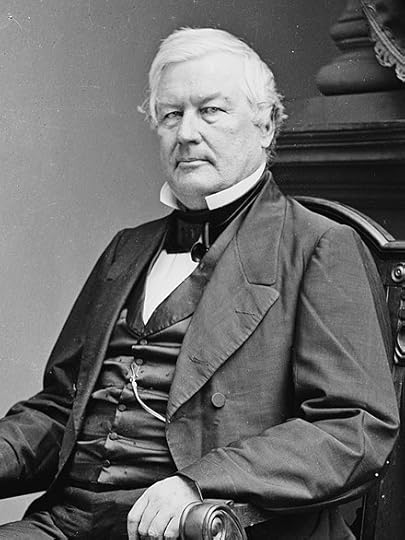
I have been progressing through presidential biographies in chronological order, and I've hit one of America's historical doldrums: the period between Andrew Jackson (an asshole, but he at least made history interesting) and Abraham Lincoln.
Millard Fillmore, to the degree that he's remembered at all, is little more than a historical punchline today. His name is satirized in political cartoons. Fictional "Millard Fillmore High Schools" are used in 80s sitcoms and comic books to indicate "This school is a hellhole of mediocrity." As far as I can tell, in reality there are actually no schools in the entire United States named after poor POTUS #13. (The University at Buffalo, which Fillmore was once chancellor of, used to have a building named after him, but it was renamed in 2020 during the wave of cancellations of any historical white dude who ever did a racism.)
Fillmore was our second "accidental president," taking office after the death of Zachary Taylor. He served one term, declined to run for reelection, and ended up presiding over the death of the Whig Party and the rise of the Republican Party, with his attempts at striking a "moderate" position between "slavery good" and "slavery bad" manifestly a failure.
Unsurprisingly, biographies of Millard Fillmore are not exactly abundant. So, in diving into the life and times of
So, HARD MODE it is.
Robert Rayback's biography is indeed quite positive about Fillmore. Indeed, while not quite a hagiography, Rayback is fulsome in his praise, constantly describing Fillmore as principled, polite, and motivated by the best and most noble of intentions.
Millard Fillmore was a New York machine party politician who rose to the top at the height of the spoils system (you got and kept office by promising to reward political allies, explicitly with jobs and contracts). He presided over a party (the Whigs) that literally had no foundational platform or principles, and he did everything he could to hold the Whigs together to maintain political power. At the beginning of his career, he cynically joined the Anti-Masonic Party despite having no real convictions about Masons. At the end of his career, he cynically joined the nativist, anti-Catholic Know-Nothing Party despite having no real convictions about immigrants or Catholics. During his presidency, he supported the Missouri Compromise of 1850, which included the Fugitive Slave Act (which is why the University of Buffalo cancelled him 180 years later). Arguably, he had utilitarian reasons for all of these political moves, and Rayback makes a valiant effort to present it as pragmatic realpolitick motivated by a desire to hold the Union together. But, let's face it, Fillmore might have been a pleasant, well-mannered fellow, but as a president he was at best unremarkable, living in an unremarkable period, and at worst, a grifter and a useless "moderate" who was never guided by anything other than political advantage.
The Man From Buffalo
Unlike many other presidents, Fillmore grew up poor. His father was an unsuccessful tenant farmer in upstate New York. Young Millard, hoping to make something of his life, decided he liked the law, and got himself apprenticed to a Quaker lawyer named Judge Walter Wood.
This experience was both an opportunity and an experience for Fillmore. Judge Wood was sour, dour, and miserly, yet he advanced Fillmore money he needed for his clerkship. However, Judge Wood was also a landlord, and most of Fillmore's work for him involved evicting poor tenants. The judge also wanted control over him, and reprimanded him when Fillmore had the opportunity to make a little money on the side.
Eventually, Fillmore worked his way free of Judge Wood and became a lawyer in Buffalo. He then moved to Albany, arriving as a well-dressed dandy who looked nothing like his hayseed upbringing. Here, he got his start in politics.
Anti-Masons: the first QAnon
The Anti-Masonic movement of the early 19th century has been described, with some justification, as an early QAnon-type movement. Freemasonry had been around for a long time, and many of the Founding Fathers were Freemasons. They were (and are) an ancient fraternal order with secret signs and handshakes and a mystical bent that frequently aroused the animosity of Catholics and protestants, and spawned many conspiracy theories.
In 1826, a Freemason from upstate New York named William Morgan disappeared, in shady circumstances. Morgan was in debt and reportedly had been writing an "expose" of the Masonic Order to make a quick buck. Local Masonic lodges had him arrested, but were not able to keep him jailed. When he subsequently turned up missing, lurid tales of his abduction, torture, and execution by being thrown over Niagara Falls spread throughout New York, touching off anti-Masonic hysteria which led to the forming of a full-fledged political party devoted to removing all Freemasons from office. Even former president John Quincy Adams was drawn into the Anti-Masonic movement.
At around this time, Millard Fillmore was entering politics, under the wing of political boss Thurlow Weed, who would be his great patron and later his greatest enemy. Weed saw the Anti-Masons as a "Trojan horse" to fight his political rivals in Albany, and Fillmore rode that horse without ever leaving much record of any real anti-Masonic views. It would not be the first time that he'd sign onto a platform for political advantage without really caring what it was endorsing.
Much of the next part of Rayback's biography details the political machinations of New York in the first half of the 19th century. Having already read a biography of Martin Van Buren, whose origins were similar to Fillmore's and who also rose to become a major power in New York state politics, I already understood a little bit how things worked - and also how tedious it could be reading about the ins and out of the various factions operating out of Albany, New York City, and Buffalo.
Political parties were still a relatively new development in America; George Washington never acknowledged an actual party affiliation, and many politicians considered parties unnecessary and dangerous. Martin Van Buren was probably the first president to wholly and completely embrace party politics. By the early 19th century, political parties were definitely a thing, but they still weren't particularly defined by a cohesive set of principles or a "party platform." The early Federalists were basically those who supported a strong government and the Constitution, while the Anti-Federalists were defined by being... well, anti-Federalist. The Democrats started as Thomas Jefferson's party (Jefferson himself was reluctant to claim party affiliation), and evolved to be more or less the party of the South and agrarian interests.
Thurlow Weed, an influential New York newspaper editor, had long been a rival of Van Buren's "Albany Regency" Democrats, who held a lock on New York politics until the Anti-Masonic party disrupted it. Weed and Fillmore jumped on board the Anti-Masonic ticket, but it turned out that the 19th century version of QAnon, made up of people who believed that Freemasons were creating an invisible empire doing nefarious Satanic things in their lodges, did not have much staying power as a national issue. So eventually they created the Whig party.
The Whigs started as the party of everyone who really hated Andrew Jackson. Really, this was their only unifying trait. Besides absorbing most of the former Anti-Masons, the Whigs included everyone from Northern abolitionists (including John Quincy Adams) to Southern slaveholders (including Henry Clay). The first Whig President, William Henry Harrison, was elected on a campaign of... not being Martin Van Buren.
With Jackson and Van Buren out of office, you might wonder what held the Whigs together. The answer is that they were a self-perpetuating party mostly defined by trying to stay in power.
Not only did this present certain problems (like trying to hold Northern abolitionists and Southern slaveholders together in the same party on the principle of "We don't want to let those other guys win, do we?") but even regional Whigs were not unified. New York mercantile Whigs had different interests than upstate agrarian Whigs. Some Whigs were conservative, some were liberal. Their stance on protectionism changed according to whoever held the party reins.
Rayback meticulously details all the political and economic shenanigans that defined New York and its patronage system at the time. It is a gruesome (tedious) account of how the sausage was made, which mostly proved that Rayback actually read every one of those letters he cites in footnotes.
With Friends Like These
Fillmore was elected to Congress in 1832 on the Anti-Masonic ticket, during Andrew Jackson's presidency, and became a powerful national figure. Despite being a historical footnote today, Millard Fillmore was a big deal in his time. He engineered a tariff bill to screw over John Tyler, the Whig VP who upon succeeding William Henry Harrison as the first "accidental president" started openly opposing Whig policies. During this time Fillmore continued to correspond with Thurlow Weed; as Rayback tells it, Fillmore was relentlessly polite, charitable, and willing to give his old patron the benefit of the doubt, even though Weed kept backing Fillmore's rival William H. Seward.
Thurlow Weed became a kingmaker in New York. Fillmore was originally his friend, but they split over slavery, but more importantly, Weed's ego, as Fillmore insisted on actually maintaining autonomy. William H. Seward was openly anti-slavery, unlike Fillmore, who thought slavery was morally wrong but not wrong enough to make Southerners mad. This led to Weed and Seward conspiring against Fillmore, and this conspiring and backstabbing would continue even once Fillmore improbably found his way to the White House.
Eventually, Fillmore left Congress and returned to Buffalo to work in his law practice. However, he was too political to give up politics. Still deeply embedded in the Whig Party, he negotiated with Weed over who would be the Whig VP candidate in the election of 1848. Fillmore wanted the job but was too much a party loyalist to create a schism over it. Weed did not want Fillmore to become VP because that would give him too much power over the Whig Party (especially, the patronage appointments controlled by the White House). So Weed schemed to get the Whig convention to reject Fillmore as a candidate because "We need him as Governor of New York."
Rayback provides another detailed account of the Whig Party convention, the backroom negotiations, and the votes which led to Fillmore unexpectedly becoming Zachary Taylor's running mate.
General Zachary Taylor, a national hero after the Mexican War, was an attempt by the Whigs to repeat their success with William Henry Harrison, running a war hero military commander who had basically zero political experience. It worked. Taylor and Fillmore took the White House, handily defeating Democratic candidate Lewis Cass, in part because former President Martin Van Buren, running with the son of John Quincy Adams, split the vote with his Free Soil Party.
Taylor and Fillmore had barely had a relationship, and Fillmore was sidelined, like many afterthought VPs, while he was alive. Fillmore had been working out the division of spoils in New York with Thurlow Weed, but Weed was all the while planning to stab him in the back with the help of now New York Senator Seward. They seized control of all Whig patronage appointments throughout New York, and made a point of disempowering Fillmore and getting rid of all his appointments in his home territory of Buffalo, openly bragging about the fact that Vice President Fillmore was impotent and had no power to give anyone anything.
When President Taylor repeated history again by unexpectedly dying in office, Fillmore became the second accidental president, and Weed and his cronies were suddenly suffering a serious case of heartburn.
The Great Compromiser
When Zachary Taylor died, the Weed-Seward camp assumed Fillmore would retaliate, so they doubled down and lashed out, trying to undermine President Fillmore right from the beginning.
Fillmore tried to offer compromises, and refrained from taking back all of Weed's patronage appointments, hoping he'd see the olive branch and reciprocate. Instead, Weed and Seward stepped up their attacks and threatened to split the Whig party. At the New York convention, Seward was pressing for stronger anti-slavery planks while Fillmore wanted to stay centrist to hold the North/South Whig party together.
This was another section of the book where it was evident that Rayback was perhaps a little too enamored with his subject. Fillmore did appear to be a reasonable and forgiving man, constantly trying to work things out and show forbearance towards his supposed "allies" in the Whig Party who kept trying to screw him over. Rayback emphasizes Fillmore's very reasonable attempts at compromise, rather than pointing out that (a) he was kind of a chump (at some point it must have been obvious that Weed was the scorpion and Fillmore was the frog) and (b) his "compromises" on the issue of slavery were all about holding the Whig Party together regardless of actual principles. Rayback presents Fillmore's moderate position on slavery ("slavery is bad but let's just wish for it to go away eventually without actually doing anything about it") as reasonable, while taking at face value his position that the abolitionists were a bunch of unreasonable radicals threatening party unity.
Fillmore did face a real problem, with Southern Whigs obviously alarmed by the growing abolitionist sentiment among Northern Whigs. This was a problem he was never going to be able to solve.
He wasn't a complete failure in office, but the fact is he was just one in a string of presidents who kicked the slavery can down the road, and otherwise had a fairly unremarkable presidency.
He presided over the California Gold Rush and filibuster ventures in Cuba. He rejected the Manifest Destiny advocated by his predecessors and opposed American expansionism, while out-negotiating Britain and France, who wanted to sign a treaty with the United States agreeing that none of them would ever colonize Cuba - a proposal which, as Fillmore pointed out, was a significant concession for the U.S. and hardly any concession at all for European powers who'd more or less given up on colonialism in the New World.
One of the issues Fillmore faced during his presidency was the struggle over building a canal through Central America, which is one of the few places where Rayback actually criticizes Fillmore. The British had control over the Pacific trade and didn't want Americans to have easy access to the Pacific. They took control of San Juan, Nicaragua, ostensibly in the name of "His Mosquito Majesty," the chief of the Mosquito Indians who were under British protection. This posed a serious problem to efforts to build a canal. Fillmore negotiated with Britain to maintain peace, despite the fact that the British clearly weren't going to budge on San Juan; Rayback argues that Fillmore could have secured the area by force and built a canal many years earlier if he hadn't been so accommodating.
Whigging Out
Presidents in the 19th century were not like presidents today. They didn't necessarily want to stay in office as long as possible, they couldn't rely on becoming rich and staying in demand after they left office, and Fillmore wasn't the first to decline to run for reelection.
Fillmore wanted out, but in 1852 the Whig Party was in danger of breaking apart, and Fillmore first and foremost wanted to keep the party together. His rival William Seward backed Winfield Scott, another former general the Whigs hoped would win votes on his military record. Scott, being an anti-slavery Northerner, would have caused the Southern Whigs to revolt, so Fillmore stayed on the ballot. His original plan was to have his name withdrawn "at an opportune time" once Scott was defeated, but his friend, the legendary Daniel Webster, who had been absent from his Secretary of State duties for most of Fillmore's presidency, leaving Fillmore to do Webster's job, had wanted to be president forever. Webster, despite having very little chance of winning, stayed on the ballot, divided the Whig vote, and ended up throwing the nomination to Scott. The Southerners, as predicted, revolted, Democrat dark horse candidate Franklin Pierce trounced Scott in the election, and Millard Fillmore graciously forgave Webster as he watched the Whig Party go down in flames.
Fillmore attended Pierce's inauguration on a cold March winter day. His wife caught pneumonia, and died three weeks later. Fillmore suddenly had a lonely retirement to look forward to.
So of course he decided to run for president again.
(continued in comments)

Read
September 27, 2023See my review here. https://oldoriginalthoughts.blogspot....

November 3, 2023
Difficult going.
February 3, 2025
While a good overview of Fillmore's life, the book actually deserves more credit for explaining the general politics of an era. The author is apparently a little too enamored by Fillmore to be completely unbiased but is very thorough (sometimes too thorough) in describing the political maneuverings that took place around him.

November 28, 2021
Very informative and detailed. Well researched, but lacks a personal or emotional connection to the subject. Nonetheless, with so little written about the 13th president, this book is a must read for presidential historians.

August 10, 2022
The subject, our 13th president, was interesting. The writing at times did not always hold the attention. Fillmore’s best quality sincere and honest, not a hint of scandal. Worst quality, looked the other way on the subject of slavery as many did in his era.
Now on to Franklin Pierce.
Reading the presidential biographies update:
1. George Washington: "Washington: A Life" by Ron Chernow
2. John Adams: "John Adams" by David McCullough
3. Thomas Jefferson: "American Sphinx: The Character of Thomas Jefferson" by Joseph Ellis
4. James Madison: "James Madison: A Life Reconsidered" by Lynne Cheney
5. James Monroe: "The Last Founding Father: James Monroe" by Harlow Unger
6. John Quincy Adams: "John Quincy Adams: A Public Life, A Private Life" by Paul Nagel
7. Andrew Jackson: "Andrew Jackson: His Life and Times" by H.W. Brands
8: Martin Van Buren: "Martin Van Buren" by Ted Widmer
9. William Henry Harrison: “William Henry Harrison” by Gail Collins
10. John Tyler: "John Tyler" by Gary May
11. James K. Polk: "A Country of Vast Designs" by Robert W. Merry
12. Zachary Taylor: “Zachary Taylor” by John S.D. Eisenhower
13. Millard Fillmore: “Millard Fillmore: Biography of A President” by Robert J. Rayback
Now on to Franklin Pierce.
Reading the presidential biographies update:
1. George Washington: "Washington: A Life" by Ron Chernow
2. John Adams: "John Adams" by David McCullough
3. Thomas Jefferson: "American Sphinx: The Character of Thomas Jefferson" by Joseph Ellis
4. James Madison: "James Madison: A Life Reconsidered" by Lynne Cheney
5. James Monroe: "The Last Founding Father: James Monroe" by Harlow Unger
6. John Quincy Adams: "John Quincy Adams: A Public Life, A Private Life" by Paul Nagel
7. Andrew Jackson: "Andrew Jackson: His Life and Times" by H.W. Brands
8: Martin Van Buren: "Martin Van Buren" by Ted Widmer
9. William Henry Harrison: “William Henry Harrison” by Gail Collins
10. John Tyler: "John Tyler" by Gary May
11. James K. Polk: "A Country of Vast Designs" by Robert W. Merry
12. Zachary Taylor: “Zachary Taylor” by John S.D. Eisenhower
13. Millard Fillmore: “Millard Fillmore: Biography of A President” by Robert J. Rayback
Displaying 1 - 30 of 178 reviews