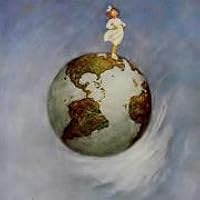
Master storyteller, social historian, and folklorist Sybil Marshall scoured English history to bring together a fascinating collection of folk tales in one glorious edition. Out-of-print for over thirty years, Overlook is re-issuing this bewitching book to enchant a new audience.From the great mass of folk tales that exists, Sybil Marshall has chosen a wide variety of stories, retelling them with wit and suspense. We have her tales of the little people and of giants, of the Devil and the saints, and supernatural and moral tales.Let Sybil Marshall lead you through the old English countryside, exploring the beliefs and legends of time gone by. This beautifully packaged edition, complete with wood engraved illustrations by John Lawrence, will entertain, educate, and ensnare audiences of all ages.
Born Sybil Mary Edwards, she was educated at Ramsey Heights Elementary School, 1919-1923, Ramsey Grammar School 1924-1932, Exhall Grange Emergency Training College, Coventry, 1948-1949 and New Hall, University of Cambridge, 1960-1962. At Cambridge she gained English Hons. Class 2:1 (Tripos completed in 2 years).
She became a teacher and lecturer in primary education and wrote a variety of books on education as well as a collection of fiction and memoirs.
Before the advent of radio, TV and the internet, people used to listen to stories and tales of people and places. Most of the time these were very local, how a rock came to be balanced on a hill, stories of battles against strange and magical creatures, accounts of local history that have become legendary and moral tales to warn people from pursuing a particular way.
Marshall had collected this comprehensive collection of folk tales over thirty years ago from all around the country and has grouped them by subject and theme. The themes are as wide ranging as Fabulous Beasts, Moral Tales and the Supernatural. All of these stories are deeply rooted in the local vernacular and were as much as a part of the old English countryside as the hills, cliffs and sea.
Choosing the stories in this collection must have been tough, but there are enough from different regions to ensure that she has chosen the best example. This is a beautiful book to hold too, not only does it have a richly patterned cloth cover, but throughout the book are John Lawrence’s stunning wood engravings that bring so much to the tales that Marshall collected. A worthy reissue of the collection and I hope that people can one again be enchanted by these myths and chronicles. 3.5 stars
A great collection, beautifully packaged. The introduction is a little daunting at 40 pages and is more of a full on dissertation, but worth sticking with for some interesting background information om the topic of Folk Tales as a whole and how this collection was assembled and organised. The stories themselves are very easy reading at a few page each, except when you have to try and decipher the odd dialect! The woodcut illustrations also add to the ambience of these olde worlde tales.
This is a very interesting read. A collection of stories clearly categorised and grouped to provide a range of tales of different lengths that can be dipped into and out of at will. All are written in an easy to read (with a few dialect exceptions that only serve to enhance the nature of the folk tale being shared) and give an entertaining representation of sitting down round the fireplace to listen to a good local 'yarn'. The stories are of a varied length as befitting the nature of the tale, some 5 pages, others 1, but this is of little consequence as each is a stand alone story. The narrative style varies from tale to tale, 4 being written in an original bollard or poetic format, others bing in the first person, although out are in the third person as a 'historical' recounting.
There is a fascinating (if long) introduction to the whole volume discussing in a more academic (yet still easy to read) style various matters relating to the nature of the stories included in the anthology, such as the etymology of the spoken (English) language, how folk tales originate and were collected in print, and the definition of what makes a folk tale. In this light, my earlier use of the word 'yarn' is perhaps a little unfair, but for the purpose of this review will be sufficient. In fact, this i tradition has made me consider the nature of my own fictional writing, family stories and specifically details in a current work in progress... but that is not for here!
The book itself is a beauty to have on the bookshelf, akin to the old fabric bound books, with ornate pictures printed from wood engravings dotted throughout the book in various sizes, and on the cover in, to represent aspects of the story being told. Though there are some typing errors (some I think are a result of typeface quirks) that irk me slightly, in general the setting out is clear and logical.
The stories lack dramatic intensity and always end rather limply. A typical story goes like this: There’s something slightly odd in a village. One day someone dies and then things continue much the same.
I think it’s fair to say that the skill of the storyteller must have been crucial for bringing these tales to life. They lose something by being written down.
My favorite story was “The White Rabbit” found in the section, “Spectral Beasts.”
I was reading this book when I was in between other books. The stories were fun but some were a little repetitive. It is definitely a good time killer.
This is an eminently page-turning collection of tales, albeit, retold rather than ipsissima verba and presented without scholarly apparatus. But the retelling aims to recreate the cadence and asides of the raconteurs from many corners of England with the author's good feel for the material as a native bearer herself. Includes etiological tales, tales of the supernatural, of saints, the devil and witchcraft, of beasts and superbeasts (Saki's phrase), of giants and other notable characters.
The story of a culture heritage, its how's and several proposed why's. The various stories are good, too. The woodcuts by John Lawrence are wonderful and worth looking at just for themselves.
A wonderful and broad series of tales and folk history, this collection reads as if it were written by someone who loves stories rather than story telling. Sadly, often rather than engaging in producing an interesting or provocative narrative the author relates event after event with no feeling for tension or timing. This leads to it feeling like more of an encyclopaedia rather than a story book at times. As a collection to read, digest, and retell favourites with your own style this collection is perfect, however. Isn’t that what folk stories are for anyway?
Also the pictures are wicked sick and couldn’t be more appropriate for the stories and tone of the book.