In Steel Town, it's always dark. In Steel Town, it's always raining...
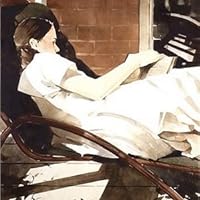
In Steel Town, the mills blaze all day and all night, making steel and even more steel to be shipped over the Magic Mountains, down the Pitch-Black River, and far, far away. The men who work in the mills work as hard as the machines that make the steel, never stopping. But when the men go home at night, a different side of Steel Town emerges -- one filled with music and neighbors, pierogies and spaghetti, churches and front porches. This gritty yet poetic world is brought to life through Jonah Winter's lyrical, rhythmic text and Terry Widener's luscious, nocturnal illustrations, whose massive figures glow with the few lights that shine through this darkness. This is a portrait of an imaginary town derived from the very real American steel towns of the 1930s, when the sky was often black as night all day and the cavernous mills belched out fire and smoke. Here is a journey to a town that time has not forgotten, just Steel Town.
Jonah Winter is the celebrated author of many picture book biographies, including Barack, which was a New York Times bestseller. His books include Here Comes the Garbage Barge, Sonia Sotomayor, Roberto Clemente, and more. A poet and a painter, Mr. Winter divides his time between Santa Fe and a small town in Pennsylvania.
I think of all of the books I reviewed this was my favorite because I'm a Pittsburgh native. This book give great vivid descriptions of what it's like inside the mill, through the illustrations one can actually feel the heat of the furnace, and molten steel. I really enjoyed this book giving my son an opportunity to know where/what the steel mills were and what it took for men to keep them running.
Steel Town did a great job on historical representation of life in the mills in the 1930 era. I would recommend this book to young children around the age of 6 years old. I think it would be a good book to use to discuss the hardship lifestyle of an American steel worker. I really loved the dark illustrations. They worked perfectly with the dark dirty steel mill workplace. The book was also very poetic and rhythmic and easy to enjoy. It kept your eyes very busy enjoying the illustrations.
I think this book, which details the lives of men who work in a steel mill, will appeal to a very specific reader, one who is fascinated by factories and large machines. Everyone else will become bored with the text.
Nice book to introduce kids to iron and steel mills, how steel is manufactured etc. My kid loved reading about molten iron and coal etc. The content (both illustrations and the text) could have been better.
A great book to introduce children to a whole different world: working in mills in the 1930s. Filled with great imagery, vivid illustrations, and lyrical text - Steel Town was great at evoking what it might feel like. It is also a great potential conversation starter about so many things.
"Steel Town is always dark and the street-lamps are always lit.
Steel Town honors the cities, factories, and men dedicated to producing iron and steel during the depression. Winter's poetic text outlines the steps in the manufacture of iron and steel, while showing the rhythm of life in a factory town.
Terry Widener's illustrations mimic depression era social realism, and his colors are dark and rich browns, blacks, and grays. Workers, machinery, and sky are all lit by the glow of the huge furnaces of molten metal. The factory machinery is huge, but the nearby workers appear large and strong.
The language of the text and the views of giant factories with their train cars, conveyors, and blast furnaces will attract the interest of boys (and girls) who are fans of dinosaurs, trains, and the McMillans I stink and I'm mighty books.
Steel Town would be a great one-on-one read with a machinery fascinated 3 to 5 year old, or a good read aloud to a class of early elementary students. It could also be used in a unit on factories and the processing of natural resources, of special interest to those in states with a history of mining or iron and steel production.
This book was very informative and provided an overview, but I felt like it was just facts and did have any connection that drew the reader in. The pictures did an okay job and showing us what it looks like, however, to me they seemed rather boring. The details about the processes of the steel mill as well as the jobs were explained well. I feel like if the author would have added information about why steel mills were important and what their products were used for then it might have been more intriguing. I did like that the pictures were a little dull to show the dirtiness. I think that this book would still be good to use in a classroom for the explanations it gives and then before or after reading the book you can talk about why steel is important and how it benefits us in order to make it more relatable to the kids.
This book tells the story of a steel town that is sent in the 1930s. There aren't really any main characters to the story, but rather the author provides an overview of the different jobs people would be doing within the town. The images provide a great visual to what is being described on the page. The images are also all dark, which shows how dark and dirty many of the steel towns were during this time period.
This book would be great for upper elementary through high school. Students could either use this as a preview to the industrial revolution in the United States or could read this after they've learned some background information on the time period.
I thought this book was fantastic. I read it to my six year old son and he was enthralled. This book hit close to home, as my family has lived in steel country since the first decades of the 1900's. it shed light onto the depression which still permeates the culture, which i had always attributed to the decline of the steel industry in the 70's 80's, but now see that the steel industry was, even in its peak, a hard, disheartening, and crushing industry on the people who worked and lived in steel towns. I was delighted with the eastern church scene, my son immediately exclaimed "that's our church, mommy!".
I thought this historical representation of the mills' "strong backs, bones, muscles, and sweat" was gritty, raw, and very affecting. The author is from Pittsburgh, a famed former steel town. One gleans the impression that the story is about Pittsburgh as well, with the mentioning of the Birmingham Bridge. The basic theme and nostalgia regarding hard work, community, and the simplicity of the "way things were" is quite generational and very much worth sharing with today's children living in modern-day, albeit bygone, steel towns, especially for the sense of city and cultural origin that is proffered through the text and illustrations.
A throw back in time, Steel Town by Jonah Winter, is a look at what life was like in one of Americas steel towns back in the 1930s. The impressive illustrations and lyrical text captivate the reader and draw them into a time of long ago. Winter uses literacy techniques such as repetition and onomatopoeia to capture the hardships of the time, men and machine working tirelessly all day long until it is time to go home.
I found the repetition strange and without use to the narrative or lyricism. The words and pictures were dark; while evocative of their subject, this was too dull and dreary to engage my children - even I struggled to continue. The interesting bits about the people and the town were reserved to the first few and last few pages. The long drawn out explanation of the step by step process was too much for a story and too little to be truly instructional. Overall, sadly, we didn't like this book so much.
I really enjoyed this book because I think it is sometimes hard to find ones to educate younger students about the way people lived in the early 1900s and during the Great Depression. It talks about people living and working in the Steel Town and in steel mills and iron mills. It would be a great introductory book to start talking about this time period, and also is an enjoyable read for 2nd or 3rd graders.
Great use of color in the illustrations, and I think it would work well either for kids who are fascinated by machinery or as an introduction (perhaps in a classroom setting) to steel town life in the 30s. The picture of cheerful women chatting over the fence and trading vegetables felt totally out of place, but otherwise I thought the illustrations were really effective.
Steel Town, an historical fiction of a true depiction of 1930's industrial steel towns. The story reveals the never ending day to night and night to day grind of iron mill industry. The illustrator does a wonderful job with visuals of smoke filled sky using pitch black, gray, and blue and blazing red and bright yellow of melted iron to steel.
I'm conflicted about this story. While the illustrations are fantastic and the repetition really brings a nice flair to the story, giving it an almost mechanical nature to make the reader seem right there in Steel Town,there's also a tragic, fatalistic outlook, a sort of hopelessness where hard work leads to no end.
This book was cool for two reasons. One, I read it with a six-year-old who was captivated by how steel and iron were made back in the 1930s. Two, not only did I feel immersed in Steel Town while I read it but I was totally curious what it would be like to walk on the molten iron with wooden shoes or wear a protective suit in a 3,000 degree Fahrenheit climate.
i liked the illustrations; thought they went well with the text. The text however, was too informational for what is a picture book. Perfect for anyone looking to learn about making steel and iron; very technical in that regard.
I actually found this kinds of depressing! The illustrations are tremendous, and the story illuminating as to the steel making process, but it made the lives of these men seem very hard. Perhaps that was the point.
Steve says: I liked it of course. Good for any kid but especially boys into trains, models, factories with great illustrations. A lot of text talking about the old country from which steel workers came to the U.S. Likely in PA, OH , WVA...steel country.
This was an interesting book that told about the production of steel and the life of a steel worker from a simple perspective. The dark drawings definitely set the mood. Not a very glamorous life.
This story was a good story that talked about the steel mills and how they worked. It was very informational and taught me what happened during these times. I respect steel mill workers more now since this story informed me what happened during these days.
Wonderful illustrations. Great text format. Would be a good read aloud to teach rhythm. Talks about the harsh realities some people have who work in jobs that are dirty and dangerous. Gender bias, women cooking, men working and then just relaxing.
We love this book. The boys especially love the topic of iron-making and steel-making. I love reading it aloud. Filled with poetic alliteration, consonance, and repetition, the text reinforces the texture of the mills--hard, hot molten metal-making.