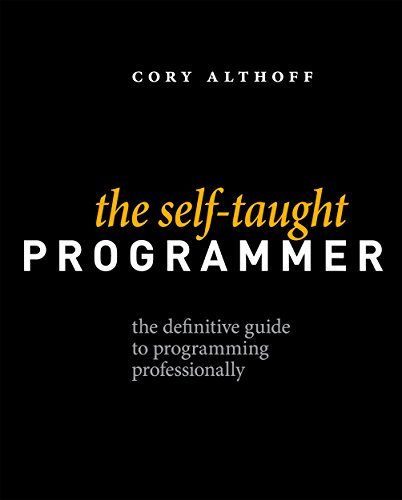
For a reasonable start to your programming journey.
The book is divided into five sections, each addressing a critical aspect of programming and professional development:
### **1. Learn to Program**
- **Focus on Python:** Python as the language to introduce foundational programming concepts.
- Topics include:
- Variables, loops, conditionals, functions, and object-oriented programming.
- Debugging techniques and common programming mistakes.
- Small projects and solving exercises.
### **2. Learn to Use Tools**
- **Version Control:** Introduction to Git and GitHub for managing code and collaborating with others.
- **Command Line Basics:** Covers fundamental shell commands for navigating and managing files.
- **Writing Tests:** Highlights the importance of testing and introduces unit testing with Python.
- **Understanding IDEs and Text Editors:** Guides readers on choosing and using development environments effectively.
### **3. Learn to Work with Others**
- Emphasizes collaboration and teamwork, which are essential in professional settings.
- Topics include:
- Code reviews: How to review and accept feedback constructively.
- Agile development: Basic principles of Agile and working in sprints.
- Writing clean and maintainable code: Focus on readability and modularity.
### **4. Learn Computer Science**
- Introduces fundamental computer science concepts:
- Data structures: Lists, dictionaries, stacks, and queues.
- Algorithms: Sorting, searching, and recursion.
- Big-O Notation: Basic understanding of algorithm efficiency.
- Provides an accessible overview without overwhelming beginners.
### **5. Land a Job**
- Guides readers on how to transition into the professional world of programming.
- Topics include:
- Building a portfolio: Importance of showcasing projects on GitHub.
- Preparing for interviews: Common technical and behavioral questions.
- Networking and job hunting: Leveraging LinkedIn and professional connections.
- Importance of continuous learning to stay relevant in the field.
### **Key Takeaways**
1. **Programming is a learnable skill.**
- Anyone can learn to program with dedication and consistent practice, even without formal education.
2. **Projects are essential for growth.**
- Build real-world projects to solidify your skills and demonstrate your abilities to potential employers.
3. **Master the tools of the trade.**
- Learn Git, testing frameworks, and command-line basics to work efficiently in professional environments.
4. **Understand core computer science concepts.**
- Knowing algorithms, data structures, and problem-solving techniques is vital for technical interviews and career growth.
5. **Focus on communication and collaboration.**
- Writing clean code and working effectively in teams are as important as technical skills.
6. **Stay persistent in the job search.**
- A strong portfolio, networking, and interview preparation can help you break into the industry.