Jump to ratings and reviews
Rate this book

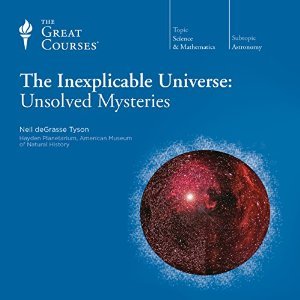
The Inexplicable Universe: Unsolved Mysteries

Rate this book
Everything we now know about the universe-from the behavior of quarks to the birth of entire galaxies-has stemmed from scientists who've been willing to ponder the unanswerable. And with the advent of modern science, great minds have turned to testing and experimentation rather than mere thought as a way of approaching and grappling with some of the universe's most pressing and vexing dilemmas. So what is our latest picture of some of the most inexplicable features of the universe? What still remains to be uncovered? What are some of the next avenues of exploration for today's chemists, physicists, biologists, and astronomers? Pondering the answers to these and other questions is a great way to appreciate the grandeur and complexity of the world around you, better understand and discuss news and developments in science, and spark further interest in some of science's many exciting areas of study. "We know a lot about the universe. But there's even more that we don't know,"says astrophysicist and Professor Neil deGrasse Tyson, director of the Hayden Planetarium, an award-winning lecturer, and one of the world's foremost experts on the secrets of the universe. And his course The Inexplicable Universe: Unsolved Mysteries is the perfect gateway into this mind-bending and eye-opening subject. Each of these six self-contained lectures is a marvelous journey to the frontiers of the known (and unknown) universe and introduces you to tantalizing questions being addressed by the world's top scientists. Undeniably engaging and fascinating, this lecture series is a wonderful entrée to scientific pursuits that lie at the very heart of the history and nature of our universe.

An Informed Scientific Conversation

Central to The Inexplicable Universe is the way it takes you deep into hidden layers of the universe in a manner that is extremely accessible. Rather than a stern lecture given before a podium complete with confusing mathematics, Professor Tyson's lectures have the feel of an informed conversation that manages to be both thorough and easy to grasp. With each of the inexplicable mysteries he lays bare for you, Professor Tyson introduces you to the history behind it, lays out the science that has helped us grasp it, explains what researchers have discovered to date, and reveals what we have yet to discover. And while the topics explore subjects in everything from quantum mechanics to cosmology to string theory, you'll never feel overwhelmed by what you're learning. In fact, you're more likely to find yourself intrigued by just how much we know-and curious about what the near future will possibly reveal.

Explore Fascinating Territory

So what territory will you chart in this course? Here are some of the inexplicable ideas you'll investigate in these lectures. Neutrinos: Discovered in 1956, these fast-moving, ghostlike particles are made in abundance in the sun's core. They hardly interact with matter; it takes a light-year's worth of lead (5.8 trillion miles) to stop a neutrino. Not only that, but 65 billion neutrinos pass through every centimeter of your body that's facing the sun every second of every day. String theory: This astounding theory offers the hope of unifying all the particles and forces of physics. In the past several decades since the dawn of string theory, it's been imagined that all the fundamental particles we see and measure are just the manifestation in our dimension of strings vibrating in higher dimensions and at different frequencies. Quantum foam: This idea posits that when the fabric of space and time is so tightly curved on itself, space-time is less a smooth curve and more like the froth on a latte. In this state of matter and energy, quantum fluctuations can spawn entire universes, each with slightly different laws of physics within them! In addition, you'll also get a peek at what it would be like to travel through a black hole, ponder the possibility that life on Earth originated in debris from Mars, probe the supposed existence of multiple universes, and even imagine the possible end of the universe itself.

A One-on-One Chat with a Renowned Science Educator

Professor Tyson is renowned throughout the scientific community and the media for his vast knowledge, his penetrating insights, and his amazing ability to make even the most intimidating areas of science accessible, engaging, and-most of all-enjoyable. He brings the same inviting tone and sharp intellect to The Inexplicable Universe as he does to his range of media appearances on popular television programs. Due to its unique subject matter The Inexplicable Universe takes a highly visual approach. Many of the fascinating subjects in the course, such as black holes, string theory, and multiple universes are best demonstrated visually and Professor Tyson's lectures feature expertly crafted computer animations, explanatory diagrams, high resolution photographs, and other instructive visual elements. In order to...

4 pages, Audible Audio

First published January 1, 2012

28 people are currently reading
3310 people want to read

About the author

Neil deGrasse Tyson

92 books285k followers
Neil deGrasse Tyson was born and raised in New York City where he was educated in the public schools clear through his graduation from the Bronx High School of Science. Tyson went on to earn his BA in Physics from Harvard and his PhD in Astrophysics from Columbia.

In 2001, Tyson was appointed by President Bush to serve on a twelve-member commission that studied the Future of the U.S. Aerospace Industry. The final report was published in 2002 and contained recommendations (for Congress and for the major agencies of the government) that would promote a thriving future of transportation, space exploration, and national security.

In 2004, Tyson was once again appointed by President Bush to serve on a nine-member commission on the Implementation of the United States Space Exploration Policy, dubbed the “Moon, Mars, and Beyond” commission. This group navigated a path by which the new space vision can become a successful part of the American agenda. And in 2006, the head of NASA appointed Tyson to serve on its prestigious Advisory Council, which guides NASA through its perennial need to fit ambitious visions into restricted budgets.

In addition to dozens of professional publications, Dr. Tyson has written, and continues to write for the public. From 1995 to 2005, Tyson was a monthly essayist for Natural History magazine under the title Universe. And among Tyson’s fifteen books is his memoir The Sky is Not the Limit: Adventures of an Urban Astrophysicist; and Origins: Fourteen Billion Years of Cosmic Evolution, co-written with Donald Goldsmith. Origins is the companion book to the PBS NOVA four-part mini-series Origins, in which Tyson served as on-camera host. The program premiered in September 2004.

Two of Tyson’s other books are the playful and informative Death By Black Hole and Other Cosmic Quandaries, which was a New York Times bestseller, and The Pluto Files: The Rise and Fall of America’s Favorite Planet, chronicling his experience at the center of the controversy over Pluto’s planetary status. The PBS NOVA documentary The Pluto Files, based on the book, premiered in March 2010.

In February 2012, Tyson released his tenth book, containing every thought he has ever had on the past, present, and future of space exploration: Space Chronicles: Facing the Ultimate Frontier.

For five seasons, beginning in the fall of 2006, Tyson appeared as the on-camera host of PBS NOVA’s spinoff program NOVA ScienceNOW, which is an accessible look at the frontier of all the science that shapes the understanding of our place in the universe.

During the summer of 2009 Tyson identified a cadre of professional standup comedians to assist his effort in bringing science to commercial radio with the NSF-funded pilot program StarTalk. Now also a popular Podcast, for three years it enjoyed a limited-run Television Series on the National Geographic Channel. StarTalk combines celebrity guests with informative yet playful banter. The target audience is all those people who never thought they would, or could, like science. In its first year on television and in three successive seasons, it was nominated for a Best Informational Programming Emmy.

Tyson is the recipient of twenty-one honorary doctorates and the NASA Distinguished Public Service Medal, the highest award given by NASA to a non-government citizen. His contributions to the public appreciation of the cosmos have been recognized by the International Astronomical Union in their official naming of asteroid “13123 Tyson.” And by zoologists, with the naming of Indirani Tysoni, a native species of leaping frog in India. On the lighter side, Tyson was voted “Sexiest Astrophysicist Alive” by People Magazine in 2000.

More recently, Tyson published Astrophysics for People In A Hurry in 2017, which was a domestic and international bestseller. This adorably readable book is an introduction to all that you’ve read and heard about that’s making news in the universe—consummated, in one plac

Ratings & Reviews

What do you think?
Rate this book

Friends & Following

Create a free account to discover what your friends think of this book!

Community Reviews

5 stars
875 (39%)
4 stars
932 (41%)
3 stars
356 (15%)
2 stars
53 (2%)
1 star
20 (<1%)
Displaying 1 - 30 of 244 reviews
Profile Image for Melindam.
885 reviews407 followers
December 23, 2024
"Matter tells space how to curve, and space tells matter how to move."

Loved this so much!

It was 2 years ago when I listened to Astrophysics for Young People in a Hurry written and narrated by Neil deGrasse Tyson and I absolutely enjoyed it, even more so, because he kind of helped me understand a little about all that stuff with the Universe and quantum etcetera. This is no mean feat as unfortunately (or maybe fortunately, who knows?) I find that my mind lacks the elasticity of our continually expanding universe. I cannot seem to grasp all that science and transcendency or to follow all that is going on out there. Neil deGrasse Tyson made me feel a bit less ignorant or at least made me feel that my ignorance is kind of not my fault, really.

This series of short lectures -courtesy of The Great Courses series and Audible- works in a similar vein and are also fascinating: instructive, entertaining and inspiring. Wish I had a teacher like him when I learned physics/chemistry. :)

We are given some historical overview and intro of the development of astronomy, math, physics and how its representatives were trying to make sense of it all and how the course was/is constantly corrected to where they currently are and where they are hoping to get.
We are also offered some mix of facts and scientific speculation about life on and possibly outside of Earth and we learn that the chemical sequences of most organic molecules on Earth are oriented "left-handed" (when transcribed with chemical formula) while the ones found on meteorites are 50-50% left-handed and righthanded. :)

Of course, the matter of the black holes is something that won't/cannot be avoided. And I learned that "death by black holes" (aka falling into them) is called -and I love this word- spaghettification.

From black holes, we obviously jump to dark matter, aka the missing mass and dark energy vs gravity and then get to contemplate the multiverse theory a little. :)

Also, my takeaway is that astrophysics has some things to thank for to literature. Like the word "quark" (elementary particles creating protons and neutrons - yes, I just learned this from this listen!) comes from Finnegans Wake by James Joyce.

– Three quarks for Muster Mark!
Sure he hasn't got much of a bark
And sure any he has it's all beside the mark.


Going into more details about the original meaning of "quark" (English or German or Slavic??) would lead to further etimological debates, but currently I am busy thinking transcendental thoughts about stars and galaxies, so maybe later I will follow through with that. ;)

It is a short listen, just over 3 hours and I absolutely recommend it. :)
Profile Image for Gendou.
633 reviews332 followers
January 27, 2019
I love Neil Tyson. I loved him in Cosmos. I loved several of his other books. But this one is 40% garbage and 60% boring. The reader who is unfamiliar with cosmology may find that 60% exciting and be easily fooled by the other 40%. Instead of this book this reader should check out my cosmology bookshelf for some real 5-star winners.

Here is a list of things Tyson gets inexcusably wrong in the book.

* He claims it audacious to expect to be able to communicate meaningfully with aliens from another planet. This is in the context of SETI which searches for radio communications. He concludes this because we differ from Chimpanzees by only 1% of our DNA, but can hardly communicate with them. This is a false analogy because Chimpanzees can't build fucking radio antennas. If they could, I promise you I could have a very interesting conversation with them. Aliens may not share any DNA in common with us, but they will share plenty in common because we both live in the same universe. We both know the same laws of physics, and can bootstrap communication from math, on to physics, chemistry, game theory, etc. until we have enough common ground to say anything worth saying.

* He claims there is an "entire other spacetime" that's "opened up before you" in the center of "a black hole that is rotating". He claims this is an "entire other universe that is not the one you just came from". I don't even know what this means second claim means, but the first one is simply untrue for all black holes, and I don't know why he's singling out Kerr black holes. http://jila.colorado.edu/~ajsh/inside...

* He claims "every attempt to explain the Pioneer anomaly has failed" and that it "remains unsolved to this day" which was untrue when this lecture was published. Seriously, ten seconds on Wikipedia is enough to prove this false. He has no excuse whatsoever for this apparently dishonest mystery mongering. This is the only true "mystery" in this book subtitled "unsolved mysteries". But it's been conclusively solved! https://en.wikipedia.org/wiki/Pioneer...

* He claims we "know nothing about" dark matter. This, too, is mystery mongering. We know a lot about it. We know about its distribution in galaxies and galaxy clusters. We know it's non-baryonic matter which doesn't interact with the electromagnetic force. We know it behaves like a cold gas. Sure, we don't know where it fits into the standard model. Same with the graviton, if one even exists. But you can't say we "know nothing about" gravity! That's ridiculous sensationalism and profoundly misleading to readers. https://en.wikipedia.org/wiki/Dark_ma...

* He describes MOND as though it were a viable candidate for explaining dark matter. This hasn't been true for a decade. MOND is dead. https://en.wikipedia.org/wiki/Modifie...

* He implies that Earth's orbit around the Sun might be expected to come under threat when Andromeda collides with the Milky Way. But this won't happen for 4 billion years. The Earth will be gone by then. And even if it were around, the chances of a star coming close enough to interfere with planetary orbits is nearly zero. This is as true today as it will be when these two galaxies collide. The collision takes place on a high distance scale. Individual stars won't generally be at an elevated risk to collide with one another. https://en.wikipedia.org/wiki/Androme...

* He claims quantum mechanics includes "quantized space and time". Classical quantum mechanics is based on the quantization of particle energy levels, but doesn't include a quantization of spacetime. This seems like a problem and it's why some theorists are working on LQG. https://en.wikipedia.org/wiki/Loop_qu...

* He claims our sun is "kind of average, actually". Bullshit! Our Sun is a G class star. Only 3.5% of known stars are in this class. About 90% of stars in the universe are smaller than our sun. https://en.wikipedia.org/wiki/Sun http://www.atlasoftheuniverse.com/sta...
Profile Image for UniquelyMoi ~ BlithelyBookish.
1,097 reviews1,760 followers
March 19, 2015

4 inexplicably fascinating stars!


Neil deGrasse Tyson is absolutely brilliant narrating this set of lectures in Audible's The Great Courses series. His excitement for these unsolved mysteries is apparent and that made me even more fascinated by what I was learning. It was nice to be able listen to a single lecture, then not have to recap when I started listening again because these lectures are topic-unrelated to each other.

Overall, my favorite part of The Inexplicable Universe: Unsolved Mysteries, is getting the behind the scenes scoop on how some of our greatest discoveries were made, and why some of our most thought provoking questions remain unanswered.

This is a must listen for anyone who finds themselves looking at the world around them and wondering...

Blurb...

Everything we now know about the universe - from the behavior of quarks to the birth of galaxies - has come from people who've been willing to ponder the unanswerable. And with the advent of modern science, great minds have turned to testing and experimentation rather than mere thought as a way of grappling with some of the universe's most vexing dilemmas.

So what is our latest picture of some of the most inexplicable features of the universe? What still remains to be uncovered and explored by today's scientists?

"We know a lot about the universe. But there's even more that we don't know," says astrophysicist and professor Neil deGrasse Tyson, director of the Hayden Planetarium, an award-winning lecturer, and one of the world's foremost experts on the secrets of the universe. This course, which has been honored with a 2013 Telly Award for Outstanding Educational Program, features six self-contained lectures that transport you on a marvelous journey to the frontiers of the known (and unknown) universe and introduce you to tantalizing questions being addressed by the world's top scientists. Engaging and fascinating, this lecture series is a wonderful entrée to scientific pursuits that lie at the very heart of the history and nature of our universe.

Disclaimer: Please note that this recording may include references to supplemental texts or print references that are not essential to the program and not supplied with your purchase.


Profile Image for Clif Hostetler.
1,280 reviews1,033 followers
April 10, 2015
These are six lectures by Neil deGrasse Tyson who's recent hosting of the "Cosmos: A Spacetime Odyssey" series has made him a popular explainer of science. Most of the topics covered are things I've heard before, but it's always good to hear them repeated in simple easy to understand language.

I don't remember hearing about the “Pioneer anomaly" before (ref. Lecture 5). The tracking of the two Pioneer satellites over a thirty year period has indicated that they were subjected to more deceleration while leaving the solar system than can be explained with our current knowledge of physics. He said nobody's been able to explain this anomaly. I was surprised by his statement because the cause is obvious to me. The satellites are decelerating because they are bumping into all that "dark matter" that makes up the universe. ;)
Actually, this Wikipedia article says that the anomaly has been explained (with no help from me).

The following are descriptions of the contents of the lectures copied from the publisher's website.

Lecture 1 -- History’s Mysteries
Science history is filled with puzzling mysteries that were only solved with modern science’s focus on experimentation instead of thought. Here, take a closer look at concepts that were once unexplainable but, thanks to modern physics, are now better understood. You’ll focus on two such former mysteries: the existence of an invisible “aether” through which light and sound were believed to travel and the orbit of Mercury, which seemed (to earlier scientists) to violate Newton’s fundamental laws of motion.

Lecture 2 -- The Spooky Universe
Did you know that electrons, discovered in 1897, have never actually been observed by scientists? Or that quarks can only be studied in pairs? Or that as you travel faster or find yourself in a higher gravity, time ticks more slowly for you? Delve into these and other mind-warping facts and insights about the fundamentals of matter in a lecture that covers everything from particle physics to quantum tunneling to thermonuclear fusion.

Lecture 3 -- Inexplicable Life
Join Professor Tyson on a fascinating investigation of the possible origins of life in the universe. Why was Jupiter believed to be a good environment for life in the 17th century? Why is there only one single “tree of life” on Earth instead of multiple ones? How do extremophiles help scientists study life’s genesis? Could life have come to Earth from another planet? And what do we mean when we hope to find examples of life that is “intelligent”?

Lecture 4 -- Inexplicable Physics
Among the many topics you’ll learn about in this lecture are the discovery of more elements on the periodic table; muon neutrinos, tao particles, and the three regimes of matter; the secrets of string theory (which offers the hope of unifying all the particles and forces of physics); and even the hypothetical experience of traveling through a black hole.

Lecture 5 -- Inexplicable Space
Scientists have made astounding progress in their grasp of the universe. But what remains to be understood? Investigate some perplexing aspects of space that science has uncovered in the last half-century. Learn about the mysterious trajectory of the Pioneer spacecraft (known as the “Pioneer anomaly”). Explore two of the longest-standing problems in astrophysics: dark matter and dark energy. And even try to map the shape of space-time.

Lecture 6 -- Inexplicable Cosmology
Take a fascinating trip through dimensions higher than our own. You’ll discover how quantum physics and string theory have opened our eyes to the possibilities of quantum foam, the multiverse, antimatter, and tachyons. Also, join Dr. Tyson for a preview of the long-term fate of the universe (including the collision of galaxies, the burning out of stars, and the decay of orbits into black holes).
Profile Image for Xavier Patiño.
207 reviews68 followers
December 13, 2021
This was a quick and short course narrated by the great astrophysicist Neil DeGrasse Tyson! He speaks about some of the great mysteries that plagued the minds of ages past and how we were able to solve them after technology improved (wiping away some silly superstitions as well.) After some interesting history Tyson tackles the current quandaries that befuddle the minds of astrophysicists and cosmologists today.

I found the courses engaging and they provided great food for thought. NdGT has a great sense of humor and makes learning difficult concepts fun. Highly recommended!
Profile Image for Linda ~ they got the mustard out! ~.
1,893 reviews139 followers
September 13, 2019
I always loved science and math back in my school days, and I love to look up at the stars and wonder what's out there, how we got here (we might be the Martians!), and what I might be doing in another dimension or alternate universe. And yet, even though I've seen this guy's name pop up from time to time, I probably never would've listened to this if it weren't for ERB's Sir Isaac Newton vs Bill Nye rap battle. (Warning: that rabbit hole is deep. Click at your own risk.) 😉

This is a delightful series of lectures by astrophysicist Neil deGrasse Tyson, in which he talks about the universe, its many mysteries, what we know (very little) and what we don't know (a lot). His enthusiasm is infectious and he provides some history and the development of scientific theory and discovery along with delivering some of the great unknowns of our universe and our existence.

If you're not deep into science - or decades away from your last science class, like me - this is an easily accessible series, six lectures in three hours. You'll learn some things (like spearmint and caraway are the exact same molecular structure), have your memory jogged (lightyear experiments for the win), and just have a blast for a few hours listening to a guy who loves what he does.

I have a few other of his audiobooks on my library wishlist that I'll be bumping up after this.
Profile Image for Lexxi Kitty.
2,060 reviews476 followers
October 3, 2020
I like Tyson, for the most part. I thought this would be like Cosmos. At least the part I saw. Instead it was like watching a particularly smart guy randomly wander through topics small & large, occasionally even things of an outer space nature.

Many times I was thinking 'well, this is boring, though I assume it'll lead somewhere'. It almost never lead anywhere. One example: talking about atoms, neutrons, electrons, quarks, etc. I already knew these things and am not fascinated with them. Figured mentioning was a foundation to talk about something deeper. It didn't get deeper, at least not with this particular set of factoids.

Rating 3

October 2 2020
Profile Image for  Cookie M..
1,436 reviews161 followers
October 6, 2022
Mind expanding. All the things about science that delight me and confound me.
Profile Image for Rodica.
466 reviews28 followers
January 24, 2021
I love myself a Neil deGrasse Tyson. This is one of the Great Courses, a collection of lectures Audible offers. He discusses what he knows best - science, Cosmos, our knowledge and the efforts made to acquire, but also, the part sometimes overlooked, our limitations. At least half of the actual scientific information flew way over may head, as per usual, but the philosophical and moral layers are the same as in his other books - his awe and fascination in front of such a mystery and such an opportunity to learn and explore, his humbleness in front of the vastness of questions that still lay ahead of us, his understanding of our infinitesimal place in all of this, almost to the point that we can’t really grasp these concepts (look, I know I’m not smart enough to study these matters), but also him being proud of what was actually achieved so far. I’ve read some reviews critiquing some of the points he made. I can’t really expand on that, as I have no real clue (refer to my entire review so far :), but, strictly IMHO, this is not a course for future cosmologists. This is starting point for fellow laymen. And a good reminder of the paradox of our lives - short and potentially insignificant in the grand scheme of things, but also full of potential, as long as we keep our minds open and alert.
Profile Image for Hyzie.
Author 1 book61 followers
February 13, 2020
Neil deGrasse Tyson is *so* excited about the universe it's impossible not to be excited with him. He absolutely makes this audiobook, which would have been interesting to begin with, an amazing experience.

A few of my favorite quotes:

Kids love black holes like they love the t-rex, and I think it's because each of these things can eat you, and anything that can eat you you give the highest respect.

Dark matter's just a placeholder name. We could easily have just called it Fred…Dark matter I'll call Fred and dark energy I'll call Barney


This was interesting and full of some fascinating unsolved mysteries, and it made me want to dive a bit deeper. I haven't done a ton of study of the universe since school, and given that Pluto lost and regained its planetary status since then, there's probably a lot of other stuff that has changed as well. This has pointed me to a few things I'm interested in studying.

Profile Image for AndrewP.
1,656 reviews45 followers
June 2, 2015
This audio book is actually a set of 6 lectures published by The Great Courses company. There is also a DVD version available, but the one I had was the audio only one available from Audible.

Prof Tyson delivers these lectures in his own unique style and offers some interesting explanations for scientific laws and principles. For example; when you suck up a piece of spaghetti it starts off really slow, then whips up and slaps you in the face. That's due to the Conservation of Angular Momentum :) That's one of the simpler examples as the level of these lectures is a bit higher than people may have seen on Cosmos. Being a science nerd, there was not a lot here that I didn't already have a fair idea about. That's not to say I didn't learn anything, I did. I was not aware that the terms 'dark matter' and 'dark energy' are actually just placeholders for something the math says should exist. We don't have a shred of evidence that they actually exist, or if we could even detect them.

A good listen if you're a science student and have a reasonable grasp of astrophysics etc.
Profile Image for Jams.
518 reviews25 followers
January 15, 2015
This has been fun and informative.

I will admit I didn't understand much about the lecture on the periodic table. That beast has always baffled me. I really enjoyed the lecture on black holes and the expanding universe.

The professor's poking fun at anyone who looks for "the hand of God" in the mysteries of the universe was a bit annoying. But, after all, I am listening to his lectures to hear his opinion, not my own.
Profile Image for Katie Cunningham.
Author 15 books25 followers
January 19, 2015
I hadn't listened to a Great Course before, but after hearing this, I ran out and put a bunch of them on my wishlist.

Dr. Tyson has a wonderful speaking voice, and the topic is absolutely engaging. Even if you're a science and space nerd, give this a listen. He goes over the parts of the universe that were previously unexplained (and why that was), and explores what we can't currently explain with our current models.
Profile Image for Nicole (bookwyrm).
1,357 reviews4 followers
November 6, 2017
This is a good book, and I like the "unsolved mystery" angle. I do recommend spacing out Dr. Tyson's books, though, rather than reading several of them all in a row (the way I did) since he covers a lot of the same material. (It makes perfect sense, since this is his field of study. But I think I'd have gotten more out of this one had I not listened to it so close to "My Favorite Universe" and "Astrophysics for People in a Hurry".)
Profile Image for Suzanne.
1,802 reviews
October 27, 2017
I'm glad I decided to listen to this one. I loved his enthusiasm for the subject, and it was very accessible and VERY interesting.
Profile Image for György.
121 reviews12 followers
September 30, 2018
Oookay...
The 100% of life on Earth is left handed and so The Inexplicable. Why I expected something more? It was prof. Tyson and he came to the "The Teaching Company" then I expected something more than 6 lectures scrambled in hurry. Sorry! When you're stars, some of us expect from you to provide output over average. Mea culpa.
Profile Image for Kristi Richardson.
732 reviews34 followers
January 5, 2015
This is a short course on the Universe by Neil de Grasse Tyson which I enjoyed but in some ways it wasn't as good as his television show on the same subjects. Listening isn't as fun as seeing and hearing!

The 6 classes are as follows:
1.History's Mysteries
This class talks about some things that were mysteries but can be explained now with our current knowledge. Examples are the course of Mercury and the mysteries "ether" that scientists believed the Universe was made of.

2.The Spooky Universe
This class gives you examples of weird things that are ongoing within the Universe. The fact that in 1897 electrons were "discovered" but no one has still ever seen one. We learn about particle physics and thermonuclear fusion.
3. Inexplicable Life
This course was one of the best to me. Professor Tyson talks about how life began, and why aren't there different ways life evolved on the earth. Would it be possible life evolved on Mars and then came to Earth? He also talks about how arrogant humans are in searching for intelligent life in the Universe.
4. Inexplicable Physics
I never took Physics in High School so a lot of this was all new to me. He talks about string theory and what will happen if you go through a black hole!
5. Inexplicable Space
This one focuses on dark matter and dark energy. Strange stuff!
6. Inexplicable Cosmology
This class tells of quantum foam, the multiverse, antimatter, and tachyons. He also talks about the possibilities of how the earth and Universe will end. Is there anything else out there?

This was enjoyable, not as in depth as I would have liked, but it's a great course for piquing your interest in further studies.
Profile Image for Ashley.
143 reviews101 followers
June 26, 2015
This was a short but enjoyable Great Courses audiobook selection featuring six lectures on the following topics:

1) History's Mysteries
2) The Spooky Universe
3) Inexplicable Life
4) Inexplicable Physics
5) Inexplicable Space
6) Inexplicable Cosmology

I almost didn't purchase it because science isn't my greatest strength and I wasn't sure that the audio format would be most helpful for me, but it wound up being a good decision.

Tyson is an exceptional teacher, one who is able to explain topics enthusiastically and in an accessible manner while not dumbing things down to the point that you're insulted by his delivery. It's hard not to get excited about black holes, string theory, and supernovae while listening to these lectures. (It's actually pretty endearing to hear him get giddy over the thought of the world as we know it imploding.) You may not fully understand everything in the end -- I was still fuzzy on a few smaller points -- but you will get the biggest ideas and feel enriched because of it.

I will absolutely listen to this series again, which is something I don't think I've ever done with another Great Courses audiobook -- and I usually love them. It's enjoyable, educational, rewarding, and just plain fun. And maybe with future listens, I'll understand the finer points!
Profile Image for Lorena Romero.
166 reviews10 followers
May 14, 2019
Excelente explicación sencilla, clara y con el humor de siempre de Neil 👌🏻 me encanta su estilo
Este curso es básico, pero no por ello poco interesante, al contrario, básico, práctico y súper entendible. Lo amé.
Profile Image for Tracy Rowan.
Author 13 books27 followers
November 8, 2017
I think my brain is going to explode.

No, not really.  In spite of this being some deeply confusing stuff, Dr. Tyson always manages to keep it to a level where, if I don't understand it in a technical way, I get the idea he's trying to get across.  From the tiniest particles to the size of the universe, Neil deGrasse Tyson, tackles the stuff we don't know put beautifully in the context of what we do know. 

Along the way he speculates on things like multi-universes, the action of a spinning black hole (on paper, you could survive it but either way, it's a one-way trip), particles which exist beyond the speed of light, and a whole heap of other things that kept me riveted for the approximately seven hours of this course. I was left wishing that it had been twice as long, and it may end up being an audiobook that I revisit during my planned re-reads next year.

Good science writing is clear and concise, and it helps the reader/listener to grasp the gestalt of the work.  This is hella good science writing. 
514 reviews3 followers
October 6, 2015
This would easily get a 5 but I'm knocking a star off as it's too short! Tyson has an excellent method of delivery, he's approachable and easy to understand but not facile (which Brian Cox often stumbles into) and he can highlight the brilliance of science and the barrier that religion has, can and will be to it without being insulting (Dawkins trap).
He covers a range of experiments that didn't "work" and how they lead to amazing new theories. He also has some fun "think out loud" musings such as "how aliens might view our intelligence" and how we may be living at a time where the cosmos can no longer reveal vital clues (akin to how at some point in time galaxies will no longer be visible).
The only drawback is it's too short and I was cut off just as I was really getting into it.
I certainly need to try his actual books although they sadly aren't narrated by him. Guess I should track down "cosmos"
Profile Image for Adam.
Author 9 books10 followers
May 6, 2015
While this title is short by Great Courses standards (only about 3 hours) and therefore is more of a sampler than comprehensive course, Dr. Tyson brings great energy and accessibility to science. I would want anyone who "hates science" to just listen and enjoy the mysteries. The speculation about the origins of life on Earth was especially thought-provoking. While the science here isn't highly technical, nor is it highly in-depth, it is fascinating and exciting. Dr. Tyson's lectures remind us that science is not interesting just because of the facts, but because of the excitement that comes from contemplating the unknown.
Profile Image for Scott Jann.
169 reviews1 follower
November 28, 2017
This wasn’t really a book, but some lectures. Listening reminded me of reading to Michio Kaku’s book. I love Neil deGrasse Tyson’s grasp of science and how well he can explain it. One thing that stuck out to me was how he asked about what we would even have in common with aliens? He explained how chimpanzees were more than 99% identical, genetically, to humans, but we don’t have deep, meaningful exchanges with them, how could a completely, evolutionarily distinct alien creature have anything in common with us?
Profile Image for muthuvel.
256 reviews144 followers
September 7, 2016
Whoa! One of Shortest coolest lecture ever heard to understand the most complicated complex theories and discoveries that we know about our universe explained in simple ways briefly. Highly recommended for people willing to understand who aren't from scientific background.
The entire lecture is also available at YouTube https://m.youtube.com/watch?v=sIUbaPm....
Worth buy using a credit in Audible tho (lol)
Profile Image for Lucie.
167 reviews34 followers
August 26, 2018
Good, I listened to the audio version and particularly liked the enthusiasm of the narrator. However, I didn't learn much as a lot of the content was similar to "A Brief History of Time", and for me that book had much deeper explanations which made it more satisfying than this one. Nice to have a different/more up to date perspective though, I particularly enjoyed the unsolved mysteries slant. Maybe 3.5 stars (although many more were mentioned!) :)
Displaying 1 - 30 of 244 reviews

Can't find what you're looking for?

Get help and learn more about the design.