This wonderful folktale reveals some of the down-to-earth wisdom of the indigenous peoples of Chiapas. At the same time, it provides us with a fresh perspective on the struggles of the people there. They fight to conserve their culture and a vision of the world which they see as flowering with holiness—a holiness that cannot be measured in dollars or defined by politics.
Subcomandante Insurgente Marcos is the military strategist and spokesperson for the Zapatistas, an indigenous guerrilla movement in Mexico. It is his person, more than any other factor, that has pushed the Zapatista movement and the plight of the indigenous people in Mexico onto the international scene. Marcos continues to be the focus of media attention—in Mexico, in the States, and internationally, despite the Mexican government’s attempts to discredit him.
On New Year’s Day, 1994, Subcomandante Insurgente Marcos and the Zapatistas, wearing their trademark ski masks, erupted on the world scene by declaring war on the Mexican government and attacking military installations in San Cristóbal, Chiapas. Since that time, Marcos—because of his charm, intelligence and mystique—has become a post-modern revolutionary hero. In his communiqués to the Mexican people, he has often related folktales and stories that reflect the culture and wisdom of the indigenous peoples of Chiapas.
But no one seems to know who Subcomandante Insurgente Marcos is. The Mexican Government claims he is Rafael Guillen, but they’re literalists. He says he’s a Mexican like any other, born somewhere between the Atlantic and Pacific Oceans and between the northern and southern borders. He says he wears a ski mask because he is no longer whoever he was.
Subcomandante Marcos (date of birth unknown) is the spokesperson for the Zapatista Army of National Liberation (EZLN), a Mexican rebel movement. In January 1994, he led an army of Mayan farmers into the eastern parts of the Mexican state of Chiapas in protest of the Mexican government's treatment of indigenous peoples.
Marcos is an author, political poet, adroit humorist, and outspoken opponent of capitalism. Marcos has advocated having the Mexican constitution amended to recognize the rights of the country's indigenous inhabitants] The internationally known guerrillero has been described as a "new" and "postmodern" Che Guevara. He is only seen wearing a balaclava, and his true identity remains unknown.
Was not sure what to expect with this book...part of my 'trying to learn Spanish' shelf. It is a very touching story that both children and adults will like. I find that I am more and more attracted to folktales as a way to see what is truly important to a given culture. Books like this help preserve this disappearing art.
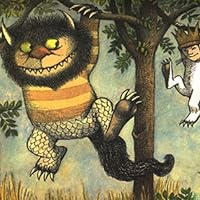
The illustrations are excellent, but the story is even better. An absolutely amazing creation story about colors. Although I wouldn't recommend it for small children as there are some mature topics mentioned, I think that older kids and adults would really enjoy it. I'll be adding it to my collection if I can :)
Actually, I read this when I bought it years ago (and it always reminds me of Borders Westwood, where I was at the time, and the fellow revolutionary/book-lovin' people who knew I'd appreciate it...) but I just reread it because why not?
Subcomandante Marcos, the public face of the Zapatista uprising in Chiapas State, Mexico, relates a traditional Mayan folktale in this bilingual picture-book, originally published in Mexico in 1996, and translated into English in 1999. The story of how colors came into the world, it follows the gods - but not, as the narrator informs us, the original gods who created the world - as they become bored with the ubiquitous black, white and gray all about them, and set out in their various ways to create brighter hues. Discovering red through one of the god's spilled blood, and blue through another god's ascent to the heavens, they slowly gather a collection of beautiful colors, which they then disperse throughout the world. As a reminder of the diversity of colors to be found in creation - and more obliquely, of the diversity of ways of seeing and thinking - the gods then paint the macaw every shade under the sun, making it into an emblem of their great work painting the world.
I understand that there was some controversy surrounding the publication of The Story of Colors/La Historia de los Colores - apparently the National Endowment for the Arts withdrew their initial support for a bilingual edition, in light of its author's controversial status as an insurgent - so I am particularly glad that it was eventually made available to English readers! A lovely pourquois story explaining the origin of color, as well as a teaching tale emphasizing the beauty of diversity, it boasts some beautiful (and very colorful) artwork as well. I particularly liked the contrast between the scenes occurring in the black and white world, which naturally enough were accompanied by stark black and white artwork, and those occurring after color entered the world. Parents might want to screen this beforehand, as there are repeated references to love-making - nothing graphic, it's just mentioned naturally in the narrative - but with that caveat aside, I would recommend this one to folklore enthusiasts young and old.
Colorful, fun, amazing, playful, these are the ways in which Subcomandante Marcos narrates this amazing story about how gods found colors, and how colors were spread around the world. The story is very enriching for the symbolism, and it expresses a Mesoamerican indigenous point of view about the unimaginable diversity that exists in the world. The story invites to see the world as a multicultural whole in which each color can find its inner beauty and admire the beauty of other colors around. And then, be like a macaw, who flies embracing all the colors she was given. The book has vocabulary that some people might find "controversial" for a children's book, like making love for example. I would share this book with 5 year old children or older. There is a note about the translation at the end that I found very helpful since there are some phrases that can be considered grammatically incorrect; despite that, the storytelling is clear and rich because it reflects the way in which people from Chiapas use the Spanish language.
This folktale takes place in a mountainous jungle, where the gods are bored and angry. They decide to go looking for other colors to brighten the world for the people. This is the latin american tale that tells the story of how colors were born.
This colorful (in every sense of the word) folktale from the indigenous people of Chiapas, Mexico, is brought to life by Subcomandante Marcos of the Zapatista Army of National Liberation in the style of an oral retelling, a unique literary device not often utilized in picture books. A truly one of a kind reading experience, as much for adults as for children. Mentions of smoking and "making love" may dissuade some from sharing this book with younger children.
TLDR; This colorful (in every sense of the word) folktale from Chiapas, Mexico, is brought to life by Subcomandante Marcos of the Zapatista Army of National Liberation in the style of an oral retelling. Truly unique.
El Subcomandante Marcos, del Ejército Zapatista de Liberación Nacional, da vida a este colorido (en todos los sentidos de la palabra) cuento popular de Chiapas, México, en forma de relato oral. Verdaderamente único.
Overall this book delivers a good message about the beauty diversity brings to the world and the importance protecting heritage. One hang up I have is the references to smoking. If you didn’t know better the multiple references to smoking would almost have you believing this book was sponsored by a tobacco company.
Great story & great illustrations...but I don't think it's appropriate for children. The story is pretty dark, it deals with mature themes. Seems more suitable for teens.
The inside book jacket says, "Well, one day old man Antonio is walking in the mountainous jungle of Chiapas with his friend Subcomandante Insurgente Marcos when he sees a macaw bird, its feathers blessed with each and every color, like a rainbow. The bird reminds the old man of a story that he thinks that his fiend Marcos should know. It's the story of how the gods found all the colors in the world. [...] This wonderful folktale reveals some of the down-to-earth wisdom of the indigenous peoples of Chiapas. At the same time, it provides us with a fresh perspective on the struggles of the people there. They fight to conserve their culture and a vision of the world which they see as flowering with holiness---a holiness that cannot be measured in dollars or defined by politics." That "down-to-earth wisdom" etc. was not how I experienced this, but okay.
(I do disagree with other reviewers that mention of humans making love somehow makes this book unsuitable for young children.)