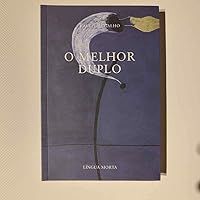
On Grief and Reason is the second volume of Joseph Brodsky's essays, and the first to be published since he was awarded the Nobel Prize in Literature in 1987. In addition to his Nobel lecture, the volume includes essays on the condition of exile, the nature of history, the art of reading, and the idea of the poet as an inveterate Don Giovanni, as well as a homage to Marcus Aurelius and an appraisal of the case of the double agent Kim Philby (the last two were selected for inclusion in the annual Best American Essays volume). The title essay is a consideration of the poetry of Robert Frost, and the book also includes a fond appreciation of Thomas Hardy, a "Letter to Horace", a close reading of Rilke's poem "Orpheus. Eurydice. Hermes", and a memoir of Stephen Spender. Among the other essays are Mr. Brodsky's open letter to Czech President Vaclav Havel and his "immodest proposal" for the future of poetry, an address he delivered while serving as U.S. Poet Laureate.
Joseph Brodsky (Russian: Иосиф Бродский) was a Russian-American poet and essayist. Born in Leningrad in 1940, Brodsky ran afoul of Soviet authorities and was expelled from the Soviet Union in 1972, settling in America with the help of W. H. Auden and other supporters. He taught thereafter at several universities, including Yale, Columbia, and Mount Holyoke. Brodsky was awarded the 1987 Nobel Prize in Literature "for an all-embracing authorship, imbued with clarity of thought and poetic intensity." A journalist asked him: "You are an American citizen who is receiving the Prize for Russian-language poetry. Who are you, an American or a Russian?" Brodsky replied: "I'm Jewish; a Russian poet, an English essayist – and, of course, an American citizen." He was appointed United States Poet Laureate in 1991.
Κοτζαμάν Brodsky και μας δίνουν 5 αφηγήματα.. Υπέροχος λόγος, αλλά η θεματολογία αν εξαιρέσω μερικά σημεία ήταν αδιάφορη. Πέρασε και δεν ακούμπησε ο αγαπητός Γιόζεφ.
"A substantial part of what lies ahead of you is going to be claimed by boredom."
Imagine starting a commencement address with this line? This is what Brodsky did at Dartmouth, 1989, with his essay "In Praise of Boredom," just one of the brilliant pieces included in his collection On Grief and Reason. (I'd gladly attend more commencement ceremonies at our own campus if we got to hear brutally frank but entertaining and existential addresses like Brodsky's!)
In a nutshell, he argues that college does not prepare students for the inescapable fact of a working career: "Everything that displays a pattern is pregnant with boredom." But Brodsky is no wicked scold out to mock parents for having dropped a hundred grand or more on an education that apparently will prove existentially irrelevant (oh well, it's only money, Mom and Dad) or to terrify newborn grads into a life of escapist drink and drugs. Rather, he argues, with great panache and insight, that boredom is means to attaining genuine passion by forcing us to recognize our insignificance: "That inferior in significance, we best it in sensitivity. This is what it means -- to be insignificant. If it takes will-paralyzing to bring this home, then hail the boredom. You are insignificant because you are finite. Yet the more finite a thing is, the more charged with life, emotions, joy, compassion." This should be required reading for every college grad -- actually, for anyone wracked by boredom. Brodsky must've anticipated that a somewhat less than traditional address filled with cliches and platitudes might need leavening with a dash of wit here and there, and he delivers with deadpan lines such as "All one can suggest is to be a bit more apprehensive of money, for the zeros in your accounts may usher in their mental equivalents." (this line may be too subtle for Last Comic Standing, but that just makes its cut all the more surgical!)
This piece contains all of the trademarks of a typical Brodsky essay: erudition worn lightly, wit and wry tone, droll delivery, compassion, and enthusiasm for the endlessly fascinating and infinite foibles of the human condition. Though there isn't a dull piece in the collection, I would especially recommend "An Immodest Proposal" (plan for increasing reading of poetry); "Homage to Marcus Aurelius," and "Letter to Horace," which contains the most daring opening to an essay I've ever read!
Though Brodsky won the Nobel Prize in 1987, primarily on the basis of his poetry and on his reputation as a Soviet dissident (who so rankled the Politburo Boys that they threw him out of the country), I think his essays may well prove to be his more enduring achievement. His other collection, Less Than One, is also very strong, but I find On Grief and Reason has a bit more range in topics.
Великолепна книга! С неописуемо удоволствие прочетох есетата и речите на големия поет Йосиф Бродски, който е бил също така изключително ерудиран интелектуалец... Неговите задълбочени размисли по различни важни теми страшно силно ме развълнуваха, както тези на Георги Марков в брилянтните „Задочни репортажи“. Бродски е бил репресиран и изгонен от тоталитарния режим в СССР, емигрирал и преподавал в САЩ, а впоследствие напълно заслужено е спечелил Нобелова награда за литература!
„Всъщност, ако се замислим, нито едно столетие не е произвело такова количество шмалц като нашето: може би трябва да му обърнем повечко внимание. Шмалцът може би трябва да се разглежда като оръдие на познанието, особено като се има предвид доколко неподходящи са другите инструменти, с които разполага векът. Защото шмалцът е плът от плътта и кръв от кръвта на шмерца, той е неговото по-малко братче. Всички ние трябва да си седим вкъщи, това е по-добре, отколкото да маршируваме нанякъде.“
„Длъжни сме да говорим, защото трябва постоянно да напомняме, че литературата е най-великият, със сигурност по-велик от което и да било вероучение, учител по човешка проницателност и че когато обществото пречи на естественото съществуване на литературата и на способността на хората да научат уроците й, то намалява собствения си потенциал, забавя темпа на развитието си и в крайна сметка застрашава основите си.“
„Философията на държавата, нейната етика — да не говорим за нейната естетика — винаги са „вчерашни“. Езикът и литературата са винаги „днешни“, а често — особено ако политическата система е ортодоксална — могат да бъдат и „утрешни“. Едно от достойнствата на литературата се крие тъкмо в това, че тя помага на човека да уточни времето на съществуването си, да се разграничи както от тълпата свои предшественици, така и от себеподобните си, избягвайки тавтологията — тоест съдбата, известна още и под почетния термин „жертва на историята“. Изкуството като цяло и литературата в частност са забележителни с това, че не понасят повторенията.“
„Естетическият избор е нещо дълбоко индивидуално, а естетическият опит винаги е частен. Всяка нова естетическа реалност прави човешкия опит още по-частен; а това обособяване, приемащо понякога маската на литературен (или друг) вкус, може да се окаже ако не гаранция, то поне форма на защита срещу робството. Защото човек с вкус, и особено с литературен вкус, е по-малко податлив на припевите и ритмичните заклинания на всяка политическа демагогия.“
The strength of this collection is in the essays on literary analysis. Brodsky is a technically astute poet who dissects Hardy, Horace and Frost with thought provoking insight. The essay on Spender is really entertaining and autobiographical. Most of the essays revolve prominently on poetry, or on his migration experience and acquiring a new Lingua Franca. Some essays are inspirational to motivate young writers and poets and so on.
The essay ‘A Cat’s Meow’ is so awful I had to skip it. Brodsky attempts to discuss the creative process but the effect is a robotic analysis of creativity that tangents off all over the place. It’s a disaster. It’s the only essay I didn’t like and skipped.
Brodsky has an interesting way of using English, which makes the reading experience both charming and easy to follow.
If you like any of the poets mentioned here, or good essays in general, this is a recommended read.
Brilliant, witty, entertaining. Makes great reading for anyone who is a little bit down in the dumps. Here's a gem from "In Praise of Boredom" (p.111), a commencement address (!) in which Brodsky demonstrates how boredom teaches us to understand time and our own utter insignificance:
"...what's good about boredom, about anguish and the sense of the meaninglessness of your own, of everything else's existence, is that it is not a deception.
"...Try to embrace, or let yourself be embraced by, boredom and anguish, which anyhow are larger than you...as the poet said, 'Believe your pain.' This awful bear hug is no mistake. Nothing that disturbs you is. Remember all along that there is no embrace in this world that won't finally unclasp.
"If you find all this gloomy, you don't know what gloom is...."
Russian fatalism is inspiring. It helps one to hover over the tragedies, absurdities and stupidities of life from the safe distance of self-detachment. The actual distance to these three might feel too far or might feel too near. It can either be something that happened thousands of years or miles away from you; or it could be something that is happening right here right now in your family. That's why the word 'safe' is the key in that sentence; it means you're detached enough to be able to reason, but in a distance safe enough not to become indifferent and to stop caring.
That's Brodsky's style of looking at the world. Reading Brodsky doesn't feel like reading at all; it feels like a conversation with an incredibly cultured and cultivated man about everything important in your and his life. I spent most of the time with him during my lunchtime. And it was a pleasure to sit next to the fountains outside my office, for an hour every working day, and hear the water and Brodsky's thoughts flow through me. He told me about the true meaning of freedom, of individual sovereignty, of beauty of poetry, and of grief and reason.
He told me about his youth in Leningrad, when he and his friends dreamt deeply and daily about the Western freedom. They dreamt about it so intensely that 'maybe, the freedom that we achieved in our small circle in Leningrad, was bigger and better than [the freedom] offered in the West itself', Brodsky says. This made me wonder, can a person who never lived or never encountered Russia, fully understand what Brodsky means by this?
What's also incomprehensible about Brodsky is how a Russian poet managed to become a master of the English prose? In times, when even access to Russian-English dictionaries was scarce in USSR; Brodsky, a non-native English speaker, tamed the English language to the level that was accepted and worshipped by the leading authors of the time - by W.H.Auden, C.P. Snow, Spendler and others.
Can this be explained by his insatiable love for language? Undoubtedly. He spends pages dissecting and explaining why a poet Robert Frost used this word and not the other in his poems. Every word matters to a poet, because every word has a precise feeling. 'For a writer only one form of patriotism exists: his attitude toward language.' What is a poet other than a lover of language's intricacies?
While sitting and sipping my coffee next to the fountains during the lunch break, Brodsky taught me how to love language; and since we both share Russian as our native tongue and both taught ourselves English through Shakespeare and Milton - this conversation became very intimate. He was exiled from Russia and I, though not exiled but living far from home, felt a close connection to his often bitter feelings about our homeland. For both of us, Russian language acts as a shield against the melancholic nostalgia about homeland we left. It's what keeps us connected not to the physical place or its politics, but to what it truly embodies - a powerful, exceptional, undefeatable culture. From Pushkin and Tchaikovsky to Mandelshtam and Shostakovich.
There is a lot of digression in this review as there is a lost of digressions in Brodsky's prose. But they always connect or reveal something deep and subconscious. I can't think of an English poet (or an author) who mastered Russian to the level Brodsky mastered English. And, if English is your native tongue - you must read Brodsky to realise that the bridges between civilisations are not built by bricks, but are built by words.
Не се сещам за друг, който да е толкова брутално обсебен от поезията като Бродски.
Ще разделя есетата на две части. Първата ще причисля към тези, които засягат по-общи теми, а втората ще окачествя като: разкостващи поетични анализи. Честно казано втората ми дотегна, поради единствената причина, че не харесвам анализи на поезия. Сега за останалото. Ако не сте чели гений, прочетете Бродски - абсолютен виртуоз на текста! От "по-общите" есета могат да се извадят безброй сентенции. Ще се опитам да илюстрирам силата и начина, по-който пише. Представете си онези особени полусънни състояния: малко преди да заспите или малко преди да се събудите окончателно. Именно в тези моменти се случва да стигнем до интересни и необичайни прозрения, които дори успяваме да формулираме в ясни фрази. И тук се случва прецаквацията: или заспиваме, и с това губим възможността да запомним мислите си, или събуждайки се, фразата се скъсала и е загубила толкова важни елементи от така прекрасната формулировка, че не служи за нищо. Е, Бродски е успял да пренесе цели и непокътнати тези фрази, и да ги напише.
On Grief and Reason is a collection of twenty-one essays, all but one written since 1986. Of these, some are without question on a par with the best of his earlier collection, Less Than One. In “Spoils of War,” for instance—an essay classical in form, light in touch—Brodsky continues the amusing and sometimes poignant story of his youth, using those traces of the West—corned-beef cans and shortwave radios as well as movies and jazz—that found their way through the Iron Curtain to explore the meaning of the West to Russians. Given the imaginative intensity with which they pored over these artifacts, Brodsky suggests, Russians of his generation were “the real Westerners, perhaps the only ones.” The breadth of the essays is impressive with some that touched on topics unfamiliar to me while others were closer to home. "Homage to Marcus Aurelius" is a vision of the man that only someone with a poetic imagination could obtain. Brodsky sees through the ages into the loneliness and endurance of a good ruler. He ends the essay with the most appropriate words, those of Marcus Aurelius himself. This collection of essays is valuable for insight and inspiration, and I return to it as I do with any classic anticipating further encouragement on the road to wisdom.
Hands down the most enjoyable book I have read, I have had a wry wee grin on my face for the past week because of Brodsky. He turns a cocophany of thoughts into a clear narrative that will had me wondering if I should have Studied literature and philosophy instead of engineering.
Thanks for recommending this goodreads ( I realize that i im a Mongol addressing a algorithm :-))
Brodsky is smart, snappish, unassailable in the way that only Soviet dissidents can be. I just never really want to read long criticism of a single poem. His cranky commencement speeches are fun, though, when he looks out over a crowd of spoiled Ivy League grads and says, basically, in a super-Russian way, This is the best your life is ever going to be. It's all downhill from here with Joseph Brodsky!
They don’t give out Nobel peace prizes in literature for nothing. This should be assigned in high school. These essays will teach you how to think and how to write. Makes you feel like you’re living in an era before iPhones in a good way.
I think Brodsky is a brilliant essayist; intelligent, witty and wise. I especially like an essay in this book called "In praise of boredom", the passage "'you are finite', time tells you in a voice of boredom 'and whatever you do is, from my point of view, futile' " was a real eye-opener for me. And there were more bits like that;
" the reason boredom deserves such scrutiny is that it represents pure, undiluted time in all its repetitive, redundant, monotonous splendor"
" In a manner of speaking , boredom is your window on time"
I don't know , that essay just moved me and made me think about time in various aspects and in a different way.
«Hoy día se halla muy extendida la opinión de que el escritor debería utilizar en su obra el lenguaje de la calle, el lenguaje de la masa. Pese a su apariencia democrática y a sus evidentes ventajas para el escritor, tal consigna representa un intento bastante absurdo de subordinar el arte a la historia. La literatura debería hablar el lenguaje de la gente solo en el caso de que queramos que el Homo sapiens detenga su evolución. De lo contrario, es la gente la que debería hablar el lenguaje de la literatura».
if this collection of essays was in any way a measure of intelligence, I would be crying in the bathroom at the moment, lamenting my absolute stupidity. Some of the essays were heartbreaking, considering that he was an author in exile, like so many russian authors and creators right now. Some essays were out of my reach in terms of prior knowledge, such as letters to a greek writer. Overall a very humbling experience. I do recommend it.
On Grief and Reason, first published in 1997, is the second volume of Joseph Brodsky's essays and the first to be published since he was awarded the Nobel Prize for Literature in 1987. In addition to his Nobel lecture, the volume includes essays on the condition of exile, the nature of history, the art of reading, and the idea of the poet as an inveterate Don Juan, as well as a tribute to Marcus Aurelius and an assessment of the case of double agent Kim Philby (the latter two were selected for the annual Best American Essays). The title essay is a meditation on the poetry of Robert Frost, and the book also includes an appreciation of Thomas Hardy, "Letters to Horace," a close reading of Rilke's poem "Orpheus. Eurydice. Hermes," and a memoir of Stephen Spender. Other essays include Brodsky's open letter to Czech President Vaclav Havel and his "immodest proposals" for the future of poetry, which he published during his tenure as U.S. Poet Laureate.
Joseph Brodsky (born 1940 in Leningrad, Russian SFSR, Soviet Union) died 1996. He was a Russian and American poet and essayist. Born in Leningrad (now Saint Petersburg), Soviet Union, Brodsky fell out with Soviet authorities and was expelled from the Soviet Union in 1972 ("strongly advised" to emigrate), settling in the United States with the help of W. H. Auden and other supporters. He has since taught at Mount Holyoke College and at universities including Yale, Columbia, Cambridge, and Michigan. Brodsky was awarded the 1987 Nobel Prize in Literature "for the sweeping scope of his work, the clarity of his thought, and the poetic intensity of his work". In 1991, he was named Poet Laureate of the United States.
Table of Contents Spoils of War The Condition We Call E xile A Place as Good as Any Uncommon Visage Acceptance Speech After a journey Altra Ego How to Read a Book In Praise of Boredom
When Robsky was a child, he ate canned corn beef that was airdropped into the Soviet Union by the United States. For the Soviet Union, which was short of food at the time, this was undoubtedly a rare delicacy. What's more interesting is that this canned food not only tastes good, but also has a sturdy and beautiful packaging. After eating, it can be used in many ways in daily life, which can be said to be a multi-purpose item. I don't know whether these canned food were dropped out of friendship when the United States and the Soviet Union were still allies during World War II, or whether they were a means to shake the confidence of the other side's citizens during the confrontation between the two sides during the Cold War. But what is certain is that the impact of this behavior is very obvious: people actually benefited, and they would inevitably have a certain yearning for the country where the canned food came from, or at least have a positive emotion. This reminds me that no matter what political or economic system is implemented, the most fundamental principle is to ensure that everyone is "well fed." Similarly, when running a business, no matter how grand the vision you advocate is, you must ensure that your employees have relatively generous material rewards. Even on a smaller scale, such as when you are with friends, when you are a boyfriend or husband, or when you are a father, you should strive to make the people around you feel happy and satisfied when they are with you - this is the most important thing, and everything else must be built on this foundation.
Robowski was exiled from his homeland. This experience is almost unimaginable to most people, and no one wants to experience it personally. Before I went to the United States alone to study and live there for a long time, I didn't have much concept of "psychological loneliness" and "separation". Because when I lived in China, even if I was not in the city where my hometown was, I didn't feel obvious loneliness. So at that time, I simply thought that there was no essential difference between going to a strange city abroad and going to a strange city in China. But the facts have proved that the two are still far apart. "Being alone in a foreign land is a stranger", especially during festivals, that kind of loneliness is often magnified several times. From this, I also began to understand why "foreign love" always makes people feel difficult to persist. It's not just the obstacles of distance and time difference, but also the confusion and loss when being overseas and lonely, and even the doubt about oneself. These emotions will surge in my heart from time to time. Look at those exiled people again. At least studying abroad is your own choice, and no matter how hard it is, you can say "I accept the outcome". But those who are exiled are forced to leave their homeland. How helpless and painful would that situation be?
Perhaps, the more a person travels, the more he or she will experience some subtle changes. Looking back on the days when I just finished high school and entered college, traveling attracted me more than any interpersonal relationship. I hardly cared who my companions were or who I set out with. I only cared about the destination: plateaus, dense forests, deserts, mountains and rivers... The motherland is so vast, and the world is even more boundless. In the following ten years, I never realized that my understanding of travel always remained at the level of "what I saw" - everything fell on "things" and ignored "people". However, just as people experience unique psychological changes at the age of 10, 20, and 30 , in the tenth year after graduating from high school, my thoughts suddenly changed dramatically: I no longer had the strong curiosity I had in the past about distant places, and the magnificent scenery that once amazed me became increasingly vague in my memory. On the contrary, the travel companions and interpersonal interactions that I used to care little about became more and more vivid in my retrospect, and even became the most touching part of my heart today.
The most notable feature of art is its "uniqueness". If we compare various things in the physical world - such as cars, houses, computers or mobile phones - the feelings they give people are usually not very different; however, a work of art may bring completely different experiences: some people appreciate it, while others are confused. This is because art is closely related to people's subjective attributes. In recent years, artificial intelligence has been extremely popular. We can already use it to write poems, generate images, and make videos. Perhaps it will soon be able to "independently" construct a truly meaningful story. The same thing may cause very different resonances in the hearts of different people. Sometimes I think that although there are countless individuals in the world, we may be like batches of samples generated by AI's "unsupervised learning", each taking on a different exploration path. Perhaps we all belong to a larger "intelligent body" or "spiritual community", and each of our lives is a unique trajectory from birth to end. Looking at the past and present, the existence of countless people is like the constantly accumulated parameters that help that larger intelligent body to exhaust all possibilities. In this long process of exploration, "uniqueness" is the most precious value of each person to the "great holy spirit"?
Everyone's existence is accidental and destined to be short-lived. Perhaps a group of people are gathering in a room to give a speech at this moment, but a few hours ago, there might be no one there; a few hours later, there will be no one there either. I gradually realized that every gathering is hard-won. We pass by countless people every day, but only a few can really intersect with each other's lives. Faced with this fleeting and uncontrollable gathering and emotion, we often go to two extremes: either desperately trying to grasp it, or simply stay away from it. For a long time, I chose the latter, because I felt that it was better to give up than not being able to grasp it , because emotion is an illusion. But gradually I realized that this attitude may not be desirable. So, I began to seek a balance between these two extremes: since I understand that all relationships will experience changes and even dissipate, I should cherish everything I have now. At the same time, I also know that no relationship can last forever, and at most it can only accompany me throughout my life. Maybe I shouldn't escape for "short-term", and I will no longer worry about gains and losses because of the fear of loss, and I wish I could hold it tightly all the time. Perhaps, this is just like the way we treat life: no matter what, we are getting older day by day and will eventually face death. The key is whether we can enjoy life without distraction and not be bound by worries about gains and losses while knowing this end.
Twenty-one essays by the Nobel prize-winning poet. Two of the essays are his Noble lecture and his acceptance speech, and many of the other essays were written for occasions or lectures. What makes these essays stick is that Brodsky has the knack of living in his prose pieces and imbuing them with his warm, intelligent personality. I would have payed money to eavesdrop on the parents walking out after listening to his 1989 Dartmouth College commencement address, "In Praise of Boredom". Good luck kids! It's all down hill from here. I bet there were some pissed off parents in that crowd, though some others might have been nodding their heads in agreement.
I wasn't as big a fan of the line by line readings of poetry by Frost, Hardy and Rilke, though the title essay on Frost is the best of the lot and mostly manages to transcend the lecture hall feel of the other essays. I'm sure Brodsky was an amazing teacher, but reading lectures when you know there isn't a test tomorrow can be a little tedious.
Who knew, though, that I was going to get a summer reading list for the beach. Want to get up to speed on contemporary modern poetry (at least for the 1st half of the twentieth century)? "If your mother tongue is English, I might recommend to you Robert Frost, Thomas Hardy, W.B. Yates, T.S. Elliot, W.H. Auden, Marianne Moore and Elizabeth Bishop." I'll take that assignment.
The second time giving up on a Joseph Brodsky book despite already being more than halfway through, the first book being Less Than One which I had given up in Cambodia after xth essay on Anna Akhmatova's poems (and I'm not a poetry person, which Brodsky would find disdainful).
I encountered On Grief and Reason in its Chinese translation in a bookstore in Shanghai, and thought it would be sick to have such a nicely titled book added to my shelves. However, there is something about Brodsky's way of writing — academic and presumably with acerbic wit (that flies over my head) — that I find quite unreadable, and reminded me why I gave up on his book 1.5 years ago. However, after ploughing through some of these paragraphs, I am sometimes rewarded with some gems that I can relate to, which will be appended below.
An essay on Brodsky's travel to Rio de Janeiro left an impression on me; it painted a scene of sensuality and infidelities on a hot summer night in a 5 star hotel, playing in my head like a movie scene. The essay on Kim Philby and the duplicity of spies, which assumes background knowledge on the whole affair, was completely unreadable. So was the one on history and Muses. I abandoned the essay "On Grief and Reason" (on poetry) halfway, and "Marcus Aurelius" was the final straw.
This is a reminder that I'm not as literary as the literates of this world, not as academic as the academics — and I wouldn't wish to be.
*** On Literature Were the masters of this world better read, the mismanagement and grief that make millions hit the road could be somewhat reduced. Since there is not much on which to rest our hopes for a better world, and since everything else seems to fail one way or another, we must somehow maintain that literature is the only form of moral insurance that a society has; that it is the permanent antidote to the dog-eat-dog principle; that it provides the best argument against any sort of bulldozer-type mass solution -- if only because human diversity is literature's lock and stock, as well as its raison d'etre. We must insist that literature is the greatest teacher of human subtlety, and that by interfering with literature's natural existence and with people's ability to learn literature's lessons, a society reduces its own potential.
Literature is a dictionary, a compendium of meanings for this or that human lot, for this or that experience. It is a dictionary of the language in which life speaks to man. Its function is to save the next man, a new arrival, from falling into an old trap, or to help him realise, should he fall into that trap anyway, that he has been hit by a tautology. This way he will be less impressed -- and in a way, more free. For to know the meaning of life's terms, of what is happening to you, is liberating.
On existence To be lost in mankind, in the crowd among billions; to become a needle in that proverbial haystack — but a needle someone is searching for.
Put down your vanity, you are but a grain of sand in the desert. Measure yourself not against your pen pals but against human infinity: it is about as bad as the inhuman one. Out of that you should speak, not out of your envy or your ambition.
Try not to stand out, try to be modest. All you will see from that vantage point of standing on somebody's shoulders is the human sea, plus those who, like you, have assumed a similarly conspicuous position. On the whole, there is something faintly unpalatable about being better off than one likes. To covet what somebody has is to to forfeit your uniqueness; on the other hand, of course, it stimulates mass production. The notion of exclusivity also forfeits your uniqueness, not to mention that it shrinks your sense of reality to the already-achieved. Far better than belonging to any club is to be jostled by the multitudes of those who, given their income and their appearance, represent unlimited potential.
If you sit long on the bank of the river, you may see the body of your enemy floating by. — Chinese proverb
On both It's time to scrub the term 'Communism' from the human reality of Eastern Europe so one can recognize that reality for what it was and is: a mirror. For that is what human evil always is. The magnitude of what took place in our parts of the world, and over two-thirds of a century, cannot be reduced to 'Communism'. Catchwords, on the whole, lose more than they retain, and in the case of tens of millions killed and the lives of entire nations subverted, a catchword simply won't do. The scale of what happened in our realm suggests that the executioners run in the millions, not to mention the complicity of millions more. What you call 'Communism' was a breakdown of humanity and not a political problem. It was a human problem, a problem of our species, and thus of a lingering nature. To this day, the word 'Communism' remains a convenience, for an -ism suggests a fait accompli. It would be inconvenient for the cowboys of the Western industrial democracies to recognize the catastrophe that occured in an Indian territory as the first cry of mass society: a cry from the world's future, and to recognize it not as an -ism but as a chasm suddenly gaping in the human heart, to swallow up honesty, compassion, civility, justice, and, thus satiated, presenting to the still democratic outside a reasonably perfect, monotonous surface. The real civility is not to create illusions. 'New understandings', 'global responsibilities', 'pluralistic metaculture' are no much better at the core than the retrospective utopias of the latter-day nationalists or the entrepreneurial fantasies of the nouveaux riches. This sort of stuff is predicated on the premise, however qualified, of man's goodness, of his notion of himself as either a fallen or a possible angel. This sort of diction befits, perhaps, the innocents, or demagogues, running the affairs of industrial democracies.
"... the ancient and perhaps as yet unfounded belief that, were the masters of this world better read, the mismanagement and grief that make millions hit the road could he somewha_t reduced. Since there is not much on which to rest our hopes for a better world, and since everything else seems to fail one way or another, we must somehow maintain that literature is the only form of moral insurance that a society has; that it is the permanent antidote to the dog-eat-dog principle; that it provides the best argument against any sort bulldozer-type mass solution-if only because human diversity is literature's lock and stock, as well as its raison d'etre.
We must talk because we must insist that literature is the greatest-surely greater than any creed-teacher of human subtlety, and that by interfering with literature's natural existence and with people's ability to learn literature's lessons, a society reduces its own potential, slows down the pace of its evolution, "
Before I knew Brodsky was a poet I was drawn to the thoughtful and expansive essays in Less Than One. The essays in this book are fewer in number but are no less universal in their understanding. The essays on life in the Soviet Union and the titular essay are among the most moving prose I've ever read.
Good stuff. Several of the essays are very insightful. He is also well read and he comes at things from a different angle sometimes. I appreciated his suggestion that we should evaluate political candidates on which books they have or have not read. Overall, a good collection.
there's some really great bits on stoicism however most of it is brodsky close reading his favourite poems - which i guess means im the fool for expecting a book of essays from a poet to be anything else.
To be lost in mankind, in the crowd--crowd?--among billions; to become a needle in that proverbial haystack--but a needle someone is searching for--that's what exile is all about. Put down your vanity, it says, you are but a grain of sand in the desert. Measure yourself not against your pen pals but against human infinity: it is about as bad as the inhuman one. Out of that you should speak, not out of your envy or ambition. (25)
For the other truth of the matter is that exile is a metaphysical condition. At least, it has a very strong, very clear metaphysical dimension; to ignore or to dodge it is to cheat yourself out of the meaning of what has happened to you, to doom yourself into remaining forever at the receiving end of things, to ossify into an uncomprehending victim. (25-6)
Perhaps an additional truth about the matter is that exile slows down one's stylistic evolution, that it makes a writer more conservative. Style is not so much the man as the man's nerves, and, on the whole, exile provides one's nerves with fewer irritants than the motherland does. This condition, it must be added, worries an exiled writer somewhat, not only because he regards existence back home as more genuine than his own (by definition, and with all attendant or imagined consequences for normal literary process), but because in his mind there exists a suspicion of a pendulum-like dependency, or ratio, between those irritants and his mother tongue. (30)
For one in our profession the condition we call exile is, first of all, a linguistic event: he is thrust from, he retreats into his mother tongue. From being his, so to speak, sword, it turns into his shield, into his capsule. What started as a private, intimate affair with the language in exile becomes fate--even before it becomes an obsession or a duty. (32)
In a manner of speaking, we all work for a dictionary. Because literature is a dictionary, a compendium of meanings for this or that human lot, for this or that experience. It is a dictionary of the language in which life speaks to man. Its function is to save the next man, a new arrival, from falling into an old trap, or to help him realize, should he fall into that trap anyway, that he has been hit by a tautology. This way he will be less impressed--and, in a way, more free. For to know the meaning of life's terms, of what is happening to you, is liberating. It would seem to me that the condition we call exile is up for a fuller explication; that, famous for its pain, it should also be known for its pain-dulling infinity, for its forgetfulness, detachment, indifference, for its terrifying human and inhuman vistas for which we've got no yardstick except ourselves. (33)
But perhaps our greater value and greater function are to be unwitting embodiments of the disheartening idea that a freed man is not a free man. (34)
from ALTRA EGO
Pasternak's famous exclamation "Great god of love, great god of details!" is poignant precisely because of the utter insignificance of the sum of these details. A ratio could no doubt be established between the smallness of the detail and the intensity of attention paid to it, as well as between the latter and one's spiritual accomplishment, because a poem--any poem, regardless of its subject--is in itself an act of love, not so much of an author for his subject as of language for a piece of reality. If it is often tinged with an elegiac air, with the timbre of pity, this is so because it is the love of the greater for the lesser, of the permanent for the transitory. (91)
from HOW TO READ A BOOK
Whoever said that to philosophize is an exercise in dying was right in more ways than one, for by writing a book nobody gets younger. (97)
from IN PRAISE OF BOREDOM
Respect it, then, for its origins--as much perhaps as for your own. Because it is the anticipation of that inanimate infinity that accounts for the intensity of human sentiments, often resulting in a conception of a new life. This is not to say that you have been conceived out of boredom, or that the finite breeds the finite (though both may ring true). It is to suggest, rather, that passion is the privilege of the insignificant. (110-111)
from PROFILE OF CLIO
What makes up for this difference [between historian and theologian], however, is their respective quests for causality, the common denominator, and the ethical consequences for the present--so much so that in a society in which the authority of the church is in decline, and the authority of philosophy and the state are negligible or nonexistent, it falls precisely to history to take care of ethical matters. (116)
This makes history, I believe, a more dramatic choice. An escape route trying to prove every step of the way that it is an escape route? Perhaps, but we judge the effetiveness of our choices not so much by their results as by their alternatives. The certitude of your existence's discontinuity, the certitude of the void, makes the uncertainties of history a palpable proposition. In fact, the more uncertain it is, the greater its burden of proof, the better it quells your eschatological dread. (117)
This failure leads to our belief that we can learn from history, and that it has a purpose, notably ourselves. For all our fondness fo causality and hindsight, this assumption is monstrous, since it justifies many an absence as paving the way to our own presences. Had they not been bumped off, this benefit of hindsight tells us, it would be somebody else sitting here at our table, not exactly ourselves. Our interest in history, in that case, would be plain prurience, tinged perhaps with gratitude. (119)
As a process, history is not so much an accretion as a loss: otherwise we wouldn't need historians in the first place. Not to mention that the ability to retain doesn't translate itself into the ability to predict. Whenever this is done--by a philosopher or a political thinker--the translation almost invariably turns into a blueprint for a new society. The rise, the crescendo, and the fall of the Third Reich, as much as those of the Communist system in Russia, was not averted precisely because it was not expected. The question is, can the translation be blamed for the quality of the original? The answer, I am tempted to say, is yes; and let me succumb to this temptation. (130)
A culpa de ler pouca poesia, e a sensação de que assim me escapa metade da literatura, põe-me por vezes, em género de meio termo, a procurar a prosa de poetas conhecidos. O benefício, como se esperaria, não ocorre sempre. Li de Brodsky o Watermark, que não hesitaria em classificar como pequena obra prima, e foi embalado nele que cheguei aqui. Para me desiludir. Ao contrário de Watermarck, que era unido por Veneza, esta é uma colecção de ensaios muito díspares e frequentemente datados. Os melhores são aqueles que recorrem ao tom nostálgico, memorialístico de Watermark (logo o primeiro, sobre a infância de Brodsky em Estalinegrado, após a segunda guerra mundial). Os piores, para quem não seja um académico agarrado à causa, são os ensaios verso-a-verso de Thomas Hardy e Robert Frost (que dá o título ao livro). Talvez porque os latinos me interessem mais que os británicos (e porque o tom é menos académico) gostei das partes sobre Horácio e Marco Aurélio. De resto, saltei muito, o que é sempre mau sinal.
作家最擅长去做毕业演讲。“In praise of boredom” 除了警醒年轻人不要因为苦闷而步入歧途,更是鼓励毕业生以前进列车的目光看待未来的痛苦和无足轻重。相比在UM还比较传统与矜持,在Dartmouth他就放飞文采了。
“Profile of Clio”,是我读过对历史这个creature最有见地的思考。如何处理历史和未来的关系已经复杂到哲学范畴了。他的观点一贯读独到 - 历史是一种旨在驯养时间的尝试。社会主义源自历史决定论的原则。历史的唯一法则就是偶然性。在思想上成为游牧者。不确定性使个体提高警惕。不确定性要比生活更真实。Again,流氓诗人的背景意味着他不可能屈服于任何可被预见的路径。这就是人类伟大的最重要标志。
What's more, in order to write a good book, a writer must read a great deal of pulp--otherwise he won't be able to develop the necessary criteria.
On the whole, books are indeed less finite than our-selves. Even the worst among them outlast their authors-mainly because they occupy a smaller amount of physical space than those who penned them. Often they sit on the shelves absorbing dust long after the writer himself has turned into a handful of dust. Yet even this form of the future is better than the memory of a few surviving relatives or friends on whom one cannot rely, and often it is precisely the appetite for this posthumous dimension which sets one's pen in motion.
"By failing to read or listen to poets, a society dooms itself to inferior modes of articulation-of the politician, or the sales-man, or the charlatan-in short, to its own. It forfeits . . . its own evolutionary potential." - Joseph Brodsky