I wrote fiction to please myself. The stories that I thought nobody would want to read, I wrote for myself. . . I wrote about myself in my stories, trying to figure out how I felt about things and why. I grappled with loneliness, intense loneliness that made me feel breathless and empty.
- Gabriela Lee
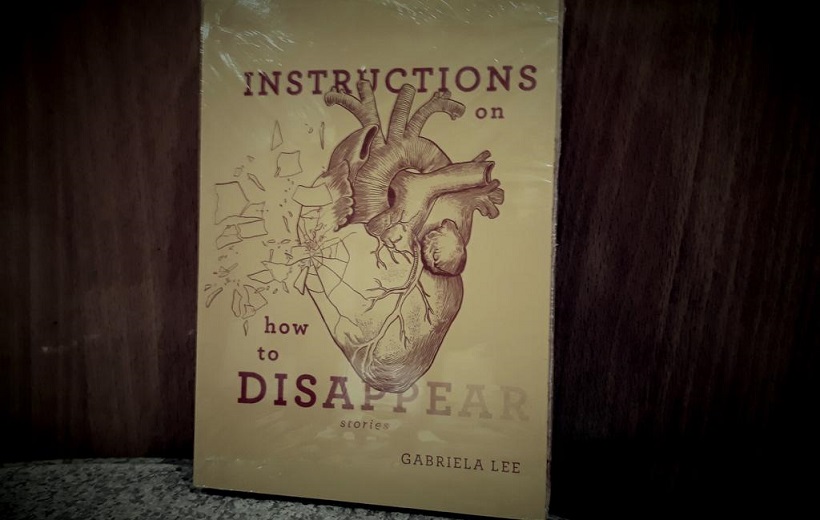
1. INSTRUCTIONS ON HOW TO DISAPPEAR (Visprint, 2016) by Gabriela Lee adds to the flavorful canon of Philippine speculative fiction. Not just adds, but, most especially, escalates in terms of the genre’s impact to readers and in its sense of significance in Philippine literature in general. This collection of 11 stories sums up Lee’s potential in equalling the linguistic power and aesthetic sensibilities of today’s most celebrated Filipino fictionists. This collection serves as a rainbow of characters hungering and drooling for relevance and sanity, characters whose passions might come in tidbits to secretly and gradually suppress our complacency and superficiality. Her characters, not only given the scale of power and scrutiny but also laid out in carefully chosen words and perspectives, are indeed instructions on how to disappear. Disappear from life’s rigidity and monotony.
2. What I love about Lee’s characters is they start from accepting their vulnerabilities, then to seeing hopes for strength and transformation, and, at the end, learning these hopes should have been dealt with meek intentions. Thus, these creatures are always confronted with moral or psychological dilemmas which we might vicariously experience in moments of daydreaming. In “August Moon,” a woman who deemed herself as a good wife took on a continuum of flashbacks, as she little by little uncovered betrayal and maltreatment; a ghost lurking in the wreaths offered on her coffin, patiently waiting the nightmare of being dead and invisible to her loved ones to fade.
3. In the title story “Instructions on How to Disappear,” you stand there acting as Susan, living her pains and troubles, as her body became translucent, glistening, and brittle. You feel the heartache, almost impenetrable by light and sound, and you keep on believing there are chances of going back. But there’s none. In an essay of her own poetics, Lee said that she could absolutely relate with this story. This is me. . .This is what I’m becoming. I wrote this even before I left for Singapore, but I felt like I was still Susan, trying to disappear into her own skin, emptying herself . . . the story stayed with me. I felt like I was on the verge of disappearing, of becoming invisible.
4. Amidst the narratives of vulnerable souls, Lee stands erect as a master storyteller of woman characters whose trying times turned into opportunities for resistance, seduction, and empowerment. The readiness to endure was there, yet the spirit does not give in, soaring against curses and tides. “Tabula Rasa” is a fine example of this category, following a woman with her body utilized to slurp her lover’s memories and knowledge, to the point that he was likened to a blank slate. On the other hand, “Bargains” charted the story of a writer confronted with a writer’s block, willing to risk her oral faculties to fill in the void. Inspiration, said the shrewd character of Auntie Wang, is expensive to brew. So it is one of our valuable items for sale. Both of these stories described women as risk-takers, sojourning the trails of danger and despair to get into the metropolis filled with double standards and remarks of underestimation.
5. “Hunger” and “Capture” are what I consider winners of detail amplification. You can smell, hear, and touch the gore brought by transmogrification of human beings into creatures driveling for blood and flesh. Lee has the power to hold her grip on you so tight, then throw you into a battlefield where you are frozen and motionless while witnessing carcasses splattering the pavements and bat-like wings flapping and strutting. You are given the 360 degrees of details. Just wait for what would come next.
6. The story that topped the roster is “This Side of the Looking Glass” which covers a range of emotions – estrangement, thirst for revenge, shock, humility and contentment – eloquently articulated as the plot complicates. Heat, dust, hordes of sweat, glimmering nails, flabs of fat, and reengineered eyebrows melt into the background to illuminate a young lady whose willpower will never be enervated, as long as she loves her curves and imperfections, as long as the invisible forces, be they odds and tribulations, are with her side. It reminds you of the archetypes found in fairy tales and young adult bestsellers. But you keep on reading, believing there is something to be learned, there is life to be celebrated.
7. Not only does this collection captivate me. Most importantly, it rests on me the consolation that in imagination and creativity, everything can transcend the universal design, anything is beyond borders. Kudos to Gabriela Lee. Adore her and this impressive debut.