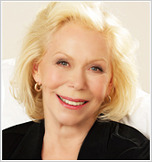
“Your thoughts create your life!” This is the message that Louise Hay has been teaching people throughout the world for more than 27 years. Now, children can learn and understand the powerful idea that they have control over their thoughts and words, and in turn, what happens in their life. Within the pages of I Think, I Am! kids will find out the difference between negative thoughts and positive affirmations. Fun illustrations and simple text demonstrate how to make the change from negative thoughts and words to those that are positive. The happiness and confidence that come from this ability is something children will carry with them their entire lives!
Louise Hay was born to a poor mother who married Hay's violent stepfather. When she was about five, she was raped by a neighbor. At fifteen she dropped out of high school without a diploma, became pregnant, and on her sixteenth birthday gave up her newborn baby girl for adoption.
She moved to Chicago, where she worked in menial jobs, before moving in 1950 to New York. At this point she changed her name and began a career as a fashion model. She was successful at this, working for Bill Blass, Oleg Cassini, and Pauline Trigere.
In 1954, she married Andrew Hay, but after fourteen years of marriage Louise was devastated when Andrew left her for another woman.
Hay said that she found the First Church of Religious Science on 48th Street, which taught the transformative power of thought. Hay revealed that here she studied the metaphysical works of authors like Florence Scovel Shinn and the Religious Science founder Ernest Holmes.
In the early 1970's Hay became a Religious Science practitioner. In this role she led people in spoken affirmations meant to cure their illnesses. She also became popular as a workshop leader.
She studied transcendental meditation with the Maharishi Mahesh Yogi at his university in Fairfield, Iowa.
In 1977 or 1978 she found she had cervical cancer, and she concluded that its cause was her unwillingness to let go of resentment over her childhood abuse and rape. She refused medical treatment, and began a regimen of forgiveness, therapy, reflexology, nutrition, and occasional enemas, and claims she rid herself of the cancer. She declared that there is no doctor left who can confirm this story, but swore that it is true.
In 1976 Hay wrote a small pamphlet, which came to be called "Heal Your Body." This pamphlet was enlarged and extended into her book You Can Heal Your Life, which was published in 1984. As of February 2008, it is still on the New York Times best sellers list.
Around the same time she began leading support groups for people living with H.I.V. or AIDS that she called Hay Rides. These grew from a few people in her living room to hundreds in a large hall in West Hollywood. Her work with AIDS patients drew fame and she was invited to appear on "The Oprah Winfrey Show" and "Donahue" in the same week in March, 1988.
You Can Heal Your Life immediately landed on the New York Times Best Sellers List. More than 35 million copies are now in print around the world in more than 30 languages and has been made into a movie.
Louise Hay established Hay House Publishing. It is the primary publisher of books and audio books by Deepak Chopra and Doreen Virtue, as well as many books by Wayne Dyer.
In addition to running her publishing company, Hay runs a charitable organization called Hay Foundation that was established in 1985.
ببینید به نظرم این کتاب اومد یه حرکت خیلی اشتباهی کرد، خواست مثلا بگه بجای افکار منفی افکار مثبت رو پرورش بدید، خواست بگه دنیا جای قشنگیه و اگه افکار منفی نداشته باشیم میشه قشنگ زندگی کرد. به نظرم این کتاب «کودک رو گول میزنه»! چرا؟ چون ما عوض اینکه بیایم بهشون حل کردن مسئله رو یاد بدیم، فراموش کردن و قورت دادن مسئله رو یاد میدیم. برای مثال توی کتاب نوشته بود«دوستام باهام حرف نمیزنن و من رو دوست ندارن» و بعد برای راهحلش پیشنهاد داده بود به کودک گفته بشه که عیبی نداره، عوضش ادمهای دیگه توی زندگیت هست که دوست دارن. به نظرم کودک نیاز داره با این مسئله روبهرو بشه، نه اینکه مسئله رو حذف کنه، روبهرو شدن بااین موضوع سوال کردن رو مطرح میکنه. اینکه چرا دوستام باهام قهرم؟ چرا دوستام باهام حرف نمیزنن؟ و اینکه باور کنید بروز احساسات خیلی کار خوبیه. وقتی ما بروز میدیم یه غذایی رو دوست نداریم، از این رنگ بدمون میاد یا هرچیز دیگه ای باعث میشه به ارامش روانی برسیم. این کتاب کاملا به کودک تحمل کردن رو یاد میداد که تحمل کردن واقعا ارامش روحی روانی رو ازبین میبره. این کتاب علنا داشت سوال کردن رو از کودک محروم میکرد و خیلی خیلی ایرادهای دیگه 🙂
بعد از خوندنش يه كم عصباني بودم:) از اينكه چرا واقعا اينقدر شعاري و مستقيم بود براي مخاطب كودك. تو دنيايي كه اين همه كتاب هاي كودك با موضوعات و نوشته ها و نقاشي هاي خلاقانه وجود داره طوري كه قوه تخيل و خلاقيت كودك به خوبي تقويت ميشه چرا همچين كتابي؟ تعجبم از امتياز بالاشه :( شايد من جايي دارم اشتباه ميكنم من دعوت ميكنم از رعنا و پرستو و حسين و سميه كه بخونن و نظرشون رو بهم بگن. ممنونم
Ak máte radi pozitívne myslenie a chcete so silou afirmácie naučiť pracovať aj vaše deti, je tá kniha pre vás. Ilustrácie sú pekné, veľavravné. Text je skrátka súbor afirmačných viet zasadených do vysvetľujúcich situácií. Nič viac, nič menej. Jeden bod dávam dole za podivnú voľbu písma (ktoré vyzerá mierne hrôzostrašne). A za to, že ak pozitívne myslenie nie je vaša šálka kávy, tak knihu neoceníte (čo je okej).
My five-year-old son reflected on this book days after reading it and came up with ways on his own to reinforce these practices. A great tool for parents trying to encourage these mindfulness practices.
Louise Hay is the "your thoughts create your life" woman. So, I have issues with her. She's the kind of person who thinks you choose all the crappy things that happen to you because you are supposed to learn something from them or you cause them with your negativity, which is some Secret-level bullshit.
This children's book does remain rather innocuous, though. It is basically a positive-thinking type book, encouraging kids to examine what they are saying to themselves and changing it to an affirmation that is constructive rather than discouraging. As a mom to five kids, I know I have a couple who are just naturally more pessimistic. They go into situations and tend to see the negative sides of them rather than the positive, and that does influence their experiences. In that way, I agree that your thoughts create your life, and this could be a good, simple reminder for those kinds of kids. Talk to yourself in a kinder way.
I just hesitate to introduce Hay to the elementary set because her adult works can be damaging. They don't have to be, depending on your skepticism level going on and what parts you pay attention to, but they can be.
Este libro me enseño a tener mas confiansa en mi y en mis capacidades y además nunca decir que no puedo o que no soy lo suficientemente buena, un excelente libro no solo para niños si no también para jóvenes. Creo que es importante leer dentro de un buen contexto, y claro que los padres lo lean antes y con su hij@, ya que si se lee fuera de contexto la idea principal del libro se pierde. La moraleja no es que hay que eliminar o ignorar los problemas o que cosas malas sola y exclusivamente te suceden si piensas negativamente, si no que a veces nuestra mente nos puede engañar, a veces crea problemas en donde no los hay, a veces nos concentramos tanto en lo negativo de las situaciones o nuestros errores que nos empezamos a victimizar o atacar y claramente esto no soluciona nada, com cuando uno de los niños olvida su suéter en una de las atracciones, en vez de ponerse a llorar o lastimarse con pensamientos como ¨Soy un tonto¨, es mejor admitir nuestro error y aprender de ello.
A very short book that helps young readers to put negative thoughts aside in different situations in which they may find themselves and, instead, learn to see the positive side of life. Nice illustrations!
Oso liburu laburra, irakurle gazteei pentsamendu negatiboak alde batera uzten laguntzen dien egoera ezberdinetan, eta, horren ordez, bizitzaren alde positiboa ikusten ikasten. Ilustrazio politak!
Un brevísimo libro que ayuda a los pequeños lectores a dar de lado los pensamientos negativos en distintas situaciones en las que se puedan encontrar y, en cambio, a saber ver el lado positivo de la vida. Bonitas ilustraciones!
Un livre très court qui aide les jeunes lecteurs à mettre de côté les pensées négatives dans différentes situations dans lesquelles ils peuvent se trouver et, au contraire, à apprendre à voir le côté positif de la vie. Belles illustrations!
Great little ready for the new positive minds. It’s a step toward the importance of showing our children that they should remain positive with so much negativity around today.
This is a book that has a " I think I can theme", not a typical reading book. Well illustrated but not very interesting as a type of entertaining book.
While there are some suggestions that aren't perfect, this is a great tool to teach children how to talk kindly to themselves. I used the book, Don't Feed the Monster on Tuesdays!: The Children's Self-Esteem Book, as a companion piece for a really good family night lesson.
A beautifully illustrated book for children and a gentle introduction to the power of thought. Realistic examples of what may challenge some kids and a practical guide on self-empowerment through learning how to turn a situation around. I seemed to like it more than the smallies, so I did wonder was it too literal for the targeted age group?
I love this book! It is a powerful way to encourage self-confidence within students. It illustrates prominent insecurities children may encounter in life. They are then encouraged to embrace who they are and understand the beauty of individuality.
I expected this book to be more explanatory, my 4 year old was not engaged as I was reading it to her. I love Louise and own many books / audios by her, so I expected this book to be very interesting. Luckily I did not spend $15 on this book, I borrowed from our library.