

What do you think?

Blade of the Immortal (US) #1
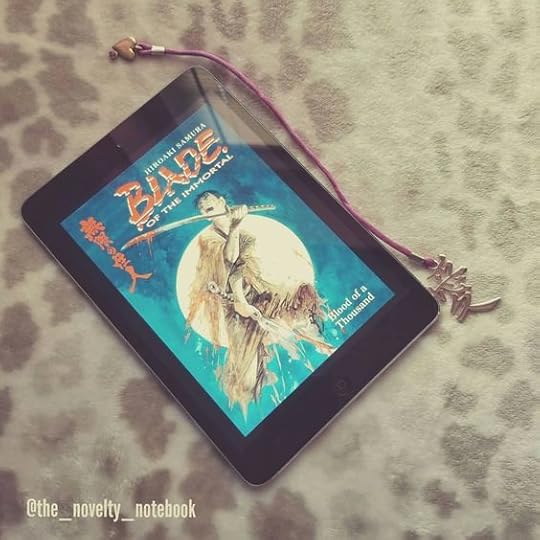
Blade of the Immortal, Volume 1: Blood of a Thousand
To end his eternal suffering, he must slay one thousand enemies! Manji, a ronin warrior of feudal Japan, has been cursed with immortality. To rid himself of this curse and end his life of misery, he must slay one thousand evil men! His quest begins when a young girl seeks his help in taking revenge on her parents' killers . . . and his quest won't end until the blood of a thousand has spilled!
191 pages, Paperback
First published September 22, 1994
About the author
Hiroaki Samura
477 books260 followersHiroaki Samura ( 沙村広明) is a Japanese cartoonist and illustrator. He is best known for writing and illustrating the manga Blade of the Immortal (1993-2012). Among his other manga series Die Wergelder (2011-2018) and Wave, Listen to Me!, the latter serialised since 2014.
Ratings & Reviews
Friends & Following
Create a free account to discover what your friends think of this book!
Community Reviews
Displaying 1 - 30 of 205 reviews

January 2, 2020
3.5 stars so I rounded up.
Ok. So to put this bluntly, this is a manga about a douchebag, who has been made immortal, so he can redeem himself and avenge his sister's death. He meets a very naive girl, who is hellbent on revenge for her father's murder, and together, she does stupid things, and he ends up jumping in to save her. Personally, I'd rather have a badass female main character, instead of a weaker female, in need of a man to help her. This girl is good with a sword, but not as good as necessary to take on all these swordsmen. Plus she is young and her mind is weak. I'm not against having a strong male lead character, I'm simply against the trope of a simple, stupid woman, getting in over her head, and needing a man to dig her out of her hole. It was more enjoyable toward the end though, and the art is good, hence the half star and round up. This book was readable, and if a man saving a helpless woman is your thing, feel free to pick this one up. I will be giving the second volume a go, just to see if maybe I judged it a little too harshly at first. In all honesty though, if you want to read about a male samurai who is reluctant to fight, but will do so if pushed, or to protect his loved ones, and with a strong female lead, I recommend reading Rurouni Kenshin instead.
Ok. So to put this bluntly, this is a manga about a douchebag, who has been made immortal, so he can redeem himself and avenge his sister's death. He meets a very naive girl, who is hellbent on revenge for her father's murder, and together, she does stupid things, and he ends up jumping in to save her. Personally, I'd rather have a badass female main character, instead of a weaker female, in need of a man to help her. This girl is good with a sword, but not as good as necessary to take on all these swordsmen. Plus she is young and her mind is weak. I'm not against having a strong male lead character, I'm simply against the trope of a simple, stupid woman, getting in over her head, and needing a man to dig her out of her hole. It was more enjoyable toward the end though, and the art is good, hence the half star and round up. This book was readable, and if a man saving a helpless woman is your thing, feel free to pick this one up. I will be giving the second volume a go, just to see if maybe I judged it a little too harshly at first. In all honesty though, if you want to read about a male samurai who is reluctant to fight, but will do so if pushed, or to protect his loved ones, and with a strong female lead, I recommend reading Rurouni Kenshin instead.

August 23, 2011
This review is for the series as a whole and contains some mild spoilers in relation to the first volume
It is hard to go past this series when recommending manga to people. The artwork is amazing, each panel, no matter how tiny, could be considered it's own amazing piece of art. I love the artwork so much I have even bought the art book.
The story starts off seeming like a classic edo era samurai revenge tale, but the depth of the characters and a few crazy twists make it impossible to say classic, since classic implies 'done before'.
Manji - our male lead - has been cursed with immortality. To die he must make amends for his bloody past by... Er... Keeping on killing. A little odd I know, but the one hundred men killed in his past were good men including his sister's husband, and he plans to earn his retribution by killing a thousand bad guys. A thousand. This series is going to go on forever.
Rin - our female lead - is a sixteen year old girl forced to watch her mother and father killed over a grudge related to the sword school her father runs. Determined for revenge, but physically incapable of defeating the roughest toughest men in Japan she seeks the aid of a body guard.
Even the main villain is deeper than just the bad guy who opposes the good guys.
The story is filled with crazy fun shinobi each with intriguing backstories. Expect some amazing fight scenes and also a fairly sizable amount of blood and gore. The historical backdrop is detailed and I was immensely grateful for the glossary at the back explaining some of the unfamiliar words to me.
A must read for any fans of samurai manga, but I strongly recommend to anyone who enjoys comics/graphic novels/sequential art.
It is hard to go past this series when recommending manga to people. The artwork is amazing, each panel, no matter how tiny, could be considered it's own amazing piece of art. I love the artwork so much I have even bought the art book.
The story starts off seeming like a classic edo era samurai revenge tale, but the depth of the characters and a few crazy twists make it impossible to say classic, since classic implies 'done before'.
Manji - our male lead - has been cursed with immortality. To die he must make amends for his bloody past by... Er... Keeping on killing. A little odd I know, but the one hundred men killed in his past were good men including his sister's husband, and he plans to earn his retribution by killing a thousand bad guys. A thousand. This series is going to go on forever.
Rin - our female lead - is a sixteen year old girl forced to watch her mother and father killed over a grudge related to the sword school her father runs. Determined for revenge, but physically incapable of defeating the roughest toughest men in Japan she seeks the aid of a body guard.
Even the main villain is deeper than just the bad guy who opposes the good guys.
The story is filled with crazy fun shinobi each with intriguing backstories. Expect some amazing fight scenes and also a fairly sizable amount of blood and gore. The historical backdrop is detailed and I was immensely grateful for the glossary at the back explaining some of the unfamiliar words to me.
A must read for any fans of samurai manga, but I strongly recommend to anyone who enjoys comics/graphic novels/sequential art.

September 5, 2017
Clever critics of Christianity often posit the question "if you're required to do good because of the threat of eternal damnation, is it really morally laudable?" These critics identify some inherent self-interest in godly good works. After all, one might be trying to simply secure a comfortable place in the afterlife. For these critics, a goodness that is more authentic is one that comes from impulses outside of self-interest. This logic might suggest that the greatest goodness is what requires sacrifice.
For Manji, the protagonist of Blade of the Immortal, he certainly isn't searching for eternal life in the hereafter. He has eternal life already. His quest is precisely to be allowed to die after he's been cursed with eternal life for past moral transgression. His goodness, in that case, might be seen as self-interested. In fact, Manji tells everyone who will listen it is so. And yet, before Manji sought his own death, he seemed to have a moral compass. As a mortal, Manji turned on the daimyo he once served because the daimyo was corrupt. Beyond all this, it is difficult to align the notion of "self-interest" with a wish for death.
Manji represents a particular kind of heroic persona, much like Guts from Berserk, Spike from Cowboy Bebop, or Killy from BLAME!. Despite disavowing the position of heroism, they find themselves constantly sacrificing for others and seeing some kind of greater good in spite of themselves. Manji, in particular, is always quick to lambast the self-righteousness of other characters he encounters. Manji wants to strip away the detritus of moralizing and through that process, ends up in a position worthy of a hero.
While this volume of Blade of the Immortal gives readers an introduction to Manji and his background, delivers phenomenal art, and is filled with tense action, it is the moral calculus of the manga's world is most striking. Manji is an antidote to moralistic self-righteousness and a reminder that true goodness often doesn't and can't speak its own name or to its own nature. The manga also reminds readers that overzealous religiosity and a more generalized self-righteous disposition are aligned. What they share is that a shadow is cast over their "good works" by the compulsory nature of their behavior. At least in the world of Blade of the Immortal, it also requires tremendous sacrifice.
For Manji, the protagonist of Blade of the Immortal, he certainly isn't searching for eternal life in the hereafter. He has eternal life already. His quest is precisely to be allowed to die after he's been cursed with eternal life for past moral transgression. His goodness, in that case, might be seen as self-interested. In fact, Manji tells everyone who will listen it is so. And yet, before Manji sought his own death, he seemed to have a moral compass. As a mortal, Manji turned on the daimyo he once served because the daimyo was corrupt. Beyond all this, it is difficult to align the notion of "self-interest" with a wish for death.
Manji represents a particular kind of heroic persona, much like Guts from Berserk, Spike from Cowboy Bebop, or Killy from BLAME!. Despite disavowing the position of heroism, they find themselves constantly sacrificing for others and seeing some kind of greater good in spite of themselves. Manji, in particular, is always quick to lambast the self-righteousness of other characters he encounters. Manji wants to strip away the detritus of moralizing and through that process, ends up in a position worthy of a hero.
While this volume of Blade of the Immortal gives readers an introduction to Manji and his background, delivers phenomenal art, and is filled with tense action, it is the moral calculus of the manga's world is most striking. Manji is an antidote to moralistic self-righteousness and a reminder that true goodness often doesn't and can't speak its own name or to its own nature. The manga also reminds readers that overzealous religiosity and a more generalized self-righteous disposition are aligned. What they share is that a shadow is cast over their "good works" by the compulsory nature of their behavior. At least in the world of Blade of the Immortal, it also requires tremendous sacrifice.

November 30, 2008
Lots of pulpy ultra-violence in this and as far as that goes its really good. The translation from Japanese to English however is terrible and for multiple reasons.
The originals used different dialects for certain characters. The "hero" being more modern with lots of slang and his antagonist using older proper Japanese. There is no attempt to translate this.
They were originally thin magazine form which made the center two-page spread, he does one for each story, easily visible. The collected books are thicker and make this difficult to see.
As most manga readers know Japanese reads right to left. Some translations use a mirror image of their books and some leave them as they are. Samura tried something different though by cutting out and rearranging the panels. As experiments go though, it was not a great success.
Finally the original works made heavy use of Japanese calligraphy, not just as text, but as part of the artwork. Some of this is kept, with translations at the bottom of the page, but it just adds to the cluttered and sometimes confusing pages.
The originals used different dialects for certain characters. The "hero" being more modern with lots of slang and his antagonist using older proper Japanese. There is no attempt to translate this.
They were originally thin magazine form which made the center two-page spread, he does one for each story, easily visible. The collected books are thicker and make this difficult to see.
As most manga readers know Japanese reads right to left. Some translations use a mirror image of their books and some leave them as they are. Samura tried something different though by cutting out and rearranging the panels. As experiments go though, it was not a great success.
Finally the original works made heavy use of Japanese calligraphy, not just as text, but as part of the artwork. Some of this is kept, with translations at the bottom of the page, but it just adds to the cluttered and sometimes confusing pages.

October 23, 2020
This is a review of the entire series.
Manji is a ruthless ronin stricken with the curse of immortality. To undo his curse, he must take the lives of a thousand sinners. He's a wandering sword for hire that kills without mercy and hunts down evil warriors all over feudal Japan. He wanders and kills without purpose for quite some time, but his long journey to end his own life takes an unexpected turn when he meets a compassionate young girl named Rin who is seeking revenge for her parents after they were murdered by members of a brutal new sword school called the Itto-ryu. Manji accepts the role of Rin's guardian and their drastically different ideals and personalities begin to change each other in ways neither of them could've foreseen as they clash with one merciless sinner after another.
The story cycles between several groups of samurai warriors each with their own moral codes and objectives. Other than Manji and Rin, there is Anotsu Kagehisa; the leader of the Itto-ryu and his band of rogues that openly defy old traditions as they seek to revolutionize the way of the samurai through force. Hyakurin and her partner Giichi who work as government cutthroats under a faction called the Mugai-ryu along with a serial killer named Shira, and so on. There are also hundreds of assassins, criminal gangs and shady individuals that wish to learn the secrets of Manji's immortality for their own nefarious purposes. With so many vicious people on the loose, it's no surprise that this ends up being one of the most brutal and bloody samurai tales ever told.
Blade of the Immortal makes ultra-violence look like a poetic art form. Blood and limbs fly like scarlet paint. Blades cut through flesh and bone like knives through butter. The use of clever battle poses and finishing techniques against the backdrop of hyper-stylized Edo period art makes for some museum-worthy battle and death scenes.
Despite how glamorized violence and bloodshed is throughout the series, it does not shy away from exploring the aftermath of said violence and how it impacts the psychological state of the characters. A sweet girl like Rin seeks revenge against Anotsu of the Itto-ryu for leading an assault that resulted in the murder of her family and slowly grows accustomed to the constant brutality that the path of revenge leads to. Anotsu himself isn't the one-dimensional evil monster that Rin believes him to be as he is driven by a sense of revenge himself; his revolution against outdated traditions begins only because people he loved were hurt, killed and outcasted by the harsh rules and teachings of the old sword schools. Even those who live through vicarious swindling and assassination such as Hyakurin and her partner Giichi have very traumatic upbringings and take no joy in their work.
We see how violence warps these characters into killing machines and then we see how the violence they inflict on others leads to more tragedy and bloodshed. Whether it be physical, mental or sexual, the violence throughout the series never goes unexplored or unpunished. It somehow manages to be brutally elegant and mature at the same time, the bloody battles are fantastic and the effects it has on the characters is even more so.
What seems to be a cliche samurai revenge story subtly transforms into an exploration of the psychological effects that violence has on many different types of individuals. Some are defined by it, some are bound to it, some love it while others allow themselves to grow from it or be destroyed by it. Violence and revenge are never fully justified nor condemned. It's presented from a very neutral and realistic point of view, allowing you to see it from every angle possible and judge for yourself whether it can be justified or not.
The story is simple, but the webs of conflict between many groups of complex and dangerous characters is where it truly shines. Strong development, elegant violence, moral ambiguity and an unusually modern punk tone in the dialogue and mannerisms of the characters offers a unique way of exploring a feudal-era drama that defies the expectations of a traditional revenge story.
***
If you're looking for some dark ambient music for reading horror, dark fantasy and other books like this one, then be sure to check out my YouTube Channel called Nightmarish Compositions: https://www.youtube.com/channel/UCPPs...
Manji is a ruthless ronin stricken with the curse of immortality. To undo his curse, he must take the lives of a thousand sinners. He's a wandering sword for hire that kills without mercy and hunts down evil warriors all over feudal Japan. He wanders and kills without purpose for quite some time, but his long journey to end his own life takes an unexpected turn when he meets a compassionate young girl named Rin who is seeking revenge for her parents after they were murdered by members of a brutal new sword school called the Itto-ryu. Manji accepts the role of Rin's guardian and their drastically different ideals and personalities begin to change each other in ways neither of them could've foreseen as they clash with one merciless sinner after another.
The story cycles between several groups of samurai warriors each with their own moral codes and objectives. Other than Manji and Rin, there is Anotsu Kagehisa; the leader of the Itto-ryu and his band of rogues that openly defy old traditions as they seek to revolutionize the way of the samurai through force. Hyakurin and her partner Giichi who work as government cutthroats under a faction called the Mugai-ryu along with a serial killer named Shira, and so on. There are also hundreds of assassins, criminal gangs and shady individuals that wish to learn the secrets of Manji's immortality for their own nefarious purposes. With so many vicious people on the loose, it's no surprise that this ends up being one of the most brutal and bloody samurai tales ever told.
Blade of the Immortal makes ultra-violence look like a poetic art form. Blood and limbs fly like scarlet paint. Blades cut through flesh and bone like knives through butter. The use of clever battle poses and finishing techniques against the backdrop of hyper-stylized Edo period art makes for some museum-worthy battle and death scenes.
Despite how glamorized violence and bloodshed is throughout the series, it does not shy away from exploring the aftermath of said violence and how it impacts the psychological state of the characters. A sweet girl like Rin seeks revenge against Anotsu of the Itto-ryu for leading an assault that resulted in the murder of her family and slowly grows accustomed to the constant brutality that the path of revenge leads to. Anotsu himself isn't the one-dimensional evil monster that Rin believes him to be as he is driven by a sense of revenge himself; his revolution against outdated traditions begins only because people he loved were hurt, killed and outcasted by the harsh rules and teachings of the old sword schools. Even those who live through vicarious swindling and assassination such as Hyakurin and her partner Giichi have very traumatic upbringings and take no joy in their work.
We see how violence warps these characters into killing machines and then we see how the violence they inflict on others leads to more tragedy and bloodshed. Whether it be physical, mental or sexual, the violence throughout the series never goes unexplored or unpunished. It somehow manages to be brutally elegant and mature at the same time, the bloody battles are fantastic and the effects it has on the characters is even more so.
What seems to be a cliche samurai revenge story subtly transforms into an exploration of the psychological effects that violence has on many different types of individuals. Some are defined by it, some are bound to it, some love it while others allow themselves to grow from it or be destroyed by it. Violence and revenge are never fully justified nor condemned. It's presented from a very neutral and realistic point of view, allowing you to see it from every angle possible and judge for yourself whether it can be justified or not.
The story is simple, but the webs of conflict between many groups of complex and dangerous characters is where it truly shines. Strong development, elegant violence, moral ambiguity and an unusually modern punk tone in the dialogue and mannerisms of the characters offers a unique way of exploring a feudal-era drama that defies the expectations of a traditional revenge story.
***
If you're looking for some dark ambient music for reading horror, dark fantasy and other books like this one, then be sure to check out my YouTube Channel called Nightmarish Compositions: https://www.youtube.com/channel/UCPPs...

July 25, 2022
This stuff is replete with keen attention to draftsmanship. Samura kills it with his bouts of exaggerated, polished, violent (and at times gorgeously adorned) illustrations. The thing is when that magic wears off there is not much underneath. The Blade of Immortal volume 1 sets the stage for a pure revenge tale around our immortal protagonist Manji in feudal Japan with modern sensibilities.
It's a fine thing on its own but I need something extra. I have a feeling I might get it.
It's a fine thing on its own but I need something extra. I have a feeling I might get it.

April 16, 2009
Its about a guy named Manji who is immortal because of some special worms that an old woman gave him. He still feels pain, but he can reattach his body and heal. A girl named Rin is looking to avenge her family, so she hires Manji to take the killers on.
Although, I don't feel like adding the rest of the volumes onto my book list, that's kinda tedious because, there's 30 plus... But basically, I enjoyed the story for its uniqueness. There is something always very violent about seinen graphic novels that I appreciate. It has its intensities, its intrigues, and it's romancing. What I found captivating was that it has a lot to do with questioning ethics and morality. Although, there is very little romance between Rin and Manji, but it becomes very evident later in the series. It has a lot to do with fighting and strategy, Manji does overdo it sometimes, I think he is entirely dependent on his special ability too much. He practically exploits it for all its worth, and I say, that's not a bad idea. But what agony do you have to go through just to win a fight?
Although, I don't feel like adding the rest of the volumes onto my book list, that's kinda tedious because, there's 30 plus... But basically, I enjoyed the story for its uniqueness. There is something always very violent about seinen graphic novels that I appreciate. It has its intensities, its intrigues, and it's romancing. What I found captivating was that it has a lot to do with questioning ethics and morality. Although, there is very little romance between Rin and Manji, but it becomes very evident later in the series. It has a lot to do with fighting and strategy, Manji does overdo it sometimes, I think he is entirely dependent on his special ability too much. He practically exploits it for all its worth, and I say, that's not a bad idea. But what agony do you have to go through just to win a fight?

April 5, 2020
SUPER FAST REVIEW:
Well this is pretty bad-ass.
So in this unique story a samurai has been given immortality because of these magic worms inside him that keep healing his body in various ways.
In a way the story seemed a bit to me like if Bloodshot was a samurai (I guess before nanites they had to have magic worms) so that’s awesome! There’s also some pretty great action throughout.
I unfortunately wasn’t into the art style (which is weird since I usually enjoy, often even love the artwork in almost any manga I can think of) and the characters though they seemed to be slowly but surely getting more interesting so that might not be a problem in later volumes.
Overall this is a pretty sweet manga with great action scenes and a pretty bad-ass story that pretty much overwrite any problems I had with it. May not be flawless but it’s worth reading if this book sounds like you’re kinda thing!
4/5
Well this is pretty bad-ass.
So in this unique story a samurai has been given immortality because of these magic worms inside him that keep healing his body in various ways.
In a way the story seemed a bit to me like if Bloodshot was a samurai (I guess before nanites they had to have magic worms) so that’s awesome! There’s also some pretty great action throughout.
I unfortunately wasn’t into the art style (which is weird since I usually enjoy, often even love the artwork in almost any manga I can think of) and the characters though they seemed to be slowly but surely getting more interesting so that might not be a problem in later volumes.
Overall this is a pretty sweet manga with great action scenes and a pretty bad-ass story that pretty much overwrite any problems I had with it. May not be flawless but it’s worth reading if this book sounds like you’re kinda thing!
4/5

December 18, 2012
A good manga that just isn't for me. I don't think I've read a samurai manga yet that I've loved, so I should probably give the genre a rest for now. Still, I can acknowledge that the art here is uncommonly good, often highly detailed and with a unique flavor. The story seems, from this volume at least, to be pretty solid. It just isn't in my wheelhouse, though I'm glad I gave it a try.
This particular translation was published in the U.S. in 1997. This is worth remembering when reading Dark Horse's note congratulating themselves on only flipping individual panels instead of entire pages. They're preserving the artist's original intent! That would be unacceptable in a manga published today, but for 1997, that was pretty good.
This particular translation was published in the U.S. in 1997. This is worth remembering when reading Dark Horse's note congratulating themselves on only flipping individual panels instead of entire pages. They're preserving the artist's original intent! That would be unacceptable in a manga published today, but for 1997, that was pretty good.

February 21, 2020
(Source)
My Thoughts 💭
After reading the translation notes, I thought this manga would be great. The author of this actually gave a shit about how his work was going to be translated. The dude even went out of his way to redraw whole panels just so his English audience would understand it better. Sadly, it didn't work for me. The panel and scene transitions really made it hard to keep up with the story and ultimately ended in a complete clusterfuck.

May 9, 2013
One of the better gory dark fantasy manga. Volume 1 is promising the setting, the main plot, and also character introductions.

May 10, 2026
Blade of the Immortal Vol. 1 hooked me fast with its brutal action, weird weapon designs, and revenge-driven story. Manji is a great lead — the immortality gimmick makes every fight feel unpredictable and inventive instead of repetitive.
Samura builds a grimy, violent Edo-era world that feels dangerous in every scene, and the central revenge quest with Rin is immediately compelling. The variety of swords, hidden weapons, and fighting styles was probably my favorite part.
The only thing holding this back from a 5-star read for me was the inclusion of pedophilic/sexual exploitation elements. That stuff really pulled me out of the story, and I’m hoping the series continues without leaning on it.
Outside of that, this was a really strong start to a dark samurai revenge epic, and I’m excited to keep going.
Samura builds a grimy, violent Edo-era world that feels dangerous in every scene, and the central revenge quest with Rin is immediately compelling. The variety of swords, hidden weapons, and fighting styles was probably my favorite part.
The only thing holding this back from a 5-star read for me was the inclusion of pedophilic/sexual exploitation elements. That stuff really pulled me out of the story, and I’m hoping the series continues without leaning on it.
Outside of that, this was a really strong start to a dark samurai revenge epic, and I’m excited to keep going.
October 27, 2024
This is my first dabble into Manga and it was pretty good but the dialogue was really corny at times and some of the action scenes were impossible to comprehend what is happening.
The story follows an immortal samurai that must kill 1000 bad guys to avenge his sister’s death of which he’s responsible for, and only then he can die.
The story follows an immortal samurai that must kill 1000 bad guys to avenge his sister’s death of which he’s responsible for, and only then he can die.

March 13, 2022
I always wanted to try Manga. I heard a lot of good thing about this Manga from my cousin brother. Volume 1 is good, but can't judge it now, there are 30 more volumes to go. Will read and review after reading other volumes.

January 25, 2017
2.5 stars, mostly because this is just not my bag.
My graphic novel book club read this along with Monstress, Volume 1: Awakening and had a really good discussion comparing the two. This book was kind of interesting, but it was a more gory than I like, and the main character is fairly douchey.
My graphic novel book club read this along with Monstress, Volume 1: Awakening and had a really good discussion comparing the two. This book was kind of interesting, but it was a more gory than I like, and the main character is fairly douchey.
November 20, 2018
Good stuff, a legend of a story, well written, great art work, I think the books are better than the movie, and the movie is great.

December 9, 2018
This was really good

December 2, 2019
This series is one of my favs! So mutch fun to finelly read it again.
Blade of the immortal volume 1 by Hiroaki Samura get 10/10 stars.
Blade of the immortal volume 1 by Hiroaki Samura get 10/10 stars.

March 1, 2021
Another pit of ultraviolence with an edgy protagonist, but without the tragic vision and unified style of Berserk. I guess it's nice that someone occasionally tells a joke.

June 19, 2008
The story is wonderfully written and illustrated. His characters are incredible and their motivations are real. The artwork is a work of art; sometimes it hurts to read because it is too brutal or too painful. The situations he puts his characters in can be oddly strange, but familiar feeling too. The relationships between his people are real, imperfect, honest, and you connect to each one, even when you don't want to. The story is gritty, warm, yet painful, just like the ones I want to be able to write someday. They use words like "historic epic of passion, violence, and stark beauty" to describe it, or my favorite description, "streetwise and violent and yet possessed with a dark grace and beauty"... this is not just a "nice little story"- this is a story for adults who are prepared to have their hearts ripped out and their emotions trampled on, time and time again. This is a story for people who are disturbed by the violence, yet see its role in storytelling. (And yes, this story's images have given me nightmares- it is not for the young or the queasy).
Manji is cursed. He has bloodworms in his body that will heal any injury. If he loses an arm, or is stabbed in the heart, the bloodworms will heal him. In order for the curse to be lifted, he must kill one thousand evil men. (And at the rate he is going, that won't take too long). He carries more weapons on his body than items you'll find in the average woman's handbag, and is adept at using them. He is getting sloppy in his skills though, since he knows he will survive any attack.
But, then a sixteen year old girl-woman named Rin hires him as her bodyguard/revenger. Rin's parents were slaughtered in front of her eyes by a group called the Itto-ryu which is run by one of Japan's deadliest swordsmen, Anotsu. The story is about her quest for revenge and the cost of her journey.
Manji is cursed. He has bloodworms in his body that will heal any injury. If he loses an arm, or is stabbed in the heart, the bloodworms will heal him. In order for the curse to be lifted, he must kill one thousand evil men. (And at the rate he is going, that won't take too long). He carries more weapons on his body than items you'll find in the average woman's handbag, and is adept at using them. He is getting sloppy in his skills though, since he knows he will survive any attack.
But, then a sixteen year old girl-woman named Rin hires him as her bodyguard/revenger. Rin's parents were slaughtered in front of her eyes by a group called the Itto-ryu which is run by one of Japan's deadliest swordsmen, Anotsu. The story is about her quest for revenge and the cost of her journey.

August 9, 2007
Blade of the Immortal is the saga of Manji, a masterless samurai who is cursed with immortality, and the people in whose lives he becomes entangled. Unlike American or European visions of immortality like Highlander, in Blade of the Immortal immortality is something to escape. This volume explains how Manji fell under the curse and began his hunt of a thousand killers, to regain his own mortality. The story is translated into street punk English, the closest thing to what was written in the original Japanese. The language lends it a pulpy charm, making it a little more fun to read even in the grimmest scenes. The art is simply breathtaking, all black and white with a sketchy style that lends everything simple and chaotic depth. Where it is bloody and brutal, it is also beautiful, and where it is tender, it is also ugly. It is unabashedly violent, embracing both the entertainment value and horrors of violence simultaneously, something that should scare away gentler readers. The characters are earthy, from the eccentric artist who paints with a brush on the end of a sword, to the conflicted protagonist, who despite his selfish mission, can't help but help others. This volume is a good introduction to Manji's violent path to redemption, before he's sucked into the twisted plots of later volumes.

June 30, 2016
This is the first volume of Hiroaki Samura's Blade of the Immortal, a somewhat unorthodox samurai manga with fantastical elements and dialogue which mixes old style with anachronistic slang. The main character, Manji, is a ronin, a samurai without master, who is infected by sacred bloodworms called kessen-chū after having lived a wicked life. These worms effectively make the infected party immortal, but not invulnerable. In order to turn his life around, and possibly, eventually, end it, Manji strikes a deal with the ancient nun who infected him with the worms to begin with. In order to atone for his killing of 100 good men, and also this action's consequence of bringing misery to his sister's life, and then also causing her death, Manji sets out to atone for his sins by killing 1000 evil men. This is the act that will free him from the bloodworms and allow him to die; but it is an act that turns out to be more difficult than he had originally thought.
Blood of a Thousand is good beginning to Manji's story, and it definitely leaves me wanting to read more in the future. The basic premise is solid, and Samura's art and narrative style are both very good. The volume also contains an introduction with notes on the translation, which are very useful to a reader who cannot read Japanese and are not well steeped in Japanese culture and history.
Blood of a Thousand is good beginning to Manji's story, and it definitely leaves me wanting to read more in the future. The basic premise is solid, and Samura's art and narrative style are both very good. The volume also contains an introduction with notes on the translation, which are very useful to a reader who cannot read Japanese and are not well steeped in Japanese culture and history.
November 1, 2019
Manji, a Japanese warrior, is cursed with immortality and in order to get rid of it, he has to kill one thousand bad people. A 16 year old girl named Rin requests the help of Manji to avenge the death of her parents who she had to watch get brutally murdered. The art style is very intricate but it also looks as if it's a sketch at the same time. This makes it a bit hard to see what is going on in some panels, but it is still very interesting to look at. Everything is in black and white and the lines are thin. There is a decent variation between softer rounder lines and harsh angular lines. The images are fairly realistic for a comic book. I feel like the setting of older Japan is very important to the story line. The idea of honoring your people and your family and avenging the death of loved ones is more of an old ideal than modern day. I also feel like the older style clothing adds an interesting layer to the story. I really enjoyed this book and sadly I only have volumes 1 and 22 and can't seem to find the other books anywhere so if you are able to find the books I recommend reading them. I will say there is a lot of mature language and gore in the story. For example in the very beginning we see Manji getting a sword put through his skull, but if you don't mind either of those things this book was very entertaining.

March 2, 2012
Revisiting Blade of the Immortal was a gratifying experience. Although my younger self rated it five stars, driven perhaps by a strong samurai bias and excitement, I still found it to be an impressive and engaging read.
This volume sets the stage for a compelling tale of revenge, set in Edo period Japan, centered around a young girl seeking to avenge her parents' deaths at the hands of a ruthless clan. This clan, travels from dojo to dojo, intent on domination.
Accompanying her on this quest is Manji, a skilled bodyguard burdened with a unique curse. He must kill a thousand evil men to atone for his past sins and to rid himself of the mystical worms that grant him immortality by healing his wounds. His desire to regain mortality adds depth to his character and complexity to the story.
While the plot may be somewhat predictable at times, it remains engaging, bolstered by exceptional artwork that stands out from typical manga styles. The visual storytelling enhances the narrative, making it a captivating start to an epic journey.
This volume sets the stage for a compelling tale of revenge, set in Edo period Japan, centered around a young girl seeking to avenge her parents' deaths at the hands of a ruthless clan. This clan, travels from dojo to dojo, intent on domination.
Accompanying her on this quest is Manji, a skilled bodyguard burdened with a unique curse. He must kill a thousand evil men to atone for his past sins and to rid himself of the mystical worms that grant him immortality by healing his wounds. His desire to regain mortality adds depth to his character and complexity to the story.
While the plot may be somewhat predictable at times, it remains engaging, bolstered by exceptional artwork that stands out from typical manga styles. The visual storytelling enhances the narrative, making it a captivating start to an epic journey.
April 4, 2009
I like this comic book, mainly because of it's drawing style. Definitely not an ordinary comic drawing. It's like a compilation of sktetch masterpieces.
The story is unique, with the backround of Post-Samurai era in Japan. Manji, the main character of the story, got infected by some magical worm, causing him to be an immortal person. To get his mortality back, he must kill a 1000 of bad guys. Some price for a mortalty huh? :-)
I've never know that our mortality could have that much prize.
In fact, many people wish for the immortality, not vice versa. :-p
The story is unique, with the backround of Post-Samurai era in Japan. Manji, the main character of the story, got infected by some magical worm, causing him to be an immortal person. To get his mortality back, he must kill a 1000 of bad guys. Some price for a mortalty huh? :-)
I've never know that our mortality could have that much prize.
In fact, many people wish for the immortality, not vice versa. :-p

February 2, 2013
I cannot recommend a book on artwork alone. While Blade of the Immortal is very nice to look at, the story ruins any appeal it had for me. The entire first volume is unnecessary. The later volumes have much better characterization and plot, and the same level of artwork.
My recommendation, if you want to read Blade of the Immortal, is SKIP THE FIRST VOLUME.
My recommendation, if you want to read Blade of the Immortal, is SKIP THE FIRST VOLUME.

May 7, 2013
Gorgeous art and perfect storyline with the right amount of humor. Manji must slay one thousand men to be free of the curse of immortality, in which worms inhabit his body and repair it every time he is injured or killed. He finds the perfect opportunity in teenager Rin, who is determined to kill the man responsible for the deaths of her parents.

December 7, 2018
I wasn't so sure about this one in the beginning, but after reading through I really enjoyed it!

March 29, 2021
If you enjoyed Ninja Scroll ...... and hm.....Ninja Scroll with lots of great sword fighting. Though you might want to check out the movie/anime tv series as well.

October 29, 2021
An Edo-era samurai story, but with some fairly unconventional tonal language choices. I don't mean they're speaking German, but the main character, Manji, isn't traditional sounding. There is a weird patter he uses and in many ways he's an antihero and perhaps this is supposed to lend itself to illustrating that point, but it stands out against more restrained dialog from others.
The art in this book is exceptional. Some panels feel like traditional manga and others are hyperdetailed and look almost like charcoal and graphite drawings. The art alone is worth showing up for, but the story itself of a Ronin who is made immortal (thanks to weird worms that heal him from the inside), but is trying to find some redemption for past sins to he can finally die is oddly compelling. He winds up helping a 16 year old girl, Rin, who watched her parents get killed and seeks revenge. This is the outset of their journey and in it you see some character growth from both of them and I'm interested in where this story is headed.
The art in this book is exceptional. Some panels feel like traditional manga and others are hyperdetailed and look almost like charcoal and graphite drawings. The art alone is worth showing up for, but the story itself of a Ronin who is made immortal (thanks to weird worms that heal him from the inside), but is trying to find some redemption for past sins to he can finally die is oddly compelling. He winds up helping a 16 year old girl, Rin, who watched her parents get killed and seeks revenge. This is the outset of their journey and in it you see some character growth from both of them and I'm interested in where this story is headed.
Displaying 1 - 30 of 205 reviews