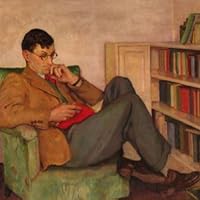
The bookmark for the hardbound edition (discovered in a thrift shop selling old clothes and gifted to me by the wife in our anniversary) that I had for my second reading of Graham Greene's "The Honorary Consul" is rather intriguing in its own way. The note at the back of the medieval picture describes it as "The First Kiss Of Lancelot and Guinevere", an illumination from LANCELOT DU LAC, a painting from around 1310. Some of us might know already that the tryst between Sir Lancelot and Queen Guinevere was one of the catastrophic incidents that led to the dissolution of the Round Table and of King Arthur's reign as well. It is a classic travesty of infidelity and thus the consequences of the illicit act and the conundrums of loyalty and love that it entailed are encapsulated in this portrait perfectly. The bookmark thus complements the novel - a thriller about a wrong kidnapping and its consequences, surely, but also a thriller, not of politics or crime, but rather of the human soul.
A thriller of the human soul....now, how many thrillers or novels for that matter can be described with that intriguing name, I wonder? Perhaps, one would only have to revisit the nineteenth century to find an equivalent - perhaps in the novels of Dickens or in Stevenson's adventures which could feature the themes of betrayal and danger convincingly as well as characters who could not be trusted entirely or even villains who were not wholly evil. Greene, perhaps the only author of the twentieth century, to usher in the same sense of danger and suspicion, even in the relationships of love and friendship, had always been fascinated with these authors - and so "The Honorary Consul" can be deemed as a rousing ode to these novels about greedy uncles who got their own unsuspecting nephews abducted and sold as slaves and about unreliable father figures and guardians who could get their own wards killed or plunged into mortal danger.
But eventually, Greene's novel is far beyond all the usual tales of drama and heroism - it is a tale rooted in the grim and dangerous reality of the world we live in, just as "Oliver Twist" followed its titular character through the sordid streets of London and "Kidnapped" followed David Balfour as he tried to wade through dangerous political upheavals in the Scottish highlands. It is set in one of the author's beloved landscapes - the South American milieu of violence and machismo, of romantic passion and revolution and indeed, how astutely, through its exquisitely orchestrated plot of an old, bamboozled British Consul, wrongly kidnapped by a ragged band of Paraguayan rebels in a not-so-sleepy Argentinian town, does this writer portray, intelligently yet intimately, the dilemma between idealism and betrayal, between hope and despair, that haunts this terrain, ruled by despotic tyrants, fed on American aid and yet lingering in vain on the brink of some hope of change.
Neither is Greene's interest merely political - this was a writer, who, as Maria Aurora Couto once said, never lost grasp of the "the human factor" - the never-simple tangle of human relationships, feelings and emotions, of hope and pathos that elevates even his entertainments to the rank of great literature. And "The Honorary Consul", true to his signature style, is filled to the brim with characters, fascinating and brilliantly etched - men and women, priests and policemen, writers and exiles, prostitutes and criminals - people who are utterly believable and deserving of empathy in their flaws and virtues, in their delusions and fears, in their deceptions and confessions. There is indeed a story of kidnapping and a deadline approaching dangerously at the crux of the novel but Greene also makes sure that each flashback reveals a character's emotional and moral depth, each conversation develops an utterly believable relationship among them and that through their actions and decisions, the reader is compelled skillfully to think and dwell on the irony of the situation. The consul, Charley Fortnum and his unimportant stature makes it even more difficult for the authorities to save him and the only man who wants to do something is the much younger and more dispassionate Eduardo Plarr, his wife's illicit lover, who seems to have discovered finally a purpose to his burnt-out, fatherless existence.
In this sad yet strangely story of these two men and their captors, themselves despairing men chasing a lost cause and fighting a lost battle, Greene delivers something unexpected - a thriller that deftly deconstructs and disinters the quixotic romance behind the English stiff upper lip and the despair that lies coiled behind the Spanish ideal of machismo. And in case one would think that the writer has lost his knack for suspense, think again. There's a constant sense of unease in the proceedings, even in the beginning of an affair or in the conversations made inside a hut of tin and mud in the barrio of the poor while the clocks wind down to the deadline.
In the last fifty pages of the novel, Greene even makes us live, talk, listen, eat and sleep and wait along with these hapless rebels and their victim, unaware of what would happen next. To take up such a brave challenge at a time when you are already established as a great author? To write your eighteenth novel with the same energy and passion of your first? Nobody else than Greene could have succeeded on both counts and still deliver a masterpiece of pure, potent storytelling.


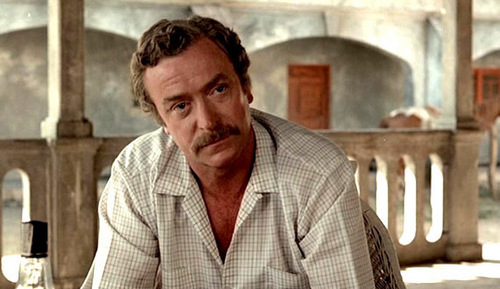




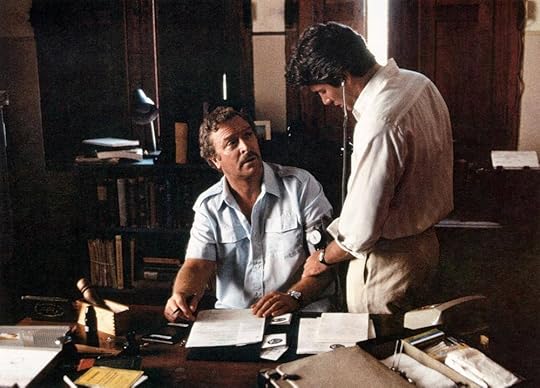
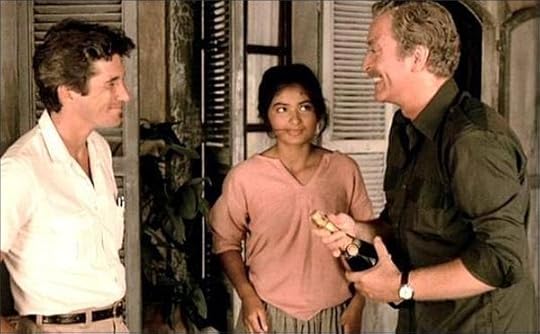




 Wonderful read, especially after my last Greeneland episode of 'The Heart of the Matter', which I didn't enjoy very much at all. Lots to mull over with this one and it is good to have thought provoking issues on the menu. Fully recommended.