Jump to ratings and reviews
Rate this book

Tintin #9

Las Aventuras De Tintín: El Cangrejo de las pinzas de oro

Rate this book
Las Aventuras De Tintin en castellano: El Cangrejo de las Pinzas Oro (Tintin #9) .

64 pages, Hardcover

First published January 1, 1941

46 people are currently reading
2267 people want to read

About the author

Hergé

1,027 books1,935 followers
Georges Prosper Remi (22 May 1907 – 3 March 1983), better known by the pen name Hergé, was a Belgian comics writer and artist.
His best known and most substantial work is The Adventures of Tintin comic book series, which he wrote and illustrated from 1929 until his death in 1983, leaving the twenty-fourth Tintin adventure Tintin and Alph-Art unfinished. His work remains a strong influence on comics, particularly in Europe.

"Hergé" is the pseudonym of George Remí, making a game with the initials of his name inverted. Throughout the evolution of his star character, Tintin, we can see the progress of this author: from the first titles marked by the ultraconservative doctrine of the director of the newspaper Le Petit Vingtième, to the breaking of conventions embodied from The Blue Lotus , as well as the evolution of the society of his time. The research carried out by Hergé to historically contextualize his Adventures, as well as his implicit social criticism, have made Tintin a masterpiece of the 20th century.

Series on Goodreads:
* The Adventures of Tintin
* Quick & Flupke
* The adventures of Jo, Zette and Jocko

Ratings & Reviews

What do you think?
Rate this book

Friends & Following

Create a free account to discover what your friends think of this book!

Community Reviews

5 stars
5,958 (38%)
4 stars
5,910 (37%)
3 stars
3,226 (20%)
2 stars
443 (2%)
1 star
80 (<1%)
Displaying 1 - 30 of 524 reviews
Profile Image for Luís.
2,370 reviews1,358 followers
November 22, 2025
If this album does not shine because of its bland plot, it marks the arrival of an essential character in Tintin's world: Captain Haddock.
I must say that Captain and Milou have always been my favorite characters, probably because they are less smooth than Tintin.
The Crab with the Golden Claws is a wreck that Tintin encounters since the Captain suffers from an alcohol addiction, maintained by his second, to keep him away from his shady business. Throughout the album, the Captain tries his best to stay sober while Tintin leads the investigation with the cunning and finesse of his mind.
Hergé's drawing is sublime. We take a full view because the artist gratifies us with large boxes expressing all his talent. I particularly liked the graphics of the desert and the souk.
Profile Image for Bionic Jean.
1,383 reviews1,564 followers
December 1, 2024
Many years ago, every day at the same time, televisions up and down the country would boom out “Hergé’s Adventures of TIN-TIN”. English children everywhere would drop whatever they were doing, and for the next five minutes would be glued to the family television set. Because five minutes was all there would be each day, of this action-packed continuing animated film.

The first story to be adapted was The Crab with the Golden Claws in 1956, although a favourite of mine, much repeated all through the 1960s, was “Objective, Moon!” (which sounds great to a small child if you say it in a big boomy voice). They were adapted from large format slim paperbacks, with stories in comic strip form, four strips per page, and an occasional full page illustration. To be honest, although they are instantly recognisable, I’m not sure I ever read the books. So over time, the memories receded.

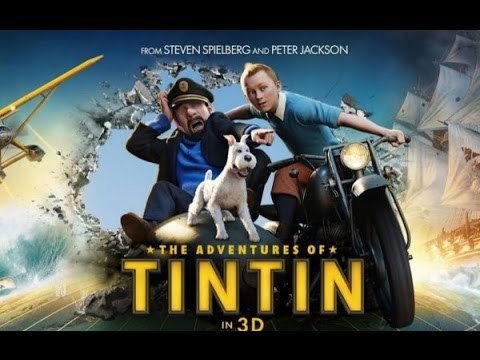
Then I learned there was to be a major film called “The Adventures of Tintin”. It was to be directed by Steven Spielberg, produced by Peter Jackson, and partly written by Stephen Moffat. The plan was for a motion capture computer-animated film, with a starry cast of actors to provide the voice-overs. With names like these, it was a must-watch film, and I vaguely wondered what had caught the attention of these cinema giants, to want to revive the series. I learned that Steven Spielberg had become an avid fan of the Tintin comic books in 1981, after a critic reviewing his film “Raiders of the Lost Ark” had compared it with Tintin’s adventures. There had been live action film versions of Hergé’s comics before, but Hergé himself didn’t like them, and thought that Spielberg was the only person who could ever do Tintin justice. Hergé met with Spielberg in 1983 and although he died that week, his widow subsequently gave Spielberg the rights in 1984.

The film was put on hold, and finally made for release in 2011. It proved to be an exciting and fast-paced adventure. The plot was a loose adaptation of three “Tintin” books The Crab with the Golden Claws (1941), “The Secret of the Unicorn” (1943) and “Red Rackham’s Treasure” (1944). It was called “The Adventures of Tintin” in the USA, and named after the middle book of the series, “Tintin: The Secret of the Unicorn” elsewhere:


Watching this proved entertaining enough for me to search out the original books, which are still in print, and I started at the beginning with The Crab with the Golden Claws.

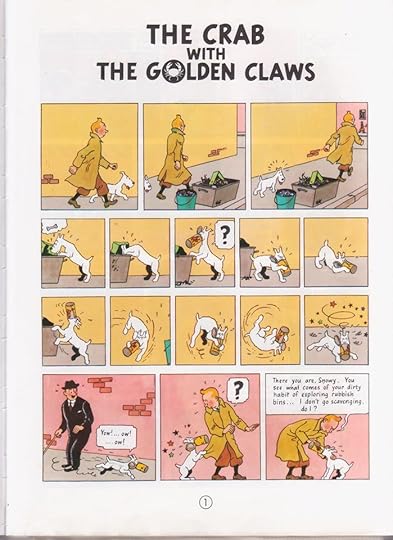
What a treat it proved to be! I chortled my way through it, enjoying the language as much as the cartoons, and realising that, clever as the special effects in the films could be, a lot of the humour could not transfer. Many of the expressions on the faces of the characters, the liveliness of the drawing style, the sneaky asides in the detail (which the reader only notices after a moment) – all these are necessarily lost when a successful cartoon is changed to a different format. Here is the first page:


Yet this is only a taster for the story itself. To start with, Tintin meets up with his friends Thomson and Thomson. They are alike as two peas in a pod; a couple of bumbling Belgian civil servants, complete with brollies and bowler hats. They tell him of a case involving a drowned man, some counterfeit coins, and a scrap of paper from what appears to be a tin of crab meat with the word “Karaboudjan” scrawled on it.

Tintin instantly remembers the piece of paper Snowy had dragged out of the dustbins, and runs back to see if he can retrieve it. The action-filled pages describe Tintin’s investigation on a ship called the “Karaboudjan” where he is taken prisoner by a gang of criminals who have hidden opium in the cargo of crab tins. With the help of his trusty friend Snowy the dog, who chews through the ropes tying him up, Tintin escapes from the cabin he has been locked in, by knocking out the man bringing him food, leaving the man himself bound and gagged there instead.

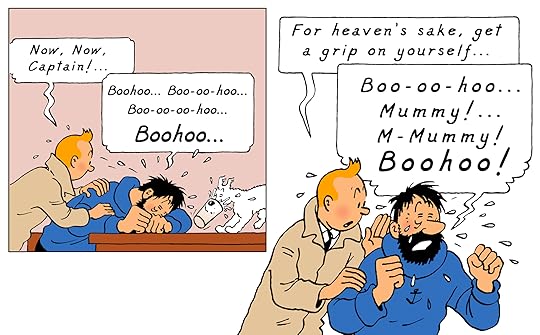
Then we see the first introduction of everyone’s favourite seafarer, “Captain Haddock”, who is a recurring character in the series. Instantly we deduce that this sea captain is, at the moment, very worse for drink. Very maudlin and comically yearning for his dear old mother, he is completely useless to our young hero Tintin. Captain Haddock has been manipulated by his first mate, Allan, and is unaware of his crew’s criminal activities. Tintin hides in the locker under the bed and gets the better of both Allan and Jumbo, the sailor left in the cabin, by tricking them into thinking he has climbed out of the porthole back into the storeroom. It is Jumbo who is left tied to a chair and gagged. And while Allan blows open the storeroom door with explosives, only to find it empty, and Jumbo tied up in the Captain’s room, our plucky young hero and Captain Haddock have managed to escape in a handy lifeboat.

The scenes in the lifeboat are hilarious, as more than once the daring duo’s lives are in peril due to the drunken exploits of Captain Haddock. However, they manage to send a radio message to the police about the cargo, whereupon they are attacked by rapid gunfire from a seaplane. Never fear, Tintin and the Captain hijack the plane, tie up the pilots, and try to reach dry land. Captain Haddock’s drunken antics in a storm mean that they crash-land in the Sahara, and the plane bursts into flames, whereupon the imprisoned crew escape.

They have no food and no water, but Snowy is dauntless and leads them to a place full of bones. Surely this is all they will need?


They trek across the desert, and the combination of Captain Haddock’s inebriation, desert mirages and dehydration nearly combine to be the end of both of them.

“The Adventures of Tintin” was originally a series of comics by the Belgian cartoonist Hergé. They featured a young Belgian reporter “Tintin” and his dog “Snowy”. Surprisingly, the stories do not seem overly dated. Yet originally The Crab With the Golden Claws, the ninth one, was serialised in weekly parts between October 1940 and 1941. It was published in “Le Soir Jeunesse”, a children’s supplement to “Le Soir”, Belgium’s leading francophone newspaper, and was therefore published in the middle of the German Occupation of Belgium during World War II.

Although The Crab With the Golden Claws was published in book form shortly afterwards, it was not published in the USA until the 1960s, as the first Tintin story. It had been heavily edited to remove all black faces. The black Africans depicted in Hergé’s original were changed to be a white sailor and an Arab. Apparently the American publisher had reservations about depicting blacks and whites mixing together. This has resulted in a rather odd cartoon where Captain Haddock protests “Arrest that Negro! He’s a gangster …” and the reader can clearly see that the character running away is a heavy-set individual with swarthy skin, a stubbly chin, a drooping moustache and a skull cap!

Although these are cartoons, in my opinion the drawings are mainly gently poking fun at personality types, rather than depicting offensive ethnic stereotypes, which could have been the case from drawings of this period. The accent is heavily on the humour. For instance, we are invited to identify with the affronted imam in front of a mosque, having kicked out the Thomson twins (now sitting crestfallen on the road) for not having removed their shoes. Whether it is a portly French gentleman, a faceless member of the French police, a handsome and affably dim, square-jawed Army officer, or a small and slender Japanese man, finely featured with narrow eyes and dimples, all are depicted with great humour and charm. We laugh amiably at them all – and at ourselves for doing so. The thugs are typically thugs, and of various racial types.

Although this book can be enjoyed by young children, who will follow the story through the pictures, it is quite a complicated plot to follow in detail, and has a wealth of incidentally funny moments which only an adult will see. Many of the place names are puns. For instance, the town of “Kefheir” is a pun on the French expression “Que faire?”, meaning “What is to be done?”, and the port of “Bagghar” (baggare) translates as “scrape or fight”. Best of all, the name “Omar ben Salaad” means “Lobster Salad” in French.

This book will likely give you a few guffaws, and fortunately there are over twenty in the series to look forward to, the next book of course being the one the film was called after “The Secret of the Unicorn”. It is a fast-moving, exciting story, full to the brim with slapstick humour.

But it has to be said that my favourite character of all is the brave, super-intelligent, canine consort and faithful friend, Snowy. He’s my true hero.
Profile Image for Dream.M.
1,037 reviews647 followers
August 27, 2025
خرچنگ چنگال طلایی، باورود درخشان و جنجالی کاپیتان هادوک، شروع یه فرنچایز رفاقتی جذابه که جلد اولش همین کتاب محسوب میشه.
جالبترین چیز توی این کتاب برای من چهره کاملا انسانی هادوک بود. انسانی که باوجود ضعف اخلاقیش( اعتیاد به الکل) همچنان شجاع، فداکار و باهوشه. از اینجا به بعد دیگه تن‌تن تنها قهرمان داستان ها نخواهد بود...
Profile Image for Scott.
323 reviews401 followers
April 16, 2018
Billions of bilious blue blistering barnacles!!!! Ten Thousand Thundering Typhoons!!!!

Is there a greater character in children's fiction than Captain Haddock?

Does anyone in Seuss compare to a violent, swearing, alcoholic sea captain who constantly endangers the lives of his friends with his insatiable lust for booze? Do any of Mo Willems characters have anything on a man who can't even abstain from whiskey for the duration of a moon mission(!) and gets so hammered that he goes for an inebriated solo spacewalk?

I think not.

Growing up, I loved Haddock. His cynicism, his sometimes near-psychotic, other times maudlin benders, his constant swearing - everything about the character delighted me. He is the opposite of the sanitized, tidy characters that populate most children's fiction.

The Crab With the Golden Claws is a special volume in the Tintin series for me, as it is the book where Haddock makes his entrance, bringing a bit more fun and color to Herge's stories.

The story is the usual mysterious adventure, with Tintin discovering the smuggling of Opium in ship named the Karaboudjan, a ship captained my none other than Haddock, who is unaware of the illegality of his cargo. There is danger, close escapes, foreign locales - all the stuff you expect from a Tintin story.

There are some great sequences - a drunk Haddock building a fire in the middle of a lifeboat with the boat's oars, a drunk Haddock causing a plane crash, Tintin and Haddock cornered in a wine cellar where the bullets fired at them flood the cellar with wine and the alcohol fumes addle their wits, Tintin having a nightmare where Haddock mistakes him for a bottle of wine and is about to use a corkscrew to 'open' him. (In retrospect this is a pretty booze-soaked story, but as a child I lapped it up- it was so different from the other stuff I was reading!)

I loved this book as a child and It holds up pretty damn well as an adult. If you haven’t read any Tintin, you could do worse than starting with The Crab With the Golden Claws.
Profile Image for Jon Nakapalau.
6,486 reviews1,021 followers
September 27, 2023
Another great Tintin (TT) adventure! Very timely as far as the different ways drugs are transported around the world. TT really strikes me as a cross between Tom Sawyer and Jonny Quest; he is one of the most resourceful fictional characters I have ever come across. I am trying to broaden my reading of cartoons/comics/GN beyond my preferred reading; TT is a series I am looking to read more of.
Profile Image for Jokoloyo.
455 reviews304 followers
February 23, 2017
My first Comic book that I've "read"! Of course I didn't understand a word of it, I was 4-5 years old and could not read yet.

Oh, don't ask logic to my little-self. If I read it as and adult, I think Tintin is one lucky bastard lives in a nice universe where the criminals are mostly polite (except when they lost temper), and ordinary people are kind-hearted. Except Captain Haddock, he is a prodigy in Tintin universe. And this comic is the first appearance of Haddock.

Profile Image for Piyangie.
625 reviews769 followers
May 24, 2020
This installment puts Tintin against in contact with another opium smuggling enterprise. In this fast-paced adventure, Tintin goes through many dangers to finally catch the ringleaders behind this enterprise.

It is a good story and an enjoyable read, but compared with the preceding installment, King Ottokar's Scepter, it was a step taken back. However, there is much more comicality in this installment with the introduction of our dear Captain Haddock!

Interestingly, I didn't remember much of this Tintin story from my childhood reading, but I certainly remembered the ship, Karaboudjan. It is funny how our memory works. I probably have liked the name then. :)

Overall, not one of the best in the series but an interesting enough installment.
Profile Image for Alan.
718 reviews288 followers
February 27, 2024
In researching this volume a bit more, I learned about the troubles of Hergé with keeping some form of his story going throughout the war and especially during Nazi occupation. The Nazis did a perfunctory job of censoring The Black Island (because it’s set in the UK) and Tintin in America (because of the title). But they didn’t censor King Ottokar's Sceptre, which was actually directly aimed at them. Farr explored whether Hergé could have left Belgium in order to continue his work outside of the Nazi-occupied country, but I find these conversations to be much easier to have now, tens of decades removed from the fact. However, current events had to be put aside, as the censors were at work and current events meant WWII and occupation. This did have its massive upside, which was a heartier development of the characters.

This is a really important Tintin adventure for one reason only: the introduction of Captain Haddock (whose first name we learn toward the very end of the series).

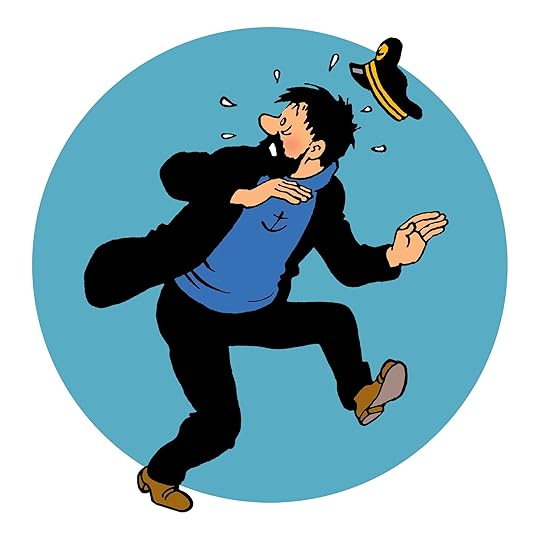
Haddock

He becomes a mainstay, appearing in every single adventure from here on out, which means that the role of Snowy is diminished. I love the meeting of the two aboard the Karaboudjan, which is smuggling opium in tin crab cans:

Actual Meeting of the Two

Tintin Meets Haddock

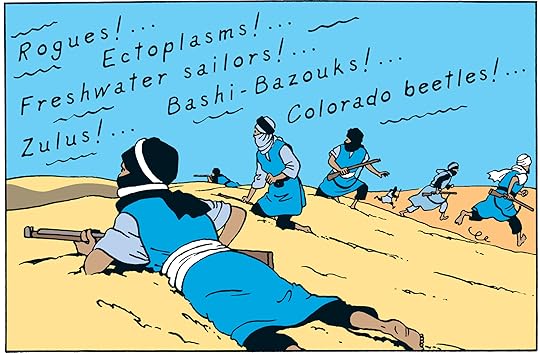
Why do we love Haddock? He is more flawed than Tintin, and that means a lot. For one, his yearning for alcohol is the stuff of legends. He is impulsive. He shows emotion, and he does so without regard for decorum. What’s more, he has an extensive vocabulary of words that are meant to be curses, which I provide here:

- Beasts
- Swine
- Cowards
- Gangsters
- Scoundrels
- Jellyfish
- Tramps
- Troglodytes
- Toffee-noses
- Savages
- Aztecs
- Toads
- Carpet-sellers
- Iconoclasts
- Rats
- Ectoplasms
- Freshwater swabs
- Bashi-bazouks
- Cannibals
- Caterpillars
- Baboons
- Parasites
- Pockmarks
- Bandits
- Brutes
- Buccaneer
- Vegetarian
- Politician
- Pirate
- Corsair
- Harlequin
- Hydrocarbon
- Aborigine
- Polynesian
- Gyroscope
- Blackamoor
- Anthracite
- Coconut
- Fuzzy-wuzzy
- Anthropithecus
- Blackbird
- Nincompoop
- Anacoluthon
- Invertebrate
- Liquorice
- Vampire

And of course…

- Blistering barnacles!

Haddock’s Curses

I quote directly from Farr here:

According to Hergé, the idea of the irrelevant insult struck him several years earlier when he witnessed an argument between a shopkeeper and customer. After a long rally of insults, the shopkeeper offered the ultimate unanswerable insult – “You Four Powers Pact!” – and so had the last word, game, set and match. This extraordinary term of abuse was based on the Four Powers Pact signed on July 15, 1933, between Britain, France, Germany and Italy.
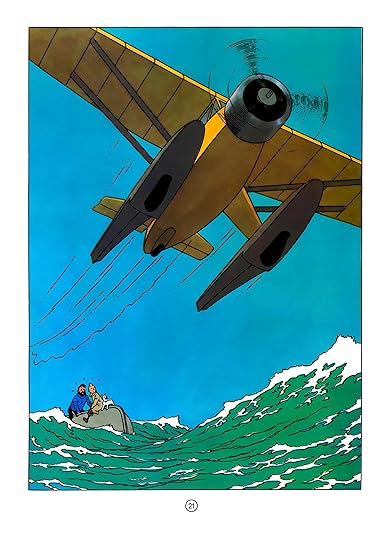
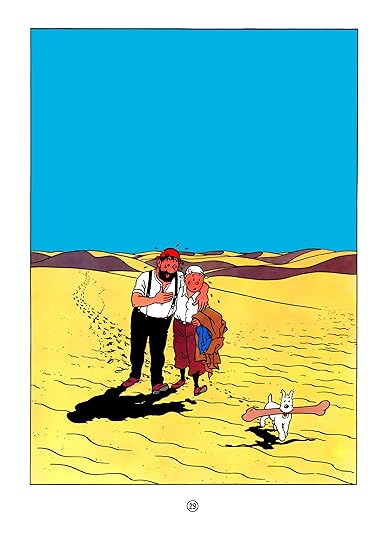
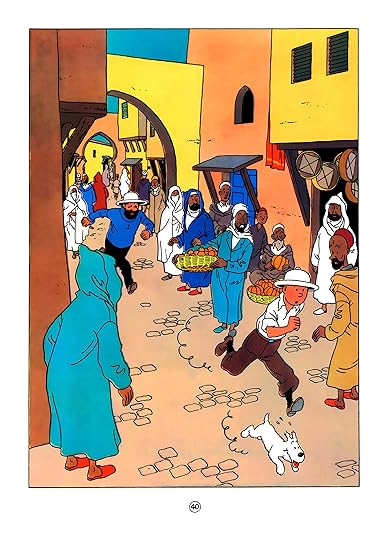
There are some unbelievable, full-page plates in this one which take the breath away:

Large Panel Plane

Then when Tintin and Haddock (and Snowy, of course) have crash-landed in the Sahara in French Morocco:

Large Panel Desert

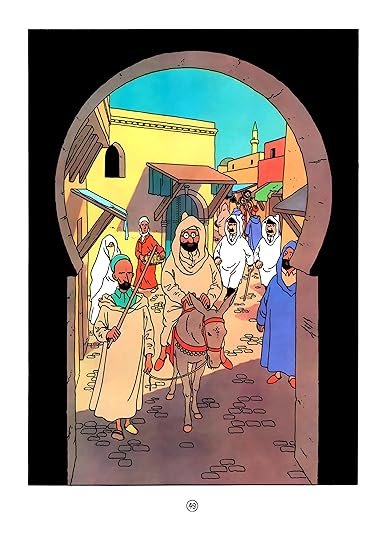
And a couple more, one of them running down an alley in Bagghar and the next of Omar Ben Salaad on the back of a donkey :

Large Panel Bazar One

Large Panel Bazar Two

Apparently, this came about because Hergé did not meet his required length for a Tintin book for the first time, so… why not. Let’s go big. Also of note: this was the final volume that was initially published in black and white. And speaking of black and white (but in an entirely different sense), American censors (!) were at work, as they “wanted no mixing of races in children’s books” – a character named Jumbo aboard the Karaboudjan was black in the original version and changed to white in the American version.

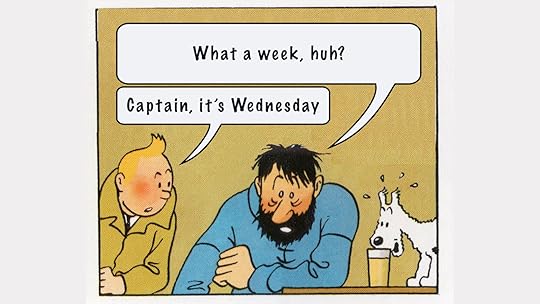
Finally, younger readers (of the current climate) will no doubt recognize the following meme:

Meme

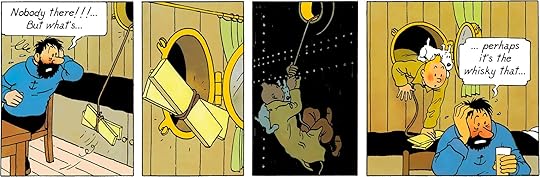
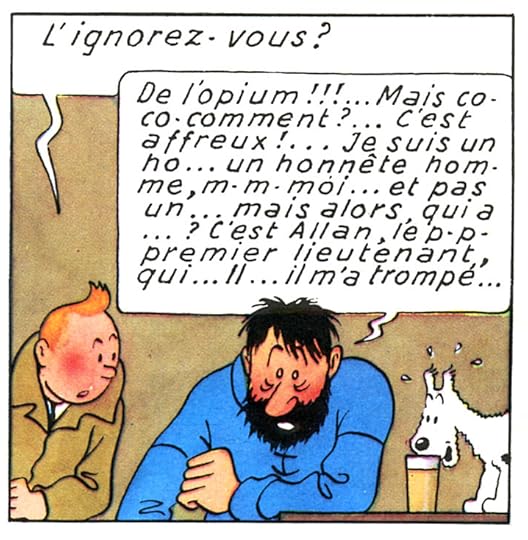
The origin of this meme is the following panel, which takes place very early on in the relationship of Tintin and Haddock aboard the Karaboudjan:

Meme Original
Profile Image for Harun Ahmed.
1,646 reviews417 followers
July 18, 2025
কাহিনিতে বিশেষ কিছু নেই কিন্তু মাতিয়ে রাখার জন্য ক্যাপ্টেন হ্যাডক একাই যথেষ্ট।।
Profile Image for Yousra .
723 reviews1,374 followers
January 8, 2018
تان تان أخيرا :)

لـ تان تان معي ذكريات طفولة لا تنسى ... تتعلق جميعها بكون تلك القصص كانت دائما كالسراب ...

كان لنا جار يكبرني بعام وله أخت في عمر أختي الكبرى وأخ في عمر أختي الوسطى أو ربما يكبرها بعام ... كان جاري وزميلي في المدرسة ... كان يشتري الكتب والمجلات ولأنه ولد ولأنه الطفل الثالث ولأن له أخ أكبر فقد كان دائم الحصول على أمتع الكتب وأجملها وألبومات الصور والستيكرز واللعب الغريبة فهو يذهب في كل مكان وبعد فترة كنت أعطيه من مصروفي ليشتري لي الستيكرز أو المجلات ... ولسبب غامض ظلت تان تان عصية علي ... كان كريما جدا فهو يبادلني وأخي الأصغر الكتب والمجلات القليلة التي لدينا ونتبادل الستيكرز المكررة وربما أعارني مرة او اثنتين مجلات تان تان لكن لفترة قصيرة جدا لا تسمح لي بمطالعتها فأعيدها كما كانت وقد أصابني منها الإحباط .. لا أستطيع قرائتها في هذا الوقت القصير

كبرنا ووجدت زملاء وزميلات دراسة آخرين تبادلت معهم كتبا أخرى ونسيت تان تان لفترة وإن ظل في قلبي شيء تجاهه لكن لا تصادفني اعداد هذه المجلة

عرفت أنها يعاد طبعا الآن وطبعا طبعا تتوافر في مكتبتي المفضلة بيت الكتب فاشتريت أعدادها كاملة لعلها تشد انتباه اولادي حيث شاهد الولدين الكبار حلقات كارتون تان تان على قناة ج لكنني أعلم أنني سأقرأها كلها قريبا قبلهما بكثير 😅😅 الموضوع يتعلق بحلم طفولة يتحقق

عدد غريب ... كلاسيكي بامتياز ... الرسومات رائعة ... ربما صعب أن أحفز أولادي وأدفعهم لقرائتها فهما لن يفهما ما الشراب الذي أسكر هادوك أغلب الوقت وجعله يأتي بالحماقات ولا يعرفا معنى المخدرات

القصة طريفة حقا وتان تان ظريف جدا وضحكت كثيرا وتفاعلت بشكل لم أكن أتخيله مع الشخصية :)

تان تان في بيتي يا جدعان 😀😀
Profile Image for Fuchsia  Groan.
168 reviews238 followers
November 22, 2019
Hace ya algo más de un año que comencé a leer las aventuras de Tintín. Hasta ahora, ninguno de los álbumes me ha gustado demasiado, con la única excepción de la aventura formada por Los cigarros del faraón y El loto azul. Como he ido comentando durante estos meses, las historias me parecían más bien una sucesi��n de gags y persecuciones que invariablemente terminaban por aburrirme. Y sin embargo no puedo decir que no haya disfrutado la lectura, casi siempre por causas externas a las historias: las innumerables curiosidades, las constantes polémicas, las modificaciones que iba haciendo Hergé en las sucesivas ediciones, el gran detalle en el dibujo (especialmente me gustan los vehículos). Así, puedo decir que, de alguna manera, con los que más disfruté fue con los que considero peores, los tres primeros: Tintín en el país de los soviets, Tintín en el Congo y Tintín en América.

Sabía que este El cangrejo de las pinzas de oro suponía un antes y un después, con la aparición del mítico Capitán Haddock, pero he de decir que al comenzarlo no tenía ya muchas esperanzas. Me equivocaba: me ha gustado, tanto por la aparición tan esperada, como por la historia, más sencilla que en anteriores ocasiones, pero también más cohesionada.

Me ha sorprendido la falta de historia al margen, la ausencia de política, de actualidad. La explicación se encontrará sin duda en el momento histórico: 1940 y la invasión nazi de Bélgica.
Profile Image for B Schrodinger.
101 reviews695 followers
December 6, 2015
This is really becoming a Tintin countdown to Christmas for me. Usually I've been reading these outside in a banana lounge at twilight. That's the perks of the Southern Hemisphere all of you jerks up there.

'The Crab With the Golden Claws' is, I think, one of the most famous Tintin adventures. It introduces Captain Haddock, the salty sailor with unique swearing abilities that is rather fond of alcohol. This time Tintin stables, as he always does, never to find a lead in the conventional manner, upon a drug trafficking ring. Opium, and Tintin recognises it instantly by sight. I am sure there is a perfectly innocent explanation for this.

Thompson and Thomson are here and a little bit more slapstick than usual, but the joke of mis-repeating each other is gone. Now they just repeat each other. That's not funny.

There is a lot of action sequences here, probably why it provided a lot of inspiration for the Spielberg/Jackson movie. It is another rollicking fun adventure that I remember fondly as a child.

I just want to leave you with Captain Haddock swearing:

Profile Image for Gary.
1,022 reviews257 followers
August 25, 2017
A series of clues, including a mysterious tin of crab, and the possessions of a drowned sailor leads Tintin to a Ship called Karaboudjan.
He has stumbled on gang led by the villainous First Mate of the ship, Allan, and soon makes first acquaintance with Captain Haddock, presented here a pathetic and wretched drunk, very different from the robust and redoubtable Captain Haddock we come to know in the subsequent volumes.
Escaping from the clutches of Allan and his gang, Tintin and the Captain take a life boat which is fired on by a plane with Moroccan markings.
They manage to get hold of the plane, but due to one of the Captain's drunken outbursts the plane crashes into the Sahara.
After Tintin and the Captain are rescued by the French foreign legion in Morocco, they eventually reach the port-city of Bagghar, where Tintin comes across the gang of drug-runners led by wealthy Bagghar merchant, Omar Ben Salaad.
This book was an important stage in Tintin's development, and while not quite as inticate as some of the others is an entertaining and memorable addition to one's Tintin collection.
Profile Image for Ehsan'Shokraie'.
763 reviews221 followers
December 15, 2020
اولین حضور کاپیتان هادوک,اسطوره طنز کودکی های من:)
Profile Image for Sam.
263 reviews31 followers
April 7, 2020
Clearly, I am reading these in the most random order. I can't believe this is where Tintin meets Captain Haddock for the first time!
Profile Image for نیما اکبرخانی.
Author 3 books151 followers
June 3, 2021
ستاره‌ی بی بدیل نمایش وارد می‌شود.
از این قسمت جناب کاپیتان هادوک هم وارد شد. بیشتر خوش گذشت.
Profile Image for Hákon Gunnarsson.
Author 29 books162 followers
June 9, 2022
Tintin was one of the comic book heroes of my childhood. I'm going to read my way through the series again as I listen to a radio program about him, and his creator, Hergé. In the ninth book Tintin gets talking to Thomson and Thompson, and the conversation sends him on an adventure.

When this book was originally being published Belgium was under German occupation. It is quite interesting to compare this one to the one before because of the different situations that Hergé was in. While the previous volume had been quite political, dealing with the way Germany had annexed Austria soon before, this one is everything but political. It is basically a thriller for kids dealing with opium smuggling which may sound like a unusual plot for a kids book in today’s world but is in keeping with the previous volumes in the series. This move away from politics is understandable. If Hergé would have written something the wasn’t to the Nazi taste, it simply wouldn’t have been published.

As a book, it’s not really among my favorite in the Tintin series. It’s not bad as such, but the humor is somewhat lacking, but it does work quite well as a thriller. It moves fast, and at the same time fairly logically from scene to scene.

There is one thing that makes this book very important in the series, and that is that it introduces Captain Haddock for the first time. This surprised me a little in fact. The Crab with the Golden Claws is the ninth volume in a series that ran 24 books, which means one third of it had been published when the Captain finally showed up. When I think of Tintin, Captain Haddock is always there, but clearly he isn’t.

In the Tintin series, Captain Haddock is my favorite character, Snowy comes in second, and the Tintin shows up at number three. Perhaps it is a little surprising that a foul mouthed, bad tempered, raging alcoholic would be the favorite character for me as a kid, but perhaps not. Think of Donald Duck. He may not be a raging alcoholic like the Captain, but he is the most foul mouthed, bad tempered little Duck you’re likely to come across. Of course, I do see the Captain in a different light now as an adult, but I think he still is my favorite character. Perhaps for a bit different reasons now.

All in all, I think this is a pretty good volume in the series, perhaps not among the best, but it does at least give us Captain Haddock for the first time.
Profile Image for Wulf Krueger.
513 reviews126 followers
September 4, 2022
Wieder einmal bin ich mit Die Krabbe mit den goldenen Scheren bei einem der schwächeren und problematischeren Bände der Comic-Reihe gelandet: Tim ist auf der Spur einer Bande von Opium-Schmugglern und bereist zu Lande, zur See und in der Luft auch wieder - für die Entstehungszeit - “exotische” Orte wie Marokko, wo “die Wilden” geschmäht und von den französischen Kolonialherren "großmütig" geführt werden…

Rassistische und kolonialistische Klischees gibt es hier insofern - mal wieder - zuhauf. Bis hin zum am Rande auftretenden japanischen Detektiv, der einer bewußt rassistischen Karikatur entsprungen sein könnte.

Auch hier ist Hergé Kind seiner Zeit: Sein Land, Belgien, ist zur Entstehungszeit dieses Bandes (1940) von den Deutschen besetzt und obschon Hergé nicht kollaboriert, so wird er doch zumindest beeinflußt. Ganz zu schweigen davon, daß gerade auch Belgien eine üble Kolonialgeschichte hat.

Auch ansonsten ist die Geschichte für mich von nur geringem Interesse - allerdings, und das ist der einsame Höhepunkt dieses Bandes, taucht zum ersten Mal Kapitän Haddock auf, der Tim auf vielen weiteren Abenteuern zur Seite stehen und ihm manchmal auch die Schau stehlen wird.

Zwei von fünf Sternen.


Blog | Facebook | Twitter | Instagram | Pinterest | Medium | Matrix | Tumblr

Ceterum censeo Putin esse delendam
Profile Image for Adriana Scarpin.
1,734 reviews
January 25, 2021
Esse mês, mais especificamente dia 9 de janeiro, fez 80 anos que Tintin encontrou o capitão Haddock pela primeira vez e o resto é história. Uma das coisas que mais gosto do Tintin é o quanto foi influente em termos de humor e aventura moldando o Indiana Jones - não à toa Spielberg adaptaria mais tarde também o Tintin num filme igualmente excelente.
6 reviews
March 3, 2008
I think Tintin was the coolest person to ever exist.
Profile Image for Juan Benot.
Author 14 books155 followers
July 23, 2025
colonial problemático menuda cosa lo del alcoholismo de Haddock vaya cosa masculina perfect magnifique
Profile Image for Maria Carmo.
2,052 reviews51 followers
May 29, 2020
So, finally in this adventure, Tin-tin meets for the first time Le Capitaine Haddock!!!!! And what a state he is in, during this first adventure together! As Captain of a cargo ship, he has been tricked by his immediate to drink too much and stay away from managing what is going on in his ship - while the Lieutenant is trafficking Opium! Of course Tin-tin and Milu come to the rescue...
Funny and adventurous, as all of Hergé's books.

Maria Carmo,

Lisbon 9 January 2015.
Profile Image for Michael Gerald.
398 reviews56 followers
March 8, 2012
This is one of the books on which the latest Tintin film is based. Again, Tintin is up against the problem of drug trafficking. This book is also memorable for it is where Captain Haddock makes his first appearance, as the ship captain with an alcohol addiction who is saved and eventually helped reformed by Tintin.
Profile Image for Noella.
1,252 reviews77 followers
June 4, 2023
Deze keer komt Kuifje terecht bij opiumsmokkelaars. De opium is verborgen is blikjes krab, op het etiket staat een rode krab met gouden scharen. En de smokkelwaar bevindt zich op het schip van kapitein Haddock...Het is een hele klus voor Kuifje en Bobby om de zaak tot een goed einde te brengen.
Profile Image for Kavita.
846 reviews459 followers
March 28, 2023
In this one, Tintin is actually consulted by Thompson and Thomson regarding a case. A man drowned at sea is found with five counterfeit coins on him. But it is the picture of the crab with the golden claws that catch Tintin's attention. He realises it is from tinned crab and there is the word 'karaboudjan' written on it. This sets him off on another adventure, a nautical one this time. The counterfeiting ring somehow turns into a opium smuggling ring, but that's life for you!

The Crab with the Golden Claws is a remarkable development in the series since it introduces the alcoholic and potty mouthed Captain Haddock. Henceforth, it will be a pleasure to learn new swear words from him! Next time I want to curse out someone, I'll do it by shouting 'anthracite' or 'coconut' or 'blackbird' or even 'slave-trader'. Brilliant insults without using actual nasty words!

Unfortunately for Tintin, Captain Haddock is worse at deterring him than the actual criminals! He gets drunk all the time and does silly antics, adding to the fun. I especially enjoyed their trek through the desert with Tintin trying to manage a drunk and dehydrated Haddock. The final speech by Haddock on the perils of alcohol was simply hilarious.

I find the historical historical context of these comics quite fascinating. By the time, The Crab with the Golden Claws was published, Belgium was under German occupation and Hergé decided to quietly stop taking any political stance in order not to draw attention to himself. Gone was the poking fun at European politics and colonisation. Instead, plot development and comedy became more prominent, not necessarily a bad thing.

I enjoyed this book and am looking forward to seeing more of our favourite alcoholic!
Profile Image for David Sarkies.
1,930 reviews382 followers
June 11, 2014
Captain Haddock makes his first appearance
6 February 2012

Okay, not only is this one of my favourite albums, it is also the album in which we have one of the major characters, Captain Haddock, first appears. At this stage we now have the two police officers (the Thompson twins), the opera singer (Bianca Castafiore), some reoccurring villains (Rastapopolous and Mr Alan Mate), and now Tintin's travelling companion, the drunk ship captain Captain Haddock.
It is funny that some have noted that none of the characters (with the exception of Jolon Wagg) actually have any family, and in some cases, no real background at all. All we know about Tintin is that he is a reporter that works for a Belgian newspaper, and all we know about the Thompson Twins is that they are police officers. The same goes with Captain Haddock, though he do get a glimpse of his heritage, which is more than we have with the other characters.
However I do not think that the lack of a background ends up detracting from the stories themselves. I just do not believe that Herge thought that it was necessary to delve too deeply into his character's pasts. What we have is a series adventure, as well as some very clever satire, and the characters seem to be well rounded enough so as be able to exist without a background that exists outside of the series. In the end there is nothing beyond what is in the album that is really needed to add to the excitement of the adventure.
Once again Tintin is going after drug smugglers. He seems to have a habit of stumbling into adventures, and the key with Tintin is that the more you try to discourage him, the more determined he is to get to the bottom of the mystery. It is not the case that Tintin is always right though, he is not. A number of times he does make mistakes, however it is his determination to see that the villains do not get away with their villainy that makes Tintin who he is.
The recent movie that was released is partly based upon this book, which once again made me enjoy the movie much more. Moreso, it is interesting that in this album, and in the movie, they have the joke about Captain Haddock lighting a fire in a boat to keep them warm, however that part is skipped out in the cartoon series. Also, at the end of the album, Tintin and Captain Haddock are trapped in a wine cellar, and the fumes from the wine make them drunk, and it is hilarious when Captain Haddock charges out of the bunker in a fit of rage chasing the bad guys, while Tintin is dancing and singing along behind him. I must admit that Herge is hilarious, though the younger readers are probably not able to relate to a number of the jokes that us adults are able. Herge is truly a writer for all ages.
Profile Image for Dan.
131 reviews
August 2, 2011
The Tintin stories for anyone who has read them and understands their history can't be viewed as anything other than groundbreaking. The beginnings of these stories have been around as long as the Lord of the Rings, the illustration and environments in the Tintin books are accurate and extremely detailed. Anyone who has spent even a little time exploring Herge (Georges Remi) can see the painstaking research and adversity he worked through to compose the world around Tintin. His ideas were ahead of his time (Exploring the moon, Industrialization, South American political conflict, modern slave trade, extraterrestrial life) and he made certain every detail for every object would be realistic (after the third book at least). Herge's work can certainly be cited as an influence for any modern day graphic novel or comic book.
Profile Image for Ashley Capes.
Author 76 books576 followers
July 18, 2015

Another of my favs - probably because it's here that we first meet Haddock AND get treated to some of his fantastic strings of curses!

People familiar with the recent CGI film will see a lot of plot elements and scenes taken from the Crab, like the way Tintin meets Haddock and the use of the Karaboudjan, the sea plane escape and shootout, the crash and hallucinations in the desert etc

There's also a fantastic little sequence where Haddock is screaming for revenge and the snap-zooms and rage on his face is priceless, right down to the disappearance of his pupils.

More fantastic full-page images here too - this issue feels jam-packed with them, though it's the underside of the sea-plane one that I liked the best.

Displaying 1 - 30 of 524 reviews

Can't find what you're looking for?

Get help and learn more about the design.