In George Washington and the American Military Tradition , Don Higginbotham investigates the interplay of militiaman and professional soldier, of soldier and legislator, that shaped George Washington’s military career and ultimately fostered the victory that brought independence to our nation. Higginbotham then explores the legacy of Washington’s success, revealing that the crucial blending of civil and military concerns characteristic of the Revolution has been variously regarded and only seldom repeated by later generations of American soldiers.
Washington’s training, between 1753 and 1755, included frontier command in the Virginia militia, adjunct service to the British regulars during the French and Indian War, and increasing civil service in the Virginia House of Burgesses and Continental Congress. The result of this combination of pursuits was Washington’s concern for the citizen behind the soldier, his appreciation of both frontier tactics and professional discipline, and his sensitivity to political conflict and consensus in thirteen colonies in forming a new, united nation. When, in 1775, Washington accepted command of the Continental Army from the Continental Congress, he possessed political and military experience that enabled him, by 1783, to translate the Declaration of Independence into victory over the British.
Yet, Higginbotham notes, the legacy of Washington’s success has sometimes been overlooked by generals concerned with professional training and a permanent military establishment, and therefore apt to revere foreign heros such as Jomini, Napoleon, and Bismarck more than Washington. Other leaders, most notably the World War II chief of staff, George Marshall, have recognized and implemented Washington’s unique understanding of civil and military coordination. In times almost wholly dominated by a military agenda, Washington’s and Marshall’s steady subordination of soldier to citizen, of strategy to legislation, recalls the careful consensus of thirteen colonies in 1776.
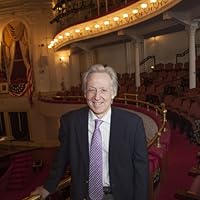
Don Higginbotham was an American historian and Dowd Professor of History and Peace, War, and Defense at the University of North Carolina at Chapel Hill.
I read this book as part of my teaching load for a military history course this semester. I thought it was an excellent assessment of how George Washington contributed to an American military "tradition" of military subordination to civilian authority. Higginbotham pays particular attention to how Washington learned from his experiences in the French and Indian War and, in 1775, became the best positioned candidate to provide both the strategic and tactical leadership necessary to win the war and act as broker between military and civilian interests. Although Washington was given discretionary powers by the Continental Congress he was diligent to avoid military overreach in civilian affairs or to allow the regular army to trample the rights of civilians in the name of military necessity.
Excellent read. Although it is short this book is densely packed with ideas about civil-military relations and 18th century military history.
Higginbotham is a perceptive student of Washington and takes a judicious approach to his complicated military career -- the book acknowledges the general's strengths and his weaknesses, and examines how they were connected. Good treatment.
A well-written series of discussions on General George Washington, this book highlights the changing civil-military relationships in the years prior to and during the American Revolution. The author contends that we not only owe Washington not only the Revolutionary victory, but also our present-day subordination of the military to civilian supremacy. He further argues that no one was more uniquely qualified than Washington to accomplish this herculean task. Although a quick read, this book is packed with gems of knowledge that will aid anyone attempting to navigate the difficult world of civil-military relations.