Jump to ratings and reviews
Rate this book

Magnetic Field

Rate this book
Travels through the thoughts and experiences of a group of characters as they imagine and invent rather horrifying stories about the lives of people around them.

192 pages, Paperback

First published January 1, 1983

5 people are currently reading
1085 people want to read

About the author

Ron Loewinsohn

32 books13 followers
Loewinsohn earned his BA from Berkeley in 1967 and his PhD from Harvard in 1971 with a dissertation on the early poetic development of William Carlos Williams.

Loewinsohn Joined the English Department faculty at UC Berkeley in 1970, where he spent the remainder of his career. His first novel, "Magnetic Field(s)," was one of five finalists for the National Book Critics Circle Award for fiction in 1983.

Ratings & Reviews

What do you think?
Rate this book

Friends & Following

Create a free account to discover what your friends think of this book!

Community Reviews

5 stars
82 (30%)
4 stars
97 (36%)
3 stars
63 (23%)
2 stars
19 (7%)
1 star
6 (2%)
Displaying 1 - 30 of 64 reviews
Profile Image for Vit Babenco.
1,785 reviews5,792 followers
October 12, 2019
Magnetic Field(s) is about people’s dwellings, objects belonging to people and auras produced by those things…
More and more now he found that after he had gotten his one valuable thing out of a house and into his car he wanted to go back in the house and simply stand there, feeling the house as a kind of ongoing zone around him. He had been taking things that had no value from the very beginning, even though he did not know what he would do with them. Outside the house they had come from, they lost whatever magic they had seemed to possess – a spoon that said NEW JERSEY, a small plastic syrup bottle in the shape of a bear, a half-size railroad spike that someone had had brass-plated. They were things that had acquired a sort of magnetic charge from having been in one place, where people actually had lived, for a long time. Outside of those places they seemed not inert but diminished.

Things are reflections of the persons they belong to and seeing personal belongings one may imagine a person they belong to and even this person’s life.
You can’t see the image of a camera obscura unless you’re inside it. You can’t know what a magnetic field is like unless you’re inside it. If you stand outside it, all you can see is the effects of its being there, the designs of the iron filings…

One can’t place oneself inside the inner selves of other people… One can judge other people only by the effects they produce on the surrounding world.
Profile Image for karen.
4,012 reviews172k followers
June 19, 2020
there is something both elegant and disturbing about this short novel. it gave me a really nice chill as it started unfolding; what starts off as a well-written but not awe-inspiring first part builds into this twisting echoing tantalizing web of a novel that reads much much bigger than it is. like house of leaves, except, you know, good.

come to my blog!
Profile Image for Nathan "N.R." Gaddis.
1,342 reviews1,652 followers
Read
May 20, 2017
“Killing the animals was the hard part.”

For a meta-fictionist reader such as myself, every book finds itself taken as a book about our books, the reading of them and the writing of them. Sometimes it may be the simple matter of Twain tipping his hat to Don Quixote in his Huck Finn story; other times, as is the case with Loewinsohn’s Magnetic Field(s), that habit of reading aboutness as a self-reflexive aboutness feels like the literary version of an earworm. The book is no longer just the story it contains but every element of the story speaks metaphorically or analogically about the experience of reading the story. And so it should be. Heidegger writes about Dasein dwelling in language; Gass about our ‘habitation of the word’; Barth about aboutness; Loewinsohn about books qua rooms and houses in which we have our being.

The opening piece of Magnetic Field(s) is a portrait of a burglar, Albert, who finds himself interested not so much in the removal of property and his financial gain (although about his job he says that he “likes the hours”) but in the experience of being in the house, the dwelling, the rooms. He imaginatively projects himself into the consciousness of the people who dwell there, for whom the room speaks, in which they have their habitation. Rather than endeavoring to be as efficient as possible in his burglary, quickly in and out, reduce the risk, etc., he prefers to take a beer from the fridge, to make himself some toast, to smoke a cigarette and watch Television; he wants to feel how it feels to have this room, this apartment, be the field of one’s being.
It was how intensely he felt the thrill of being in the house. It was a place to live, and partly it was so delicious because it was so absolutely forbidden, much more forbidden than the stealing, this being where other people have their life. . . They were trying to make this house become part of them, and the whole time it was standing all around them, containing them inside itself, holding them in its own body. (22)
Are not these houses and rooms the very books themselves within which we readers undertake a habitation when we take up a new fiction? Each book feels like another room, another field of possible experience, the ‘what it’s like’ to be a particular, other consciousness.

Albert is in the habit of removing from his burglarees some object of little value, some talismanic piece that resonates with the consciousness of those who dwell in those rooms--a child’s toy seal, a pipe in the shape of a penis, an ashtray, a ceramic matchstick holder, etc. These objects announce themselves within a room and he acts to maintain them as a bridge back to his experience within that room, his feeling himself into the consciousness of its dwellers. But once the objects have been removed, stolen, taken out of their webs of relations in that room they lose that "charge" which had attracted him to them.
They were things that had acquired a sort of magnetic charge from having been in one place, where people actually had lived, for a long time. Outside of those places they seemed not inert but diminished. Some of the older pieces he eventually threw away because they had lost whatever it was that had prompted him to take them in the first place. He had forgotten which houses they had come out of. But he always took the money things--stereos, TVs, jewelry. They formed the public reason for his being in the houses at all.
How can such a passage not be read as a critique of the reader who approaches a book in order ‘to get something out of it’? Not only does that which we ‘take away from’ a book disintegrate and lose its being, its meaningfulness, when it is ripped away from its articulated existence, but this burglarizing of a book is merely a public alibi for our dwelling with pleasure within the text of our fiction. It is a thin justification offered to the public for our mere and illicit being there within the consciousness of a fictional life, in that world within which the characters dwell.

Such a seemingly heavy-handed metaphor will not be to everyone’s taste. In fact, I could just be making all of this up, despite the plenitude of evidence. For some of us who love books, we love to find books that are about us, stories which are about our pleasure and experience of dwelling within the consciousness and world of all those characters, to feel our way through their dwellings, to imaginatively project ourselves into their habitations.


Appendix: The habitation of the earworm.

“Even as he pictured what went on in the room, he did not see himself in the scene watching.” (26)

“I live here.” (36)

“This was something that stayed a secret for a while and then emerged from that unseen room into the public world, where it circulated, freely and openly, even though its true, undercover nature, its stolenness, remained concealed.” (40)

“Well, when are we going to get to walk around inside it?” (47)

“This viewer is going to have to work his ass off. No rest for the wicked.” (51)

“Now he was in that non-space the headphones created.” (55)

“It sounded a little like some of Nancarrow’s things for player piano, but of course the Mozart had a melodic basis, a solidity of understructure.” (57)

“Why would anyone in his right mind go to all this trouble to turn music into paper? It was like a Xerox copy of the world.” (69)

“Well. I don’t know. This is all pretty metaphorical.” (72)

“What the hell have I just read? . . . What a horrible, constipated style the man wrote in!” (158)


A Note on the Type
The text of this book was set via computer-driven cathode-ray tube in Bembo, the well-known monotype face. The original cutting of Bembo was made by Francesco Griffo of Bologna only a few years after Columbus discovered America. It was named after Pietro Bembo, the celebrated Renaissance writer and humanist scholar who was made a cardinal and served as secretary to Pope Leo X. Sturdy, well-balanced, and finely proportioned, Bembo is a face of rare beauty. It is, at the same time, extremely legible in all of its sizes.
Composed by Crane Typesetting Service, Inc., Barnstable, Massachusetts.
Printed and bound by The Haddon Craftsmen, Inc., Scranton, Pennsylvania.
Typography and binding design by Dorothy Schmiderer.


______________
A Conversation with Ron Loewinsohn
By Corey Weber

[Note: This interview was conducted via e-mail in Summer 2002, prior to the Dalkey reprint of Ron Loewinsohn's Magnetic Field(s) in November of the same year.]

"The most immediate impulse for writing the book was the fact that I'd just been burglarized. This was maybe the fourth or fifth time this had happened to me, and all of the issues connected with being broken into, being invaded, were all very much on my mind. The cops who investigated the burglary also told me some remarkable anecdotes about burglars—some of Albert’s adventures derive from those anecdotes. Like David in the novel, I’d been burglarized just before leaving to go back east for part of the summer, which my family and I were planning on spending in a house much like the one David sublets. So the parallels between the burglar and me were already reverberating in my head: we were both invading someone else’s space or life. But of course this is exactly what the novelist has to do: get into someone else’s experience and live there, for some extended period: it takes weeks and weeks to write a novel."

Ron's page at Berkeley.

Profile Image for Drew.
239 reviews126 followers
March 20, 2012
So I guess it's been a month, but I'm going to take a stab at a (short) review anyway, despite not being able to remember all the things about this book that I thought would stick with me.

This is supposed to be one of the overlooked classics of the 1980's, which, given my fairly low opinion of the 80's in general, I can believe. What's fascinating to me about it is how accurately it portrayed the American privacy/property impulse. According to Erickson in the preface, this impulse hasn't always been a part of American culture, but I think it has. Sure, people all over the world probably want both privacy and property, but in America we've placed a premium on it and, at the same time, made it relatively attainable. Each suburban (and a suburb, as far as I can tell, is for the most part an American phenomenon) home is its own mini-castle, complete with a moat analogue in the yard. In fact, we have laws in most states that are called Castle Laws, that enable you to address an intruder - any intruder - with lethal force.

With this as part of our ethos, it's not too surprising that Loewinsohn makes his characters say things like the worst part of being robbed is "the feeling of being violated, of having your privacy invaded, that's pretty bad." This seems cliché now, since everyone who gets robbed tends to use the word "violated." But at the time, I'm not sure. I still cringed, but I want to try to give Loewinsohn the benefit of the doubt, because he's meditating on something pretty interesting.

The fact is, though we've always been pretty privacy-oriented, only recently has complete privacy become an option (setting aside cases of recluses and hermits and all that). A comparatively high proportion of Americans can and do work from home. You can get your groceries delivered by a number of different services. Thanks to the Internet, you can buy anything you might need for entertainment or anything else, without leaving your home. Hell, if you're looking for a significant other, you can even find those online. And by the way, apparently more Americans are living alone than ever before.

I do think people are taking full advantage of these things, and because of this, it's interesting to think that maybe robberies and burglaries will become increasingly traumatic because of this. People who live alone can unleash their latent eccentricities a bit, without fear that anyone will judge them...unless someone breaks into their house, of course. And if you're used to having your home be almost a literal castle, wouldn't it feel that much worse to have it invaded?

And obversely: I live in a house with four other people, and none of us have anything much worth stealing. People I've never seen before frequently show up at the door, and I let them in because I assume they're friends of friends. But they could be anyone, really. And actually, my house has been robbed a number of times in the last two years, and I don't feel particularly violated. Loewinsohn's narrator says the worst part is the violation, and the items stolen don't really matter because of insurance. Since I don't have homeowner's insurance, I have to disagree with him. For us, the items stolen are the only things we care about.

My point is that most Americans have an expectation of getting past that situation relatively quickly; if I were to put it in Loewinsohn's terms, my magnetic field is smeared together with a bunch of others, and they all ultimately cancel each other out. Would Albert, the book's serial breaker-and-enterer, feel much of anything if he came into our house? Doubtful. Whereas in the houses of the well-to-do, there's always an aura surrounding the objects, and this is what Albert feeds on. Consequently, the owners of the aura can feel that it's been violated. This seems hardly a good thing, so ultimately I don't think I envy them their complete privacy.

Also, there seems to be a dog-eared page in my copy of this, and I've just figured out why; it's a quote that makes me a bit less likely to ever want to have a kid. There's a precocious and troubled kid in this book (a trope that I'm not sure I'll ever tire of), and he develops a hobby of building model trains with his dad, as a bonding thing. Naturally, the dad feels great about this, as he hasn't been able to reach the son any other way. Later, we find out that "the boy had never had the slightest interest in model railroading, and had begun the layout and continued to expand and develop it, almost to the day of his death, because he knew it made his father feel good to think he was contributing in this way to his son's happiness."

Ouch. This reminds me of a few occasions on which I did things like this, never to the Mortimer kid's extent, of course. And seeing it from the other point of view, if I ever had a kid who did something like that to/for me, I'd be crushed. First of all, to be deceived by a child, even a precocious one, would be a little embarrassing. Second of all, to feel like I'm doing someone a favor and then to find out they've been doing the favor for me the whole time is always a downer, and in this case, as the father, I'd feel like a major failure.

So..I didn't really say much about the book. You'll have to just trust me when I say it's pretty good. Loewinsohn's prose is not gorgeous, but in a good way. And the way he weaves the three stories together is impressive in the exact way that The Sea Came In At Midnight was not.

Profile Image for Marc Kozak.
269 reviews153 followers
June 24, 2020
I'm sure many of us have had that quasi-stoner moment where we see a large group of people and suddenly think, "oh my God, each one of those people has their own life! And their own friends! And their own jobs and their own relationships and their own set of problems! Every person in the world has their own little universe, consisting of all the complex facets and details that make up a life like my own! And just like my universe is totally unknown to all of them, their universes are totally unknown to me!!! AHHHHHHHHHH!!!"

My reading of Loewinsohn's short but surprisingly dense novel is an exploration of what happens when someone tries to break and enter into a stranger's own little universe, and what it means to have your own little universe violated by a stranger. It starts with a pretty simple example of a burgler breaking into someone's home, but quickly becomes much more than that. Have you ever felt strange when somone else starts going through your iTunes library? Like some part of you is exposed somehow? What does it mean to listen to someone else's music? To stay over at someone else's home during a vacation? To hold an object that belongs to someone else? To sleep with someone else's spouse?

Even just thinking about really getting into another person's life in a significant way can be exciting, uncomfortable, and terrifying. The book repeatedly mentions that there is a sense of longing and sadness when we are unable to get into someone else's universe -- like we are missing out on some significant understanding. With great surprise, I found myself knowing that exact feeling.

This is kind of an embarassing admission, but what the hell, we're all internet friends here. I have a common recurring fantasy that happens when I'm viewing something beautiful, like a sweeping Chicago cityscape as I walk to work in the morning, or I'm at a particularly memorable event, like a great concert or even a fun night out with friends. I find myself picturing people who aren't significantly in my life (ex-girlfriends, people from back home, friends I've lost touch with) being able to literally see what I'm experiencing through my own eyes. Like they have some sort of virtual reality goggles they can put on, and see what I see at that moment. I "hear" their thoughts or dialogue in my own head -- "Oh, look at that!" or "This is incredible!" I've often wondered why I do this, and while I'm sure some of it is pettiness (whoa, look at the cool stuff Marc is doing, why am I no longer close to him?) or narcissism (yes, everyone is so very interested in what Marc is doing all the time!), I think a lot of it is frustration at not being able share those parts of my little universe, those things I find touching or special in that moment, that are only visible to me. Even if I'm with other people, there's still a strange feeling of sadness, because this tiny moment that made my self-universe a little bit brighter will never truly be known in the same way by anyone else. In those moments, the world seems impossibly large, and everyone's own little universes seem far away.

"You can't know what a magnetic field is like unless you're inside it," Loewinshon says. This great little book shows that we can wander the outskirts of someone else's field, but frustratingly, sadly, never truly make it inside.
Profile Image for Greg.
1,128 reviews2,148 followers
May 6, 2008
This book is so good it hurts. I can't say much else about it except it's fucking awesome--anything else I might say could ruin the book for someone reading it.
Profile Image for Rod.
109 reviews57 followers
October 27, 2013
Reading Magnetic Field(s) was a unique experience, though it's really hard to put into words exactly what makes it so unique. Essentially, it is a short novel broken into three sections that are interconnected and told from different perspectives, kind of like Rashomon or the telephone game (but not really). The book is sort of like an echo chamber, with images and themes repeating throughout, but in slightly different forms and from different perspectives, making one question what is coincidence and what isn't and also, possibly, how much is imaginary or not. A hypnotic and magnetically captivating read with believable, engaging characters. Probably one I'll revisit later because I know there are further depths to be plumbed.
Profile Image for Babak.
Author 3 books125 followers
August 27, 2024
A meticulously crafted novel. Objects and scenes reappear in slightly modified form while the narrative intricately connects the lives of multiple main characters.
Profile Image for MJ Nicholls.
2,275 reviews4,851 followers
February 20, 2011
I was attracted, magnetically, to this novel after a glowing analysis of Loewinsohnian poetics in Sorrentino's essay collection Something Said. I also can't deny the attraction to a novel that shares the namesake of Stephin Merritt's chamber-pop legends (same name, more committed plural).

Well. Letdowns all round. The novel comprises three sections, two 45 pages in length, buttressing the centrepiece, which is a prim 90 pages. This is symmetrical structurally: 45 pages per hour, four hours reading in total. The book, as you may suspect, uses the magnetic field as a pull for its characters, plot, language, recurring images, etc.

Essentially what we have are three separate stories, loosely connected to one another through Loewinsohnian poetics. The first concerns a burglar and the metaphysics of burglary. The second is a lengthy ramble about a depressed teenager who writes concrete music and kills himself. The last is a male fantasy snore about a middle-aged academic dating a supermodel.

The prose is fluid, clever and stylish, but strikes an authorial distance that makes it hard for us to care. So in the end, I didn't.
This entire review has been hidden because of spoilers.
130 reviews226 followers
July 20, 2008

Takonator: “fuck I need to go home I need to take a shit”

Magnetic Field: “Just 10 more pages”

10 pages later....

Takonator: “ok”

Takonator: “fuck man I need to take a shit”

Magnetic Field: “READ ME!!!”

Takonator: “look man I really need to go home, I’ve been here since 3:30 and is almost 9 and I need to take a shit”

Magnetic Field: “I COMMAND YOU TO READ ME!!!”

Takonator: “OMG please let me go there is no way I’m using a public bath room just to keep reading you!! Culo save me!!”

Takonator’s Culo: “listen man I need to go! If you don’t let the poor guy go and do his busyness there is going to an “accident” here and after that I’ma need to be clean and you the closest piece of paper that I can see…”

Magnetic Field: “wait man calm down there is no need to go crazy, go home but come back next week and READ ME”

Takonator: “aight”

Takonator’s Culo: “Deal”
Profile Image for Ademption.
254 reviews139 followers
August 2, 2014
WHAT FOLLOWS IS DOUBLE SPOILERS (For Magnetic Field and The Sea Came in at Midnight). CONTINUE AT THE RISK OF HAVING TWO GOOD BOOKS RUINED!

Apologies in advance if my words break down, and sound like repetitive gibberish.

Narratively, The Sea Came in at Midnight is the logical opposite of Magnetic Field.

Maybe explaining the narrative in broad strokes will help explain the (magnetic) nature of the narrative. In part 1, there's a burglar, Albert, who robs a house rented by David. In part 2, David thinks briefly about Albert and about the family who used to own the house. In part 3, David thinks about his professor-friend back home who is having an affair with one of his students. In parts 2 and 3, as David is thinking about other characters, the narrative subtly shifts, from David conjecturing about these people based on scant evidence, into the fully fleshed out stories of these people. As these transitions occur, it becomes less clear who is driving the proverbial bus. There are several groups of characters and stories, but whether David is imagining them, or they exist apart from him, or a little of both is unknown.

Objects that Albert the burglar steals throughout his career appear in other people's houses at different times. The objects and stories almost fit together, but then they don't, because the objects live in spaces and times that don't logically flow from the timelines of the stories. What I also mean is that Albert could not have stolen some of the objects, but he comments on them when he steals them, and then the objects appear in other houses at different times. Are they the same objects but resold, are they waiting to be stolen, or are they just other industrial copies that someone else bought? Who can say. However, the objects do inform Albert's assessment of their owners' character. I found myself prejudging characters in other timelines, who have these objects in their houses, based on the quiet reverberations of Albert's sentiments about owners of such objects.

Characters, who never meet, use the exact same phrases at different points in the story. For example, when confronted with a burglary in their home, committed by Albert or someone else, they say "I feel so violated," because there is a shared psychological trauma beneath the cliché.

The repeated objects and dialogue point to at least three things:
1. People aren't unique, except when they are kid geniuses.
2. Kid genuises are creepy, but can be funny.
3. Democratic privacy is relatively new.

To expand on that last point, democratic privacy (i.e. privacy for nearly everyone) is a historically new concept. Kings have had their castles and usually enough power to simulate privacy. But it is relatively new for the average Joe to have his own inviolate abode away from the rabble. Unfortunately, democratic privacy is probably a short-lived concept. Drew is much more elegant on this point in his review. Even as more people move towards privacy, Western governments move towards greater surveillance. Privacy works for those who can afford it, but governments must find it troublesome that the little guy now has too much. For example, I can lock myself away at home, shades drawn, wearing headphones, plugged into my laptop, ostensibly safe in an otherwise silent room, and if I'm on the internet, the government is there too monitoring my usage. Before you pull the plug on me for bordering on "conspiracy theories," another side of privacy is that people left alone too long get alienated and weird by living too long in their own private worlds.

This book is from the 1980s. Instead of the internet, the characters use tape decks, record players, stereos (stereos for godsakes) and libraries to immerse themselves. They ensconce themselves in a quotidian cocoon of domestic life, and get upset when this calm is shattered by crime or random violence. The author is pointing to the fact that people can be lulled into an alienated domestic existence, which others may find bizarre or boring if they were permitted to look in, and that Life usually finds sudden ways of disrupting these artificially created lulls.

While also spurning definitive narrative linkages, the novel has matryoshka doll-like structural elements. The dedication on this novel is the same dedication on a monograph that a character reads. David and his friend work on a musical performance art piece entitled Les Champs Magnétiques. In a secret room in David's rented house, a model train set features a model of the house and the larger town. The model house features a replica of the room and the train set... You get the idea.

All the domestic weirdness, repeated objects and dialogue, concepts within concepts, and narrative transitions that almost go together but repel one another--- speak to a repeated line of dialogue: "a magnetic field is something someone cannot understand or experience until they are fully immersed in it." This is also the book talking about its structure and itself.

This a beautifully constructed novel. I enjoyed the weirdness and that all the pieces that seem like they go together and magnetically repel one another before they touch (or maybe they sometimes do touch). The violence is quite shocking because it is sudden, gruesome and mostly involves pets. While the violence is genuinely distressing, it is also admirably effective and lifelike in its sudden awfulness.

All the almost-but-not-linked, repetitive pieces and the violence are as irritating as they are impressive. My mind keeps trying to make connections that aren't quite there and remixing bits of the novel, trying to recombine them in a way that makes a whole, and the novel rejects them. Magnetic Field is so beautiful and irritating in a way that feels invigorating.
This entire review has been hidden because of spoilers.
Profile Image for S̶e̶a̶n̶.
979 reviews582 followers
August 27, 2024
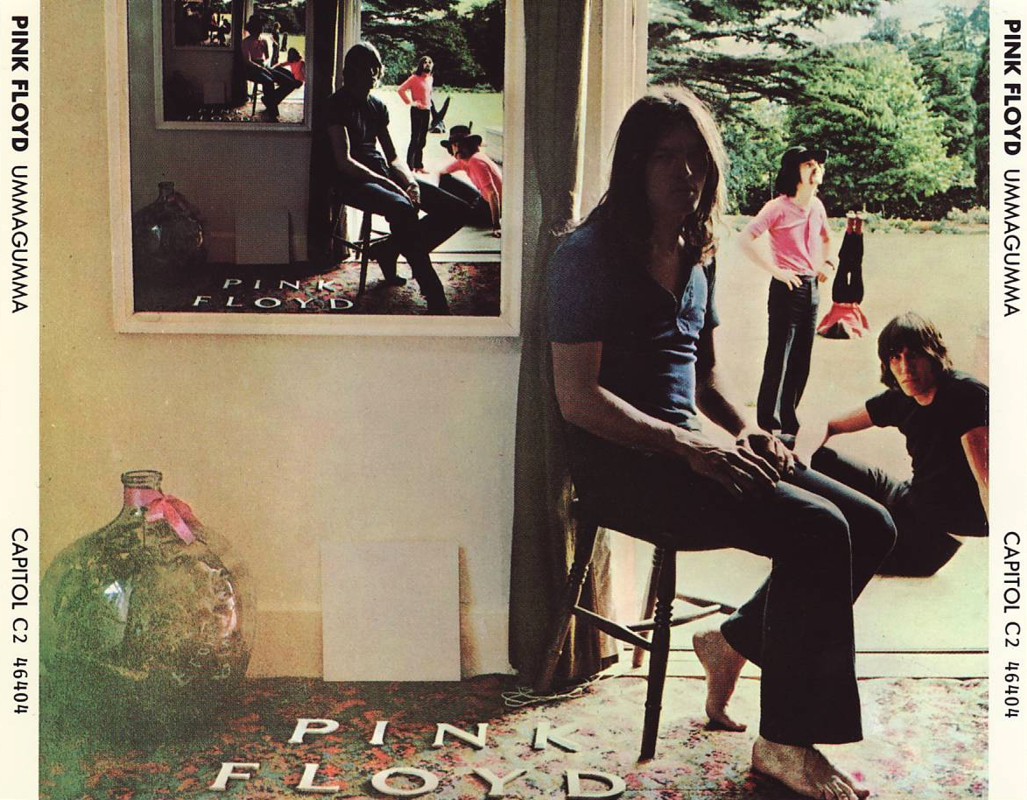
This could be a perfect postmodern novel for readers who hate postmodern novels. Divided into three sections, each focusing primarily on a single character, it begins with a portrait of a small-time burglar with a penchant for lingering in the places where other people live their lives. The plot, such as it is, moves on from there, repeatedly expanding and folding in on itself with elegant motion. It reminded me a bit of how Richard Linklater's film Slacker drifts from one character to the next, picking up the loose thread as it begins to unravel. Eventually the book turns into a literary example of the Droste effect, aka mise en abyme (see: cover of Pink Floyd Ummagumma LP). Infinite reflections of reflections, each nested within each other. It may sound dizzying, but Loewinsohn is possessive of a markedly steady hand in creating his prosaic reflectivity. Those readers whose patience has been tried in the past by blurrier examples of such trickery can approach this novel with the confidence that Loewinsohn will not abandon them in a sea of perpetually disconnected potential connectivities (at least not without a few floating objects to cling to and a miniature set of tools for reconnecting said disconnected connectivities). While the text is open enough to allow for many ways of looking at it, to me it reads like a long meditation on spaces, both indoor and outdoor, how we inhabit them, what they come to mean to us as we do so, and how they appear to those on the periphery. Loewinsohn uses his poet's sensibility to express this in such an organic manner that it feels at the end as if his meaning has been absorbed through osmosis rather than discerned through reading and processing individual words and sentences. Not easy for a writer to accomplish, but a welcome gift to readers when it occurs.
Profile Image for Ben Loory.
Author 4 books728 followers
December 15, 2009
wow, fascinating, mesmerizing book. postmodern in conception, but laserbeam storytelling in action. absolute crystal prose, fun and funny and sad and scary and philosophical and full of great characters. has the kind of world-as-a-haunted-house feel that i love so much in W.G. Sebald, but isn't as weighty or academic or obsessed with decay and evil (in fact, world as a funhouse or house of mirrors might be more like it). can't imagine why i've never read (or even heard of) this book before. thanks to whoever it was in the fiction files who brought it up and added it to the books-to-read list.
Profile Image for David.
174 reviews23 followers
April 4, 2008
Only 16 people on goodreads have read this book?

Think about it: you could be #17.
Profile Image for Jonathan.
1,009 reviews1,229 followers
November 5, 2014
Taught and intricately structured, pitch-perfect prose and some lovely meditation on Being. Just what I needed.
Profile Image for Kathleen.
Author 35 books1,359 followers
March 4, 2020
An architecturally impressive, experimental, poetic layer cake of a book.

From ALBERT:

"In the houses, the foreignness or difference was actually a heavy charge in the air of each room. When he left, he always felt light and strong. And the difference felt stronger as he penetrated deeper into the house that stood all around him silently, or was inhabited by the voice of the radio. He could feel it even in the living room or the kitchen where the people ate their breakfast without thinking about it very much. When they were someplace else, not here, they could think about this kitchen table, but their thought of it did not include him being here in this place, while his thought of it did include them" (23).

From KINDERTOTENLIEDER:

"It was the recording and composing studio all over again, or Hartpence's afghan. This poetry was a room or a house he would see always from the outside. Worse, it was a room in his own house in which he could stand forever without being *in* it, part of the thing that made it *somebody's*--his son's, rather than just a room. Reading the poems and hearing the music was like looking into what he thought was a window but that turned out to be a mirror, revealing nothing to him--only himself, a man standing there *looking*. The boy was enfolded int he words and the music, the rooms in which he moved took him into themselves, while the father could only stand and look" (116).

From DANIEL:

"It was what everyone wanted and almost nobody did, to slip out of or through the structure that gave your life a shape into a room where your life took the shape you wanted it to have, to love and beloved by someone perfectly beautiful. The dream of millions" (161).
Profile Image for John.
422 reviews48 followers
March 6, 2008
in an interview, loewinsohn explains that he wrote the novel in basically six weeks(!), but when i think about how i read this enthralling, mysterious novel in practically one fevered gulp, i'm not surprised. can't wait to read it again. divided into three sections, MF begins with a burglar's experiences of being in the homes (spaces) of complete strangers and what he imagines their lives are like. the second section is from the perspective of the owner of the last house the burglar is breaking into. they briefly interact, in a very odd and funny scene. the second character turns out to be a sort of "sound artist" who takes his family to spend the summer on the Hudson in a sublet. there, while working on a sound sculpture called "Magnetic Field," he begins to think about the family that lived in the house he's subletting. in the final section, he finds out that his collaborator on MF has been having an affair, and he's shocked that he'd had no idea, and begins imagining how the affair had developed. all along, there are phrases that repeat though in entirely different contexts. very unsettling yet hypnotic. truly felt like more than just a book in my hands, but an art experience that in addressing the idea of space, whether physical or personal, and how we experience it, completely altered my own experience of space. like taking a drug. which maybe is why i can't wait to re-read it.
Profile Image for Brian.
362 reviews69 followers
September 19, 2009
This book starts off like a crime novel with a couple of brutal scenes and some really screwed up characters. Then it's not.

Being violated... being the violator...

If this book is like a house and you just walked through the front door you would expect to be in the foyer or living room. You know that the door to the right will be a kitchen but when you look inside it's a porch. What you thought would be the bathroom turns out to be the garage... this book kind of does that to you. Nothing is quite what you expect but it's exactly what you thought it would be. The story appears to shift directions but then you realize that it really didn't.

It's not a philosophical book but it does make you think about 'where' you are and 'who' you are (sorry for the apostrophes... and now the parenthesizes). Think a bit Calvino but not as meta. Loewinsohn uses repetition and coincidence beautifully. Walls and mirrors will never be the same... I think I might prefer a room in the deserts of the West where the horizon is out of reach and there are no surfaces to hang a Dick Tracy print. My house no longer feels right.

Kind of hard for me to articulate my feelings about this book. Just read it. It is good.


"Lots of beautiful things," he went on, "are filled with pain and darkness. This house, next door."
Profile Image for Josh Friedlander.
832 reviews136 followers
April 15, 2015
A strange and lovely meditation on being, in which three barely related stories intersect in all sorts of unusual ways (a turn of phrase, an object reappearing in different contexts). All three turn the theme of otherness, whether in one's own life or in someone else's; the strange identity of places with their inhabitants, the way you can feel like an observer in your own life, powerless against the random forces of the universe. Only when you're in a magnetic field can you understand what it's like. Through some oblique poetry and eerily reflexive stories, Loewinsohn examines how life feels when you aren't paying attention. One of the "great neglected experimental novels of the '80s", according to smarter people.
Profile Image for Alan.
Author 15 books191 followers
January 30, 2013
This novel is all about rooms. In the first section a burglar describes how it feels to be inside other peoples' spaces, their books and plants, their secrets ubcovered - pornography (this is the 70/80s so stashed magazines), drugs, fetish items - and how it makes him feel isolated, sick. He wants to make a mark, and empties an ashtray on a sofa, smashes a large fishtank. It ends with him robbing and having an encounter with the main protagonist of the second part. This latter is about secret rooms - literally, through a hidden door to an attic where there is a massive trainset, complete with model village containing the house with the secret room and trainset - and ones created by sound (the man is an experimental composer and tapes environmental noises), and later emotion, to stunning effect. The second part of the second section is mesmerising and moving. The third part about a secret affair conducted in hotel rooms and singles bars was good, but less interesting, I felt. As a whole the echoes and overlaps throughout the book play like a piece of music in your head. Delightful.

Profile Image for Kobe Bryant.
1,040 reviews183 followers
October 20, 2016
I wasn't a fan of the part where he describes all the hot sex the professor (the author himself being a professor, how weird) was having with the young incredibly beautiful model
Profile Image for Michael.
99 reviews19 followers
December 14, 2009
Good call, Greg. Another amazing book that I'd never heard of. "Magnetic Field(s)" features a lot of great writing and one really cool narrative trick, which I guess I shouldn't spoil. I'm most compelled to tell you not to be put off by the title and publication date-- this is not some self-consciously hard-to-read early 80's pomo tripe. There are characters, there are stories, and there are a lot of things to keep you reading besides that. I guess the overall aim is to convey the fragility of the lives we make around ourselves and the sort of sacred trespassing we do every day as we move through other people's homes, interact with their children and loved ones, take in their art, et cetera. Just as when you recognize and savor the weight of that trespassing, this book is a pleasure.
Profile Image for Lemma.
73 reviews7 followers
June 8, 2023
I saw this on the shelf at a used bookstore and pulled it out because of the title. Then I bought it because of the cover. Turns out it's a tight and moderately exciting book, the first novel from a career poet, unconventionally structured so as to entwine a series of seemingly unrelated characters, with some of those character segments being more successful than others. Stylistically it's defined by a mix of earnestness, bitter bite, and casualness, reminiscent of Houellebecq and especially of DFW- very often an object will be described as "just sitting there", "just hanging", etc., and at times you almost wish he showed less care for the characters then he does. You probably won't get your mind blown but it's a fine novel that shows ambition and poise, even if it doesn't achieve everything it sets out to. I don't regret giving it my money and time, and it's the sort of book that could easily grow on me as I continue to think about it in the coming years (which I will).
Profile Image for Marc Nash.
Author 18 books468 followers
March 20, 2014
A novel about pursuing identity through the spaces we live in, other people's usually. So part 1 is through the eyes of a burglar who increasingly becomes obsessed with the lives of the people he's robbing as imagined from their geegaws and knickknacks. Part 2 sees a family in a holiday home discovering the secrets of the owner whose son was killed in a hit and run. That son being a potential progeny who inhabited the basement (where he had a recording studio) and the attic where he had a train set that was more interested in the detail of the landscape than the trains. But he also furnishes a small glade in his beloved forest, as if it were a living room extension. The final section sees a married man having an affair and his friend imaging the dual lives of both the husband who exists in two beings to wife and mistress, but also change wrought upon the familiar places when he brings his mistress to his bed and instantly changes its former guise as a marital bed. The writing is elegantly simple and the ending brings the book round full circle to where it started. Simple and effective writing, chockfull of ideas for the reader to take away with them and reflect on.
Profile Image for 🐴 🍖.
494 reviews40 followers
Read
February 8, 2018
profoundly mixed feelings on this one. was in awe at points of how immersive the storytelling was... then my dude ron will start gesticulating and waving his arms about how model trains or binaural recording or being in somebody else's house are like fiction bc they're all imitations of life, maaaan -- which, i get to thinking, jeez, i like this metafiction stuff up until the cogs and gears start showing -- which, i get to thinking, is it still metafiction if the cogs and gears DON'T show? and i end up tied up in knots over whether i actually like the things i like. in the final reckoning a novel this thought-provoking has to be doing something right, regardless of how many times i may have muttered "cool it with the room similes"
Profile Image for Eric Lundgren.
Author 6 books40 followers
April 2, 2011
This is a gorgeous, weirdly tuned book -- a "poet's novel" only in the limpid exactitude of its prose. The narratives of a house thief, housesitting composer, and middle-aged adulterer intertwine and resonate in a novelistic echo chamber, in which personal and narrative boundaries are constantly violated. And somehow, through his use of repeated, slightly altered motifs, Loewinsohn manages to the capture the difficulty and necessity of imagining other lives. Stuff like this reminds me why I read and write.
Profile Image for Trin.
2,303 reviews678 followers
June 14, 2007
I was lucky enough to have Loewinsohn as a professor at Berkeley, and so tracked down this book, which really deserves to get more attention. It's a twisty combination of narratives whose atmosphere reminds me a bit of the best parts of House of Leaves. Unsettling and fascinating.
Profile Image for Kevin.
376 reviews44 followers
February 7, 2011
I ... I'm not really sure what I think. This was a tight circular swirling focus on people's thoughts and emotions, but apparently was about nothing but that focus. I started to lose track in places out of apathy. Maybe I was distracted. Regardless, I thought it well-written and parts were fascinating, but other parts just left me cold. Not sad I read it, but won't be picking it up again.
Profile Image for J.A..
Author 19 books121 followers
November 29, 2013
Unlike the sharp staccato repetition of a writer like Peter Markus, Loewinsohn uses long-form repetition, the whole of the novel an insistent loop that only really appears when you've forgotten about it. Super interesting read and definitely a book worth narrative study.
Displaying 1 - 30 of 64 reviews

Join the discussion

Can't find what you're looking for?

Get help and learn more about the design.