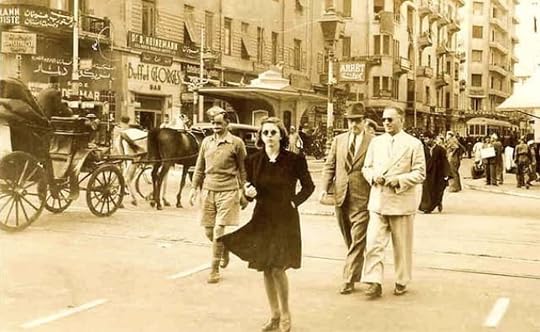
Cairo, 1942 - A city ruled by Egyptian royalty, occupied by the British military, seething with spies and deserters. Here in a hotbed of corruption, espionage, and profiteering, the war will reach a turning point and the future of the free world will be decided. Captain Bert Cutler, late of the Glasgow police, has been brought to Egypt with one purpose: to find Rommel's spy and plug the remarkable leak of exact intelligence that is making the Axis advance toward Cairo unstoppable. In a heady atmosphere of social gaiety, explosive politics, black marketeering, and sudden violence, Alice Stanhope, the beautiful young aristocrat with a well-connected mother in Alexandria; Prince Plotr, the aging Tsarist; Peggy West, the handsome British nurse awaiting her husband's return from a distant secret mission; exquisite Zeinab el-Shazil and her handsome brother, Sayed; Solomon al Masri, the wily arms dealer; Wally Wallingford, the reckless adventurer with his Independent Desert Teams; and a host of others will be ensnared in the tangled web of intrigue. From the formal headquarters of British Intelligence through the ancient streets of Cairo to bohemian soirees at the Hotel Magnifico...from a flamboyant houseboat on the Nile to remote desert villages and the shell-shattered wastes of the Sahara, Bert Cutler must pursue his clever and elusive prey. Even as the odds against the Allies escalate and the only victory possible must be snatched from the jaws of defeat, he dreams of a life with the lovely Alice, keenly aware that he himself is not what he seems. He is a man caught in a strange twist of fate...a man playing a brilliant charade. He is a man who has attended an inquiry into his own death and may yet live to face a charge of murder. Seizing a crucial moment of history and bringing it vividly to life in all its drama, irony, and ambiguity, Len Deighton has created a brilliant and compelling thriller that will grab you on the first page and hold you spellbound to the very end.
Deighton was born in Marylebone, London, in 1929. His father was a chauffeur and mechanic, and his mother was a part-time cook. After leaving school, Deighton worked as a railway clerk before performing his National Service, which he spent as a photographer for the Royal Air Force's Special Investigation Branch. After discharge from the RAF, he studied at St Martin's School of Art in London in 1949, and in 1952 won a scholarship to the Royal College of Art, graduating in 1955.
Deighton worked as an airline steward with BOAC. Before he began his writing career he worked as an illustrator in New York and, in 1960, as an art director in a London advertising agency. He is credited with creating the first British cover for Jack Kerouac's On the Road. He has since used his drawing skills to illustrate a number of his own military history books.
Following the success of his first novels, Deighton became The Observer's cookery writer and produced illustrated cookbooks. In September 1967 he wrote an article in the Sunday Times Magazine about Operation Snowdrop - an SAS attack on Benghazi during World War II. The following year David Stirling would be awarded substantial damages in libel from the article.
He also wrote travel guides and became travel editor of Playboy, before becoming a film producer. After producing a film adaption of his 1968 novel Only When I Larf, Deighton and photographer Brian Duffy bought the film rights to Joan Littlewood and Theatre Workshop's stage musical Oh, What a Lovely War! He had his name removed from the credits of the film, however, which was a move that he later described as "stupid and infantile." That was his last involvement with the cinema.
Deighton left England in 1969. He briefly resided in Blackrock, County Louth in Ireland. He did not return to England apart from some personal visits and very few media appearances, his last one since 1985 being a 2006 interview which formed part of a "Len Deighton Night" on BBC Four. He and his wife Ysabele divided their time between homes in Portugal and Guernsey.
Len Deighton drops his spy thriller into Cairo, 1942, a city where loyalties change hands faster than the local currency, and Rommel's tanks sit close enough to make the British garrison sweat through scorching desert heat alone.
Solomon, the houseboat operator running intelligence for Tel Aviv, gives the book its liveliest pulse. He doles out information to his junior partner Yigal in careful portions, a young man carrying a dream that a Jewish homeland might rise on cleaner terms than deserters and black marketeers tend to offer.
Solomon bargains with such men whenever the cause demands it anyway, and the gap between Yigal's ideals and Solomon's tradecraft grows heavier with every chapter, a moral weight piling up scene by scene.
Peggy West carries her own private campaign through the plot, a nursing sister chasing a wish to reach Jerusalem and find the husband she suspects married a passport instead of a wife. Her path toward Palestine Eretz Israel plays a softer counter-melody against the louder war drums, a portrait of a promised land sitting forever past reach for so many characters here, fenced off by bureaucratic battles, wartime travel restrictions, and the slow gears of empire grinding through every application.
Deighton plays gold against brass for the length of the book, and this metal-on-metal contrast adds depth to the fun. Cairo glitters to outsiders and newcomers alike, all souk treasure and Nile shimmer, yet underneath that shine sits an alloy that tarnishes the moment somebody stops polishing it. By the close, even a houseboat picks up a new name reflecting the difference between the real metal and its cheaper cousin,right where Deighton wants it.
Captain Cutler and Corporal Ross open proceedings locked in their own quiet chess contest. Two working-class Scots whose moves on the board echo larger gambits played out by spies and double agents elsewhere in the city.
Wallingford, a deserter trading in stolen goods and dangerous secrets, puts Solomon's whole operation at risk, giving Yigal plenty of grounds for suspicion toward the company his boss keeps.
The Zionist material gets handled with steady non-sentimental seriousness. Solomon and Yigal speak plainly about Tel Aviv, about the cold calculus facing a people watching a continent murder their relatives with genocidal glee, and about a homeland existing, in 1942, largely as a hope on paper, still waiting for its place on any map.
Deighton gives these characters genuine political weight, complete with an intelligence network, internal disagreement, divided loyalty, and stakes equal to anyone else moving through the desert war. Zionism reads here as serious history in motion, woven into the spy plot instead of parked beside it.
Egypt's wartime cosmopolitan mess, its Copts and Catholics and Jews packed alongside the British garrison and the Arab population watching empire fray at the seams, gives Deighton room to stage a dozen small dramas inside one large historical canvas.
Readers drawn to espionage thick with period detail, dialogue that snaps without strutting, and politics handled with genuine seriousness toward the Jewish characters and their cause will find Cairo's golden hustle worth every grain of sand kicked up along the way.
A closely observed story set in and around Cairo in 1942.
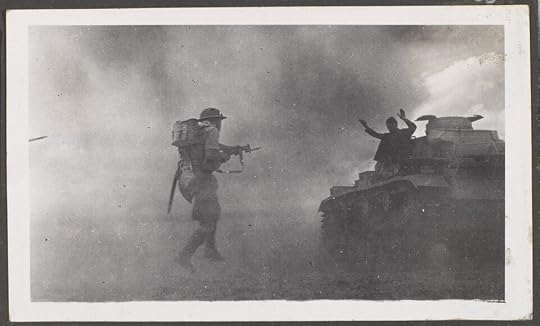
The background is WWII and the expected arrival in the city of the German Afrika Korps led by Rommel, who appear to know every move the British forces are making in Egypt.
There's a spy in Cairo and it's the job of Major Albert Cutler to find the spy before Rommel rolls into Cairo. No one is whom they appear to be, including Major Cutler himself.
The characters are many and varied: Egyptian nationalists, German deserters, British deserters, money lenders, representatives of Jewish freedom fighters, Russian emigres, nurses, military policemen all living against a backdrop of bazaars, mosques, houseboats, military conflict, and the struggle for justice.
City of Gold is Len Deighton’s WW2 Cairo-set spy thriller, not any other use of the common title. Rommel is coming, seemingly unstoppable. One reason for his success is that he has a spy – somewhere – feeding him extremely good information on the British Army. Better even than they have in London sometimes.
Meanwhile Cairo remains an Egyptian city, formally neutral under the government of the King. But he rules only at the British pleasure. The city is full of exiles and women – wives of troops are being evacuated unless they have a job – and everyone is part of a plot or has an agenda. Even out in the desert there are lies and deceit, with special forces teams criss-crossing the sands.
Into this comes Corporal Ross, arrested for murder, but his escort dies of a heart attack on the way. The escort, Major Cutler, is a policeman, being brought in to head the search for Rommel’s spy. And he has one of special investigation’s warrant cards, one that lets him pass any door, and assume any rank or uniform needed. Which Ross might just make more use of than anyone would expect.
Read This: For a convoluted, almost-real WW2 thriller, that delves deeper into wartime Egypt than usual. A good work even by Deighton’s standards.
Don’t Read This: If spy nonsense is not your thing.
Τρίτο βιβλίο του Λεν Ντέιτον που διαβάζω, μετά το "Επιχείρηση: Βερολίνο" και το "Ο εγκέφαλος", αλλά είναι σαν να τον διαβάζω για πρώτη φορά, τόσα που χρόνια που πέρασαν από τότε που διάβασα τα δυο προηγούμενα βιβλία (Οκτώβριος του 2011 και Σεπτέμβριος του 2012, αντίστοιχα). Λοιπόν, ήταν για μένα ένα άκρως ψυχαγωγικό και απολαυστικό ανάγνωσμα, κράμα κατασκοπευτικού θρίλερ και πολεμικής περιπέτειας, με το μεγάλο του προσόν να είναι η όλη αποτύπωση της πόλης του Καΐρου κατά τον Β' Παγκόσμιο Πόλεμο, και πιο συγκεκριμένα το 1942, τότε που η στρατιά του Ρόμελ δεν ήταν και τόσο μακριά από το να κατακτήσει την καταπληκτική αυτή πόλη. Ο συγγραφέας με τις περιγραφές του και την όλη πλοκή του κατάφερε να με μεταφέρει με περισσή άνεση στην υπέροχη αυτή πόλη -τη γεμάτη κατασκόπους, λιποτάκτες και μαυραγορίτες-, από το αρχηγείο της Βρετανικής Αντικατασκοπείας μέχρι τους σκοτεινούς και επικίνδυνους δρόμους της πόλης, αλλά και από τα διάφορα ξενοδοχεία και κέντρα διασκέδασης στα απομακρυσμένα χωριά και τα απομονωμένα φυλάκια στις ερημιές της Σαχάρας. Η πλοκή διαθέτει λίγη δράση και λίγο μυστήριο, αλλά δεν είναι δα και τόσο στιβαρή ή αγωνιώδης, πάντως προσωπικά τη βρήκα του γούστου μου, γιατί πάνω απ' όλα ο συγγραφέας με ταξίδεψε σε μια άλλη, συναρπαστική εποχή, και μου παρουσίασε κάποιους αρκετά ενδιαφέροντες χαρακτήρες. Η γραφή είναι πολύ καλή, οξυδερκής και ευκολοδιάβαστη, μπορώ να πω επιπέδου Έρικ Άμπλερ ή Τζον Λε Καρέ, σίγουρα την απόλαυσα. Στα αδιάβαστα έχω τέσσερα ακόμα βιβλία του (τρία στα ελληνικά και ένα στα αγγλικά), οπότε έχω μέλλον μαζί του.
I love the atmosphere of this novel. Deighton does a wonderful job of creating Cairo during World War II. The characters are interesting, and his context of both the war and the political climate are well done. Unfortunately, the book proceeds at the pace of one of Deighton's Bernard Sampson novels. While the Sampson novels are staged to evolve and reveal at a pace suited to the later years of the cold war, this story needs more tension or at least a sense of urgency. In the end, I found myself wanting something more.
I like books that put me in a different time and place. This book is about life and intrigue in the city of Cairo in the early 1940's. Nazi Field Marshall Rommel is advancing across the desert, the British are resisting, and black-marketeers are running guns for Zionists and making quick money any dangerous way they can. An interesting cast of characters. Not a spell-binder, but moves along nicely with a decent plot and subplots.
Good character development and a plot that feels well-paced but, at times, subplots are resolved a little too neatly. Fascinating insight into life both at the front and in turbulent British-run Cairo.
A thoroughly competent book featuring all of Deighton's narrative trademarks: suspense, action, uncertain loyalties, questions of trust, a fairly healthy disrespect for 'automatic authority,' and a generally wry examination of what constitutes heroic action. One can, however, see Deighton's retirement coming (perhaps only in retrospect); he is growing tired of writing.
Not as much detective work as I hoped, and plans fall effortlessly into place thereby missing any tension but creating a warm, satisfying yarn. Classy invocation of the period, as always.
Mostly I just didn’t care. This is set in an important time of history, but with all the selfish high jinks, they take away from what could be a decent story.
This entire review has been hidden because of spoilers.
Just a bit of a fun yarn really. The only reason it doesn't get a 4 is because all the loose bits and ends are tied together too neatly and quickly; the ease of resolution is somewhat unsatisfying
I found this to be a hugely enjoyable read. Some of Len Deighton's novels have been made into films and I think this novel will fare very well in the form of a movie.
Just to give a brief introduction: The setting is Cairo, also known as the "City of Gold", during the Second World War and Rommel is making great headway against the British and is approaching Cairo. Apparently Rommel has a spy in the British army, because he knows their movements in advance and is acutely aware of their strengths and weaknesses. Into the picture comes Bert Cutler, major and military policeman. Cutler is mysterious and holds his own secrets and is intent on finding this spy. Will Cutler find the spy? Will his own secrets be revealed? Read and see for yourself.
Deighton shows a very precise understanding of the historical period and the nature of the army. The circumstances have an authentic feel and the story is based on real happenings amalgamated with fictional characters. For those who enjoy Second World War historical fiction and even those who like a pleasant detective/police/spy story, this is a good reading option.
I've only read two Len Deighton books. This was the second and SSGB was the first. Both are fantastic stories, well written and I felt I didn't want to stop reading them. When I reached the end of City of Gold, I was sorry it had ended, as the narrative was fast flowing and carried me along with it. I really felt as though I were in war torn Cairo along with the characters. I loved the way Len Deighton has various possibilities for the German spy who's passing on information to Rommel. It only became obvious to me towards the end, which is probably the author's intention. There were a few characters who could have been the spy, inclusive of the soldier impersonating an officer. However, to me, it was the least obvious person. I always enjoy a good book, like this, that has a strong narrative, believable characters and set in an actual historical period of time. I realise that not everything in novels is real, but the few bits of reality make the story more convincing for me.
The story and characters are nuanced, multi-layered and flawed, all of which makes them relatable. The story moves along and the writing, as always with this author, makes me as angry as ever that my love of writing led me to be an attorney, when I might have been concocting stories like this one.
Much enjoyed this WWII thriller with twists from beginning to end - a lot of detail about Cairo and a chance to learn a bit of Arabic too. Armchair travel into the desert as Rommel's forces are encroaching. Somewhat stereotyped in the characters of the various British soldiers and women but the plot moves along in typical Deighton style.
Loved reading about Cairo and the desert war. Len Deighton does the proper research exposing both the grand view and the personal details that mark a great writer.
I just love Len Deighton. He requires careful reading, as he packs an enormous amount of information and subtle wit in each page, and perhaps younger readers might find him somewhat dated, but for those of us who remember when World War II was still in our parent's time, and who will have some familiarity with the tension between British and American culture, Deighton can be a worthy addiction.
In City of Gold, Deighton takes us to Cairo-=capital of the nominally autonomous Egypt, ruled by King Farouk--who is able to keep some of Egypt's proud people half convinced that the UK is an ally and not an oppressive occupier, although deep down every Egyptian does know the truth.
The British are preparing for Rommel's onslaught. Rommel appears to have tremendous intelligence about the British troops and positions--so good there must be a spy--but where?
The British decide to bring in civilian detectives to help--and specifically Albert Cutler. As the book starts, Cutler is taking a train up to Cairo while shepherding a British corporal, Jimmy Ross, who had murdered his commending officer (with apparent justification, although we are informed that is neither here nor there). On the journey, Cutler has a heart attack, and Ross decides his only chance is to assume Cutler's identity.
Can Ross acting as Cutler get away with the switch in personality and save his life? Can he---not a detective at all, but now thrown into the assignment of catching the Allied spy for Rommel--catch that spy and turn the war around? And of course, can he get the girl--from an aristocratic family but with grace and chutzpah engaged with him in his detective work? and what about the gun running in Egypt to Israeli forces seeking to arm Israel/Palestine ahead of the British wavering on supporting the Jewish state? Finally, will a band of British deserters, who have assumed the identity of "secret agents carrying out hush hush missions but in reality stealing the British army blind of ammunition, weapons and fine wines meant for officers only, really get away with their shameless activities?
Deighton writes with assurance and detail, such that the reader would believe he was reading an eyewitness account. Deighton is no stranger to irony, cynicism, and the evil of man. Yet the good English muddle through, partly by courage/brazenness, partly be accident, and partly because in the end the good and the clever beat the bad and corrupt. Very satisfying, but also a bit of a mental workout--with the interplay of army bureaucracy, state politics, WWII historical context and the very real task ahead of the reader to determine which of the characters are honest and which are fraudulent.
Some great lines:
[as Ross exits the Cairo train station in the late afternoon, he sees: "Ten billion particles of dust in the air picked up the light of the dying sun that afternoon, so that the slanting beams gleamed like bars of gold. So did the smoke and steam and the back-lit figures hurrying in all directions...'They call it the city of gold' [Ross/Cutler's adjutant says to him]."
"You could not depend upon anyone here to tell the truth. The army, the Arabs, and even the BBC all smoothly lied like troopers when it suited their purposes."
Deighton's ability to weave in economics and politics in his thrillers is outstanding, for example:
"When cotton prices jumped, many landowners began to plant it, which caused continuous rises in the price of bread. This...added a new dimension to the discontent...."
In alignment with all who travel frequently to the emerging markets, Deighton describes a typical expat cafe-- which a mob now threatened:
"The whole point of coming here for tea was to forget for a few minutes that they were surrounded by millions of dirty and diseased Egyptians. Now the tea drinkers felt threatened; worse, they felt vulnerable."
Regarding the US presence, an Irish assistant (of Harry Wechsler--a US syndicated columnist who was visiting the "front" to report on the "real war" to his readership) asks Wechsler: " 'What gives you all that energy?' once they were back in the car and crawling forward, looking for a way across the frontier. 'Money,' said Harry without hesitation. 'Do you know how many readers I have?' 'Yes, you told me.'" Money in fact is a theme and the corruption it causes, even in a war virtually everyone could agree was just and noble.
Thoroughly enjoyable and informative--adding to Deighton's stock of great and intelligent thrillers.
Len Deighton was prolific and accomplished, with wide-ranging interests. Best known for his Cold War spy novels, he also wrote a number of historical novels set during World War Two. City of Gold belongs to what is almost a sub-genre of "Cairo at War" novels, joining Olivia Manning's Levant Trilogy and Geoffrey Household's Arabesque (see my reviews), among others. Rommel is threatening Cairo from the Libyan desert; British colonial rule is threatened by rising Egyptian nationalism; a sizable British and refugee expatriate community manages to live pretty well in the midst of grinding native poverty, waiting for the roof to fall in. At this critical moment, Jimmy Ross, a British corporal being escorted to a court martial on a questionable charge of murder, takes advantage of his guard's fatal heart attack to assume the dead man's identity and masquerade as a major in the security services. He intends the impersonation to be brief, a desperate delaying tactic while he arranges a real escape, but he finds that nobody questions his identity, and his best move seems to be to settle into the job. If the setup requires a bit of suspension of disbelief, Deighton sells it with his convincing depiction of military bureaucracy and wartime chaos. All of this sets up the main story line, Ross's attempt to find out who in Cairo is betraying British military secrets to the Germans. The action shifts between Cairo and the the Western Desert, where hard-pressed Tommies are digging in for Rommel's big push. There are multiple sub-pl0ts involving a diverse cast of characters: upper-class twit officers and street-smart enlisted men, rear-echelon pencil-pushers and battle-hardened desert rat veterans, black-market schemers, Jewish gun-runners, refugee flotsam, Egyptians of all classes. And two British women, a naive young socialite determined to find a role in the war effort, and a tough, practical-minded nurse with an absent husband and a jaundiced view of the world. It's classic Deighton with sharp characterization, devious intrigue and convincing detail in a vividly evoked setting. Great stuff.
Cairo 1942. Jimmy Ross, handcuffed and charged with murder is riding on a train to Cairo accompanied by Bert Cutler, a police detective from Glasgow, when the unexpected happens. Cutler dies from a heart attack and Ross takes his identity. He manages to take the handcuffs off and takes Cutler’s suitcase along with his, when he arrives at the station. Now Ross has to learn how to be a detective and not give away his identity. But this is not just the story of Jimmy Ross who becomes Bert Cutler. It is the story of a few other characters who intertwine in war-torn Cairo and before Rommel decides to make his attack (as I learned from this book Rommel never made it to Cairo).
There is Alice Stanhope, a beautiful young aristocrat who gets a job as a receptionist in the hospital. Peggy West, an English nurse, who got Alice the receptionist job. Prince Piotr, a Russian aristocrat, who throws elaborate parties and invites the elite of Cairo at the hotel Magnifico. Zeinab el-Shazli and her brother Sayed (who I don’t think needed to be there); Solomon al Masri, an arms dealer; Wally Wallingford, an adventurer, and Wechsler an American journalist. There is also the servant, Percy, a German deserter; and Robin Dalrymple an English officer.
All are interweaved in the same story. The book moves from one character to the next. Each chapter, in a way, represents each of the characters and their actions. While reading it, you will find yourself wanting to know more about how Jimmy Ross is going to pull the charade of being a detective, but unfortunately, you don’t see much of that. At the end the story comes to a closure but quite a disappointing one.
Len Deighton has given a great description of the city of Cairo during the war. I felt that I was there, and really enjoyed that. But he also used military acronyms that I had to google to find out what they meant.
Even though it was a good read, I did feel that with all the characters, I kind of lost track of who is who. And the ending was bit abrupt.
I've really grown to love the fictional world of Len Deighton's spies and agents, where no one is who they seem and everyone has a price. This latest journey into his work doesn't quite land for me, but I think it highlights some of the same strengths that I've found in his previous work.
"City of Gold" concerns Cairo, Egypt, during the height of the Second World War in Africa, when Erwin Rommel's fabled "Afrika Korps" was a persistent threat to British soldiers in the Middle East. Our action begins in early 1942, at the nadir of Allied efforts to hold back what's coming. We meet Bert Cutler, a Scottish detective escorting a prisoner, Jimmy Ross, to stand trial in Cairo for the killing of a superior officer. What happens next has the potential to change the outcome of the war, if Cutler can keep his wits about him. Surrounding him are snooty British officers, expat Russians, Jewish freedom fighters, and gun runners of a more amoral bent. And Cutler, with a secret of his own, has to figure out how the Germans are able to know where the British troops are. Is it some sort of "super spy" that Rommel has buried deep in Army intelligence? Deighton being Deighton (AKA not Ian Fleming, and more akin to John le Carre), the solution to the mystery is almost comical. But that doesn't mean that the stakes go down once the truth is uncovered.
Like I said, "City of Gold" doesn't quite stick the landing, but it's got an intriguing premise that, dare I say, would work as a limited series on a streaming service. It's more historical than espionage oriented, though the spy stuff is fun (the constant threat of betrayal and exposure lends real tension to even the most humdrum encounters in the novel). On the whole, I'm glad that I read it, though I doubt I'll retain much fondness for it once it passes out of my recent memory. But it's a Len Deighton novel, and as I've realized this year, no time spent reading his work could be considered as time wasted.
My first Len Deighton. Not quite as weighty as John Le Carre, but less pulpy than Ian Fleming.
This is not a fast paced, up against time, hero vs villain tale – it is a terrific recreation of Cairo as the desert war rumbles towards it in 1942.
The kick off for the story is the desperate hunt for the spy who is revealing the allied secrets to Rommel but the narrative spreads out to include sleazy thief deserters (from Germany and Britain), dodgy gun-runners in the fight for Jewish independence and Arab nationalism and plain old murder most foul.
Deighton portrays a city on the brink, not just the threat of the ever more powerful German war machine but the tide of history that is bringing British colonial rule to an end – the future is up for grabs and a lot of factions want a part of it.
Our main protagonist (Military detective with a secret) is our main guy at the start – he’s got a mission and a love interest, but he is often sidelined as we catch up with a plethora of other characters of lesser and greater virtue. This is not a bad thing; the swirl of intrigues is what makes Cairo at this time what it was.
Deighton serves up a world of seedy glamour, grubby coffee houses, endless desert and an overhanging threat of danger and catastrophe – the true picture of Cairo beneath its historic and cultural legacy. It’s telling that in the last scene of the book a boat named “City of Gold” is renamed “City of Brass”.
Len Deighton's City of Gold is a middling historical thriller set in Cairo during WWII. The British are flabbergasted that Erwin Rommel's Afrikakorps seems to have such brilliant intelligence about their military preparations, suspecting a Nazi spy ring, Egyptian nationalists or a combination thereof. A tough counterintelligence officer named Ross (posing as a regular Army captain) organizes a small crew of agents (a well-connected Englishwoman, a friendly Egyptian and a White Russian emigre among them) to ferret out the hidden enmies. Along the way there are murders, sexual tensions, nationalist unrest and of course the looming conflict between Rommel and Montgomery, which will either depend on Ross's success, or render it moot. Deighton renders all of this competently enough, with a good pace, decent scene-setting and the requisite splashes of violence and intrigue. All the same, it often feels workmanlike rather than thrilling: the characters are stock archetypes, Deighton's prose seems perfunctory and even a clever final twist makes a muted impact. Ken Follett's The Key to Rebecca covers these same events, and despite Follett's occasional lapses into sensationalism manages a much more compelling and dramatic story. City of Gold isn't a bad read, just disappointing from the author of The Ipcress File.
I haven't met a Deighton book I didn't thoroughly enjoy until this one. I loved the conceit at the start that explained how Major Cutler came to be in Cairo and the deceit at the heart of this was maintained well right up to the end. Where I found the book disappointing was that it is a police procedural written by a master of spy fiction and the discrepancies were all too apparent. Perhaps the most glaring one is that it ignored one of the tropes of the crime genre, that the perpetrator must be one of the characters in the story who is unmasked in the denouement. Deighton's research into the city of Cairo in 1941 was evident as was his deep knowledge of German and British armoured vehicles. Thus the setting was very real but the characters, especially the two principal women, were sketchily drawn. This and the weird resolution of the central 'crime' made for an unsatisfactory read.
Perhaps it was too naive of me to assume that Gemini’s praises would translate to anything realistically meaningful…
It felt as if at least 80% of the book was written for pure exposition, and that somehow it would have led to a meaningful conclusion where all loose ends are tied up - that is not the case.
Nothing really happened, especially the love story between Alice and Jert that was hyped up the entire fucking book. Not even a kiss? Jesus Christ.
Anyways, it wasn’t very impressive, I just wish Deighton did more with his obviously talented writing in terms of plot and continuity…
This entire review has been hidden because of spoilers.
Published in 1992: classic well researched Deighton. Even though I favour Le Carre for me Deighton has always been an enjoyable read and greatly superior to Fleming. The story is set at the crucial time in 1942 when Rommel was seemingly threatening to take the Suez Canal helped by a flood of excellent intelligence on British plans and supplies. This is all true and Deighton weaves his tale from that material. It's an excellent enjoyable read. If you don't know Deighton and you're interested in WWII you should check out his non fiction on the War.
I really like this book because it has a great mix of feeling and emotion with action and suspense. The characters are realistic rather than super-human. It would be nice to have someone provide a synopsis of the facts that underlie this tale so that we might appreciate how this little slice of history fit into the bigger picture of the WW II. This book has inspired me to read Codebreakers and to read about El Alamein.
A solid three and a half stars. The British have their backs to the wall in the deserts of North Africa as Rommel drives relentlessly towards Cairo, the seat of British power on the continent. Rommel seems to know British plans and a desperate hunt for the mole begins. Not my favourite Deighton (‘Bomber’, Goodbye Mickey Mouse’ and his soy trilogies top my list), but an enjoyable read all the same.
I'd forgotten how good Deighton is. Set in Cairo in the second world war a detailed story based on fact about the hunt fir a Nazi spy Deighton develops complex characters with detailed descriptive text. The variety of characters and nationalities allied to the formation of Israel in the background keeps the reader involved and intrigued. If I have one criticism it is that the ending comes quite rapidly but means you can't put the book down for the last 50 pages.