Jump to ratings and reviews
Rate this book

The Medium is the Massage

Rate this book
The Medium is the Massage is Marshall McLuhan's most condensed, and perhaps most effective, presentation of his ideas. Using a layout style that was later copied by Wired, McLuhan and coauthor/designer Quentin Fiore combine word and image to illustrate and enact the ideas that were first put forward in the dense and poorly organized Understanding Media. McLuhan's ideas about the nature of media, the increasing speed of communication, and the technological basis for our understanding of who we are come to life in this slender volume. Although originally printed in 1967, the art and style in The Medium is the Massage seem as fresh today as in the summer of love, and the ideas are even more resonant now that computer interfaces are becoming gateways to the global village.

160 pages, Paperback

First published January 1, 1967

299 people are currently reading
20748 people want to read

About the author

Marshall McLuhan

119 books918 followers
Herbert Marshall McLuhan was a Canadian philosopher whose work is among the cornerstones of the study of media theory. He studied at the University of Manitoba and the University of Cambridge. He began his teaching career as a professor of English at several universities in the United States and Canada before moving to the University of Toronto in 1946, where he remained for the rest of his life. He is known as the "father of media studies".
McLuhan coined the expression "the medium is the message" in the first chapter in his Understanding Media: The Extensions of Man and the term global village. He predicted the World Wide Web almost 30 years before it was invented. He was a fixture in media discourse in the late 1960s, though his influence began to wane in the early 1970s. In the years following his death, he continued to be a controversial figure in academic circles. However, with the arrival of the Internet and the World Wide Web, interest was renewed in his work and perspectives.

Ratings & Reviews

What do you think?
Rate this book

Friends & Following

Create a free account to discover what your friends think of this book!

Community Reviews

5 stars
6,947 (39%)
4 stars
5,443 (30%)
3 stars
3,536 (20%)
2 stars
1,094 (6%)
1 star
551 (3%)
Displaying 1 - 30 of 829 reviews
Profile Image for Trevor.
1,523 reviews24.8k followers
September 1, 2014
This was a much more interesting read than I suspected it would be before I started. The argument runs a bit like this:

Every technology only makes sense in as far as it extends a human sense or ability. The car makes us better ‘walkers’. The telephone, for example, could be seen as a much-improved human ear, allowing us to hear across continents or a plough a much-improved human hand, allowing us to dig up an entire field. Stick with this idea for a moment and soon we see that we have used technology to turn ourselves into gods. One of my favourite examples being Hermes, the messenger god, who Homer tells us could run swifter than the wind. Now, when I am finished with this review it could potentially be read by millions of people all over the planet within moments of my clicking Save – Hermes has nothing on modern technology. I now have a voice (continuing the metaphor of the technologically extended human body) loud enough to ring out across the entire planet – whereas, in announcing the death of Pan all the gods could muster was a voice to boom out across the waves toward a single boat.

Now, a human with a voice that can travel at the speed of light across the entire planet, and a fire stick that can set fire in an instant to an entire city or, with enough such atomic weapons, potentially end all life on the planet, is a substantially different beast to that human’s hunter-gatherer ancestors. Not only can such a human transform the environment in ways a hunter-gatherer could never dream of doing, but this human will also be transformed in turn by the sheer power of their new found limbs, their new found abilities, their new found super-powers. For much of human history we have wondered what it must be like to fly, what it must be like to see what is happening through walls and what it must be like to run faster than a cheetah. All of which are such commonplaces today they have become too trivial to really rate a mention.

And yet we rarely ask ourselves just what these new and impressive powers have done to our conceptions of ourselves.

If language and communication are fundamental attributes that help to define what it is to be human then how communication has changed ought to also help change our perception of how we define ourselves. There are clear stages in the development of human communication and these are related to the senses that have been heightened and made more powerful by the application of new technologies. The difference between a culture that must rely on the oral transmission of data, compared to one that can rely on a written technology is substantial. It is a standard trope now to quote Socrates’ concerns with writing (and that is done once again in this text) but perhaps his is a point that cannot really be made too often – no new technology comes without some costs and writing cost us our memories. When the eye becomes an ear the need for a perfect ear diminishes. If anything McLuhan does not really go far enough here. As Luria points out in Cognitive Development: Its Cultural and Social Foundations, access to literacy is not a minor matter of just undermining our memories, but rather it fundamentally changes our abilities to categorise knowledge, think syllogistically (or sequentially) and (not to put too fine a point on it) think logically.

We trust our eyes more than we trust our ears – and this is interesting, particularly in the move from the print obsessed world toward out new obsession with television images. Television can’t really cope very well with words – even dialogue in dramas is pared back to a minimum, and drama on television is not at all like drama in a theatre. When plays are shown on television they appear ‘wrong’, they seem very stodgy and even bloated. Television has moved the eye back from being an ear to once again being an eye, but a terrifyingly all seeing eye (at least, seemingly so). Ezra Pound said poetry was really about capturing images (and written text, we often forget, is a visual medium, not really an aural one), but this obsession with images seems to reach its peak with television.

The book and the framed picture were interesting moments in the technological development of human culture – prior to the book (as made available by Herr Gutenberg) there really weren’t what we would today call ‘authors’. Texts often did not have single authors and those that clearly did often were not even ‘signed’. But the commoditisation of works – including art works getting frames – meant an interesting dialectical process was put in train. On the one hand the individual was asserted, as author, painter, creator – and on the other the individual lost some of their individuality. This was because they had to subsume themselves in their text so as to allow that text to be read, universally, that is, by anyone (McLuhan makes this clear in his discussing of the role of perspective in Renaissance art – in looking at such a painting you are affectively being told 'you will stand here, this is what you will see'). The placement of the viewer as a universal viewer, the placement of the writer as a universal voice is the opposite movement from our obsession with the individual author or artist in much of the modern world – think Shakespeare or Caravaggio.

What is really interesting in this is the move away from ‘authored’ works that the new media present us with today and which McLuhan saw coming. My favourite example of this at the moment is Wikipedia. It is a text that is not really ‘authored’ in the traditional sense – there is no single author even of a single article – but the fact of its existence is undeniable and not only is the question of who authored any part of Wikipedia of little interest, it is mostly beside the point.

Too extreme an example? Well, what about a television show? Who is the author here? Is it the scriptwriter? The director? The producer? The television network that commissioned the series? The actors? Although we may talk of a Kubrick film or even a David Lynch television series, these seem exceptions to us today - where 'from the makers of' often makes me think the new film simply won't be nearly as good as the previous effort - a response learnt from aversion therapy. Film is collaboration – the medium is not as individual or isolated as the authoring of a novel or the painting of a painting once was.

One of the things I’ve taken to doing lately – and I regret it, as I’m sure time spent reading newspapers is mostly time wasted – is reading articles from The Age, The Guardian and The Washington Post every day. What is always a surprise is how similar these three news sources from three continents are in what they presented as ‘news’. McLuhan refers to this as the global village – and this, too, would seem a difficult conclusion to argue with. The value of the information we receive in the marketplace of this village may be of questionable worth, but that we are feed the same diet of high fat, low-nutrient guff right across the globe is certainly not questionable.

McLuhan’s main point is that the guff that comes at us via the new media is determined by the preferred style of that new media and how this new media works. His classic phrase, the medium is the message, is to the point here. The medium gets us to respond to the world in a new way, and how we respond to the world mediated via that medium is much more interesting than any of the individual ‘messages’ we think we are responding to.

This really is an interesting little book. It is almost a series of aphorisms (although, some of the aphorisms stretch over a couple of pages, but often not) made explicit by some remarkably interesting and illuminating images - a bit like a Bird Brian review. There are times when what McLuhan has to say seems frighteningly prescient (given that this was written in the early 1960s). Particularly when he talks about individuals being given the power to self-publish – and if that isn’t what the Internet does, it is hard to know what it does do.

So, over all, a remarkably interesting and remarkably short text.
Profile Image for Jon Nakapalau.
6,486 reviews1,021 followers
May 2, 2025
This book has been on my list for so long - now I am in awe of Marshall McLuhan built upon the work of Ferdinand Tönnies and Max Weber (Gemeinschaft und Gesellschaft) and helped us understand the seismic waves that would trigger the 'reality-quake' that the media started in the 60's...the effects of which we are still feeling today...now more than ever!
Profile Image for Mahtab Safdari.
Author 53 books38 followers
November 26, 2025
The Medium is the Massage explores the profound ways in which media shape human experience, arguing that the personal and social consequences of any medium arise not from the specific content it conveys, but from the new scale, pace, and patterns it introduces into human affairs. A medium, in McLuhan’s view, is an extension of ourselves—whether a phone, a light bulb, or a wheel—and its true impact lies in how it reconfigures our modes of perception and interaction.
McLuhan posits that all media extend human senses or physical capabilities. The wheel, for instance, extends the function of our feet, while electronic media extend the central nervous system, transforming our cognitive processes and social relations. Each new medium alters the balance of our senses: print culture emphasized the visual, fostering linear, sequential thought and individualism, whereas electronic media such as television and the internet encourage a more simultaneous, multi-sensory experience. This shift, he suggests, fosters collective involvement and the emergence of a “global village.”
The book’s title itself is a layered pun. “Massage” suggests the way mass media soothe and condition audiences, subtly reshaping their sensorium while embedding structural changes in culture. At the same time, the phrase plays on “Mass Age” and “Mess Age,” underscoring the multiple dimensions of media’s influence. McLuhan warns against focusing solely on content—whether a program’s violence or a headline’s message—likening such fixation to a burglar distracting a watchdog with a piece of meat. The true significance lies in the medium’s structural effects, which often operate invisibly yet profoundly.
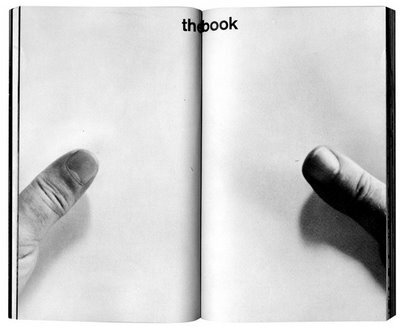
Formally, the book embodies its own thesis. Designed as an “inventory of effects,” it employs a collage-like format of varied typography, fragmented images, and aphoristic statements. This unconventional structure disrupts linear reading and immerses the reader in the fragmented, multi-sensory mode of perception that McLuhan associates with the electronic age. In this way, the book is not only a theoretical exploration but also a practical demonstration of its ideas.
Though written decades before the rise of the internet and social media, McLuhan’s insights remain strikingly relevant. His framework is frequently applied to the digital environment, where the medium—algorithms, perpetual connectivity, and the architecture of news feeds—arguably exerts a greater influence on society and individual behavior than any single post or message. The Medium is the Massage thus continues to serve as a vital lens for understanding the pervasive effects of media in shaping modern life.
***
“The environment as a processor of information is propaganda. Propaganda ends where dialogue begins. You must talk to the media, not to the programmer. To talk to the programmer is like complaining to a hot dog vendor at a ballpark about how badly your favorite team is playing.”
Profile Image for notgettingenough .
1,081 reviews1,365 followers
December 4, 2013
Are there other people who wonder about this?

Goodreads ONLY exists because of the goodwill of the people who do all the unpaid slave labour that keeps it where it is. That is Manny, and Paul Bryant, me to a relatively insignificant extent, whoever is reading this.

It is covered in offensive ads. They are there because the site is able to make a lot of money by using OUR goodwill and turning into cash.

I wonder if there is anybody else out there, offended by an ad that lets you get in touch with desperate Thai girls, or inyourface hamburger ads, and would like to do something about it?

I've never solicited votes before except for fun, but I would now seriously like to solicit votes for this review on the basis that it is a serious issue and I would like to fight it and I hope others might too.

I am a member of sites where they at least give you the choice of paying extra so as not to have advertising in your face and I for one would greatly appreciate this option. I spend my life avoiding advertising. I don't want TV that has advertising, I don't listen to radio that has advertising, and I strongly object to Internet sites that force me to watch advertising when I AM THE ONE THAT HAS MADE THE SITE WORTHY OF BEING ADVERTISED!!!

Goodreads' policy is this:

What do i do if i see an annoying ad on goodreads?
Goodreads uses a variety of ad networks to serve advertisements on the site, which means occasionally things slip through that we can't control. We do try our best to keep our ads relevant, appropriate, and useful to members.

We ask our ad networks not to include disruptive ads, but sometimes one slips through. Please help us by reporting any ads that match the following:

* Auto-expanding or auto-sound ads.
* Ads that expand or play sound on mouse-over (on-click is fine)
* Ads that contain nudity or other offensive material

If you find one, please send a screenshot and the ad's destination url to support@goodreads.com, and we'll do our best to block it as soon as possible.


This is hilarious. I define advertising of that type, ie inmyface, not something I choose to look at, as offensive in principle. I do not want to see a hamburger ad. I do not want to see an ad trying to get goodreads viewers interested in Thai wives. I do not want to see anything in between these. I would not object, on a booksite, to see advertisements specifically about books and clearly associated themes. That's it.

Oh, actually, I have this further thought. I would pay if I have to, to avoid ads being in my face, but why can't they be classifed? Ie in a separate link where I can CHOOSE to see them if I want to?

Apparently goodreads is 'only' worth $1M. This is not about the survival of the site and having to have ads to pay the costs. It is about these sites building themselves up on the basis of unpaid 'work' by the users, which becomes something that makes goodreads valuable. Who owns goodreads? At which point, after building it up, are 'they' going to sell it for a pretty sum to Amazon? I ask these questions because that is what happens to these sorts of sites all the time and it has important implications for us as consumers.

Yeah, well. I hope somebody out there agrees with me.


Profile Image for Noam.
244 reviews37 followers
September 29, 2025
'All media work us over completely. They are so pervasive in their personal, political, economic, aesthetic, psychological, moral, ethical, and social consequences that they leave no part of us untouched, unaffected, unaltered. The medium is the massage. Any understanding of social and cultural change is impossible without a knowledge of the way media work as environments.

All
media
are
extensions
of
some
human
faculty –
psychic
or
physical


The wheel


…is an extension of the foot


the book


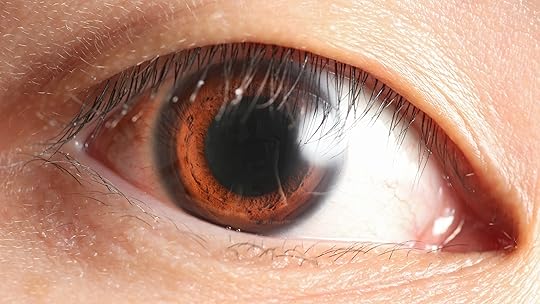
is an extension of the eye...


clothing, an extension of the skin...


electric circuitry,

an extension of
the central
nervous
system


Media, by altering the environment, evoke in us unique ratios of sense perceptions. The extension of any one sense alters the way we think and act - the way we perceive the world.

When
these
ratios
change,
men change.'

p.26-41


P.S. Except for the book image, these are unfortunately not the original images of Quentin Fiore that inspired me. I used similar ones, but Fiore's images are much better, with a stronger impact. One cannot find them on the Internet. Just try to find this book. It’s worth it!
Profile Image for John Matsui.
Author 9 books50 followers
July 25, 2016
I read this and all of Marshall McLuhan's works decades ago when the ideas were revolutionary and often hard to visualize.
Observer's today might find its pages unremarkable, like looking at the splash page of a website. Consider it this way, you open a chest that's been buried since 1967 and find a fully functional smartphone that's very much like an iPhone 5. The smartphone is basic tech compared to what's in your pocket until you realize when it was built.
When I first heard of McLuhan using the term Global Village, I had a perplexing and nonsensical image of all people around the world living in grass huts and somehow holding hands and singing Kumbaya.
It wasn't until I leafed through the images in The Medium is the Massage that it hit me that my thinking was so entrenched in old patterns, it couldn't process McLuhan's futurist ideas of the technologies that would transform not just how we interact but how those technologies transform us from consumers into being part of the machinery.
Anyone writing a review such as this, a blog or a tweet becomes the medium.
Profile Image for tara bomp.
520 reviews162 followers
November 4, 2013
Only good if you don't take it as serious politics/cultural studies, and even then it's pretty ridiculous. A lot of it looks absurd in the context of the 40 odd years of technological and political. development since this was written. The idea that modern technology is particularly liberating, especially, doesn't look like much now. It's weird because he seems to make comments every so often which show the essential similarity between modern technology and older technology but he doesn't let it change his rather bold predictions of the coming massive societal changes due to technology. The text is written kind of confusingly a lot of the time. Overall it's just a bit crap.

The "art" aspect is pretty poor and I really don't appreciate stuff like mirror text.

"Until writing was invented, man lived in acoustic space: boundless, directionless, horizonless, in the dark of the mind, in the world of emotion, by primordial intuition, by terror. Speech is a social chart of this bog." Really? Is there any reason to believe this at all?

"The instantaneous world of electric informational media involves all of us, all at once. No detachment or frame is possible." No reason to consider this true.

"In tribal societies we are told that it is a familiar reaction, when some hideous event occurs, for some people to say, "How horrible it must be to feel like that," instead of blaming somebody for having done something horrible. This feeling is an aspect of the new mass culture we are moving into—a world of total involvement in which everybody is so profoundly involved with everybody else and in which nobody can really imagine what private guilt can be anymore." First, "tribal societies"?? Lazy as hell. There's a lot of ideas about "primitive" society in this that are just claptrap. And second guilt is just as private. Like he regularly says that technology is making the world more connected and social yet the reality is that things haven't changed much in that respect and if anything we've become *more* atomised - the reams of analysis about neoliberalism bear this out.

"The poet, the artist, the sleuth —whoever sharpens our perception tends to be antisocial; rarely "well-adjusted," he cannot go along with currents and trends. A strange bond often exists among anti-social types in their power to see environments as they really are." Very unpleasant "sheeple" style talk, no reason at all to believe this really.

I really think humour actually works to reinforce existing prejudices - it's generally done before thought, based on your pre-existing ideas.

"Formerly, the problem was to invent new forms of labor-saving. Today, the reverse is the problem. Now we have to adjust, not to invent." The problem is always to invent new ways of labour-saving, because that's capitalism. We have always needed to adjust to changes, it's a constant. There's been several serious changes in the past 1000 years (emergence of capitalism for a start). This is not new and not accurate.

He claims that television will not work as a background. Heh. His idea that television means the viewer participates whereas other mass media is just a "packaging device" makes no sense and is never explained.

I disagree with most of what he says and he never argues it or anything, it's just there. It feels super wanky, like adbusters or something. There's even a John Cage quote about how the I-Ching helped him find "joy". There are a few ok bits but it's not worth going through the rot.

"Hollywood is often a fomenter of anti-colonial rebellions" is stretching the truth a lot.

Talk about "Orientalizing" the West is gross and racist and makes no sense.

The idea that electronic media brings us into a village again has not really been borne out at all.

Will appeal if you love going on about "spectacle", "sheeple" or talking about how revolutionary twitter is. Will not appeal if you want decent politics, good arguments, good writing, good analysis, or good art. Admittedly I'm probably being unfair with a 1 star rating, but I'm sick of technological fetishism and there really wasn't anything convincing or exciting in this.
Profile Image for Crito.
315 reviews93 followers
January 12, 2019
ksssshhhhk
ssiiiiiippp
Ahhhh...
leans back in chair
Now Marshall McLuhan, THAT was a real intellectual.
Profile Image for muthuvel.
256 reviews144 followers
February 22, 2020
'Our "Age of Anxiety" is, in great part, the result of trying to do today's job with yesterday's tools - with yesterday's concepts.'

I came to know about McLuhan, thanks to Neil Postman's work called Amusing ourselves to Death. Neil Postman, in his work, discussed extensively about the various forms of sources used by the people for the pursuit of knowledge and truth over the times of human civilization starting from the oral tradition, writing, typographical, telegraphical, televising traditions briefly. It must be noted each of the traditions had their own flaws and perks. Postman stood his case for the writing and typographical traditions for the coherent informative essence and for promoting systematic contextual understanding and thinking among the traditional participants which he felt lacked especially in the television showbusiness culture. He blames the TV culture for frivolity, inability to do authentic actions and obtain solutions for real world problems and most of which most people would feel relevant. McLuhan and Postman says almost the same thing except they don't agree with their respective conclusions because of their respective standpoints.

We live in a world where most of these traditions are well inside the melting pot of modernity illusions. Say, for instance, though written witness statements are allowed in the judicial courtrooms around the world, most of the cases obligate witnesses' presence in the court and their oral statement indicating the implemented myth of pre-socratic traditions.

McLuhan's idea arise the notion of analysing other traditions with the existing or previous environmental traditions which would always lead to problems. He starts from Plato accusing the oral tradition after the trial and killing of Socrates.
'What the Greeks meant by "poetry" was radically different from what we mean by poetry. Their "poetic" expression was a product of a collective psyche and mind. The mimetic form, a technique that exploited rhythm, meter and music, achieved the desired psychological response in the listener. Listeners could memorize with greater ease what was sung than what was said. Plato attacked this method because it discouraged disputation and argument. It was in his opinion the chief obstacle to abstract, speculative reasoning - he called it "a poison, and an enemy of the people.”

He says there would always be conflict when there's major shift in traditions especially during the transitions throughout the history.

McLuhan puts forward basically we all have been used to the visually biased knowledge and truth tradition since the dawn of our civilization.

"Books are the extension of the eye.'
Also, he compares the contextual fidelity of traditional, 'The ear favours no particular “point of view.” We are enveloped by sound. It forms a seamless web around us.

We hear sounds from everywhere, without ever having to focus.

We can‘t shut out sound automatically. We simply are not equipped with earlids. Where a visual space is an organised continuum of a uniformed connected kind, the ear world is a world of simultaneous relationships.'


He quotes John Cage, "One must be disinterested, accept that a sound is a sound and a man is a man, give up illusions about ideas of order, expressions of sentiment, and all the rest of our inherited aesthetic claptrap."

McLuhan, on the contrary to Postman, showers some critical points pertaining to the writing and typographical tradition that the concept of knowledge become a private property as a form of economic commodity because of the particular tradition and it lead to anonymity from the masses to isolation leading men to inspire and conspire.
He also takes the perceptive aspects of television which Postman considered those brought chaos and disinformation. He talks about TV, "In television, images are projected at you. You're the screen. The image wrap around you. You're the vanishing point. This creates a sort of inwardness, a sort of reverse perceptive which has much in common with oriental art."

He concludes with this,


Somehow the overall format of the book is totally baffling for me when it comes to reading aphorisms, lengthy Paragraphs, photographs, mirrored, inverted pages and comic illustrations at the same time in a same book. Guess, we're all biased in someways. Typographical, in my case.
Profile Image for Nate D.
1,653 reviews1,251 followers
November 30, 2017
Classic pop-theoretical discourse (via kinetic typography and image) on the effects of changing media in the 20th century. Prescient. Perhaps as relevant in today's hyperconnectivity as in the television era of its conception. And with a kind of ambivalence of value that seems appropriate: once technology changes, there's no going back and it may be more useful to "inventory the effects" than to judge or decry.
Profile Image for Anthe.
6 reviews
March 17, 2020
Ik had dit boek graag gelezen op papier, maar de huidige omstandigheden hebben mij belet naar de bieb te gaan. Ik heb dan maar de PDF gelezen op mijn computer. Ik vermoed dat McLuhan dat fantastisch zou gevonden hebben.
Profile Image for Steve.
396 reviews1 follower
Read
December 20, 2022
This short, quick read – one long overdue – presented as an engaging collage, owing to the collaboration with graphic designer Quentin Fiore. Professor McLuhan noted the deleterious social effects of media some six decades ago. It’s a wonder that his warnings were as widely heard as they were ignored. Here we are at the end of 2022 and the issues he called attention to have only become more pronounced; our pathetic government behaving like the oft-sighted deer in the headlights. The monetization of our thoughts and behaviors now fuels enormous profits for corporate coffers, permitting a select cadre among the elite to accumulate astonishing wealth at warp speed, while the masses are, in exchange, lured into individual, addictive vortices and away from the communities that once characterized our distant ancestors. Professor McLuhan made the point that detachment actually began long before we harnessed the electron, it began with the written word, where writers and readers could remove themselves in thought. And here I considered my commitments to reading and writing healthy pursuits – maybe not so much.

I took some heart from his commentary on the antisocial critic, though:
The poet, the artist, the sleuth – whoever sharpens our perception tends to be antisocial; rarely “well-adjusted,” he cannot go along with currents and trends. A strange bond often exists among anti-social types in their power to see environments as they really are. This need to interface, to confront environments with a certain antisocial power, is manifest in the famous story, “The Emperor’s New Clothes.” “Well-adjusted” courtiers, having vested interests, saw the Emperor as beautifully appointed. The “antisocial” brat, unaccustomed to the old environment, clearly saw that the Emperor “ain’t got nothin’ on.” The new environment was clearly visible to him.”
I sometimes find socializing difficult because I feel I recognize things others either don’t see, don’t want to see, or are just downright indifferent. Maybe there are more than a few who feel as I do. I also took comfort from his words for amateurism in contrast to professionalism because I consider myself very much the amateur at everything I undertake. Yes, the amateur has a chance to make a meaningful contribution.
Profile Image for Chris.
2,882 reviews209 followers
March 29, 2017
For a book published 5o years ago, this short book has aged very well (beyond a few references to the technology of the times). Still can't believe that we didn't read this in my graduate program, since so many authors name dropped McLuhan.
Profile Image for Ryan.
266 reviews55 followers
November 17, 2019
Utterly electrifying, radical, and downright brilliant. Completely changed the way I perceive the world around me, and is still just as relevant today as it was prescient when it was first published decades ago.
Profile Image for Jonathan Maas.
Author 31 books368 followers
December 13, 2018
A Prophetic Book - Written Decades Ago, Most all of it Applies Today

The Medium is the Massage became a cult bestseller in the 1960s due to its broad ranging appeal that made sense of the current age and the future, and also because of its incredible layout from graphic designer Quentin Fiore.

The Medium is the Massage Graphic

The Medium is the Massage Graphic

But this is more than just a hip book with innovative graphics.

It informs us of where we are today, why? Because Marshall McLuhan talks about media in the form of integrated circuits.

Marshall McLuhan doesn't mention the word Internet, but I'd imagine he'd not be surprised by it

McLuhan does not talk about the Internet - but he talks around it. He sees media's future - the integrated circuit, and talks about how this is the next step.

He talks about how Gutenberg's printing press made an entity known as the public, and expanded from there.

McLuhan as Nostradamus

Jennifer Wright noted in Get Well Soon: History's Worst Plagues and the Heroes Who Fought Them that Nostradamus had no magic to his prophecies, at least not in the standard sense.

She argues that Nostradamus was just an incredibly intelligent, educated, open-minded and forward thinking individual. Thus many of his innovative thoughts often came true.

You can argue the same for McLuhan. There is no magic in his thoughts, at least not in the standard sense. He's just an incredible intelligent visionary, who finds a way to see things we do not.

So put him up there with Nostradamus and Voltaire.

And if you want an accessible entry point into his thoughts, I'd recommend The Medium is the Massage - it's great.
Profile Image for ณัฐกานต์ อมาตยกุล.
Author 7 books29 followers
Read
October 6, 2018
อ่านเล่มนี้ในปี 2018 ก็คงจะช้าและเชยไปหน่อยสำหรับนักเรียนสายสื่อ (เล่มนี้เป็นผลงานคลาสสิกที่พิมพ์ตั้งแต่ 1960s) แต่เราก็รู้สึกบันเทิงและอ่านรวดเดียวจบ เพราะมันประกอบด้วยตัวอักษรนิดหน่อยสลับภาพประกอบ ที่เป็นลูกเล่นต่างๆ (ตามคอนเซปต์หนังสือ) ถึงจะเชยแต่ก็ทำให้คิดทบทวนการงานของตัวเองอยู่เหมือนกัน
Profile Image for Daisy.
60 reviews4 followers
September 6, 2024
I'm now convinced the only way to read this book is riding on a train while listening to Simon and Garfunkel (thanks to Lauren for the inspiration)
Profile Image for Jasmine.
668 reviews57 followers
December 21, 2011
So this is one of those books where I always say the wrong title (like the deluze book I always claim is about platypuses [or platypi as it maybe]). I have always called it the medium is the message, apparently that is a different book, unlike the platypi issue which is just a title I made up. I also sometimes call marshall marsha, but that is because I had a professor in college who use to do that for which I have no explanation except possibly a very thick accent.

this book is about how new technologies bring us back to primitive cultures. It's not the easiest argument for me to reiterate because i'm not totally on board, but I can give you some aspects:

Childhood was created in the 17th century, before that children were simply small adults, now because of technology children are inundated in the adult world while still expected to understand the ideal of childhood.

The public was created when movable text and mass publishing were popularized, now the public has been transformed into the mass audience. The public allowed for intellectual ownership and assume each person had a separate viewpoint. The mass audience assumes that all people have the same exposures and encourages group thinking on public forums and such.

visual culture allowed for privacy, you could go home and read a book have small families, technology no longer allows for that we are constantly on show, he connects this to the problem that private guilt no longer exists only the effect of circumstance.


The one thing that is really cool about this book is that even though it was written more than 40 years ago it feels like it was written yesterday
Profile Image for Mariah.
283 reviews4 followers
March 27, 2025
During my youth, my Dad would mention how McLuhan’s book utterly shocked him when he first read it. No one had designed a book before with the writing upside-down or the eye-catching imagery now considered the norm in advertising. I’m grateful that he held onto his copy. It astounds me how spot on some of McLuhan’s predictions were about the future and how he describes the global-village that technology creates. He speaks about how we are returning to a visual society with more consensual perspectives—Instagram anyone??

If you are interested in books that take his perspective a step forwards I would recommend: Neil Postman’s “Technopoly,” and Jerry Mander’s “Four Arguments for the Elimination of Television.” Although the most recent of these books was written in the early 90s (before I was born!) they are very relevant for the 2020s. They provide a skepticism and a questioning of the technological norms of our time period. The commentary on television and the advertising that went with it in the 80s onward can be seen as a precursor to Instagram and Tiktok. I’m looking forwards to more books that question my generation’s (Gen Z) social media usage and how it has completely altered culture.
Profile Image for AP Dwivedi.
54 reviews8 followers
December 2, 2025
Genius. Similar to Nietzsche where it’s got this commitment to philosophy but with a strong aesthetic approach, and probably also less rigorous as a result. Still, though, it’s an extremely original work that identifies the first principles that explain the subtleties of the way we experience media, and strikes me as being substantively more rigorous than Nietzsche. McLuhan seems to be synthesizing a phenomenology of media theory. The medium is the message = meaning and forms become indistinguishable = subject becomes identified with object. The message is the meaning of the experience of media; since the medium in the Information Age becomes an extension of the self, the meaning creator, the objects of consumption become vehicles for essential meaning rather than being blank slates onto which the self projects meaning. I mean, isn’t that just satisfying to think through? It implicitly predicts the fascinating content genre of “corecore” decades beforehand, along with the evolution of a key relationship in the postmodern condition (subject-object)

Likewise media moves us away from differentiated compartments of information toward undifferentiated compartments of information. When subject and object become intertwined the boundary between mind and media becomes more opaque. This leads to an outsourcing of the processing of information to the medium delivering that information; when the environment processes information for you, that’s called propaganda. Interesting to think through which of my thought and belief systems I’ve outsourced to media; great animus to maintain a practice of challenging your own beliefs and keeping your emotional state in a constant check/balance with your media diet
Profile Image for Joshua.
371 reviews18 followers
August 13, 2018
An excellent and very odd book. A review could be written entirely of quotes, which is more or less what I've done below.

The essential point of the book is that “Societies have always been shaped more by the nature of the media by which men communicate than by the content of the communication.”

Quotes from here

“The major advances of civilization are processes that all but wreck the societies in which they occur.”
“"Come into my parlor,” said the computer to the specialist.”
“The alphabet and print technology [printing] extended the emphasis upon lineality. It fostered and encouraged a fragmenting process, a process of specialism and of detachment. [A habit of thinking in bits and parts, and step by step.]”
“Youth instinctively understands the present environment—the electric drama. It lives mythically and in depth. This is the reason for the great alienation between generations.”

“Electric circuitry has overthrown the regime of “time” and “space” and pours upon us instantly and continuously the concerns of all other men. It has reconstituted dialogue on a global scale. Its message is Total Change, ending psychic, social, economic, and political parochialism.”
“Nose-counting, a cherished part of the eighteenth-century fragmentation process, has rapidly become a cumbersome and ineffectual form of social assessment in an environment of instant electric speeds. The public, in the sense of a great consensus of separate and distinct viewpoints, is finished.”
“All
media
are
extensions
of
some
human
faculty—
psychic
or
physical.”
“Clothing, an extension of the skin…”
“The wheel …is an extension of the foot.”
“The book is an extension of the eye…”
“Electric circuitry, an extension of the central nervous system.”
“The dominant organ of sensory and social orientation in pre-alphabet societies was the ear—hearing was believing. The phonetic alphabet forced the magic world of the ear to yield to the neutral world of the eye.”
“The alphabet is a construct of fragmented bits and parts which have no semantic meaning in themselves, and which must be strung together in a line, bead-like, and in a prescribed order. Its use fostered and encouraged the habit of perceiving all environment in visual and spatial terms—particularly in terms of a space and of a time that are uniform, c,o,n,t,i,n,u,o,u,s and c-o-n-n-e-c-t-e-d.”
“Until WRITING was invented, man lived in acoustic space: boundless, directionless, horizonless, in the dark of the mind, in the world of emotion {, by primordial intuition, by terror. Speech is a social chart of this bog}.”
“The goose’s quill put an end to talk. It abolished mystery; it gave architecture and towns; it brought roads and armies, bureaucracy. It was the basic metaphor with which the cycle of CIVILIZATION began, the step from the dark into the light of the mind. The hand that filled the parchment page built a city.”
“The instantaneous world of electric informational media involves all of us, al att once. No detachment or frame is possible.”
“Primitive, and pre-alphabet people integrate time and space as one and live in an acoustic, horizonless, boundless, olfactory space, rather than in visual space. Their graphic presentation is like an x-ray. They put in everything they know, rather than only what they see. A drawing of a man hunting seal on an ice floe will show not only what is on top of the ice, but what lies underneath as well. The primitive artist twists and tilts the various possible visual aspects until they fully explain what he wishes to represent.”
“Print technology created the public. Electric technology created the mass.”
“[The railway] gave us darkest suburbia and its lasting symbol: the lawnmower.”
“A strange bond often exists among anti-social types in their power to see environments as they really are.”
“Professionalism is environmental. Amateurism is anti-environmental.”
“Electric circuitry confers a mythic dimension on our ordinary individual and group actions. Our technology forces us to live mythically, but we continue to think fragmentarily, and on single, separate planes.”
“We employ visual and spatial metaphors for a great many everyday expressions. We insist on employing visual metaphors even when we refer to purely psychological states, such as tendency and duration. For instance, we say thereafter when we really mean thenafter, always when we mean at all times. We are so visually biased that we call our wisest men visionaries, or seers!”
“Reminders—(relics of the past)—in a world of the PRINTED word-efforts to introduce an AUDITORY dimension onto the visual organization of the PAGE: all effect information, RHYTHM, inflection, pauses. Until recent years, these EFFECTS were quite elaborate—they allowed for all sorts of CHANGES of type faces. The NEWSPAPER layout provides more variety of AUDITORY effects from typography than the ordinary book page does.”
“Joyce is, in the Wake, making his own Altamira cave drawings of the entire history of the human mind, in terms of its basic gestures and postures during all the phases of human culture and technology. As his title indicates, he saw that the wake of human progress can disappear again into the night of sacral or auditory man. The Finn cycle of tribal institutions can return in the electric age, but if again, then let’s make it a wake or awake or both. Joyce could see no advantage in our remaining locked up in each cultural cycle as in a trance or dream. He discovered the means of living simultaneously in all cultural modes while quite conscious.”
“Television completes the cycle of the human sensorium. With the omnipresent ear and the moving eye, we have abolished writing, the specialized acoustic-visual metaphor that established the dynamics of Western civilization.”
Profile Image for lauren :).
290 reviews6 followers
September 7, 2024
i feel like McLuhan was trying a litttttle too hard
Profile Image for Tom Schulte.
3,416 reviews78 followers
May 16, 2014
I finally got around to reading the classic last night, and what was I waiting for? It is witty, insightful, and very entertaining. Much credit must be given to graphic designer Quentin Fiore. His designs of the 1960s are mixed text and images, different sizes of type and other unconventional devices like mirror writing to create dynamic pages that reflect the tumultuous spirit of the time. In the words of critic Steven Heller, Fiore was "as anarchic as possible while still working within the constraints of bookmaking". McLuhan seems to be on a zealous mission to provoke the idea that conventional text ossifies the mind and these disruptive pages, many of which have little to no text, are as koans to break patterns of thought and challenge the reader. I especially like the quotes from John Cage and William Massey:

“Whence did the wond'rous mystic art arise, / Of painting SPEECH, and speaking to the eyes? / That we by tracing magic lines are taught, / How to embody, and to colour THOUGHT?”

Not just 18th Century poets, but even the seminal Socrates is on McLuhan's side seeing deadly rigidity in a line of text:

"The discovery of the alphabet will create forgetfulness in the learner’s souls, because they will not use their memories; they will trust to the external written characters and not remember of themselves. You give your disciples not truth but only the semblance of truth; they will be heroes of many things, and will have learned nothing; they will appear to be omniscient and will generally know nothing."
— Socrates, Phaedrus, cited by Marshall McLuhan here

McLuhan then sounded like someone railing against 24-hr cable news, unedited blogs, and face-down tweeting:

"The family circle has widened. The worldpool of information fathered by the electric media—movies, Telstar, flight—far surpasses any possible influence mom and dad can now bring to bear. Character no longer is shaped by only two earnest, fumbling experts. Now all the world's a sage."

And what he resisted in the 60s make me think his head would explode now, or maybe now we will listen?

"Electric circuitry has overthrown the regime of ‘time’ and ‘space’ and pours upon us instantly and continuously the concerns of all other men. It has reconstituted dialogue on a global scale. Its message is Total Change, ending psychic, social, economic, and political parochialism. The old civic, state, and national groupings have become unworkable. Nothing can be further from the spirit of the new technology than ‘a place for everything and everything in its place.’ You can’t go home again."

It seems, and appropriately enough, McLuhan's thesis was best summarized in a New Yorker cartoon presented here without comment near the very end with this quip:

"You see, Dad, Professor McLuhan says that the environment that man creates becomes his medium for defining his role in it. The invention of type created linear, or sequential thought, separating thought from action. Now, with TV and folk singing, thought and action are closer and social involvement is greater. We again live in a village. Get it?"
The New Yorker Magazine 1966


Profile Image for Kristis Maksvytis.
13 reviews3 followers
January 29, 2021
Culture Shock! Future shock! Wired! Come on baby tune my circuit!

Whew, it's hard to saw whether Marshall Mcluhan was a prophet or, instead, we've just been repeating the same cycle of mistakes for decades, with slight cosmetic changes.

The Medium is the Massage reads like a zine, a manifesto, a dialogue and a disjointed treatise all at once. M.M., with the help of graphic designer Quentin Fiore, created one of the most interactive marriages of theory and practice put to paper. The book's messy, erratic nature, the flurry of images, quips and observations presented here seem to suggest, nay, scream at the top of its lungs - OUT WITH THE OLD, IN WITH THE OLDER. OUT WITH THE OLD, IN WITH THE NEW. The digital age is meant to be perceived as fragmented yet holistic. The era of print media and its linear, perspectival thinking patterns, is outdated. In the global village, where information transmission is instantaneous and simultaneous, purely visual, purely verbal, localized attitudes do not function as well as they did before. The technology has run so far so fast that all other facets of life are left in the dust. School, government, the daily hustle and bustle are constantly losing their breath trying to catch up. Media alters the environment in imperceptible ways, slowly but surely (sometimes instantly and shakily) shifting an entire society, chipping away at the old, without necessarily replacing what has been eroded.

The book is an extension of the eye, the electric circuit is an extension of the nervous system. Flows and currents the latent meaning in form a dialectical whirlpool constant change production and recording and destruction streams interactions twitch facebook vr railroad circuit city immanence transcendence all that jazz


It is really astounding how much of what is put forth here can be used to described the current state of things, with only a bit of adjustment. In my VIEW (◕‿◕) this is a seminal work in media and communication studies, acting as both theory and its execution. Surprisingly, in Mcluhan's thought I can't help but notice the seedlings of not just contemporary communication studies but also Deleuze and Guattari's theories of flows, synthesis and desiring-machines, but transhumanist and posthumanist theory as a whole. Some remarks and predictions are bound to be outdated, because not even the great sci fi writers of the man's time could have predicted the world of today (his remark that Jules Verne predicted television, but in the XXIX century shows that M.M. himself must have been aware of these limitations). It is regardless quite impressive that he notices the historicities of such concepts as linearity, visuality, perspective and compartmentalization - various ways we mediate our massages that are usually assumed to be both inherent and final.

All in all, a fun romp.

Beam me up, Scotty! Hit the road Jack! Play it again, Sam!
Profile Image for Jeff Jackson.
Author 4 books527 followers
July 5, 2017
Written in the late 1960s, much of this book uncannily feels like it's directly addressing the massive changes wrought by the internet. McLuhan's cautious optimism may feel out of step with our moment, but replace "global village" with "global tribalism" and this book could've been ripped from the headlines. Visionary and then some.
Profile Image for Pasi Halonen.
20 reviews
March 19, 2022
A whimsical little book that continues to punch above its weight and beyond its period.
Profile Image for Rinstinkt.
220 reviews
Read
October 17, 2023

" In the study of ideas, it is necessary to remember that insistence on hard-headed clarity issues from sentimental feeling, as it were a mist, cloaking the perplexities of fact. Insistence on clarity at all costs is based on sheer superstition as to the mode in which human intelligence functions. Our reasonings grasp at straws for premises and float on gossamers for deductions." —A. N. Whitehead, "Adventures in Ideas."

-

The family circle has widened. The worldpool of information fathered by electric media—movies, Telstar, flight-far surpasses any possible influence mom and dad can now bring to bear. Character no longer is shaped by only two earnest, fumbling experts. Now all the world's a sage.

-

The poet, the artist, the sleuth —whoever sharpens our perception tends to be antisocial; rarely "well-adjusted," he cannot go along with currents and trends. A strange bond often exists among anti-social types in their power to see environments as they really are. This need to interface, to confront environments with a certain antisocial power, is manifest in the famous story, "The Emperor's New Clothes." "Well-adjusted" courtiers, having vested interests, saw the Emperor as beautifully appointed. The "antisocial" brat, unaccustomed to the old environment, clearly saw that the Emperor "ain't got nothin' on." The new environment was clearly visible to him.

-

"The discovery of the alphabet will create forgetfulness in the learners' souls, because they will not use their memories; they will trust to the external written characters and not remember of themselves ... You give your disciples not truth but only the semblance of truth; they will be heroes of many things, and will have learned nothing; they will appear to be omniscient and will generally know nothing."
- Socrates, "Phaedrus"

-

Science-fiction writing today presents situations that enable us to perceive the potential of new technologies. Formerly, the problem was to invent new forms of labor-saving. Today, the reverse is the problem. Now we have to adjust, not to invent. We have to find the environments in which it will be possible to live with our new inventions. Big Business has learned to tap the s-f writer.
Profile Image for Sajid.
457 reviews110 followers
December 31, 2022
“All
media
are
extensions
of
some
human
faculty-
psychic
or
physical.”


The ever-changing shift of our environment made the solid burn into air. Invisibility envelops us everywhere. The visual way of perceiving the word is almost dead. We perceive, thus we extend. Our seneses are like those spider webs. The world of perpetual happening has dissolved us into the circuits of electricity. Movement has changed its tide. The speed,the pause,the lapse has been shifted where they happen simultaneously. Distances are delivered to the constant presence or nearness. We stand face to face with terror of visibility, because visibility is a distortion. As they say,everything everywhere all at once. But this there is something to come. Nothing is whole or nothing is part. Everything is just bunches of larval points of information.
Displaying 1 - 30 of 829 reviews

Can't find what you're looking for?

Get help and learn more about the design.